 Stanza / Audio guide
Stanza · Audio guide
Harmandir SahibAudio guide
A place to remember. A story to take with you.
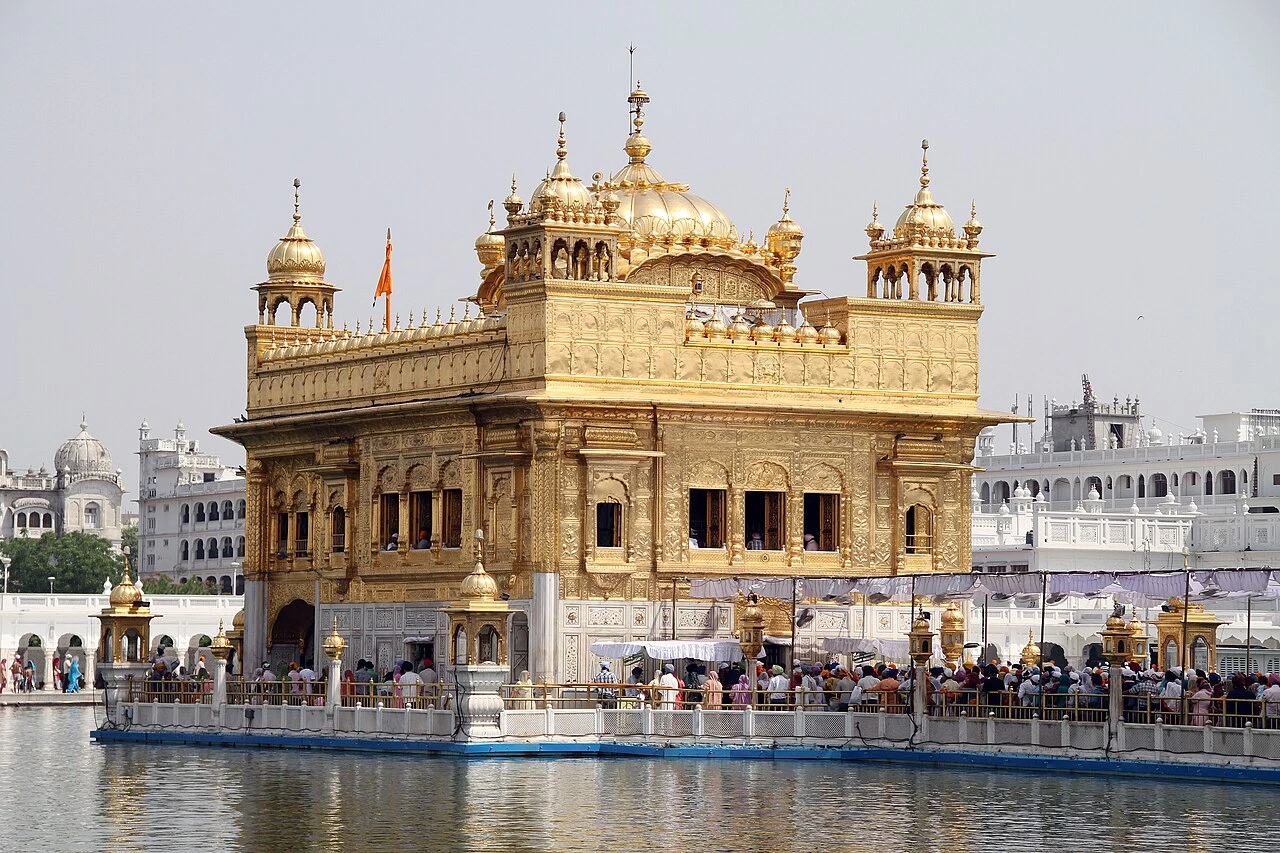
The Harmandir Sahib, also known as the Golden Temple, is a prominent Sikh gurdwara located in Amritsar, Punjab, India. It is the holiest shrine in Sikhism and a major pilgrimage destination.
Download Stanza, then search for “Harmandir Sahib”.
About the tour
One guide. Your kind of visit.
The Harmandir Sahib, also known as the Golden Temple, is a prominent Sikh gurdwara located in Amritsar, Punjab, India. It is the holiest shrine in Sikhism and a major pilgrimage destination.
Ready when you are.
- 01Get the free Stanza app.
iOS & Android
- 02Find your guide.
“Harmandir Sahib”
- 03Download before you go.
Works offline
Audio guide / 22 narrated stops
Inside the guide
Get to know a few of the stories before you go. Open a stop to read more.
01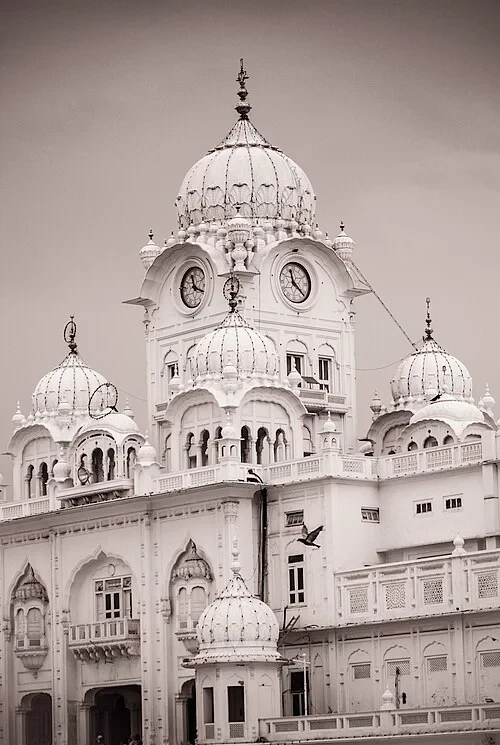 The Clock Tower Entrance (Ghanta Ghar Deori)The Clock Tower Gate
Welcome to one of the most spiritually significant sites in the world, the Harmandir Sahib, popularly known as the Golden Temple. You are beginning your journey at the North Gate, known as Ghanta Ghar Deori. As you look up, you will notice the Victorian-era clock tower that distinguishes this entrance. This architectural feature was added by the British after 1849, creating a striking blend of European styles with the traditional aesthetic of the complex. This gate serves as the primary transition point from the secular world into a space of profound holiness. Before you proceed further, there are essential rituals of respect that every visitor follows, regardless of their background. Take a moment to prepare: first, you must remove your shoes and leave them at the dedicated storage area. Next, as you approach the stairs, you will see a shallow pool of running water. Walk through this to symbolically and physically wash your feet. Finally, ensure your head is covered—a simple scarf or handkerchief will do—as a mark of humility and reverence. These acts are the first steps in aligning yourself with the atmosphere of peace and equality that defines this sanctuary. Notice how the bustling energy of the city begins to fade, replaced by a sense of quiet anticipation as you prepare to descend into the heart of the complex.
Photo: Bibek Raj Pandeya · CC BY-SA 4.0
02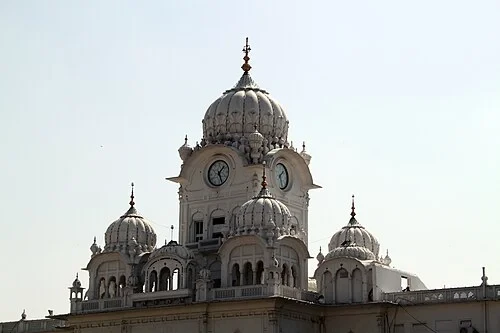 The Clock Tower Entrance (Ghanta Ghar Deori)The Threshold of Peace
Stepping through the entrance, you undergo a profound transition. The noise and heat of Amritsar’s bustling streets are left behind, replaced by a startling serenity. Notice that as you enter the main complex, you actually walk downward. This was an intentional design choice by Guru Arjan, the fifth Sikh Guru. In traditional temple architecture, structures are often raised on high platforms, but here, the temple sits at a lower level than the surrounding city. This physical descent symbolizes the spiritual virtue of humility; one must lower themselves to receive the grace and peace offered within these walls. Take a moment to look at the entrance structure around you. You can see the gleaming white marble domes and the intricate stone carvings that adorn the gateway. The brilliant white of the marble creates a sense of purity and light, serving as a frame for the vibrant life occurring within the courtyard. These carvings often feature delicate floral motifs and geometric symmetry, reflecting a dedication to craftsmanship that honors the divine. As you stand at this threshold, the entire complex opens up before you, revealing the golden sanctum at its center. This view is designed to be breathtaking, offering an immediate sense of the harmony and balance that the site represents to millions of pilgrims.
flowcomm · CC BY 2.0
03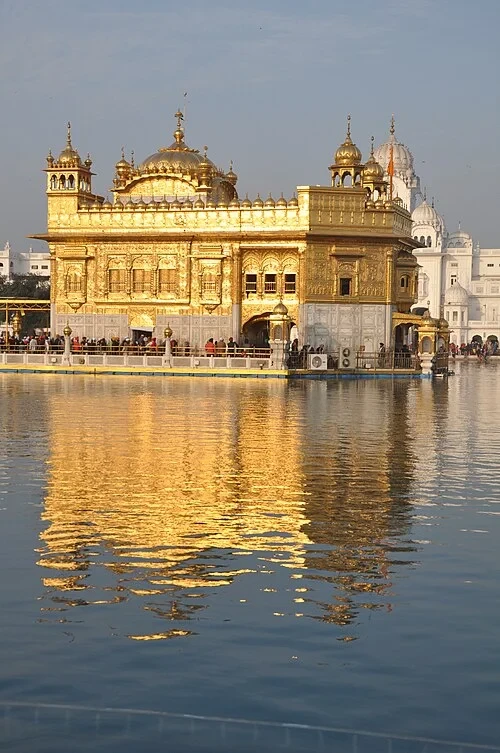 The Amrit Sarovar (Pool of Nectar)The Pool of Nectar
Before you lies the 'Amrit Sarovar,' or the Pool of Nectar, the sacred body of water that encircles the central shrine. The history of this holy pool is deeply intertwined with the origins of the city itself. Construction began in 1577 under the guidance of Guru Ram Das, the fourth Sikh Guru. It was his vision to create a central place of worship and reflection for the community, and the pool was the very first element established on this site. The city of Amritsar eventually grew around these waters, taking its name from this 'Tank of Nectar.' There is a profound spiritual belief that these waters possess restorative and purifying powers. Throughout the day, you will see devotees performing 'Ishnan,' or ritual ablutions, dipping into the pool to cleanse both body and spirit. As you look across the surface, notice how the water acts as a perfect mirror, capturing the stunning reflection of the golden sanctum. This visual symmetry between the physical building and its watery image is more than just a beautiful sight; it represents the connection between the earthly and the divine. The ripples in the water, the play of light on the surface, and the deep blue of the depths all contribute to the meditative atmosphere that has drawn pilgrims here for nearly five centuries.
Listen in the appSekhar Dey · CC BY-SA 4.0
04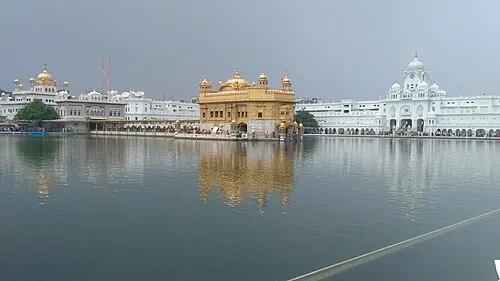 The Amrit Sarovar (Pool of Nectar)The Sacred Reservoir
The scale of the Amrit Sarovar is truly impressive when viewed from the edge of the surrounding courtyard. This sacred reservoir is nearly a perfect square, measuring approximately 154.5 meters by 148.5 meters. With a consistent depth of about 5.1 meters, it holds a massive volume of water, yet it remains remarkably clear. This clarity is maintained through a dedicated engineering system that has functioned for centuries. The pool is continuously fed by fresh water from the Ravi River, brought in via a specific canal system to ensure that the 'Nectar' remains pure and flowing. The courtyard surrounding the water provides a vast, open atmosphere, allowing thousands of people to gather without feeling crowded. This sense of space is vital to the experience of the Harmandir Sahib, emphasizing that the message of the Gurus is open to all of humanity without restriction. Standing here, you can feel the gentle breeze that often moves across the water, carrying the scent of the nearby gardens and the sound of distant prayers. The architecture of the surrounding buildings is designed to be subservient to the water and the central shrine, creating a wide-angle vista that directs your gaze inward toward the sacred center. It is a place where the grandeur of nature and the precision of human devotion meet in a quiet, powerful balance.
Listen in the appPhoto: Tejaskalyan · CC BY-SA 4.0
05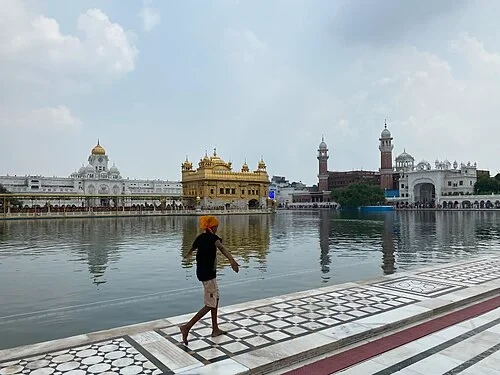 The Parikrama and Marble InlaysThe Parikrama Path
The wide walkway you are standing on is known as the 'Parikrama.' This marble path surrounds the entire pool, and visitors traditionally walk it in a clockwise direction. As you begin your journey around the water, pay attention to the sensory details. Feel the cool, smooth texture of the white marble beneath your feet. During the intense heat of the summer, you will notice long jute mats laid down along the path. These are regularly soaked with water by volunteers to protect the feet of pilgrims from the burning sun, a small but significant act of service that defines the culture here. As you walk, the air is filled with the constant, melodic sound of Gurbani—sacred hymns being sung inside the main temple and broadcast across the water. This soundtrack creates a rhythmic, meditative pace for your walk. The Parikrama is a place of incredible human diversity. On any given day, over 150,000 people from all over the world and all walks of life share this path. You might see families in vibrant clothing, elderly devotees deep in prayer, and curious visitors all moving together in a shared spirit of peace. This path isn't just a way to get from one point to another; it is a ritual in itself, a slow, intentional movement around the sacred center that allows for personal reflection and a sense of connection to the vast community surrounding you.
Listen in the appPhoto: Vinayaraj · CC BY-SA 4.0
06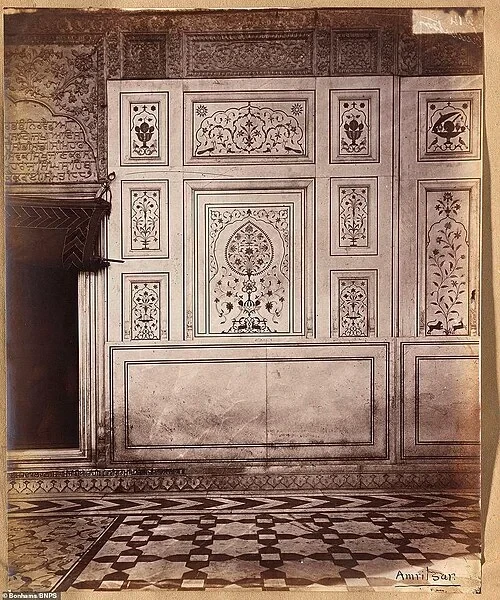 The Parikrama and Marble InlaysThe Art of Pietra Dura
As you pause along the marble walls of the complex, look closely at the intricate decorative details. You are seeing a masterclass in 'pietra dura,' a traditional marble inlay technique. This ancient art form involves carving out precise shapes in a slab of white marble and then embedding hand-cut semi-precious stones into the voids. The result is a smooth, vibrant pattern that appears to be part of the stone itself. These floral and geometric designs have been part of the temple's aesthetic for generations, representing a high point of craftsmanship in the region. The historical photograph you are viewing captures the timeless nature of this work. In 1888, Lockwood Kipling—father of the famous author Rudyard Kipling and a significant figure in the preservation of Indian arts—documented these very patterns. His work helped ensure that these traditional techniques were recognized and protected during the colonial era. By looking at these designs today, you are seeing the exact same artistry that captivated visitors over a century ago. These motifs aren't just decorative; they represent the flourishing of nature and the mathematical harmony of the universe. The stones used, which can include lapis lazuli, onyx, and mother-of-pearl, catch the light differently throughout the day, ensuring that the walls of the sanctuary seem to change with the movement of the sun.
Listen in the appJohn Lockwood Kipling · Public domain
07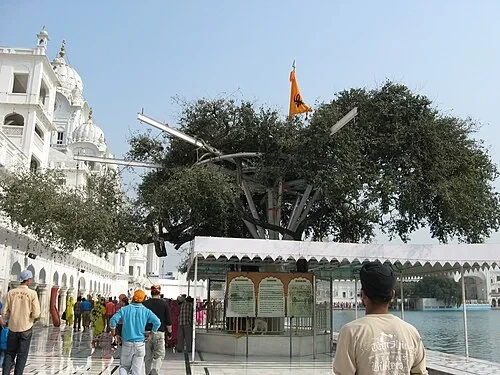 The Sacred Ber Trees (Dukh Bhanjani Ber)The Healing Tree
Standing on the edge of the Parikrama is an ancient, gnarled jujube tree known as the Dukh Bhanjani Ber. Its name translates to the 'Suffering Remover,' and it is central to one of the most beloved legends of this site. The story tells of a woman whose husband suffered from leprosy. While she was away looking for food, her husband rested near this tree. Legend says he saw a crow dip into the waters and emerge as a white swan. Taking this as a sign, he crawled into the water and was miraculously cured of his ailment. When his wife returned, she didn't recognize the healthy man standing there until the Guru confirmed the miracle. Today, the Dukh Bhanjani Ber remains a site of deep devotion. Its twisted, ancient branches are supported by a structure, but the tree itself continues to thrive, a living connection to the site's spiritual history. You will see many pilgrims pausing here to pray or take a ritual dip in the specific area of the pool near the tree, hoping for their own healing or peace of mind. The tree serves as a powerful symbol of the endurance of faith. Its weathered bark and resilient leaves stand in contrast to the polished marble around it, reminding visitors that the spiritual power of the Harmandir Sahib is rooted in ancient stories and the timeless hope for relief from suffering.
Listen in the appGabriele Giuseppini · CC BY 3.0
08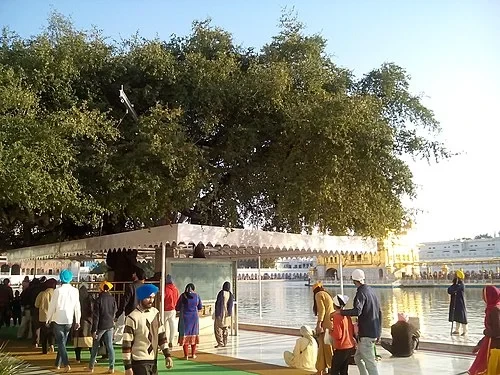 The Sacred Ber Trees (Dukh Bhanjani Ber)The Tree of Service
Another of the three sacred trees within the complex is the Ber Baba Buddha. This ancient jujube tree holds a special place in Sikh history, named after one of the most revered figures of the faith. Baba Buddha was a contemporary of the first six Sikh Gurus and lived to be over 100 years old. He was chosen by Guru Ram Das to supervise the original construction of the holy pool and the temple itself in the 16th century. Tradition holds that Baba Buddha would sit under the shade of this very tree while overseeing the labor of the devotees, often participating in the physical work himself. This tree provides a direct, physical link to the founding era of the Harmandir Sahib. While buildings can be renovated and gold can be reapplied, this living organism has stood as a silent witness to the passage of centuries. It has seen the rise of the Sikh Empire, the challenges of colonial rule, and the daily arrival of millions of seekers. The presence of these ancient trees within the polished marble courtyard highlights the Sikh respect for nature and the history of those who served the community. As you look at its sturdy trunk and shaded canopy, imagine the scene nearly 450 years ago, when the foundations were first being laid and the vision of this sanctuary was just beginning to take its physical form.
Listen in the appPhoto: Raavimohantydelhi · CC BY-SA 4.0
09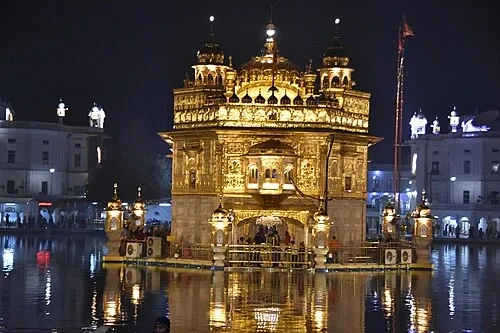 Guru Ram Das Langar (The Community Kitchen)The Guru Ram Das Langar
Beyond the spiritual rituals, the Harmandir Sahib is world-renowned for its practice of 'Langar,' or the free community kitchen. The Guru Ram Das Langar is the largest of its kind on the planet. It operates on a staggering scale, serving approximately 100,000 vegetarian meals every single day. During festivals and special occasions, that number can double. The most remarkable aspect of this operation is that it is open to absolutely everyone. Regardless of your religion, caste, nationality, or social status, you are welcome to sit on the floor and share a meal with thousands of others. This tradition is the ultimate expression of 'Sewa,' or selfless service. Almost everything you see—from the peeling of thousands of kilograms of garlic to the washing of countless metal plates—is done by volunteers. These individuals give their time freely as a form of worship, embodying the Sikh principle of radical equality. In the Langar hall, the barriers that often divide society disappear; a wealthy businessman might sit next to a laborer, both eating the same simple meal of dal, rotis, and rice. The atmosphere is one of humble efficiency and profound generosity. This kitchen ensures that no one who visits the Golden Temple ever goes hungry, turning the abstract idea of universal brotherhood into a tangible, daily reality of shared nourishment and mutual respect.
Listen in the appshankar s. from Dubai, united arab emirates · CC BY 2.0
10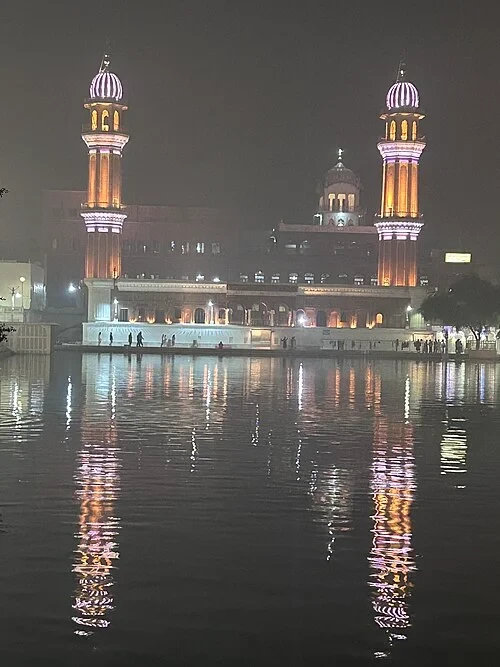 Ramgarhia Bunga (The Defense Towers)The Watchtowers of Defense
As you look toward the outer edges of the complex, you will see two prominent red sandstone towers rising above the white marble. These are the Ramgarhia Bunga. Built in the late 18th century, these watchtowers serve as a stark reminder that the history of this peaceful sanctuary has often been marked by conflict and the need for defense. During that era, the Sikh community faced frequent military raids and invasions, particularly from Afghan forces. These towers were constructed to provide a high vantage point for sentries to spot approaching threats and protect the sacred shrine from desecration. The architecture of the towers is distinctly different from the rest of the complex. Their rugged red sandstone and utilitarian design contrast sharply with the delicate gold and white marble of the main temple. This visual difference highlights their role as defensive structures. They are named after the Ramgarhia 'misl,' or clan, one of the powerful Sikh warrior groups of the time. While they are no longer needed for military purposes, they remain an integral part of the skyline. They stand as symbols of the resilience of the Sikh people and their historical commitment to protecting their faith and their most sacred site. The towers remind us that the peace found here today was often hard-won through the bravery and vigilance of past generations who stood guard over these waters.
Listen in the appPhoto: Harvinder Chandigarh · CC BY 4.0
Harmandir Sahib
Frequently asked questions
How much does the guide cost?
Free app download. Listed guide price: $1.99. Guide price shown in the app. Audio guide only. Venue admission is separate.
Can I listen without internet?
Yes. Download the guide’s audio, images, and maps in the app before your visit. Your downloaded content is then available offline.
Can I listen in my language?
Stanza supports 15 languages. Check the app for the languages available for this guide.
Do I need to follow a schedule?
No. This is a self-guided experience. Choose your stops, pause whenever you like, and return to a story at your own pace.
At your own pace
Explore Harmandir Sahib.
Download Stanza, then search for “Harmandir Sahib”.
Free app download · Guide price shown in the app
Keep exploring
Nearby audio guides
Agra
Agra Fort
Content & sources
Photo: A.Savin · FAL
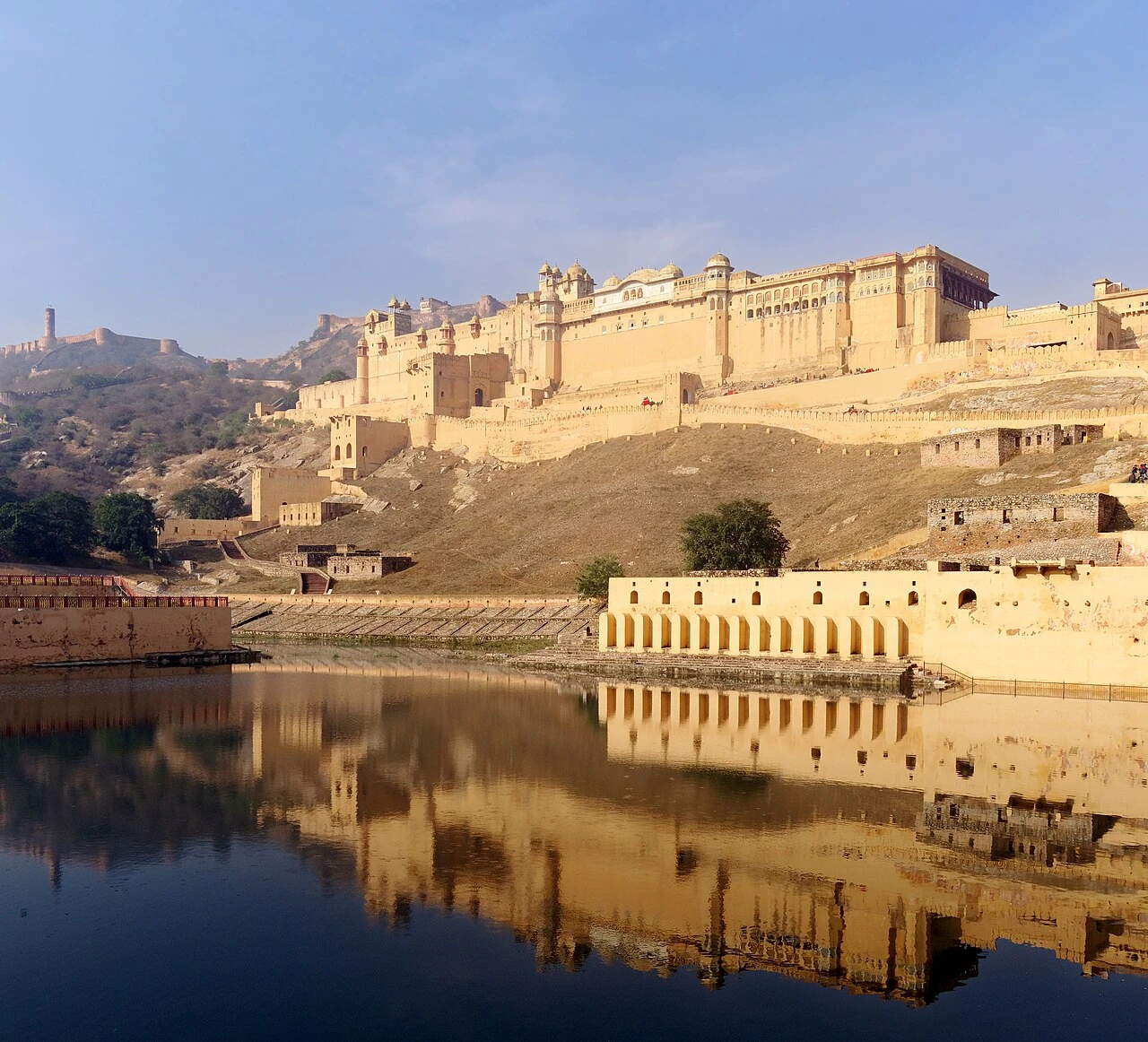
Jaipur Municipal Corporation
Amber Fort
Content & sources
Jakub Hałun · CC BY-SA 4.0
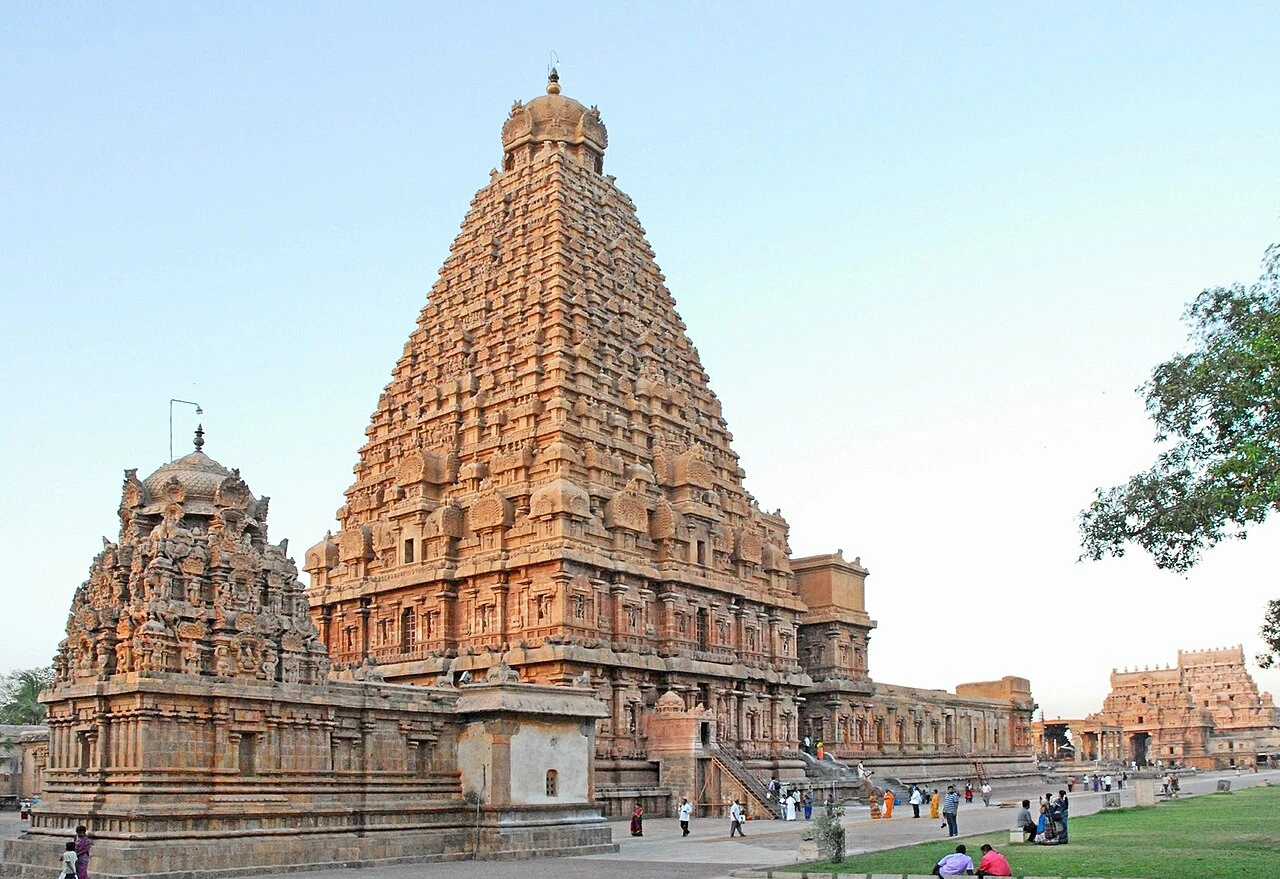
Thanjavur
Brihadisvara Temple
Content & sources
Jean-Pierre Dalbéra from Paris, France · CC BY 2.0
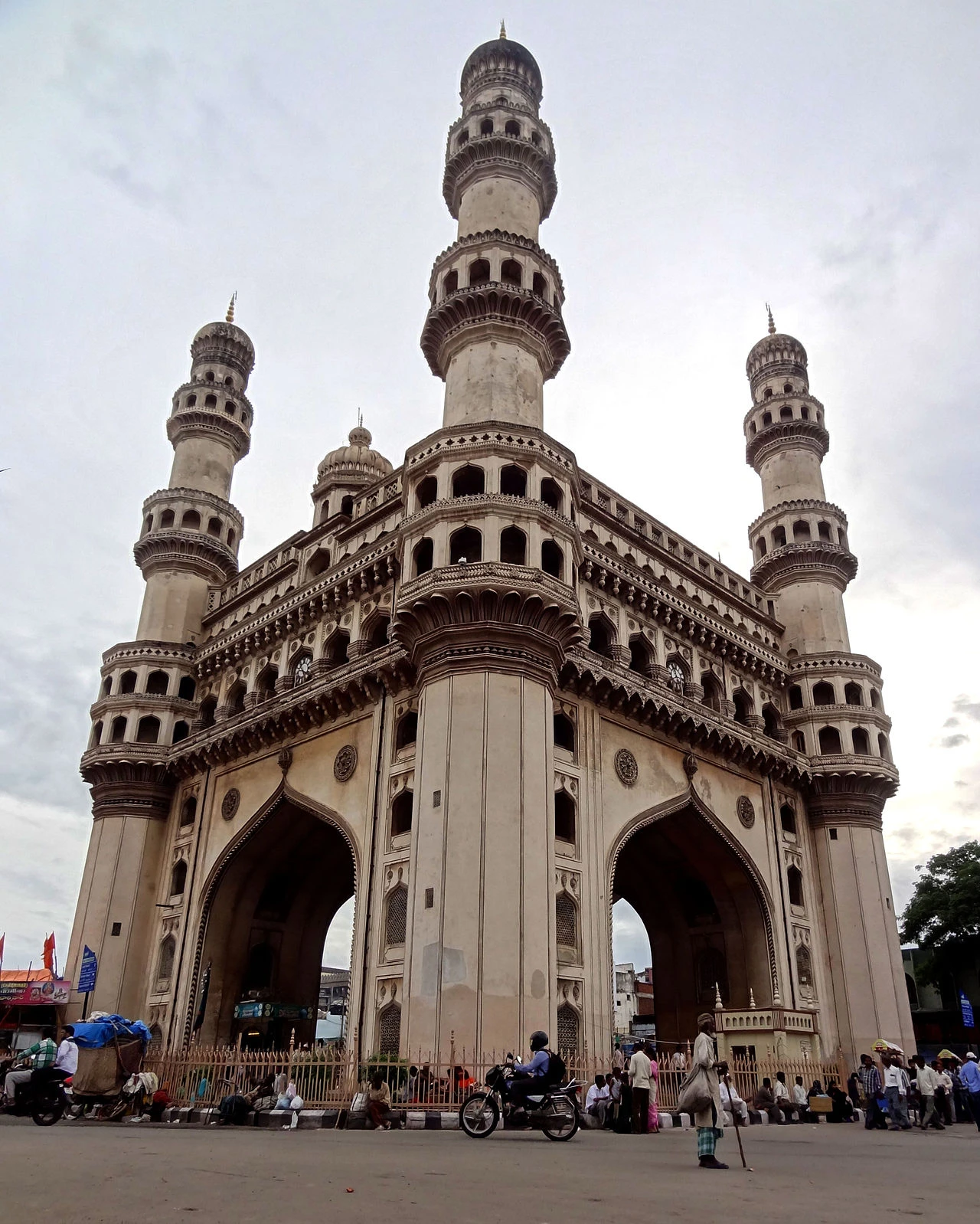
Hyderabad
Charminar
Content & sources
Gopikrishna Narla · CC BY-SA 3.0