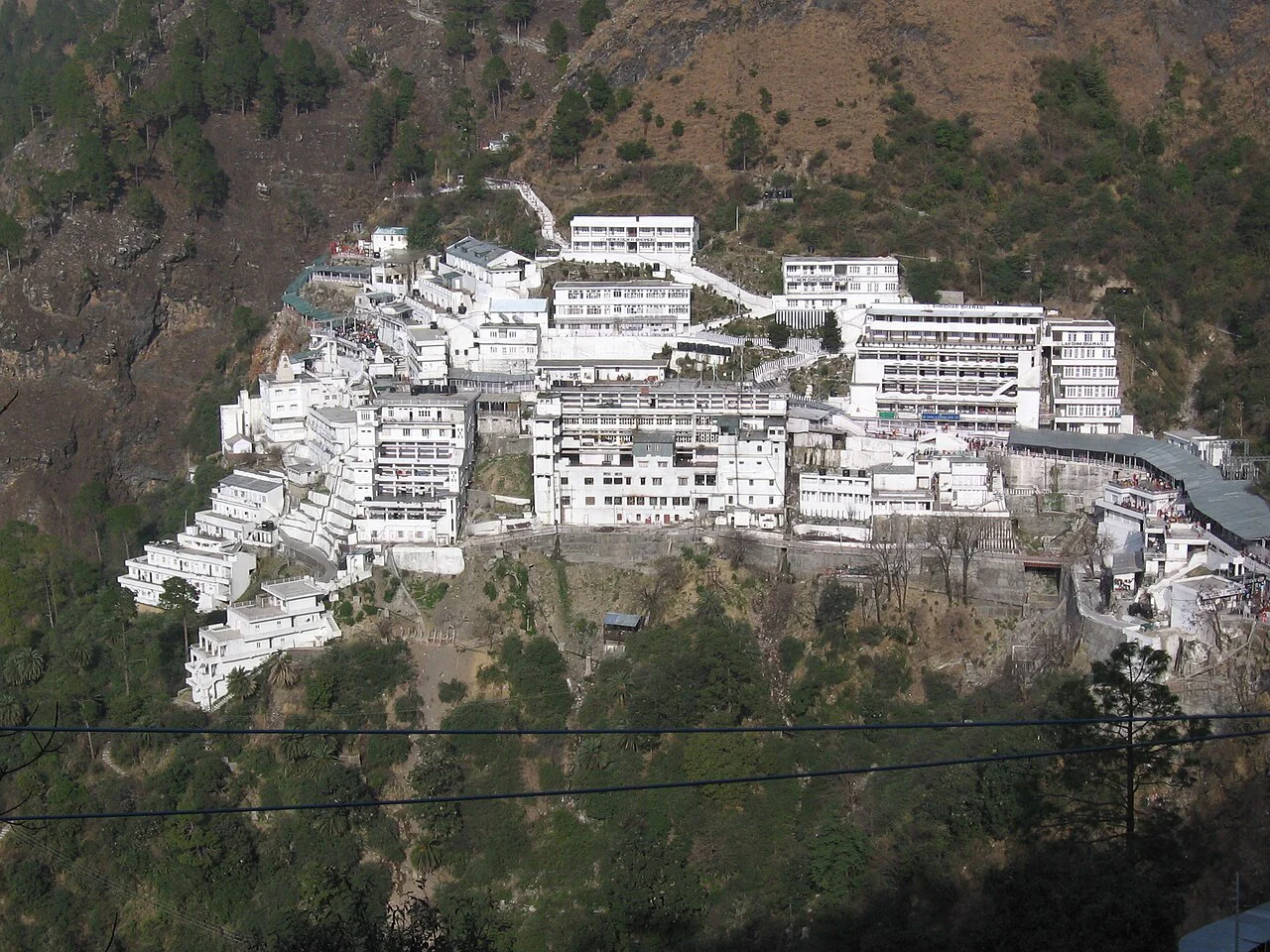
Stanza · Audio guide
Vaishno Devi Temple Audio Guide
A place to remember. A story to take with you.
The Vaishno Devi Temple is a Hindu temple located in Katra, Jammu and Kashmir. It is dedicated to Vaishno Devi, a manifestation of the goddesses Mahakali, Mahalakshmi, and Mahasarasvati.
Download Stanza, then search for “Vaishno Devi Temple”.
About the tour
One guide. Your kind of visit.
The Vaishno Devi Temple is a Hindu temple located in Katra, Jammu and Kashmir. It is dedicated to Vaishno Devi, a manifestation of the goddesses Mahakali, Mahalakshmi, and Mahasarasvati.
Ready when you are.
- 01Get the free Stanza app.
iOS & Android
- 02Find your guide.
“Vaishno Devi Temple”
- 03Download before you go.
Works offline
Audio guide / 7 narrated stops
Inside the guide
Get to know a few of the stories before you go. Open a stop to read more.
01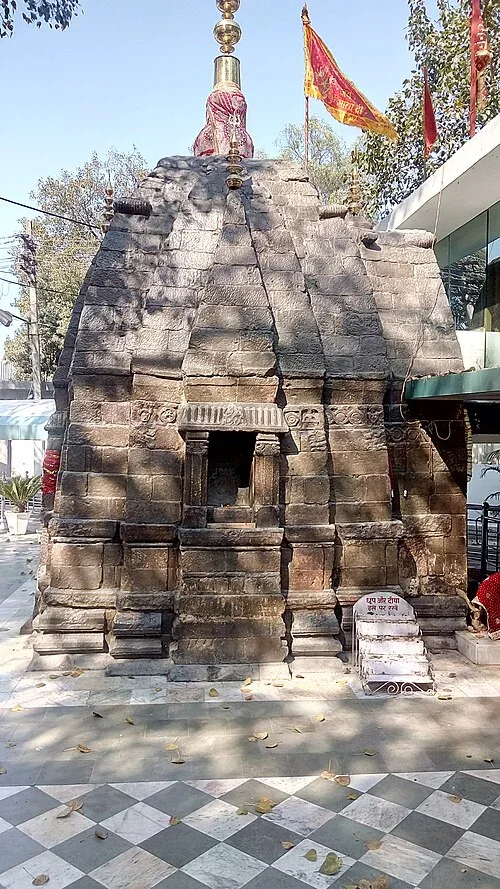 Kol Kandoli: The Traditional Pilgrimage Gateway
Kol Kandoli Temple: The Pilgrimage's Ancient Gateway
Welcome to the story of Vaishno Devi, a cave shrine of the goddess high on Trikuta mountain in the hills of Jammu. This old carved stone temple at Kol Kandoli is the traditional first station of the pilgrimage. The Mahabharata, the great account of the Pandavas and the Kurukshetra War, already speaks of the worship of Vaishno Devi. Before that war, Krishna is said to have advised Arjuna to climb into the hills of Jambhu, the ancient name for Jammu, and seek her blessings. Pleased by his devotion, the goddess appeared to him as Vaishno Devi. Arjuna praised her in verse as free from decay, the Mother of the Vedas, and the giver of victory itself. Former Governor Jagmohan held that the shrine's antiquity reaches even further back, before the Mahabharata itself. Tradition credits the Pandavas with founding the first temples here at Kol Kandoli and at the Bhawan, in gratitude to the goddess. On a neighbouring peak of Trikuta, five stone structures are said to stand for the five brothers.
Photo: Devika Robin Singh · CC BY-SA 4.0
02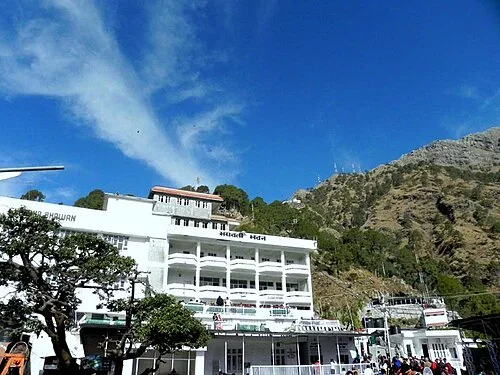 Ardhkuwari: The Midway Sanctuary
Halfway up the climb to the Bhawan, the route pauses at Ardhkuwari. The name marks a narrow cave in the rock called Garbhjun, whose twisting passage is shaped like a womb. The story goes that the goddess hid here and meditated for nine months, while the tantric Bhaironath pursued her through the mountains. How that pursuit ended is told at the Bhaironath temple near the summit. Pilgrims stop at Ardhkuwari to rest and to pass through the cave. The shrine buildings crowd close against the mountain wall, a sign of how many people gather at this one halt. For many, it is the middle of the journey in more than distance.
Photo: Nikhilchandra81 · CC BY-SA 3.0
03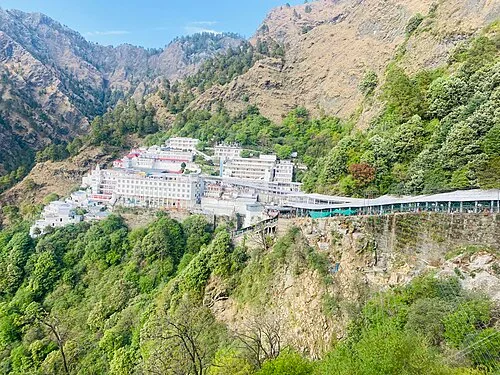 The Sacred Bhawan Complex
The Trail to the Bhawan
The climb from Katra to the Bhawan runs about twelve kilometres up Trikuta hill. The Bhawan sits at roughly 1,585 metres. Early on the trail come two sacred waypoints, Banganga and Charan Paduka, where pilgrims traditionally pause. The Trikuta Hills are made of limestone formed in the Precambrian era, and geologists put the holy cave close to a million years old. The Rigveda, the oldest of the Vedic hymns, also mentions Trikuta hill. Devotees hold that no one makes this journey unless the goddess herself calls. The call is the bulava, and once it comes, a person need only take the first step. The rest of the pilgrimage, believers say, unfolds through her grace.
Listen in the appPhoto: Erdeepakjangra · CC0
04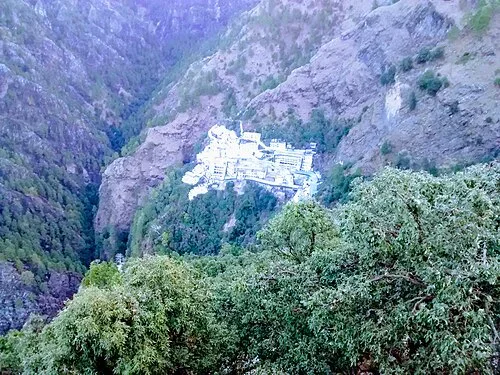 The Sacred Bhawan Complex
The Bhawan: A Shrine Transformed
High on the mountainside, the Bhawan complex spreads across its shelf of rock. The story of its management begins with a priest. Around the tenth century, the story goes, the cave shrine was revealed to Pandit Shridhar, a Brahmin of the village of Hansali near Katra, and the goddess was worshipped there as Trikuta Devi. In 1007 Raja Kirpal Dev granted a patta, a formal deed, to the Baridars, recognised as Shridhar's descendants, giving them the right to manage the shrine and keep its offerings. In 1846 Maharaja Gulab Singh placed the temple under the Dharmarth Trust, which stayed with his heirs. In 1986 Governor Jagmohan transferred control to the Shri Mata Vaishno Devi Shrine Board, which paved the routes and built facilities for the crowds. The Board's count for 2023 came to 9.52 million pilgrims.
Listen in the appPhoto: Erdeepakjangra · CC0
05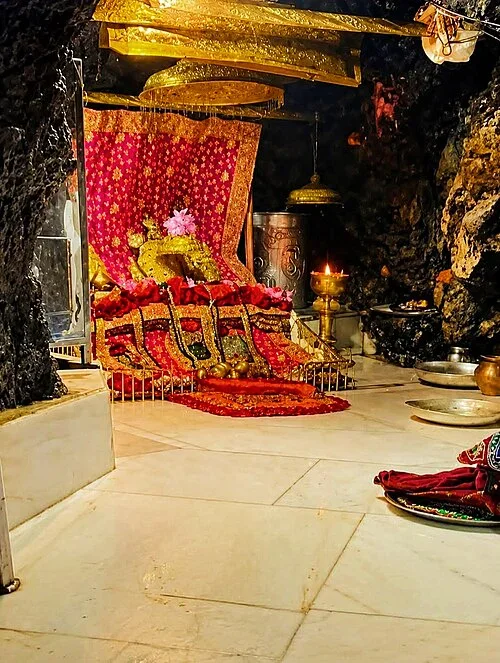 The Holy Cave and Devotional Sanctum
The Holy Cave and the Three Pindis
The destination of the whole pilgrimage is a natural cave in the limestone, about thirty metres long. Pilgrims enter along a narrow passage, wading through clear water ankle to calf deep. That stream is the Charan Ganga, believed to flow from near the pindis. The goddess here is not sculpted. Three rounded rock formations, self-manifested, are revered as Mahakali, Mahalakshmi and Mahasaraswati. Near them rises a natural formation read by devotees as the goddess's own hand, raised in the gesture that grants boons. That hand is why the cave counts among the Shakta pithas, the sacred seats of the divine feminine. Two traditions compete over how it earned that rank. One says the skull of Sati fell here. Another says her right arm, though some scriptures place that arm at Gandarbal in Kashmir.
Listen in the appPhoto: Narayan00 · CC BY-SA 4.0
06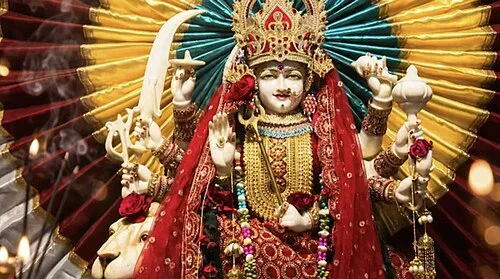 The Holy Cave and Devotional Sanctum
The Goddess in Form: Worship at the Bhawan
At the Bhawan the goddess is also served in sculpted form. Icons of Mahakali, the goddess of destruction, Mahalakshmi of wealth, and Mahasaraswati of intellect stand for worship, all images of Vaishno Devi. Their feet are washed with water carried up from the Charan Ganga. Ritual fire burns in the havan, the offering of the fire ceremony. The great festival is Navaratri, nine nights in September or October celebrating the goddess's victory over evil demons. The cave area is decorated for it, and pilgrims arrive in their greatest numbers. The scholar Diana L. Eck describes the goddess taking residence on Trikuta, the Triple Peak, where she hollowed out a cave with her trident.
Listen in the appPhoto: Junereads · CC BY-SA 4.0
07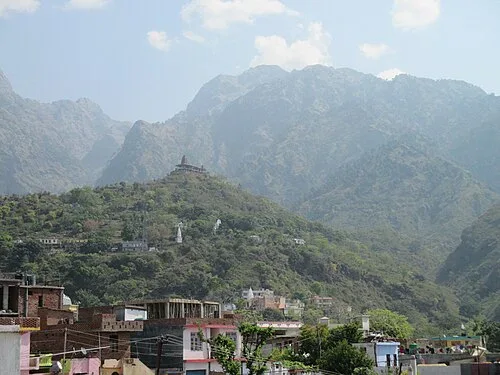 Bhaironath Peak: The Summit Circuit
Bhaironath Temple: The Summit Circuit
The last station of the yatra stands higher still, a temple on the ridge above the Bhawan. This is Bhaironath, and the pilgrimage is considered incomplete without climbing to it. The legend begun at Ardhkuwari ends here. The tantric Bhaironath pursued the goddess through the mountains and was slain at the entrance to her cave. Repenting on this peak, the story goes, he received her boon of eternal salvation. The condition was that every pilgrim would visit his shrine, so that his redemption would be shared by all who complete the journey. A cable car has carried pilgrims up this final stretch since 2018. Only when Bhaironath has been visited does the yatra count as whole.
Listen in the appPhoto: Billjones94 · CC BY-SA 4.0
Vaishno Devi Temple
Frequently asked questions
How much does the guide cost?
Free app download. Listed guide price: $0.99. Guide price shown in the app. Audio guide only. Venue admission is separate.
Can I listen without internet?
Yes. Download the guide’s audio, images, and maps in the app before your visit. Your downloaded content is then available offline.
Can I listen in my language?
This audio guide is available in 15 languages, including English.
Do I need to follow a schedule?
No. This is a self-guided experience. Choose your stops, pause whenever you like, and return to a story at your own pace.
At your own pace
Explore Vaishno Devi Temple.
Download Stanza, then search for “Vaishno Devi Temple”.
Free app download · Guide price shown in the app
Keep exploring
Audio guides — India
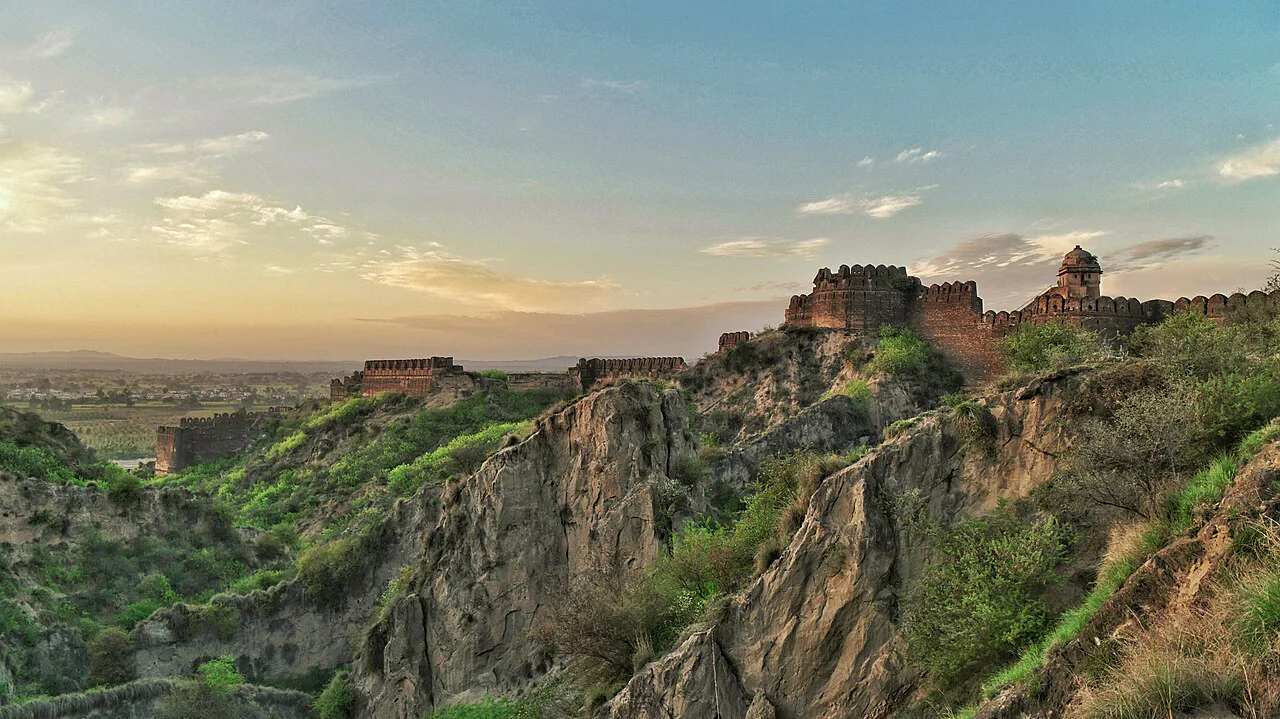
Dina Tehsil · 128 km
Rohtas Fort
Content & sources
Hussain Khalid · CC BY-SA 4.0
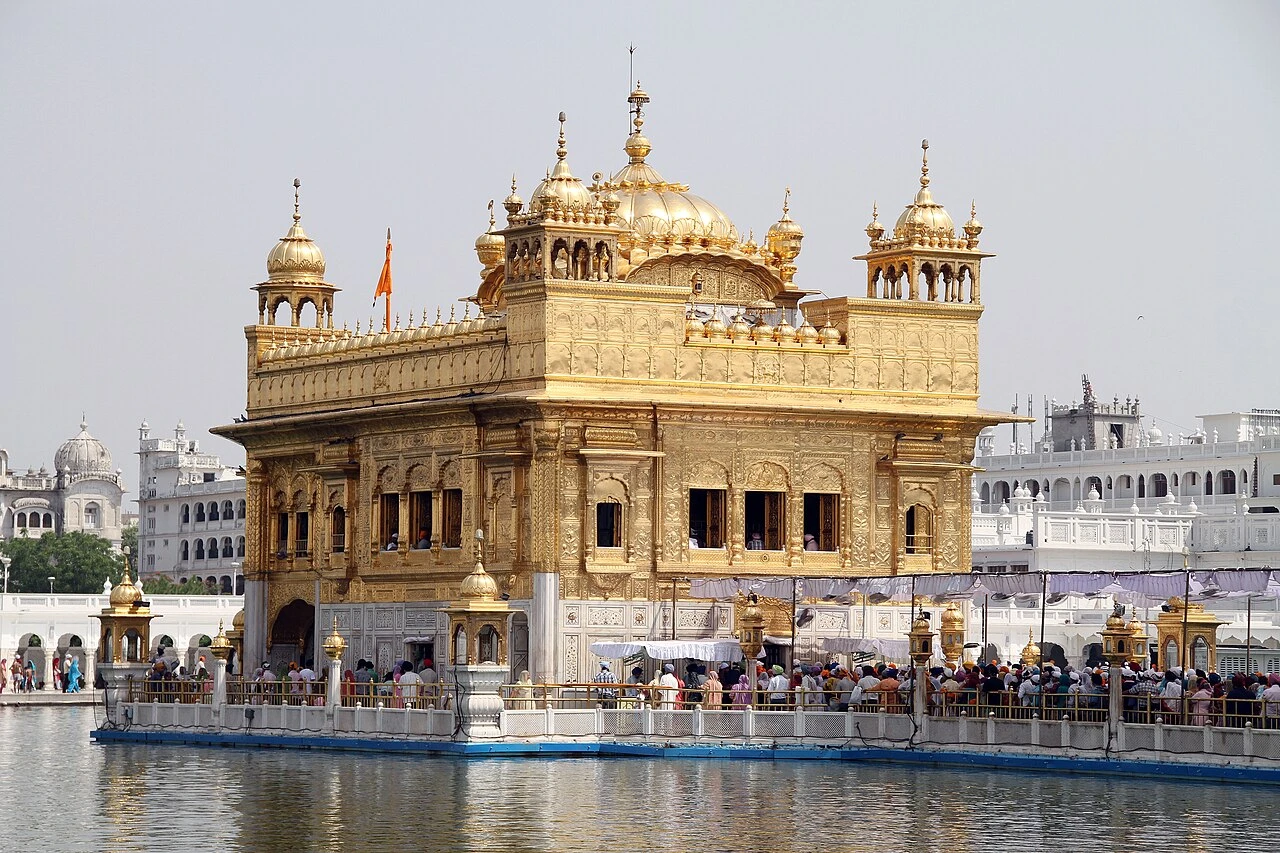
Amritsar
Harmandir Sahib
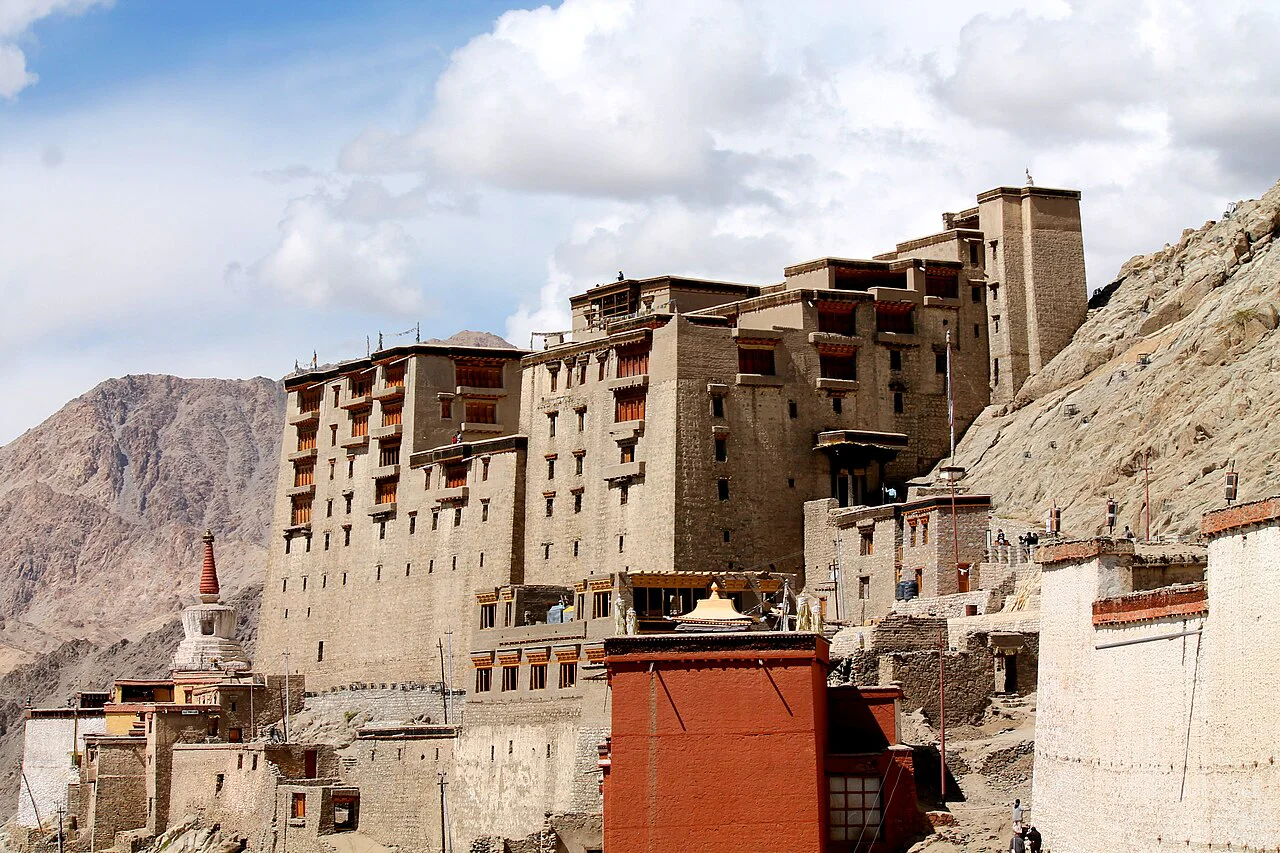
Leh
Leh Palace
Content & sources
Photo: RPSkokie · CC BY-SA 4.0
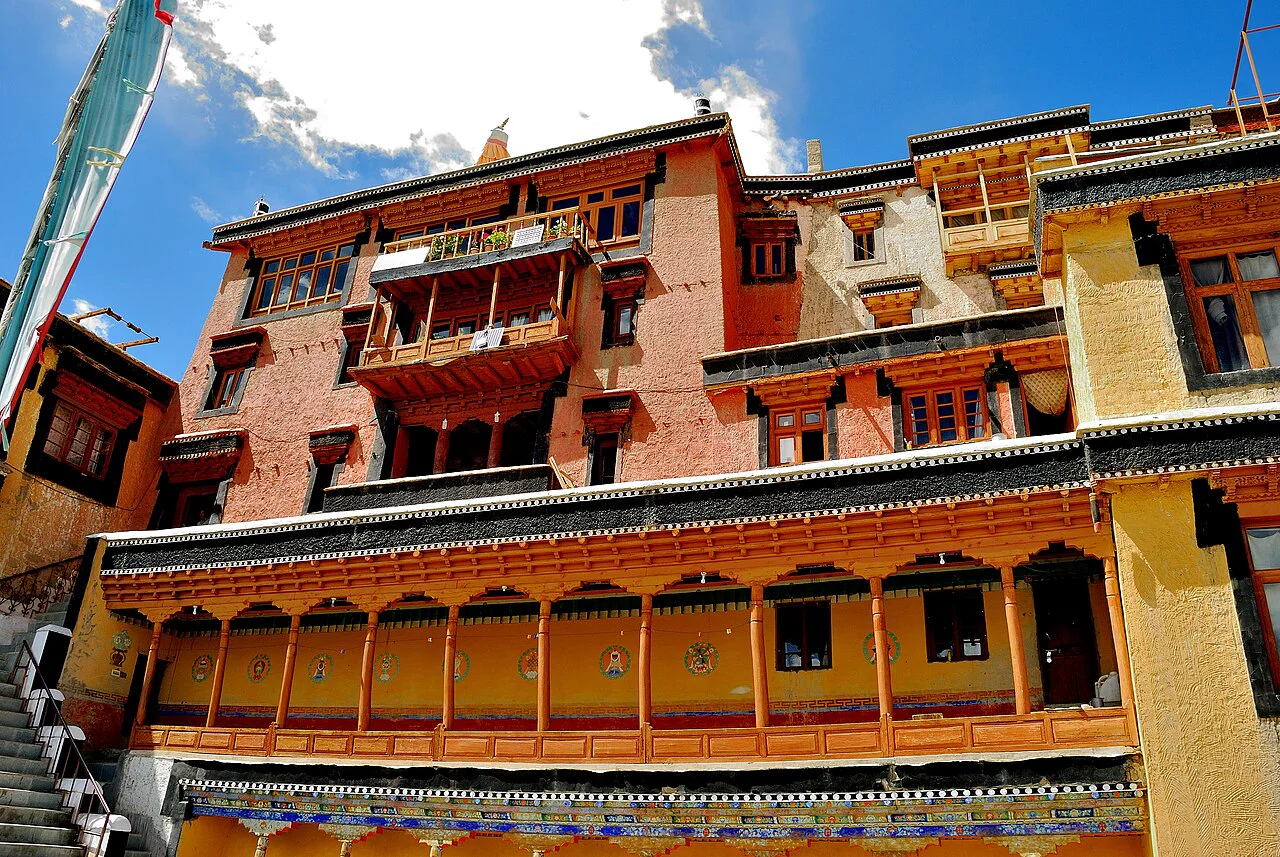
Leh district
Thikse Monastery
Content & sources
Photo: Shashank Mehendale · CC BY-SA 4.0