Stanza · Audio guide
Tulum Archaeological SiteAudio guide
A place to remember. A story to take with you.
The Maya Ruins of Tulum is an ancient archaeological site and protected area located on the Caribbean coast of Quintana Roo, Mexico.
Download Stanza, then search for “Tulum Archaeological Site”.
About the tour
One guide. Your kind of visit.
The Maya Ruins of Tulum is an ancient archaeological site and protected area located on the Caribbean coast of Quintana Roo, Mexico.
Ready when you are.
- 01Get the free Stanza app.
iOS & Android
- 02Find your guide.
“Tulum Archaeological Site”
- 03Download before you go.
Works offline
Audio guide / 10 narrated stops
Inside the guide
Get to know a few of the stories before you go. Open a stop to read more.
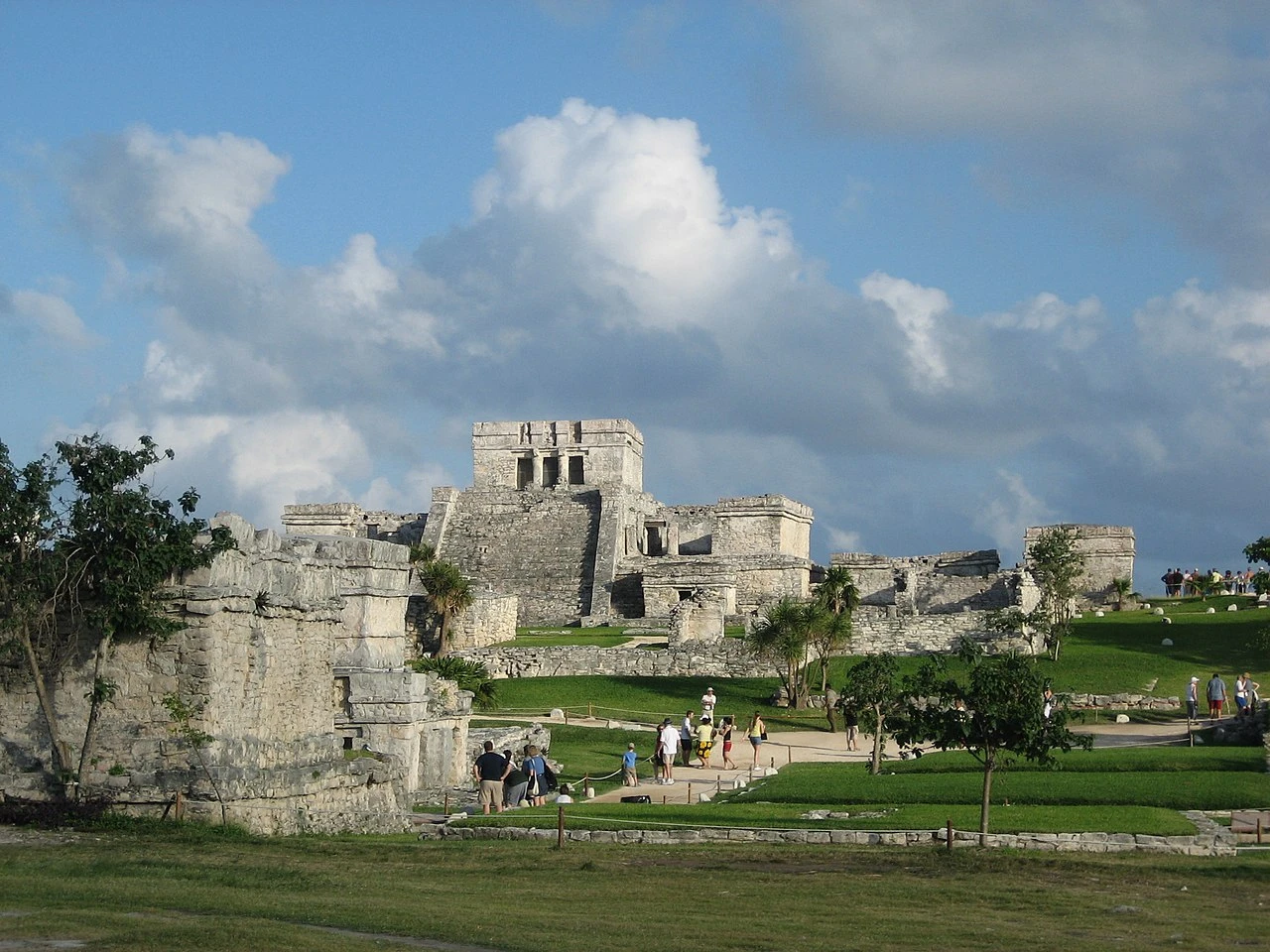
01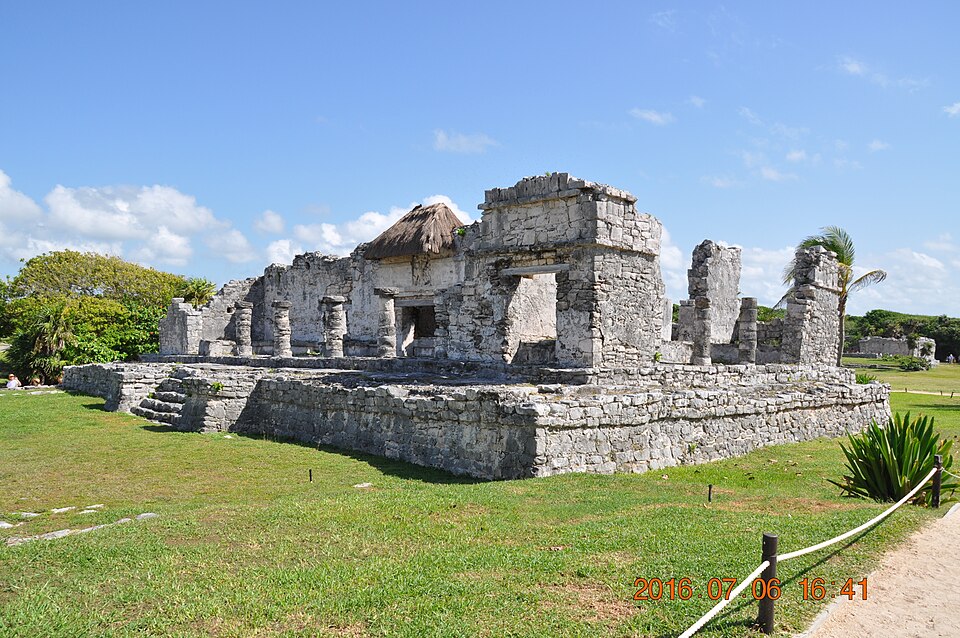 The Great Wall and EntranceTulum National Park
Welcome to the archaeological zone of Tulum, once a thriving maritime hub known to the ancient Maya as Zama, or the City of Dawn. This area served as the residential and administrative core for the city's ruling class. Notice the L-shaped building featuring a series of sturdy stone columns. These pillars once supported a massive flat roof, a departure from the traditional Maya corbel arch. This architectural choice allowed for the creation of wide, open interior spaces, a hallmark of the 'International Style' prevalent during the late Postclassic period. High-ranking nobles occupied these structures, sitting on stone benches inside to receive foreign dignitaries and oversee the complex network of maritime trade. Nearby, you might see remains of thatched roofs; archaeologists use contemporary Maya building techniques to better understand how these ancient structures were originally topped and maintained. These buildings provided the backdrop for a sophisticated political life where decisions made within these walls echoed across the Caribbean coast.
Photo: FABIENNE TOMASCHEWSKI · CC BY-SA 4.0
02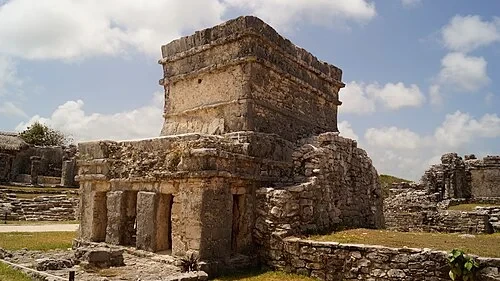 Temple of the FrescoesTemple of the Frescoes
The Temple of the Frescoes is a prime example of architectural evolution in the Maya world. Instead of demolishing old buildings, the residents of Tulum often 'wrapped' them inside new, larger ones. This specific temple was constructed in three distinct stages. Its upper level sits back from the lower facade, creating a tiered effect reminiscent of a wedding cake. This design served a crucial function beyond aesthetics; the temple was used as an observatory to track celestial movements. Monitoring the sun and stars was vital for scheduling agricultural cycles and navigating the perilous waters during maritime trade expeditions. The building’s boxy, heavy appearance was a deliberate engineering choice. Its low center of gravity and thick walls were designed to withstand the intense hurricane seasons that frequently batter this coastline. Over centuries, it functioned as both a gallery of religious art and a sophisticated tool for timekeeping, ensuring the city remained in sync with both the gods and the changing seasons.
Photo: Lievanomx · CC BY-SA 3.0
03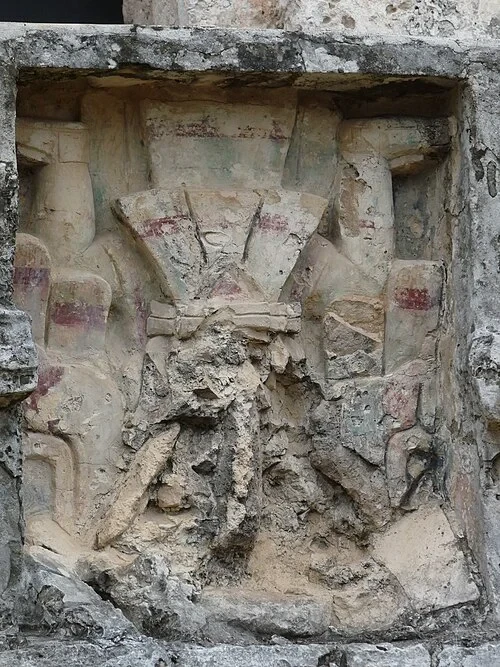 Temple of the FrescoesDiving God Sculpture
In a niche directly above the doorway sits the 'Diving God,' the most famous and enigmatic icon at Tulum. This figure is carved in a striking, upside-down pose, with its feet kicked up in the air and hands reaching toward the ground. Scholars have debated the identity of this deity for decades, proposing three main theories. Some believe it represents Ah Muzen Cab, the god of bees, which was vital for the region's honey production. Others suggest it depicts the sun descending into the underworld at dusk, or perhaps the planet Venus. This specific deity is rarely seen elsewhere, making it a distinct symbol of the Caribbean Maya. If you look closely at the protected corners of the relief, you can still find traces of the original red and blue pigments that once made this carving a vivid centerpiece. The figure’s downward trajectory may also symbolize the descent of rain or light, connecting the celestial world with the fertile soil below.
Listen in the appPhoto: El Comandante · CC BY-SA 3.0
04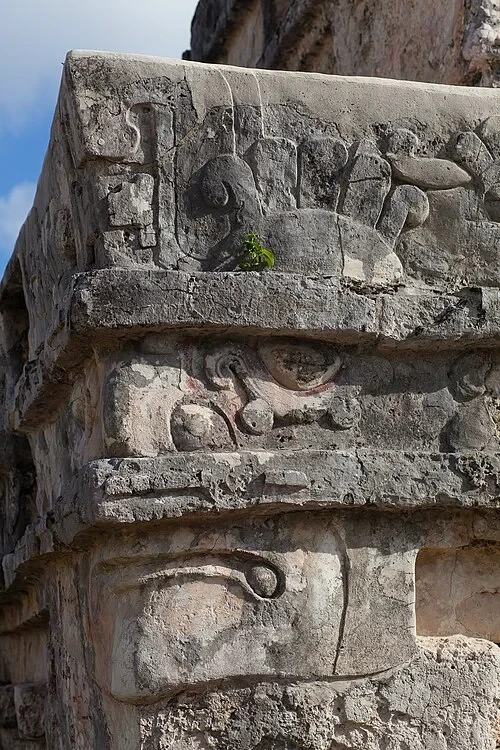 Temple of the FrescoesMasks of the Sun God
Weathered stone faces known as the Masks of the Sun God emerge from the masonry at the corners of this structure. These carvings depict Kinich Ahau, the Maya deity associated with the sun. You can still distinguish the large, almond-shaped eyes and the remnants of earspools, which were traditional indicators of divinity and status. During the city's peak, these masks were not the muted stone color you see today. They were coated in vibrant, garish pigments—predominantly red—making them visible to sailors navigating the barrier reef far out at sea. These monumental faces were positioned specifically to catch the first rays of the morning light. This orientation honors the city's original name, Zama, which translates to 'City of the Dawn.' For the ancient Maya, the daily emergence of the sun was a powerful symbol of renewal and cosmic order. These masks acted as permanent guardians, watching over the city and the horizon while asserting Tulum's identity as a sacred gateway to the eastern sea.
Listen in the appGreg Willis from Denver, CO, usa · CC BY-SA 2.0
05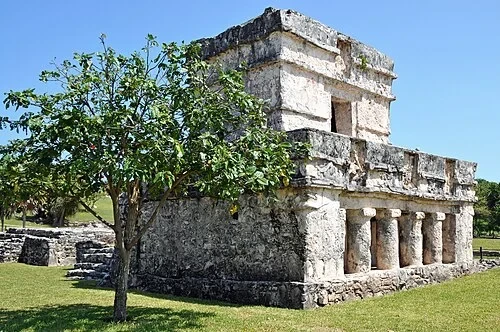 Temple of the FrescoesTemple of the Frescoes
While the great Castillo towers over the site, the Temple of the Frescoes served as the administrative and artistic brain of Tulum. This structure was far more than just a place of worship; it functioned as both an observatory and a gallery. Although the interior murals are now protected to prevent further decay, they once depicted three distinct levels of the Maya universe: the underworld of the dead, the middle world of the living, and the celestial realm of the gods. The building's exterior is densely decorated, making it the artistic heart of the archaeological site. Notice the heavy stone lintels spanning the doorways. These massive blocks were essential for supporting the considerable weight of the upper temple levels. By combining bureaucratic functions with deeply religious art, this building reinforced the authority of the ruling class. It stood as a physical representation of the Maya worldview, where the movements of the stars were inextricably linked to the laws of the land and the rituals of the people.
Listen in the appDennis G. Jarvis · CC BY-SA 2.0
06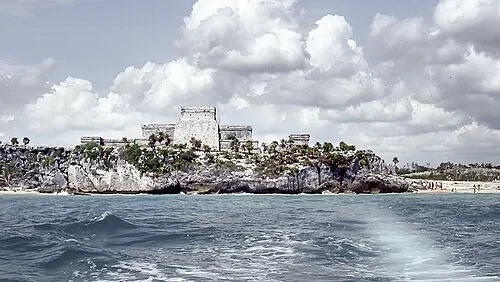 El Castillo (The Castle)The Castle
The massive building known as the Castillo occupied a critical role in Tulum's survival as a maritime powerhouse. Beyond its religious importance, it functioned as a vital lighthouse. Tulum is situated behind the second-largest barrier reef in the world, a geological feature that is notoriously difficult and deadly for navigators to cross. To ensure safe passage, Maya priests would place bright torches in the upper windows of the temple. These fires were not merely for decoration; they were part of a clever engineering system. When a sailor positioned their canoe so that the two lights lined up vertically, they knew they had found the narrow, safe channel through the reef. This allowed trade vessels to reach the harbor without being dashed against the rocks. This early navigational aid transformed Tulum into one of the wealthiest trade hubs in the Yucatan Peninsula. By controlling safe access to the coast, the city's leaders ensured a constant flow of exotic goods and solidified their influence over the regional economy.
Listen in the appPhoto: Monster4711 · CC BY-SA 3.0
07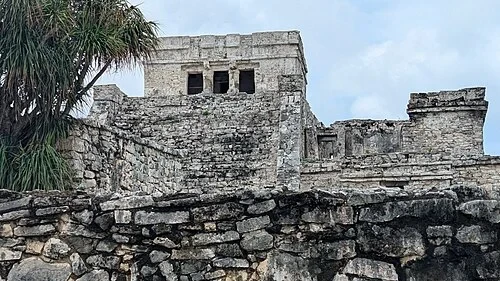 El Castillo (The Castle)The Great Castle
Standing as the tallest structure in Tulum, the Castillo was the ultimate symbol of the city's political and religious power. Its massive central staircase leads directly to a sanctuary perched high above the plaza. In 1518, the Spanish explorer Juan de Grijalva sailed past this coast and was so impressed by the sight of this tiered fortress that he compared its scale and beauty to the city of Seville. Tulum’s defensible location and strong walls allowed it to remain the last great Maya city to fall to Spanish conquest. Look toward the top entrance to see two serpent columns representing Kukulcan, the feathered serpent god. These pillars frame the entryway where the most sacred rituals took place. The base of the stairs functioned as a stage for public ceremonies, ensuring that every citizen gathered in the plaza below had a clear view of their leaders and the gods they served. The height of the building wasn't just for defense; it elevated the elite above the common people, reinforcing the social hierarchy that governed the city.
Listen in the appedenpictures · CC BY 2.0
08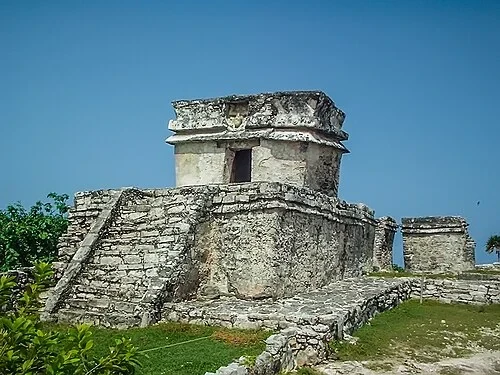 Temple of the Wind GodTemple of the Wind
The area surrounding the Temple of the Wind served as an inner sanctum, a space strictly reserved for the city's religious and political elite. A massive wall separated this sacred plaza from the commoners living outside. Unlike many other Maya settlements, Tulum was meticulously planned on a rigid grid system. Wide, white stone roads known as 'sacbe' connected the various buildings, facilitating movement and ritual processions. In the center of the plaza, you can see smaller altar platforms. These weren't for major ceremonies but were used for everyday offerings of incense, food, or smaller sacrifices. The orientation of every structure here was precisely calculated to align with the movements of the sun. This was especially important during the equinoxes, when light and shadow play across the masonry in predetermined patterns. This level of planning demonstrates the sophisticated mathematical and astronomical knowledge of the city's builders. It ensured that the city's architecture remained in constant, harmonious alignment with the celestial cycles that the Maya believed governed their world.
Listen in the appJuan Pablo M. Bastida · CC BY-SA 3.0
09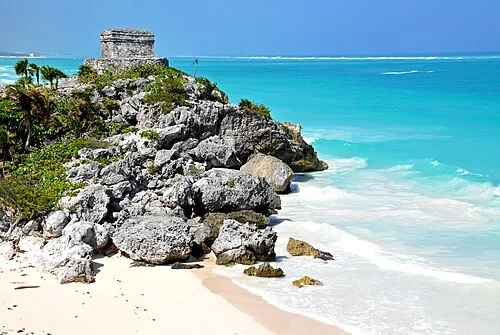 Temple of the Wind GodTemple of the Wind God
Perched precariously on the edge of the northern cliffs is the Temple of the Wind God, recognizable by its unique circular base. Circular buildings are quite rare in Maya architecture and were almost exclusively dedicated to Ehécatl, the God of Wind. According to local legend, the building’s design incorporated specific holes in the masonry. When winds reached a high velocity, these openings would create a loud, piercing whistling sound. This functioned as a natural alarm system, warning the inhabitants of incoming hurricanes well before the storms made landfall. The architecture here perfectly integrates with the environment, following the natural curve of the limestone rock beneath it. By blending man-made masonry with the jagged coastal geography, the Maya acknowledged the power of the natural elements they sought to propitiate. The temple’s location offered an unobstructed view of the horizon, allowing priests to monitor both the weather and any approaching maritime traffic. This connection between divine worship and practical survival was a fundamental aspect of life in this coastal outpost.
Listen in the appDennis G. Jarvis · CC BY-SA 2.0
10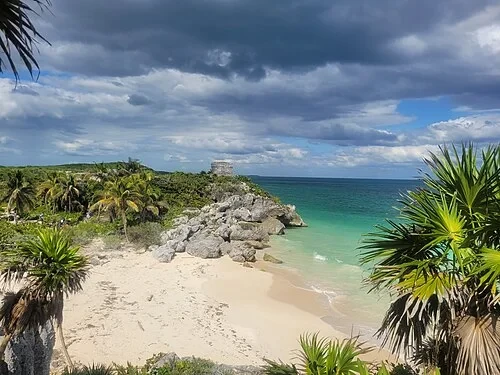 Tulum Beach (The Port of Zama)Tulum Beach
The small beach cove nestled below the cliffs was the literal engine room of Tulum's economy. This sandy strip was the primary arrival point for massive trade canoes, some stretching over fifty feet long. Carved from single mahogany trees, these vessels were capable of carrying heavy loads across long distances. Traders would beach their craft here, unloading valuable goods from as far away as the Guatemalan highlands and Central America. They brought obsidian for tools, precious jade, and cacao beans, which the Maya used as a form of currency. During its heyday, this beach would have been a scene of intense activity, filled with the sounds of different dialects as merchants bartered over their cargo. This cove was the gateway that connected the inland Maya heartland to the vast network of the Caribbean Sea. By securing this landing site, Tulum established itself as a middleman in the flow of exotic resources, transforming a small coastal settlement into a wealthy and influential port of trade that thrived until the arrival of European explorers.
Listen in the appErik Cleves Kristensen · CC BY 2.0
Tulum Archaeological Site
Frequently asked questions
How much does the guide cost?
Free app download. Listed guide price: $1.99. Guide price shown in the app. Audio guide only. Venue admission is separate.
Can I listen without internet?
Yes. Download the guide’s audio, images, and maps in the app before your visit. Your downloaded content is then available offline.
Can I listen in my language?
Stanza supports 15 languages. Check the app for the languages available for this guide.
Do I need to follow a schedule?
No. This is a self-guided experience. Choose your stops, pause whenever you like, and return to a story at your own pace.
At your own pace
Explore Tulum Archaeological Site.
Download Stanza, then search for “Tulum Archaeological Site”.
Free app download · Guide price shown in the app
Keep exploring
Nearby audio guides
Tinum
Chichén Itzá
Content & sources
Daniel Schwen · CC BY-SA 4.0
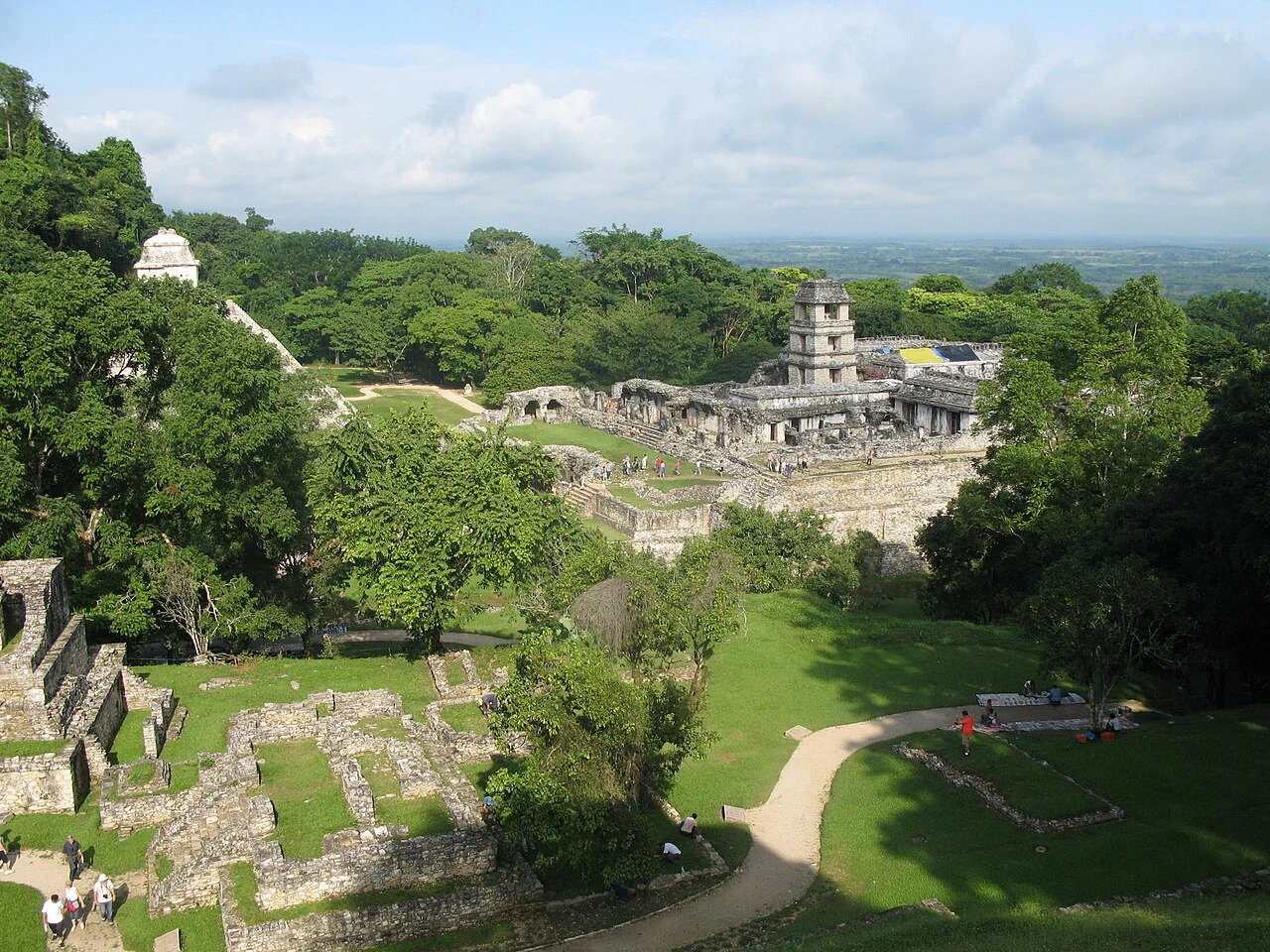
Palenque
Palenque
Content & sources
Ljuba brank at Slovenian Wikipedia · CC BY-SA 3.0
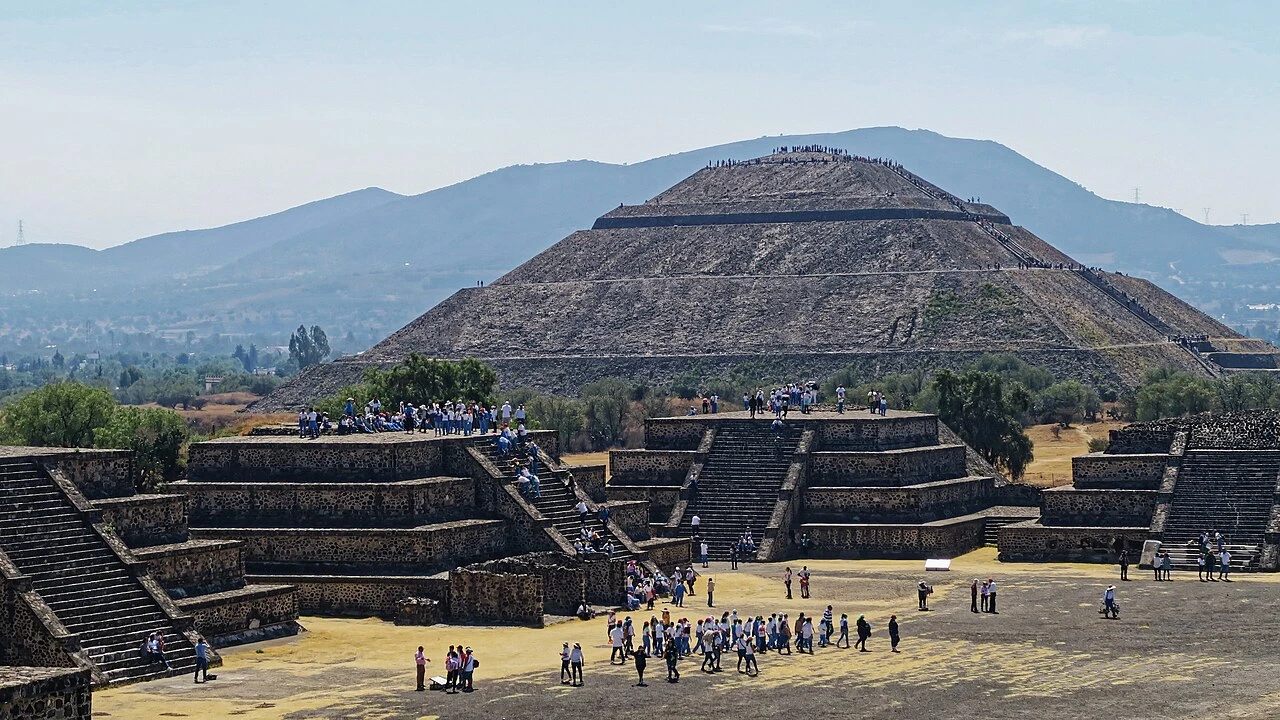
San Francisco Mazapa
Teotihuacán
Content & sources
Burkhard Mücke · CC BY-SA 4.0
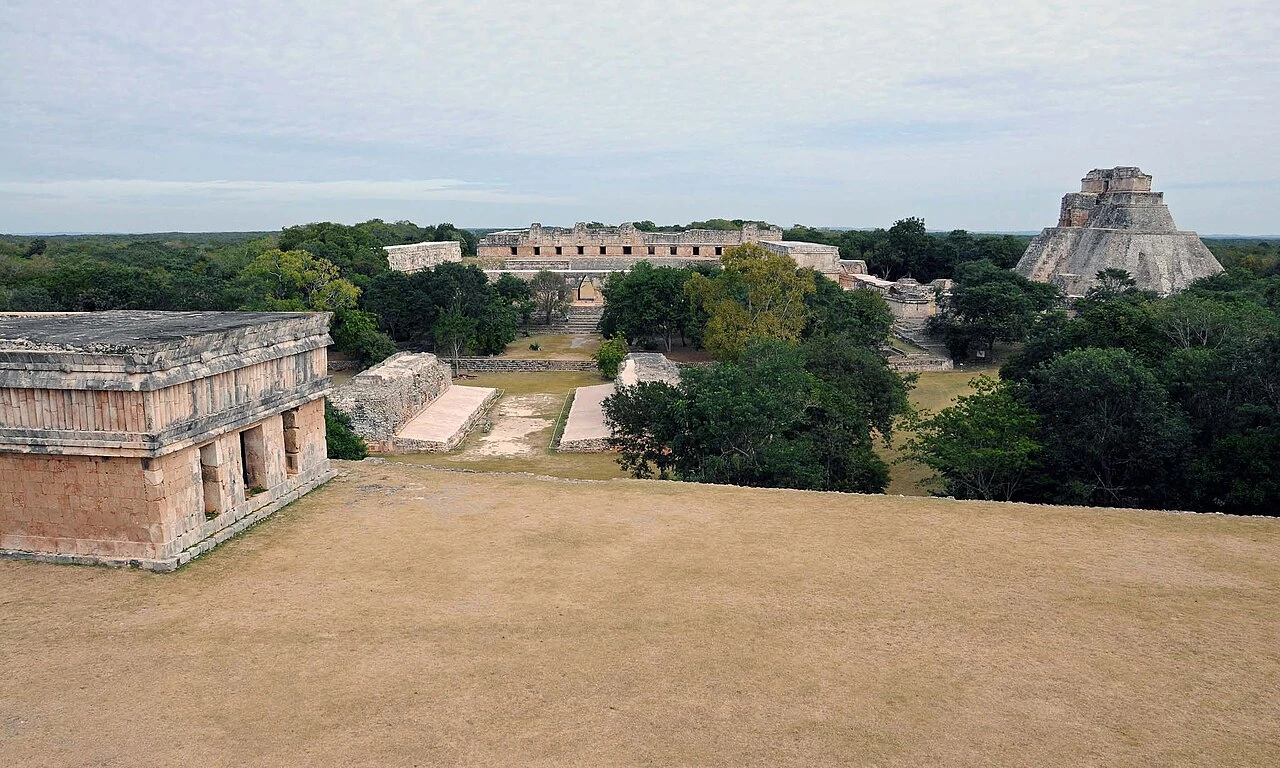
Uxmal
Uxmal
Content & sources
Photo: Adrian Hernandez · CC BY-SA 4.0