Stanza · Audio guide
Manastir OstrogAudio guide
A place to remember. A story to take with you.
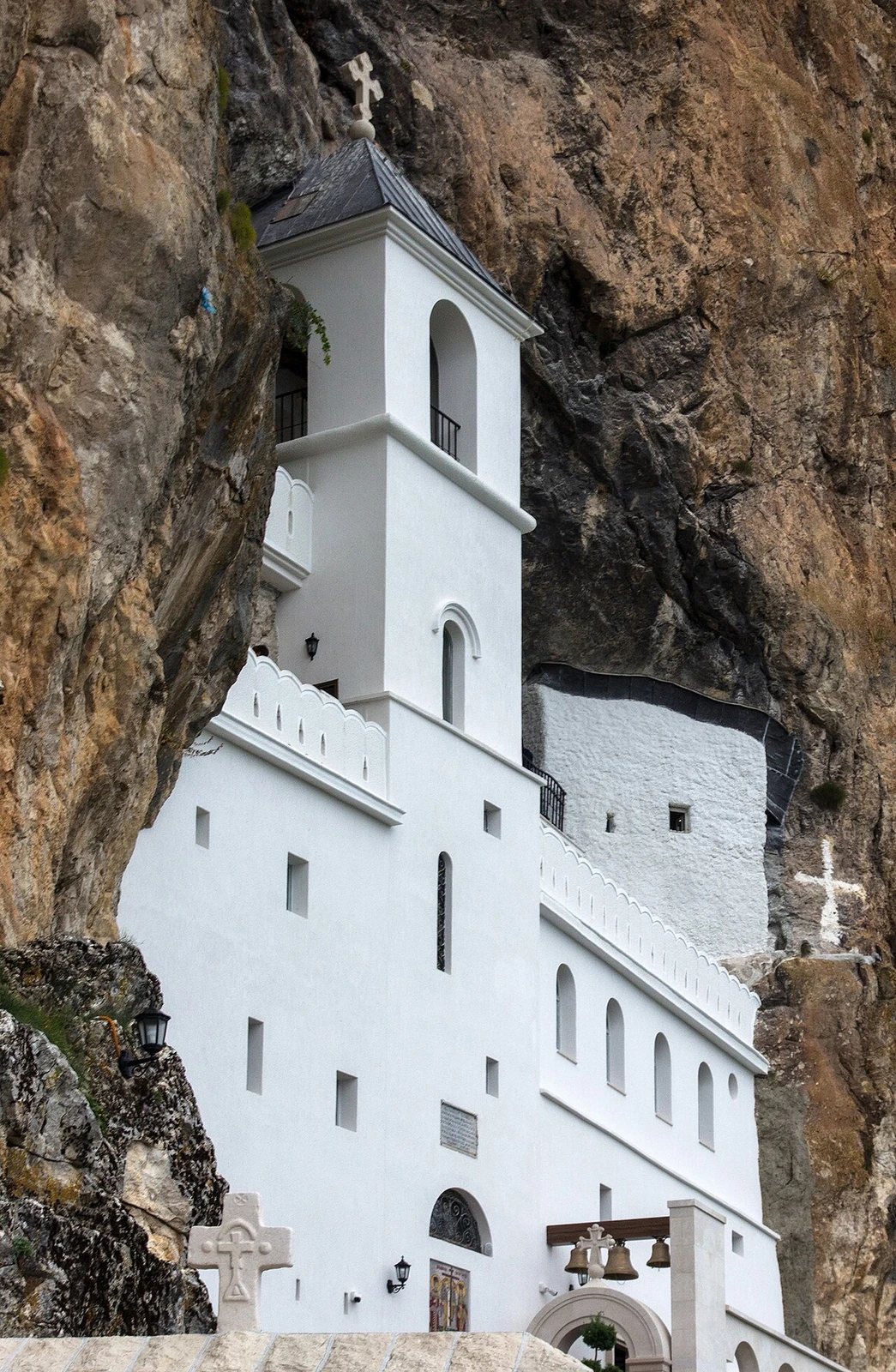
Ostrog Monastery is a prominent monastery of the Serbian Orthodox Church, renowned for its construction within a large rock outcrop. It is an important pilgrimage site.
Download Stanza, then search for “Manastir Ostrog”.
About the tour
One guide. Your kind of visit.
Ostrog Monastery is a prominent monastery of the Serbian Orthodox Church, renowned for its construction within a large rock outcrop. It is an important pilgrimage site.
Ready when you are.
- 01Get the free Stanza app.
iOS & Android
- 02Find your guide.
“Manastir Ostrog”
- 03Download before you go.
Works offline
Audio guide / 10 narrated stops
Inside the guide
Get to know a few of the stories before you go. Open a stop to read more.
01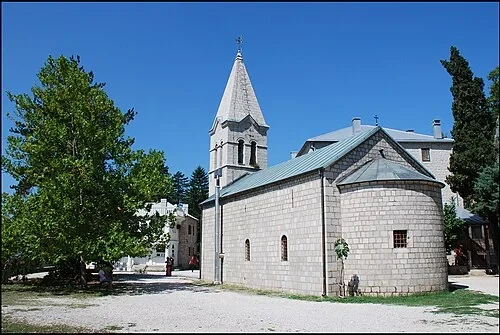 The Lower Monastery (Donji Manastir)Lower Monastery Courtyard
Welcome to one of the most significant pilgrimage destinations in the Balkans, founded by Metropolitan Vasilije Jovanović, known today as Saint Basil of Ostrog. Located roughly 50 kilometers from Podgorica, the monastery occupies a dramatic position high above the valley floor. What makes Ostrog particularly unique is its role as a multi-confessional site; it is common to see Orthodox, Catholic, and Muslim pilgrims gathered here together, all seeking healing or spiritual peace. The Lower Monastery area where we begin acts as the primary living quarters and administrative center for the monastic community. Here, the monks maintain the daily traditions and hospitality that have welcomed visitors for over four centuries. From this starting point, the complex stretches upward into the cliffs, transitioning from the residential buildings of the lower grounds to the ancient cave sanctuaries of the upper monastery. As you look around the courtyard, you can see the white stone walls of the various dormitories and administrative buildings where the permanent community resides throughout the year. It is here that the spiritual journey for many visitors begins before they ascend to the heights.
Дмитрий Мозжухин · CC BY 3.0
02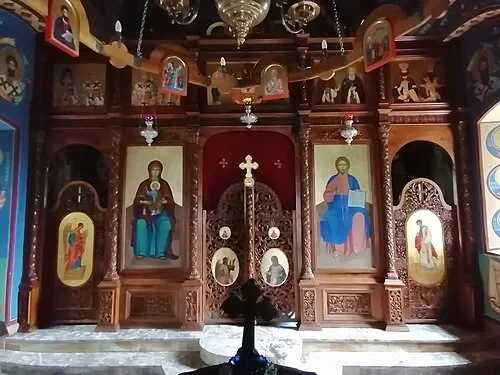 Church of the Holy TrinityHoly Trinity Church Interior
Completed in the early 19th century, this church serves as the liturgical heart for the monks living in the lower complex. Your eyes will likely be drawn to the iconostasis, a grand wall of icons and intricate woodwork that serves a vital theological purpose. It separates the nave, where the congregation stands, from the sanctuary, representing the boundary between the earthly and the divine. The craftsmanship of the wood carving here reflects the traditional styles preserved by the monastic community over generations. This interior space offers a quiet, contemplative atmosphere before pilgrims begin the arduous journey to the upper heights. The permanent monastic community conducts regular services here, maintaining a continuous cycle of prayer that has remained unbroken since the monastery's founding. Notice how the candle-lit interior illuminates the various figures of saints and biblical scenes, creating a sense of timelessness. This building was established long after Saint Basil's time but remains essential to the modern functioning of the site. The church stands as a bridge between the administrative facilities of the courtyard and the more ancient, rugged cave churches located high above in the rock face.
Photo: Andrija12345678 · CC BY-SA 4.0
03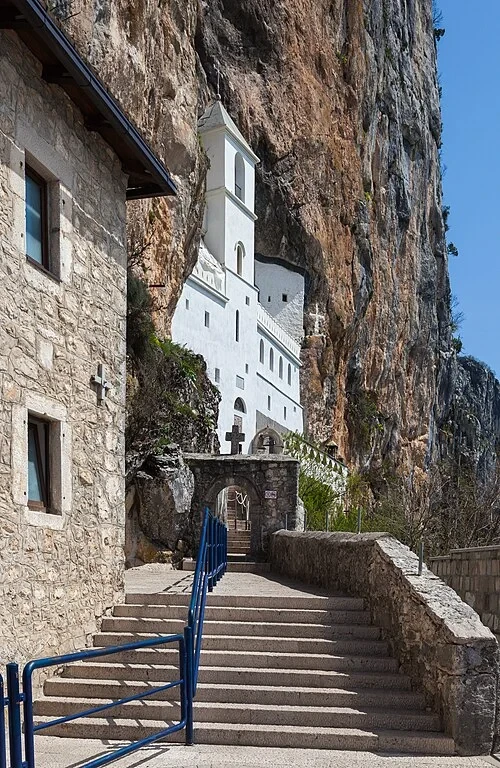 The Pilgrimage PathThe Pilgrim's Ascent
The winding path connecting the lower and upper monasteries is more than just a road; for many, it is a spiritual exercise. While vehicles can make the trip, the 3-kilometer tradition of walking—sometimes without shoes—remains a powerful part of the Ostrog experience. This journey allows for reflection as the landscape shifts from the leafy lower grounds to the stark, vertical cliffs. Although the monastery's origins reach back to the 1600s, much of the current stone architecture and pathways you see today were finalized during a comprehensive restoration between 1923 and 1926. This massive project was necessary following a devastating fire that damaged many of the original structures. The restoration successfully preserved the ancient character of the site while ensuring it could safely accommodate the growing number of visitors. The sheer rock walls begin to close in as you climb, emphasizing the isolation that Saint Basil originally sought. The path is often lined with vendors and fellow travelers, creating a communal atmosphere of shared effort and anticipation. Small rest areas along the way provide views of the valley, showing just how far the ascent has taken you. Many pilgrims use the stone steps to navigate the final, steepest portions of the climb.
Listen in the appDiego Delso · CC BY-SA 3.0
04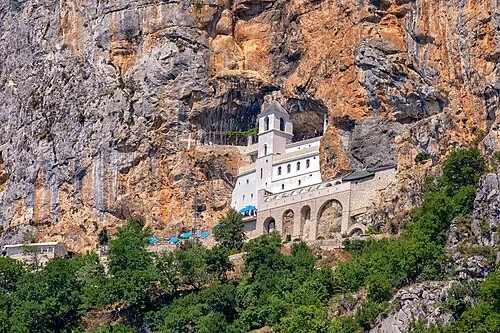 The Upper Monastery and Ostroška GredaThe Cliffside Sanctuary
The Upper Monastery is a marvel of integration, where human architecture meets the raw power of nature. Built directly into the massive 'Ostroška Greda' cliff, the sanctuary utilizes natural cave formations as its foundation. Saint Basil personally oversaw the initial construction in the 17th century, choosing this site for its defensive advantages. During the era of Ottoman expansion, this vertical rock face provided a natural fortress that was incredibly difficult for invading forces to reach. The white-washed walls you see now contrast sharply with the dark, jagged stone of the mountain, making the monastery visible from miles away in the Bjelopavlići plain. By utilizing existing caves, the builders minimized the need for extensive external walls, effectively tucking the holy spaces into the mountain’s embrace. This strategic positioning protected the monks and the sacred relics within from both the elements and historical conflicts. The building doesn't just sit against the rock; it is literally a part of it, with many interior rooms having walls of solid, unpainted stone. The narrow windows were designed as much for defense as for light, offering strategic viewpoints over the approach path below where travelers first emerge from the woods.
Listen in the approm@nski photo · CC BY 2.0
05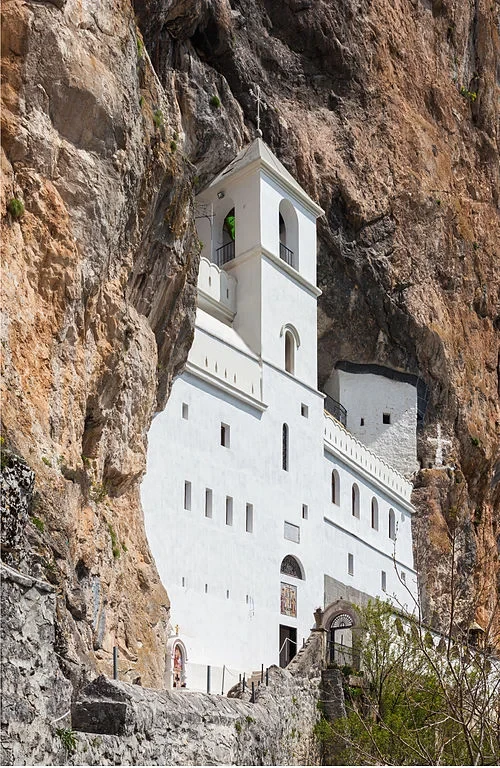 The Upper Monastery and Ostroška GredaThe White Upper Monastery
Gornji Manastir, or the Upper Monastery, contains the most sacred sites at Ostrog, including the Church of the Presentation and the Church of the Holy Cross. These small, intimate chapels are built inside natural caverns, keeping the environment cool and somber even in the height of summer. The exterior is defined by its stark white walls, which stand out against the orange and grey hues of the surrounding cliffside. Every year on May 12th, thousands of people gather here to celebrate the monastery's main feast day, which marks the anniversary of Saint Basil’s death in 1671. The narrow windows piercing the facade reflect the building's defensive origins, casting slender beams of light into the dark, stone-walled interiors. Inside the Church of the Presentation, pilgrims often wait in long lines to pay their respects at the reliquary of the saint. The space is tight and hushed, forcing a slow, respectful pace as you move through the rooms. The jagged ceiling of the cave remains visible in many places, reminding visitors that they are deep within the mountain itself. Stone steps worn smooth by centuries of footsteps lead between the different levels of this vertical complex, connecting the small chapels to the living quarters.
Listen in the appDiego Delso · CC BY-SA 3.0
06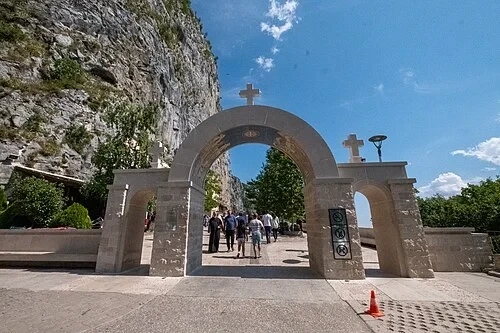 The Gate to the SanctuaryThe Entrance Gate
This stone arch serves as the gateway to the most revered section of Ostrog. Although the arch itself is a more modern addition to the complex, it maintains the traditional stone-working styles seen throughout the monastery. Look toward the top of the structure to see a series of crosses, which signify the sacred nature of the space beyond. Because this is an active site of deep religious significance, several security and informational signs are posted here. These remind visitors of the respectful dress code required for entry, such as covered shoulders and long trousers or skirts. Every year, more than 100,000 people from various backgrounds pass under this arch, making it one of the busiest religious portals in the region. The gate acts as a psychological boundary, where the noise of the journey up the mountain gives way to the quiet reverence of the sanctuary. The masonry is meticulously joined, reflecting the high level of care given to the site's ongoing maintenance. Once inside, the path narrows significantly, guiding you toward the cave churches and the balconies that cling to the side of the cliff. A small traffic cone often sits nearby to help manage the flow of pedestrians through the opening.
Listen in the approm@nski photo · CC BY 2.0
07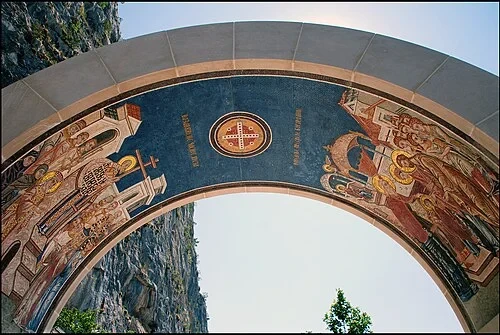 The Church of the PresentationThe Gateway Mosaics
The interior curve of the entrance gate features colorful mosaic artwork that adds a layer of narrative and beauty to your arrival. Among the figures depicted is Saint Basil himself, shown holding a small-scale model of the monastery he founded. This traditional way of depicting a founder or 'ktitor' emphasizes his role as the architect and protector of this holy site. Nearby, you can see the scene of the Annunciation, a central event in Christian tradition. The artists used gold-flecked tiles that catch and reflect the natural mountain light, making the images appear to glow against the blue and red backgrounds. This technique is common in Orthodox sacred art, intended to represent the divine light of heaven. The mosaics are carefully fitted to the arch's curvature, creating a vibrant ceiling that visitors walk beneath. Unlike the frescoes found deeper in the caves, these mosaics are exposed to the air but are protected from the rain by the arch itself. The use of durable tile ensures that the colors remain bright despite the high altitude and variable weather conditions. Each small piece of stone or glass contributes to the larger, detailed figures that greet every pilgrim.
Listen in the appДмитрий Мозжухин · CC BY 3.0
08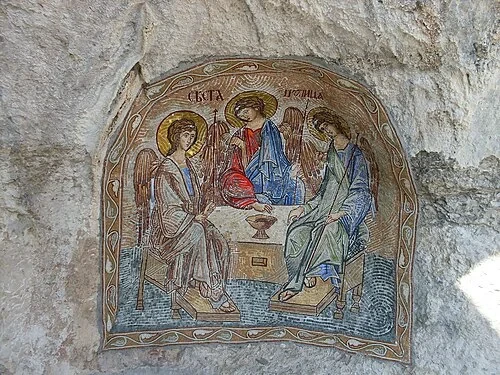 The Church of the Holy CrossThe Holy Trinity Rock Fresco
Within the cave churches, the distinction between nature and art becomes blurred. These frescoes, including the depiction of the Holy Trinity, were created by the 17th-century master artist Radul. Instead of building flat walls, the artist smoothed the natural rock surface just enough to apply pigment. This technique allowed the paintings to follow the jagged and irregular shapes of the mountain itself. You can see how the figures seem to emerge from the stone, making the church literally one with the earth. Over the centuries, the damp cave environment and the smoke from thousands of votive candles have aged the pigments, giving them a deep, weathered appearance. Radul was a prominent artist of his time, and his work here is considered a significant example of post-Byzantine art in the Balkans. The icons are not just decorations; they are windows into the spiritual world for the faithful who come here to pray. Notice how the halos and garments of the figures are still visible despite the centuries of exposure. This integration of the mountain's geology into the religious narrative is a hallmark of Ostrog's unique character. Small decorative borders frame the primary scenes, adapting to the uneven rock face.
Listen in the appОльга Коркина · CC BY-SA 4.0
09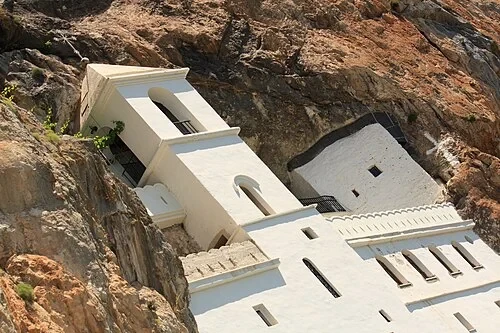 The Miracle Vine and TowerThe Miracle Vine Ledge
Just above the main monastery buildings, you can spot the green leaves of the legendary 'Miracle Vine.' According to local tradition, this grapevine began to grow from the sheer rock face at the exact spot where Saint Basil died in 1671. What makes it remarkable to believers and visitors alike is that it flourishes without any visible soil or a dedicated water source, clinging to the dry, vertical stone. Many see this as a sign of the saint’s enduring presence and a symbol of life flourishing in the most unlikely of places. The vine is located near the white bell tower, which sits perched precariously on a rocky outcrop. The tower's bells ring out across the valley, a sound that has signaled the hours of prayer for centuries. The contrast between the living greenery and the stark white masonry of the tower creates one of the most iconic views in the complex. Monks occasionally harvest the grapes, which are highly prized by the faithful. Looking at the vine from the balconies below, you can see how it has woven itself into the crevices of the mountain over time. A simple black railing provides safety for the monks who attend to the bells on the narrow ledge.
Listen in the appPhoto: FrDr · CC BY-SA 4.0
10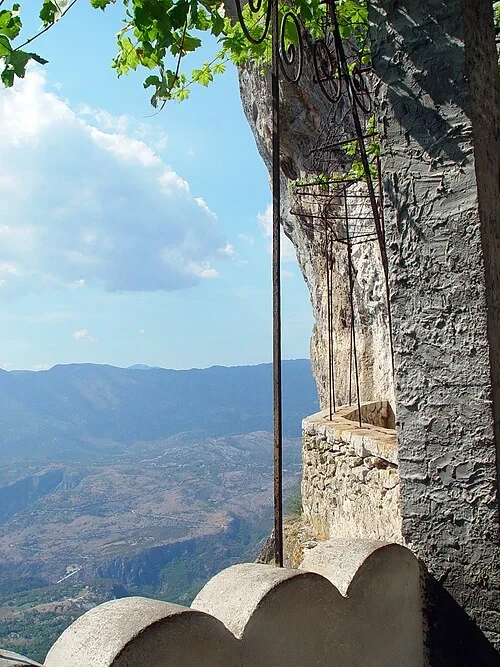 Viewpoint over Bjelopavlići PlainThe Bjelopavlici Plain Overlook
Standing on the upper balcony, the sheer height of the monastery becomes truly apparent. From this vantage point, the Bjelopavlići plain stretches out far below, with the Zeta River winding through the valley. For 400 years, this height has provided more than just a view; it offered safety and isolation for the monastic community. The sensation of being suspended between the earth and the sky is a key part of why so many find peace here. As you look down, you can trace the narrow, serpentine road that pilgrims use to reach the site. The landscape changes with the seasons, from the lush green of spring to the stark, snow-covered peaks in winter. This balcony is often the final stop for visitors before they begin their descent back to the lower monastery. It is a place for a final moment of reflection on the long history of healing and refuge associated with Saint Basil. The mountain air is often cooler here, even on hot days, carrying the scent of pine from the forests below. Small birds frequently dart in and out of the rock crevices near the balcony railings, while a few hardy grape leaves might dangle from the overhangs above.
Listen in the appPhoto: Etan J. Tal · CC BY 3.0
Manastir Ostrog
Frequently asked questions
How much does the guide cost?
Free app download. Listed guide price: $0.99. Guide price shown in the app. Audio guide only. Venue admission is separate.
Can I listen without internet?
Yes. Download the guide’s audio, images, and maps in the app before your visit. Your downloaded content is then available offline.
Can I listen in my language?
Stanza supports 15 languages. Check the app for the languages available for this guide.
Do I need to follow a schedule?
No. This is a self-guided experience. Choose your stops, pause whenever you like, and return to a story at your own pace.
At your own pace
Explore Manastir Ostrog.
Download Stanza, then search for “Manastir Ostrog”.
Free app download · Guide price shown in the app