Stanza · Audio guide
Shwedagon PagodaAudio guide
A place to remember. A story to take with you.
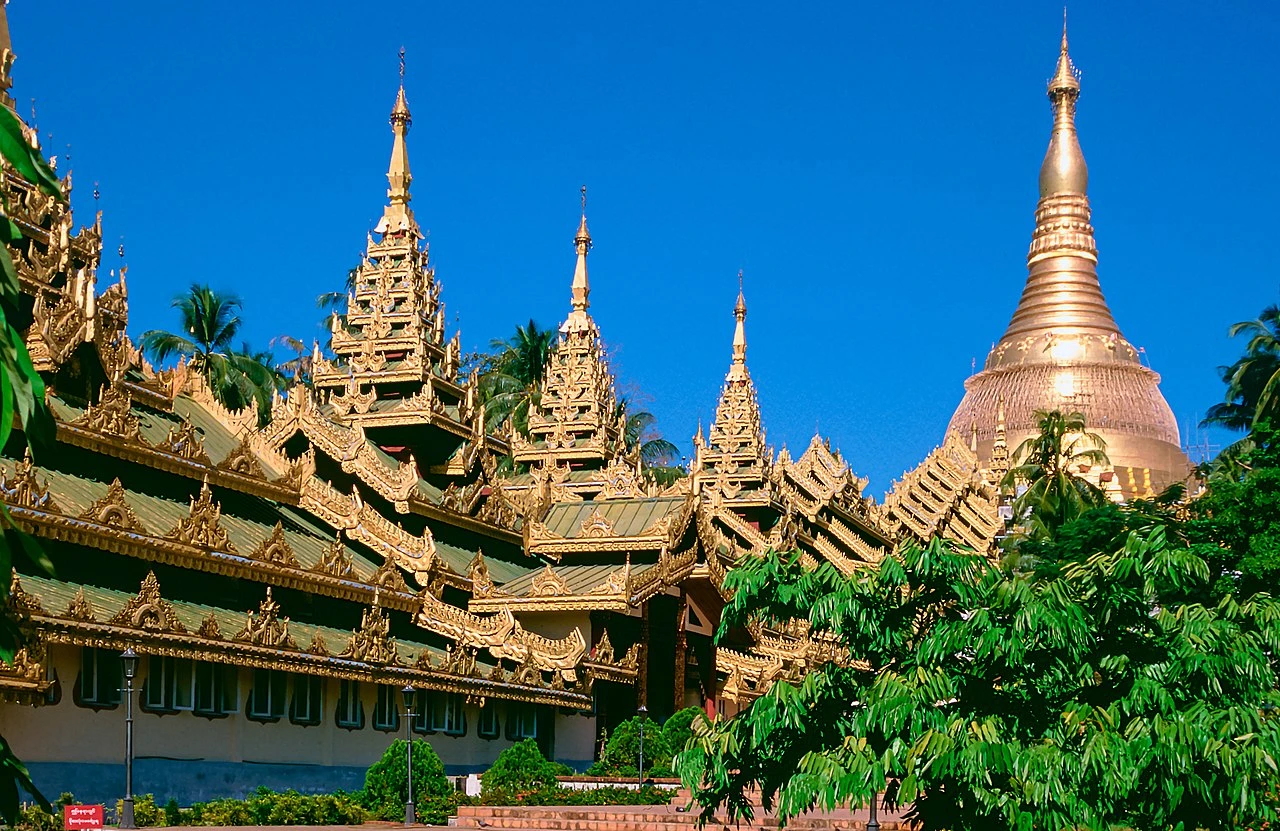
The Shwedagon Pagoda is a gilded Buddhist stupa located in Yangon, Myanmar. It is a sacred Buddhist temple complex and a prominent religious building in the country.
Download Stanza, then search for “Shwedagon Pagoda”.
About the tour
One guide. Your kind of visit.
The Shwedagon Pagoda is a gilded Buddhist stupa located in Yangon, Myanmar. It is a sacred Buddhist temple complex and a prominent religious building in the country.
Ready when you are.
- 01Get the free Stanza app.
iOS & Android
- 02Find your guide.
“Shwedagon Pagoda”
- 03Download before you go.
Works offline
Audio guide / 37 narrated stops
Inside the guide
Get to know a few of the stories before you go. Open a stop to read more.
01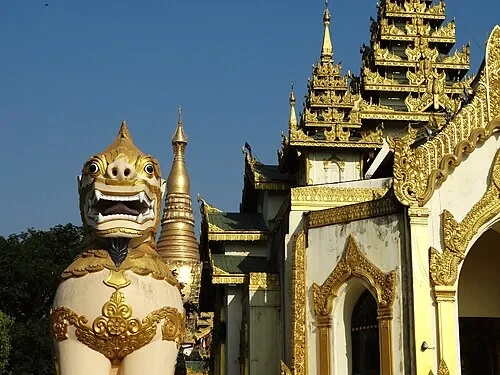 The Southern Entrance GatewayThe Southern Gateway Chinthe
Welcome to one of the most spiritually significant sites in Southeast Asia. This southern entrance serves as the primary gateway for pilgrims and travelers arriving to witness the grandeur of Shwedagon. As you approach the stairs, your attention is immediately drawn to the pair of massive white and gold Chinthe. These mythical leogryphs, part lion and part dragon, sit in traditional poses as guardians, warding off negative influences from the sacred grounds. Before you proceed up the stairs, there is a fundamental rule to observe: all footwear, including socks, must be removed and left behind. This practice is a mark of deep respect and humility, common to all Buddhist temples in Myanmar. Walking barefoot connects you directly to the ground of this holy site as you begin your ascent from the bustling city streets toward the serene atmosphere of the platform above. This entrance is the most popular starting point for a reason, as it sets the stage for the transition from the secular world to the divine.
Adam Jones · CC BY-SA 2.0
02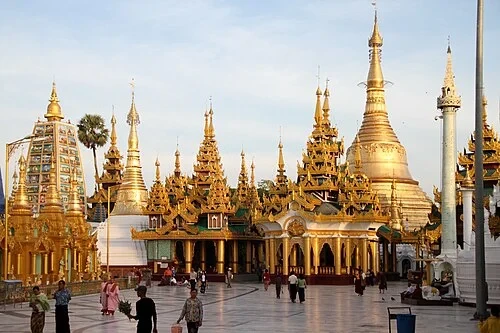 The Southern Entrance GatewayOverview of Singuttara Hill
Standing atop Singuttara Hill, the Shwedagon Pagoda serves as the unmistakable center of the Yangon landscape. This natural elevation stands 51 meters above the surrounding terrain, providing a pedestal that lifts the entire complex above the city. The pagoda itself reaches a height of 112 meters, creating a landmark visible from almost every corner of the capital. Because of its spiritual importance, there are strict local zoning rules regarding the city’s skyline. No new construction in Yangon is permitted to rise higher than 127 meters above sea level. This regulation ensures that the shimmering golden spire remains the highest and most prominent feature of the skyline, unobstructed by modern skyscrapers. Standing here, you can appreciate the intentional design that places the most sacred symbol of the nation in a position of literal prominence over daily life. The hill is believed to have been chosen centuries ago specifically because it allows the pagoda to be seen as a beacon for miles in every direction.
Photo: Gerd Eichmann · CC BY-SA 4.0
03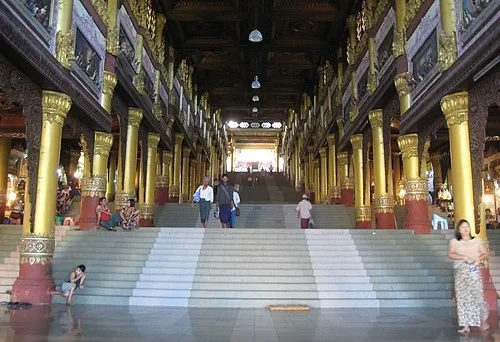 The Great Stairway of DevotionThe Great Covered Walkway
The ascent to the main platform takes place within the 'Saungdan,' or covered walkway. This long, sloping structure protects pilgrims from the tropical sun and monsoon rains as they climb the hundreds of steps leading to the summit. As you make your way upward, you will pass rows of vendors lining both sides of the stairs. These stalls are a vital part of the temple economy, selling a variety of traditional offerings. You can find fragrant flowers, bundles of incense, and small packets of genuine gold leaf which visitors purchase to apply to the statues above as an act of merit. The air here is often filled with the scent of jasmine and the sound of bells, creating a sensory bridge between the city below and the sanctuary at the top. This climb is not merely a physical journey but a meditative one, allowing visitors to slow their pace and prepare their minds for the spiritual experience that awaits them at the main platform.
Listen in the appGo-Myanmar · CC BY-SA 3.0
04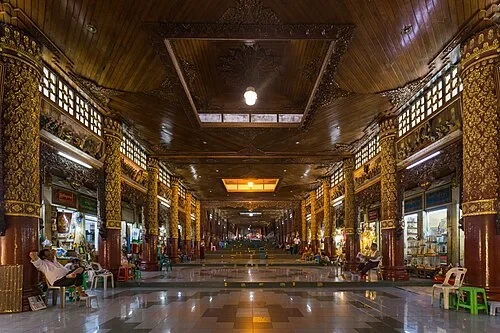 The Great Stairway of DevotionWalkway Architecture
The architecture of the covered walkway is a masterclass in traditional Burmese design. Massive teak pillars, often painted in deep reds and golds, support the heavy roof and create a rhythmic sense of depth as you ascend. If you look up, you will see the ceiling is adorned with intricate wood carvings and paintings that depict scenes from Buddhist lore and local history. These structures were specifically designed to provide shade and a cooling transition for visitors moving from the heat and noise of Yangon toward the quiet sanctuary of the main platform. The thick wooden beams and high ceilings allow for natural ventilation, keeping the air moving even on the hottest days. This architectural style, known for its durability and beauty, has been maintained through careful restoration over many decades. The transition through this space is intended to be transformative, with the cooling shadows and detailed artistry helping to calm the senses before you emerge into the brilliant light of the golden stupa.
Listen in the appMarcin Konsek · CC BY-SA 4.0
05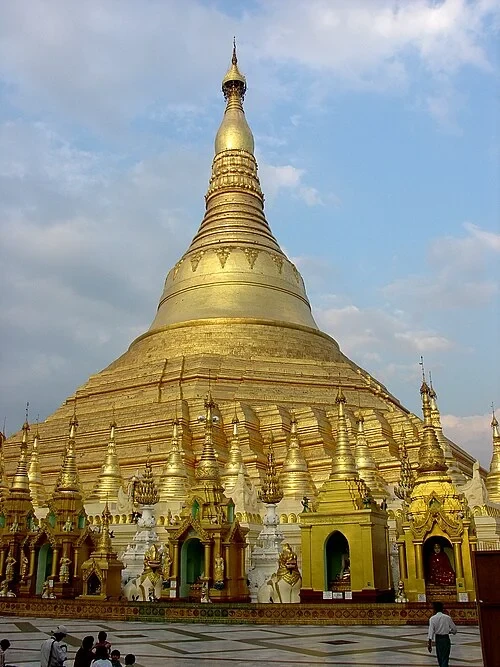 The Main Marble PlatformThe Great Golden Stupa
The centerpiece of the entire complex is the main stupa, which reaches a height of 99 meters. Its construction is a fascinating blend of ancient engineering and continuous devotion. At its heart lies a solid brick core, which provides the necessary weight and stability to support the massive structure. This core is completely covered in genuine gold plates, each roughly 30 centimeters square. Unlike gold paint used on many other temples, these are solid sheets of gold attached to the brickwork using traditional rivets. These plates are not just historical artifacts; they are constantly being added to through generous donations from both the public and the state. Every few years, a massive bamboo scaffolding is erected around the stupa to allow workers to clean the gold and add new plates. This process of constant renewal ensures the pagoda never loses its luster. The sheer amount of gold used here is staggering, reflecting the deep-seated belief that giving one’s wealth to the pagoda is the highest form of spiritual merit.
Listen in the appMichael Gunther · CC BY-SA 4.0
06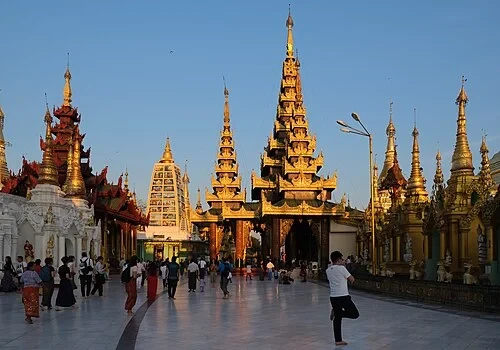 The Main Marble PlatformThe Main Sanctuary Platform
Once you reach the top of the walkway, you emerge onto the vast marble platform that surrounds the central stupa. This open space is the heart of the complex, where the daily life of the temple unfolds. You will see people from all walks of life gathered here to pray, meditate, or simply sit in quiet reflection. A common practice is to walk clockwise around the stupa, a ritual known as circumambulation that shows respect to the Buddha's teachings. The floor is made of polished marble, which stays surprisingly cool even under the midday sun. At night, this marble reflects the golden glow of the stupa, creating an environment that feels as though it is illuminated from within. The platform is designed to accommodate thousands of people at once, yet it often maintains a sense of peaceful order. Whether it is a monk in saffron robes or a family in traditional dress, everyone shares this communal space, making it a living center of culture and faith that has remained unchanged for generations.
Listen in the appPhoto: Kallerna · CC BY-SA 4.0
07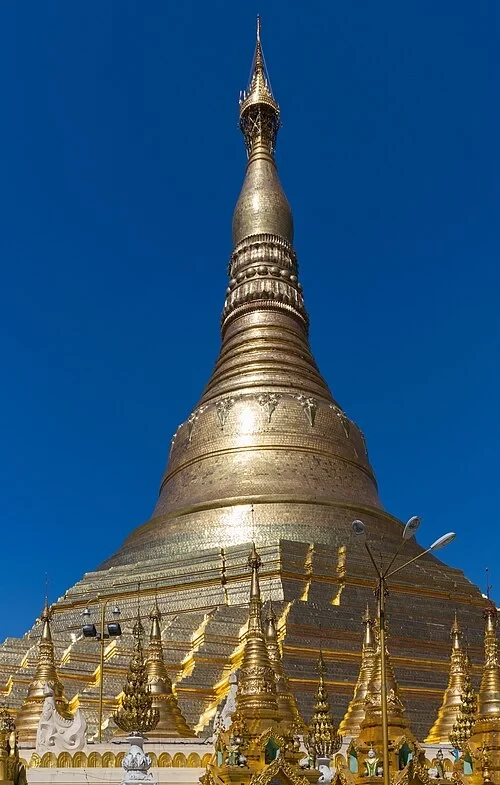 The Golden Stupa (Maha Pagoda)The Golden Silhouette
The silhouette of the Shwedagon Pagoda that we see today is the result of centuries of evolution, but its current form was largely finalized in 1775. After a major earthquake caused significant damage to the previous structure, King Hsinbyushin undertook a massive project to restore and heighten the pagoda. The design transitions elegantly from a wide octagonal base to a bell-shaped body, a style characteristic of Burmese stupa architecture. This shape is not just aesthetic; every section has a specific name and spiritual meaning in the Buddhist tradition. The base represents the earthly realm, while the tapering spire symbolizes the path toward enlightenment. The golden surface catches the light differently at various times of the day, appearing a bright, pale yellow in the morning and a deep, fiery orange as the sun sets. This iconic silhouette has become the defining image of Myanmar, representing both the resilience of the people who rebuilt it after natural disasters and their enduring commitment to their religious heritage.
Listen in the appMarcin Konsek · CC BY-SA 4.0
08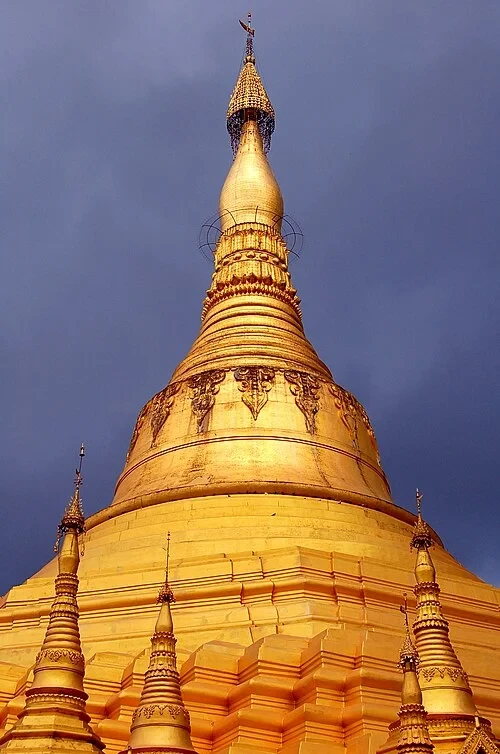 The Golden Stupa (Maha Pagoda)Plating and Devotion
The tradition of covering the stupa in gold is a practice of devotion that spans centuries. One of the most famous contributors was Queen Shin Saw Pu in the 15th century. Legend has it that she donated her own weight in gold to plate the stupa, a gesture that set a precedent for future monarchs and citizens alike. Today, this tradition continues in a more accessible way. Visitors can purchase small, fragile squares of gold leaf at the entrance stalls. These are carefully applied by hand to the various smaller shrines and Buddha images around the platform. For the main stupa itself, larger donations are used to manufacture the heavy gold plates that cover its surface. This collective effort means that the gold on the pagoda is literally a gift from the people. Over the years, the weight of the gold has increased significantly, with some estimates suggesting several tons of the precious metal now adorn the structure. It is a tangible representation of the wealth and spirit of the community poured into their most sacred landmark.
Listen in the appThe original uploader was Mind meal at English Wikipedia. · CC BY 2.0
09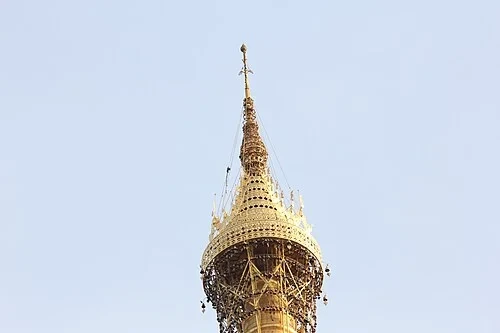 The Hti: The Diamond-Studded CrownThe Jeweled Hti Crown
At the very peak of the spire, far above the reach of any ladder, sits the Hti. This umbrella-shaped crown is a masterpiece of craftsmanship and devotion. While it looks like a delicate silhouette from the ground, the Hti is a massive structure made of heavy metal and encrusted with an incredible array of precious stones. Records indicate it is adorned with exactly 5,448 diamonds and 2,317 rubies, along with thousands of other gems like sapphires and emeralds. These jewels are too high to be seen clearly by the naked eye, but for the people of Myanmar, their presence is vital. The placement of such immense wealth at the summit represents the ultimate act of merit-making and devotion to the Buddha. It signifies that the most precious things on earth are offered to the heavens, crowning the stupa with a brilliance that transcends physical sight. On the platform, you can often find telescopes that allow you to glimpse the sparkle of these jewels against the blue sky, confirming the staggering richness of this hidden treasure.
Listen in the appMaung · CC BY-SA 3.0
10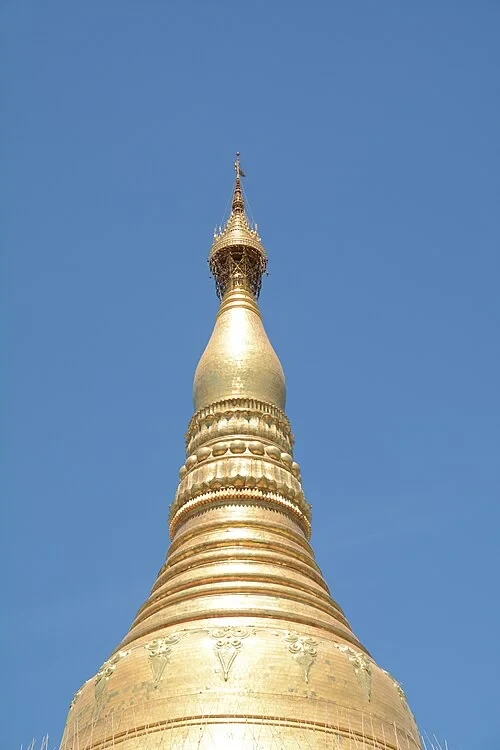 The Hti: The Diamond-Studded CrownThe 76-Carat Diamond Bud
Look toward the absolute summit to see the Seinbu, or diamond bud. This is the very tip of the spire, a small, sphere-like structure that rests atop the vane. While it appears tiny from the platform, it contains a single, massive 76-carat diamond. This diamond is positioned to catch the light in a specific way. As the sun begins to set over Yangon, the diamond bud often catches the final, horizontal rays of light, making it glow like a brilliant star long after the rest of the city has fallen into shadow. Because of its height, many visitors use binoculars provided on the platform to get a better view of its facets and the way it refracts the light. This bud represents the final stage of enlightenment in Buddhist thought, the point where all earthly ties are broken. The presence of such a significant gem at the highest point of the most sacred site in the country reflects the height of national and religious pride, shining as a literal beacon over the city.
Listen in the appPhoto: C1815 · CC0
Shwedagon Pagoda
Frequently asked questions
How much does the guide cost?
Free app download. Listed guide price: $1.99. Guide price shown in the app. Audio guide only. Venue admission is separate.
Can I listen without internet?
Yes. Download the guide’s audio, images, and maps in the app before your visit. Your downloaded content is then available offline.
Can I listen in my language?
Stanza supports 15 languages. Check the app for the languages available for this guide.
Do I need to follow a schedule?
No. This is a self-guided experience. Choose your stops, pause whenever you like, and return to a story at your own pace.
At your own pace
Explore Shwedagon Pagoda.
Download Stanza, then search for “Shwedagon Pagoda”.
Free app download · Guide price shown in the app