 Stanza / Audio guide
Content & sources
Stanza · Audio guide
Viminacium Audio Guide
A place to remember. A story to take with you.
Viminacium was a major city, military camp, and the capital of the Roman province of Moesia. It later served as the capital of Moesia Superior following the division of the province in 87.
Download Stanza, then search for “Viminacium”.
About the tour
One guide. Your kind of visit.
Viminacium was a major city, military camp, and the capital of the Roman province of Moesia. It later served as the capital of Moesia Superior following the division of the province in 87.
Ready when you are.
- 01Get the free Stanza app.
iOS & Android
- 02Find your guide.
“Viminacium”
- 03Download before you go.
Works offline
Audio guide / 17 narrated stops
Inside the guide
Get to know a few of the stories before you go. Open a stop to read more.
01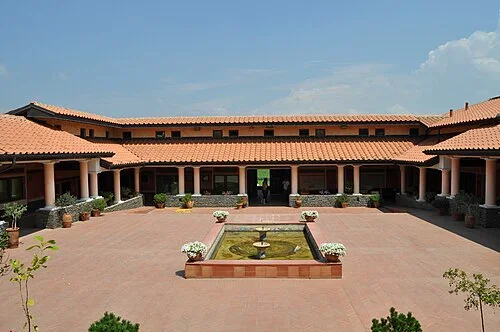 Domus Scientiarum and Castrum Orientation
Domus Scientiarum Viminacium
Viminacium was the capital of the Roman province of Moesia Superior, on the Danube in what is now Serbia. Its remains lie near the villages of Stari Kostolac and Drmno, across about four hundred and fifty hectares. Between the first and fourth centuries, it was one of the most important Roman cities and military camps. It guarded the northern frontier of the empire, and it was also a busy hub for roads and trade. In April 2018, Miomir Korać, chief manager of the Viminacium project, said that only three to four percent had been explored. Surveys of the ground since the mid-1990s have confirmed buried structures, among them a forum, a hippodrome and an imperial palace. None of them had been dug out by 2018. Serbian Queen Draga Obrenović once visited the site and gave a hundred gold ducats for further digging. The Domus Scientiarum, a new research and visitor centre, stands on the edge of the archaeological park. It was built in the style of a Roman villa. Rooms and laboratories are grouped around several atria, the open courtyards of a Roman house. Inside are an archaeological museum, a scientific library and laboratories for processing finds. There is also a restaurant and a spa built as a Roman bath. Bedrooms are available for researchers, students and visitors.
Photo: Rossignol Benoît · CC BY-SA 4.0
02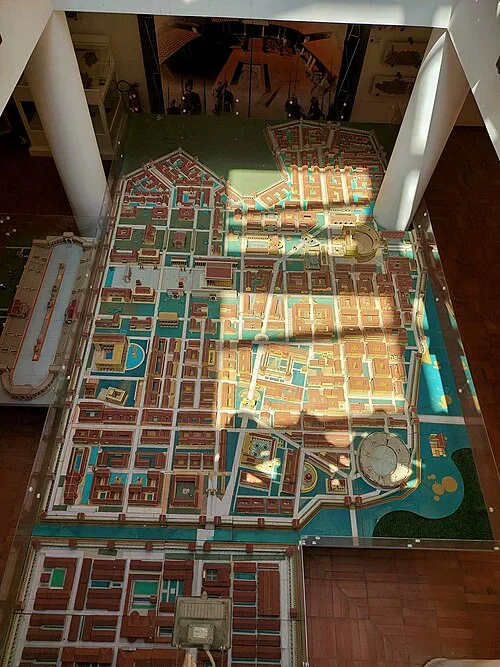 Domus Scientiarum and Castrum Orientation
Scale Model of Ancient Viminacium
The model shows how a military camp turned into a city. The camp was a rectangle about four hundred and forty-two metres along its longer side. A civilian settlement grew up beside it. The land up the Mlava valley was rich in ore and grain, and the Romans found that appealing. The city also sat on the Roman road called the Via Militaris. At its peak, Viminacium is believed to have had about forty thousand inhabitants. That figure is an estimate, not a count, but it would have made it one of the biggest cities in the Balkans of that time. Its standing as a provincial capital came in stages. After Moesia was divided in 87, Viminacium became the capital of Moesia Superior. In the late spring of 293 or 294, the emperor Diocletian travelled through his realm and made Viminacium the capital of a new province, Moesia Superior Margensis. Diocletian noted that people here wrote in Latin, not Greek as in the southern provinces.
Karolina Đukić · CC BY-SA 4.0
03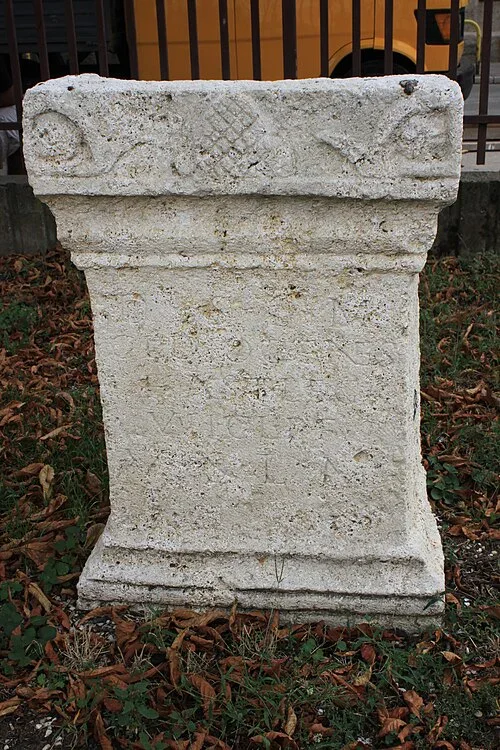 Domus Scientiarum and Castrum Orientation
Carved Stone Base (AE 1971, 418)
The first legion recorded at Viminacium was the Seventh Legion, known as Claudia. It came from Dalmatia in the year 52. This carved stone base, with its moulded top, is linked to the Seventh, though its worn lettering is hard to read. The Seventh's main headquarters, called the Principium, was found in November 2020. It was a large building with about forty rooms. Inside were offices, an armoury, a shrine, a vault and a room for keeping military flags and insignia. At its centre lay an inner yard lined with colonnades, with a fountain and a water store. Strong walls suggest there were upper floors. Emperor Trajan made Viminacium his headquarters during the Dacian Wars, between 101 and 106. Tiberius Claudius Maximus served in the Seventh, and he is remembered for carrying the head of the Dacian leader Decebalus to Trajan.
Listen in the appPhoto: Rossignol Benoît · CC BY-SA 4.0
04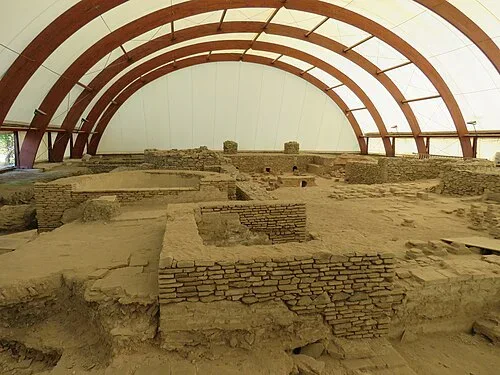 The Roman Thermae
Excavated Thermae Under Protective Canopy
Six pools were uncovered in these baths, and they were decorated with floral and animal motifs. The floors and walls were luxurious, and that included the dressing rooms. In the middle section were rooms for massage. Lanterns found in the building suggest that people could bathe after dark. The baths had at least one firm rule. Children were not allowed in. The water came along an aqueduct, using the natural fall of the land. Researchers have explored ten kilometres of it so far. The pool water was not changed, and chlorinating water was unknown then. Those who studied the remains concluded that the baths and the public toilets were a source of disease.
Listen in the appPhoto: Mickey Mystique · CC BY-SA 4.0
05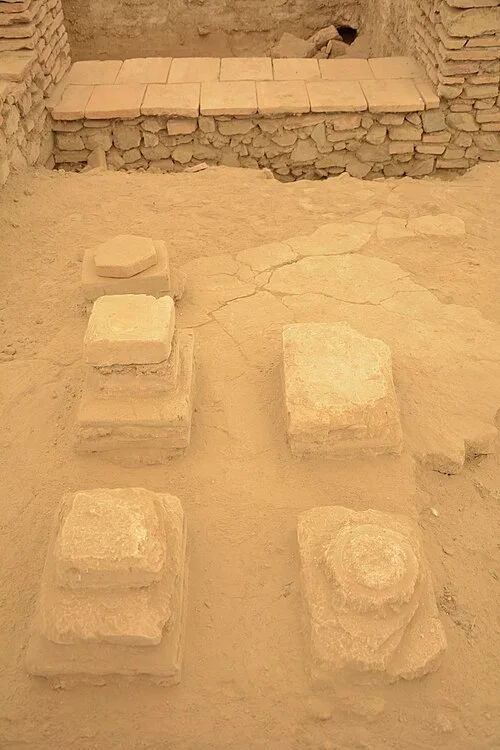 The Roman Thermae
Pillar Bases in the Thermae
The bathhouse was a steambath, and its rooms were warmed from below. Hot air moved between closely set small pillars, called colonnettes, and heated the bricks under the floor slabs. The bath water itself was not naturally warm, so it was heated as well. Researchers often call this kind of underfloor system a hypocaust. Here, several square blocks sit stacked in the sand, below a wall capped with flat tiles. Blocks like these are the sort of support such a floor would have rested on.
Listen in the appPhoto: DjordjeMarkovic · CC BY-SA 4.0
06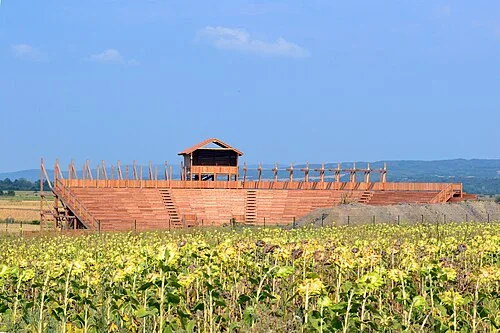 The Roman Amphitheater and Arena Spectacles
Reconstructed Amphitheatre Seating
The city had an amphitheatre with room for twelve thousand people. It was one of the largest in the Balkans. When excavators reached it, only the foundations were left. The sitting tiers have since been partly rebuilt. The new tiers are topped by timber posts and a rail, and a small wooden lookout stands above them.
Listen in the appPhoto: Jelena96 · CC BY-SA 3.0
07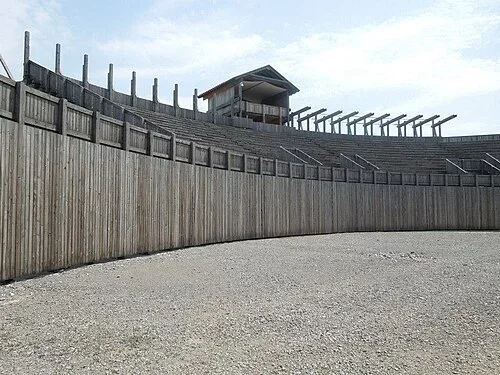 The Roman Amphitheater and Arena Spectacles
Amphitheatre Arena Floor
In June 2012, excavators uncovered a gladiator arena together with the remains of wild animals. Among them were a bear and a camel. The bear's skeleton dates from the second century, when many competitive games were held in amphitheatres. The bear most likely died during a show, fighting either another animal or a man. A camel died about a century later. Gladiator shows were held often, and the gravel floor here is the kind of space where such contests took place.
Listen in the appPhoto: Milos Tod · CC BY-SA 4.0
08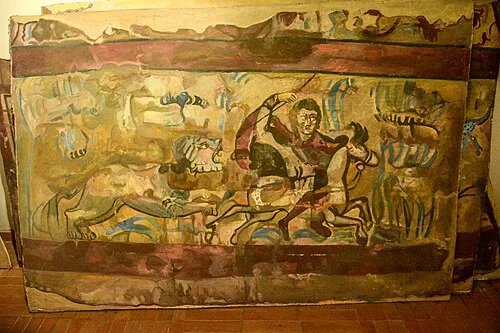 The Roman Amphitheater and Arena Spectacles
Painted Panel with Animal and Figure
Beast contests and hunts were staged in Roman amphitheatres. This painted panel shows an animal and a figure, and its scene could belong to that world. A large animal fills one side of the panel, and a figure with one arm raised is close to it. Muted reds and blues sit on a pale ground. The panel leans against a wall on a tiled floor. It is linked to the amphitheatre, but its date and find spot are still unclear.
Listen in the appPhoto: DjordjeMarkovic · CC BY-SA 4.0
09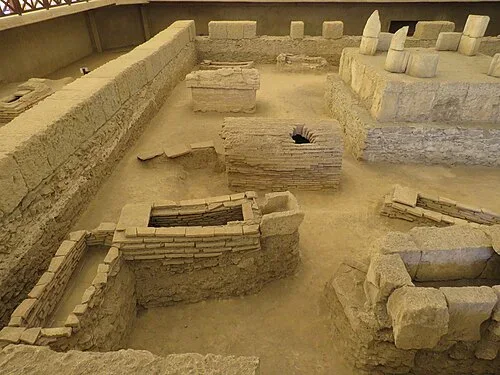 The Imperial Mausoleum and Tomb of Hostilian
Mausoleum and Cemetery Enclosures
The emperor Hostilian ruled only briefly. His father, the emperor Decius, had been killed in an ambush near Abrutus, in what is now Bulgaria. Hostilian came to Viminacium with his mother, Herennia Etruscilla, to oversee the defence of the northern frontier. According to the Greek historian Zosimus, writing in the fifth century, both of them died here in the Plague of Cyprian. That plague ravaged the empire in the 250s. Hostilian died in 251. Rome was far away, and people feared the plague would spread, so his body was buried here with full honours rather than taken to Rome. Walls still enclose several burial spaces, and a stone block has a round opening cut into it. The crypt inside the mausoleum is believed to be his imperial tomb.
Listen in the appPhoto: Mickey Mystique · CC BY-SA 4.0
10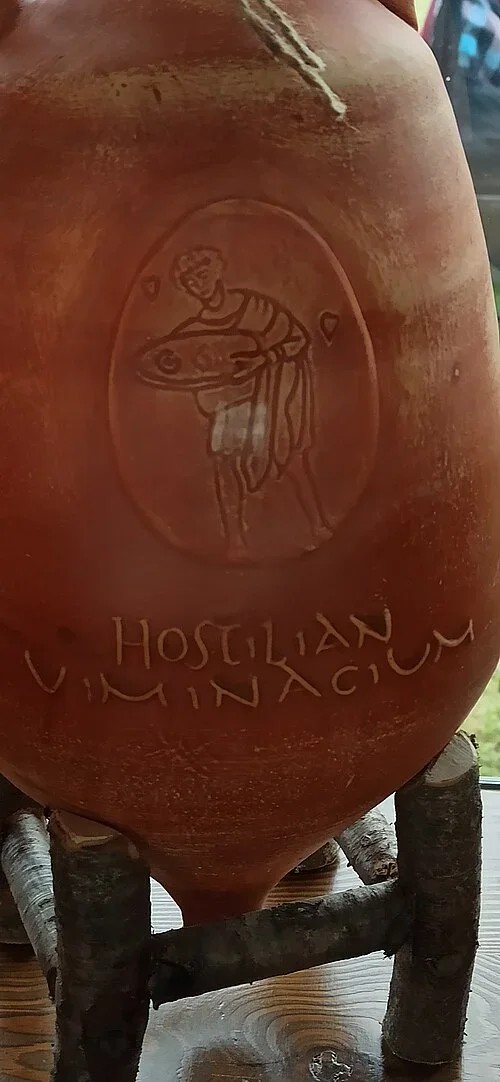 The Imperial Mausoleum and Tomb of Hostilian
Vessel Inscribed 'Hostilian Viminacium'
A name written on a clay vessel can link a person to a place. It cannot prove by itself where that person lay. This red clay vessel has two lines of letters. The upper line reads HOSTILIAN, and the lower one reads VIMINACIUM, the name of the town that stood here. Above the letters sits an oval medallion with a standing figure. The figure has no name, and nothing on the vessel ties it to the emperor. The idea that the mausoleum here is Hostilian's tomb rests on Zosimus's later written account. Whether this vessel is ancient, or a later copy, is not known. Its findspot and collection are unknown as well.
Listen in the appPhoto: DjordjeMarkovic · CC BY-SA 4.0
- 11
Fresco Portrait of a Young Woman ('Divina')
A young woman's fresco, named Divina, and what her gold-hemmed dress may suggest.
- 12
Vaulted Niche with Floral Wall Painting
The painted walls of tombs, set against more graves than any other Roman site has yielded.
- 13
Mammoth Vika in the Pavilion
The mammoth Vika, a female about a million years old, found deep in a lignite mine.
- 14
Vika's Skull and Tusks
Vika's skull and tusks, and the other mammoth remains kept at the site.
- 15
Bow of a Large Wooden Vessel
The front end of a wooden ship, and a large war ship found in March 2020.
- 16
Timber Hull Remains Under Shelter
A late Roman list that places a fleet here, and the timber hull in the old riverbed.
- 17
Bronze Coin of Gordian III, Viminacium
A bronze coin from the town's own mint, and the emperor under whom the town gained that right.
Viminacium
Frequently asked questions
How much does the guide cost?
Free app download. Listed guide price: $1.99. Guide price shown in the app. Audio guide only. Venue admission is separate.
Can I listen without internet?
Yes. Download the guide’s audio, images, and maps in the app before your visit. Your downloaded content is then available offline.
Can I listen in my language?
This audio guide is available in 15 languages, including English.
Do I need to follow a schedule?
No. This is a self-guided experience. Choose your stops, pause whenever you like, and return to a story at your own pace.
At your own pace
Explore Viminacium.
Download Stanza, then search for “Viminacium”.
Free app download · Guide price shown in the app
Keep exploring
Nearby audio guides
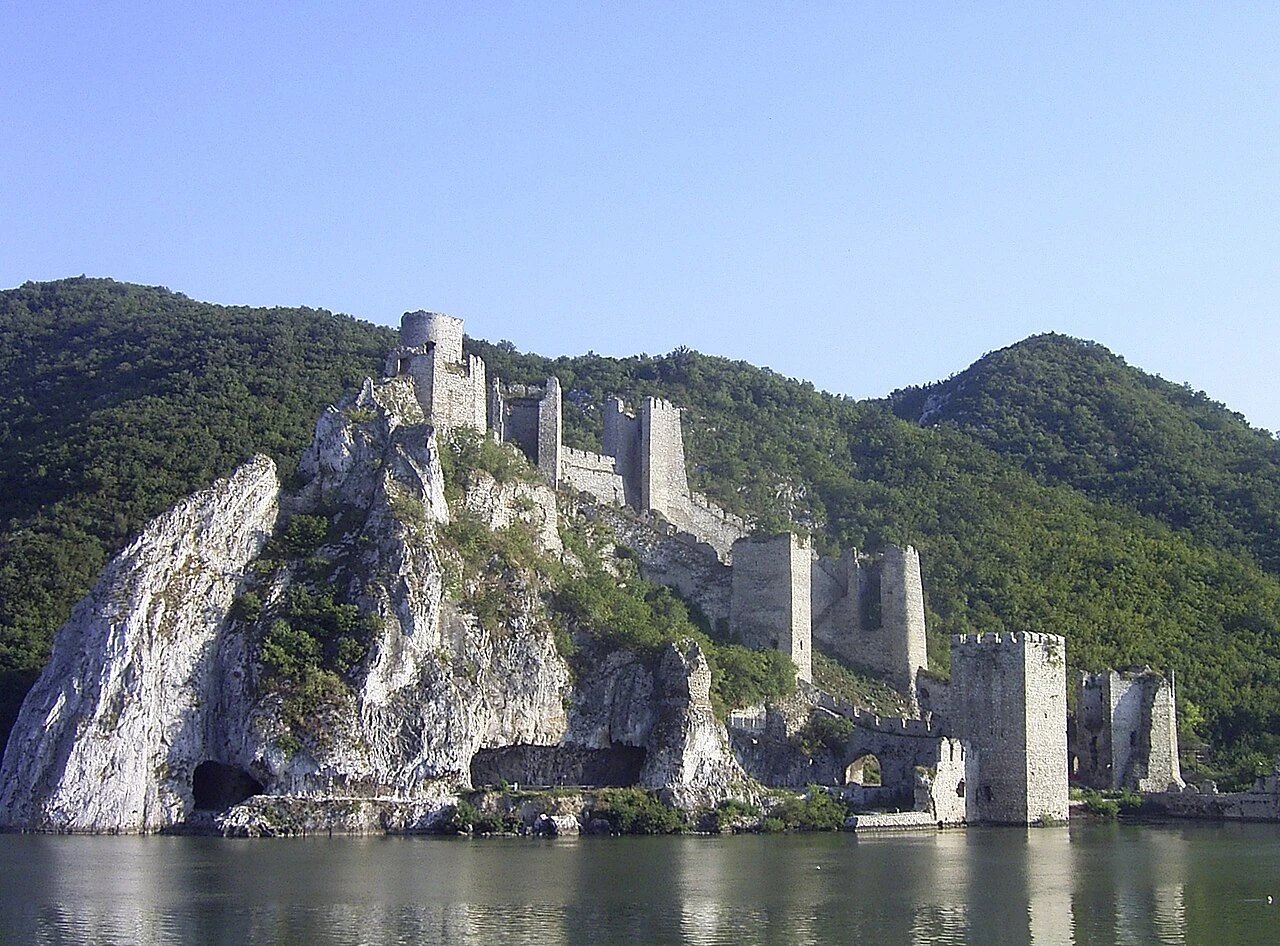
Golubac Municipality · 36 km
Golubac
Content & sources
Photo: Denis Barthel · CC BY-SA 3.0
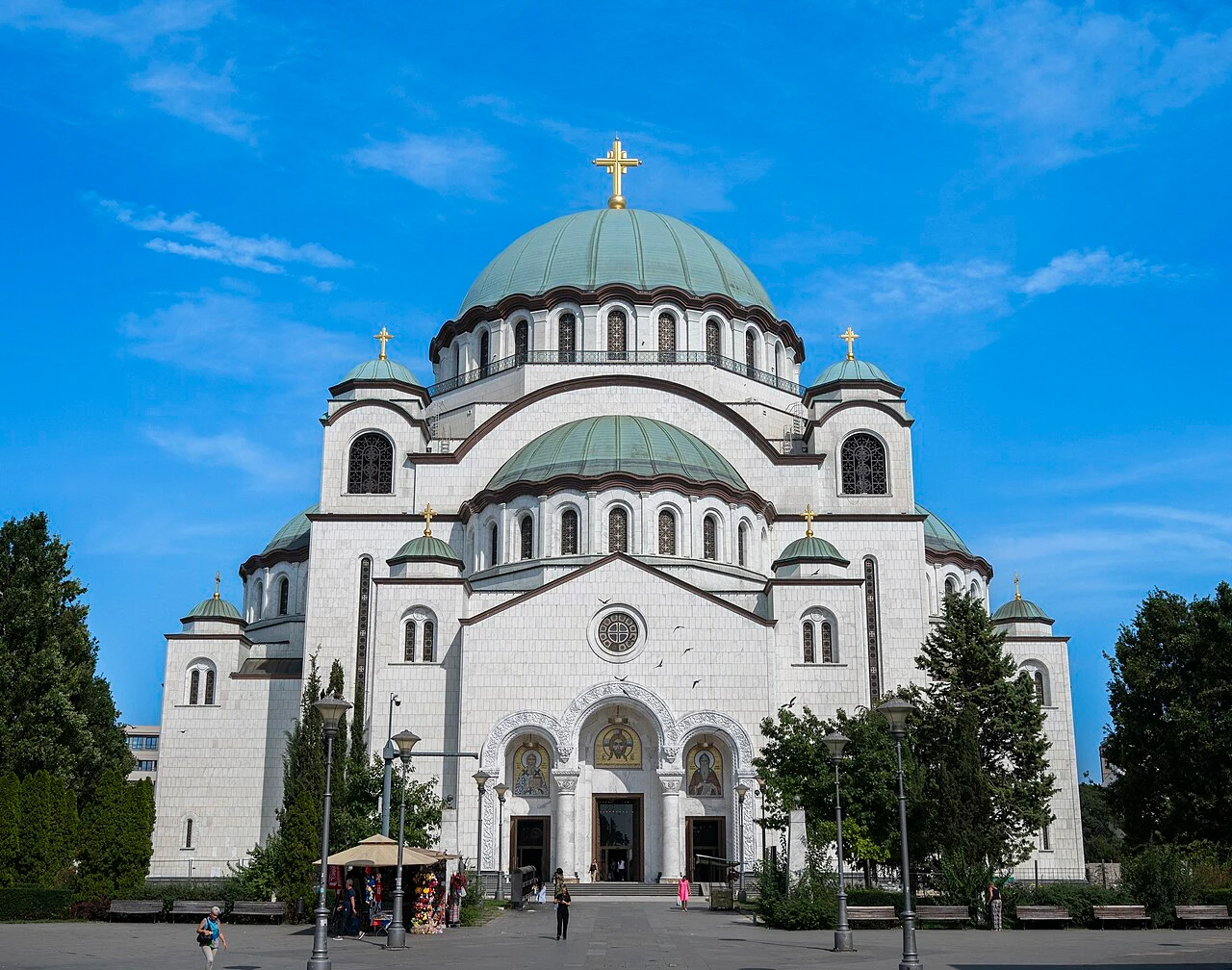
Belgrade · 61 km
Church of Saint Sava
Content & sources
Photo: Npps90 · CC BY-SA 4.0
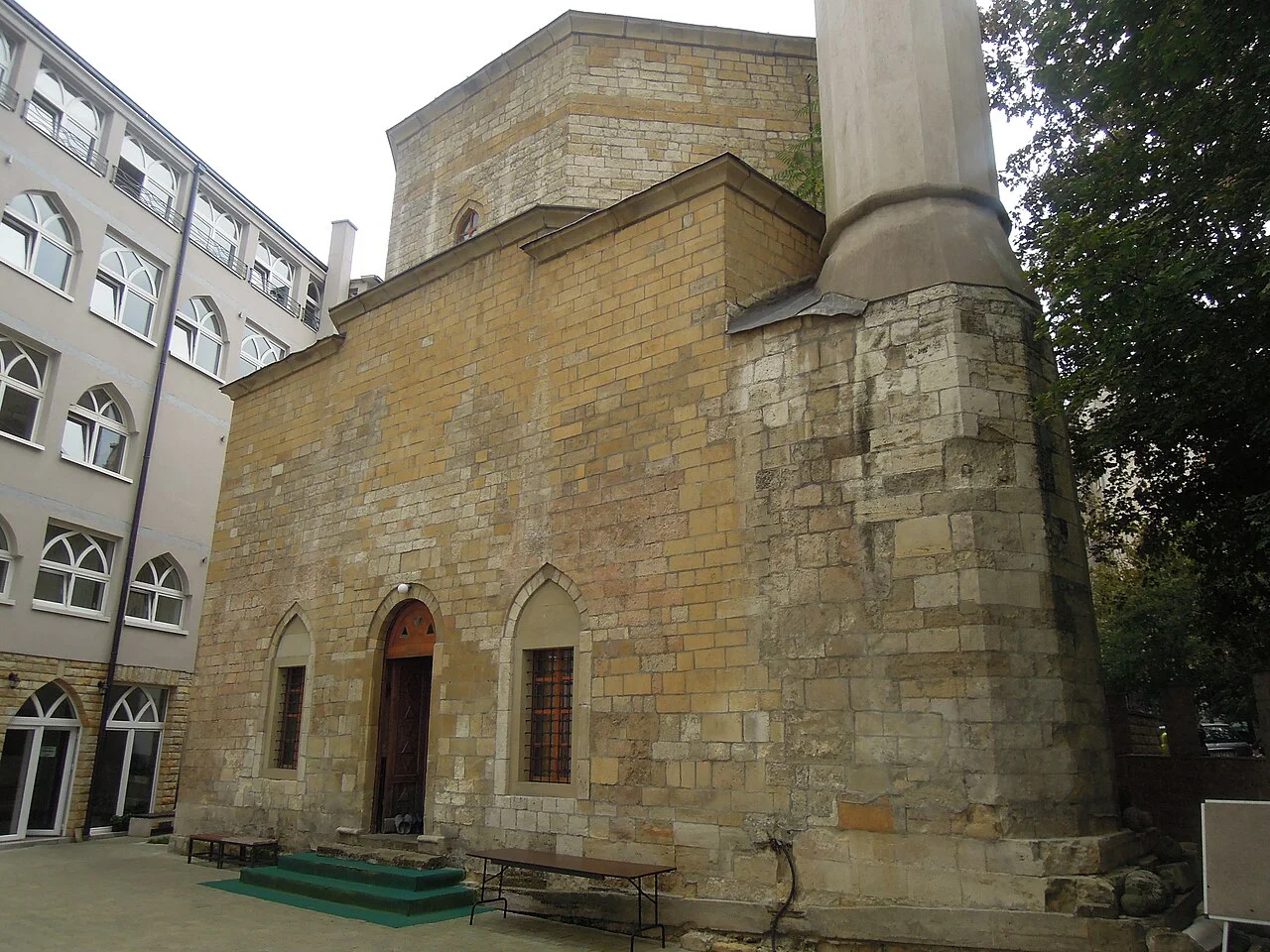
Belgrade · 62 km
Bajrakli Mosque, Belgrade
Content & sources
Photo: Mickey Mystique · CC BY-SA 3.0
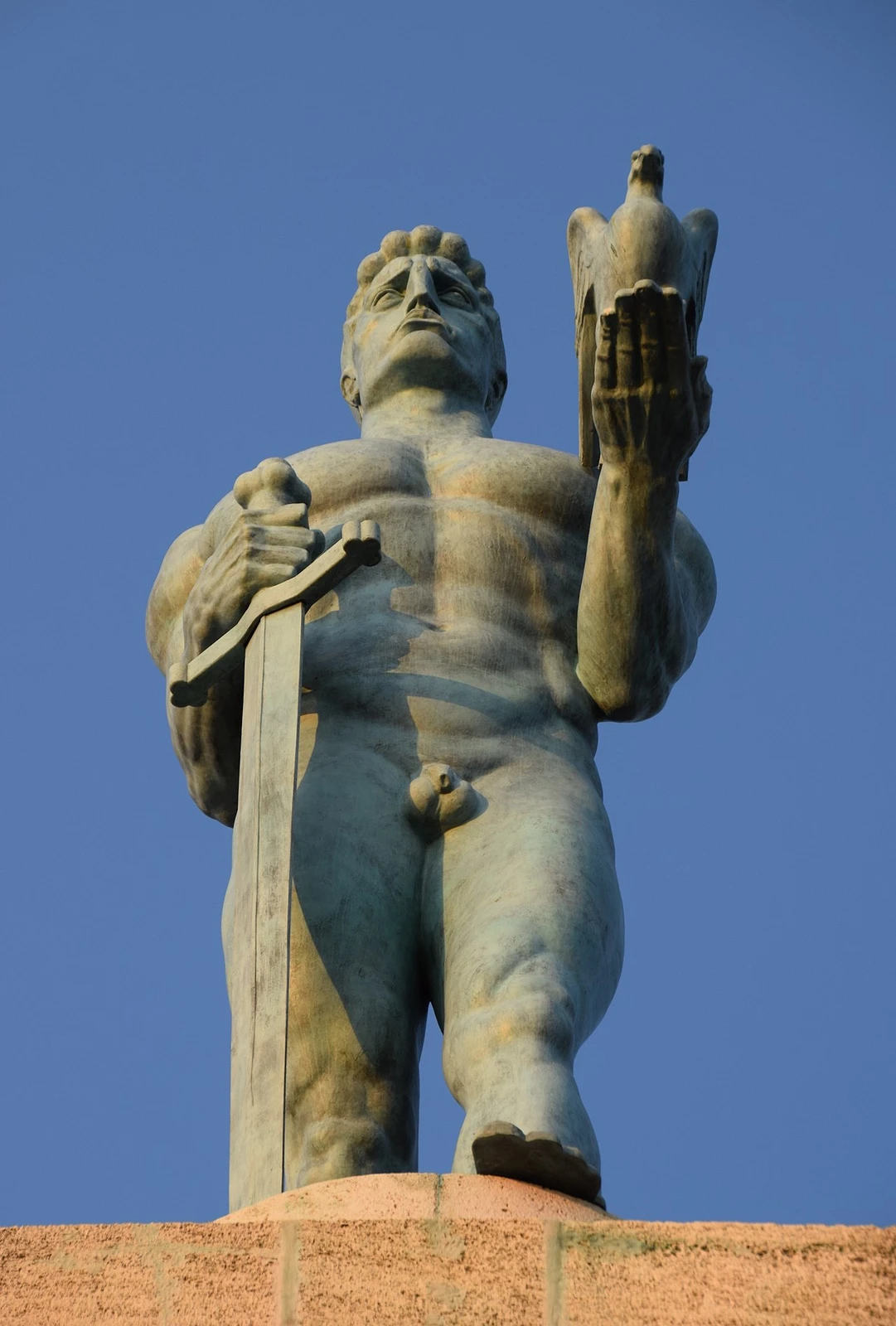
Belgrade · 63 km
Pobednik
Content & sources
George M. Groutas · CC BY 4.0