Stanza · Audio guide
GolubacAudio guide
A place to remember. A story to take with you.
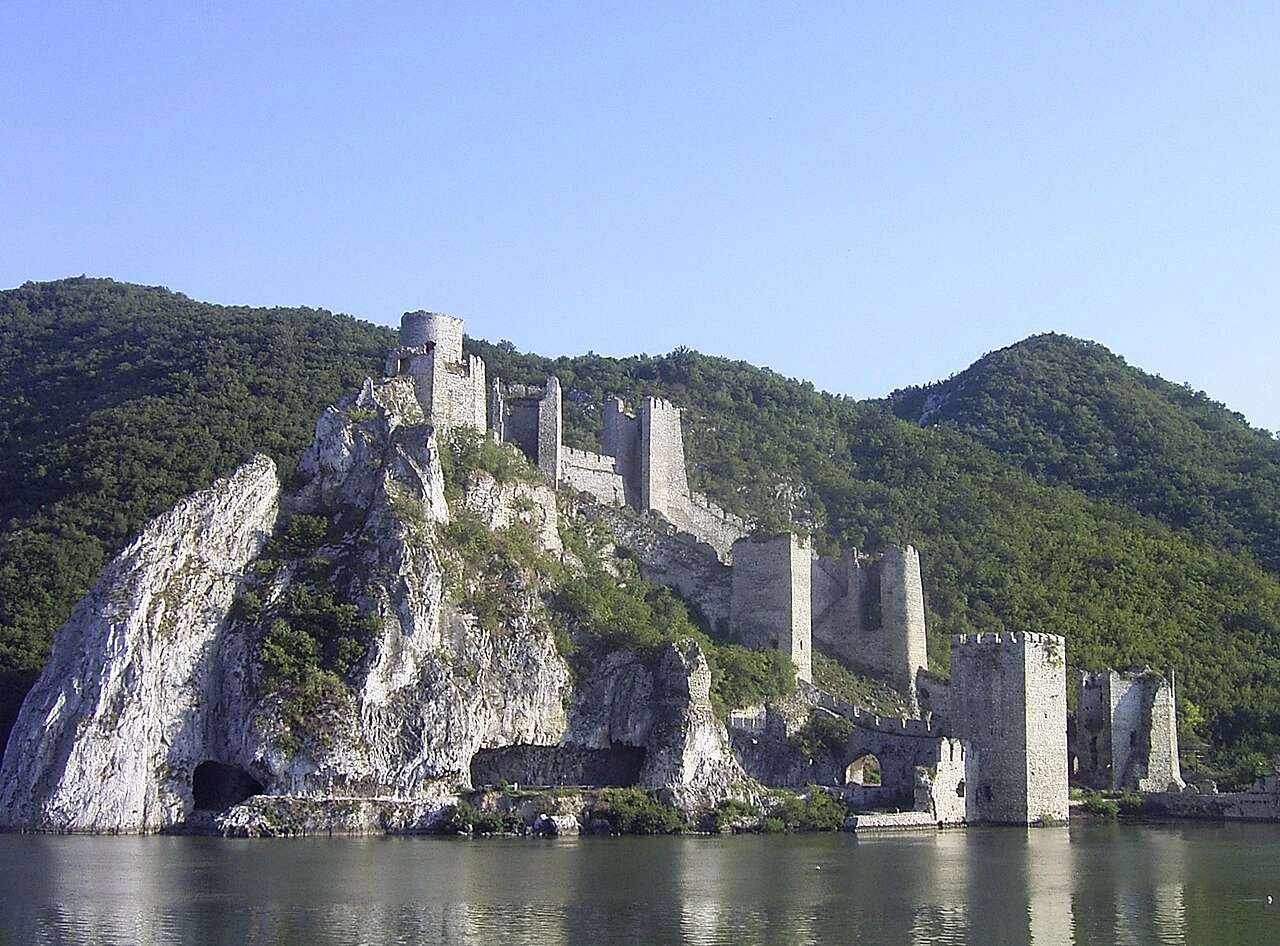
Golubac Fortress is a medieval fortified town situated on the right bank of the Danube River, near the modern-day town of Golubac, Serbia. It served as a strategic defense point guarding the Iron Gate gorge.
Download Stanza, then search for “Golubac”.
About the tour
One guide. Your kind of visit.
Golubac Fortress is a medieval fortified town situated on the right bank of the Danube River, near the modern-day town of Golubac, Serbia. It served as a strategic defense point guarding the Iron Gate gorge.
Ready when you are.
- 01Get the free Stanza app.
iOS & Android
- 02Find your guide.
“Golubac”
- 03Download before you go.
Works offline
Audio guide / 25 narrated stops
Inside the guide
Get to know a few of the stories before you go. Open a stop to read more.
01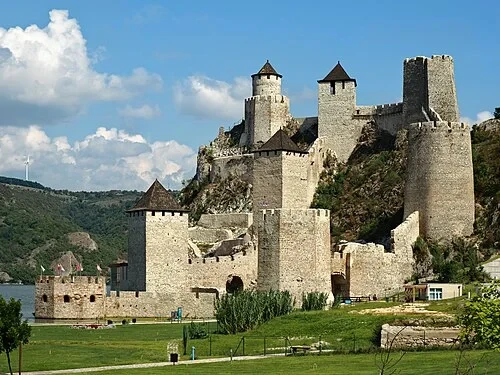 The Iron Gate Guardian: Main EntranceThe Iron Gate Guardian
Welcome to one of the most strategically significant fortresses along the entire Danube. Construction of Golubac likely began in the early 14th century, resulting in a formidable structure featuring ten distinct towers linked by heavy stone walls. This site is known as the "Guardian of the Iron Gate," as it marks the exact point where the river dramatically narrows before plunging into the gorge. Its geographic placement was no accident of aesthetic beauty; it was a cold, hard business decision. From this vantage point, the fortress command could easily monitor and tax all river traffic passing between the Balkans and Central Europe. Any ship attempting to navigate this section of the river found itself under the watchful gaze of the fortress defenders. The sheer cliffs and the width of the river here meant that no vessel could slip by unnoticed. Control of Golubac essentially meant control over the economic lifeline of the region, making it a highly contested prize for empires seeking dominance over the Danube waterway. The ten towers you see rising from the rock were built to withstand both river currents and determined sieges.
Petar Milošević · CC BY-SA 4.0
02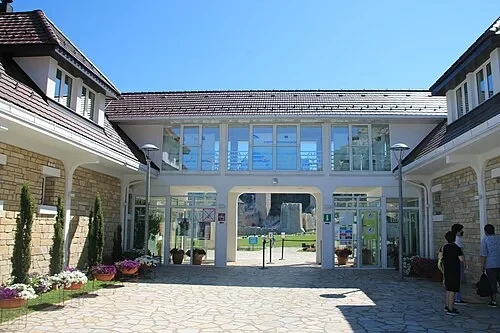 The Iron Gate Guardian: Main EntranceThe Modern Gateway
The visitor center you see today is part of an extensive restoration project carried out between 2014 and 2019. Funded primarily by the European Union with an investment of approximately 8.6 million euros, this massive undertaking aimed to preserve the structural integrity of the fortress while making it accessible to international tourism. For decades, a busy regional road actually ran directly through the lower walls of the fortress, with vehicles passing under a medieval archway. As part of the restoration, that road was diverted through a new tunnel in the hillside, finally reclaiming the fortress grounds for historical interpretation. This modern glass-and-white-stone facility provides a necessary contrast to the rugged limestone walls beyond. Inside, it houses exhibits that explain the complex layering of Serbian, Hungarian, and Ottoman history found here. The architecture of the gateway is intentionally minimal, designed to provide visitors with necessary amenities without detracting from the dramatic silhouette of the towers. By removing modern traffic and stabilizing the ancient masonry, the project has successfully transformed a decaying ruin into a premiere cultural destination.
Photo: Ванилица · CC BY-SA 4.0
03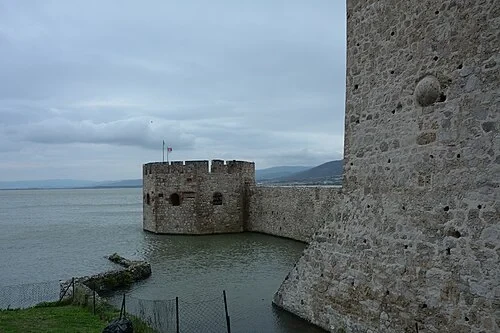 The Cannon Tower (Tower 10)The Cannon Tower
Tower 10, which you can see extending further out into the Danube than its neighbors, is the youngest major addition to the Golubac defensive system. It was constructed late in the 15th century, specifically following a devastating Hungarian raid in 1481. By this period, traditional high walls were no longer sufficient defense against the emerging technology of gunpowder. This tower was engineered to accommodate heavy artillery, featuring a low, squat profile and thick walls capable of absorbing the recoil of large cannons. Its location was strategically chosen to offer a clear, unobstructed line of fire across the water, making it nearly impossible for enemy fleets to approach the fortress unhindered. Unlike the higher, more slender towers of the upper citadel, Tower 10 focuses on horizontal defense. The wide openings on its lower levels were designed as gun ports rather than simple archer slits. Its distinct polygonal shape allowed for cannons to be aimed in multiple directions, covering the river and the harbor area simultaneously. This architectural shift from vertical height to heavy, reinforced gun platforms marks the transition from the high Middle Ages to the era of early modern warfare.
Listen in the appPhoto: DjordjeMarkovic · CC BY-SA 4.0
04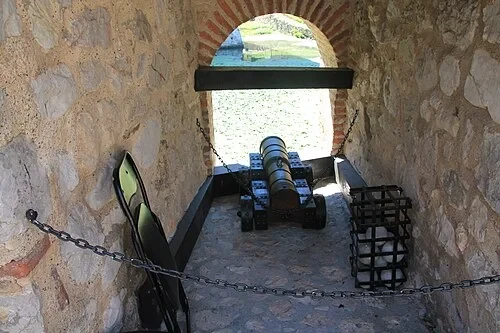 The Cannon Tower (Tower 10)Medieval Artillery
Inside the cool, stone interior of the Cannon Tower, you will find examples of the weaponry that once guarded these walls. The long barrel of the cannon sits on its heavy carriage, aimed toward the river openings. Beside it, a wrought-iron basket holds a supply of stone cannonballs. These primitive projectiles were often hand-carved from local limestone to fit the specific bore of a particular gun. While they lacked the explosive power of later iron shells, a well-aimed stone ball could easily shatter the wooden hull of a passing galley or snap a mast. These weapons were the ultimate enforcers of the river's economy. Ships passing through this narrow point were required to stop and pay tolls to the fortress commander. Those who attempted to bypass the checkpoint or run the blockade faced the very real threat of artillery fire. The logistics of operating such a gun required a team of soldiers to load, aim, and fire, all within the cramped and smoke-filled environment of the tower. The thick masonry helped muffle the deafening roar of the blast, though the smell of sulfur would have lingered for hours.
Listen in the appPhoto: Ванилица · CC BY-SA 4.0
05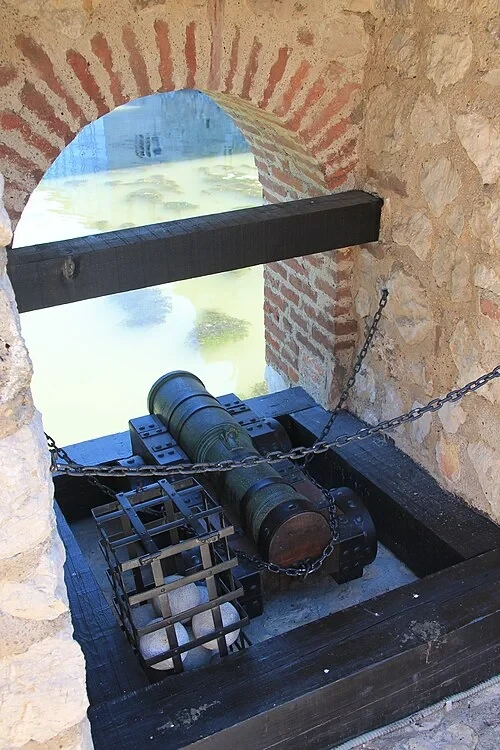 The Cannon Tower (Tower 10)The Sighting Port
Look through this arched opening, which is technically known as an embrasure. These narrow slits were critical components of the fortress's defensive engineering. The view of the Danube through this gap is remarkably clear, giving you a sense of exactly what a gunner would have seen while preparing to fire. Designing an embrasure was a delicate balancing act of military architecture. The opening needed to be wide enough to allow the cannon or crossbow to be swiveled and aimed at moving targets on the river below. However, making it too wide would expose the defenders inside to return fire from enemy archers or sailors. To solve this, the walls are often tapered, creating a funnel shape that is narrow on the outside and wide on the inside. This design provided a broad field of vision and room to maneuver the weapon while keeping the exterior target area as small as possible. Looking out today, the river appears peaceful, but for centuries, these ports were the eyes of the fortress, scanning for approaching threats or merchant vessels trying to slip past the toll. You can see how the thick stone lintels above provided additional reinforcement against potential overhead hits.
Listen in the appPhoto: Ванилица · CC BY-SA 4.0
06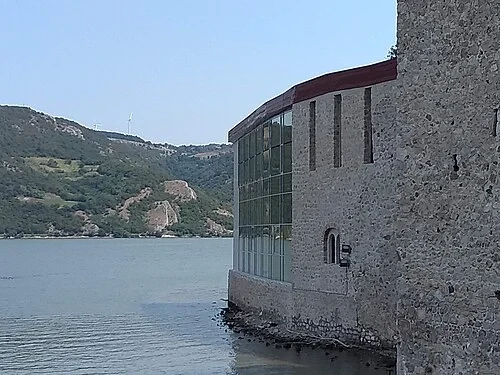 The Grand Palace (Palata)The Grand Palace Facade
The building known as the 'Palata' or Palace served as the administrative and residential core of Golubac. It was here that the fortress commander or the ruling noble family would have resided, far removed from the cold barracks of the common soldiers. As you look at the facade, you can see a distinct contrast between the original, rough-hewn medieval limestone and the smooth glass used in the recent restoration. This modern intervention was designed to protect the interior while clearly signaling which parts of the structure are historic and which are contemporary additions. Historically, this building was more than just a home; it was the site where river taxes were calculated, legal disputes were settled, and diplomatic guests were received. The interior once featured larger rooms with fireplaces, a luxury compared to the utilitarian nature of the defensive towers. The large glass windows now allow natural light to flood into the exhibition spaces, but during the Middle Ages, the openings would have been much smaller and likely covered with shutters or treated animal hides to keep out the damp river air. The masonry here is some of the most refined in the entire complex, indicating the high status of its former inhabitants.
Listen in the appPhoto: BuhaM · CC BY-SA 4.0
07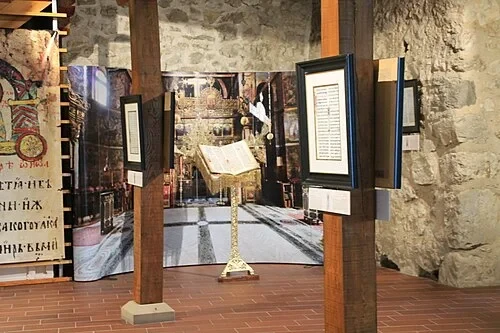 The Grand Palace (Palata)The Gospel Exhibition
Within the museum area, you will find a high-quality facsimile of the Miroslav Gospel. The original manuscript dates back to the late 12th century and is considered a masterpiece of South Slavic literacy and medieval art. While the gospel itself was not created specifically for Golubac, its presence in this exhibition highlights the deep cultural and religious connections of the Serbian nobles who held this fortress during the Middle Ages. The manuscript is famous for its intricate illuminations, which blend Byzantine style with Romanesque influences, reflecting the cultural crossroads where the Balkans sit. Such high-status objects were symbols of authority and piety for the nobility. Owning or commissioning a work of this caliber demonstrated not only wealth but also a commitment to the Orthodox faith and the preservation of the Cyrillic script. By displaying this facsimile here, the museum emphasizes that Golubac was not just a military garrison but a vital part of a sophisticated medieval state. The complex calligraphy and vibrant decorative initials suggest a society that valued artistry and intellectual labor alongside the grit of military defense. The original manuscript is currently preserved in the National Museum in Belgrade.
Listen in the appPhoto: Ванилица · CC BY-SA 4.0
08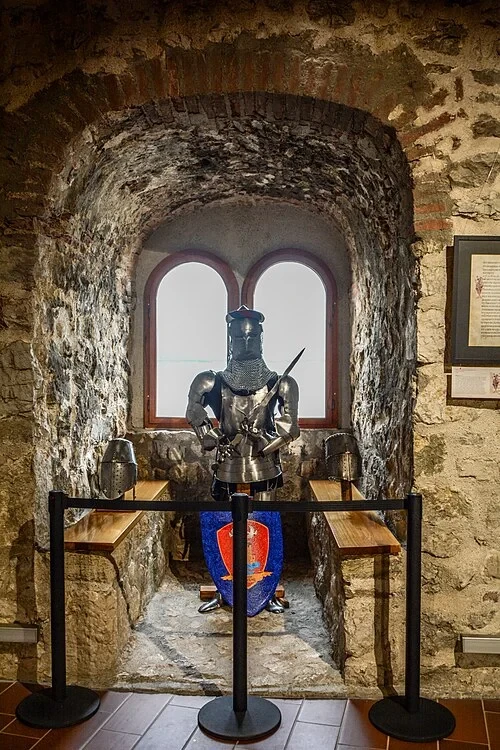 The Fortress Museum: Knights and GospelsThe Knight's Vigil
Standing before this display of medieval armor, it is easy to forget the human reality of a siege. Golubac was a site of near-constant conflict, successfully repelling over 120 recorded military attacks throughout its long history. The soldiers who stood on these walls were often encased in heavy equipment similar to what you see here. A full kit could weigh between 20 and 30 kilograms, distributed across the shoulders and hips. Beyond the sheer physical weight, consider the sensory deprivation. Looking through the narrow slits of a helmet significantly restricted a soldier's field of vision, making it difficult to track multiple attackers or maintain situational awareness in the heat of battle. Hearing was equally muffled by the metal, with only the loudest shouts and the ring of steel on steel cutting through. During the height of summer, the heat inside the armor would have been stifling, while in winter, the metal would leach heat directly from the body. This display humanizes the defensive architecture of the fortress, reminding us that these walls were only as effective as the exhausted, heavily burdened men who stood upon them. Notice the intricate joints designed to allow for a degree of movement despite the rigid exterior.
Listen in the appPhoto: DjordjeMarkovic · CC BY-SA 4.0
09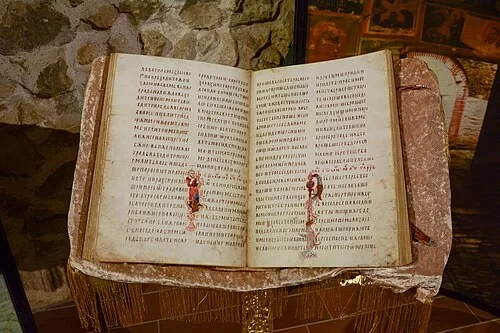 The Fortress Museum: Knights and GospelsSacred Script
A closer examination of the facsimile pages reveals the precise artistry of medieval scribes. The script is written in a combination of deep black and vibrant red ink, a traditional technique used to emphasize headers, initials, and sacred names. Each character was meticulously hand-drawn on parchment, requiring months or even years of labor to complete a single volume. While the identity of the original builders of Golubac remains a subject of debate among historians, clues about its cultural roots are found within the architecture itself. Tower 4, for instance, contains the remains of a small Orthodox chapel. This sacred space suggests that the fortress likely had Serbian noble origins, as such chapels were standard features in the strongholds of the Serbian medieval state. The presence of both the chapel and the script underscores that life here was governed by religious cycles as much as military ones. Even during times of siege, the spiritual life of the garrison was maintained. The red ink, often made from cinnabar or iron oxide, has retained its intensity over centuries, just as the religious traditions it represents remained a core part of the defenders' identity through shifting imperial rule.
Listen in the appPhoto: DjordjeMarkovic · CC BY-SA 4.0
10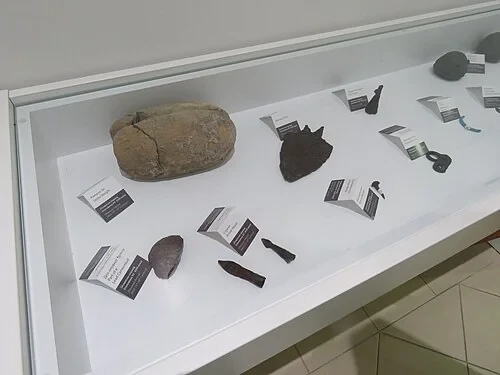 The Fortress Museum: Knights and GospelsTools of the Siege
This display case houses a collection of smaller artifacts discovered during the 2014-2019 restoration project. These items, though modest in size, offer a direct link to the daily life and death of the 14th and 15th-century soldiers who lived here. Among the objects are stone weights likely used for basic machinery or balances, as well as various types of arrowheads and lead projectiles. The arrowheads vary in shape—some are broad for causing maximum damage to unarmored targets, while others are narrow, needle-like bodkin points designed specifically to pierce chainmail or plate armor. The small lead balls represent the early transition to firearms, being the precursors to modern bullets. Unlike the grand towers and high walls, these objects were the personal tools of individual combatants. Finding them buried in the soil or wedged between stones brings the abstract history of "sieges" and "battles" down to a human scale. Each arrowhead was once notched, aimed, and released by a person standing exactly where you are today. The lead projectiles remind us that even as the fortress was being built with medieval masonry, the technology that would eventually make such walls obsolete was already being used on the battlefield.
Listen in the appPhoto: Mickey Mystique · CC BY-SA 4.0
Golubac
Frequently asked questions
How much does the guide cost?
Free app download. Listed guide price: $0.99. Guide price shown in the app. Audio guide only. Venue admission is separate.
Can I listen without internet?
Yes. Download the guide’s audio, images, and maps in the app before your visit. Your downloaded content is then available offline.
Can I listen in my language?
Stanza supports 15 languages. Check the app for the languages available for this guide.
Do I need to follow a schedule?
No. This is a self-guided experience. Choose your stops, pause whenever you like, and return to a story at your own pace.
At your own pace
Explore Golubac.
Download Stanza, then search for “Golubac”.
Free app download · Guide price shown in the app
Keep exploring
Nearby audio guides
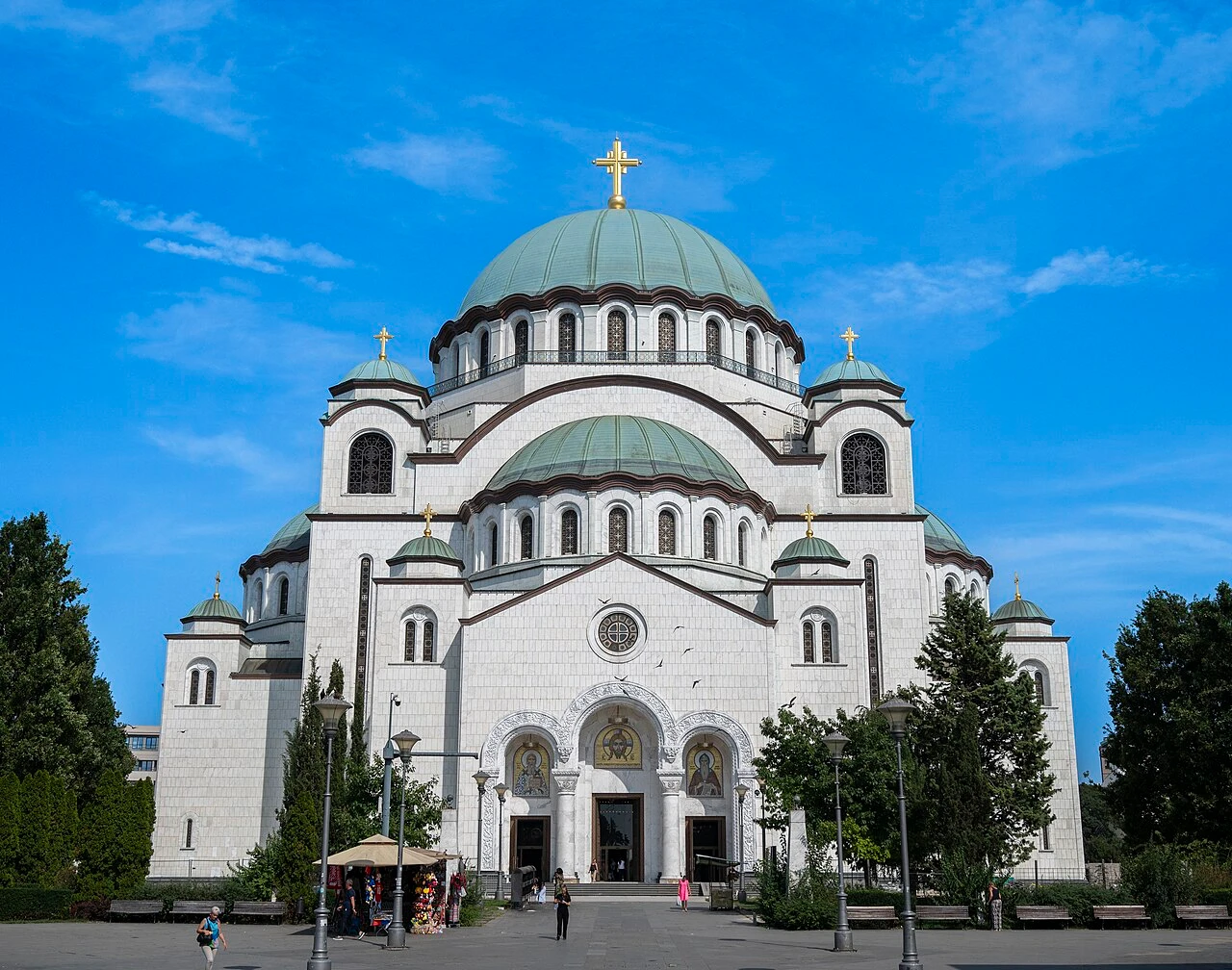
Vracar Urban Municipality
Church of Saint Sava
Content & sources
Photo: Npps90 · CC BY-SA 4.0
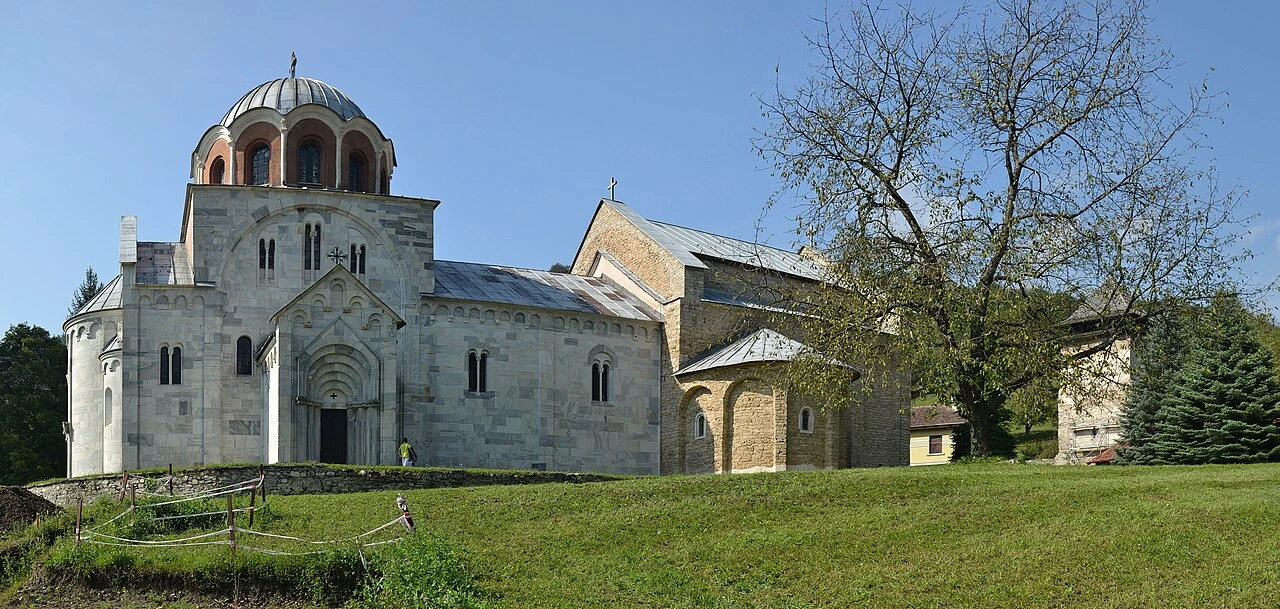
Brezova
Manastir Studenica
Content & sources
Pudelek (Marcin Szala) · CC BY-SA 3.0
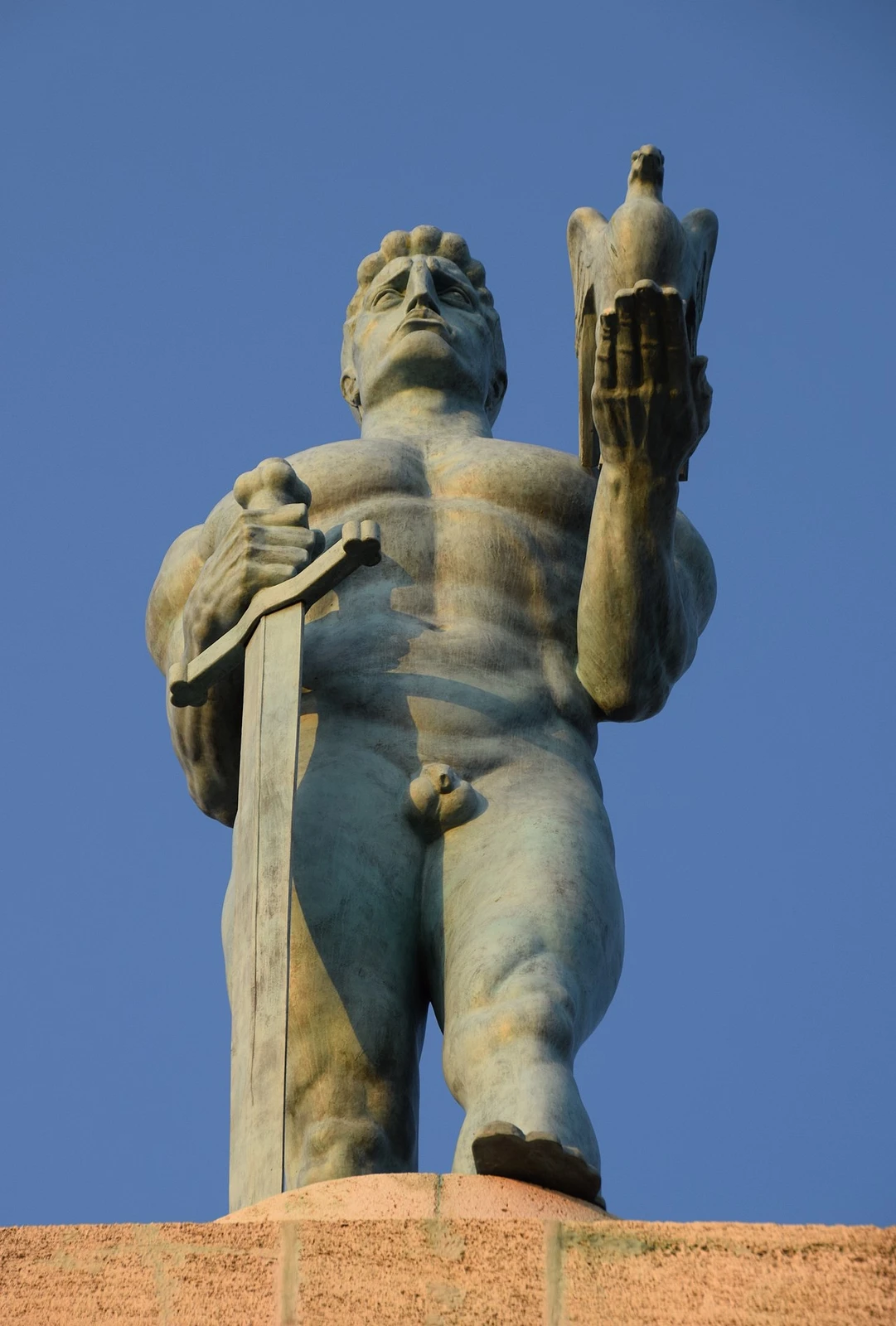
Stari Grad Urban Municipality
Pobednik
Content & sources
George M. Groutas · CC BY 4.0