Stanza · Audio guide
Church of Saint SavaAudio guide
A place to remember. A story to take with you.
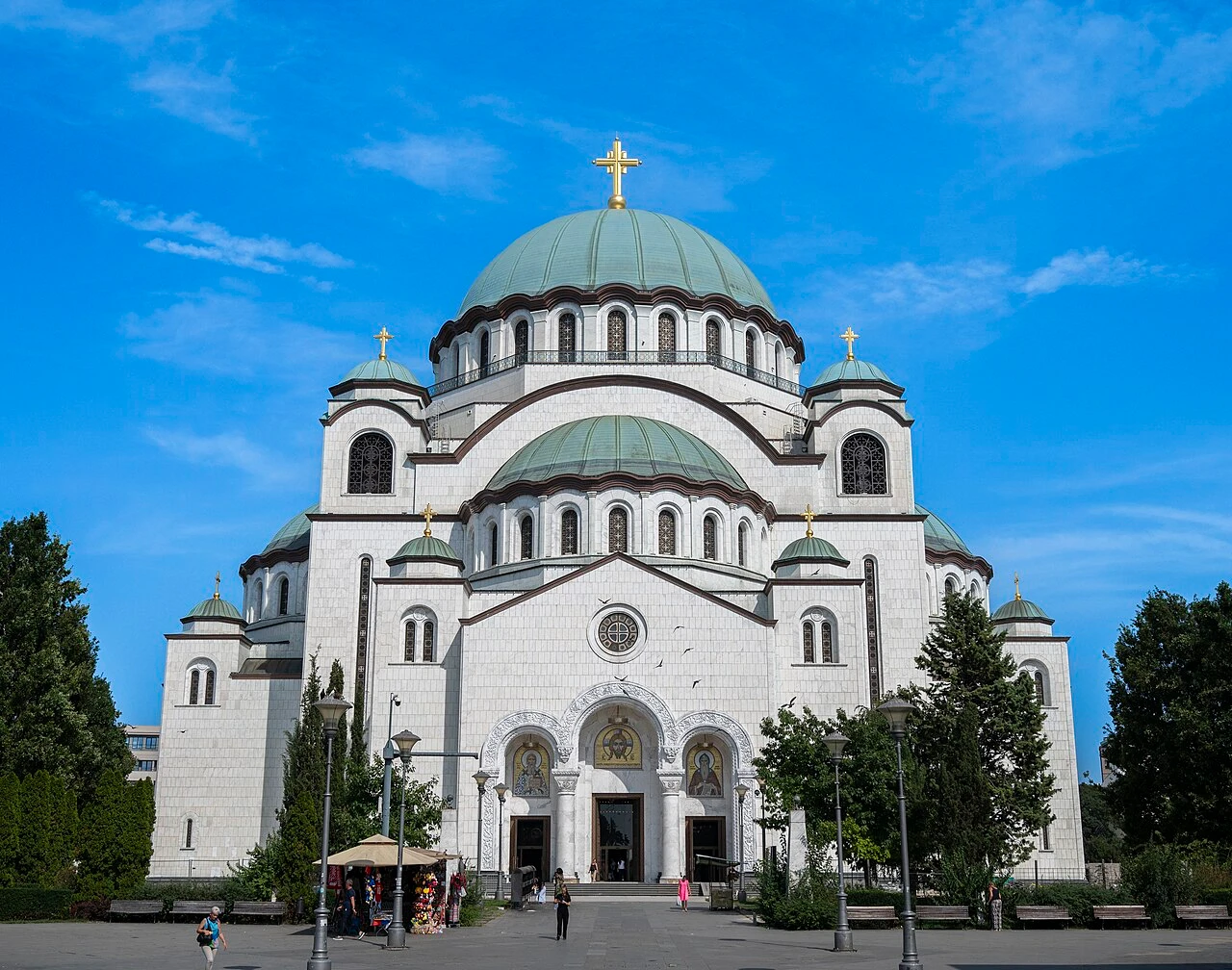
The Church of Saint Sava is an Eastern Orthodox cathedral located in Belgrade, Serbia. It is one of the largest Orthodox churches in the world and a major landmark.
Download Stanza, then search for “Church of Saint Sava”.
About the tour
One guide. Your kind of visit.
The Church of Saint Sava is an Eastern Orthodox cathedral located in Belgrade, Serbia. It is one of the largest Orthodox churches in the world and a major landmark.
Ready when you are.
- 01Get the free Stanza app.
iOS & Android
- 02Find your guide.
“Church of Saint Sava”
- 03Download before you go.
Works offline
Audio guide / 20 narrated stops
Inside the guide
Get to know a few of the stories before you go. Open a stop to read more.
01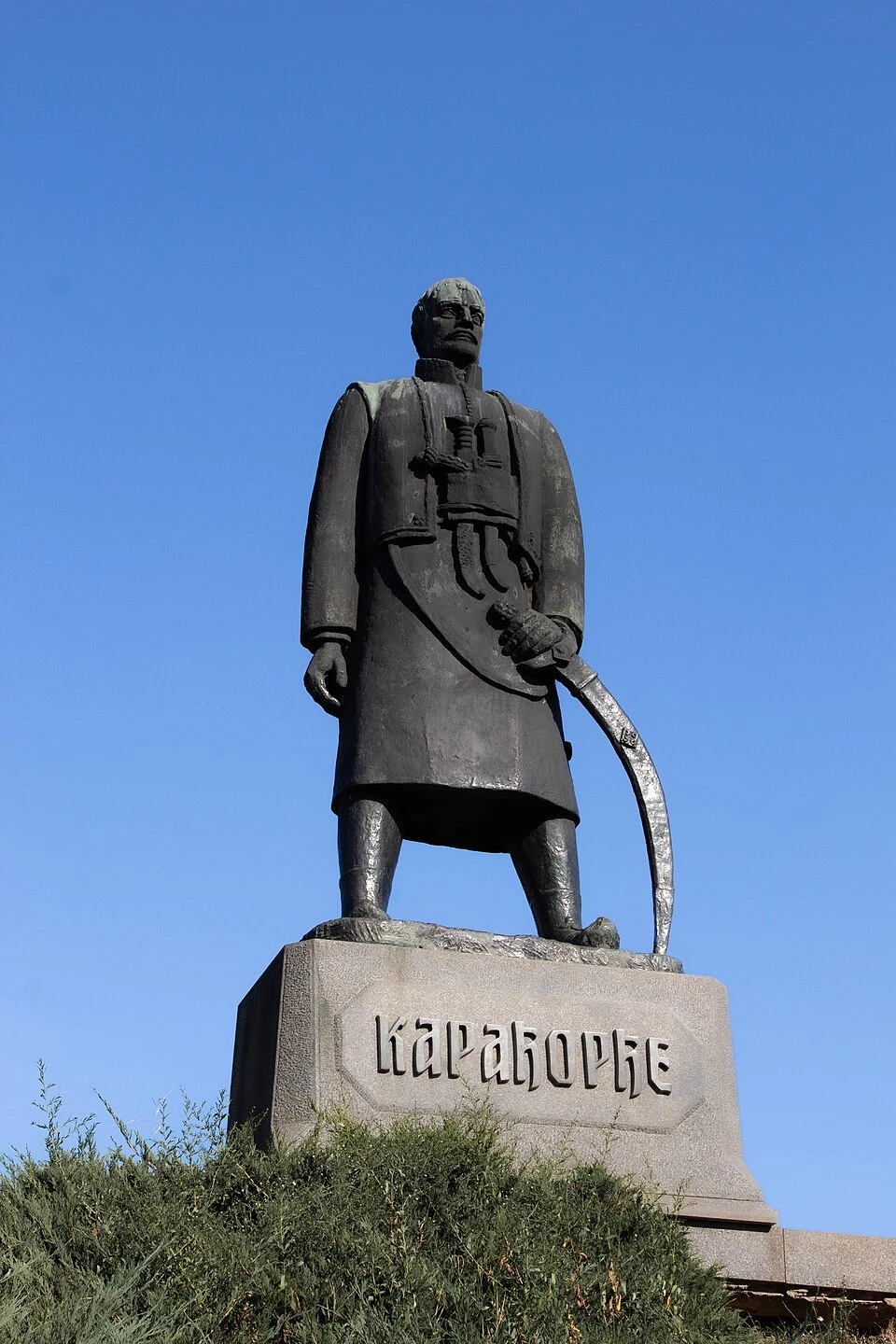 The Vračar Plateau & Karađorđe MonumentThe Karađorđe Monument
Welcome to the Church of Saint Sava, one of the most recognizable landmarks in Belgrade. Our tour begins here on the Vračar plateau, standing before the monument to Karađorđe, the legendary leader of the First Serbian Uprising in the early 19th century. This ground is much more than a public park; it is a sacred symbol of Serbian liberation and national identity. As you observe the statue, notice how the warrior’s determined gaze is fixed upon the massive white temple nearby. This positioning is intentional, framing the site as both the spiritual and historical heart of the nation. Karađorđe represents the struggle for independence from centuries of Ottoman rule, a struggle inextricably linked to the faith preserved by the Serbian Orthodox Church. By starting here, we acknowledge that the church is not just a building, but a monument to a resilient people. The plateau itself has witnessed the most pivotal moments of Serbian history, and this statue serves as a silent sentinel, bridging the gap between the revolutionary past and the enduring spiritual present that the great temple embodies.
Kec_foto · CC BY-SA 4.0
02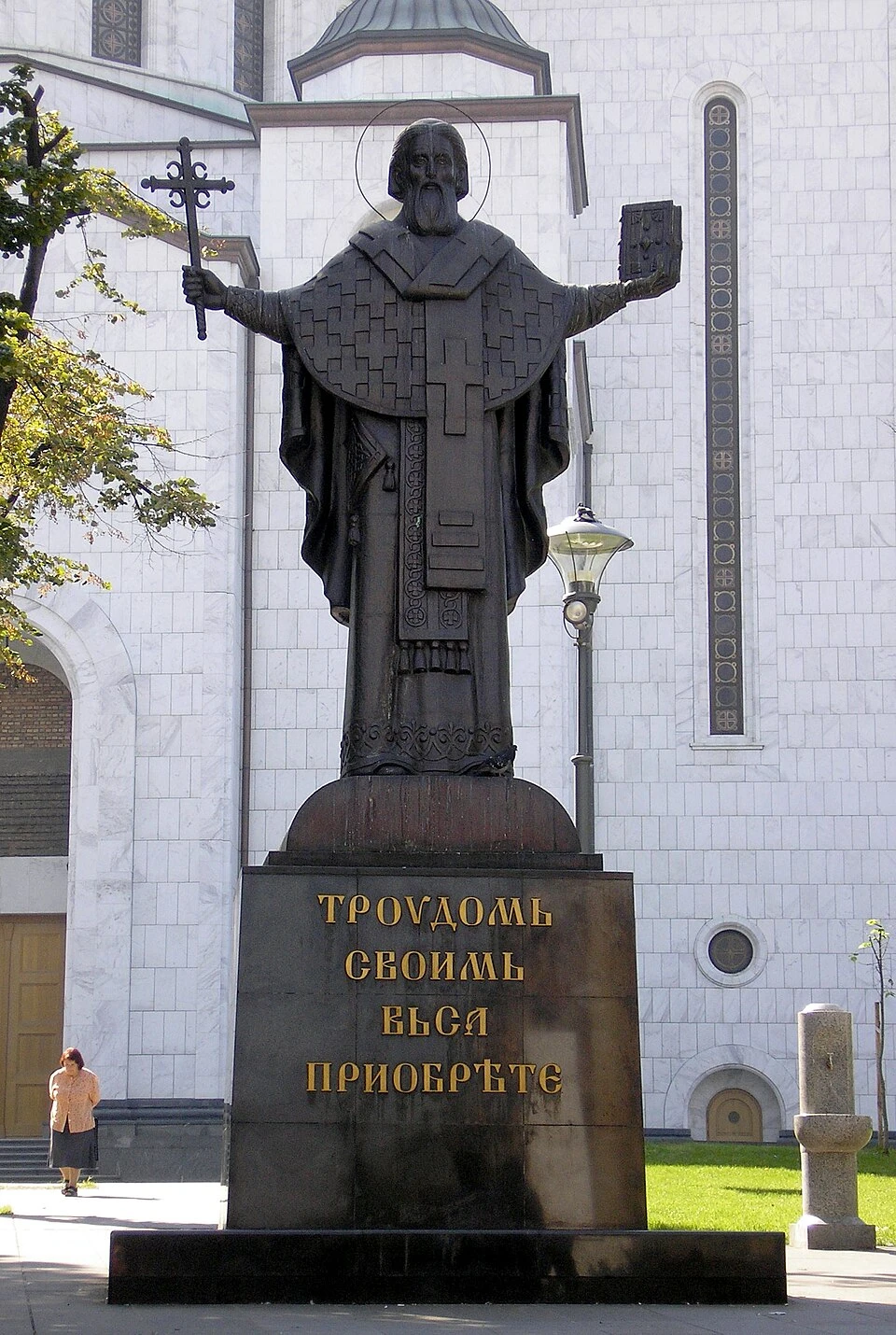 The Statue of Saint Sava & The Small ChurchStatue of Saint Sava
Standing before this statue, we meet the man for whom this entire complex is named. Born Rastko Nemanjić, he was a Serbian prince who famously abandoned his royal titles and wealth to become a monk on Mount Athos, taking the name Sava. He eventually became the first Archbishop of the autocephalous Serbian Church in the 13th century. However, the significance of this specific location stems from a dark event long after his death. In 1595, during the Ottoman occupation, the Grand Vizier Sinan Pasha ordered that Saint Sava's holy relics be brought here from Mileševa Monastery and publicly burned. This act was intended to crush the Serbian spirit and break their will for independence. Instead, it had the opposite effect, cementing Sava’s status as a martyr and a symbol of national endurance. This temple was built on this very ground centuries later as a direct response to that historical trauma—a grand architectural statement of resilience. It serves as a reminder that while the relics were turned to ash, the values and faith they represented could not be destroyed.
Michael Angelkovich · CC BY-SA 3.0
03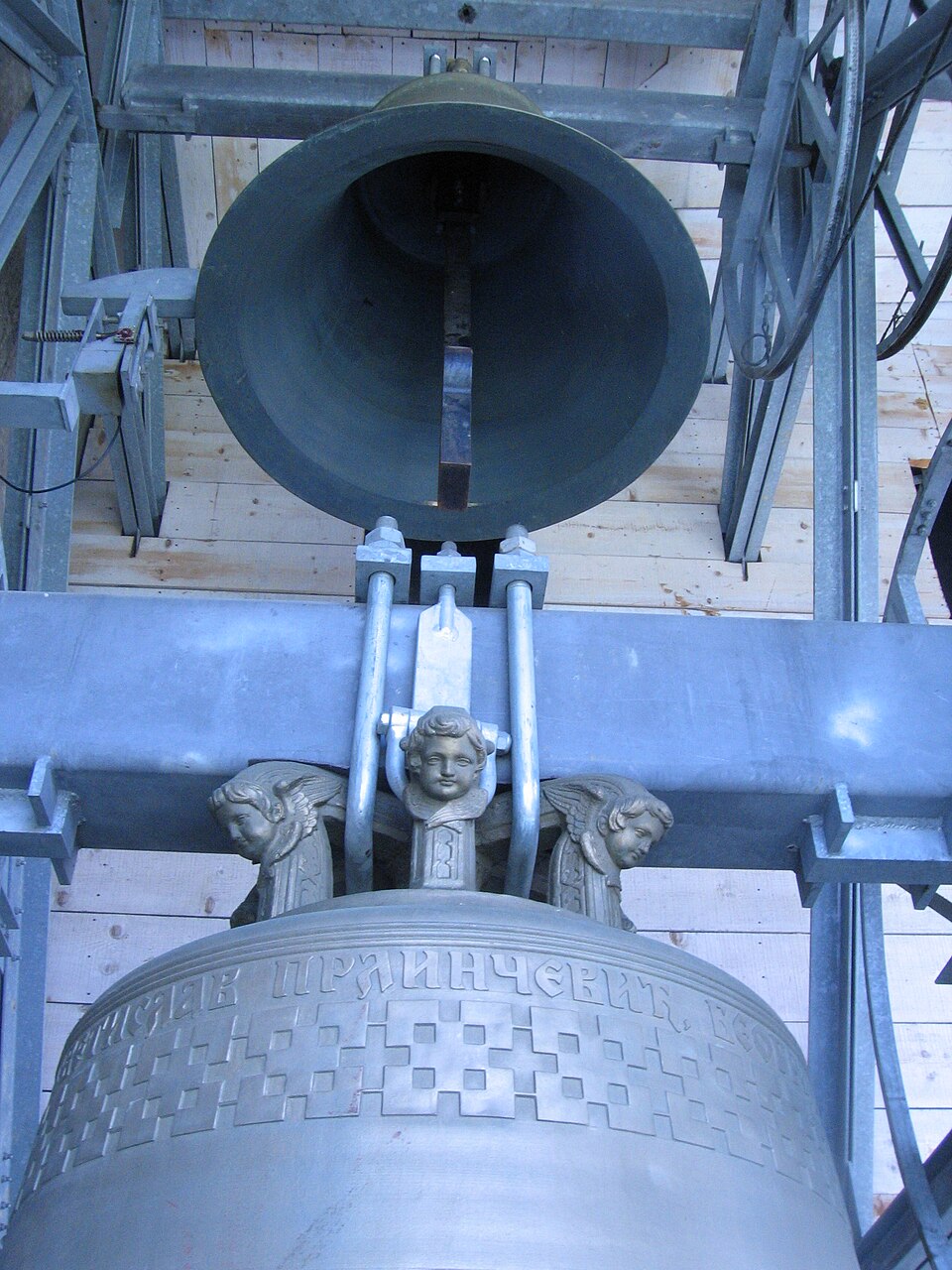 The White Marble Facade & The BellsThe White Marble Facade
Now, turn your attention to the magnificent exterior of the temple. The sheer scale of the building is breathtaking. It is clad in approximately 12,000 square meters of brilliant white Volakas marble, specially sourced from Greece, which gives the structure its pristine, luminous appearance. Reaching a total height of 78.3 meters, it is one of the largest Orthodox church buildings in the world. Looking up at the various domes, you will see a collection of 18 gold-plated crosses. These are not merely decorative; they signify the church's status as a beacon of the faith. The central cross, standing atop the main dome, is particularly impressive, reaching a height of 12 meters on its own. The architectural style, known as Serbo-Byzantine, is meant to evoke the grandeur of medieval Serbian and Byzantine traditions. The massive proportions and the choice of white stone ensure that the temple remains visible from almost every corner of the city, serving as a constant geographic and spiritual anchor for the residents of Belgrade.
Listen in the appPhoto: Orjen · CC BY-SA 4.0
04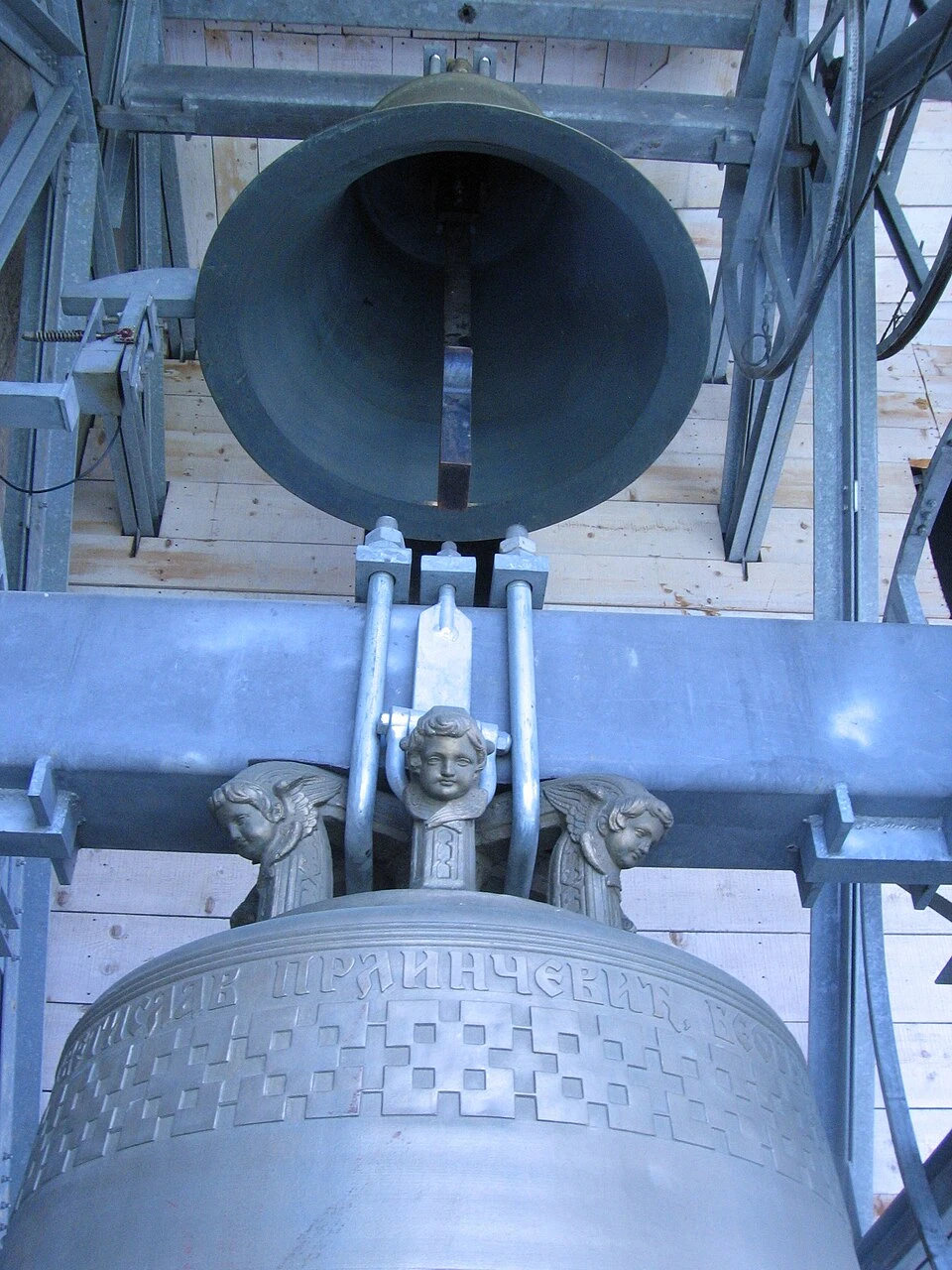 The White Marble Facade & The BellsThe Bells of Vračar
As you look toward the four corner towers flanking the central dome, you are looking at the home of the Bells of Vračar. There are a total of 49 bells housed within these structures, ranging in size and weight. These bells were crafted by the renowned Grassmayr bell foundry in Austria, a company with centuries of experience in the craft. Their installation marked a major emotional and technical milestone in the church’s long and often delayed completion process. The bells are connected to a sophisticated carillon system, which allows them to play melodic arrangements. If you are here at the right time, you might hear the 'Hymn of Saint Sava' echoing across Belgrade, a melody deeply ingrained in the local culture. The sound of these bells is more than just a call to prayer; for many, it represents the final 'voice' of a temple that remained silent for decades during its construction. The clarity and resonance of the bells are designed to reach the furthest suburbs of the city, signaling the presence and the persistence of the Vračar sanctuary.
Listen in the appPhoto: Orjen · CC BY-SA 4.0
05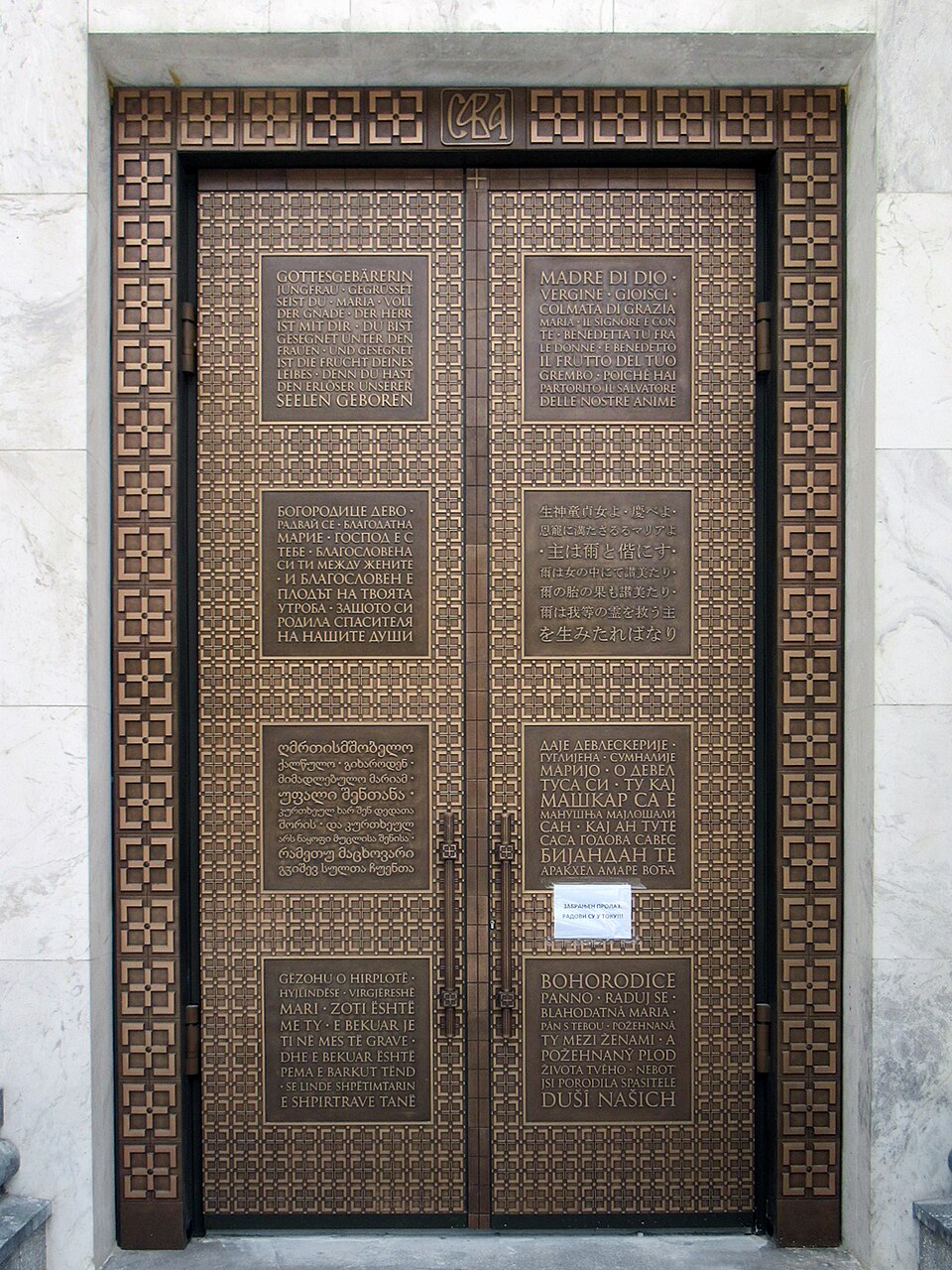 The West Portal & Bronze DoorsThe West Portal
Approaching the main entrance, we can truly appreciate the architectural vision of Bogdan Nestorović and Aleksandar Deroko, the lead architects behind this project. Their design intentionally echoes the 'New Hagia Sophia' concept, seeking to position Belgrade as a modern successor to the great Byzantine spiritual and architectural traditions. Notice the massive scale of the arches and columns that frame this portal. They are designed to funnel thousands of worshippers into the vast sacred space inside simultaneously, emphasizing the church's role as a gathering place for the entire nation. The use of traditional Byzantine forms—the semi-circular arches and heavy, grounded masonry—creates a sense of timelessness and continuity with the past. This portal acts as more than just a door; it is a transitional space meant to humble the visitor before they enter the light-filled interior. The architectural choices here reflect a desire to bridge the gap between medieval Serbian heritage and a grand, pan-Orthodox aesthetic, making a powerful statement about the cultural identity of the region.
Listen in the appPhoto: Artemco · CC BY-SA 4.0
06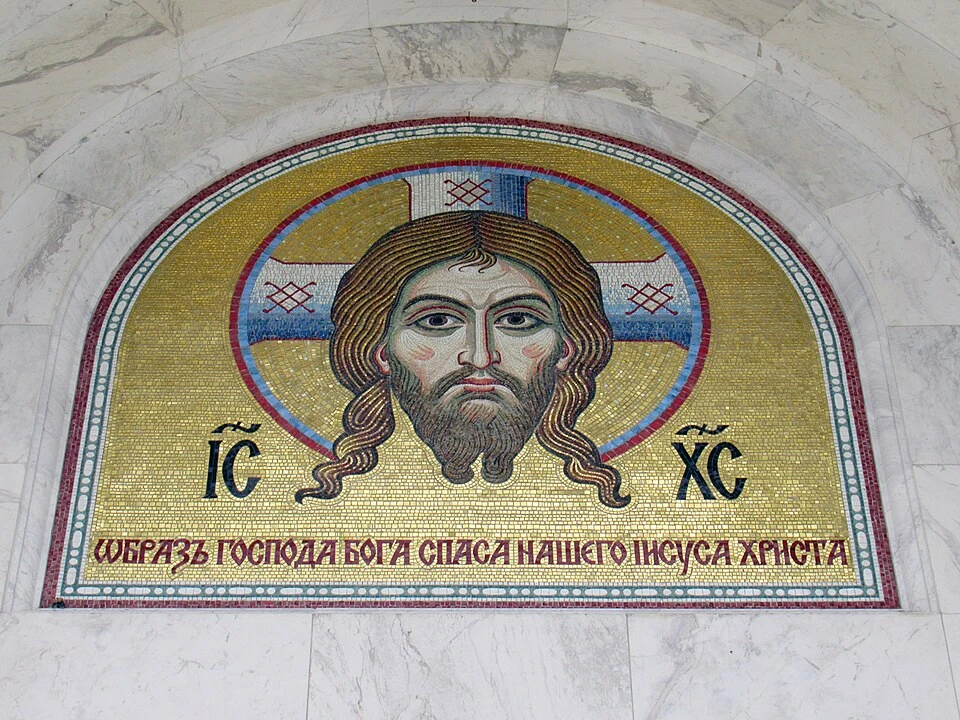 The West Portal & Bronze DoorsMosaic of the Mandylion
Pause for a moment to look at the mosaic above the entrance doors. This image, known as the Mandylion or the 'Face of Christ Not Made by Hand,' serves as the perfect introduction to the interior’s overarching theme: light. As you enter, you are stepping into a space decorated with roughly 15,000 square meters of gold-leaf mosaics. This represents one of the largest decorated surfaces in the entire Christian world, a feat of artistic and logistical coordination. The creation of these mosaics was not a solitary effort but a massive collaborative project between Serbian and Russian artists and craftsmen. The gold backgrounds of these mosaics are designed to catch and amplify every ray of light, whether from the sun or from candles, creating an ethereal glow that seems to emanate from the walls themselves. This specific mosaic of Christ is a traditional Orthodox greeting to the faithful, a solemn and welcoming gaze that sets the spiritual tone for everything you are about to see inside the nave.
Listen in the appAndrija12345678 · CC BY-SA 4.0
07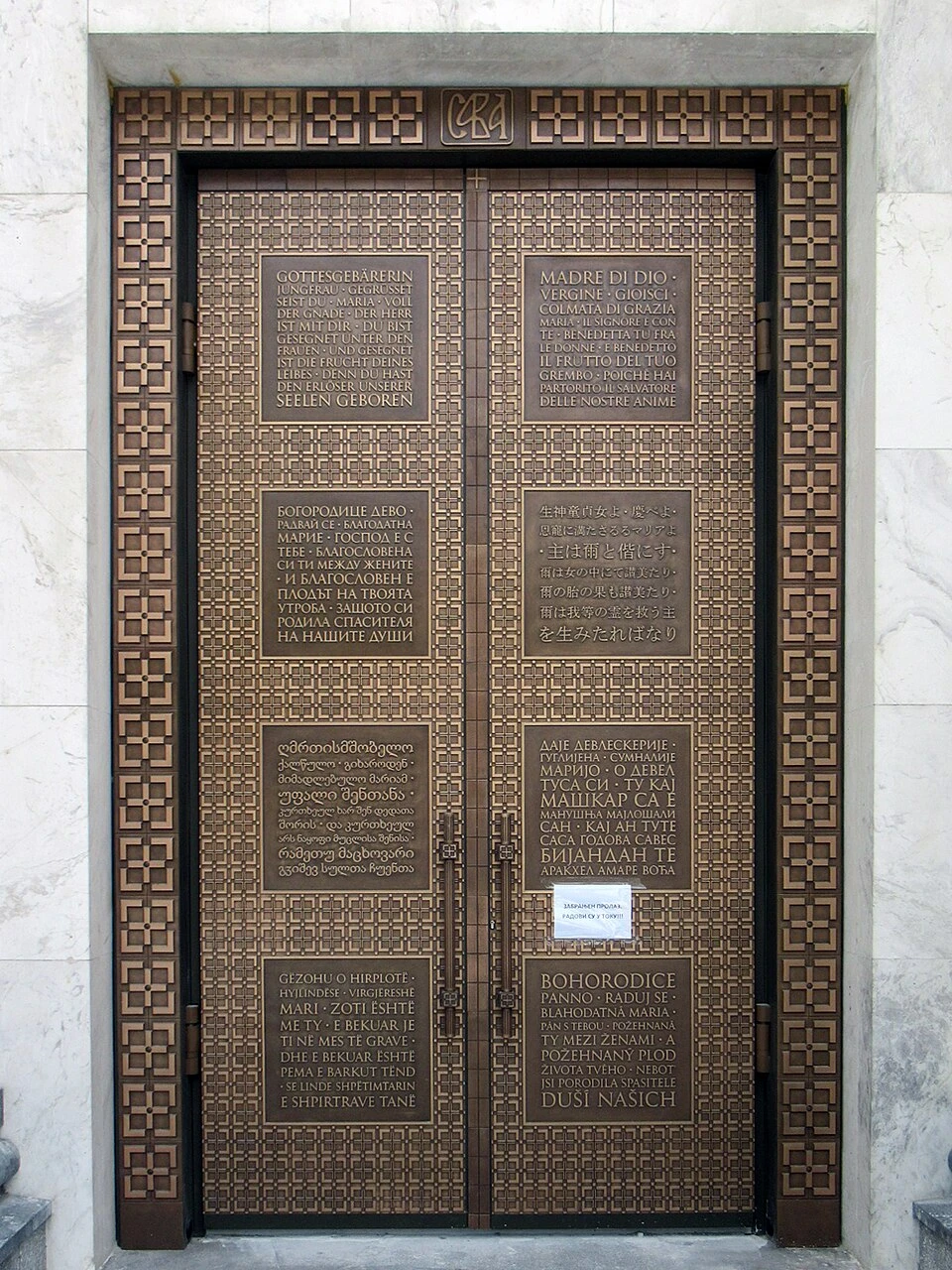 The West Portal & Bronze DoorsThe Bronze Doors
Before stepping through, take a close look at the intricate bronze doors. They are more than just functional barriers; they are works of art that reflect the church's global ambition. You may notice that the 'Hail Mary' prayer is inscribed here in several different languages. This detail highlights the temple's vision to serve as a universal center for the entire Orthodox world, welcoming visitors from all nations. The scale of these portals is matched by the interior's capacity; the church is designed to accommodate up to 10,000 worshippers at once during major religious festivals. These doors mark the threshold between the bustling modern city of Belgrade and the 'heavenly' atmosphere of the interior. The heavy, solid feel of the metal contrasted with the delicate script of the prayers provides a sensory transition, preparing the visitor for the spiritual experience that awaits inside. They represent the strength of the faith and the openness of the church to the wider world.
Listen in the appPhoto: Artemco · CC BY-SA 4.0
08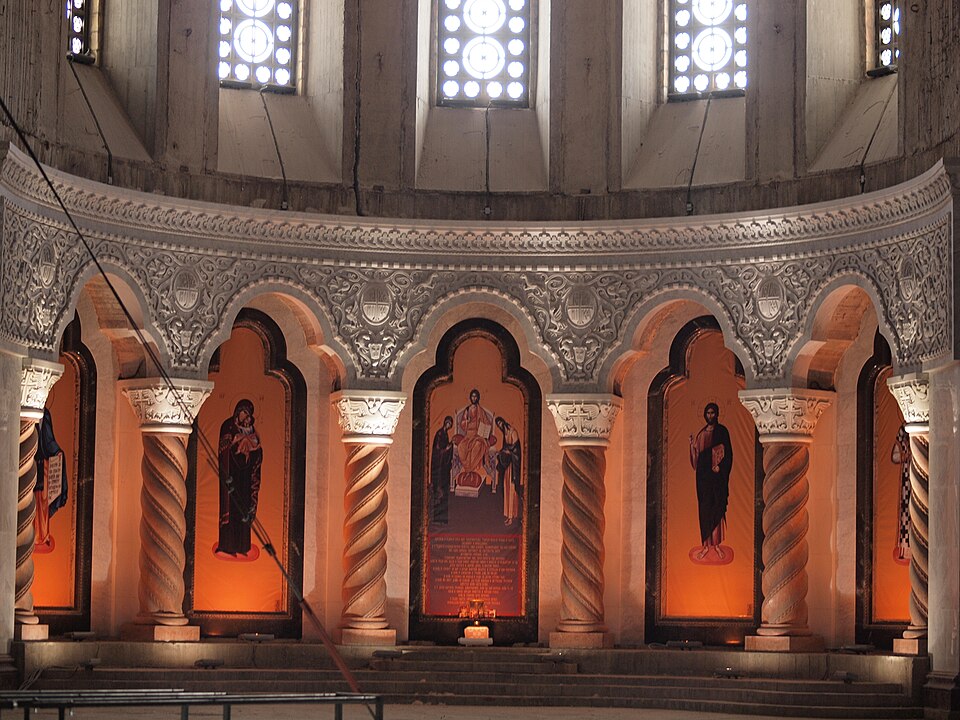 The Golden Nave & The Central ChandelierThe Golden Nave
Stepping inside provides the true 'wow' moment of the tour. The sheer volume of the space is staggering, but it is the golden glow that truly defines the experience. This radiance is produced by millions of individual glass tesserae, or mosaic tiles, many of which are covered in genuine gold leaf. For decades, this interior remained a hollow, empty concrete shell due to wars, political shifts, and financial hardships. It wasn't until the early 2020s that the shimmering decoration you see today was finally completed. This massive undertaking was made possible through significant cooperation and funding from Russia, reflecting the deep religious and cultural ties between the two nations. The light here doesn't just illuminate the space; it transforms it into something that feels separate from the material world. As you stand in the center, the light reflecting off the curved surfaces creates a sense of being enveloped in a celestial atmosphere, fulfilling the original architectural intent of creating a 'heaven on earth' for the congregation.
Listen in the appPhoto: Orjen · CC BY-SA 3.0
09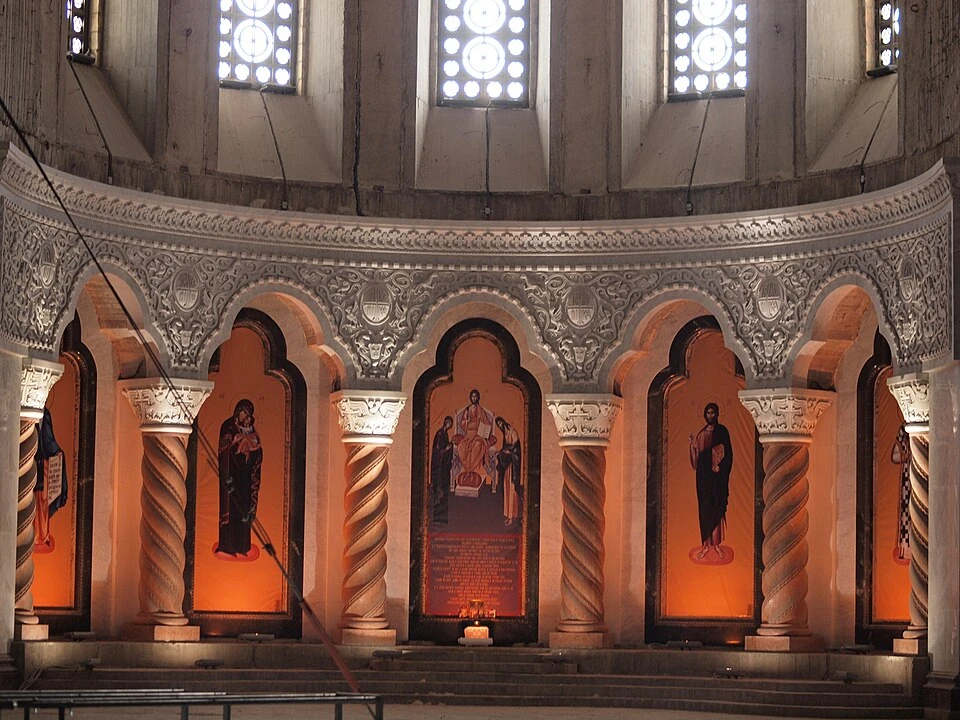 The Golden Nave & The Central ChandelierThe Central Chandelier
Dominating the central space is the massive circular chandelier, known in the Orthodox tradition as a 'choros.' This impressive feature serves to anchor the vast verticality of the nave, providing a human-scale point of reference within the towering architecture. If you look past the chandelier to the surrounding gallery arches, you can see the exquisite craftsmanship of the carved stonework. These details are a beautiful blend of styles; they incorporate the 'Morava' architectural style, which is unique to medieval Serbia, with grander Byzantine influences. Notice the intricate patterns and motifs carved into the stone, which add a layer of texture and human touch to the monumental structure. The choros itself is often lit during services, casting a warm light that emphasizes the depth and complexity of the mosaics and stonework above. It is a symbol of the light of Christ and the unity of the faithful who gather beneath its wide embrace, bridging the floor where the congregation stands with the celestial heights of the dome.
Listen in the appPhoto: Orjen · CC BY-SA 3.0
10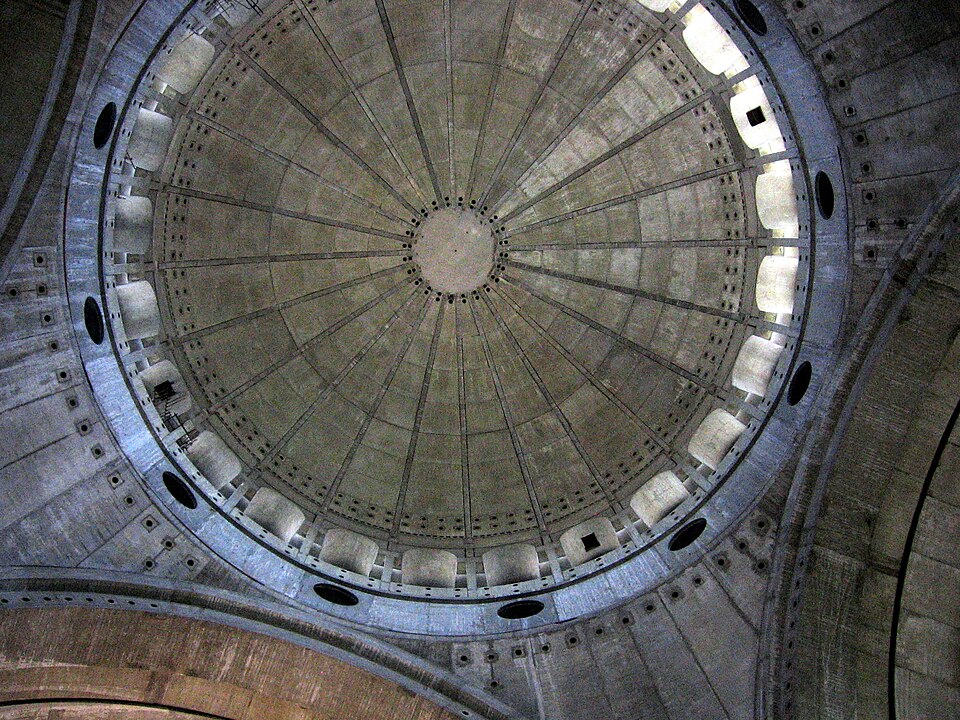 The Great Dome & The Ascension MosaicUnder the Great Dome
Position yourself directly under the center of the great dome to appreciate one of the most remarkable engineering feats in modern Serbian history. In 1989, this site witnessed what became known as the 'Great Dome Lift.' Rather than building the massive structure at its final height, engineers constructed the 4,000-ton dome entirely on the ground inside the unfinished walls of the church. Over a period of 20 days, a series of specialized hydraulic jacks were used to slowly raise the entire structure 40 meters into the air. It was a painstaking process, moving just a few meters each day, and it drew spectators from across the country. This feat of modern technology finally gave the Church of Saint Sava its iconic silhouette, which had been missing for over half a century. The successful lift was seen as a sign of hope during a turbulent era, proving that despite immense technical and political challenges, the completion of the national temple was finally within reach.
Listen in the appPhoto: Stebunik · CC0
Church of Saint Sava
Frequently asked questions
How much does the guide cost?
Free app download. Listed guide price: $1.99. Guide price shown in the app. Audio guide only. Venue admission is separate.
Can I listen without internet?
Yes. Download the guide’s audio, images, and maps in the app before your visit. Your downloaded content is then available offline.
Can I listen in my language?
Stanza supports 15 languages. Check the app for the languages available for this guide.
Do I need to follow a schedule?
No. This is a self-guided experience. Choose your stops, pause whenever you like, and return to a story at your own pace.
At your own pace
Explore Church of Saint Sava.
Download Stanza, then search for “Church of Saint Sava”.
Free app download · Guide price shown in the app
Keep exploring
Nearby audio guides
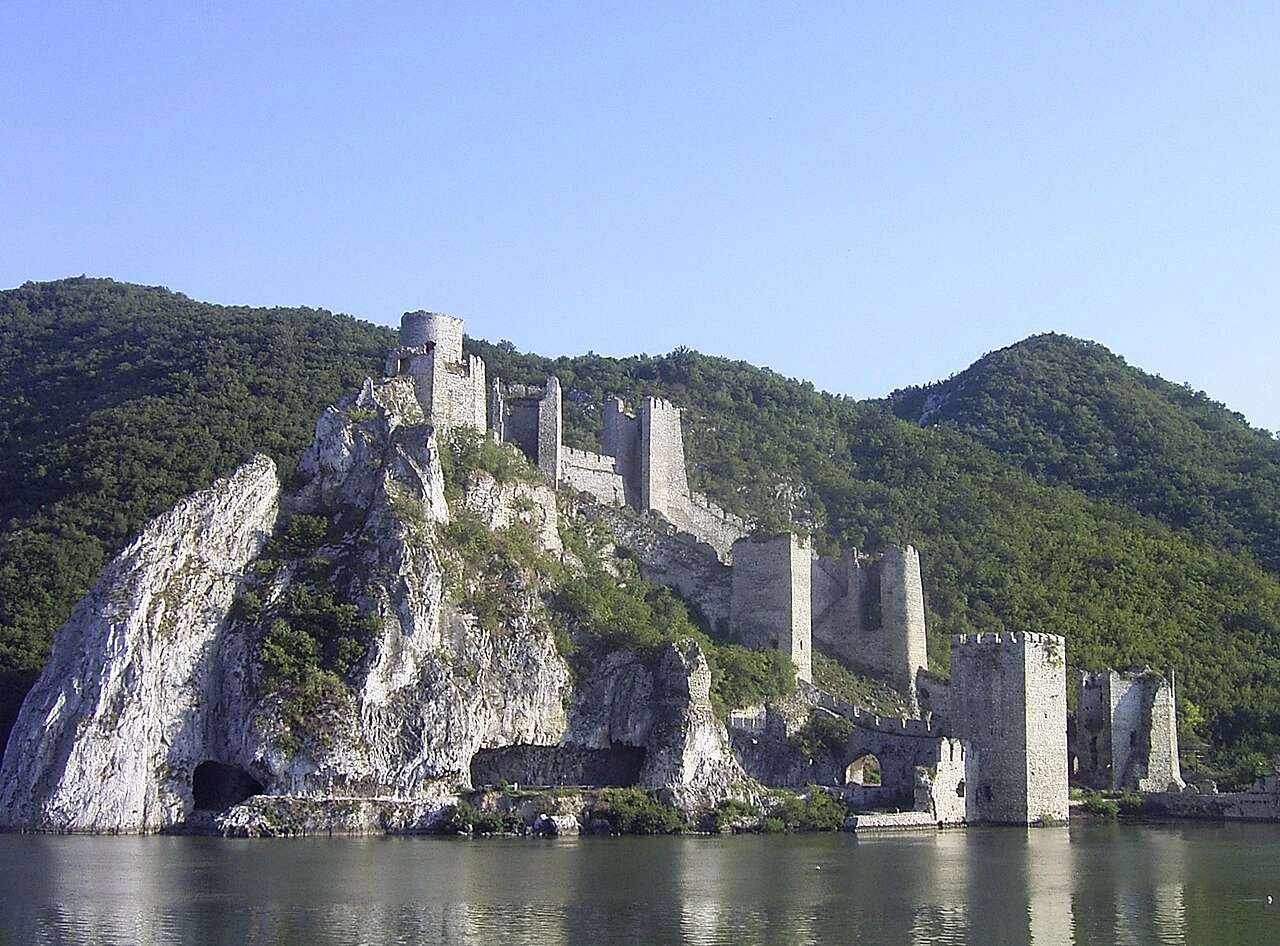
Golubac Municipality
Golubac
Content & sources
Photo: Denis Barthel · CC BY-SA 3.0
Brezova
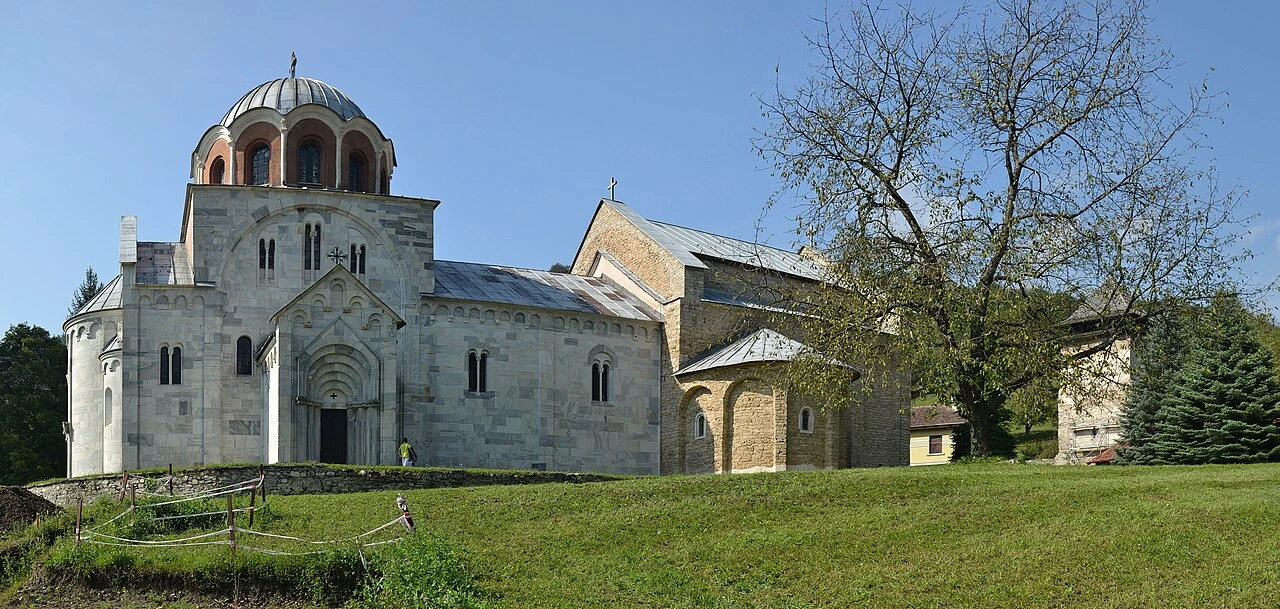
Manastir Studenica
Content & sources
Pudelek (Marcin Szala) · CC BY-SA 3.0
Stari Grad Urban Municipality
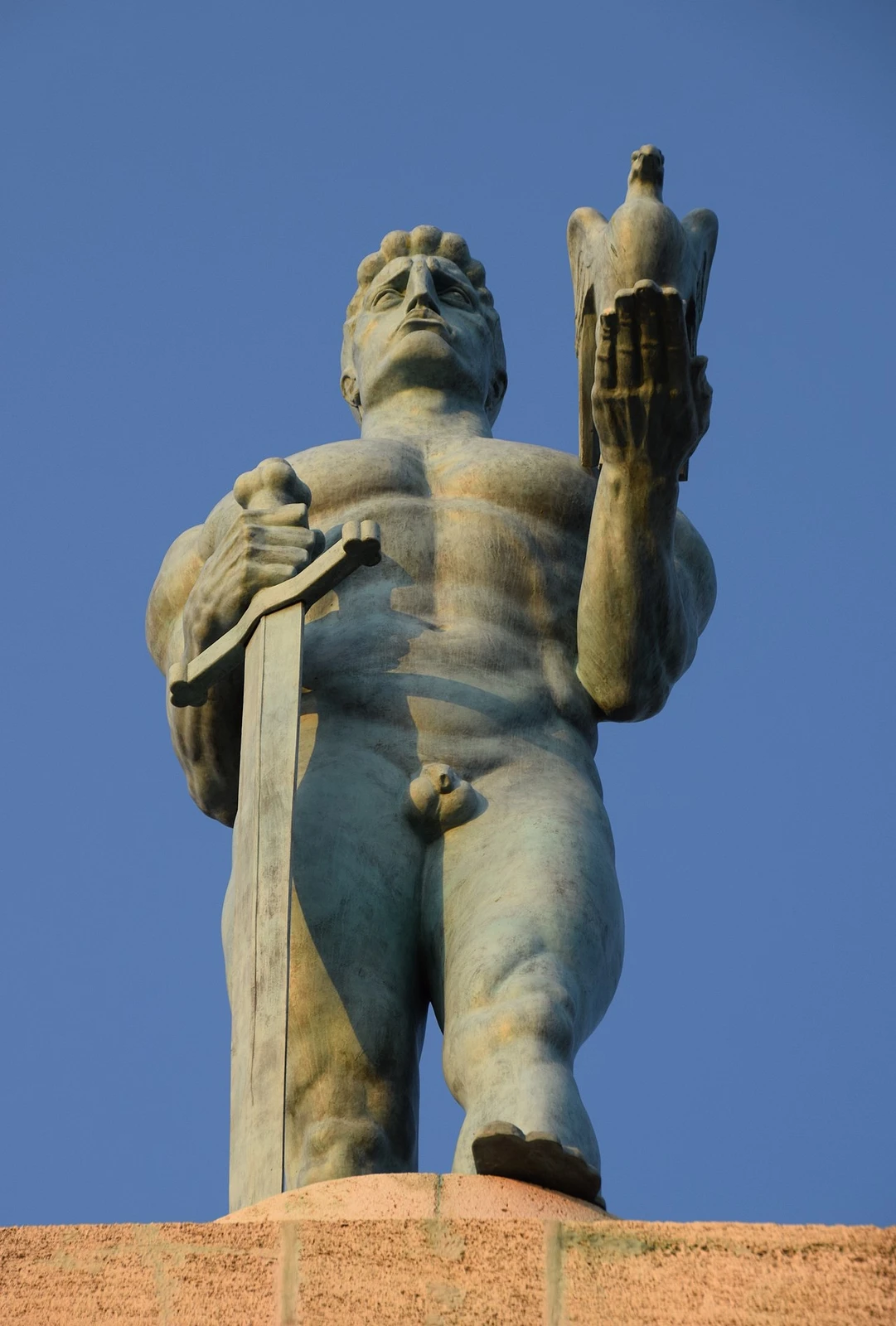
Pobednik
Content & sources
George M. Groutas · CC BY 4.0