 Stanza / Audio guide
Content & sources
Stanza · Audio guide
PobednikAudio guide
A place to remember. A story to take with you.
Pobednik (The Victor) is a monumental sculpture and monument located within the Belgrade Fortress, Serbia. It is an immovable cultural property depicting a male figure with a falcon and a sword, commemorating…
Download Stanza, then search for “Pobednik”.
About the tour
One guide. Your kind of visit.
Pobednik (The Victor) is a monumental sculpture and monument located within the Belgrade Fortress, Serbia. It is an immovable cultural property depicting a male figure with a falcon and a sword, commemorating Serbian victories during the Balkan Wars and World War I.
Ready when you are.
- 01Get the free Stanza app.
iOS & Android
- 02Find your guide.
“Pobednik”
- 03Download before you go.
Works offline
Audio guide / 10 narrated stops
Inside the guide
Get to know a few of the stories before you go. Open a stop to read more.
01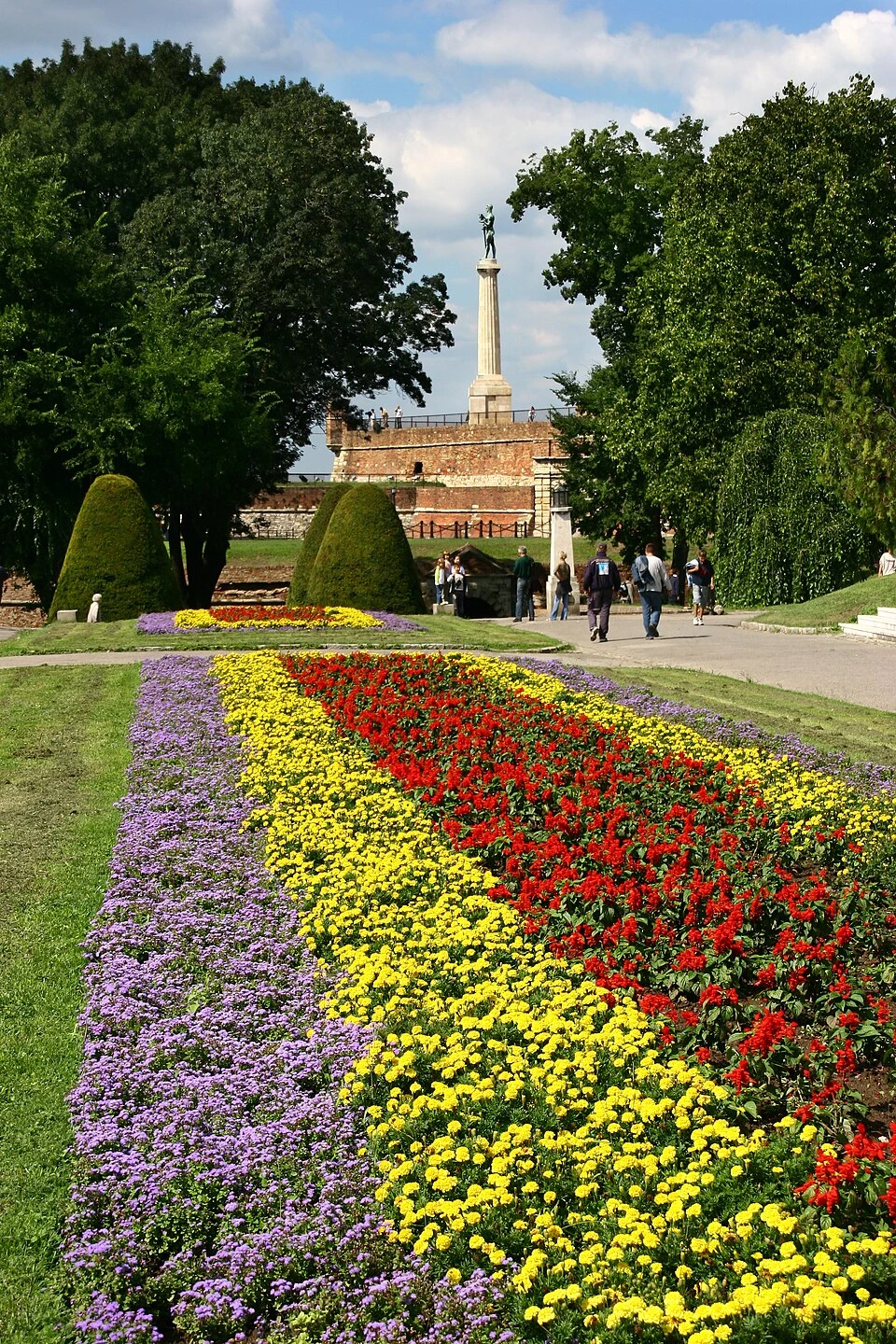 Arrival at the Victor's PlateauThe Approach to the Victor
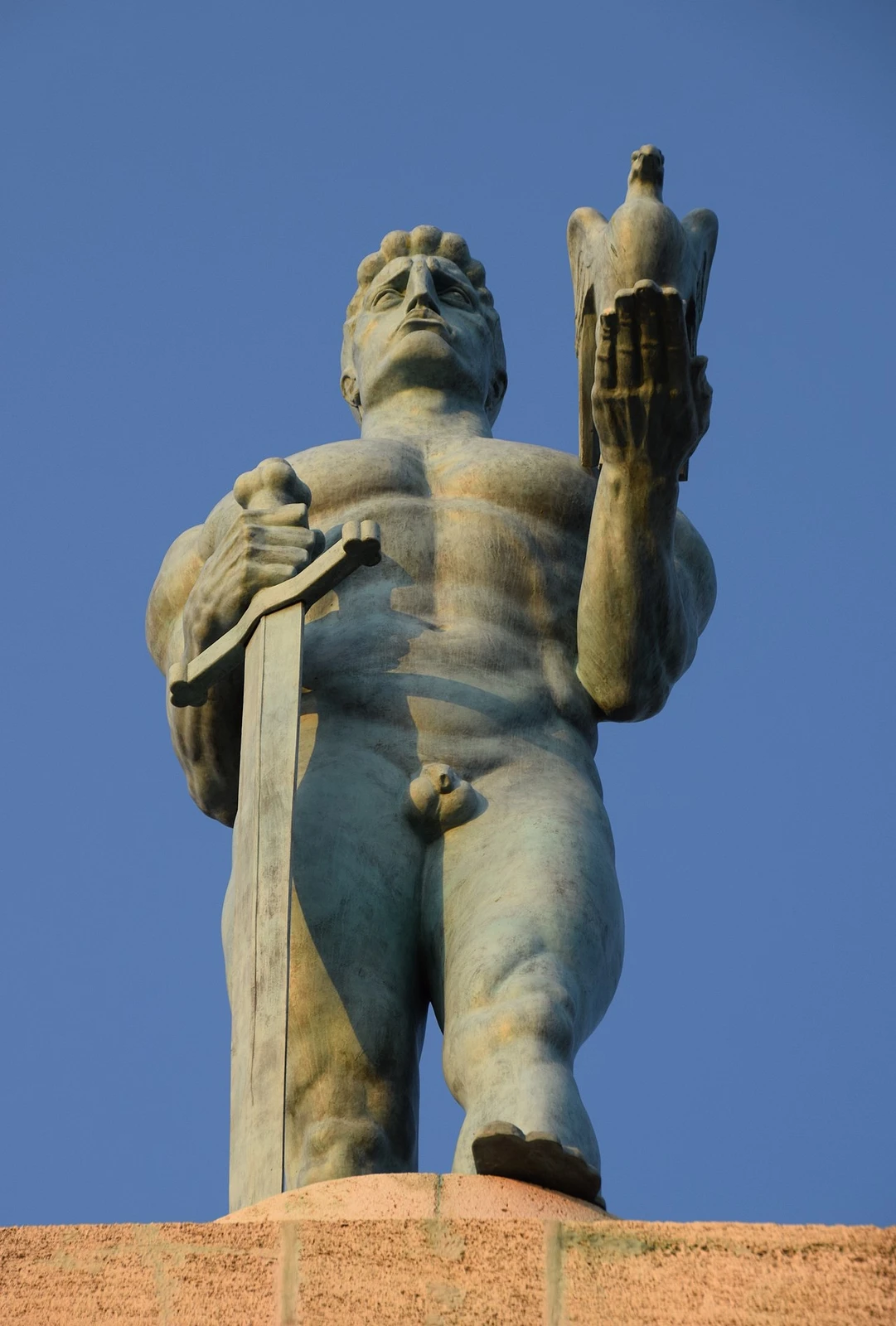
Welcome to the Belgrade Fortress. Standing tall above the manicured gardens and ancient stone walls is Pobednik, or The Victor, arguably Belgrade's most recognizable landmark. This massive monument reaches a total height of fourteen meters, with the colossal male figure itself standing five meters tall. It was envisioned by the world-renowned sculptor Ivan Meštrović and the architect Petar Bajalović, two titans of early 20th-century design. Interestingly, while the statue was cast in 1913 to celebrate the Serbian victory in the Balkan Wars, it remained hidden from public view for fifteen years. The onset of the First World War and a surprising local scandal surrounding its appearance delayed its unveiling until 1928. Over time, it has transformed from a simple war memorial into a legendary symbol of the city’s skyline. As you approach, consider the sheer scale of the work and its commanding position, which was designed to communicate a sense of enduring strength and resilience after a period of immense regional turmoil.
Photo: Jsphotomorgana · CC BY-SA 4.0
02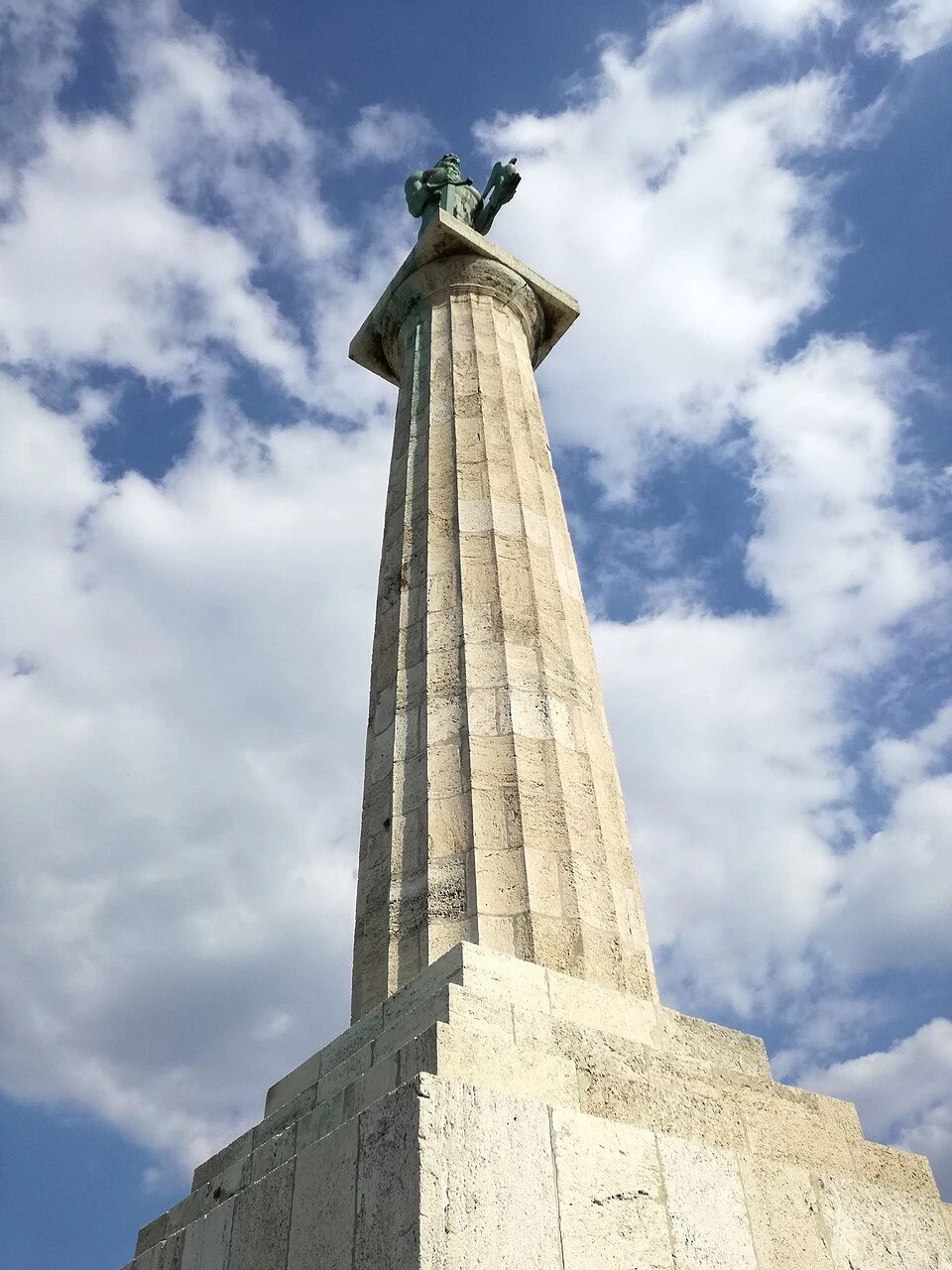 The Column and the Fountain ConceptThe Doric Column
Rising atop a stark Doric column, the Victor cuts a striking figure, but his current location was actually a second choice. Originally, this monument was commissioned for the city's central Terazije Square as the centerpiece of a magnificent fountain. However, as the unveiling approached in 1927, a fierce public debate erupted known as the 'Great Nudity Scandal.' Religious organizations and women’s groups were scandalized by the figure's complete lack of clothing, labeling it 'rude' and unsuitable for the heart of the capital. Facing immense pressure, the city council decided to 'exile' the Victor to this ridge at the edge of the Kalemegdan fortress. Here, perched high and far from the busy streets, he would be less visible to 'chaste Belgrade ladies.' Ironically, this move created the dramatic, unmissable silhouette we see today, turning a controversial rejection into the city's most iconic view.
Photo: Дидаскалос · CC BY-SA 4.0
03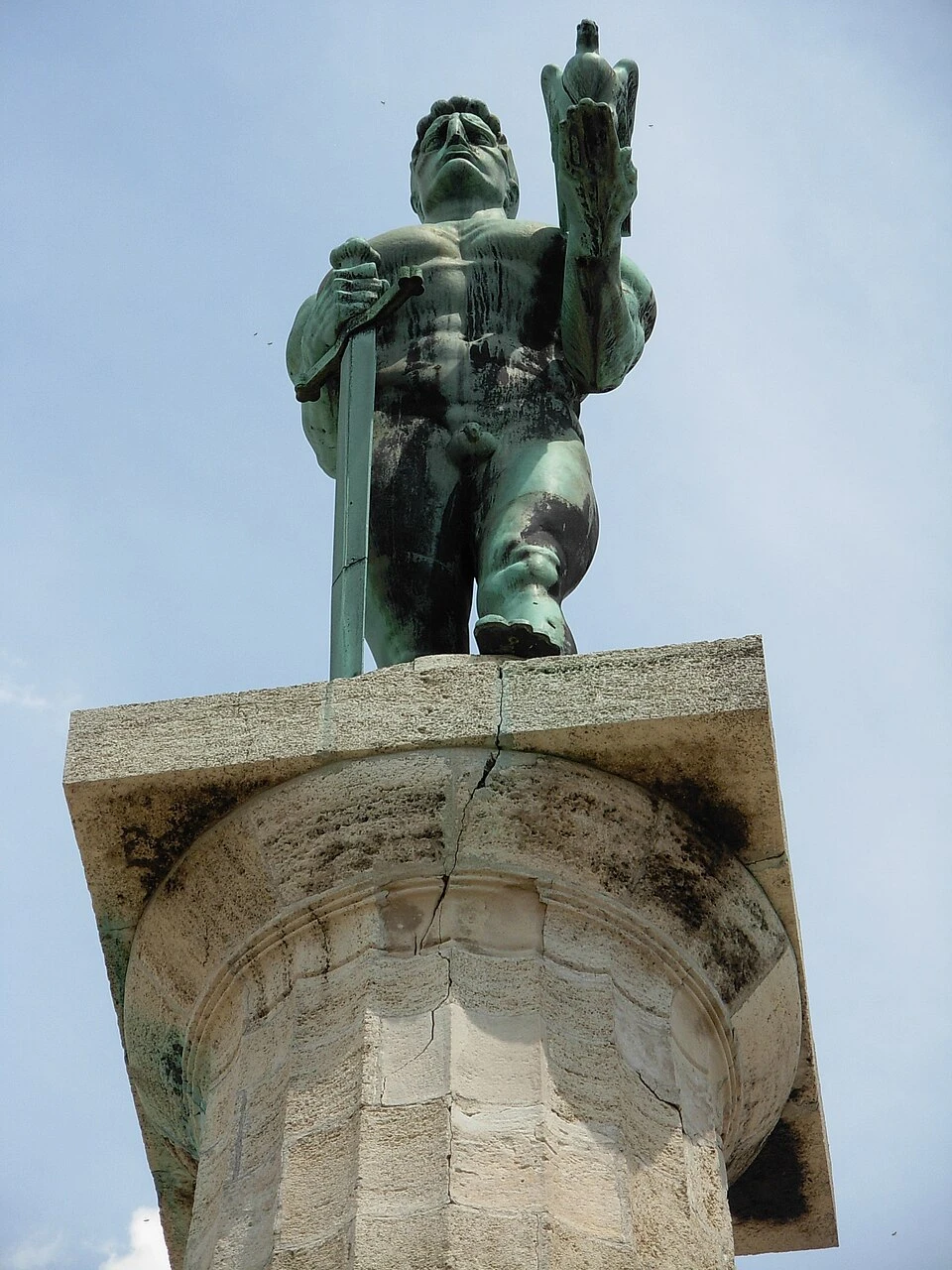 The Column and the Fountain ConceptThe 2019 Restoration
Look closely at the base where the figure meets the pedestal. For nearly a century, the monument stood firm, but by 2019, time and gravity had taken their toll. Experts discovered the entire structure was tilting dangerously, shifting approximately zero point eight millimeters every year. During the extensive restoration that followed, the city watched in awe as the massive figure took 'flight,' lifted from its perch by a giant crane for repairs. The most shocking discovery occurred then: the five-meter figure was being held in place by only a single surviving screw and a thin lightning rod wire. Despite its precarious grip, the figure was found to be incredibly solid, weighing exactly one ton. This stabilization project ensured that the Victor continues to stand straight, guarding the city for another century. It was a high-stakes engineering feat that revealed just how close Belgrade came to losing its most famous protector.
Listen in the appPhoto: Micki · CC BY-SA 3.0
04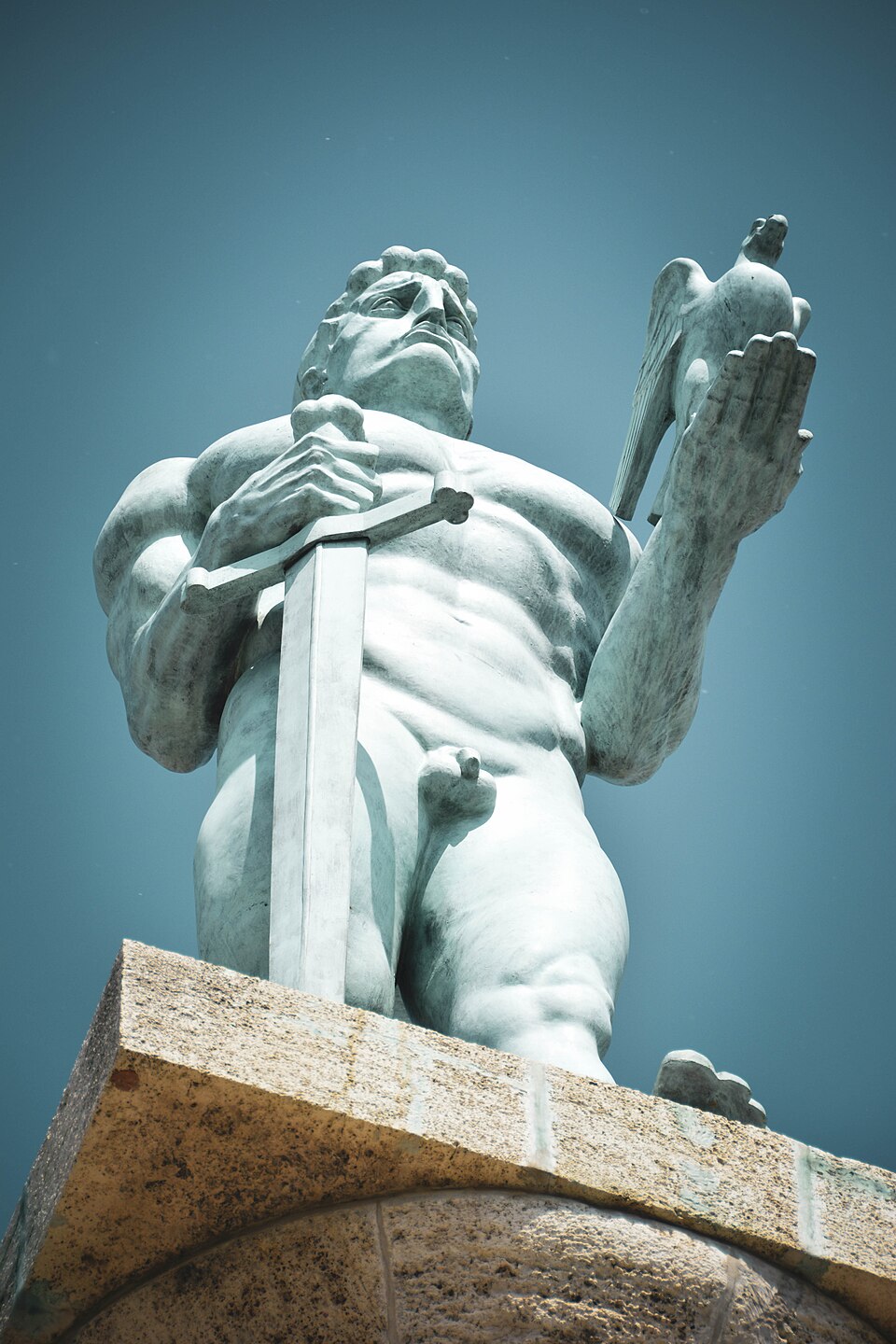 The Bronze Victor: Peace and WarThe Herculean Hero
The artistic vision behind the Victor is the work of Ivan Meštrović, whose 'heroic' style is evident in the figure’s stylized and athletic proportions. Drawing inspiration from the classical Greek myth of Hercules, Meštrović crafted a body that radiates power and resilience. Note the figure’s facial expression—it is not one of joy or triumph, but of determined stoicism. This gravity was intentional, reflecting the national mood after the devastating losses of World War I. For the artist, this wasn't just a statue; it was a symbol of strength and survival. The exaggerated musculature and stern gaze serve to remind visitors of the heavy price of freedom and the enduring spirit required to defend it. By blending ancient mythological strength with modern national sentiment, Meštrović created a figure that feels both timeless and deeply connected to the specific history of the Serbian people.
Listen in the appPhoto: LaDragana · CC BY-SA 4.0
05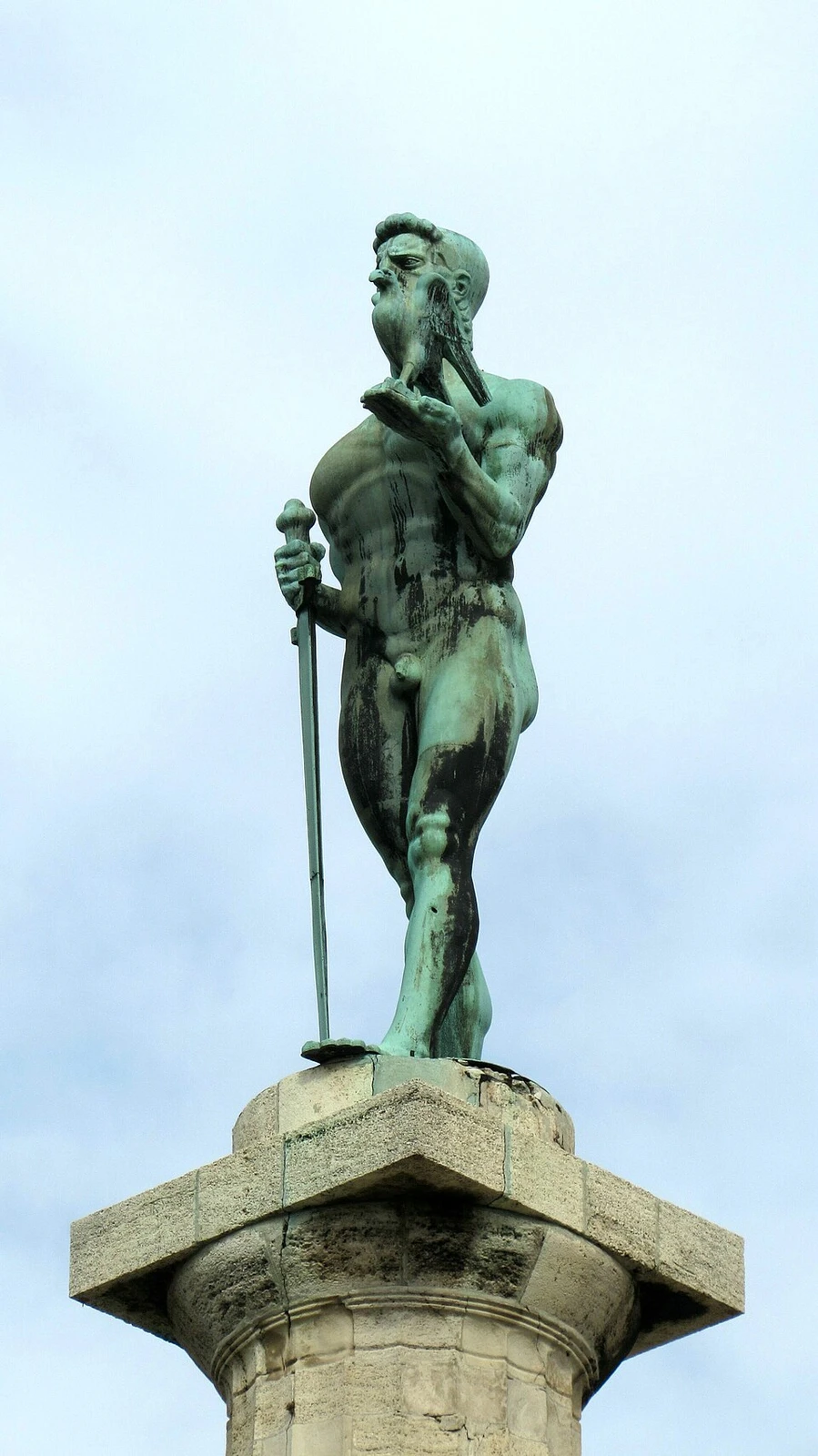 The Bronze Victor: Peace and WarThe Victor's Profile
From this angle, the silhouette reveals the dual nature of the figure’s message. In his left hand, he holds a falcon, often described as the 'watchful eye of peace,' scanning the horizon for potential threats. In his right hand, he grips a heavy sword, pointed downward but ready—a clear symbol of the protector of freedom. This composition was meticulously planned to balance the themes of conflict and tranquility. The extreme verticality of the column and the figure combined was a masterstroke by the architect and sculptor. It was designed specifically so the Victor could be seen as a sharp, clear silhouette against the sky from miles away, serving as a beacon of Belgrade's presence to all who approach the city by land or water. This intentional visibility ensured that whether arriving by the Danube or crossing the plains, the message of the city's resurgence was undeniable.
Listen in the appPhoto: Joergsam · CC BY-SA 4.0
06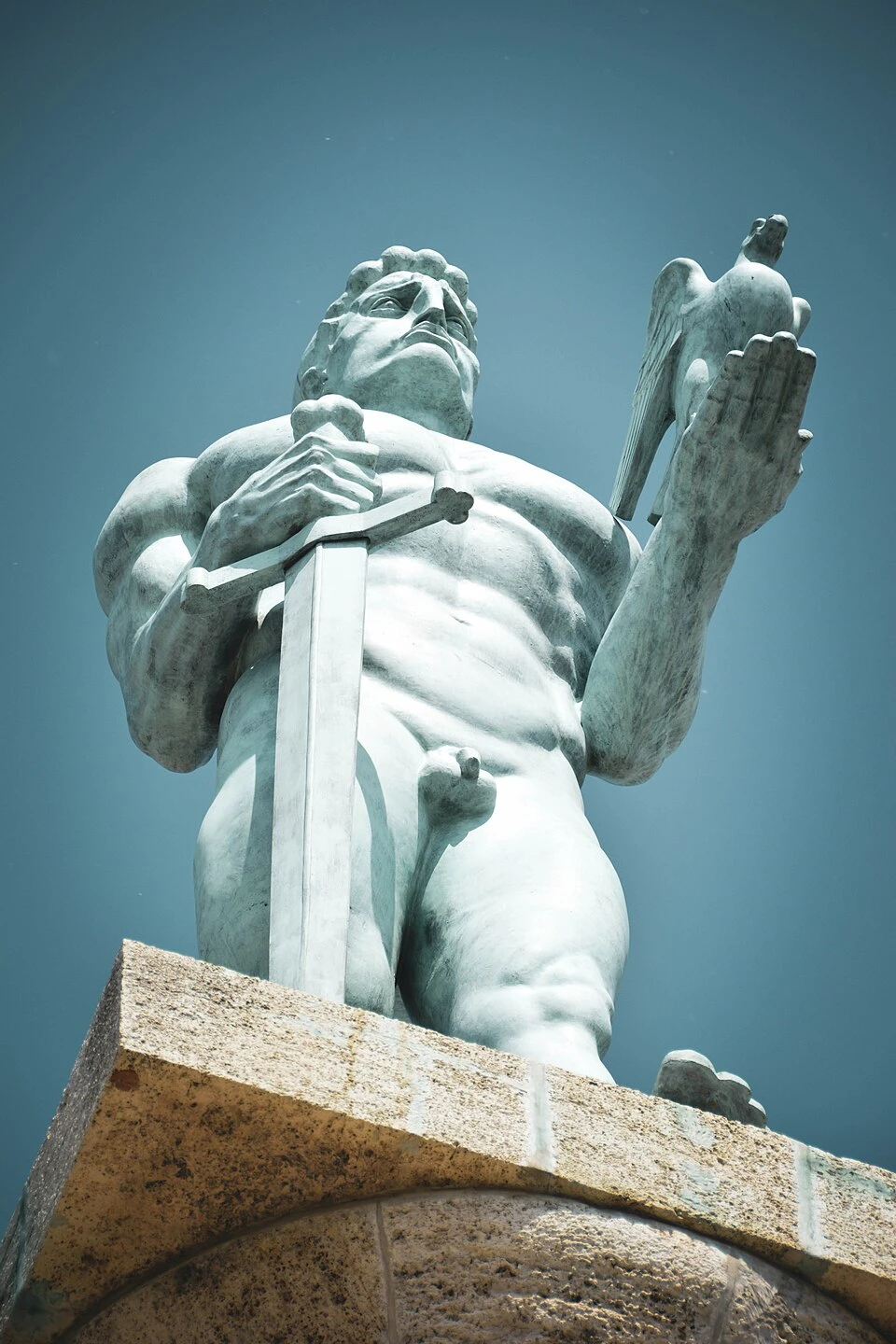 The Bronze Victor: Peace and WarThe Battle Scars
While the monument appears smooth from a distance, the surface of the figure tells a much more turbulent story. During the 2019 restoration, technicians mapped over thirty distinct bullet and shrapnel holes peppered across the body. Most of these wounds were sustained during the heavy fighting of World War II, as Belgrade was once again a central battlefield. Perhaps the most incredible finding was tucked away inside one of the figure’s legs—restorers discovered an unexploded cannonball lodged deep within the structure. These 'scars' were intentionally left mostly visible, transforming the statue into a physical record of the city’s survival through multiple conflicts. It is no longer just an artistic representation of victory; it is a literal survivor. This makes the Victor a unique historical artifact, carrying the physical impacts of the very wars it was intended to memorialize, standing as a witness to the city's enduring spirit.
Listen in the appPhoto: LaDragana · CC BY-SA 4.0
07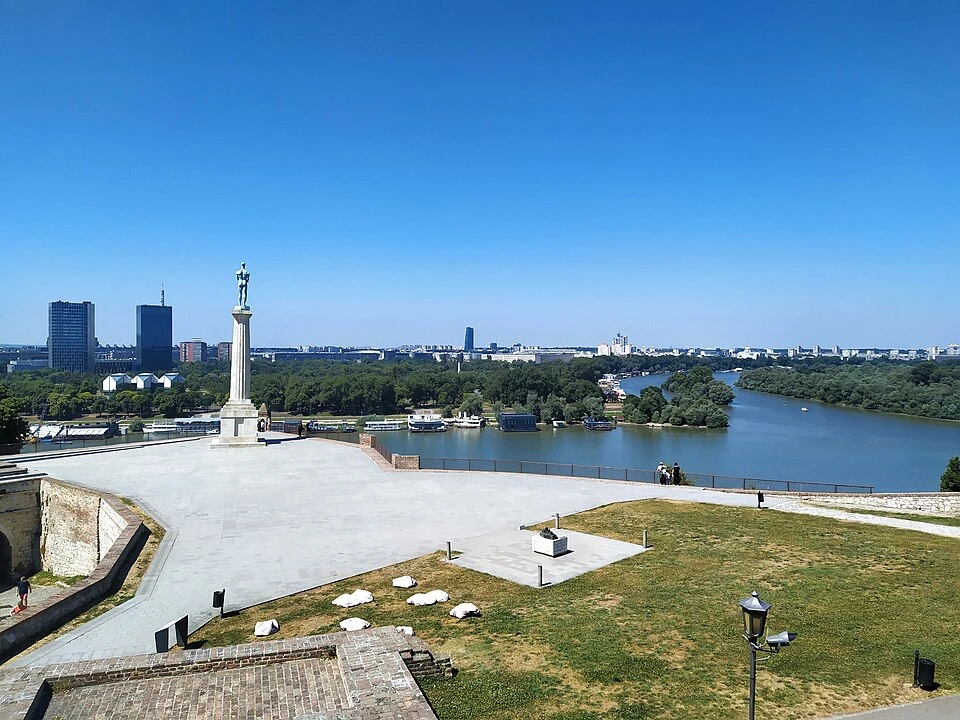 The Confluence OverlookThe Confluence Viewpoint
The placement of the Victor here was a calculated strategic and symbolic move. From this ridge, the monument overlooks the dramatic confluence where the Sava River meets the Danube. At the time of its erection, this wasn't just a beautiful view—it was a border. The Victor was positioned to face directly toward what was then the Austro-Hungarian Empire. Standing at the edge of the fortress, he served as a symbolic guardian, staring down a former enemy and celebrating the liberation of Serbian lands from foreign rule. Today, while those borders have shifted and faded into history, the monument still occupies the most commanding point in the city, presiding over the natural meeting point of these two great European waterways. This geography reinforces the idea of Belgrade as a gateway between East and West, a city that has been fought over for millennia precisely because of the ground you are standing on.
Listen in the appRadosЕ‚aw Botev · CC BY 3.0 pl
08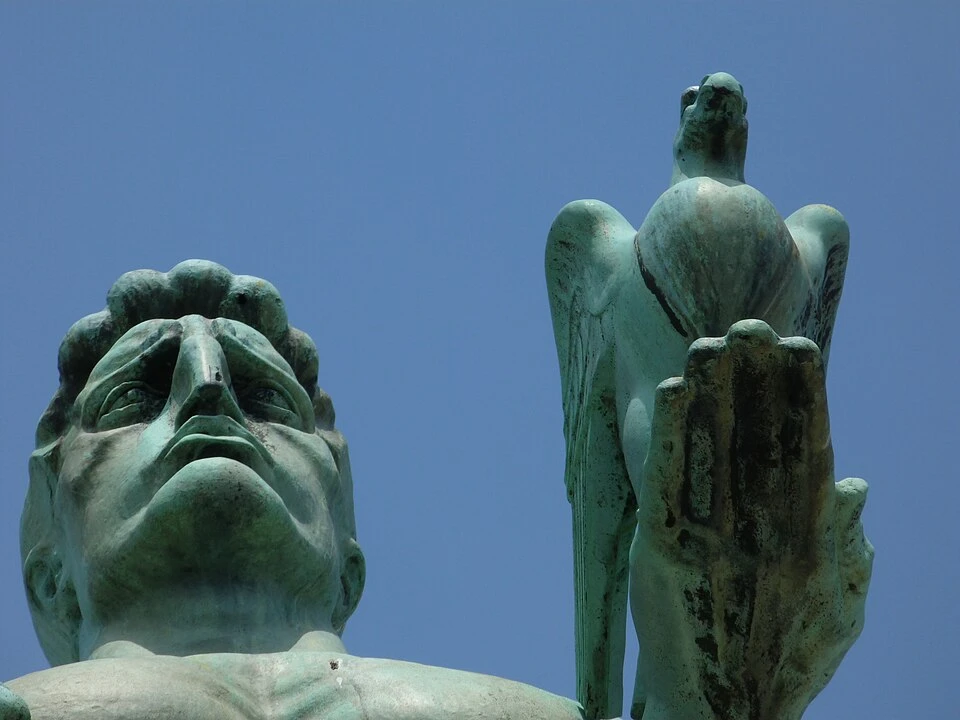 History, Scars, and RestorationThe Guardian Falcon
Let's focus our attention on the bird perched alertly in the figure's outstretched left palm. While the nude, muscular athlete is a clear nod to the traditions of classical Western art, the choice of a falcon roots the monument firmly in a specific Balkan cultural tradition. In local lore and poetry, the falcon represents the ideal of the vigilant observer—strong, sharp-eyed, and always prepared for action. If you look closely at the casting, you can see the meticulous detailing of the individual feathers and the bird’s tense, ready posture. It does not sit as a passive pet, but as an active ally. This specific detail reinforces the monument’s broader philosophical message: that peace is a fragile state that requires constant, unblinking vigilance. The falcon serves as a quiet but powerful reminder that true security and freedom come from staying watchful over the horizon, even in times of relative calm.
Listen in the appНеда Ковачевић · CC BY-SA 3.0
09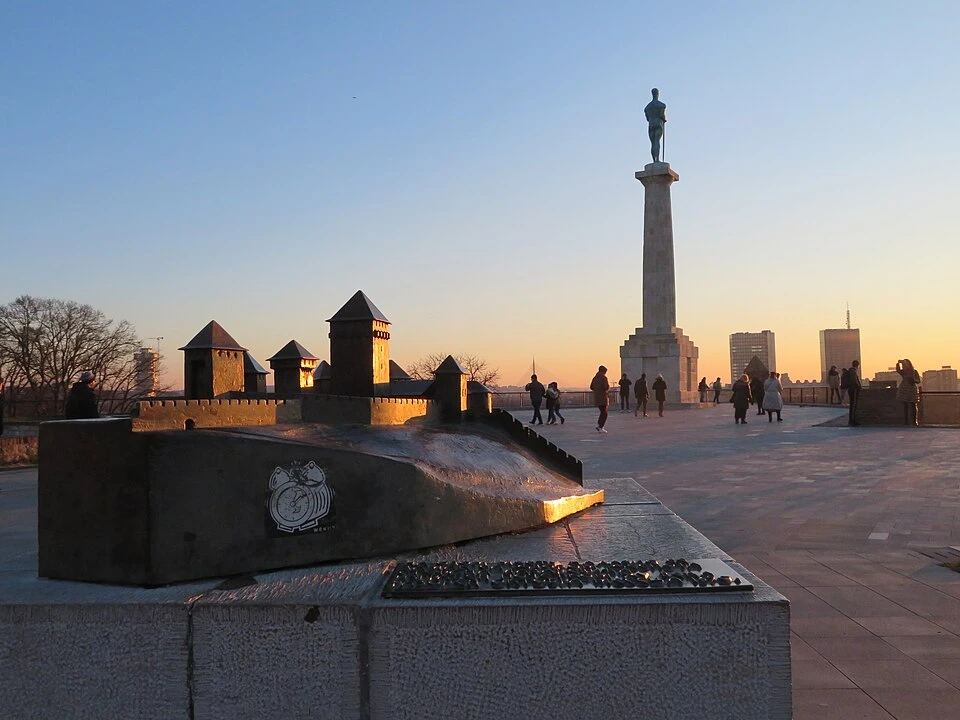 History, Scars, and RestorationThe Layers of History
The bronze model you see here provides a window into the 15th-century castle of Despot Stefan Lazarević, which once stood on this very ground. This plateau is a perfect example of how Belgrade is a city built in layers. This concept became even more literal during recent repairs to the Victor’s base. Workers were surprised to find a 19th-century tombstone embedded deep within the monument’s foundations. It appears that when the pedestal was being constructed in the 1920s, the builders recycled old stones from an abandoned nearby cemetery to use as fill. It is a poignant detail—the city’s grandest symbol of the future is literally supported by the physical remains of its past. This illustrates the circular nature of the city's history, where the ruins of one era become the foundations for the next, showing that the modern Victor stands on the literal memories of those who came before.
Listen in the appPhoto: Ani2022 · CC BY-SA 4.0
10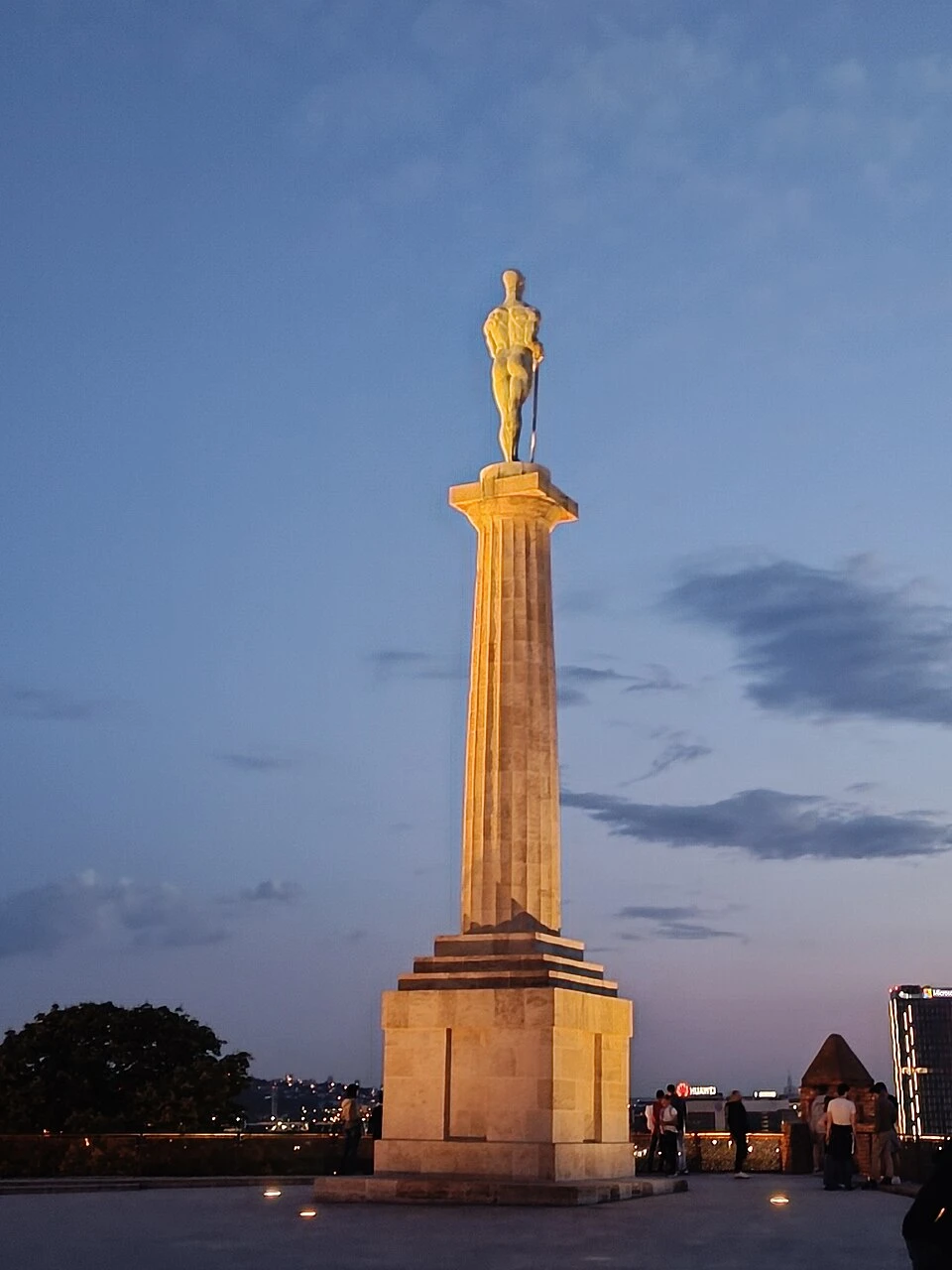 The Silhouette at SunsetThe Eternal Silhouette
We conclude our look at the Victor, which was finally unveiled on October 7, 1928. The date was chosen specifically to mark the tenth anniversary of the heroic breakthrough of the Salonika front, a turning point for the nation in the Great War. What began as a 'scandalous' statue that was practically hidden away in the fortress has, over the decades, become Belgrade's most beloved and recognizable icon. It appears on postcards, stamps, and is the first thing many residents look for when returning home. To the people of Belgrade, the Victor represents more than a military triumph; he is a symbol of the city itself—exposed to the winds and the wars of history, yet standing tall, unbowed, and enduring through the centuries. As the sun sets and the figure becomes a sharp silhouette against the sky, it remains an eternal reminder of the strength found in standing one's ground against all odds.
Listen in the appPhoto: J3ssica Dav · CC BY-SA 4.0
Pobednik
Frequently asked questions
How much does the guide cost?
Free app download. Listed guide price: $0.99. Guide price shown in the app. Audio guide only. Venue admission is separate.
Can I listen without internet?
Yes. Download the guide’s audio, images, and maps in the app before your visit. Your downloaded content is then available offline.
Can I listen in my language?
Stanza supports 15 languages. Check the app for the languages available for this guide.
Do I need to follow a schedule?
No. This is a self-guided experience. Choose your stops, pause whenever you like, and return to a story at your own pace.
At your own pace
Explore Pobednik.
Download Stanza, then search for “Pobednik”.
Free app download · Guide price shown in the app
Keep exploring
Nearby audio guides
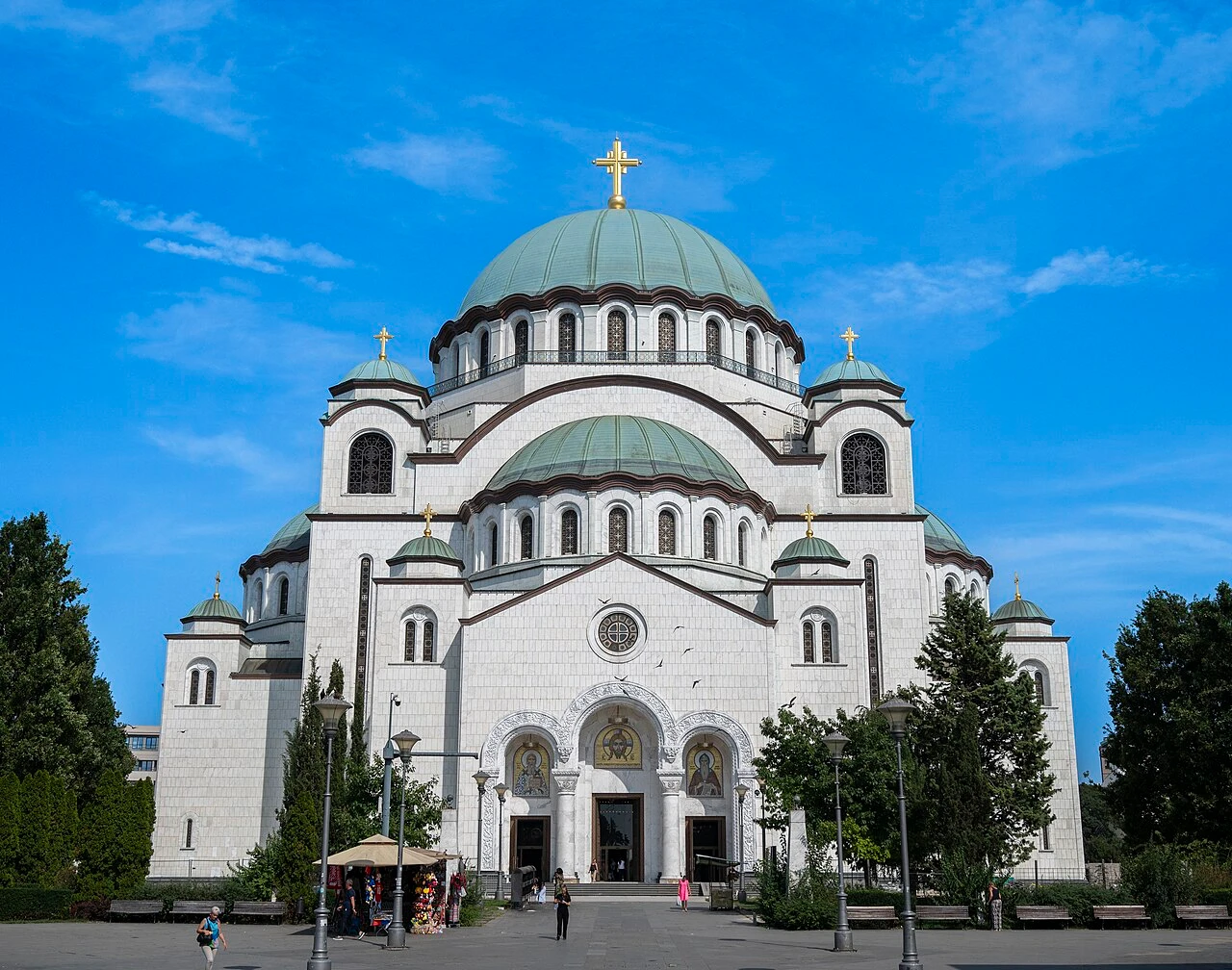
Vracar Urban Municipality
Church of Saint Sava
Content & sources
Photo: Npps90 · CC BY-SA 4.0
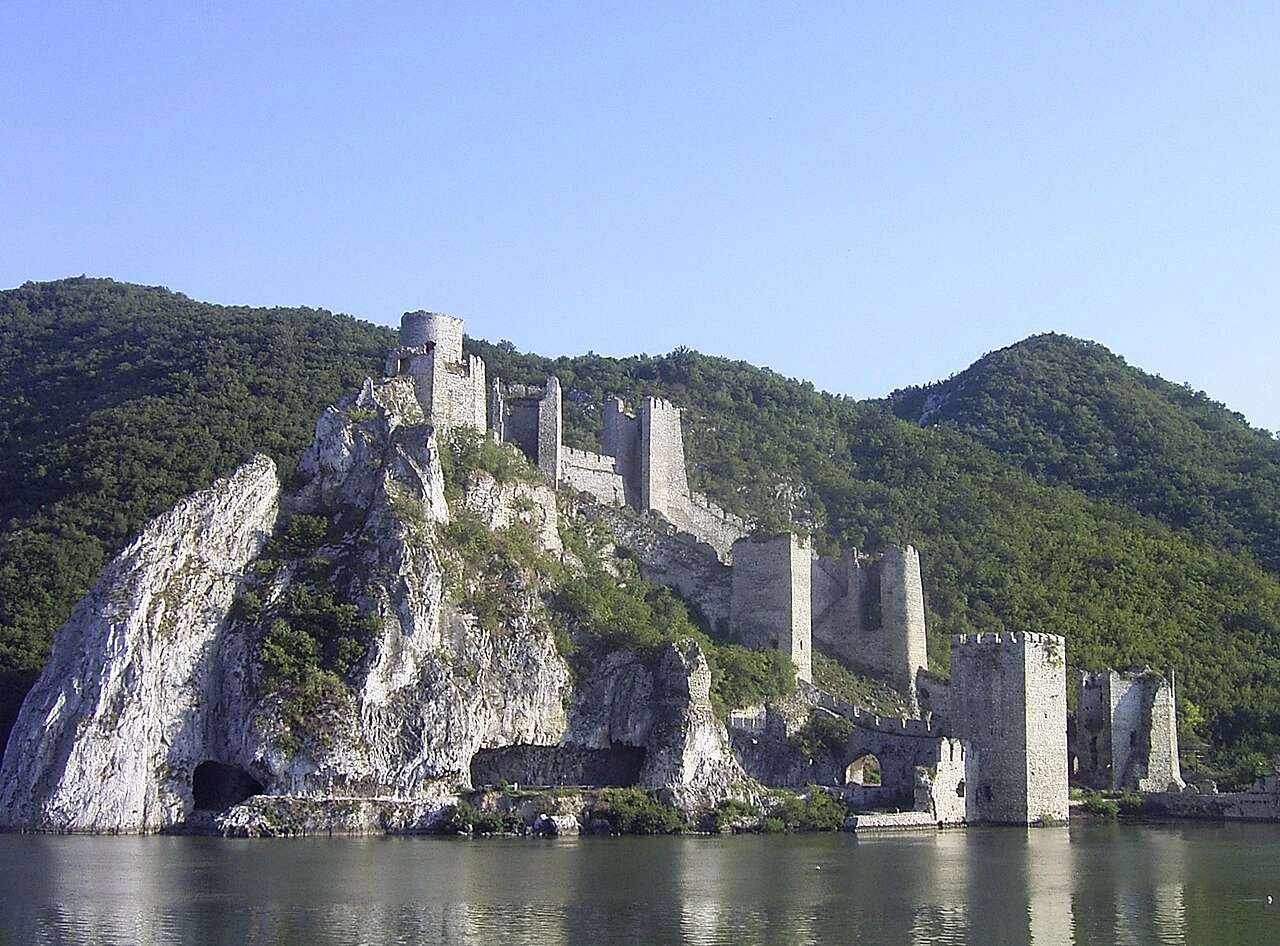
Golubac Municipality
Golubac
Content & sources
Photo: Denis Barthel · CC BY-SA 3.0
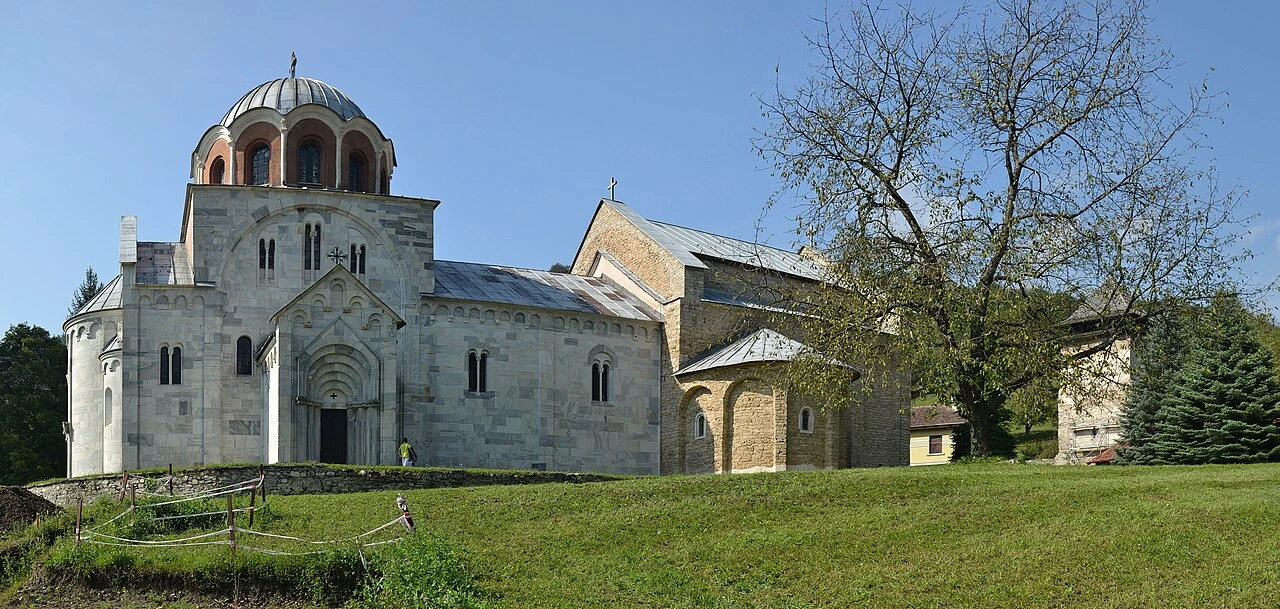
Brezova
Manastir Studenica
Content & sources
Pudelek (Marcin Szala) · CC BY-SA 3.0