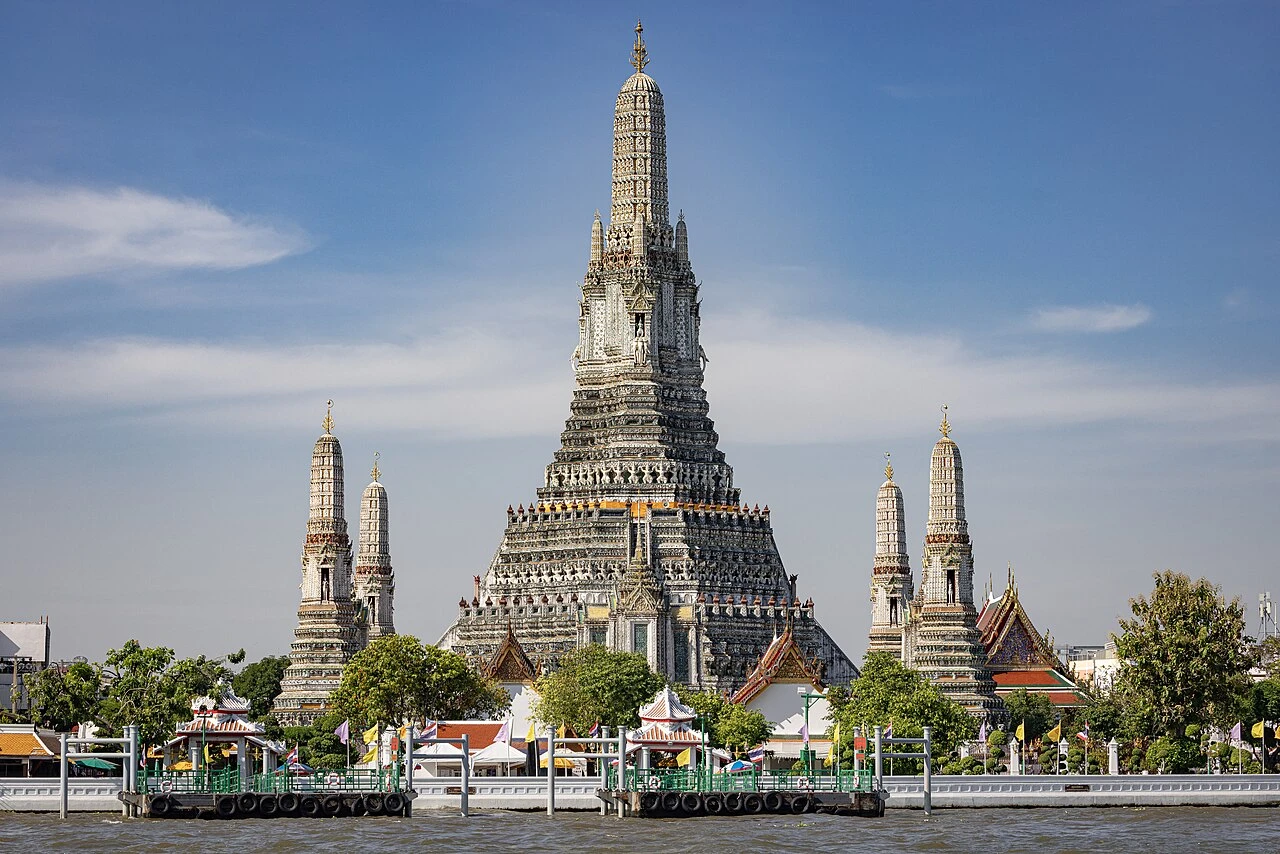
Stanza · Audio guide
Wat ArunAudio guide
A place to remember. A story to take with you.
Wat Arun is a prominent Buddhist temple located on the west bank of the Chao Phraya River in Bangkok, Thailand. It is renowned for its magnificent central prang (Khmer-style pagoda), beautifully adorned with…
Download Stanza, then search for “Wat Arun”.
About the tour
One guide. Your kind of visit.
Wat Arun is a prominent Buddhist temple located on the west bank of the Chao Phraya River in Bangkok, Thailand. It is renowned for its magnificent central prang (Khmer-style pagoda), beautifully adorned with colorful ceramic tiles and seashells.
Ready when you are.
- 01Get the free Stanza app.
iOS & Android
- 02Find your guide.
“Wat Arun”
- 03Download before you go.
Works offline
Audio guide / 12 narrated stops
Inside the guide
Get to know a few of the stories before you go. Open a stop to read more.
01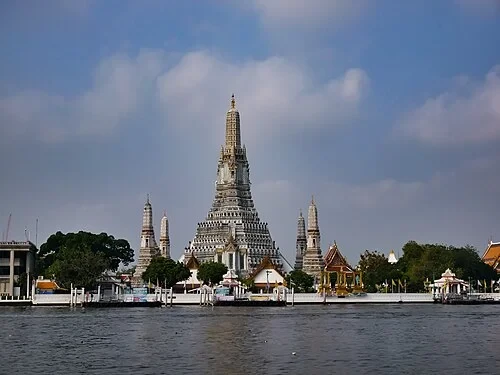 Riverside Arrival and the Temple of DawnThe Temple of Dawn
Welcome to one of the most recognizable silhouettes in Southeast Asia. This complex is known locally as Wat Arun, a name derived from Aruna, the Hindu god of dawn. The temple’s prominence dates back to 1767. Following the fall of the former capital at Ayutthaya, King Taksin reached this site at daybreak. He reportedly made a solemn vow to restore the existing shrine, eventually establishing his new royal palace here on the west bank of the Chao Phraya River. The central feature is the towering spire, or prang, which rises to a height between 67 and 86 meters, depending on which historical measurement is used. Its position right at the water's edge was strategically significant, serving as a beacon for trade vessels and royal processions entering the heart of the kingdom. While the temple has undergone many changes over the centuries, it remains a primary symbol of Thailand’s transition between dynasties and the enduring importance of the river to Thai life. The intricate patterns you see from a distance are actually composed of thousands of individual pieces of ceramic, which we will explore more closely as we continue through the grounds.
Photo: กสิณธร ราชโอรส · CC BY-SA 4.0
02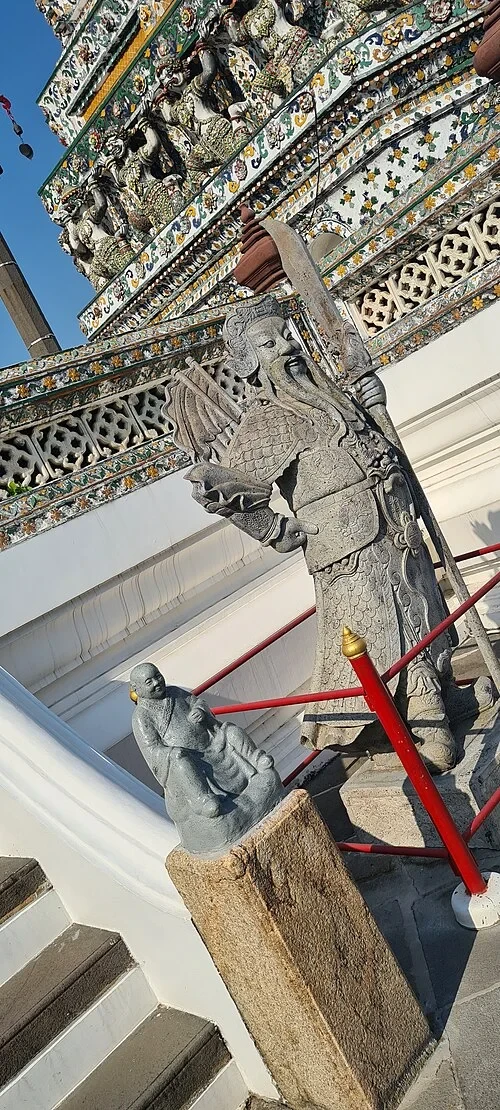 Chinese Statuary and Trade LegacyChinese Stone Guardian
Notice the figures carved from green granite situated near the river entrance. These statues have a surprising origin story that links the temple to international maritime trade. They were not originally commissioned for this religious site; instead, they served a purely practical purpose as ballast on merchant ships. During the Qing Dynasty, trade between China and the early Chakri kings of Thailand was robust. Ships carrying light Thai goods like silk and spices back to China needed heavy weight in their holds to remain stable during the long sea voyage. These stone figures provided that weight. Upon arrival in Bangkok, the statues were unloaded to make room for cargo and were frequently donated to local temples. The distinct Chinese style is evident in the detailed armor, weaponry, and facial features of the figures. This presence illustrates the deep historical trade links and cultural exchange between the two nations during the 18th and 19th centuries. Similar guardians can be found at several major temples in the city, reflecting a time when recycling maritime equipment was a common way to decorate sacred royal spaces.
Photo: Bienvenue en Thaïlande · CC BY-SA 4.0
03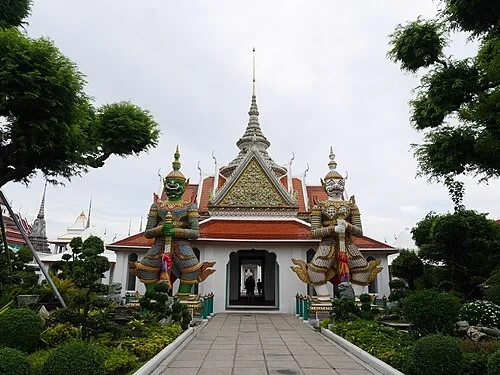 Entrance to the Ordination HallGate of the Giants
The entrance to the main ordination hall is flanked by two massive figures known as Yaksha, or demon guardians. These characters are central figures in the Ramakien, the Thai national epic derived from the ancient Indian Ramayana. In the story, Yaksha are powerful beings who serve as protectors of sacred sites and spiritual treasures. These specific figures were added to the temple complex during the reign of King Rama III in the 19th century. Their presence marks a symbolic transition for visitors, moving from the open riverfront areas into the quiet, sanctified space of the Ubosot, or ordination hall. Each guardian is depicted in a traditional defensive pose, leaning on a ceremonial mace with a fierce but protective expression. They are meticulously decorated with intricate patterns that reflect the armor worn by warriors of the era. By placing these legendary protectors at the threshold, the temple designers reinforced the idea that the inner hall is a space separated from the mundane world, reserved for deep spiritual practice and royal ceremony.
Listen in the appPhoto: กสิณธร ราชโอรส · CC BY-SA 4.0
04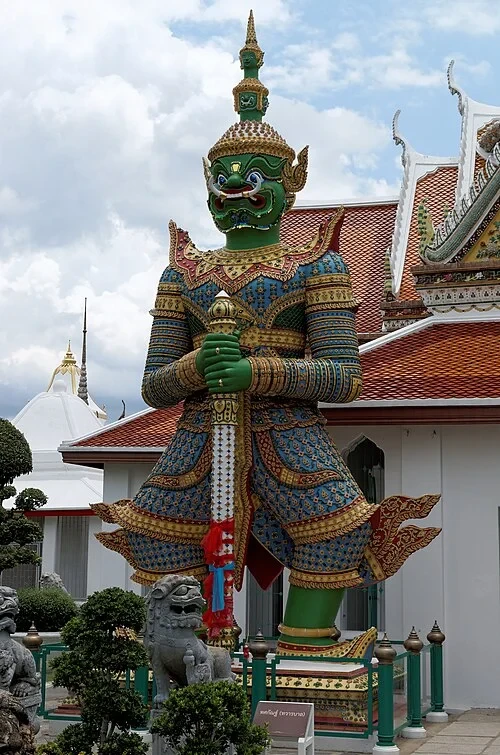 Entrance to the Ordination HallThotsakan the Guardian
Among the guardians at the entrance, the green-skinned figure is Thotsakan. In the Ramakien epic, he is the ten-headed king of the demons and the primary antagonist who kidnaps the princess Sida. However, in the context of Thai temple architecture, even a legendary villain can be transformed into a loyal protector. The craftsmanship involved in creating this figure is extraordinary. Every inch of his armor is meticulously assembled from small shards of porcelain. This technique creates a mosaic effect that causes the statue to shimmer when caught by the sunlight. Unlike a solid stone carving, this ceramic skin reflects light in multiple directions, giving the figure an almost ethereal quality during the bright afternoon hours. These individual tiles were often repurposed from broken plates and dishes, demonstrating a high level of artistic ingenuity in using available trade materials. Thotsakan stands alongside his rival, the white-skinned Sahatsadecha, together ensuring that only those with pure intentions pass through the gate. This pair remains one of the most photographed features of the temple due to the vibrant colors and the detailed textures of their porcelain-clad forms.
Listen in the appJakub Hałun · CC BY-SA 4.0
05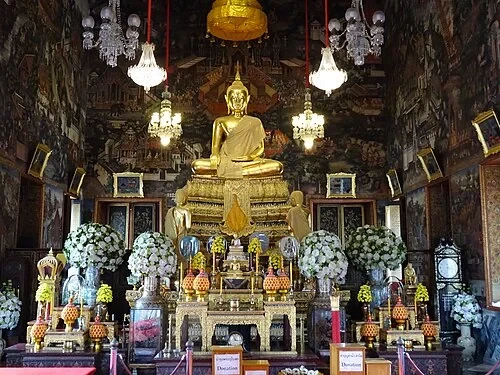 The Spiritual Heart: Ubosot InteriorThe Main Ordination Hall
The interior of the Ubosot, or Main Ordination Hall, serves as the spiritual heart of the entire temple complex. This is the consecrated ground where monks are formally ordained and where significant royal and religious ceremonies take place. The most striking feature of the hall is the vast array of murals that cover the walls from floor to ceiling. These paintings illustrate the Jataka tales, which describe the previous lives of the Buddha, as well as the path to his final enlightenment. These narratives were intended to educate the faithful, providing visual lessons on morality, perseverance, and wisdom. The style of the murals reflects traditional Thai artistic conventions, with flattened perspectives and vibrant pigments. Because this is an active place of worship, the atmosphere is notably different from the bustling outdoor terraces. The design of the building, with its high ceilings and thick walls, helps maintain a cooler temperature, creating a space for quiet contemplation. The hall’s layout and decoration have been preserved to maintain the traditions established by the early Chakri monarchs, who viewed this temple as a site of immense personal and national significance.
Listen in the appPhoto: Christophe95 · CC BY-SA 4.0
06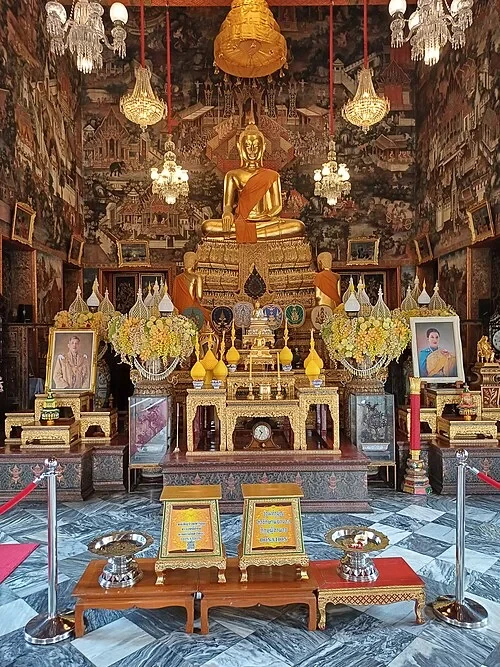 The Spiritual Heart: Ubosot InteriorThe Golden Buddha
At the center of the ordination hall sits the principal Buddha image, a figure of deep religious and historical importance. Historical accounts suggest that King Rama II, a noted artist and poet, personally designed the face of this statue, imbuing it with a specific serene expression. The figure is seated in the posture of 'Subduing Mara,' representing the moment of enlightenment when the Buddha called the earth to witness his spiritual victory. Beyond its artistic value, the statue holds a profound connection to the Thai monarchy. Following the death of King Rama II, his ashes were interred within the base of this very image. This act forever linked the spirit of the monarch to the temple he spent years patronizing and expanding. The surrounding altar is typically decorated with elaborate floral offerings and traditional regalia, emphasizing the dual role of the site as both a religious sanctuary and a royal memorial. The placement of a king's remains beneath a principal Buddha image is a tradition that underscores the monarch's role as the primary protector of the faith in Thailand. The soft lighting within the hall highlights the smooth contours of the image, which remains a focus of daily prayers.
Listen in the appRadosław Botev · CC BY 3.0 pl
07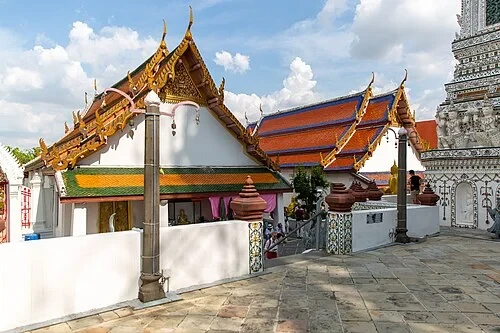 The Historic Lesser HallsThe Ancient Royal Halls
Near the base of the massive central spire stand two smaller, older buildings known as Viharn Noi and Bot Noi. These structures represent the original core of the temple as it existed before the extensive 19th-century renovations. While they may seem modest compared to the towering prang, their historical weight is significant. Between 1779 and 1785, the Bot Noi served as the temporary home for the Emerald Buddha, the most sacred religious icon in Thailand. King Taksin brought the image here from Vientiane, and it remained at Wat Arun for six years before King Rama I moved it across the river to its permanent location at the Grand Palace. Standing in this area, you are in the oldest section of the complex, where the architectural style reflects the late Ayutthaya and early Thonburi periods. The proportions are smaller, and the decoration is more restrained than the later Khmer-style additions. These halls survived the fall of Ayutthaya and the subsequent wars, serving as a rare physical link to the time when Thonburi was the capital of the kingdom. They provide a vital contrast to the grand scale of the newer structures nearby.
Listen in the appPhoto: Shesmax · CC BY-SA 4.0
08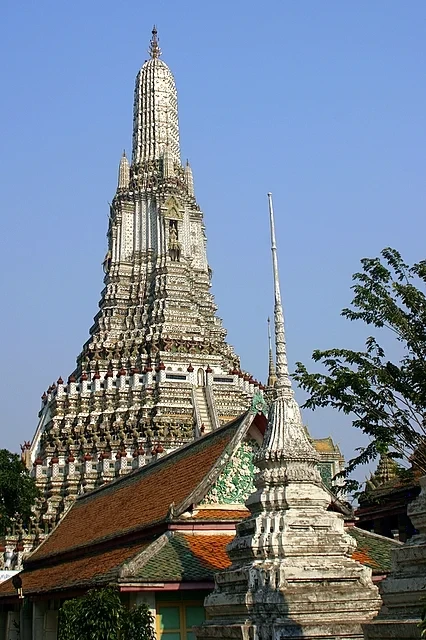 The Great Prang: A Mountain of PorcelainThe Great Prang
The central spire of Wat Arun, known as a prang, is an architectural marvel that reflects ancient Hindu-Buddhist cosmology. Its design represents Mount Meru, which in traditional belief is considered the center of the universe and the home of the gods. Surrounding this massive central tower are four smaller satellite spires. These are dedicated to Phra Phai, the god of the wind, who is often depicted on horseback within the niches of these towers. The Khmer-influenced design was a significant departure from the bell-shaped stupas common in earlier Thai periods. Construction on this specific version of the spire began during the reign of King Rama II and was finally completed in 1851 after nine years of intensive labor under King Rama III. The exterior is uniquely decorated with millions of pieces of Chinese porcelain, creating a texture that is both durable and visually striking. From a distance, the spire appears to be a solid white monument, but as you approach, the complexity of the floral mosaics and mythical figures becomes clear. This structure has made the temple an enduring symbol of Bangkok, representing the intersection of divine order and royal ambition during the height of the Chakri Dynasty.
Listen in the appBrian Jeffery Beggerly from S'pore · CC BY 2.0
09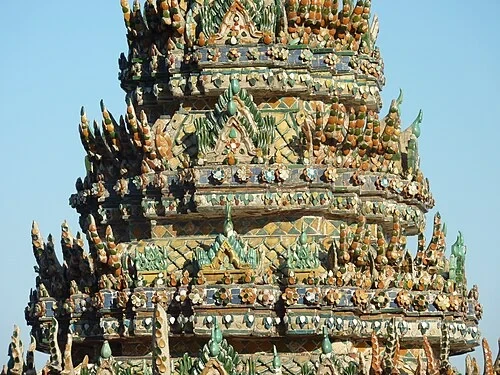 The Great Prang: A Mountain of PorcelainPorcelain Floral Mosaics
Looking closely at the surface of the spires reveals an incredible display of artistic ingenuity. The intricate floral patterns that cover the towers are composed of thousands of individual pieces of broken Chinese porcelain and even seashells. This was a highly creative way for 19th-century Thai artisans to repurpose materials that arrived at the local docks. Much like the stone guardians seen earlier, these ceramics originally arrived as ballast on trade ships. Instead of discarding the broken plates and bowls that survived the journey from China, artisans chipped them into specific shapes to create delicate petals, leaves, and geometric borders. This technique, known as 'khruang khloeang,' allowed for a level of detail and color that traditional stone or plaster could not achieve. The use of varied colors—pinks, greens, and blues—gives the temple a vibrant appearance that changes throughout the day as the angle of the sun shifts. This recycling of trade goods turned what was essentially maritime waste into a religious masterpiece. The sheer scale of the work is staggering, as every square inch of the massive spires is meticulously covered in these mosaics, ensuring the structures would remain both protected from the elements and eternally decorative.
Listen in the appPhoto Dharma from Sadao, Thailand · CC BY 2.0
10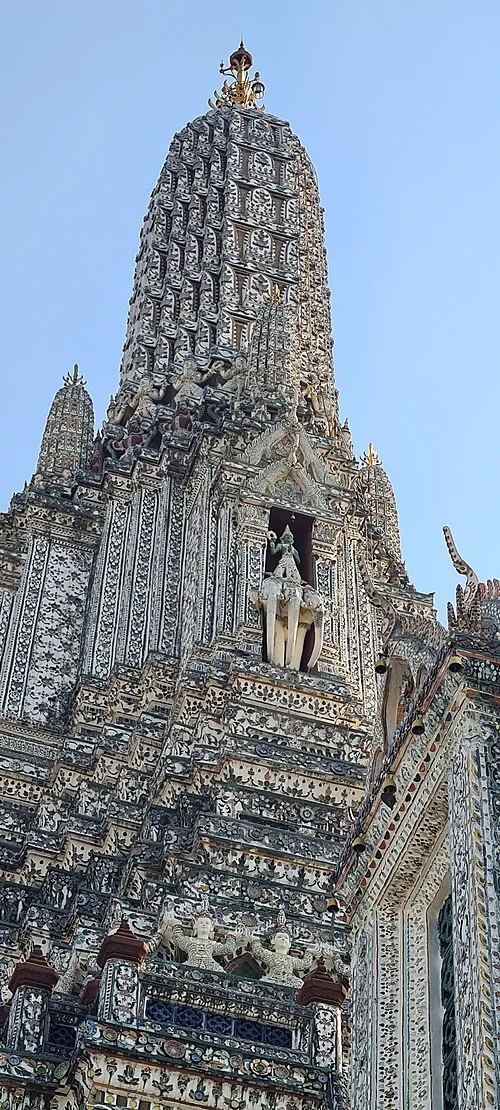 Terraces of the GodsIndra on His Elephant
Positioned in the arched niches of the second terrace is the figure of Indra, one of the most important deities in the Hindu pantheon. He is shown riding his celestial mount, Erawan, the three-headed elephant. The presence of Hindu gods within a Buddhist temple might seem unusual, but it reflects the historical fusion of these two spiritual traditions in Southeast Asian culture. For centuries, the Thai monarchy has integrated Hindu rituals and iconography into royal ceremonies, viewing deities like Indra as protectors of the righteous king and the kingdom. Indra is traditionally seen as the king of the gods and the ruler of the Tavatimsa heaven, which sits atop Mount Meru. By placing him on the prang, the architects were visually reinforcing the spire's role as a representation of that sacred mountain. There are four such figures in total, each facing one of the cardinal directions to offer divine protection to the entire complex. The elephant, Erawan, is also a powerful symbol in Thai culture, representing strength, royalty, and the blessings of the heavens. These figures are also decorated with the same porcelain mosaic technique, allowing them to blend seamlessly into the complex patterns of the tower's facade.
Listen in the appPhoto: Bienvenue en Thaïlande · CC BY-SA 4.0
Wat Arun
Frequently asked questions
How much does the guide cost?
Free app download. Listed guide price: $0.99. Guide price shown in the app. Audio guide only. Venue admission is separate.
Can I listen without internet?
Yes. Download the guide’s audio, images, and maps in the app before your visit. Your downloaded content is then available offline.
Can I listen in my language?
Stanza supports 15 languages. Check the app for the languages available for this guide.
Do I need to follow a schedule?
No. This is a self-guided experience. Choose your stops, pause whenever you like, and return to a story at your own pace.
At your own pace
Explore Wat Arun.
Download Stanza, then search for “Wat Arun”.
Free app download · Guide price shown in the app
Keep exploring
Nearby audio guides
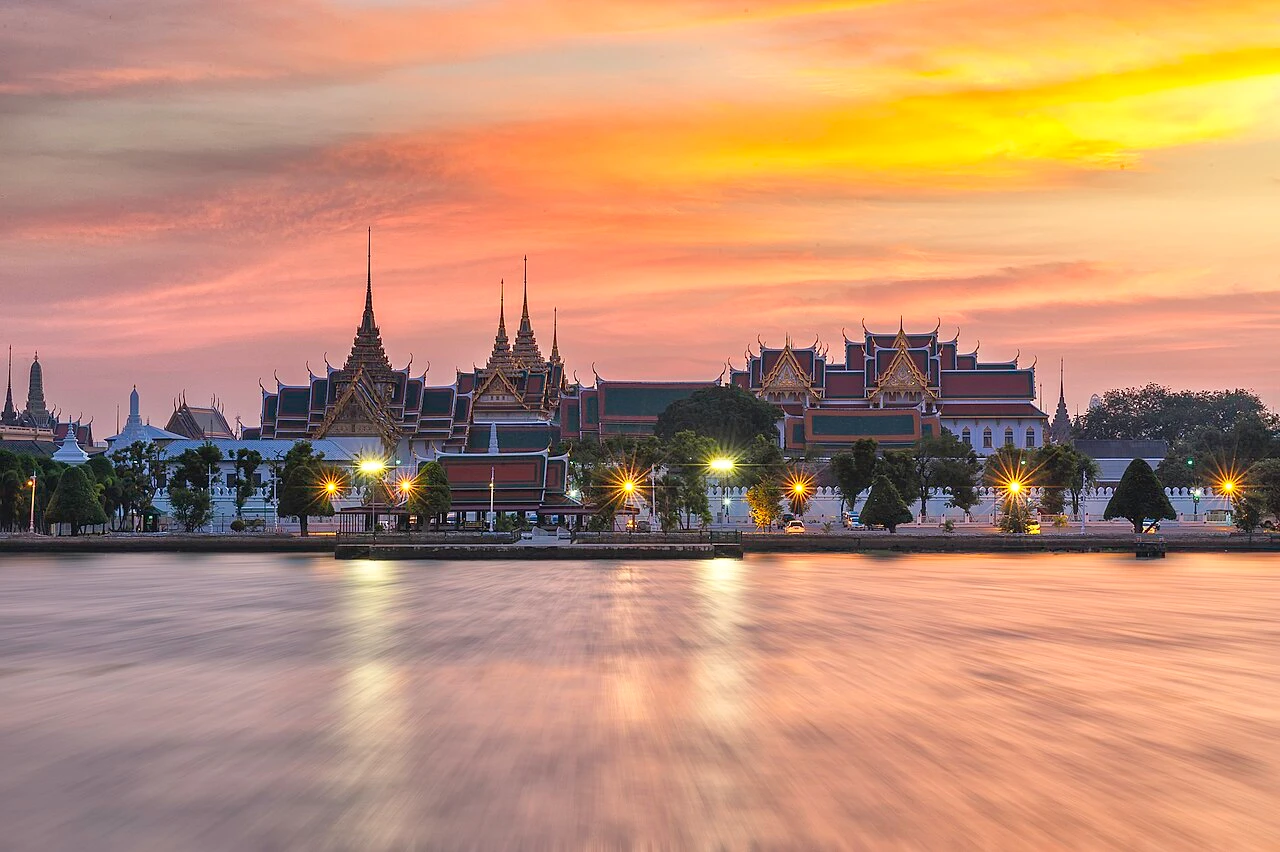
Bangkok
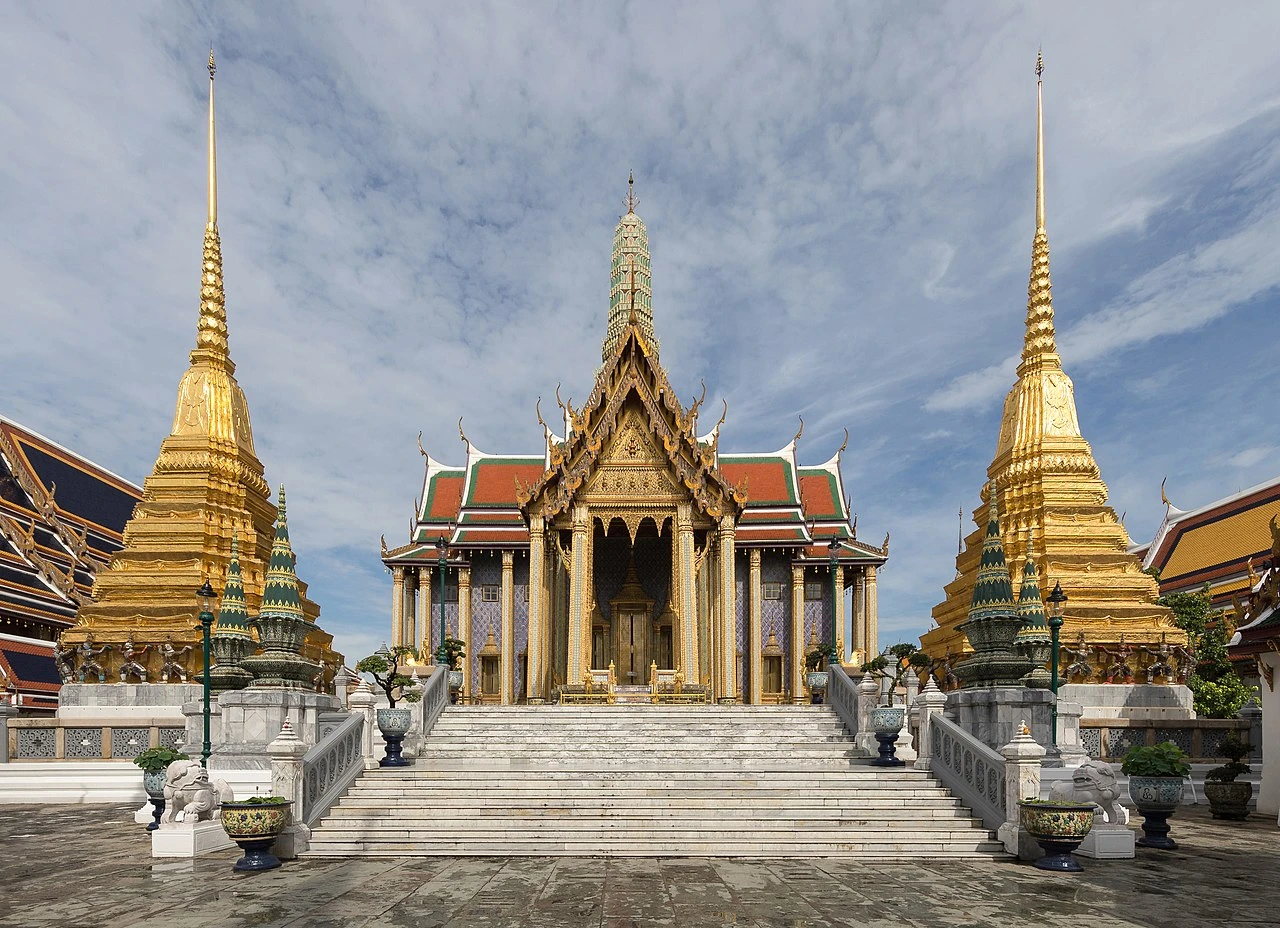
Grand Palace
Content & sources
Photo: Preecha.MJ · CC BY-SA 4.0
Bangkok
Wat Phra Kaew
Content & sources
Photo: Basile Morin · CC BY-SA 4.0
Phra Nakhon Si Ayutthaya City Municipality
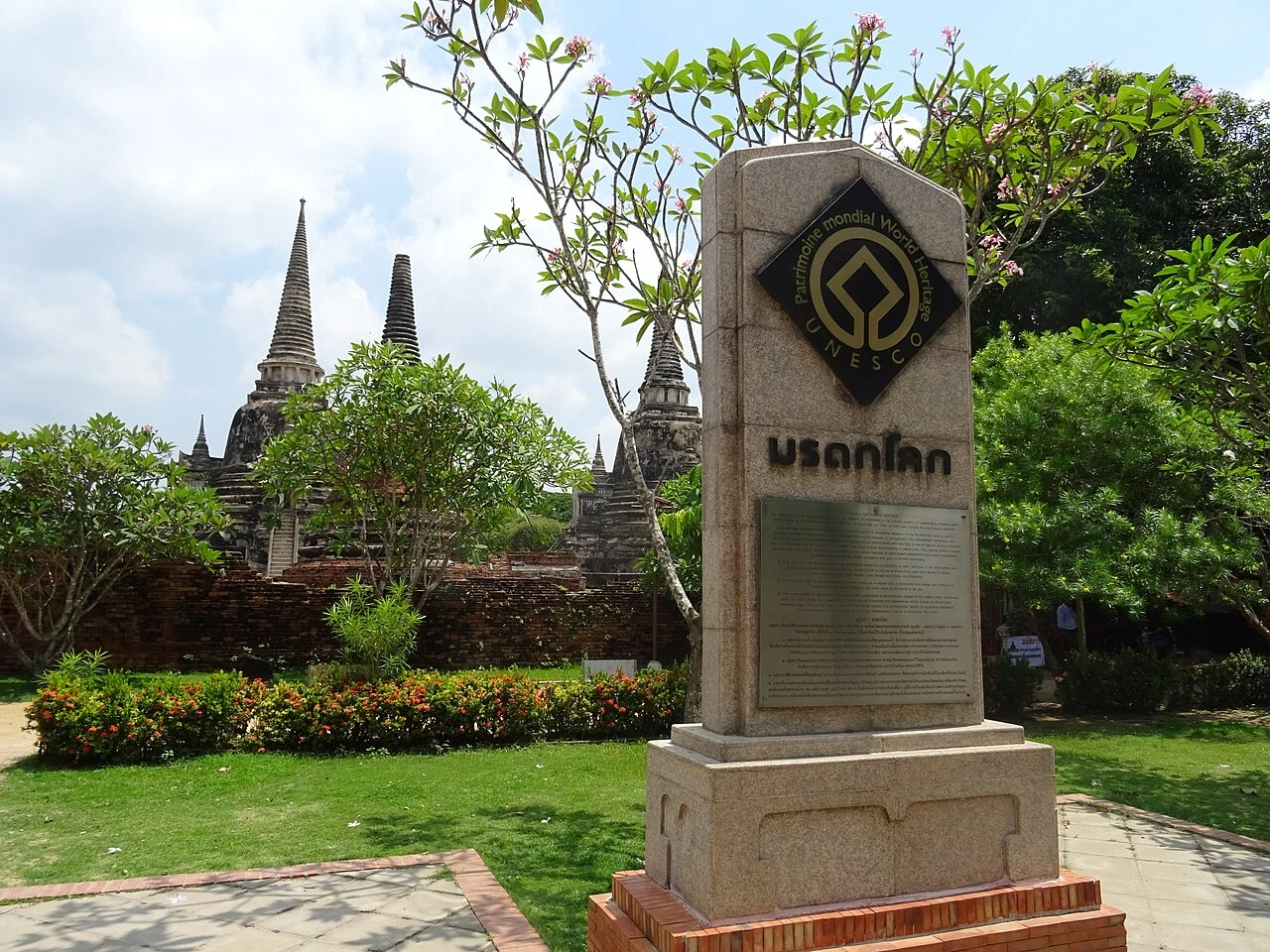
Ayutthaya Historical Park
Content & sources
Photo: Christophe95 · CC BY-SA 4.0