Languages
15Wat Phra Kaew Audio Guide
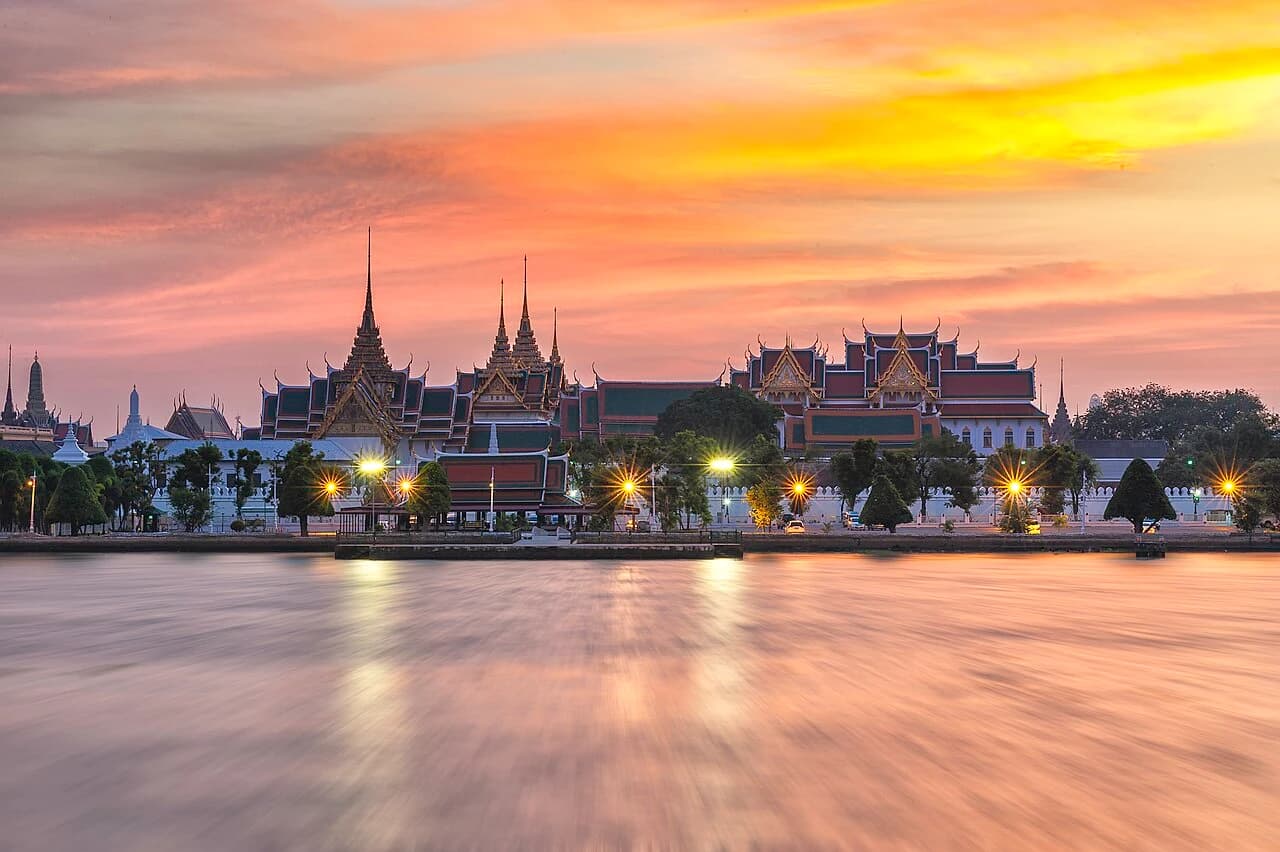
Wat Phra Kaew is a landmark in Bangkok, Thailand. Explore it with Stanza's GPS-triggered offline audio guide — available in 15 languages.
Quick Facts
31
Stops
15
Languages
100%
Offline
📍 Bangkok, Thailand · 13.7514°N, 100.4928°E
About Wat Phra Kaew
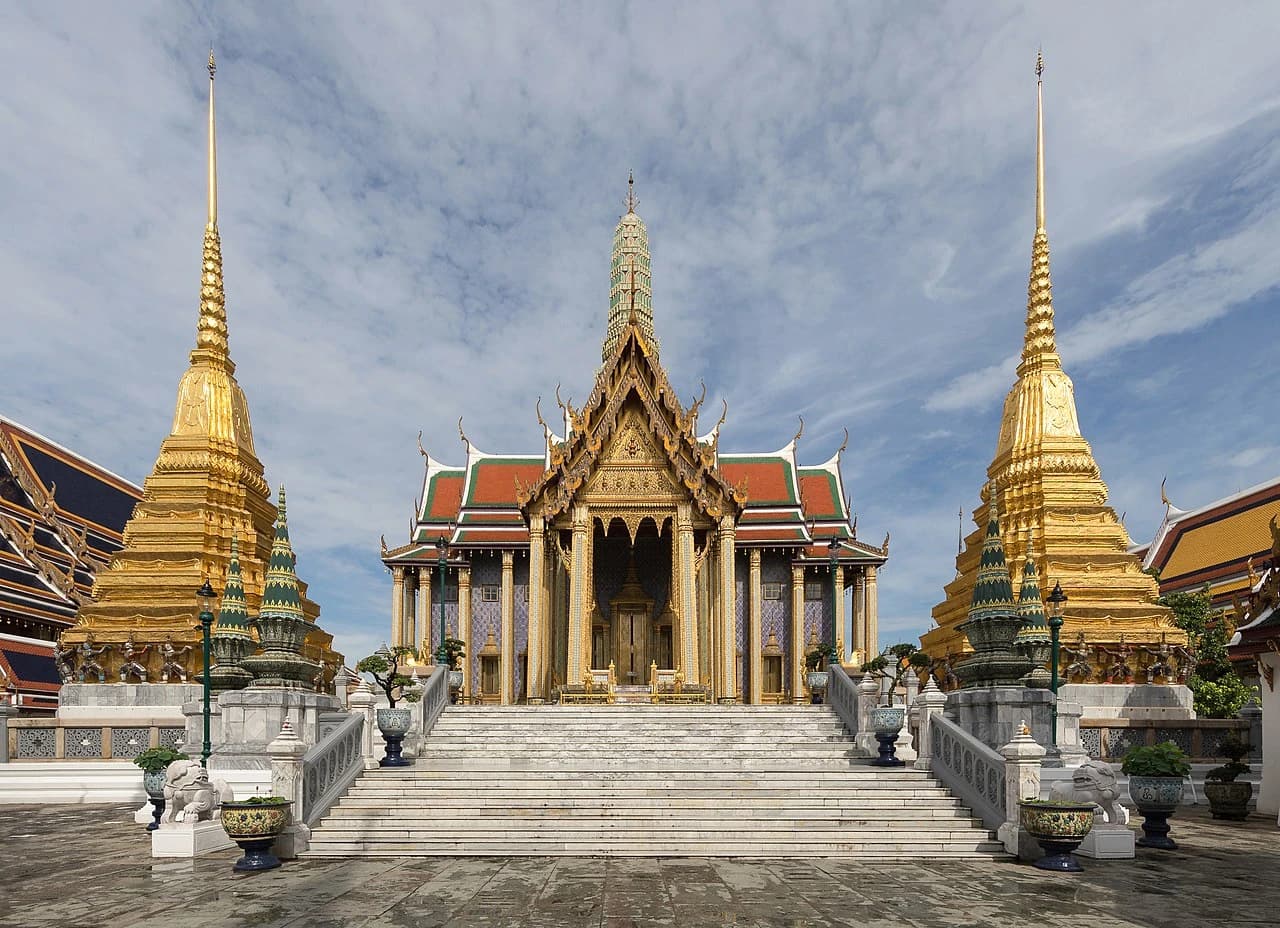
Wat Phra Kaew is a royal temple complex situated within the Grand Palace in Bangkok, Thailand. It is renowned as the home of the revered Emerald Buddha statue, considered the most sacred Buddhist temple in Thailand.
Wat Phra Kaew is also known as Wat Phrasri Rattana Sasadaram, Temple of the Emerald Buddha, Grand Palace Bangkok Temple, Wat Phra Kaeo.
This self-guided audio tour features 31 narrated stops organized across 9 sections. As a temple, Wat Phra Kaew offers a unique cultural experience in the heart of Bangkok, Thailand.
The Stanza audio guide is available in 15 languages and works entirely offline — download the complete tour including audio narration, maps, and images before your visit. As you walk through Wat Phra Kaew, GPS-triggered narration plays automatically at each point of interest.
Last updated:
What you will hear
Arrival and the Hermit Doctor
Establishes the entrance experience and the traditional offerings made at the gate. Includes the primary exterior view and the bronze Hermit statue.
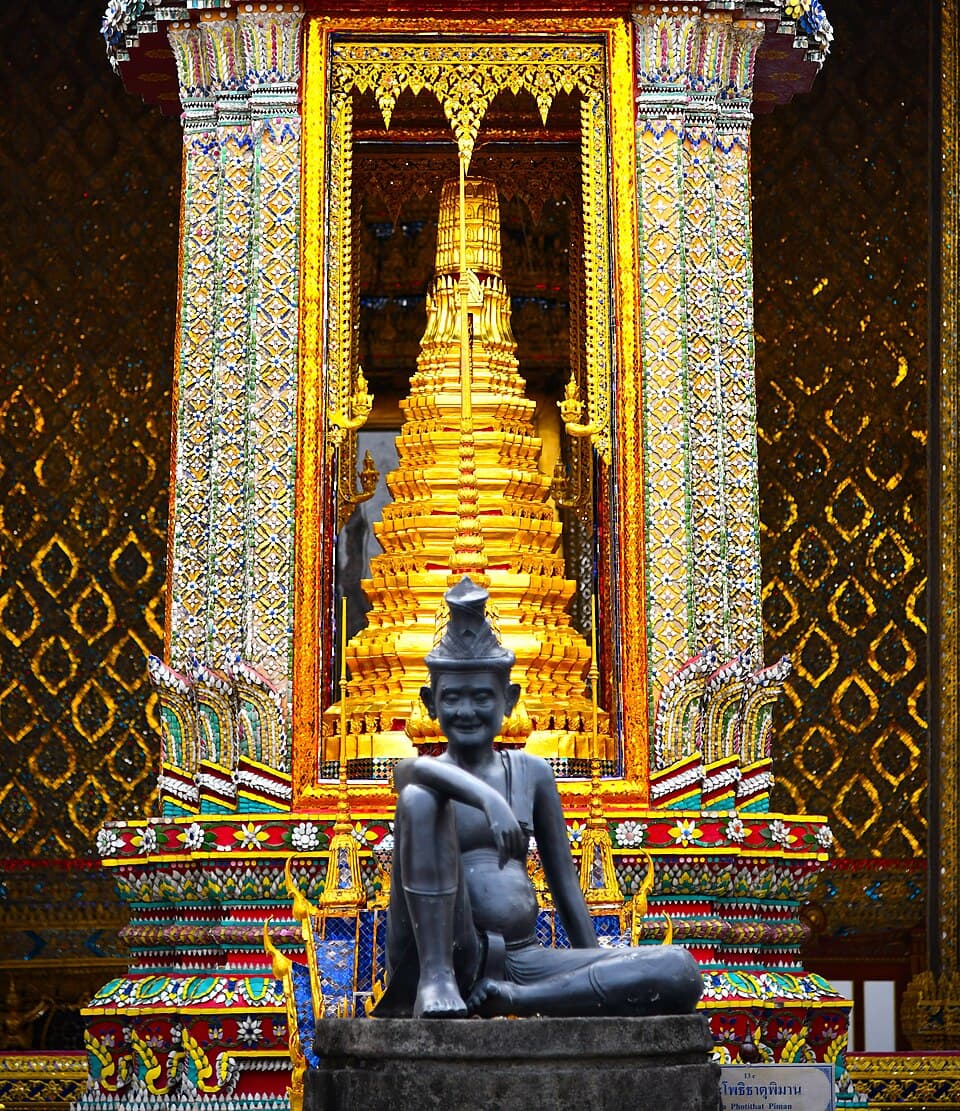
The Hermit Doctor Jivaka
Before you stands a dark statue of Jivaka Komarabhacca, often referred to as the 'Hermit Doctor.' In the Thai tradition, he is revered as the patron of traditional medicine, and his presence here at the entrance of the temple complex is significant. According to Buddhist scriptures, Jivaka lived over 2,500 years ago and served as the personal physician to the Buddha. He is credited with developing many of the healing practices and herbal remedies still used in Southeast Asia today. Take a moment to observe the base of the statue, where you will frequently see offerings left by visitors. Bunches of flowers, incense sticks, and small cups of water are placed here by those seeking health and healing for themselves or their loved ones. For many locals, Jivaka is more than a historical figure; he is an active source of spiritual comfort and medical guidance. The practice of paying respect here is a living tradition that bridges the gap between ancient spiritual belief and the physical well-being of the Thai people. It reminds us that this complex, while a royal monument, remains a deeply personal space for prayer and reflection.
The Phra Ubosot and Gilded Garudas
Focuses on the exterior of the main hall, highlighting the unique architecture and the protective mythical figures at its base.
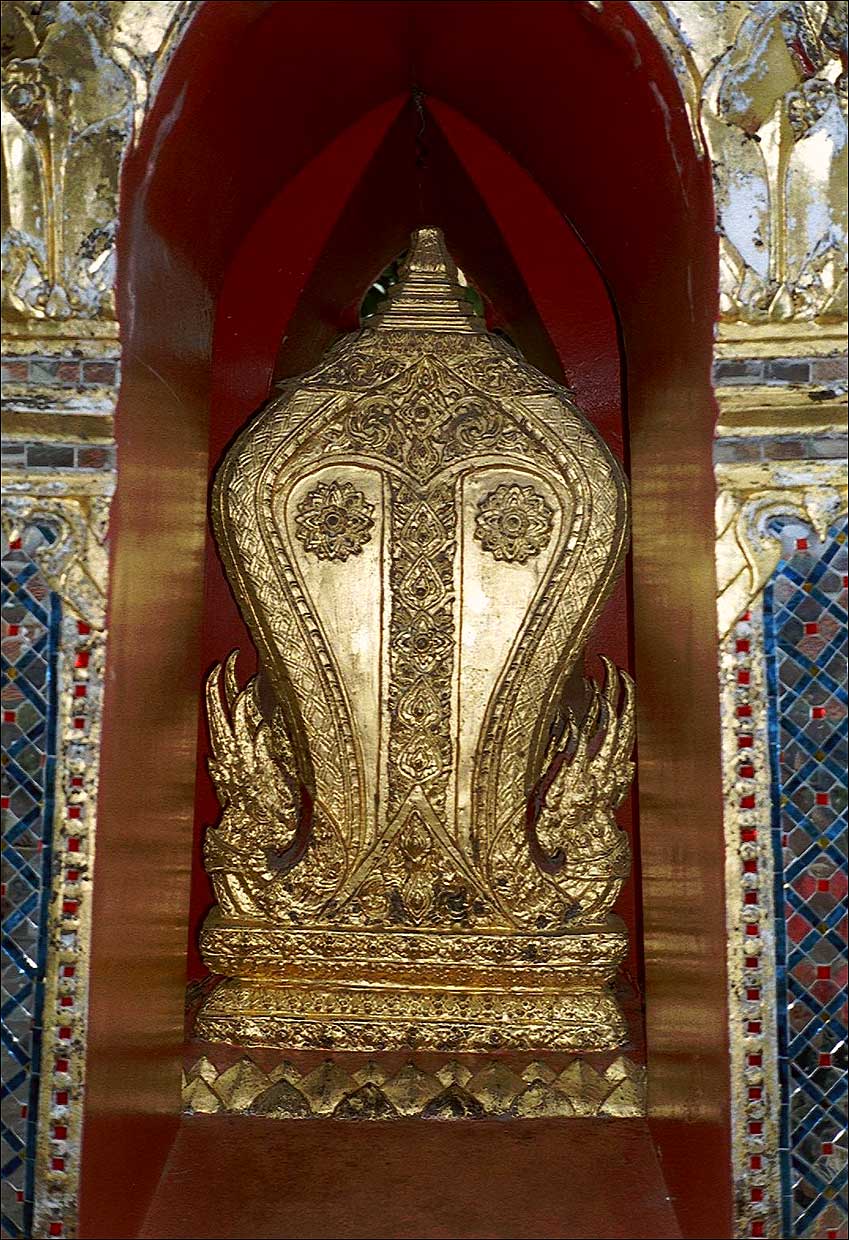
The Sacred Boundary Stones
Around the Phra Ubosot, you will see several ornate stone tablets housed in small, decorative pavilions. These are known as 'Bai Sema,' or sacred boundary stones. In Thai Buddhism, an ordination hall is only valid if its perimeter is clearly defined by these markers. There are usually eight of them placed at the cardinal and ordinal directions around the building. These specific stones are masterpieces of Thai art, featuring intricate carvings that have been highlighted with gold leaf to match the surrounding architecture. Their function is more than just physical; they signify that the space within the perimeter is spiritually distinct from the world outside. When the stones are first laid, a ceremony is performed to sanctify the ground, making it a place where monks can be ordained or where the most sacred rituals can occur. By looking at the elaborate designs on these tablets, you can see how even the functional elements of the temple are elevated to the level of high art. They serve as a constant reminder to those entering that they are crossing into a space of profound religious significance, separated from the secular activities of the palace and the city beyond.
The Emerald Buddha and Royal Rituals
Explores the interior significance and the living traditions of the temple, specifically the seasonal changing of the Buddha's garments.
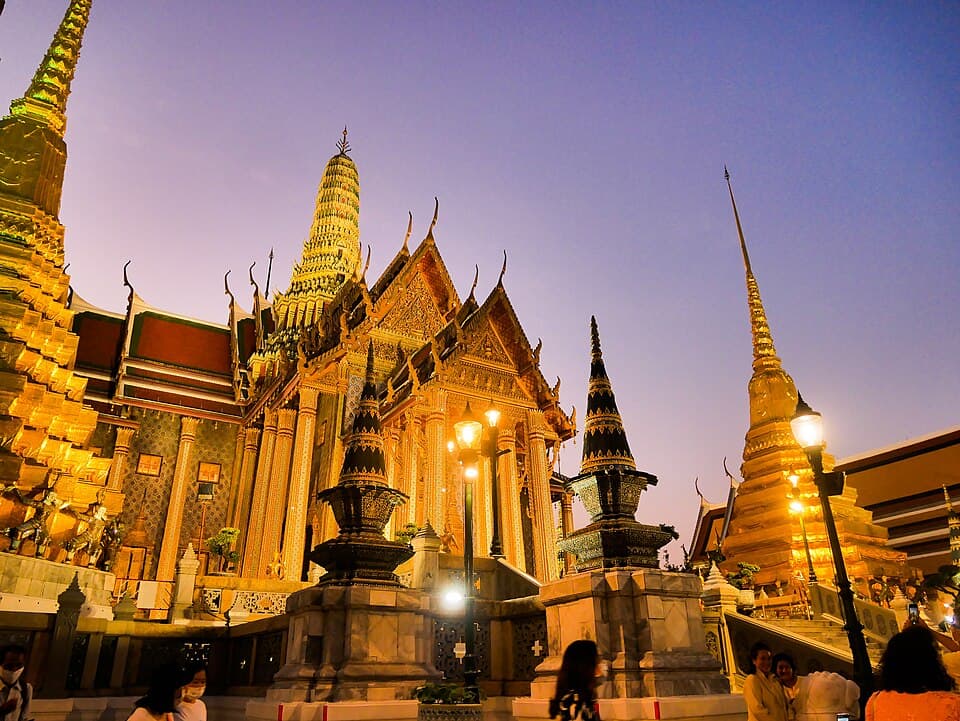
Ascent to the Royal Terrace
Stepping up onto the 'Than Phaithi,' or the raised royal terrace, feels like entering a different world. This elevated platform is the heart of the complex's most spectacular monuments. As you look around, the visual density of gold, porcelain, and glass is almost overwhelming. This terrace was not built all at once; it was significantly expanded by later kings, particularly Rama III and Rama IV, to house monuments that represent the center of the Buddhist universe. In traditional cosmology, the center of the world is a Great Mountain, and the structures here are arranged to reflect that spiritual geography. Every building you see serves a specific purpose, from housing holy relics to storing ancient scriptures. The elevation of the terrace itself is symbolic, lifting these structures closer to the heavens and away from the mundane world below. The play of light on the golden tiles and the intricate mosaics creates a shifting landscape of color that changes throughout the day. This space was designed to inspire awe and devotion, acting as a physical manifestation of the kingdom's religious fervor and the King's role as the primary supporter of the faith.
The Than Phaithi (Raised Terrace)
An overview of the elevated platform that houses the temple's most spectacular monuments and mythical bronze statues.
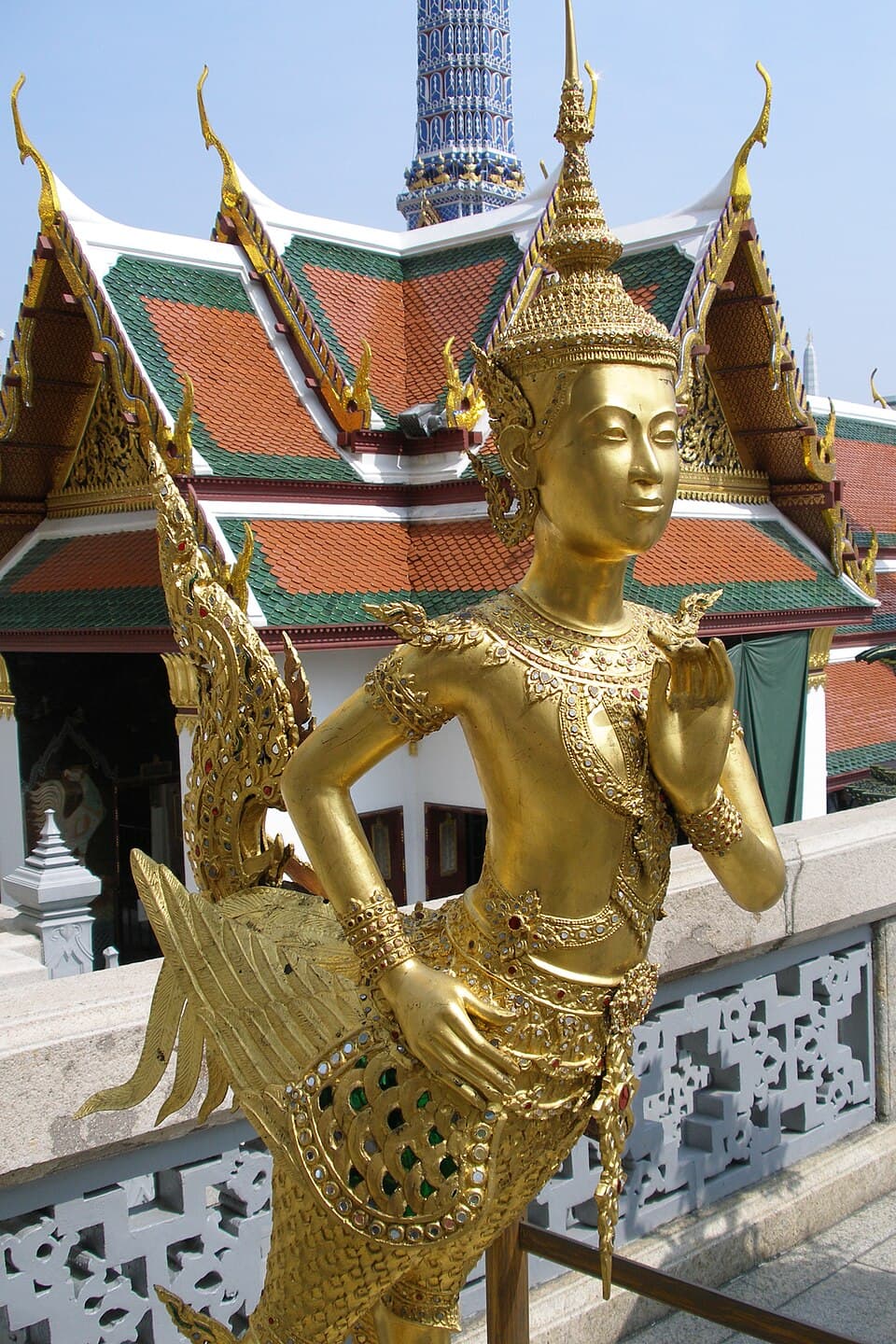
The Golden Kinnara
Standing elegantly on the terrace is a gilded bronze statue of a Kinnara, a beloved figure in Thai mythology. This being is half-human and half-bird, often described as an inhabitant of the magical Himavanta forest that surrounds the base of the cosmic Mount Meru. In Buddhist lore, Kinnaras are known for their skill in music and dance, and their presence here adds a sense of grace and celestial beauty to the temple grounds. Look closely at the craftsmanship of the statue. The transition between the human torso and the bird-like lower body is seamless, featuring an exquisite feathered tail that curls upward with delicate detail. Despite its mythical nature, the figure possesses a peaceful, very human facial expression, reflecting the Buddhist ideal of tranquility. These statues are more than just decorations; they represent the diverse beings that inhabit the spiritual world. Their presence on the royal terrace serves to remind visitors that this sacred ground is a meeting point between the human and the divine. The golden surface reflects the sunlight brilliantly, making these mythical beings seem almost alive as they stand watch over the monuments of the terrace.
The Model of Angkor Wat
Details the highly accurate stone replica of the famous Cambodian temple, commissioned by King Rama IV.
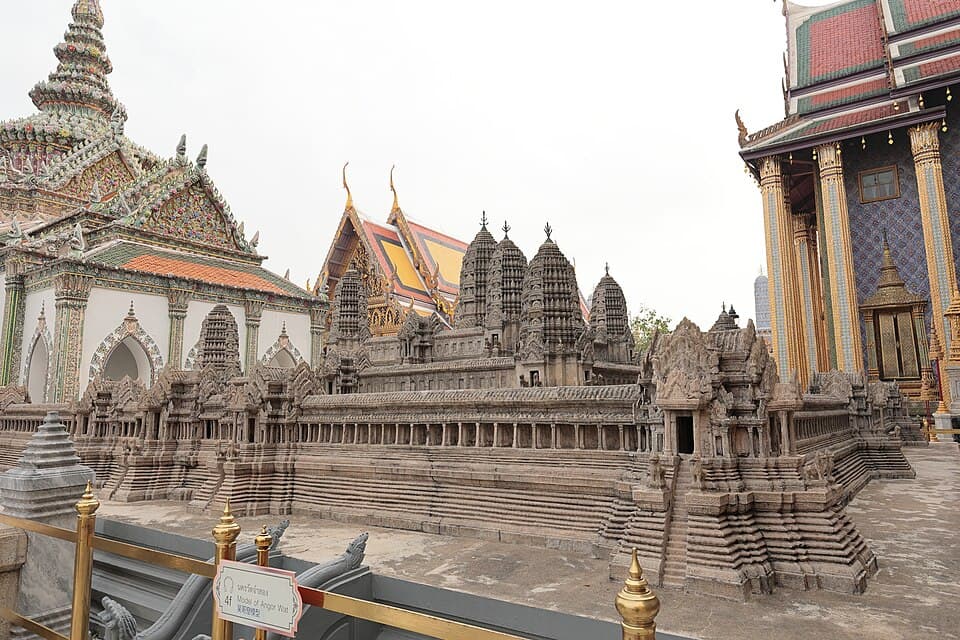
Details of the Stone Model
As you move closer to the Angkor Wat model, take a moment to appreciate the sheer level of detail that the 19th-century artisans achieved. This isn't just a rough approximation; every major tower, corridor, and gallery of the real temple in Cambodia is represented here in miniature. Notice the five main central towers, which in the original represent the five peaks of Mount Meru, the center of the Hindu and Buddhist universe. The model captures the complex, layered nature of Khmer temple architecture, where buildings are stacked and nested within one another. You can even see the tiny windows and the delicate carvings on the walls, all rendered in grey stone. This model was a massive undertaking, requiring years of study and labor to ensure that the proportions were correct. It stands as a testament to the kingdom's history and its deep respect for the architectural achievements of the past. Completed during the reign of King Rama V, it has been meticulously maintained ever since. For those who have visited the real Angkor Wat, the accuracy is striking; for those who haven't, it provides a vivid sense of the scale and complexity that defined the Khmer Empire. It remains a unique example of a 'monument of a monument,' existing as a piece of history within another historic site.
The Eight Colored Prangs
The vibrant row of porcelain-covered towers that stand along the eastern edge of the temple complex.
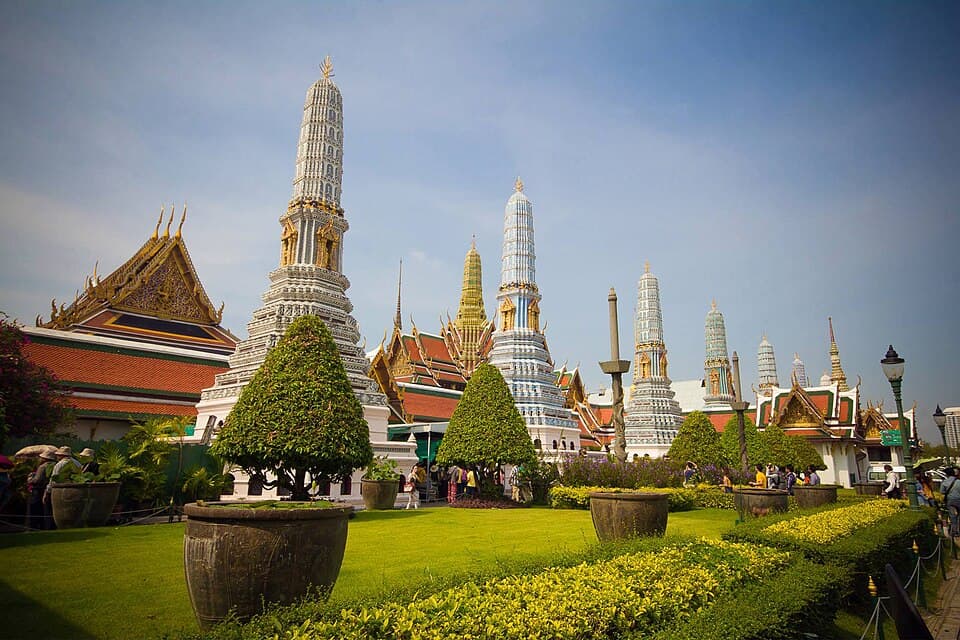
The Eight Colored Prangs
Along the eastern edge of the temple complex, you will see a striking row of eight tall, slender towers known as 'prangs.' These towers are unique for their varied colors and the thousands of porcelain shards used to decorate them. Each of the eight towers represents a specific concept within the Buddhist faith, such as the Seven Factors of Enlightenment or the various stages of the path to nirvana. Their presence serves as both a visual boundary for the temple and a symbolic reminder of the core teachings of the religion. The 'prang' shape is derived from ancient Khmer architecture and was adopted into the Thai style as a symbol of power and spiritual elevation. Notice how the colors—ranging from white and yellow to blue and green—brighten the landscape of the temple. These towers were originally built during the reign of King Rama I but have been extensively renovated and redecorated by later monarchs. The use of colorful porcelain gives them a texture and brilliance that is distinct from the golden stupas nearby. By walking along this row, you are tracing the fundamental steps of Buddhist philosophy, with each tower acting as a silent teacher for those who know the meaning behind the colors.
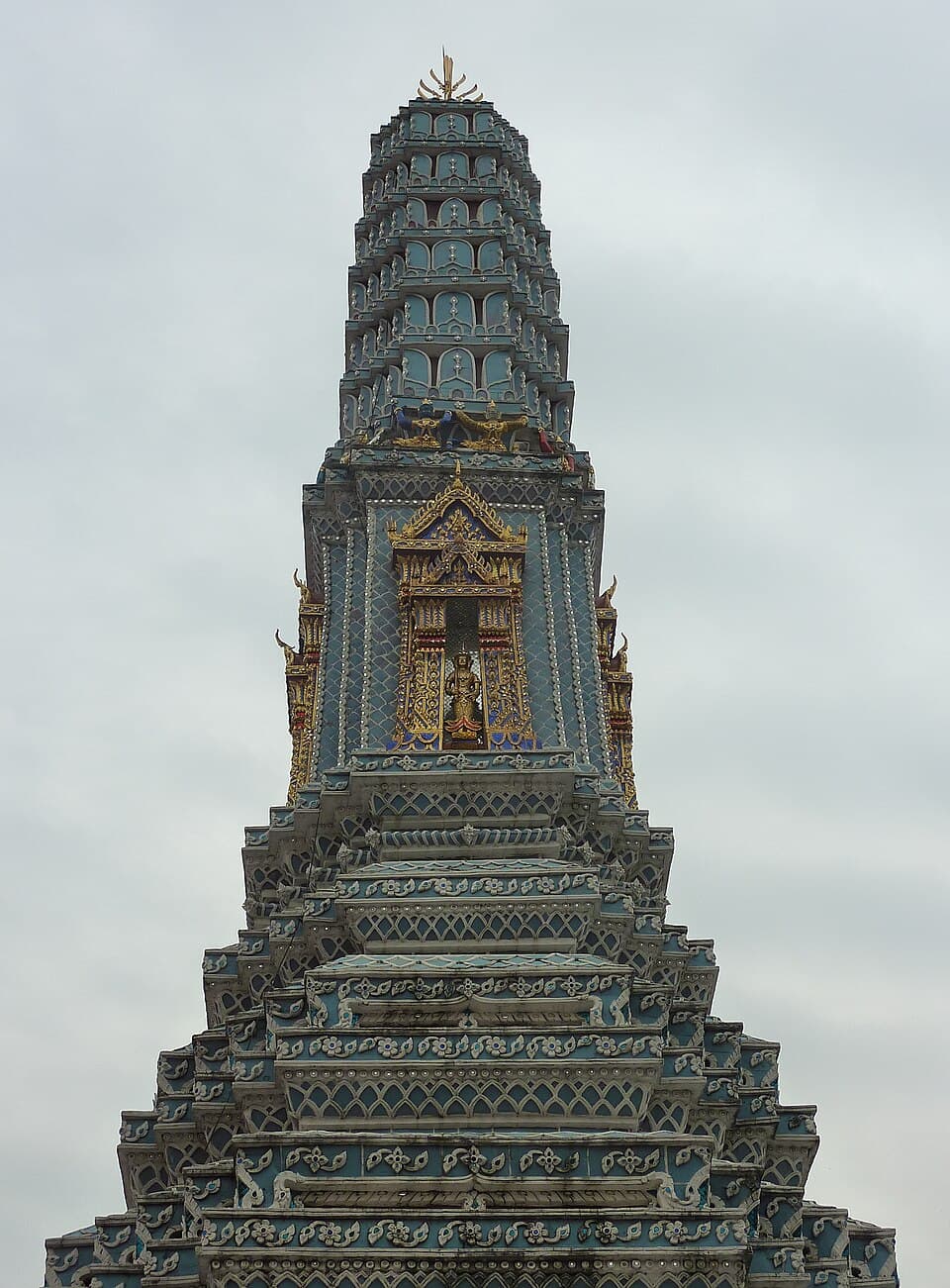
Mosaic of the Blue Tower
If you look closely at this blue prang, you will see the incredible technique used to create its intricate patterns. This is the 'Bencharong' style, which involves using small, broken pieces of high-quality porcelain to form elaborate floral and geometric designs. In the 18th and 19th centuries, much of this porcelain was imported from China. Rather than discarding broken pieces from the long sea voyage, Thai artisans cleverly repurposed them to decorate their most important temples. This was both a sustainable and highly beautiful way to adorn the towers. The blue shards are carefully arranged to catch the light, creating a mosaic that looks like a woven fabric of ceramic from a distance. Up close, you can see the individual shapes of the broken plates and bowls, each one contributing to the larger design. This technique became a signature of Rattanakosin art, blending imported materials with local creativity. The blue tower is particularly striking against the blue of the sky, its patterns appearing to shift as you move around it. It is a testament to the ingenuity of Thai craftsmen, who could take something as simple as a broken ceramic dish and transform it into a piece of divine architecture fit for the nation's most sacred site.
The Ramakien Mural Gallery
Explores the world's longest mural gallery, which tells the epic story of the Ramakien (the Thai Ramayana).
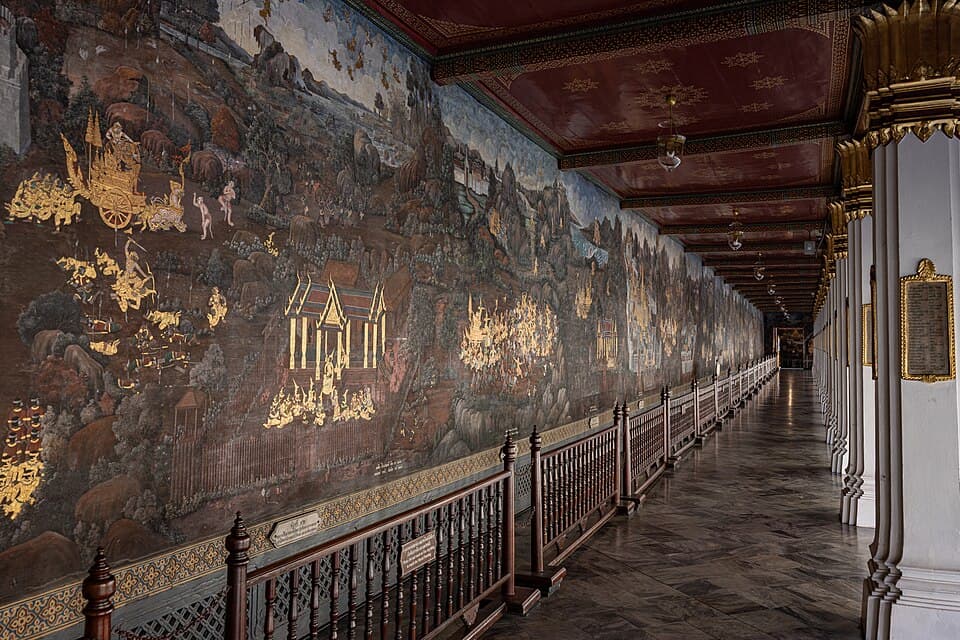
The World's Longest Mural
Step into the shaded gallery that surrounds the temple complex, and you will find yourself surrounded by one of the longest continuous mural paintings in the world. Spanning 178 individual panels, these paintings tell the story of the Ramakien, which is the Thai version of the ancient Indian epic, the Ramayana. This story is central to Thai culture, depicting the struggle between the noble King Rama and the demon king Tosakanth. It is much more than an adventure story; it serves as a moral guide for kingship and a symbol of the eternal triumph of good over evil. The murals are painted in a traditional Thai style, where multiple events often take place within a single, non-linear scene. Look at the incredible detail in the palaces, forests, and battlefields. The artists used gold leaf to highlight the most important characters, such as gods, kings, and divine monkeys, making them stand out against the more muted tones of the landscape. Every few decades, the murals are meticulously restored to maintain their vibrant colors and intricate details. As you walk along the gallery, you are following the entire narrative arc of the epic, a journey that has inspired Thai art, theater, and literature for generations. It is a place where you can get lost in the mythology that defines the national identity.
The Twelve Yaksha (Giant Guardians)
Details the massive, colorful statues that guard the temple gates and represent characters from the Ramakien epic.
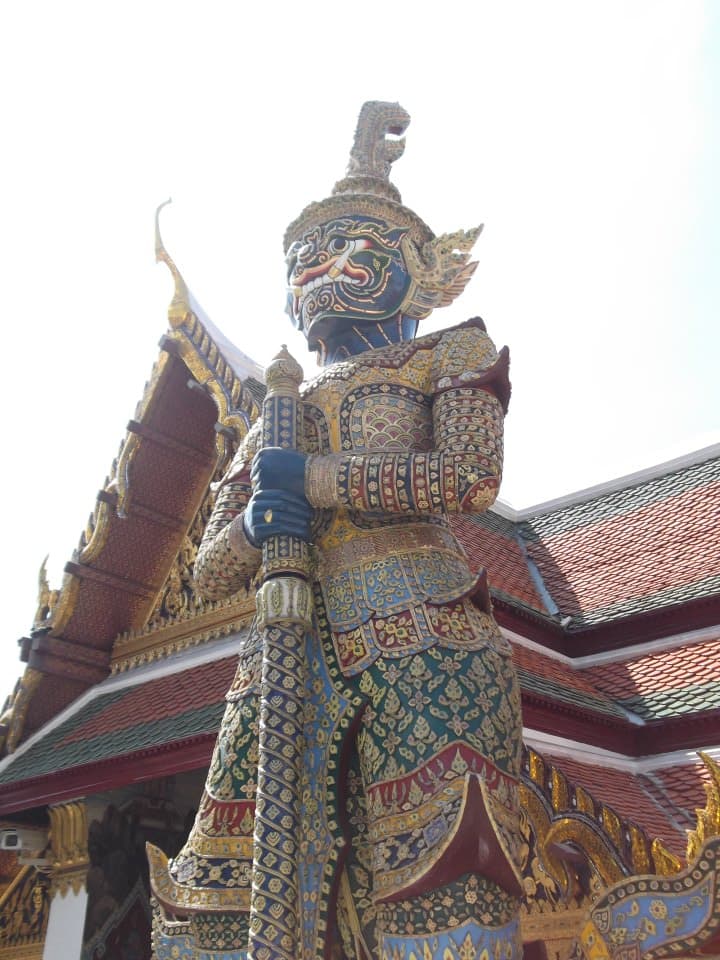
The Five-Meter Gate Guardians
Standing sentinel at the various gates of the complex are twelve massive Yaksha, or giant guardians. These statues are truly impressive, each standing approximately five meters tall. They are characters taken directly from the Ramakien epic, and their job here is purely protective. In Thai belief, these powerful beings stand guard to prevent any malevolent spirits or negative influences from entering the sacred grounds and disturbing the Emerald Buddha. Observe their elaborate costumes, which are covered in thousands of colorful porcelain tiles, creating a brilliant, shimmering armor. Each guardian has a unique color and facial expression, representing a specific character from the story. They lean on massive maces, their wide eyes and bared fangs serving as a warning to any who would enter with ill intent. Despite their fierce appearance, they are revered as faithful servants of the Buddha. The tradition of placing these massive guardians at the gates dates back to the early days of the temple, and they have become some of its most iconic symbols. As you walk past them, the sheer scale of the statues makes you feel small, reinforcing the idea of the temple as a protected, divine fortress.
The Bell Tower and Departure
Concludes the tour at the porcelain-covered bell tower before exiting toward the Grand Palace.
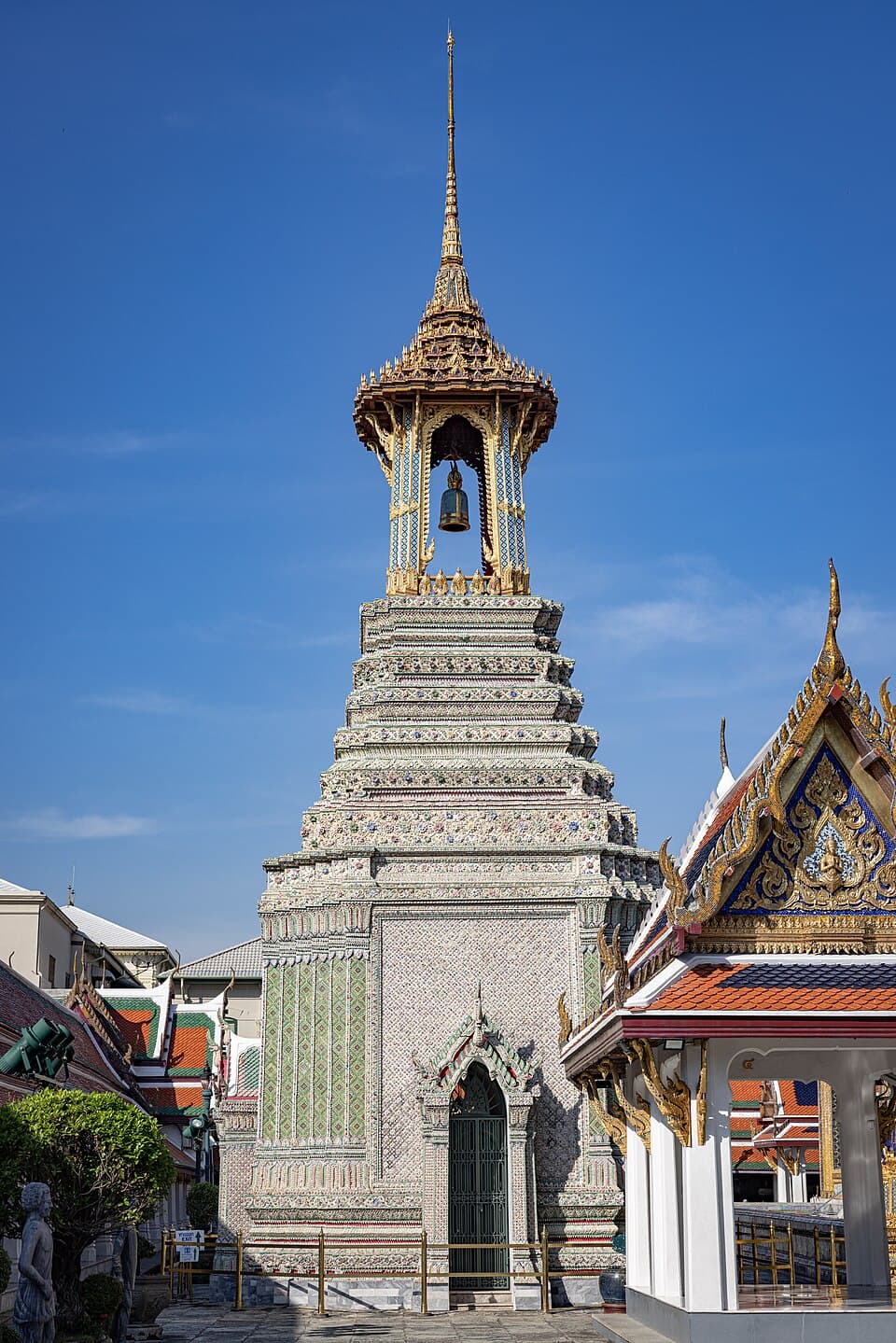
The Porcelain Bell Tower
This colorful structure is the Ho Rakhang, or the Bell Tower. Like many of the buildings here, it is covered in a vibrant mosaic of porcelain shards, forming intricate floral and vine patterns. The tower is built on a high base to ensure the sound of the bell can carry across the palace grounds. However, you won't hear this bell ringing for daily services or routine events. Its use is reserved for the most significant religious and state occasions in the nation. Specifically, the bell is rung to mark the investiture of a new Supreme Patriarch, the highest-ranking monk in Thailand. Because this event only happens a few times in a generation, the ringing of this bell is a rare and solemn sound that signifies a major transition in the country's religious leadership. The design of the tower reflects the joy and celebration of such an occasion, with its bright colors and elegant spire. It serves as a visual and auditory anchor for the community, marking the most sacred moments in the life of the Thai church. Even in silence, the tower stands as a beautiful example of how the temple integrates functional religious objects into its grand artistic scheme.
Want to hear the rest?
Download the Stanza app to unlock all 31 stops and full GPS-guided navigation.
Frequently Asked Questions
How long does the Wat Phra Kaew audio tour take?
The Wat Phra Kaew audio guide includes 31 narrated stops. Most visitors spend 45 minutes to 1.5 hours exploring the complete tour, though you can listen at your own pace and skip or revisit any stop.
Is the Wat Phra Kaew audio guide available in my language?
Stanza supports 15 languages: English, Spanish, French, German, Italian, Portuguese, Russian, Japanese, Chinese, Korean, Arabic, Hindi, Polish, Dutch, Hebrew. Check the guide in the app to confirm the languages currently available for this tour.
Can I use the audio guide offline at Wat Phra Kaew?
Yes! Download the complete Wat Phra Kaew tour — including all audio, maps, and images — before your visit. The Stanza app works completely offline, so you don't need WiFi or mobile data at the venue.
How much does the Wat Phra Kaew audio guide cost?
The Stanza app is free to download. The current listed price for the Wat Phra Kaew audio guide is $2.99; app-store region and currency may affect the final price.
How do I use the Stanza audio guide at Wat Phra Kaew?
Download the free Stanza app, search for "Wat Phra Kaew", and download the tour. When you arrive at the venue, the app uses GPS to detect your location and automatically plays the relevant narration as you move between points of interest — completely hands-free.
What makes the Stanza audio guide different from other Wat Phra Kaew tours?
Stanza offers GPS-triggered narration that plays automatically as you walk through Wat Phra Kaew — no need to manually select stops. The tour is available in 15 languages, works fully offline, and includes 31 expertly narrated stops with images and historical context.
What other audio guides are available near Wat Phra Kaew?
Stanza offers multiple audio guides in Bangkok, Thailand and nearby areas. After downloading the app, browse the map to discover all available tours near Wat Phra Kaew. Each guide can be downloaded for offline use.