Languages
15Ayutthaya Historical Park Audio Guide
Ayutthaya Historical Park is an archaeological site in Phra Nakhon Si Ayutthaya City Municipality, Thailand. Explore it with Stanza's guided offline audio tour — narrated in 15 languages.
Quick Facts
39
Stops
15
Languages
100%
Offline
📍 Phra Nakhon Si Ayutthaya City Municipality, Thailand · 14.3516°N, 100.5575°E
About Ayutthaya Historical Park
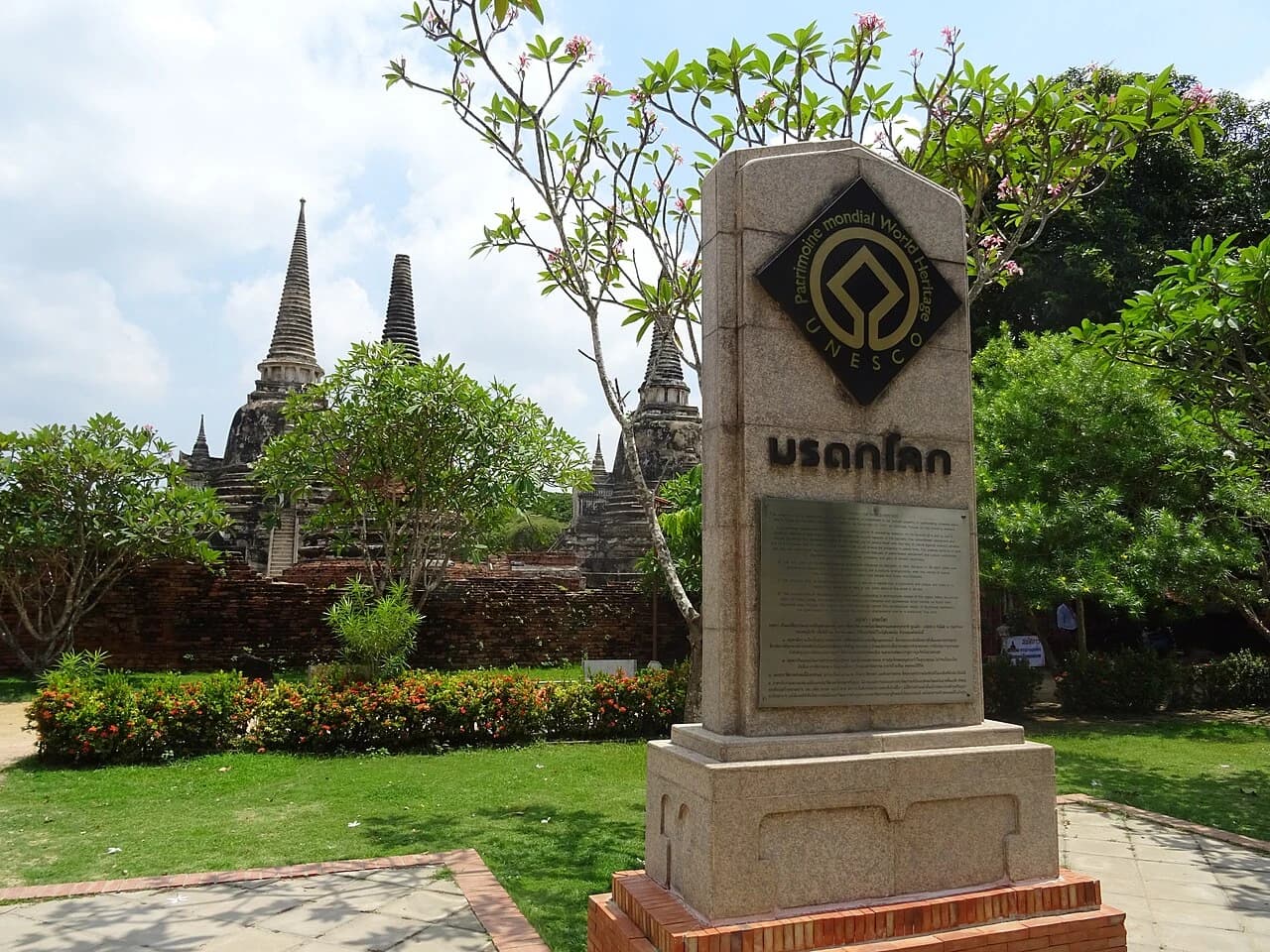
Ayutthaya Historical Park is a UNESCO World Heritage Site in Thailand, preserving the ruins of the ancient capital of the Ayutthaya Kingdom. It contains numerous temples, monasteries, and palaces, showcasing the grandeur of the former Siamese capital.
This self-guided audio tour features 39 narrated stops organized across 9 sections. As a archaeological site, Ayutthaya Historical Park offers a unique cultural experience in the heart of Phra Nakhon Si Ayutthaya City Municipality, Thailand.
The Stanza audio guide is available in 15 languages and works entirely offline — download the complete tour including audio narration, maps, and images before your visit. As you walk through Ayutthaya Historical Park, GPS-triggered narration plays automatically at each point of interest.
Last updated:
What you will hear
Khun Phaen's Residence
A traditional Thai teak house on stilts that brings to life the famous Siamese epic 'Khun Chang Khun Phaen'.
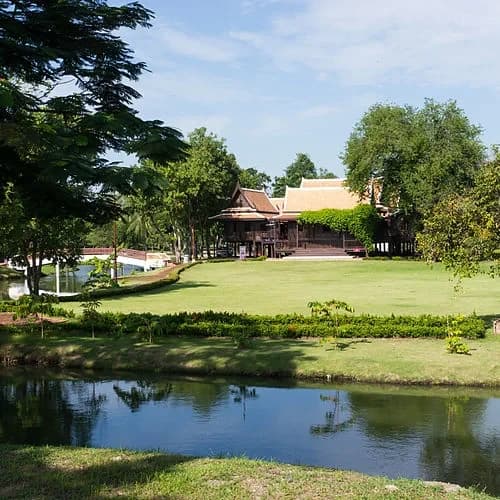
Khun Phaen's Teak House
Beyond the temples and palaces, the people of Ayutthaya lived in wooden structures perfectly adapted to the local environment. This dark teak house, elevated on high stilts, is a beautiful example of traditional Thai architecture. It is named after the legendary Siamese epic 'Khun Chang Khun Phaen,' a tale of love, magic, and war that has been told for generations. The design is deeply practical. The stilts protected the residents from the inevitable annual flooding of the surrounding rivers and allowed cooling breezes to circulate beneath the floorboards, making the tropical heat more bearable. Notice the steep gabled roof, designed to shed heavy monsoon rains quickly. While the great stone monuments of the city fell into ruin, wooden homes like this were the standard for the wealthy elite during Ayutthaya's golden age. Seeing this house provides a rare and intimate glimpse into the domestic side of history, contrasting the monumental scale of the nearby temples with the practical, elegant living spaces of the people who once walked these streets.
Sanctuary of the Auspicious Buddha (Wihan Phra Mongkhon Bophit)
Home to one of Thailand's largest bronze Buddha images, this restored vihara is a rare example of a living place of worship within the ruins.
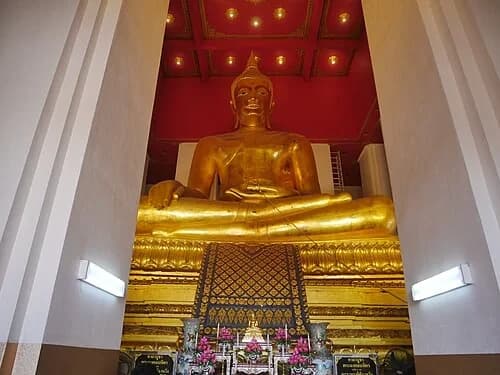
The Gilded Bronze Giant
Step inside and you will find yourself dwarfed by the sheer scale of this gold-covered figure. This is one of the largest bronze images in the country, a true masterpiece of ancient metalworking. However, its most fascinating secret was only revealed in the early 1900s during a restoration. Inside the main body of this giant figure, hundreds of smaller Buddha images were discovered hidden away. Historians believe they were placed there for protection during times of war, turning the statue into a literal vault of faith. As you look at the surface, you’ll notice it glows with countless tiny squares of gold. This is because visitors and pilgrims apply thin sheets of gold leaf to the figure as an act of "making merit," a Buddhist tradition of devotion. This massive figure has survived the fires of the 1767 invasion, multiple lightning strikes, and long periods of abandonment. Its gleaming presence today serves as a powerful symbol of the city’s endurance, standing as a bridge between the lost glory of the old kingdom and the living traditions of the present.
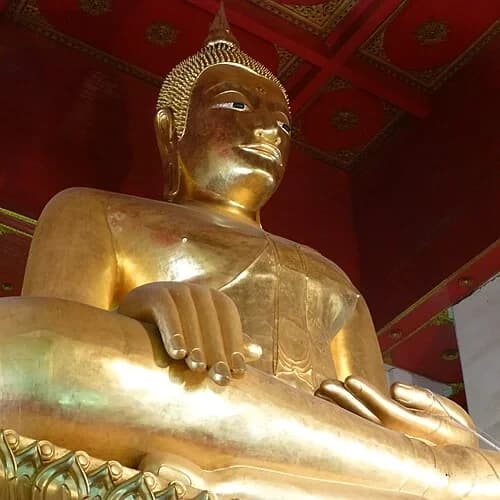
The Buddha's Serene Gaze
Take a close look at the face of this great figure to appreciate the specific artistic hallmarks of the "U Thong" style. Notice the delicate, thin lips, the elegantly connected eyebrows, and the peaceful, downward-turning eyes that seem to look inward. This statue has a traumatic history; it was originally cast in bronze and entirely covered in thick gold leaf. When the city was invaded in the 18th century, the attackers set fire to the temple specifically to melt and collect that gold. The heat was so intense that the head and right arm were severely damaged. If you look closely today, it is difficult to see the scars of that event. The seamless restoration work has made the figure look whole again, serving as a bridge between ancient craftsmanship and modern religious devotion. It stands as a testament to the skill of the original artists and the dedication of the restorers who brought it back from the brink of total destruction. The serene gaze remains unchanged, despite the fires that once roared around it.
Temple of the Funeral Pyre (Wat Na Phra Men)
Uniquely spared during the 1767 invasion because it served as the Burmese headquarters, this temple remains perfectly intact.
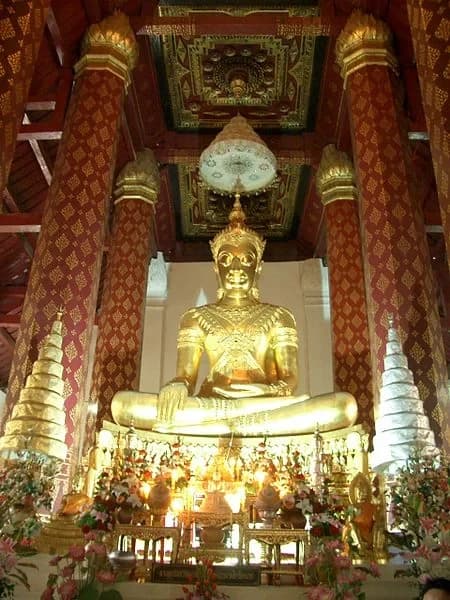
Detail of the Green Masterpiece
Look closely at the facial features of this ancient figure. The broad nose and full, thick lips are classic hallmarks of the Dvaravati style, which predates the founding of Ayutthaya by centuries. This artistic tradition flourished between the 6th and 11th centuries, offering a window into a much older chapter of Southeast Asian history. During the reign of King Rama III in the 19th century, the statue was moved to this location to ensure its protection from further decay or theft. The figure sits upon a base elegantly decorated with carved lotus petals, a symbol of purity in Buddhist tradition. Despite being over a millennium old, the stone remains a focal point of active devotion. Notice the small offerings placed at its feet—fragile fresh flowers and the lingering scent of incense. These modern tokens of faith bridge the vast gap of time, proving that the spiritual power attributed to this ancient masterpiece hasn't faded. It stands as a testament to the enduring reverence for sacred images that transcends dynasties and centuries of change.
Wat Hatdawas
A peaceful set of ruins north of the island featuring a bell-shaped chedi reflected in the neighboring canal.
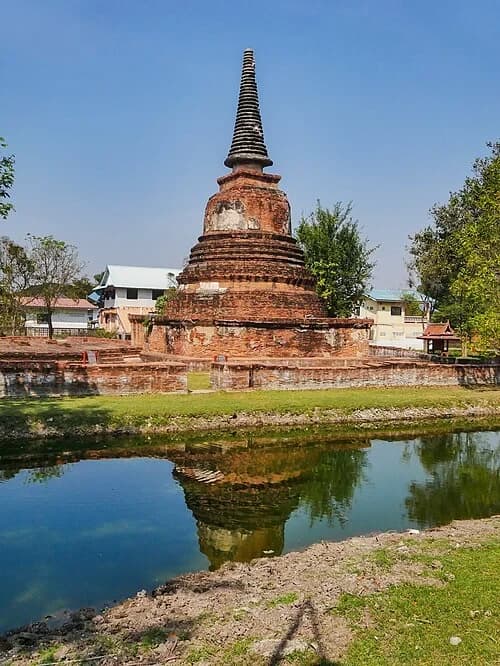
Ruins by the Water
Focus your attention on the layered brick base of the main chedi here. While the upper portions have long since crumbled, the spire would have originally stood much taller, dominating the skyline. In its heyday, these rough red bricks wouldn't have been visible; the entire structure would have been encased in smooth white lime plaster that would have shimmered brilliantly under the tropical sun. Take a closer look at how the bricks are stacked. Unlike modern construction, the ancient builders here didn't use cement. Instead, they relied on a traditional binding mixture of lime, sand, and sugar—specifically molasses—mixed with animal glue to bind them together. This organic mixture proved incredibly durable over centuries. Given its strategic position near the rear of the palace grounds, historians believe this temple was likely used for private ceremonies by members of the royal court. It represents an intimate side of palace life, a place for personal devotion tucked away from the grand public displays of the city's larger sanctuaries.
Temple of the Great Dharma King (Wat Thammikarat)
Known for its unique circular stupa base guarded by 52 guardian lions (Singha), a departure from the usual elephant motifs.
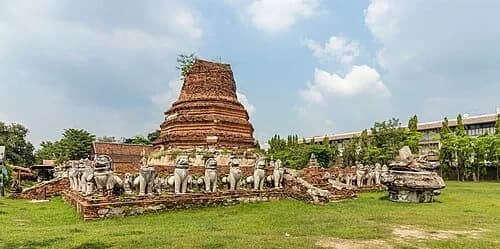
Thammikarat Temple
Notice the unusual base of this stupa. While most temples in Ayutthaya feature elephant-guarded bases, Wat Thammikarat is famously surrounded by fifty-two stone lions, known as 'Singha.' This design represents a distinct departure from local traditions, likely drawing inspiration from Khmer or Burmese architectural styles. Each lion was placed to serve as a mythical guardian, protecting the sacred relics that were once enshrined within the tower above. Look at the weathered faces of these figures. They are positioned to gaze outward in all directions, creating a symbolic perimeter of protection. Local tradition links the building of this temple to a king said to be so fierce and powerful in battle that he "roared like a lion." This temple captures that sense of strength and regal authority. Even in their worn state, the lions maintain a dignified presence, reminding us of the era when this was a site of significant royal patronage. The choice of lions over elephants marks this temple as one of the most distinctive architectural landmarks within the historical park.
Wat Phra Ram
Built on the cremation site of Ayutthaya's first king, this temple features a tall central prang reflected in the surrounding marsh.
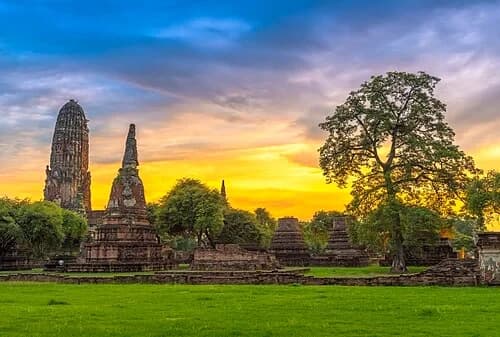
Phra Ram Temple
This temple holds a special place in the city's history, as it was founded in 1369 on the exact site where the first King of Ayutthaya was cremated. The central feature is the tall 'prang' tower, which has a distinct shape often compared to an ear of corn. This architectural style was adapted from the Khmer Empire, famously seen at Angkor Wat. In Buddhist and Hindu cosmology, a tower like this represents Mount Meru, the mythical mountain at the center of the universe. Look at the expansive lake surrounding the ruins. It wasn't always here. Originally, this area was a low-lying swamp. To build the temple, ancient laborers had to dig out vast amounts of soil to create a stable island foundation. The resulting hole filled with water, creating the lake you see today. This massive engineering project transformed the landscape, turning a marsh into a sacred precinct. Standing here, you are at the literal and symbolic heart of the kingdom’s early power, a site dedicated to the memory of the monarch who started it all.
Temple of the Elder Brother (Wat Worachettaram)
A somber site believed to be the cremation place of King Naresuan the Great, featuring a large bell-shaped stupa.
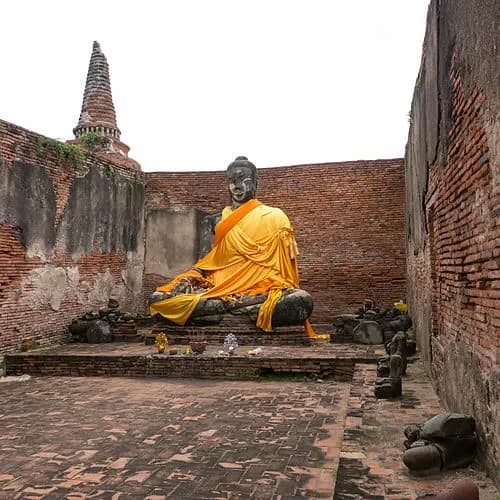
Worachettaram Temple
This temple is a somber memorial to one of Thailand’s most revered figures, King Naresuan the Great. After he passed away during a military campaign in 1605, his brother commissioned this temple to be the site of his cremation. Inside the roofless brick walls of the assembly hall, you can see a large seated Buddha statue that continues to oversee the grounds. King Naresuan is a national hero, best known for winning a legendary one-on-one "Elephant Duel" against a Burmese prince, an event that secured Ayutthaya's independence for over a century. The atmosphere here is noticeably quiet and respectful, as many visitors still come to honor the "Warrior King." The ruins stand as a quiet testament to a man whose life was defined by battle and leadership. While other temples in the park might be more grand or intact, Wat Worachettaram is significant for its emotional connection to Thai identity. The weathered bricks and the silent Buddha offer a space for reflection on the high stakes and heavy costs of the kingdom's long-standing struggle for survival.
Temple of the Reclining Buddha (Wat Lokaya Sutharam)
Home to a massive 42-meter long reclining Buddha, often draped in a bright orange cloth against the backdrop of a ruined prang.
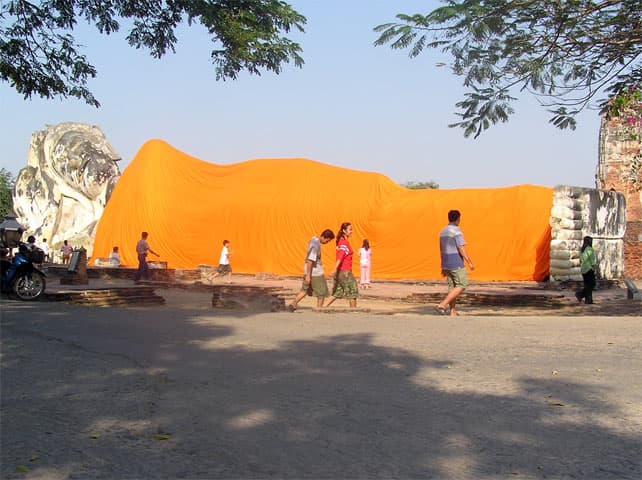
Lokaya Sutharam Temple
The focal point of this site is the massive reclining Buddha, stretching forty-two meters in length. This specific posture depicts the Buddha at the moment of his death, symbolizing his final entry into Nirvana and his release from the cycle of rebirth. Notice the giant carved lotus flower that serves as a pillow, supporting the Buddha's head. It is a scene of profound peace amidst the surrounding ruins. Originally, this giant figure wasn't exposed to the sky. It sat inside a massive assembly hall, but the wooden roof and brick walls have vanished completely over the centuries, leaving the statue lying in the open. You will often see the figure draped in a vibrant orange sash. This is a living tradition where local devotees and pilgrims wrap the statue in fresh cloth as an act of merit-making and to seek good luck. This practice keeps the ancient site connected to modern spiritual life, ensuring that even though the temple buildings are gone, the sacred presence remains a central part of the community’s devotion.
Wat Worapho
A tranquil ruin site featuring foundations of ancient halls and a seated Buddha statue, located near the western canal.
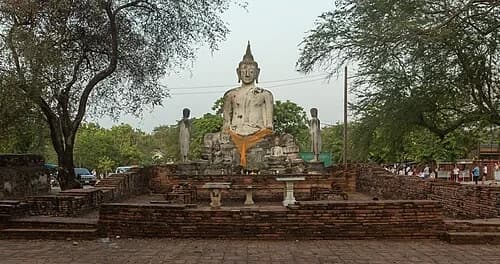
Worapho Temple
Notice the lonely, weathered brick pillar standing among the flat, overgrown foundations. This is Wat Worapho, a site that was once a prestigious center for Buddhist learning and meditation. Its name, which translates to "The Temple of the Excellent Bodhi Tree," refers to a sacred tree that once flourished here. Tradition holds that it was grown from a sapling of the original Bodhi tree in India, under which the Buddha attained enlightenment. While other parts of Ayutthaya are defined by the power of kings and the brutality of war, this site highlights the scholarly and spiritual side of the kingdom. Here, monks would have spent their days studying ancient scripts and practicing mindfulness, away from the distractions of the Royal Palace. Today, with only the foundations and a few pillars remaining, it is a quiet, contemplative space. It serves as a reminder that Ayutthaya was not just a military powerhouse, but also a major regional hub for religious philosophy and education, attracting seekers from across the Buddhist world.
Want to hear the rest?
Download the Stanza app to unlock all 39 stops and the complete guided audio tour.
Frequently Asked Questions
How long does the Ayutthaya Historical Park audio tour take?
The Ayutthaya Historical Park audio guide includes 39 narrated stops. Most visitors spend 45 minutes to 1.5 hours exploring the complete tour, though you can listen at your own pace and skip or revisit any stop.
Is the Ayutthaya Historical Park audio guide available in my language?
Stanza supports 15 languages: English, Spanish, French, German, Italian, Portuguese, Russian, Japanese, Chinese, Korean, Arabic, Hindi, Polish, Dutch, Hebrew. Check the guide in the app to confirm the languages currently available for this tour.
Can I use the audio guide offline at Ayutthaya Historical Park?
Yes! Download the complete Ayutthaya Historical Park tour — including all audio, maps, and images — before your visit. The Stanza app works completely offline, so you don't need WiFi or mobile data at the venue.
How much does the Ayutthaya Historical Park audio guide cost?
The Stanza app is free to download. The current listed price for the Ayutthaya Historical Park audio guide is $4.99; app-store region and currency may affect the final price.
How do I use the Stanza audio guide at Ayutthaya Historical Park?
Download the free Stanza app, search for "Ayutthaya Historical Park", and download the tour. When you arrive at the venue, the app uses GPS to detect your location and automatically plays the relevant narration as you move between points of interest — completely hands-free.
What makes the Stanza audio guide different from other Ayutthaya Historical Park tours?
Stanza offers GPS-triggered narration that plays automatically as you walk through Ayutthaya Historical Park — no need to manually select stops. The tour is available in 15 languages, works fully offline, and includes 39 expertly narrated stops with images and historical context.
What other audio guides are available near Ayutthaya Historical Park?
Stanza offers multiple audio guides in Phra Nakhon Si Ayutthaya City Municipality, Thailand and nearby areas. After downloading the app, browse the map to discover all available tours near Ayutthaya Historical Park. Each guide can be downloaded for offline use.