Stanza · Audio guide
Küçük Ayasofya Camii Audio Guide
A place to remember. A story to take with you.
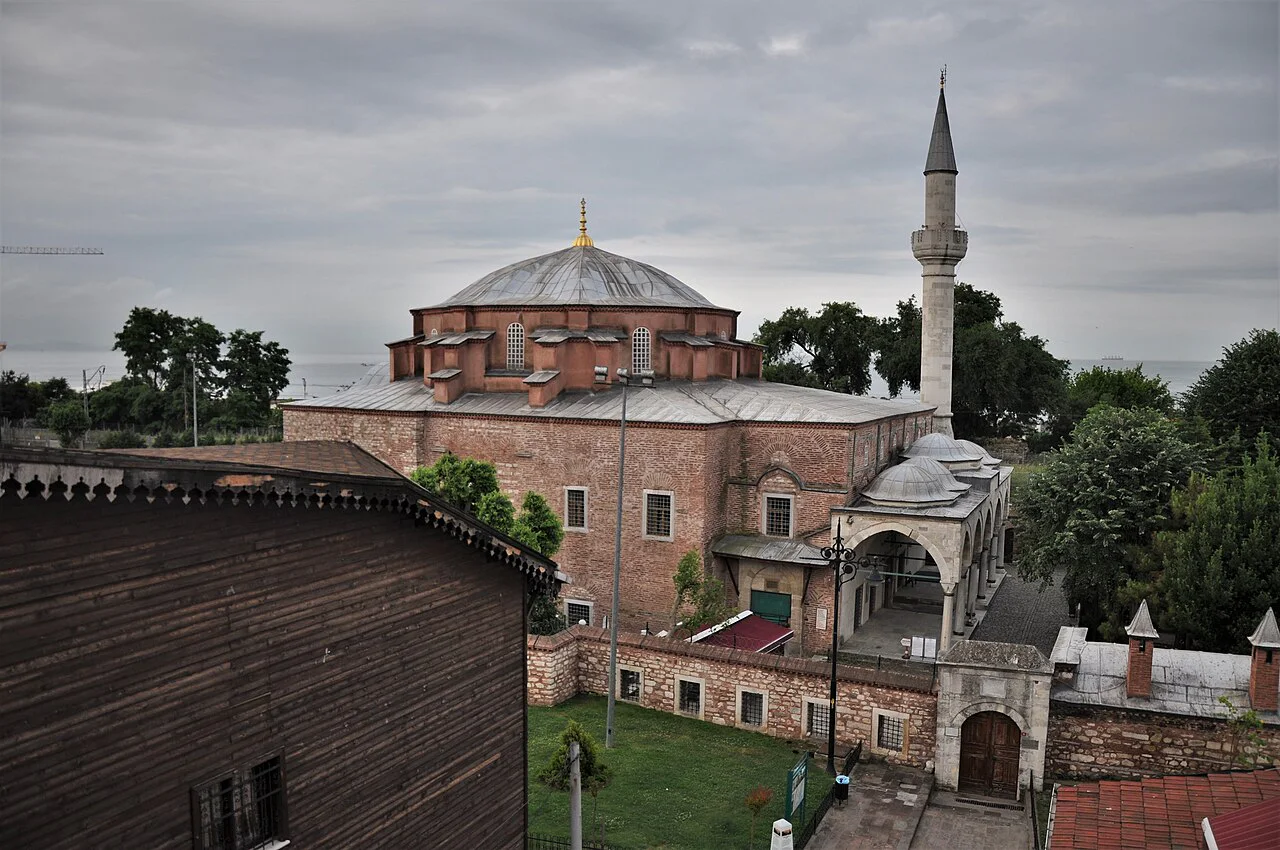
The Little Hagia Sophia mosque is a former Greek Orthodox church dedicated to the Syrian Christian Saints Sergius and Bacchus in Constantinople. It was converted into a mosque during the Ottoman Empire.
Download Stanza, then search for “Küçük Ayasofya Camii”.
About the tour
One guide. Your kind of visit.
The Little Hagia Sophia mosque is a former Greek Orthodox church dedicated to the Syrian Christian Saints Sergius and Bacchus in Constantinople. It was converted into a mosque during the Ottoman Empire.
Ready when you are.
- 01Get the free Stanza app.
iOS & Android
- 02Find your guide.
“Küçük Ayasofya Camii”
- 03Download before you go.
Works offline
Audio guide / 8 narrated stops
Inside the guide
Get to know a few of the stories before you go. Open a stop to read more.
01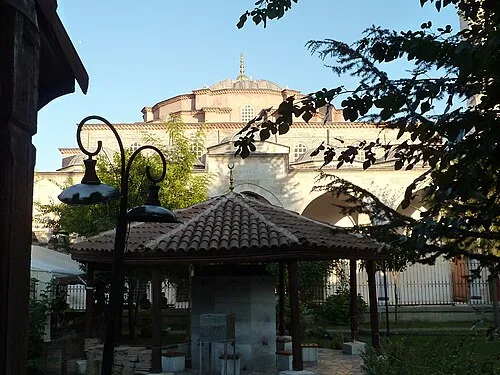 Courtyard and Hüseyin Ağa Madrasah
The Courtyard and Ablution Fountain
Welcome to Küçük Ayasofya, the Little Hagia Sophia, an active mosque in Istanbul's Fatih district. Fifteen hundred years ago it was a Byzantine church called the Church of Saints Sergius and Bacchus. The Turkish name came later, and the story of why it stuck is part of this tour. Visitors enter from the north-west through a stone gateway into a tree-lined court. In the middle stands a tiled fountain pavilion, built so the faithful could perform their ablutions before prayer. It still serves that purpose. To enter the prayer hall, shoes come off at the door, and the ground floor is accessible to everyone. Beyond the courtyard lie the prayer hall itself, its remarkable dome, and a garden with a graveyard that holds the whole story together.
User:Vmenkov · CC BY-SA 3.0
02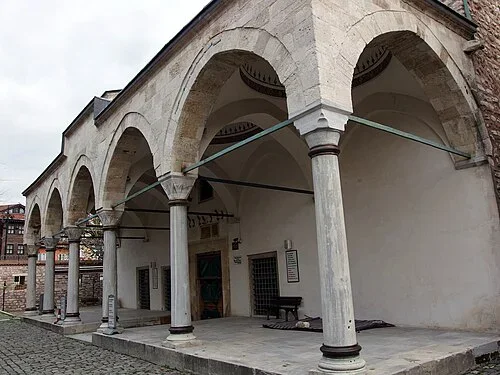 The Ottoman Portico
These arches are Ottoman work, wrapped around a much older shell. After the conquest of Constantinople in 1453, the church stood untouched for roughly half a century. Then, under Sultan Bayezid the Second, a palace official named Hüseyin Ağa transformed it into a mosque. The work happened around 1500, though sources differ on the exact years. Hüseyin Ağa was the Chief Black Eunuch, custodian of the Gate of Felicity in Topkapı Palace, one of the most trusted posts near the Sultan. At that time this five-bay portico was added at the entrance, and a madrasah, a religious school, rose beside the church. The Byzantine builders gave the site its walls. The Ottomans gave it the courtyard, the porch and the school that a mosque needed to function.
Photo: Mark Ahsmann · CC BY-SA 3.0
03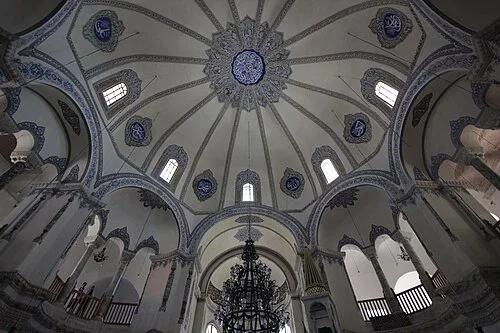 Central Nave and the Umbrella Dome
The Central Nave
The story goes that young Justinian was accused of plotting against the throne and sentenced to death. The night before the sentence was carried out, Saints Sergius and Bacchus appeared to the reigning Emperor in a dream and vouched for Justinian's innocence. The Emperor relented, and Justinian went free. When he took the throne, he kept a vow made in gratitude and dedicated a church to the two saints. Built between 527 and 536, it was one of the first acts of his reign, and may even have been begun under his predecessor. The hall inside is an octagon set within an irregular quadrilateral. It stood between the Palace of Hormisdas, Justinian's home before he was Emperor, and the Church of Saints Peter and Paul, which once shared its entrance hall and gateway with it. The chronicler Procopius praised the finished building as an adornment to the entire city.
Listen in the appPhoto: Bollweevil · CC BY-SA 3.0
04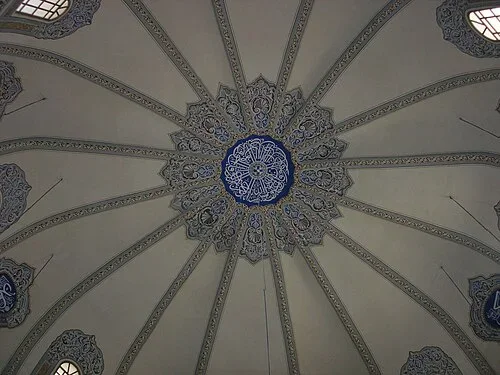 Central Nave and the Umbrella Dome
The Umbrella Dome
The dome overhead opens like an umbrella into sixteen compartments. Eight sections are flat, eight are concave, and the whole thing rests on eight polygonal pillars. It was an early and daring experiment in Byzantine dome building. Tradition gave the credit to Isidorus of Miletus and Anthemius of Tralles, the architects of Hagia Sophia, and cast this church as a dress rehearsal for their great masterpiece. That is where the name Little Hagia Sophia comes from. But the idea has largely been discredited. The building differs from Hagia Sophia in almost every architectural detail. A likelier influence was the Church of St Polyeuctus, built about a decade earlier and then the largest church in Constantinople. The design itself proved durable. Ravenna's San Vitale consciously repeats this central plan, and centuries later the Ottoman architect Mimar Sinan drew on it for his Rüstem Pasha Mosque.
Listen in the appA. Fabbretti · Public domain
05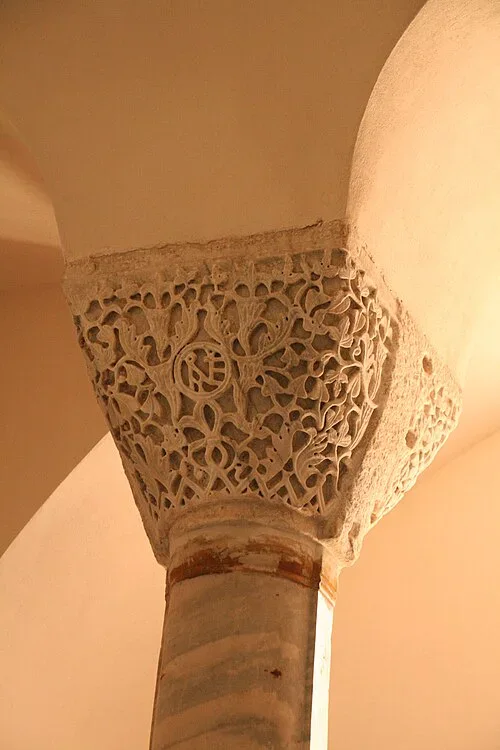 The Imperial Colonnade and Inscription
The Imperial Capitals
Running along the north, west and south sides is a colonnade on two storeys. The columns alternate between two precious stones: verd antique, a deep green marble, and red Synnadic marble, both quarried in the empire's provinces and shipped to the capital. Look closely at the carved capitals, and many still bear the monograms of Justinian and Theodora. The imperial couple had their signatures stamped into the very fabric of the prayer space, a permanent claim of patronage. The carving itself is extraordinarily fine, deep openwork that lets light and shadow play across it. That play of light on sculpture was no accident. It became one of the effects the builders of Hagia Sophia would later use on a far grander scale.
Listen in the appPhoto: Ophelia2 · CC BY-SA 4.0
06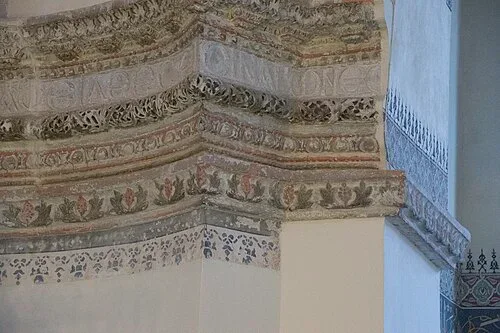 The Imperial Colonnade and Inscription
The Greek Inscription
Above the columns runs a frieze of carved Greek letters, and it is a poem. Twelve lines of hexameter verse, cut into the entablature, dedicated to the Emperor Justinian, his wife Theodora, and Saint Sergius, patron saint of the soldiers of the Roman army. Here is the puzzle. The church is dedicated to two saints, Sergius and Bacchus. Yet Bacchus is not mentioned anywhere in the inscription, and no one knows why. The carved decoration drew admiration from the start. One modern historian of the East Roman Empire wrote that by the originality of its architecture and the sumptuousness of its carved decoration, this church ranked in Constantinople second only to St Sophia itself. Faint traces of paint still cling to the stone, a reminder that the frieze was once coloured.
Listen in the appPhoto: Dosseman · CC BY-SA 4.0
07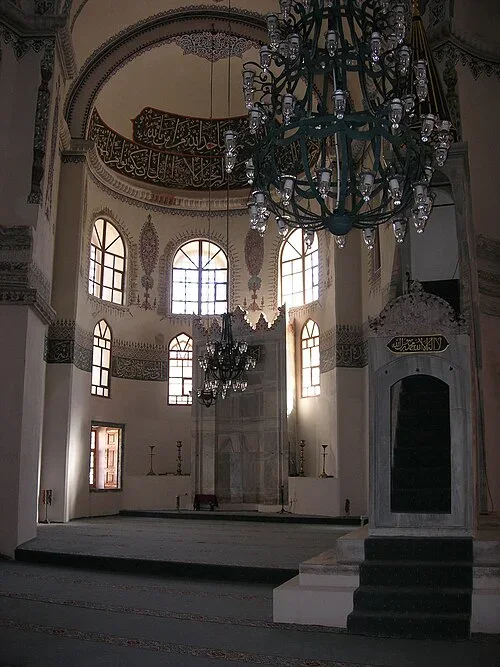 The Apse, Mihrab, and Minbar
The Apse, Mihrab and Minbar
The semi-circular apse at the end of the hall is original Byzantine work. Set into it now is the mihrab, the niche that shows the direction of Mecca, with the minbar, the preacher's staircase, standing beside it. Converting the church meant changing nearly everything inside. Windows and entrances were modified, the floor level was raised, and the interior walls were plastered over. Little remains of the original wall decoration. Chroniclers describe a church covered in mosaics, its walls faced with variegated marble, all of it lost beneath the whitewash. This altar area also holds one of the building's most dramatic episodes. In 551, Pope Vigilius, summoned to Constantinople by Justinian, took refuge in this church from the Emperor's soldiers. When they tried to seize him at the altar he clung to it so hard the structure nearly came down, and the attempt set off riots in the city.
Listen in the appA. Fabbretti · Public domain
08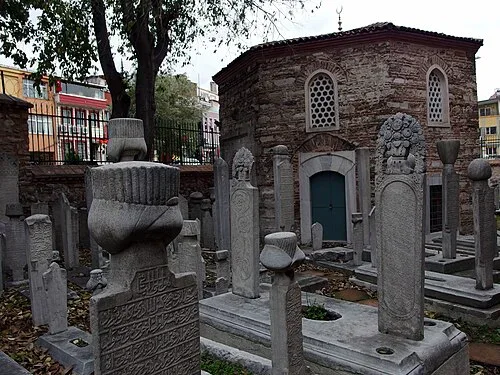 Tomb of Hüseyin Ağa and the Cemetery
The Cemetery and Tomb of Hüseyin Ağa
North of the building lies a small Muslim cemetery, and in it the türbe, the tomb, of Hüseyin Ağa, the palace official who turned the church into a mosque. His gravestones, topped with carved turbans, mark the resting place of the man whose story you heard at the Ottoman Portico. The world around him has changed completely. The Palace of Hormisdas, which in 536 and 537 sheltered Monophysite refugees under the protection of Empress Theodora, has vanished without trace. Parts of the neighbouring Church of Saints Peter and Paul were demolished to make room for a railway line, whose vibrations hastened the building's decline. Humidity and earthquakes had already taken their toll, and during the Balkan Wars the structure served as housing for refugees. The World Monuments Fund placed it on its list of the hundred most endangered sites in 2002, 2004 and 2006. A restoration lasting several years finished in September of that year, and the building returned to worship. A church, then a mosque, nearly lost and restored again, it has endured by changing with every age.
Listen in the appPhoto: Mark Ahsmann · CC BY-SA 3.0
Küçük Ayasofya Camii
Frequently asked questions
How much does the guide cost?
Free app download. Listed guide price: $0.99. Guide price shown in the app. Audio guide only. Venue admission is separate.
Can I listen without internet?
Yes. Download the guide’s audio, images, and maps in the app before your visit. Your downloaded content is then available offline.
Can I listen in my language?
This audio guide is available in 15 languages, including English.
Do I need to follow a schedule?
No. This is a self-guided experience. Choose your stops, pause whenever you like, and return to a story at your own pace.
At your own pace
Explore Küçük Ayasofya Camii.
Download Stanza, then search for “Küçük Ayasofya Camii”.
Free app download · Guide price shown in the app
Keep exploring
Nearby audio guides
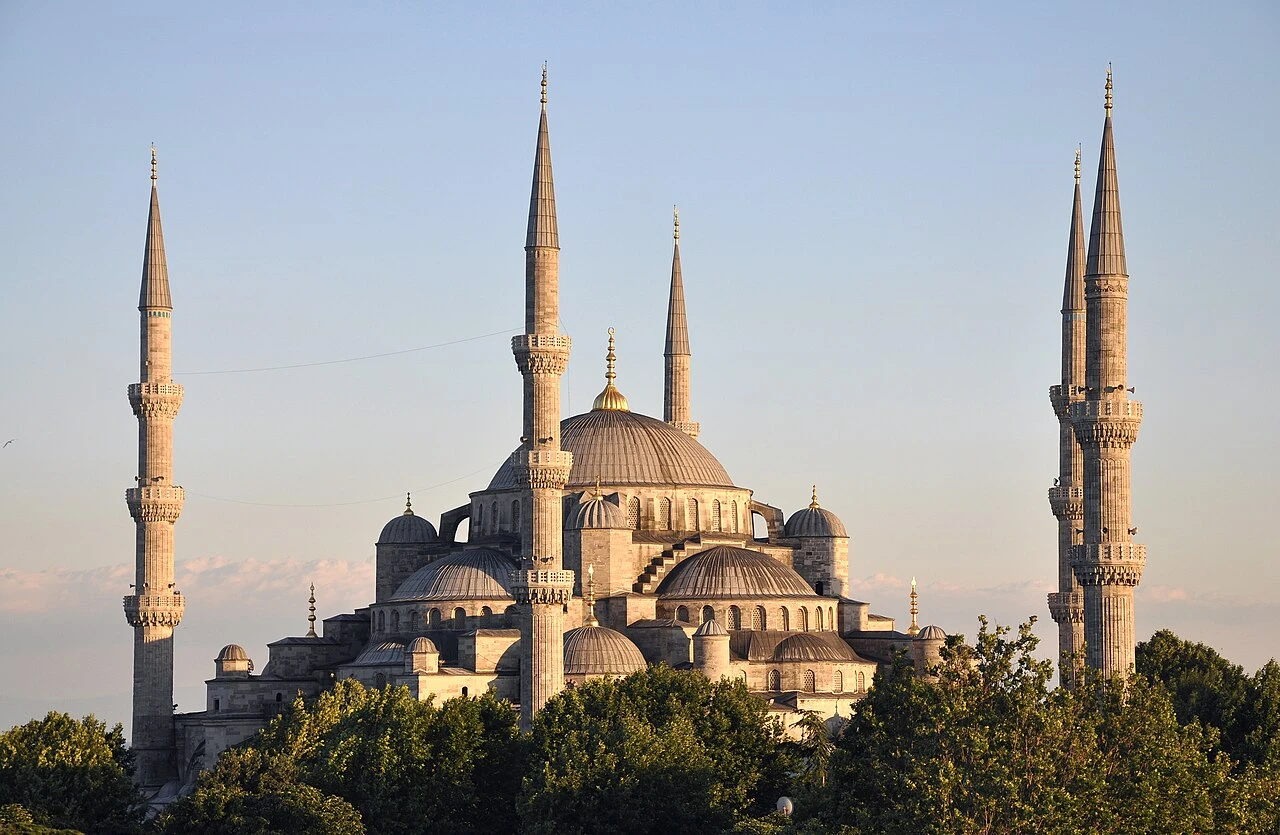
Istanbul · 1 km
Blue Mosque
Content & sources
Photo: Moonik · CC BY-SA 3.0
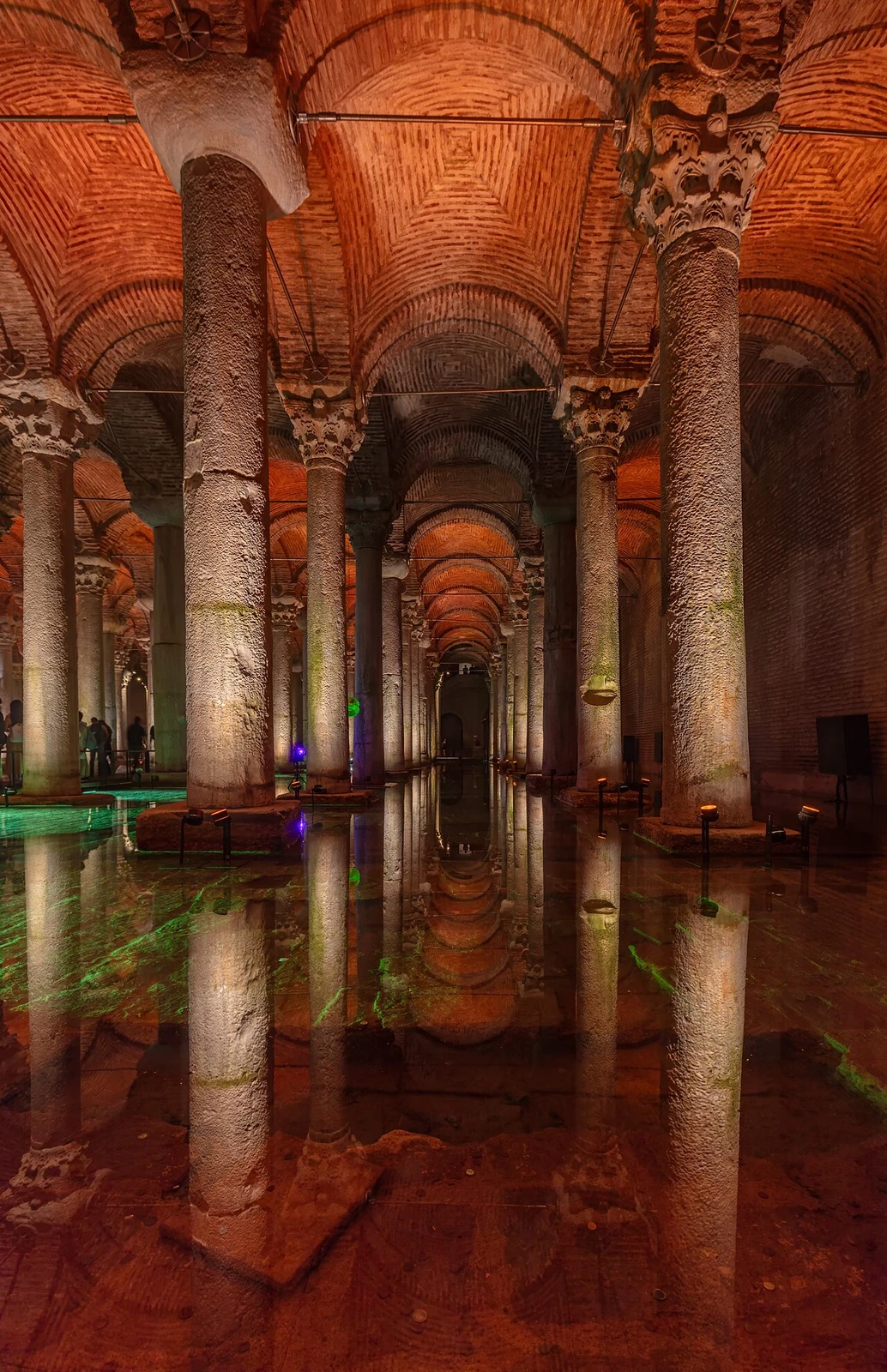
Istanbul · 1 km
Basilica Cistern
Content & sources
Diego Delso · CC BY-SA 4.0
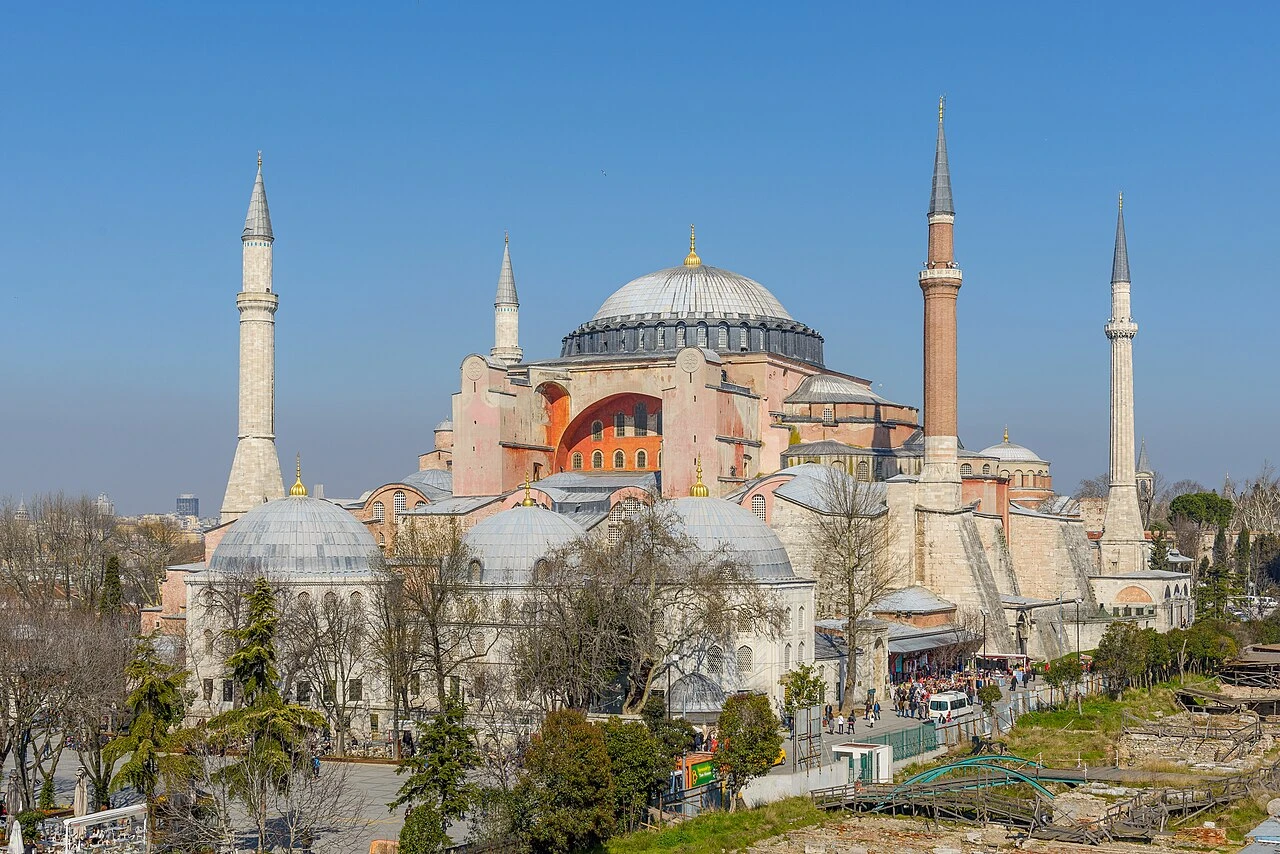
Istanbul · 1 km
Hagia Sophia
Content & sources
Arild Vågen · CC BY-SA 3.0
Istanbul · 1 km
Hagia Irene
Content & sources
Ninara · CC BY 2.0