Stanza · Audio guide
Kız Kulesi Audio Guide
A place to remember. A story to take with you.
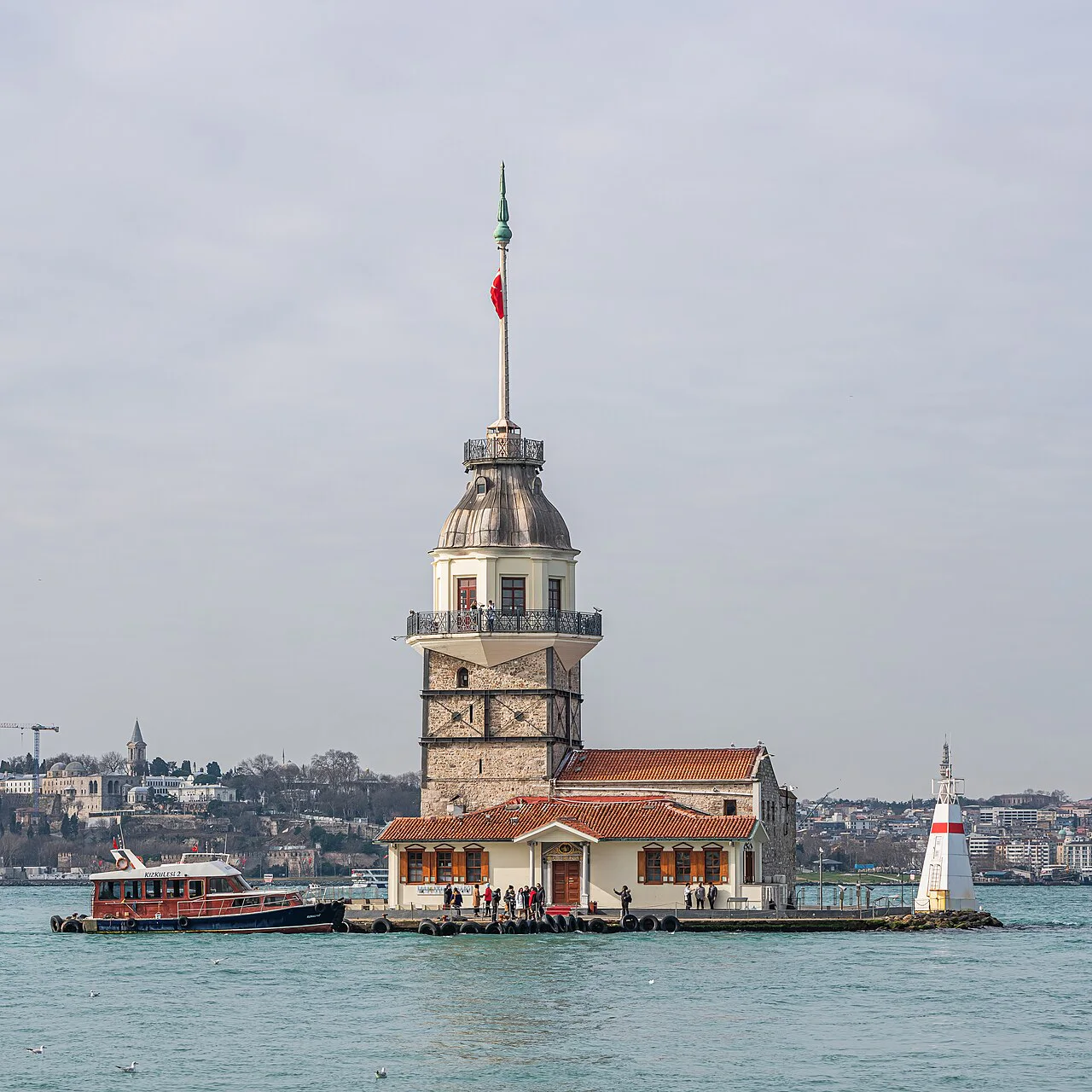
The Maiden's Tower is a tower located on a small islet at the southern entrance of the Bosphorus strait. It is situated 200 meters from the coast of Üsküdar in Istanbul, Turkey.
Download Stanza, then search for “Kız Kulesi”.
About the tour
One guide. Your kind of visit.
The Maiden's Tower is a tower located on a small islet at the southern entrance of the Bosphorus strait. It is situated 200 meters from the coast of Üsküdar in Istanbul, Turkey.
Ready when you are.
- 01Get the free Stanza app.
iOS & Android
- 02Find your guide.
“Kız Kulesi”
- 03Download before you go.
Works offline
Audio guide / 7 narrated stops
Inside the guide
Get to know a few of the stories before you go. Open a stop to read more.
01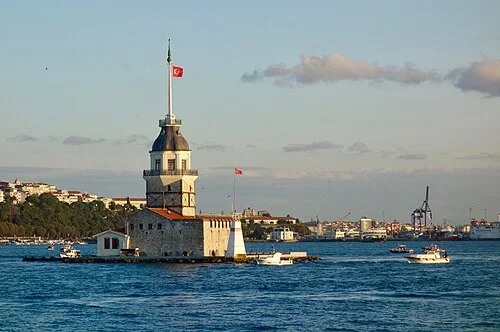 Bosphorus Approach and Maritime Crossroads
The Tower in the Strait: First Approach
Welcome to the story of a tower that stands alone in the sea. It rises from a small natural rock at the southern entrance of the Bosphorus, two hundred metres off the shore at Üsküdar. Every ship sailing between the Black Sea and the Mediterranean passes this spot, between Europe on one side and Asia on the other. That is why people have never left the rock empty for long. Over the centuries it has been a checkpoint, a watchtower and a lighthouse. The story may begin in ancient times. After a naval victory at Cyzicus, the Athenian general Alcibiades probably set up a customs station here for ships coming from the Black Sea. That was in 408 BC. The Greeks called the little rock Arcla, meaning small castle, or Damialis, meaning calf. Everything built since has stood on that same patch of stone.
Sonse · CC BY 2.0
02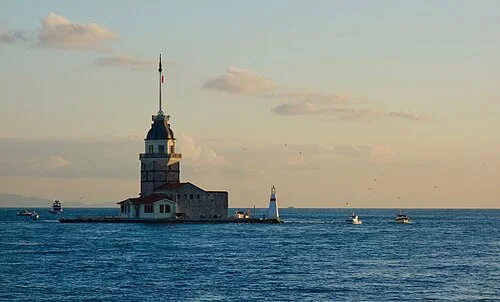 The Fortified Islet and Lower Bastion
The Chain, the Toll, and the Fortress Rock
In 1110 the Byzantine emperor Alexios Komnenos built a wooden tower here, sheltered behind a stone wall. From it, an iron chain stretched across the water to a second tower at the Mangana quarter of Constantinople. The chain barred the strait, so merchant ships had to stop and pay a toll before sailing on toward the Black Sea. The islet itself was once tied to the Asian shore by a defence wall. Its remains still lie under the water, though exactly where they run beside the platform around the tower is hard to make out. The fortress saw the end of an empire. During the Ottoman conquest of 1453, a Byzantine garrison held the tower under a Venetian captain, Gabriele Trevisano. After the city fell, the Ottomans kept the tower in service. Sultan Mehmed the Conqueror used it as a watchtower.
Sonse · CC BY 2.0
03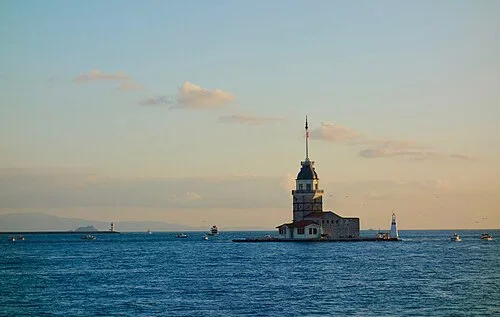 The Fortified Islet and Lower Bastion
Why It Is Called Kız Kulesi: The Princess and the Asp
Turkish speakers know this tower by another name entirely: Kız Kulesi, the Maiden's Tower. The name comes from a story people have told for generations. An oracle warned a Byzantine emperor that his beloved daughter would die of a snakebite on her eighteenth birthday. Determined to cheat fate, the emperor built a tower in the sea, far from any serpent, and locked his daughter inside. Her only regular visitor was her father himself. When the birthday came, he brought her a basket of exotic fruits, delighted that the prophecy had failed. Hidden among the fruit was an asp. It bit the princess, and she died in her father's arms, exactly as the oracle had said. It is a legend, not a chronicle of anything that happened here. But the name took hold, and it still carries it.
Listen in the appSonse · CC BY 2.0
04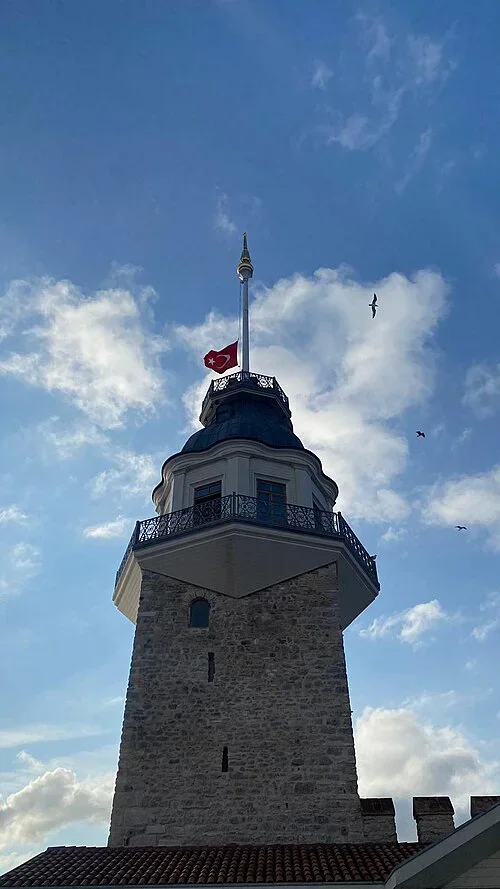 The Ottoman Baroque Crown and Lantern Dome
The Ottoman Baroque Crown and the Sultan's Tuğra
The tower before you is a survivor of disasters. An earthquake destroyed it in 1509, and it was rebuilt, only to burn down in 1721. The grand vizier Damat Ibrahim Pasha ordered the new building, and it served from then on as a lighthouse. In 1763 the tower rose again, this time in more durable stone. From 1829 it took on a grimmer role as a quarantine station, holding back cholera. Then in 1832 Sultan Mahmud II restored it and gave it the form it keeps today. Above the entrance sits a round marble medallion carrying the sultan's tuğra, his imperial seal, drawn by the calligrapher Rasim. The stone shaft, the balcony and the lantern room at the top are all part of that design. Each owner left a layer, and the silhouette shows them all at once.
Listen in the appPhoto: İlke.bahceci · CC0
05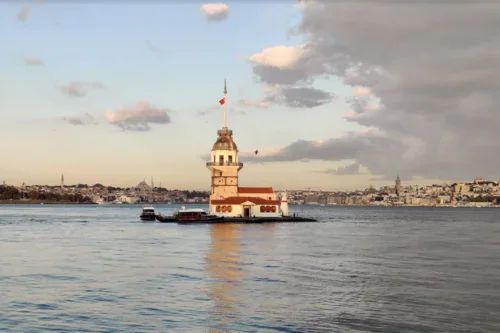 The Upper Observation Balcony
The Watcher's Panorama: Sarayburnu and the Golden Horn
From the open gallery at the top, the whole historic capital unfolds across the water. Sarayburnu, the old peninsula, holds the palace and the skyline of the former imperial city, with the Golden Horn beside it. A Byzantine keeper of the chain commanded this same view, and after him an Ottoman keeper of the light. One traveller left us the tower's measurements. In the seventeenth century, Evliya Çelebi described it as a tall, artfully built tower, an arrow's flight from land, standing in the sea. He put its height at eighty arşın, an Ottoman measure, rising through five levels inside. Around the islet he counted a perimeter of two hundred paces, with a gate on each of two sides. His figures come from a traveller's pen rather than a surveyor's, but they give the sense of a compact, densely used stronghold.
Listen in the appbeyza · CC BY-SA 4.0
06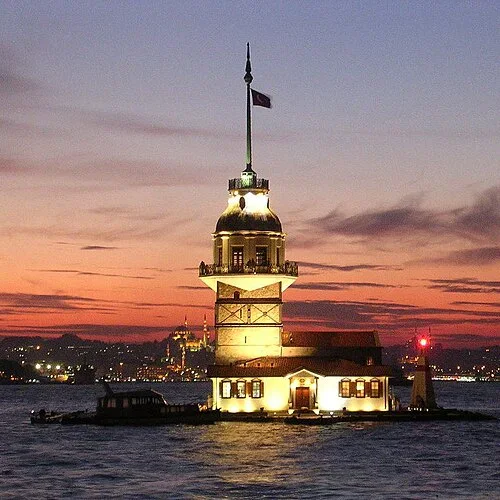 Twilight Departure and Enduring Beacon
Leander's Tower: The Light in the Dark
Europeans have known this tower by another name since Byzantine times: Leander's Tower. It comes from a Greek myth set far to the south, at the Dardanelles. Hero was a priestess of Aphrodite who lived in a tower at Sestos, and Leander was a young man who loved her from the opposite shore. Every night he swam the strait to reach her, and every night she lit a lamp at the top of her tower to guide him across. One stormy winter night the wind blew out her light. Leander lost his way in the dark water and drowned, and Hero, in grief, threw herself from the tower. The story belongs to another strait altogether. But the two waters look so alike that the tale drifted north and settled here. When the tower glows after dark, the old idea of a light kept burning for a traveller at sea feels close at hand.
Listen in the appMkaraarslan · Public domain
07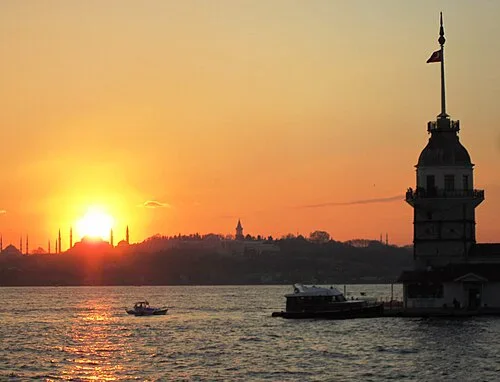 Twilight Departure and Enduring Beacon
The Enduring Silhouette: Survival and Renewal
A single rock, rebuilt again and again for more than two thousand years, because every age found a new use for it. The most recent rescue began after the great earthquake of 1999, when steel supports were added to hold the tower steady. Years of salt, humidity and wind had worn the fabric badly, and the load-bearing walls and foundations suffered the worst damage. In 2021 the Ministry of Culture and Tourism began a careful scientific restoration. Workers consolidated the foundations and hid stainless steel tie rods inside the weakened masonry. The old concrete floors from earlier repairs came out, replaced with lighter structures. On 11 May 2023 the tower reopened to the public. The city has long claimed it as its own. From 1966 to 1981 its portrait appeared on the reverse of the Turkish ten lira note, so the tower travelled in every pocket in the country.
Listen in the appPhoto: Dickelbers · CC BY-SA 3.0
Kız Kulesi
Frequently asked questions
How much does the guide cost?
Free app download. Listed guide price: $0.99. Guide price shown in the app. Audio guide only. Venue admission is separate.
Can I listen without internet?
Yes. Download the guide’s audio, images, and maps in the app before your visit. Your downloaded content is then available offline.
Can I listen in my language?
This audio guide is available in 15 languages, including English.
Do I need to follow a schedule?
No. This is a self-guided experience. Choose your stops, pause whenever you like, and return to a story at your own pace.
At your own pace
Explore Kız Kulesi.
Download Stanza, then search for “Kız Kulesi”.
Free app download · Guide price shown in the app
Keep exploring
Nearby audio guides
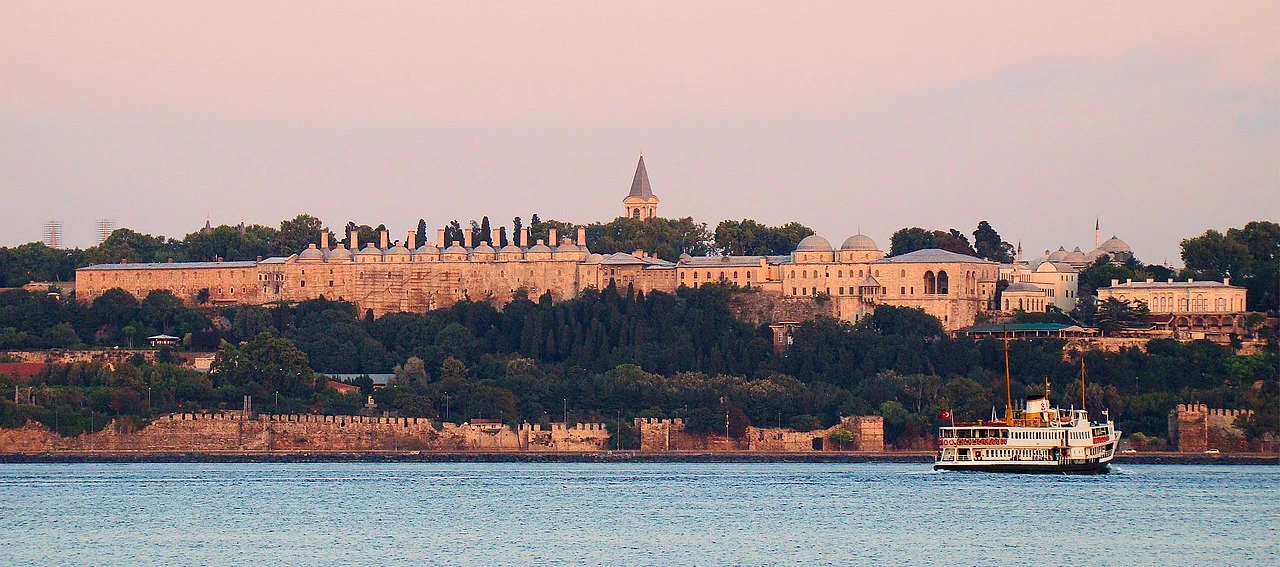
Istanbul · 2 km
Topkapı Palace
Content & sources
Bjørn Christian Tørrissen · CC BY-SA 3.0
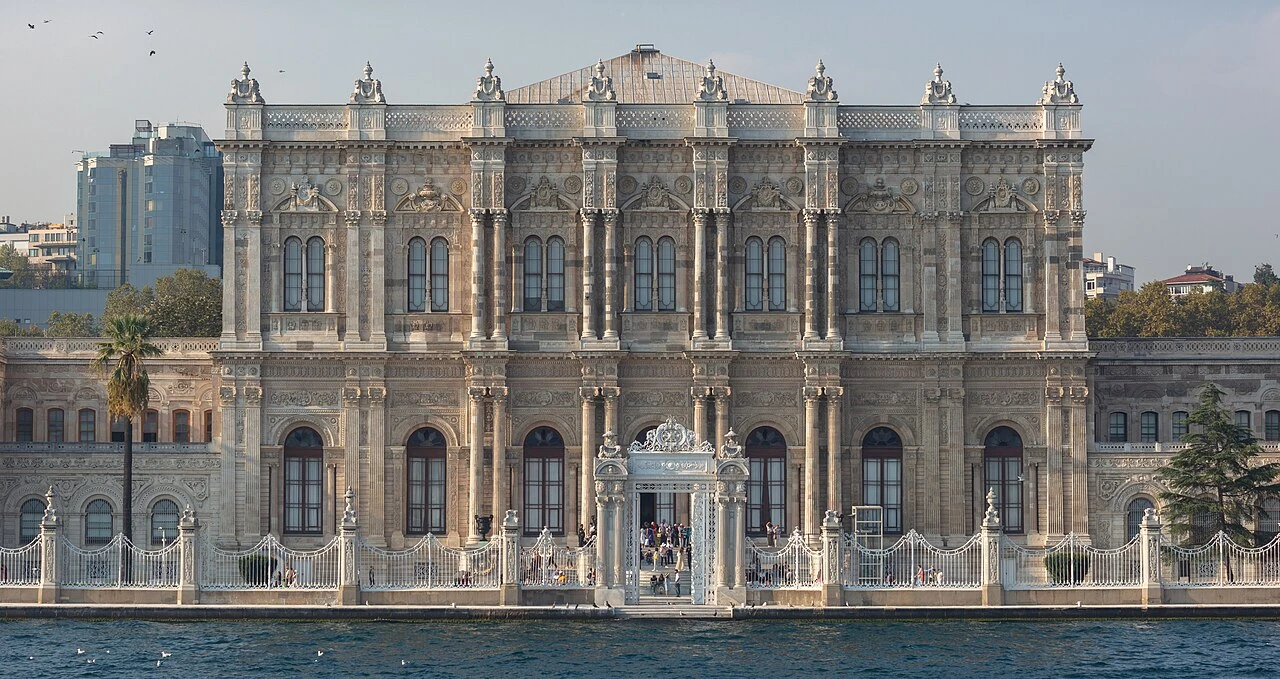
Beşiktaş · 2 km
Dolmabahçe Palace
Content & sources
Diego Delso · CC BY-SA 4.0
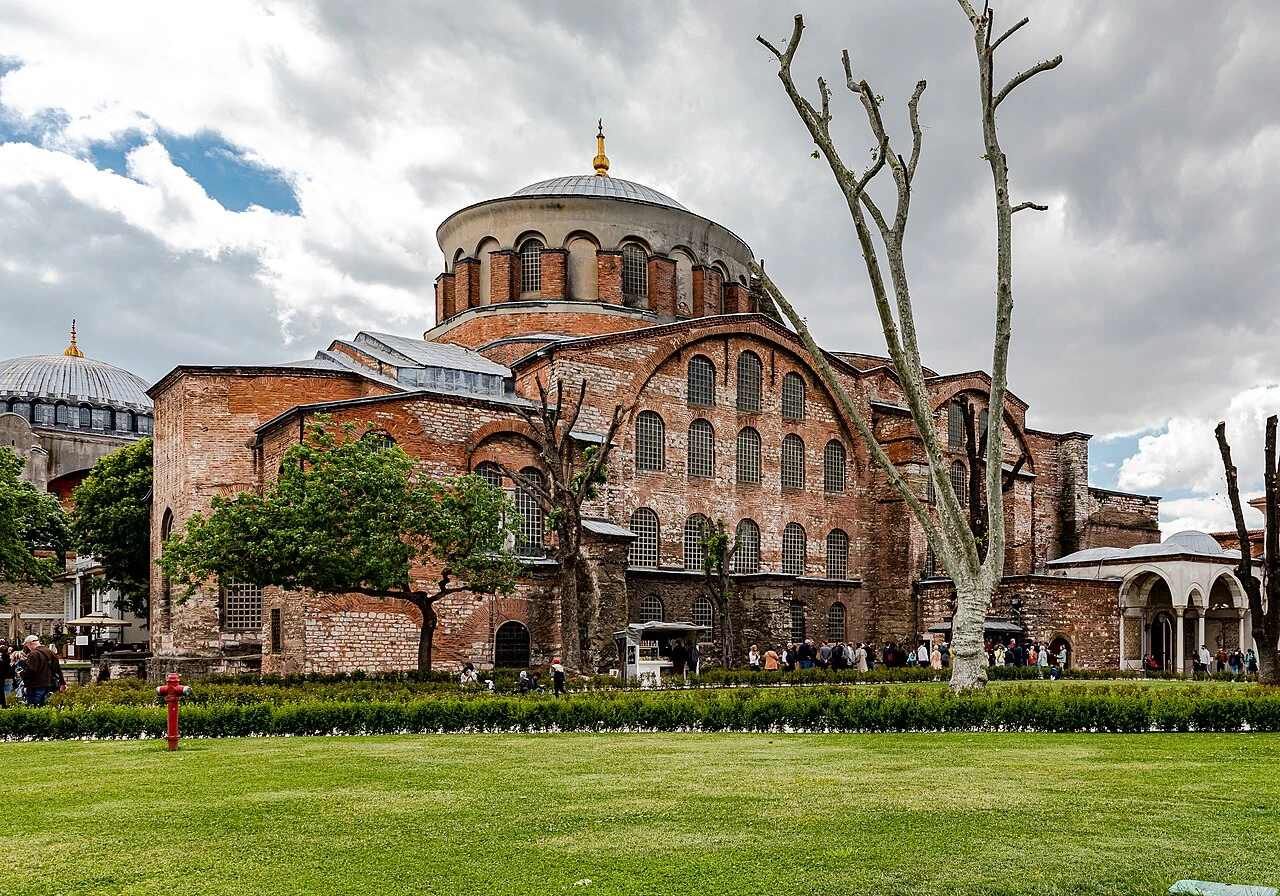
Istanbul · 2 km
Hagia Irene
Content & sources
Ninara · CC BY 2.0
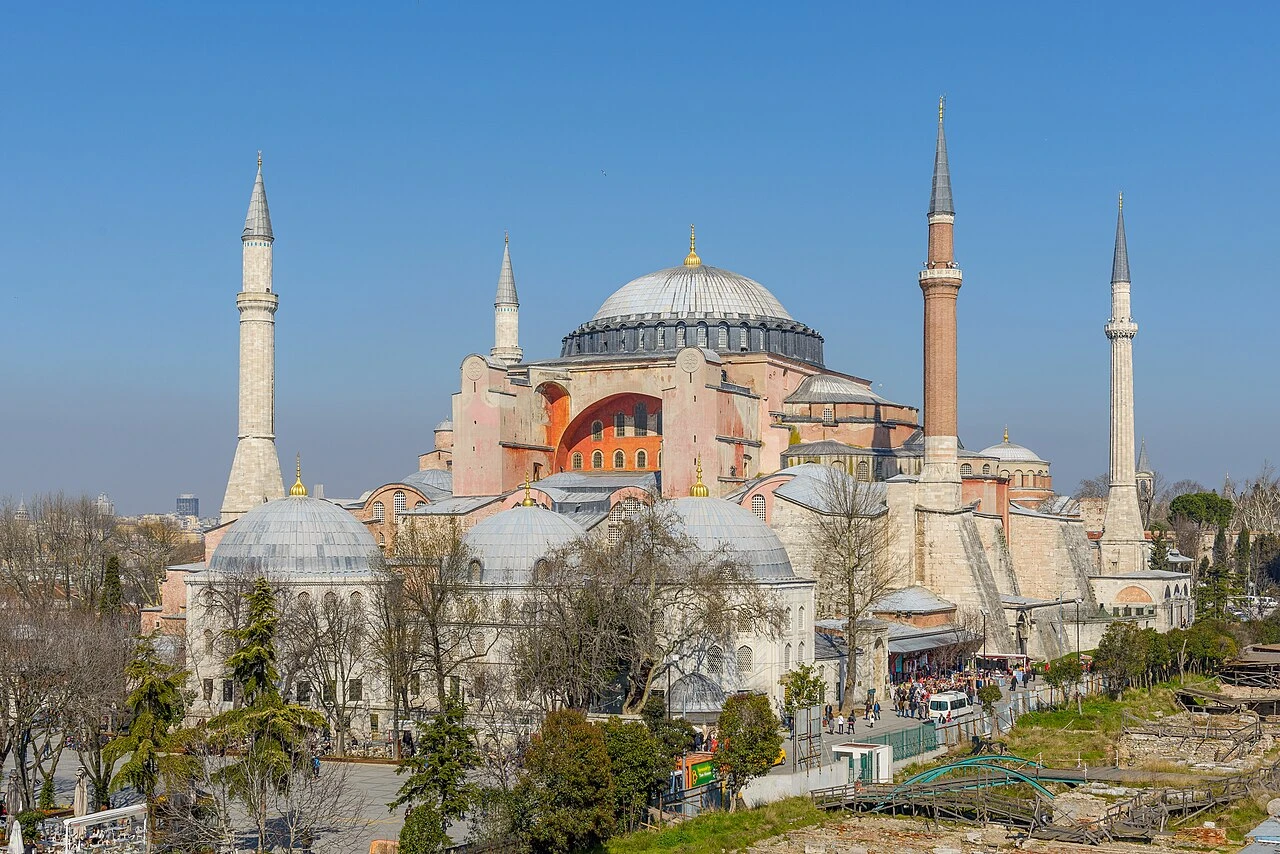
Istanbul · 2 km
Hagia Sophia
Content & sources
Arild Vågen · CC BY-SA 3.0