Stanza · 오디오 가이드
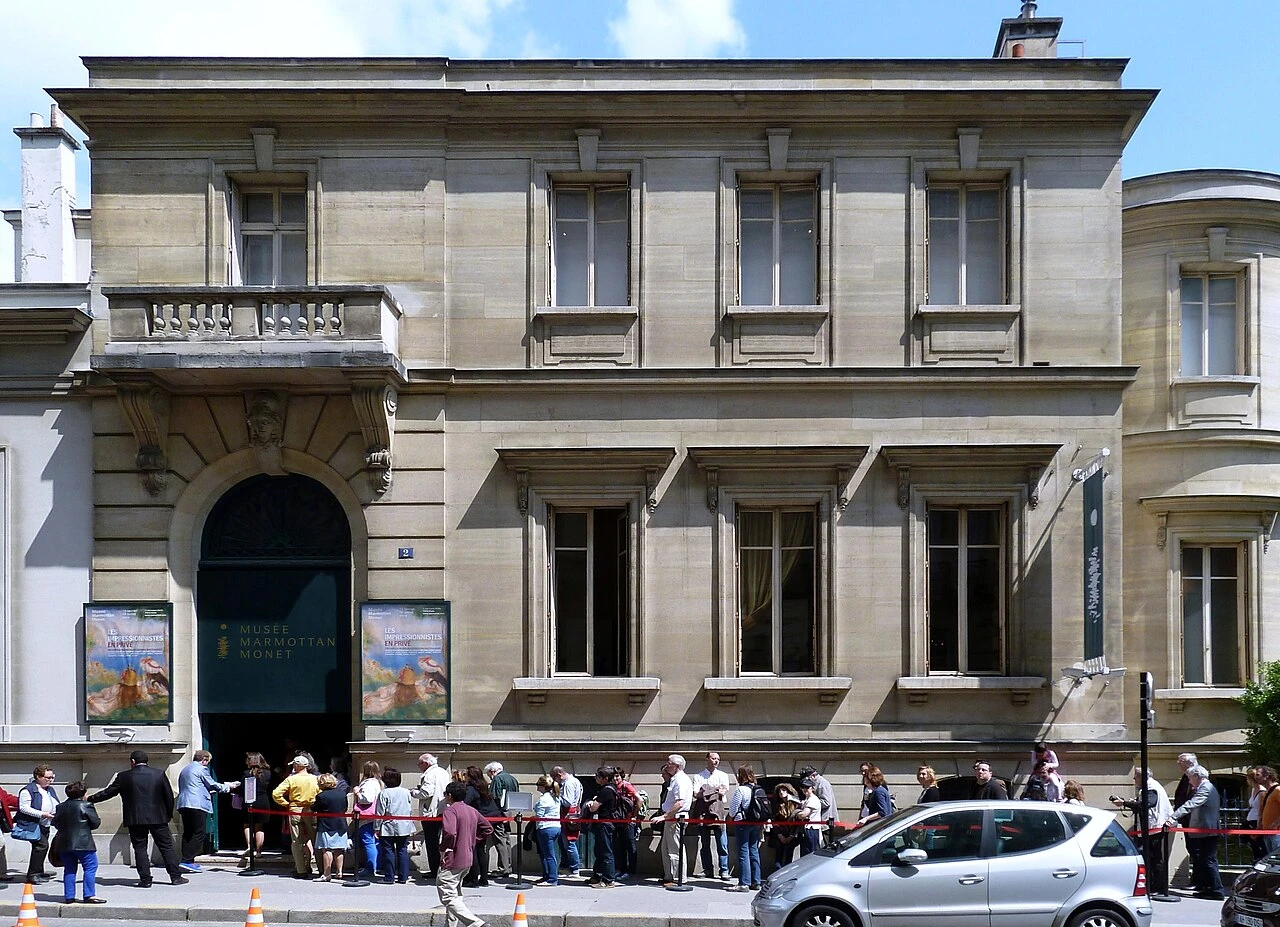
Musée Marmottan Monet 오디오 가이드
기억에 남을 장소. 함께 가져갈 이야기.
The Musée Marmottan Monet is an art museum in Paris, France, primarily known for its extensive collection of Impressionist and Post-Impressionist works by Claude Monet, Berthe Morisot, Edgar Degas, and…
지금은 영어로만 제공돼요. 다른 언어도 곧 추가됩니다.
Stanza를 다운로드한 후 검색하세요: “Musée Marmottan Monet”.
투어 소개
하나의 가이드. 나만의 여행.
The Musée Marmottan Monet is an art museum in Paris, France, primarily known for its extensive collection of Impressionist and Post-Impressionist works by Claude Monet, Berthe Morisot, Edgar Degas, and others. It houses Monet's 'Impression, Sunrise', which gave the Impressionist movement its name.
준비되면 언제든지.
- 01Stanza를 무료로 다운로드하세요.
iOS & Android
- 02가이드를 찾으세요.
“Musée Marmottan Monet”
- 03방문 전에 다운로드하세요.
오프라인
오디오 가이드 / 작품 25점
가이드 둘러보기
방문 전에 이야기를 미리 만나보세요. 장소를 펼쳐 자세히 읽을 수 있습니다.
01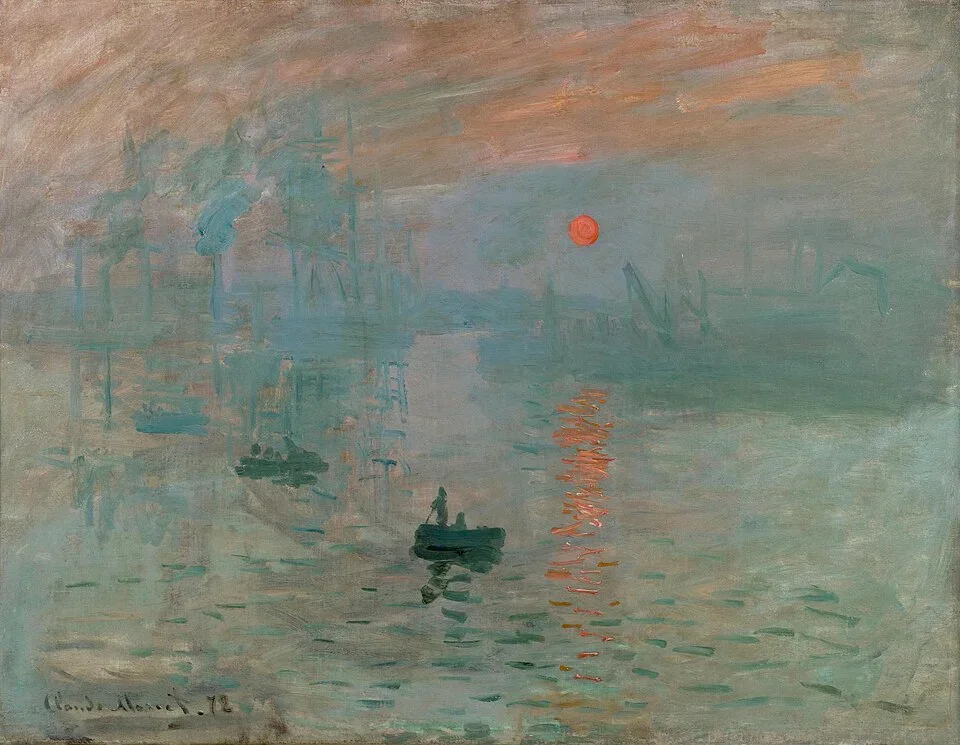
Impression, Sunrise
You could fall asleep inside this picture. Grey and green water. A pink sky. Hardly a hard edge. It feels like the quietest morning in the world. Impression, Sunrise, by Claude Monet. And the quiet is a trick. Start with the sun. A small red disc, hanging in the haze. Here is the strange part. Measured with a light meter, it is the same brightness as the sky around it. Only its colour makes it burn. Take the colour away, and the sun almost disappears. Below it, short orange strokes tremble down the water, broken like light on a moving sea. Now a small dark boat. One figure stands and rows, another sits close by. They are among the darkest shapes in the picture. Two people, perhaps fishermen, out on the water before the day has properly begun. Now go left, into the haze. Those thin shapes are not trees. They are masts and smokestacks. Steamships, breathing smoke into the dawn. Monet even left out the houses that stood on that side of the jetty, so nothing would hide them. On the right, cranes and masts, drawn in a few strokes of blue green. Not a sleepy village at all, but Le Havre, his hometown, a thriving port. France had just lost a war, and here was a harbour busy with industry. It was a real morning, too. It seems to be the thirteenth of November, 1872, around twenty five to eight. When the catalogue needed a title, he said it could hardly pass for a view of Le Havre. So, Impression. A critic used that word to mock the painters. They took it for themselves. Now look again at that sleepy morning. The port is already awake, and the mist is hiding it.
앱에서 듣기Claude Monet · Public domain
02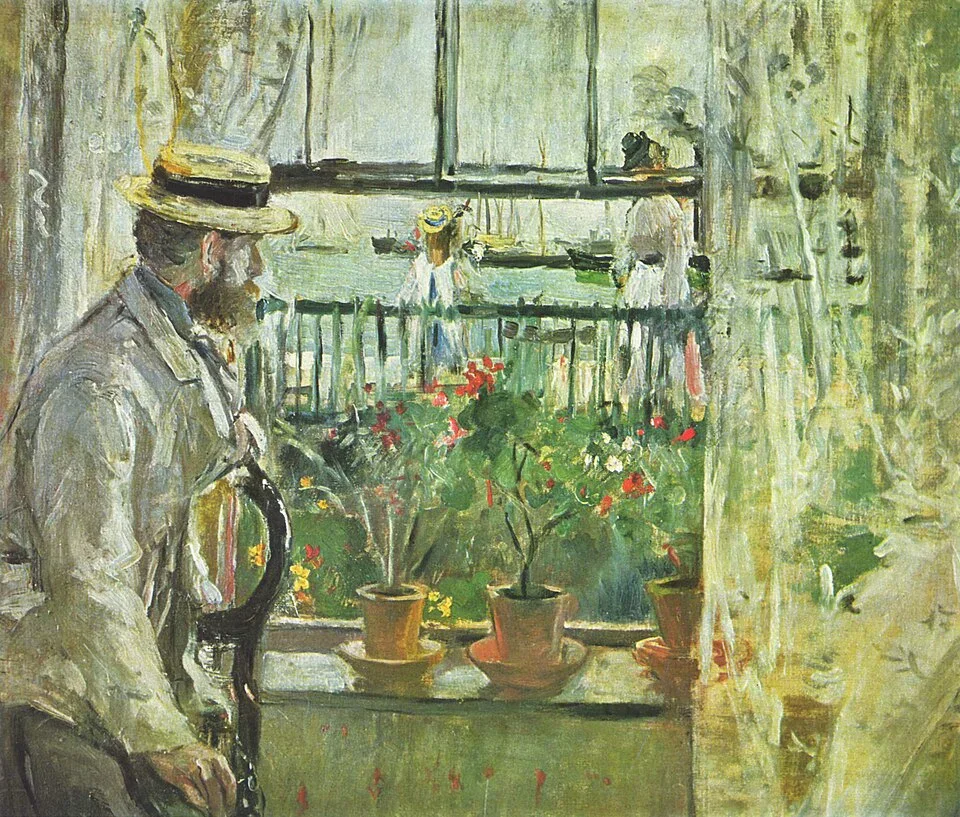
Eugène Manet on Isle of Wight
A man sits at a hotel window, watching two women in white walk past. It looks like a quiet holiday scene. It is one. But consider where the painter stands. Berthe Morisot painted this on her honeymoon, in 1875, in Cowes on the Isle of Wight. The man is Eugène Manet, whom she had just married. And she painted him from inside their hotel room, behind a thin curtain. As a woman, she was far less free to set up her easel in the streets and the port below. So the whole island reaches her through this one window. Eugène is free to come and go. She stays in, and paints the one man she may paint, in the one place she may work. Beyond him, boats rest in the harbor, part of that outside world she sees only from here.
앱에서 듣기Berthe Morisot · Public domain
03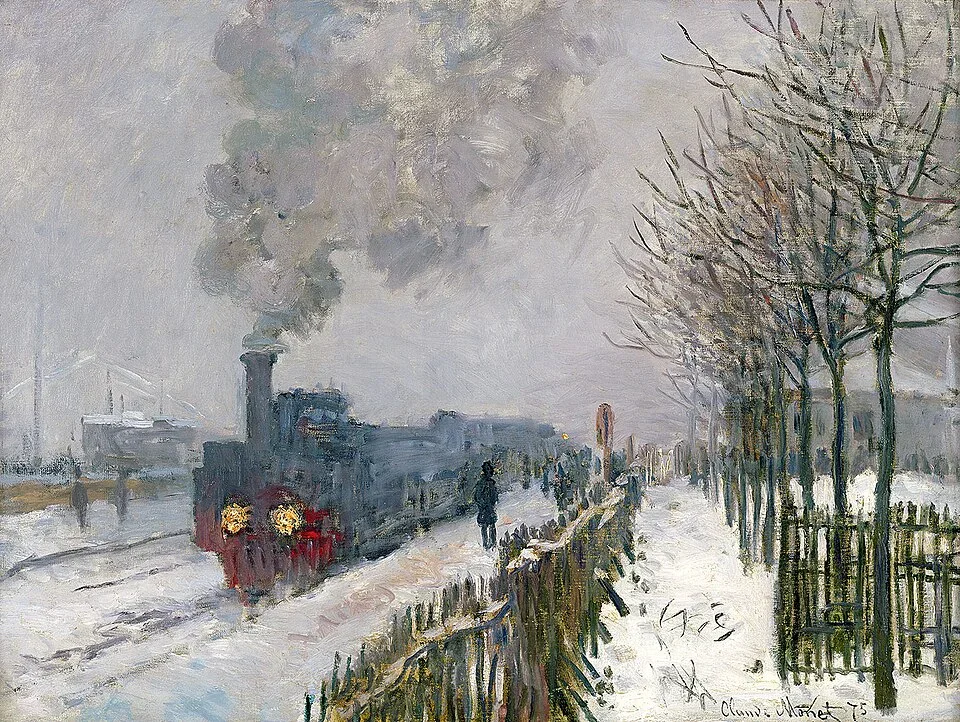
Train in the Snow
A train sits still at a station, and yet the whole picture seems to move. The tracks, the fence and the row of trees all run toward one point, and the dark engine follows them. Its smoke pours out and melts into a sky as grey as the snow on the ground, with a hint of purple in it. At the front of the engine, a red light burns against all that white. On the platform, travelers wait to board, and a signal man stands by the stop sign, ready for departure. Monet painted this at Argenteuil, the station where he caught his own train into Paris. Through the winter of 1874 to 1875 he stood on that platform, watching the trains come through the snow, and painted them as they arrived.
앱에서 듣기Claude Monet · Public domain
04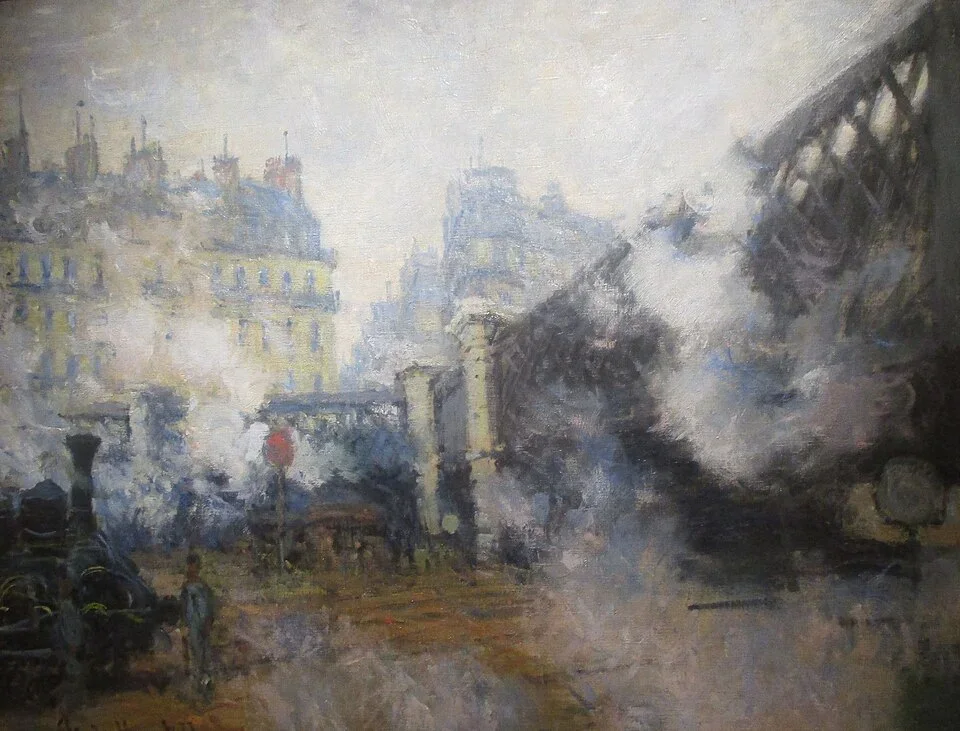
Pont de l'Europe, gare Saint-Lazare
The steam is the main character here. It drifts up between the tall houses and wraps around the bridge of stone and iron that crosses the tracks below. A locomotive is arriving, running under the bridge from left to right, and its cloud meets the daylight and dissolves. In 1877 Monet rented a flat near this station, because he wanted to paint the sun playing on the steam. But the clouds from departing trains were so thick that nothing could be seen. So he fixed it. He put on his best clothes, straightened his cuffs, and walked into the station swinging a cane with a gold handle. He asked for the director of the western railway, and announced himself as the painter Claude Monet. Trains were held back. Platforms were closed. Engines were loaded with extra coal, so they puffed out exactly the steam he wanted. The scene looks caught in a moment, but it was staged, and painted afterward in his studio. Even the steam obeyed him.
앱에서 듣기Claude Monet · Public domain
05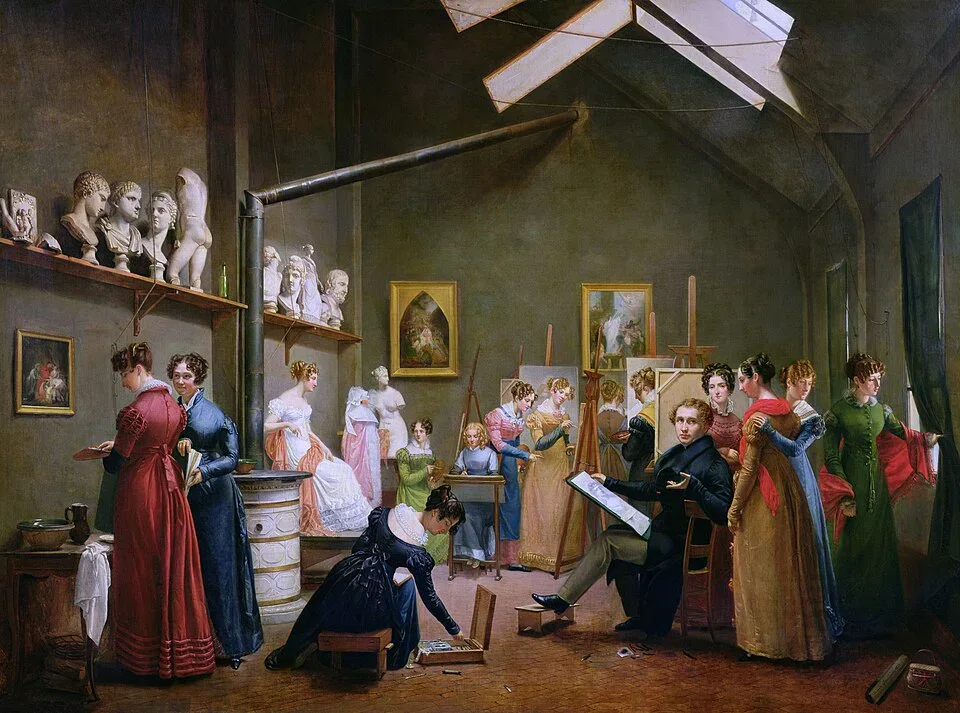
The Studio of Abel de Pujol
One of the women holds out her sketch, and the master, Abel de Pujol, is judging it. She and the others here are his students, taught in a class kept separate from the men. Notice the model posing for them, fully dressed. The men studied the nude body, so women could not, and that kept them out of history painting, the kind that mattered most. Even the sculptures obey the rule. On a shelf a male torso has been turned around, decorously, and the torso of Aphrodite beside the model has that area covered. Over by the window, two women gaze outside. One has an arm around the other, but her thoughts seem to be somewhere else, away from this room. The painter, Adrienne Grandpierre-Deverzy, taught in this studio herself, and after Pujol died in 1861 she took it over. She showed this picture at the Paris Salon in 1822, and a great collector bought it. Then it was forgotten for years, until 1976, when it came back as the cover of an exhibition on women artists.
앱에서 듣기Adrienne Marie Louise Grandpierre-Deverzy · Public domain
06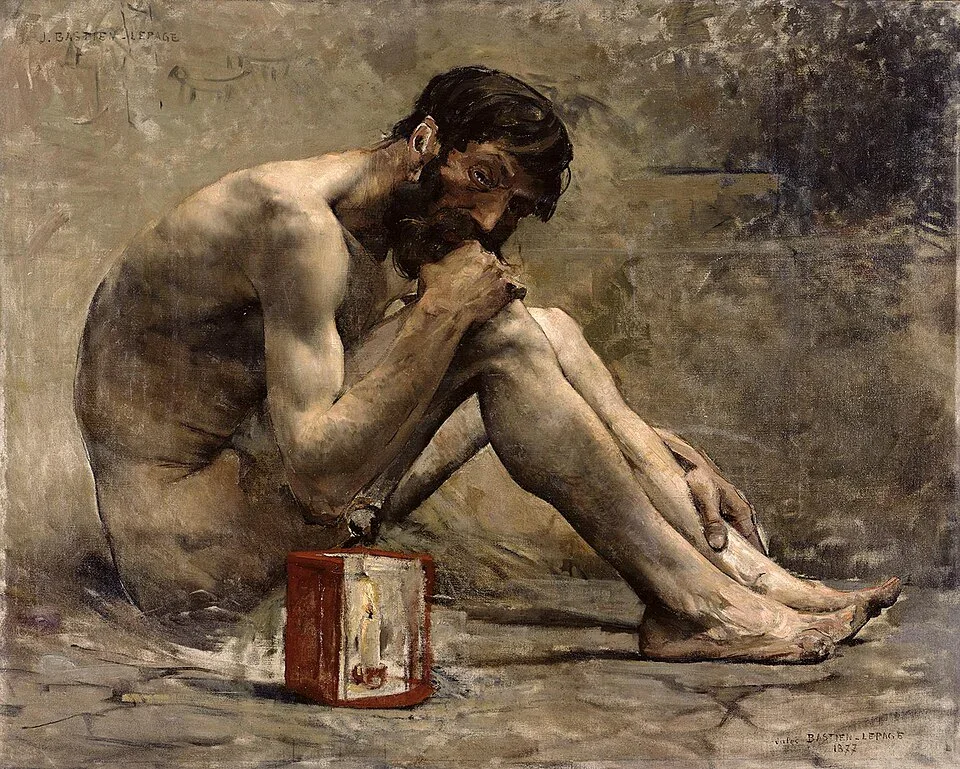
Diogenes
A naked man sits huddled against a wall, knees drawn up near his beard, one hand resting on his ankle, the other on his knee. At first he could be a beggar. He is not. This is Diogenes, the philosopher of ancient Greece. In front of him, on the ground, sits a red lantern with a lit candle inside. In a picture made almost entirely of beiges and browns, that red is the only color anywhere. It had to be, because the lantern is his sign. By daylight he carried it through the city, looking for a wise man, and he never found one. Jules Bastien-Lepage painted this in 1877, and he turns the philosopher's dark gaze toward you, still searching.
앱에서 듣기Jules Bastien-Lepage · Public domain
07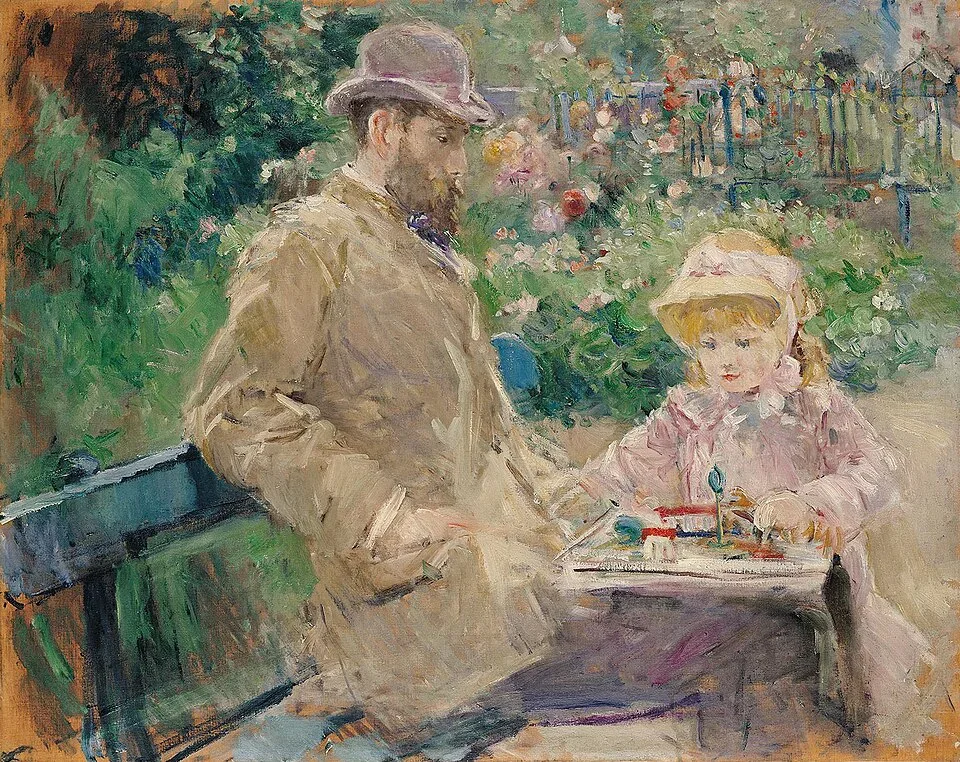
Eugène Manet and His Daughter in the Garden at Bougival
A little girl in pink plays with a set of building blocks, and she has set them up on her father's lap. He sits on a garden bench in profile, hat on, watching the toy with her. Around them a garden at Bougival is in flower. This is Berthe Morisot's own family. The man is Eugène Manet, brother of the painter Édouard. He was a painter too, but his own work never found the fame of his brother's or his wife's, so he put his energy into supporting hers instead. In 1881 she turned that quiet partnership into a picture, painting him at ease with their daughter Julie. Julie would grow up to be a painter herself.
앱에서 듣기Berthe Morisot · Public domain
08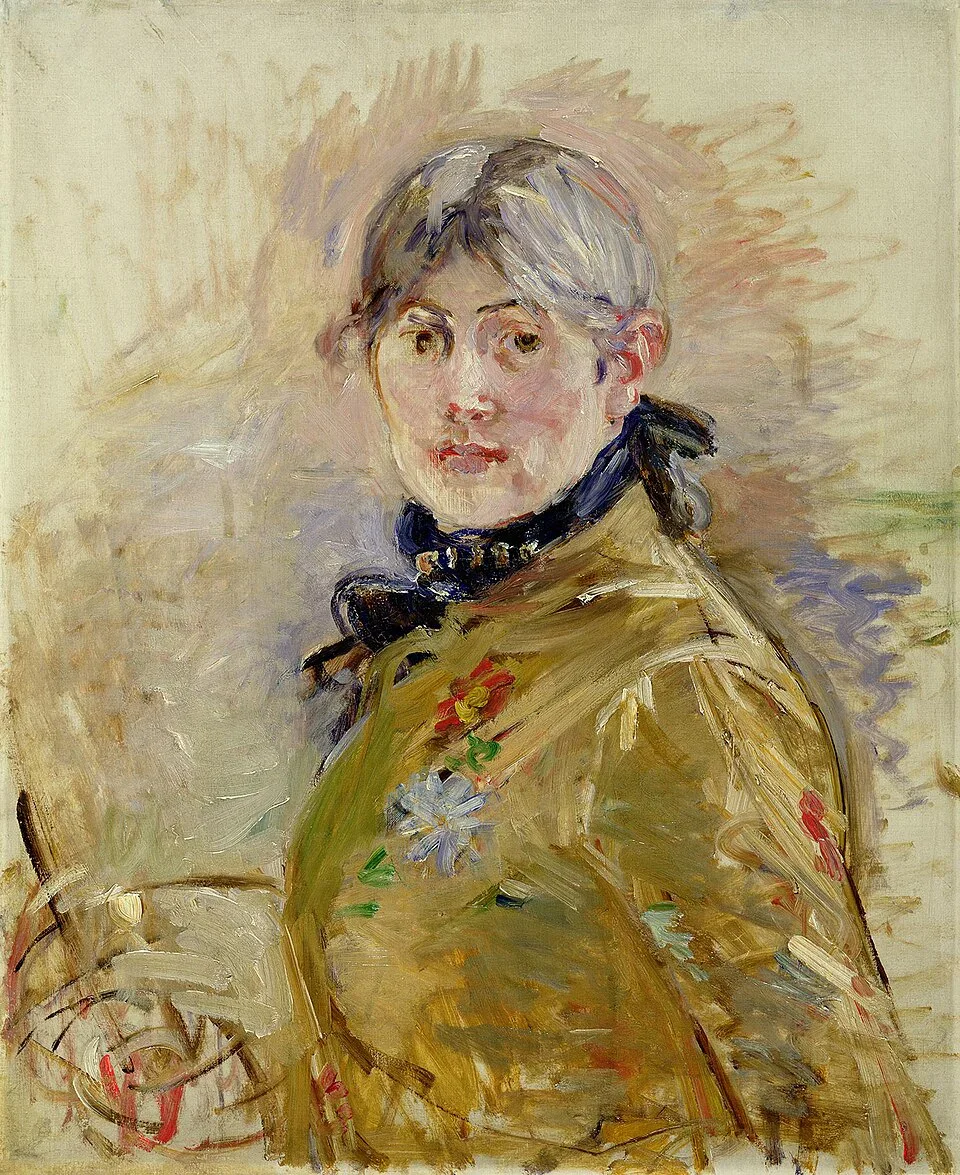
Self-Portrait
Two small flowers sit in the buttonhole of a yellow jacket. The jacket belongs to Berthe Morisot, and she is painting herself in 1885. She turns her head toward you, a black scarf at her neck, and looks straight out of the picture. In her right hand she holds a palette and a brush, her working tools. That is what this portrait is really about. Morisot had once shown her paintings at the official Paris Salon. Then in 1874 she joined the Impressionists, the painters the Salon had rejected, and she stayed with them through almost all of their exhibitions. Here she stands as one of them, a painter with her brushes, meeting your eye. Behind her the cream background darkens around her figure, with a few touches of color. She is both painter and subject.
앱에서 듣기Berthe Morisot · Public domain
09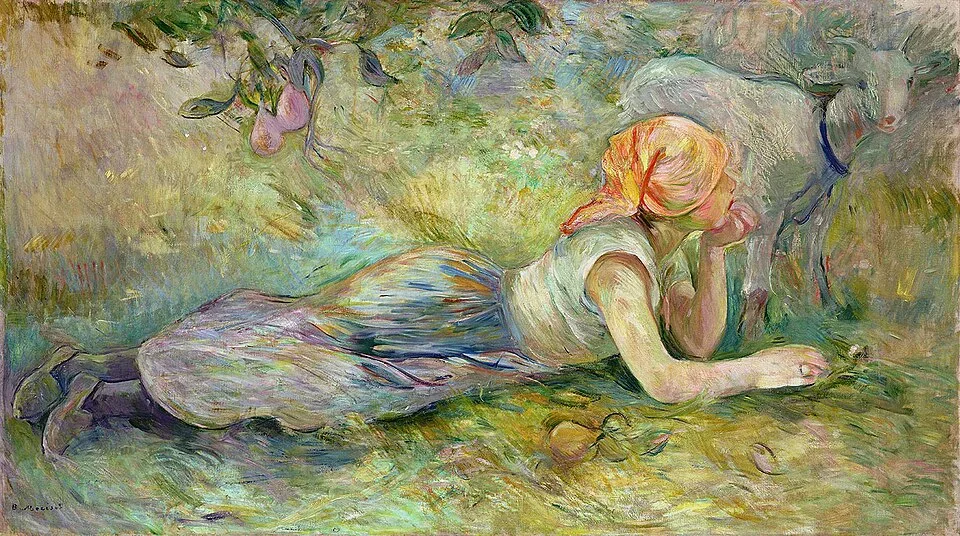
Reclining Shepherdess
A girl lies in the grass on her stomach, chin resting on her left hand, looking at something you cannot see. Under a pear tree, a few pears beside her, and next to her a small goat. A shepherdess in the grass is an old idea in painting, a kind of dream of country life. But this girl is real. She was Gabrielle Dufour, a school friend of the painter's daughter Julie. Berthe Morisot painted her in 1891 at Mézy-sur-Seine, west of Paris, in a white blouse and lilac skirt, with an orange scarf on her head. The goat stays beside her, doing its part. Gabrielle is somewhere else entirely, watching whatever caught her eye.
앱에서 듣기Berthe Morisot · Public domain
10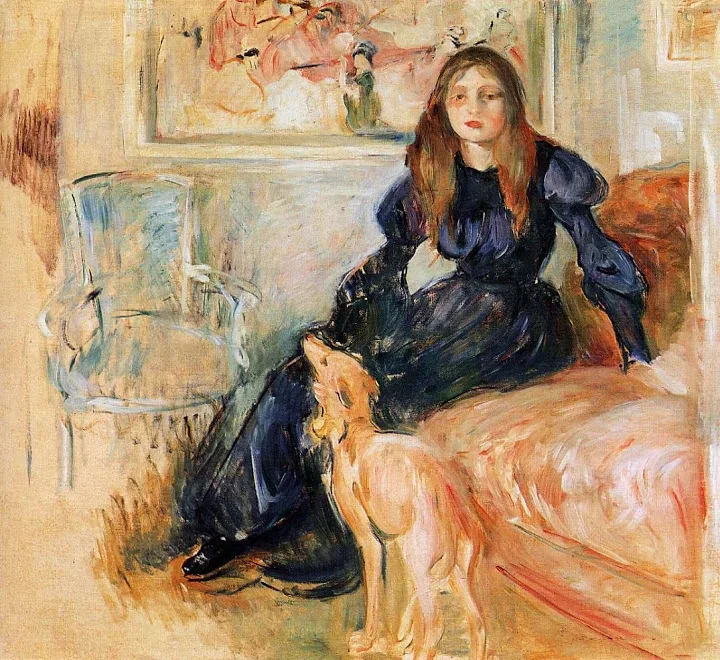
Julie Manet and her Greyhound, Laertes
A girl sits on a sofa with a greyhound beside her, and her right hand rests on the dog. Her dress is dark, and the dark is the point. She is in mourning. Her father, Eugène Manet, died in 1892, and this was painted the year after. The dog is called Laertes, and he was not bought for her. The poet Stéphane Mallarmé gave him to her, a friend's gift to a house that had lost its father. And the hand behind the brush was not a hired portraitist's. Berthe Morisot was painting her own daughter, in the year after the family's loss. Painted by her own mother.
앱에서 듣기Berthe Morisot · Public domain
- 11
Paule Gobillard Painting, by Berthe Morisot
Berthe Morisot · 1887
- 12
At the Ball, by Berthe Morisot
Berthe Morisot · 1875
- 13
Portrait of Julie Manet
Pierre-Auguste Renoir · 1894
- 14
Vetheuil in the Fog
Claude Monet · 1879
- 15
The Tuileries (Study)
Claude Monet · 1876
- 16
On the Beach at Trouville
Claude Monet · 1870
- 17
Monet that reads
Pierre-Auguste Renoir · 1873
- 18
Berthe Morisot
Édouard Manet · 1873
- 19
The Cherry Tree
Berthe Morisot · 1891–1893
- 20
Portrait of Mademoiselle Victorine de Bellio
Pierre-Auguste Renoir · 1892
- 21
The Piano Lesson
Gustave Caillebotte · c. 1879
- 22
White and yellow chrysanthemums. Petit Gennevilliers garden
Gustave Caillebotte · 1893
- 23
Portrait of Madame Claude Monet, by Auguste Renoir
Pierre-Auguste Renoir · c. 1873
- 24
Portrait of Claude Monet, by Carolus-Duran
Carolus-Duran · 1867
- 25
Landscape with bird catcher
Peter Paul Rubens · c. 1625–1640
Musée Marmottan Monet
자주 묻는 질문
가이드 가격은 얼마인가요?
무료 앱 다운로드. 1월 1일까지 무료. 표시된 가이드 가격: $1.99. 오디오 가이드만 포함됩니다. 입장권은 별도입니다.
인터넷 없이 들을 수 있나요?
네. 방문 전에 앱에서 오디오, 이미지, 지도를 다운로드하세요. 다운로드한 콘텐츠는 오프라인으로 이용할 수 있습니다.
제 언어로 들을 수 있나요?
지금은 영어로만 제공돼요. 다른 언어도 곧 추가됩니다.
정해진 일정을 따라야 하나요?
아니요. 자유롭게 둘러보는 셀프 가이드입니다. 장소를 선택하고, 언제든 쉬고, 원하는 속도로 이야기를 다시 들으세요.
나만의 속도로
Musée Marmottan Monet 둘러보기
Stanza를 다운로드한 후 검색하세요: “Musée Marmottan Monet”.
무료 앱 다운로드 · 가이드 가격은 앱에서 확인
더 둘러보기
근처 오디오 가이드
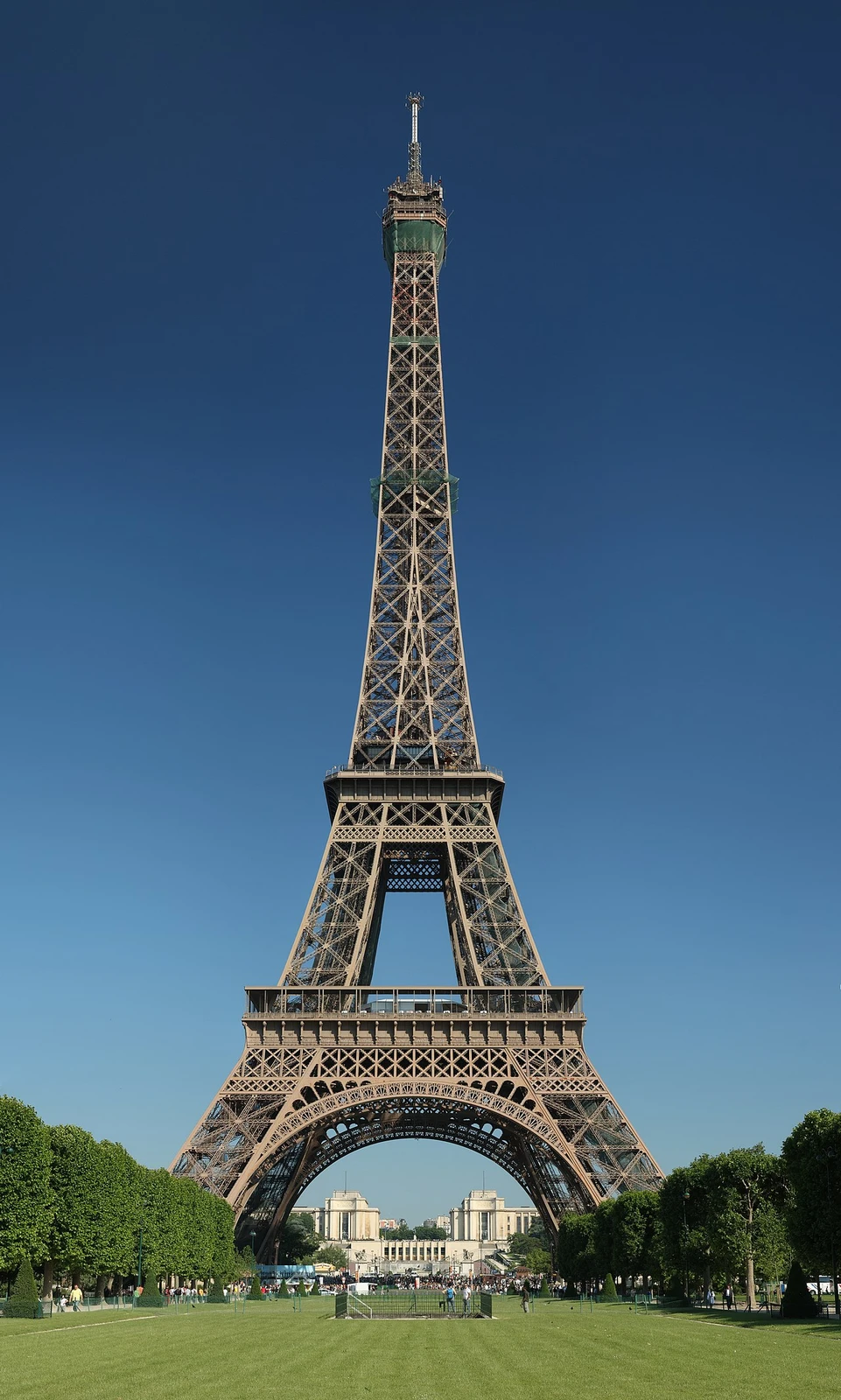
파리 · 2km
에펠탑
콘텐츠 및 출처
Benh LIEU SONG · Public domain
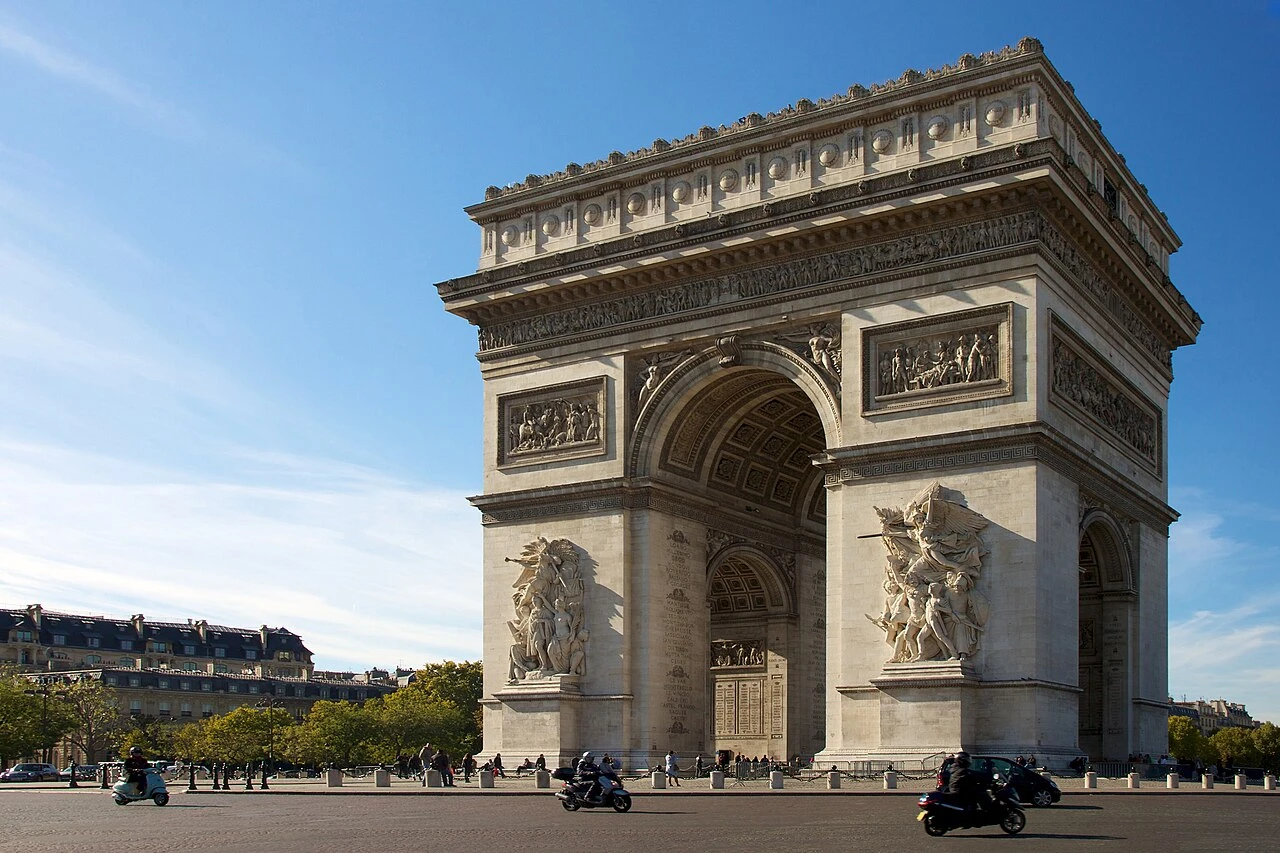
파리 · 3km
에투알 개선문
콘텐츠 및 출처
Jiuguang Wang · CC BY-SA 2.0
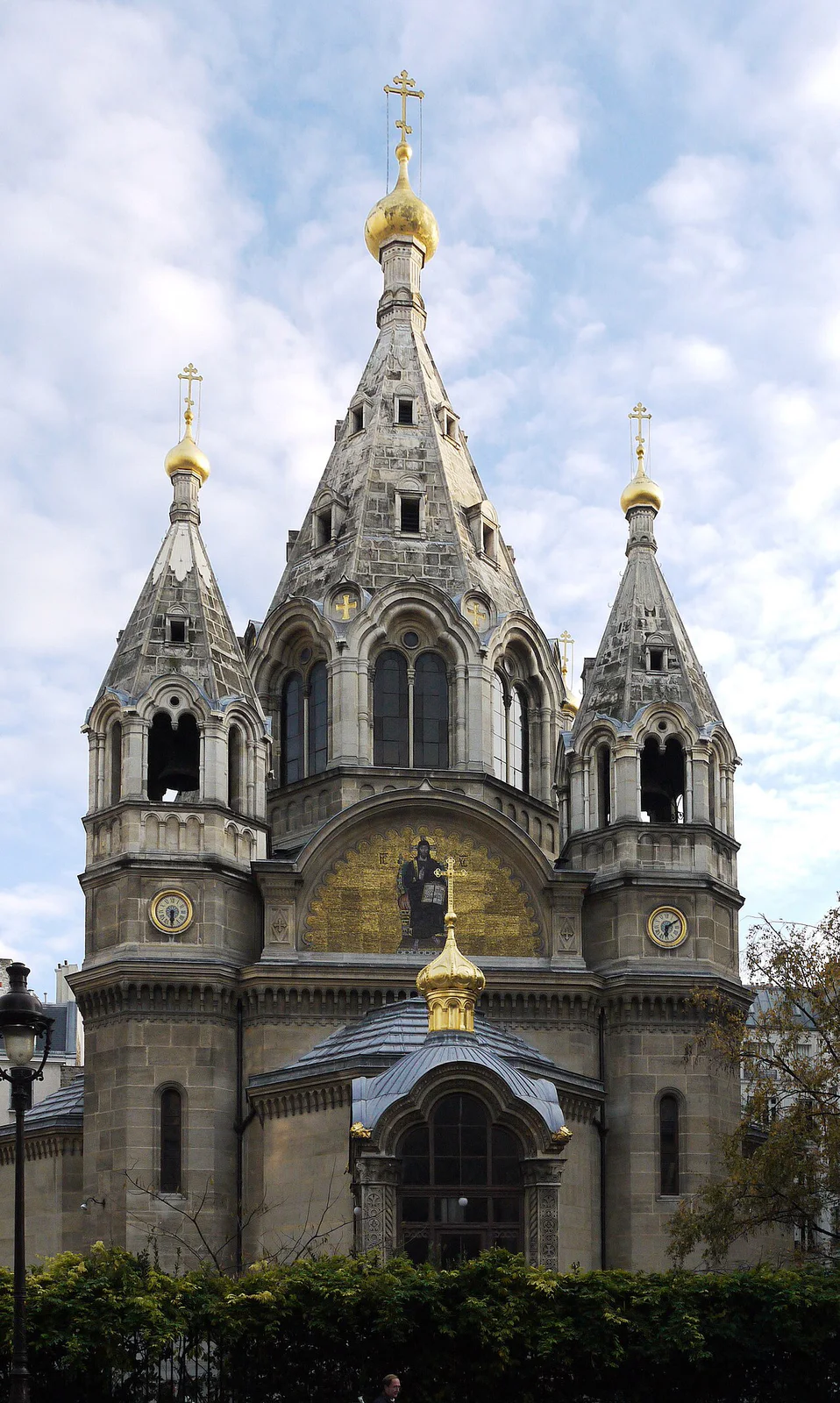
파리 · 3km
파리 알렉산드르 네프스키 대성당
콘텐츠 및 출처
Photo: Pline · CC BY-SA 3.0
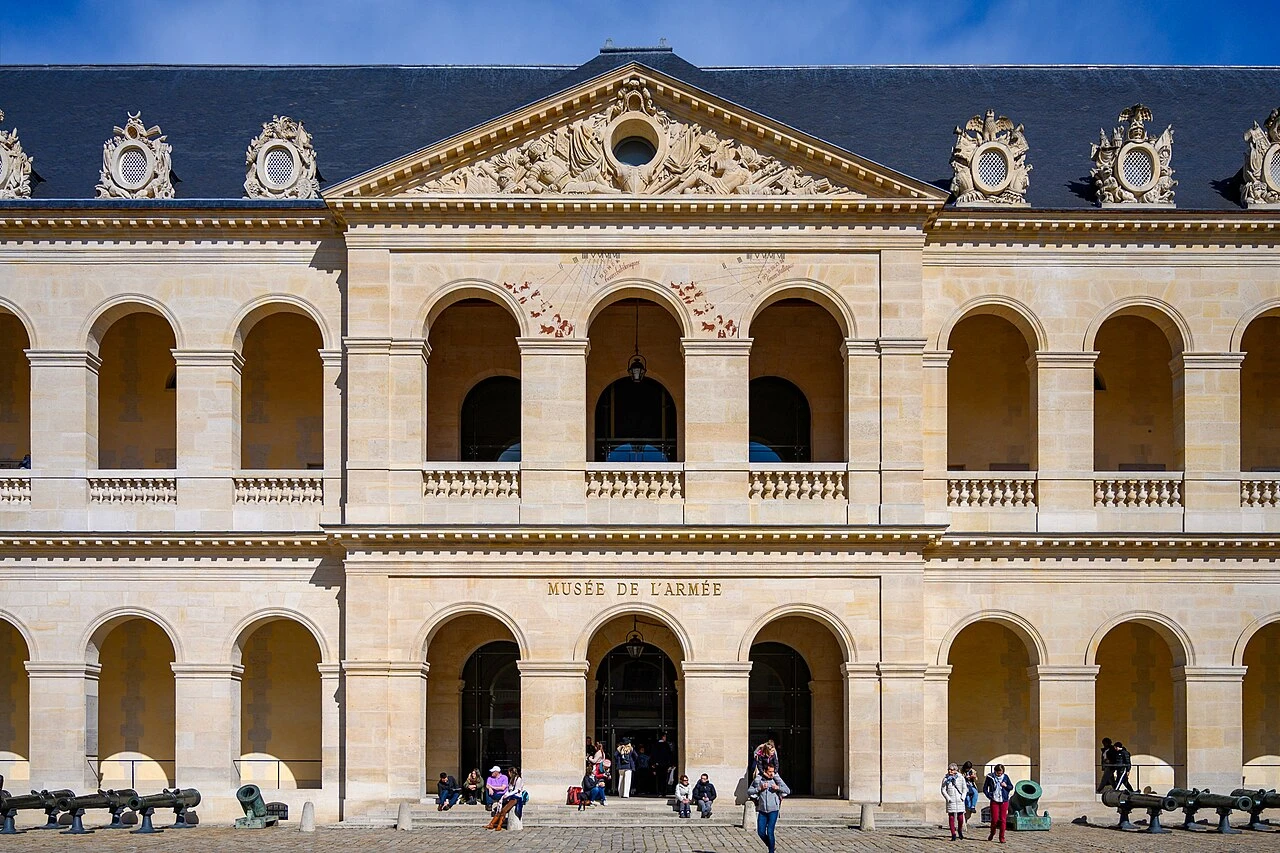
파리 · 3km
군사 박물관
콘텐츠 및 출처
xiquinhosilva from Cacau · CC BY 2.0
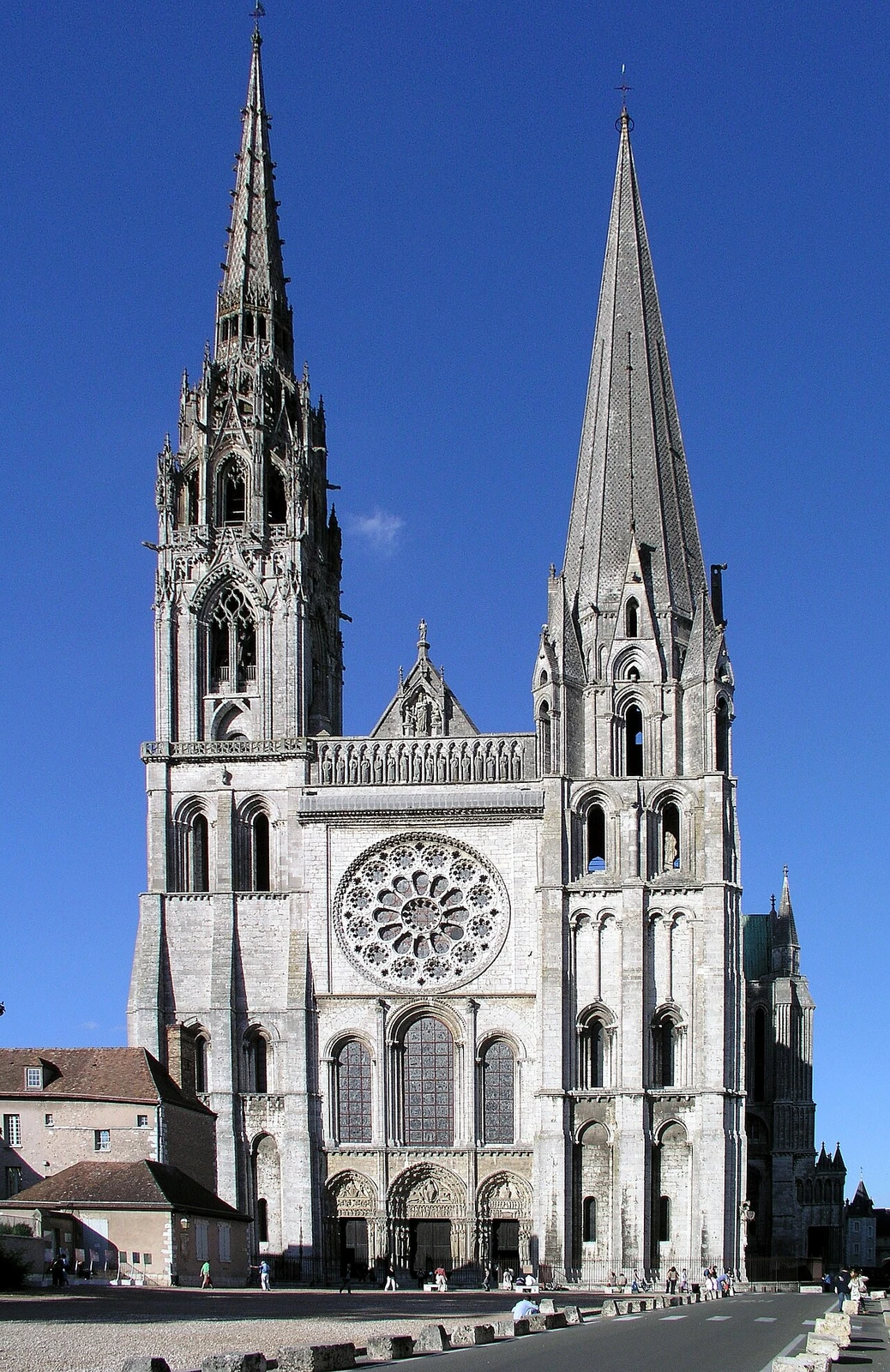
샤르트르 · 73km
샤르트르 대성당
콘텐츠 및 출처
BT · Public domain