Stanza · دليل صوتي
Barnes Foundation دليل صوتي
مكان يبقى في الذاكرة. وقصة ترافقك.
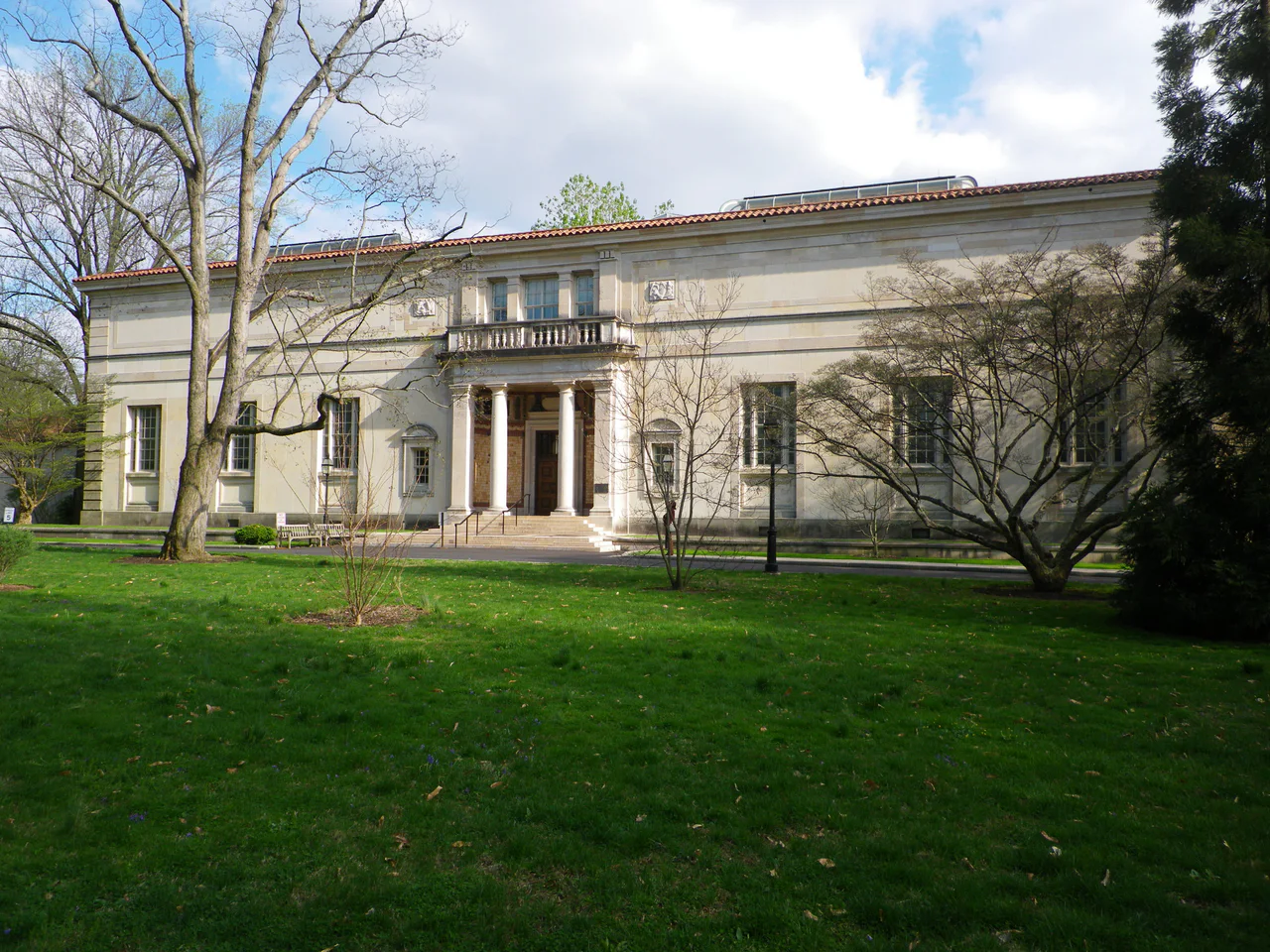
The Barnes Foundation is an art collection and educational institution that promotes the appreciation of art and horticulture. The art collection is housed in a building on Benjamin Franklin Parkway in…
بالإنجليزية حاليًا. لغات أخرى قريبًا.
حمّل Stanza ثم ابحث عن “Barnes Foundation”.
عن الجولة
دليل واحد. زيارتك بطريقتك.
The Barnes Foundation is an art collection and educational institution that promotes the appreciation of art and horticulture. The art collection is housed in a building on Benjamin Franklin Parkway in Philadelphia.
جاهز عندما تكون مستعدًا.
- 01حمّل Stanza مجانًا.
iOS & Android
- 02اعثر على دليلك.
“Barnes Foundation”
- 03نزّله قبل الزيارة.
بدون إنترنت
دليل صوتي / 38 عمل فني
داخل الدليل
تعرّف على بعض القصص قبل زيارتك. افتح محطة لقراءة المزيد.
01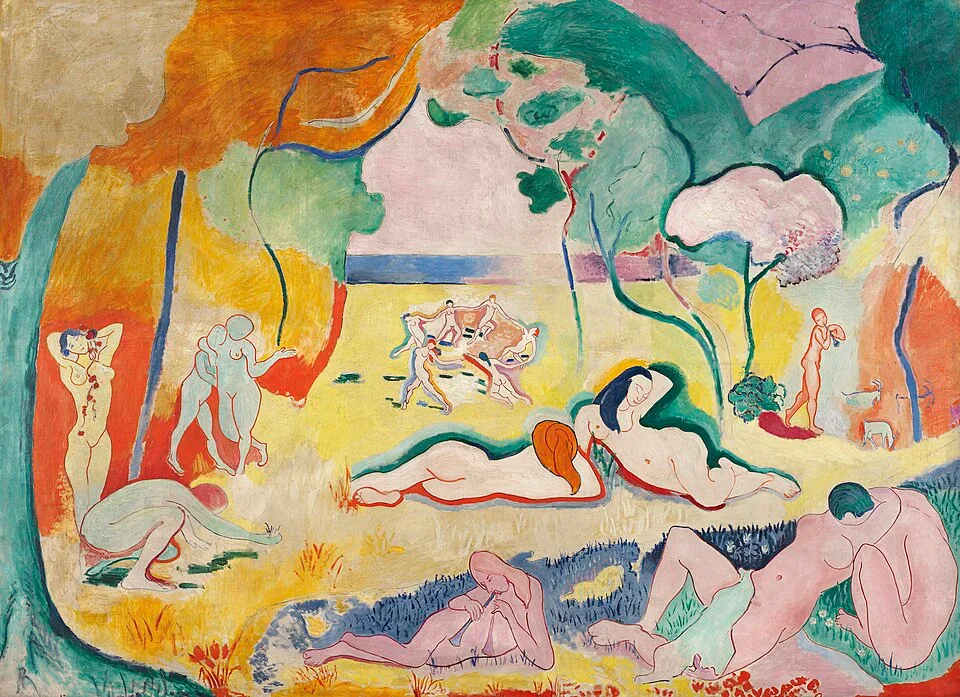
The Joy of Life
At first glance it looks like a very easy picture to enjoy. Everyone is naked, and nobody seems to be in a hurry. Yet when it was first shown, many people were outraged. Henri Matisse painted it in 1906, and he called it The Joy of Life. Start with the woman stretched out in the middle. Eyes closed, one arm behind her head. A thick line runs round her, and inside it the colour is flat and smooth. No shading to make her round. Thick lines. Flat tints, laid on pure. To many eyes in 1906, it was too much. Behind her, tiny dancers hold hands in a ring, drawn in thin, quick outlines. A few years later, Matisse painted a group much like it in The Dance. Around them, a yellow field, and much of the yellow in this picture is cadmium. Today, parts of that cadmium yellow in the painting are turning white or brown. On the right, a piper walks past two goats. Below, a woman lies in the grass, playing pipes of her own. On the left, two pale blue figures embrace, outlined in red. Blue skin. Not a colour you will meet in a park. The scene is a pastoral dream, but its colours and shapes give no clear or simple meaning. Critics found the theme unclear and the style uneven. Some feared it was the end of French painting. Picasso, it seems, set out to shock even more, and began a picture of his own. And this ease was not careless. Matisse made many sketches of the figures, and a full drawing of the whole scene. So look again at the sleeping woman. She seems to be doing nothing at all. Yet nothing in this picture happened by chance.
استمع في التطبيقHenri Matisse · Public domain
02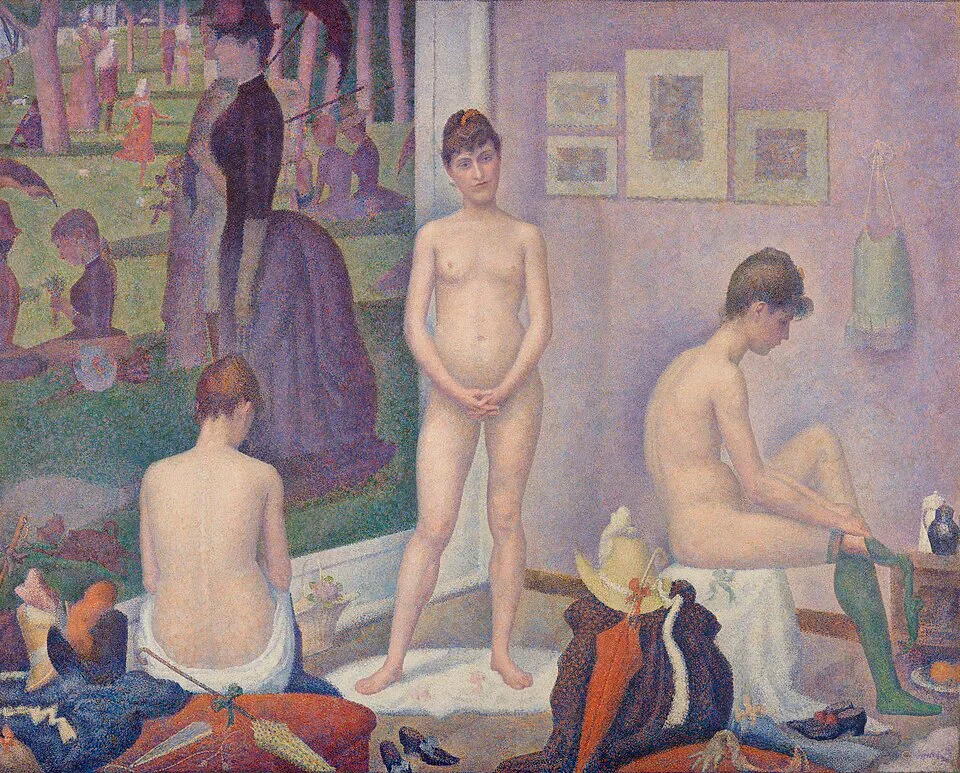
The Models
You think you have walked in on three women getting dressed. One faces you. One turns her back. One sits sideways, in profile. But look again. It is one woman. Three times. Georges Seurat painted her in three poses, and called the picture Models. Start in the middle. She looks straight at you, head a little tilted, a faint smile that is not quite a smile. Nobody is flattering her. Seurat painted these women without idealizing them. The French title roughly means the posers. Yet here they seem not to be posing. They look off duty. At the left, the same woman turns away. Head bowed, a white cloth slipped down to her hips. She seems to be performing for no one. And on the right, the third. Sitting on a seat draped in white, she pulls a green stocking up her leg. A banal moment. Seurat shows it anyway. She is not a muse. She is a model at work. Clothes lie heaped nearby, a straw hat with a red bow, a dark coat, an orange parasol. Now glance at the corner. A park, strollers under trees. That is Seurat's own earlier painting, A Sunday Afternoon on the Island of La Grande Jatte, and it hangs in this studio. Critics had called his method cold. They said his figures had no life. So this is his answer. Warm flesh, painted in the very same tiny dots of colour. Up close they are only dots. Step back, and they melt into skin. And he made it big, as big as the paintings kept for gods and battles. For a woman pulling on a stocking. Three poses. One woman. And she is looking back at you.
استمع في التطبيقGeorges Seurat · Public domain
03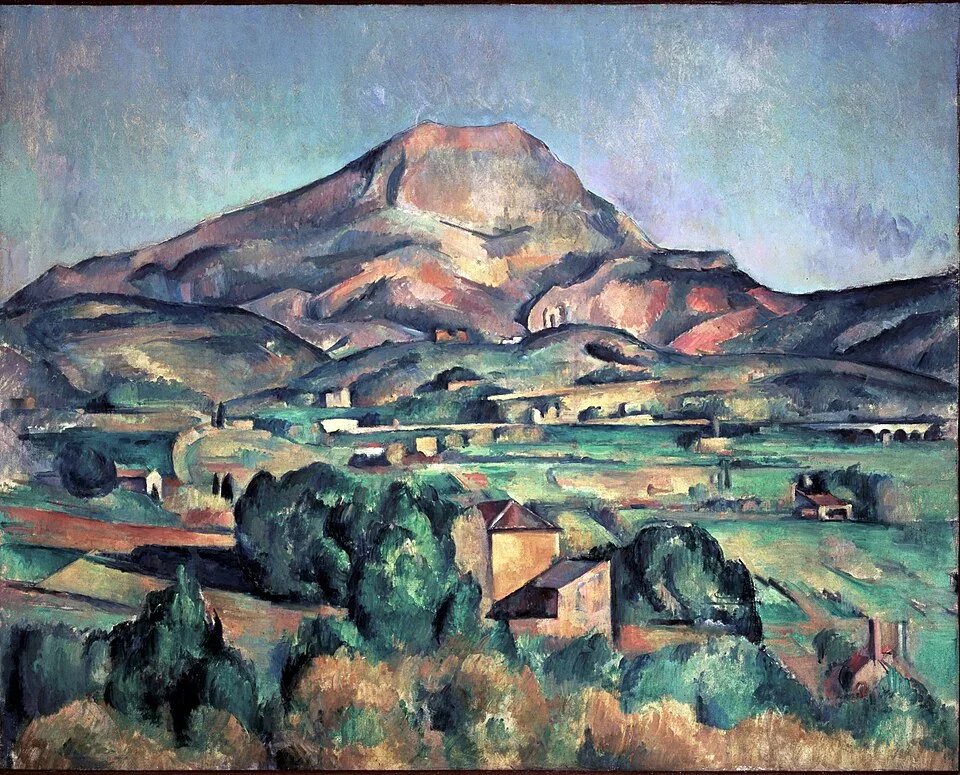
Mont Sainte-Victoire seen from Bellevue
A mountain watched from a moving train. In 1878 Cézanne wrote to his friend Émile Zola about the peak he had watched from the new railway line between Aix and Marseille. He called it a beautiful subject to paint. Soon after, at thirty-nine, he began painting this mountain again and again, and it was probably that train ride that started the whole series. Look near the middle right and you will find the proof. There the railway bridge crosses the valley of the Arc river, the very bridge he rode over. The mountain itself becomes one great cone. The trees turn into round volumes, and the houses into cubes that suggest a village. He is not copying the scene but sorting it into simple shapes, while keeping the light and colour of the land itself. No one knows exactly which year this one was painted, because many in the series were never dated.
استمع في التطبيقPaul Cézanne · Public domain
04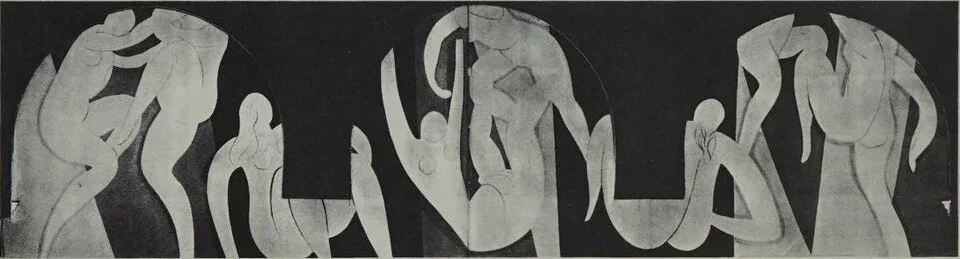
The Dance
Eight dancers circle across three panels, their bodies flat and gray against bands of black, blue and pink. The panels are not three pictures. They are one long dance, cut to fit the shape of this room. Here is the strange part. Matisse painted every inch of it in Nice, in France, far from the wall it was meant for. The American collector Albert Barnes had offered him complete freedom, and thirty thousand dollars, for the space above three arches. Then in February 1932 Matisse discovered the measurements were wrong. He wrote to say so, and started again from nothing. He went from six dancers to eight and spent two years on what was planned as one, leaving him drained. When it was finally installed, he wrote that the work had detached from him and become part of the building. Barnes, though, had never planned to show it to the public.
استمع في التطبيقHenri Matisse · Public domain
05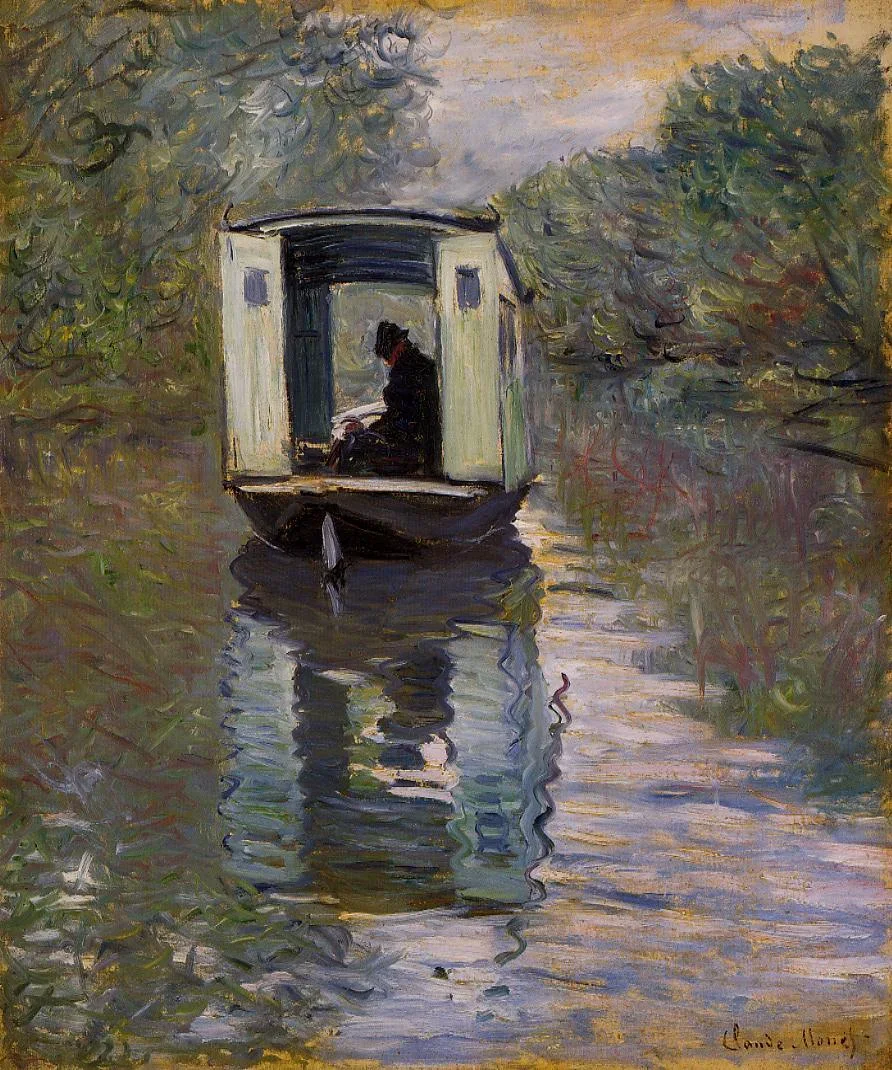
The Studio Boat (Le Bateau-atelier)
A man sits in a small boat on the river, painting. The boat is his studio. Monet bought it around 1873, soon after he moved to Argenteuil on the Seine, and he described it as a plank cabin with barely room for an easel. He most likely took the idea from his friend Daubigny, who painted from a floating studio of his own. But look again at the painter in the boat. It is Monet himself. And that is the turn in this picture. If he is in it, working, then the scene could not have come from watching alone. He is showing himself at work, not simply recording the river. It is a quiet step away from painting only what the eye sees, toward the freer pictures of his later years. He painted himself painting.
استمع في التطبيقClaude Monet · Public domain
06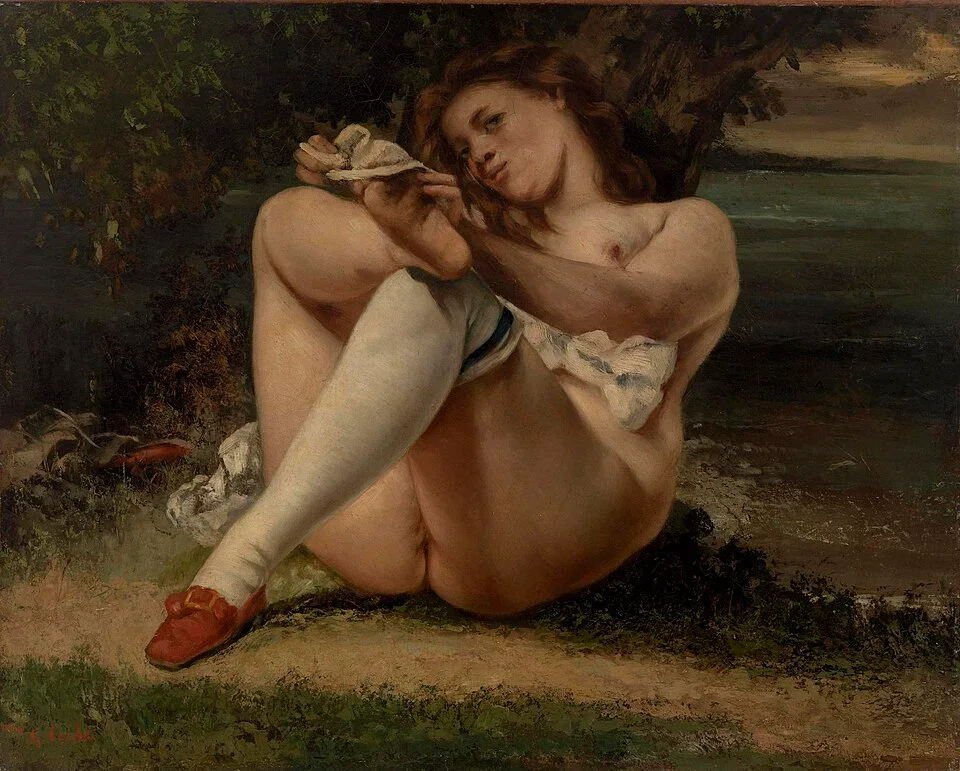
Woman with White Stockings (La Femme aux bas blancs)
A young woman lies here with nothing on but one white stocking and a red shoe. A narrow light falls across her face and her raised legs, while the rest of her body stays in shadow. And her eyes do not stay with her. They leave the picture, maybe toward a lover, maybe straight at you. Courbet painted this around 1864. In the whole nineteenth century it was never shown in public. It was probably made for a private buyer. The picture sits close to the erotic photographs taken in the brothels of his day, of which Courbet owned a collection. An inscription in his own hand says he gave the painting to his friend Pierre-Auguste Fajon. In 1926, Albert Barnes bought it from a dealer named Henri Barbazanges. Who wanted it first, and why, is still not known.
استمع في التطبيقGustave Courbet · Public domain
07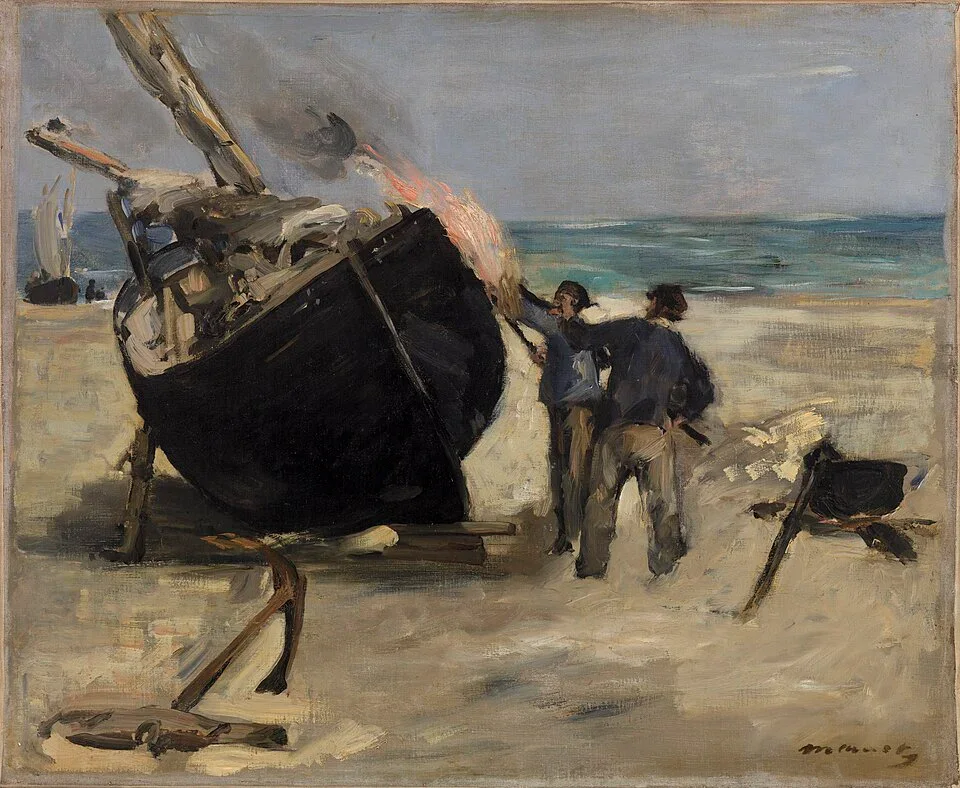
Tarring the Boat
The hull of a fishing boat is being tarred. Not a catch, not a launch. Just the upkeep, the job that keeps the boat going. Manet painted this in 1873 at the beach at Berck, during one of his regular summer stays at Boulogne-sur-Mer. A painter of modern life, spending his holiday on this. And he gave it a darker palette than he usually worked with, something typical of his painting in those years.
استمع في التطبيقÉdouard Manet · Public domain
08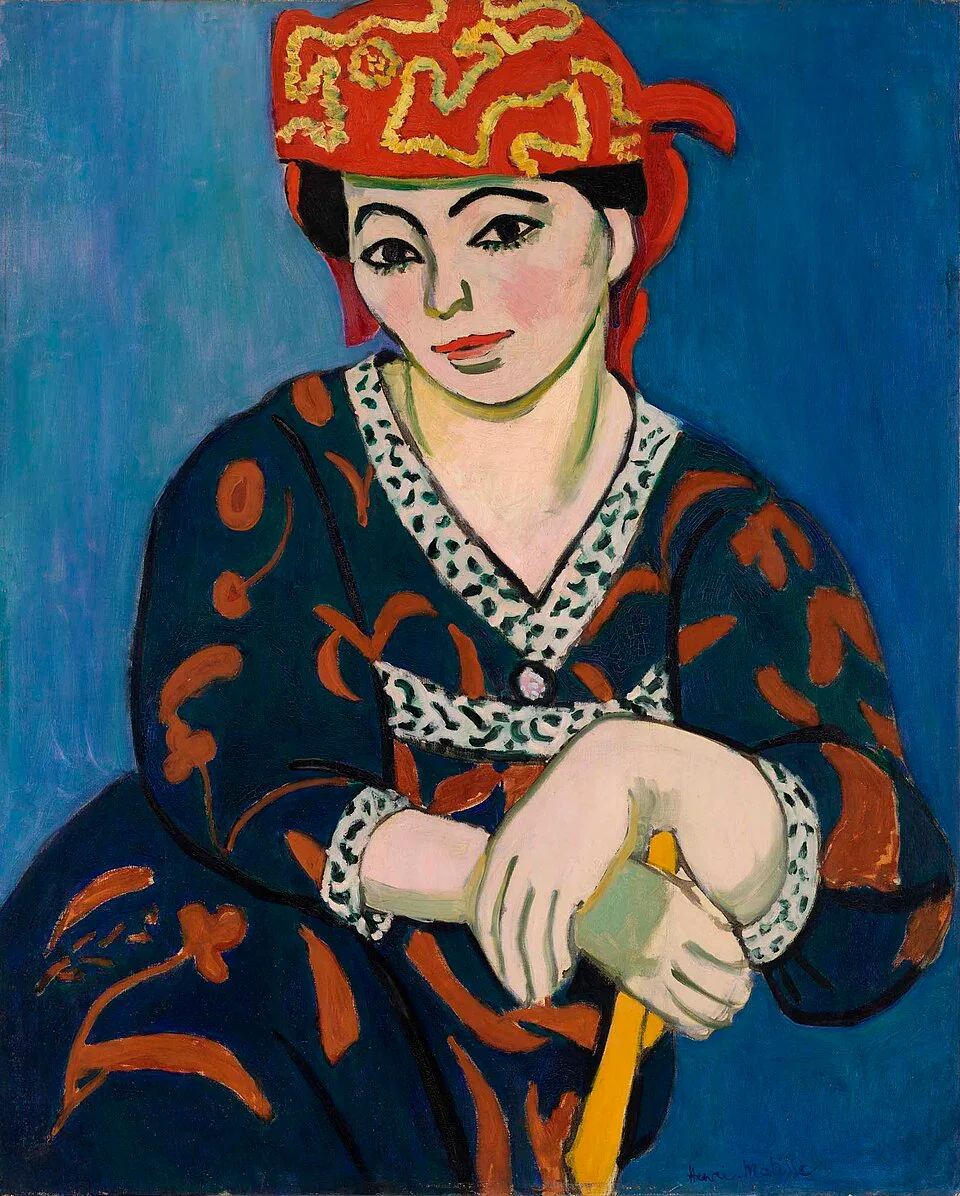
Madras Rouge
The title names what she wears. A madras is a wrapped headdress, and hers is red. The woman is Amélie, the painter's wife. Henri Matisse worked on this portrait between late April and the middle of July in 1907, and showed it that same year. Most critics did not care for it. It travelled anyway. In 1910 a New York magazine printed it with an article called The Wild Men of Paris. Wild beasts was the name given to Matisse and his circle, for the way they used colour. Three years later the painting hung at the Armory Show in New York. A photograph from that exhibition shows it on the wall with works by van Gogh and Picabia, and Duchamp's Nude Descending a Staircase beside it.
استمع في التطبيقHenri Matisse · Public domain
09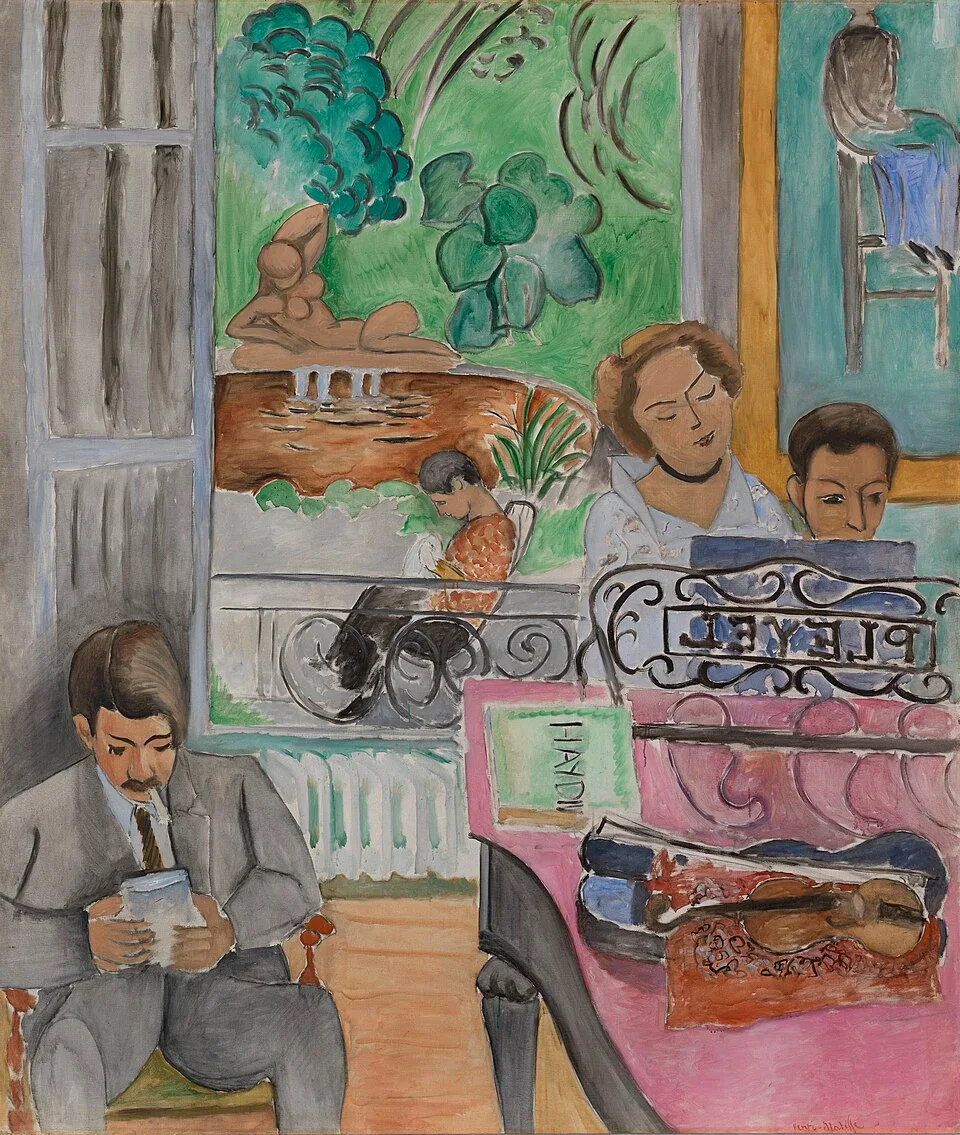
The Music Lesson
A family gathered around a piano, with a window beside them. These are Matisse's own people, in Issy-les-Moulineaux, in 1917. He had painted this exact scene the year before, in big blocks of strong color, calling it The Piano Lesson. That version now hangs in New York. But he was not done with it. So he came back to the same room, the same Pleyel piano, the same window, and painted it again, this time much closer to what a real room looks like. Even the picture hanging on the back wall, a woman on a stool, is easier to make out here than it was before. A year apart, the same lesson, taught twice.
استمع في التطبيقHenri Matisse · Public domain
10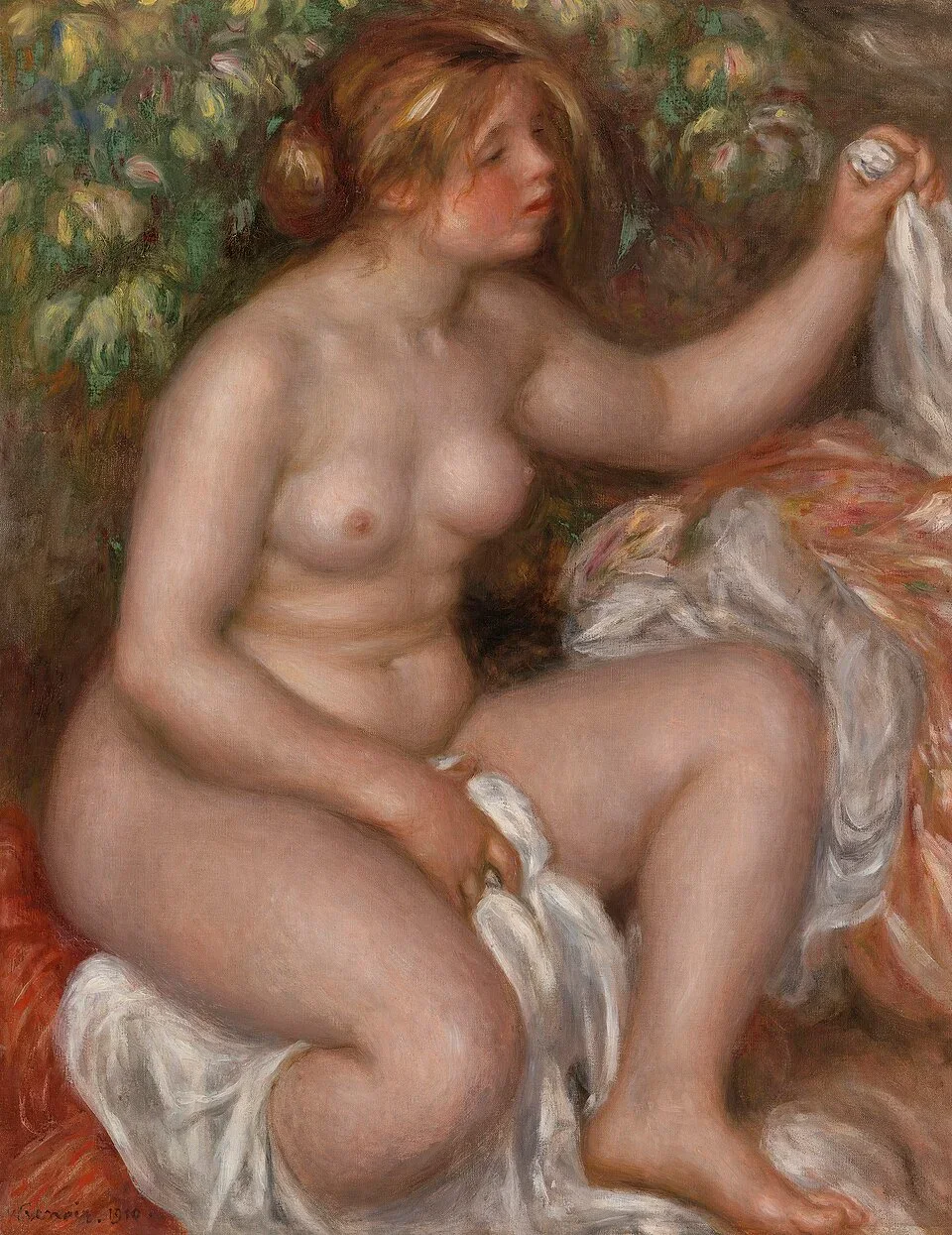
After the Bath (La Sortie du bain)
A young woman has just stepped out of the bath. She sits on a white cloth spread beneath her, one hand covering herself, the other lifting a light piece of clothing into the air. Her head turns toward that clothing. She is not looking at you at all. That is the quiet turn of this picture. A nude who does not pose. She is caught in the small, ordinary minute of getting dressed, when nobody is watching yet. Renoir painted this in 1910, in the last stretch of a career he had spent painting women. Behind her, greenery fills the space. So the bath itself seems to have happened outdoors, in the open air.
استمع في التطبيقPierre-Auguste Renoir · Public domain
- 11
Disrobing of Christ (Espolio)
Workshop of El Greco · c. 1580–1606
- 12
Endymion and his Flock
Titian · c. 1508
- 13
The Brothel
Vincent van Gogh · 1888
- 14
Portrait of Jacques Galos
Francisco Goya · 1826
- 15
Portrait of Jeanne Durand-Ruel (Portrait de Mlle. J.)
Pierre-Auguste Renoir · 1876
- 16
Mussel-Fishers at Berneval (Pêcheuses de moules à Berneval, côte normand)
Pierre-Auguste Renoir · 1879
- 17
The Family
Henri Rousseau · c. 1892–1900
- 18
The Laundry Boat of Pont de Charenton (Le Bateau-lavoir du Pont de Charenton)
Henri Rousseau · 1897–1903
- 19
The Past and the Present,
Henri Rousseau · 1899
- 20
Monkeys and Parrot in the Virgin Forest
Henri Rousseau · c. 1905–1906
- 21
Scouts Attacked by a Tiger (Éclaireurs attaqués par un tigre)
Henri Rousseau · 1904
- 22
Woman Walking in an Exotic Forest
Henri Rousseau · 1905
- 23
The Artist's Family (La Famille de l'artiste)
Pierre-Auguste Renoir · 1896
- 24
Laundry
Édouard Manet · 1875
- 25
Cypresses and Houses at Cagnes
Amedeo Modigliani · 1919
- 26
Jeanne Hébuterne
Amedeo Modigliani · 1919
- 27
Girl with a Polka-Dot Blouse
Amedeo Modigliani · 1919
- 28
Nude Woman on a Bed
Vincent van Gogh · 1887
- 29
Reclining Nude from the Back
Amedeo Modigliani · 1917
- 30
Leda and the Swan (Léda au cygne)
Paul Cézanne · 1880
- 31
Luncheon (Le Déjeuner)
Pierre-Auguste Renoir · 1875
- 32
Leaving the Conservatory (La Sortie du conservatoire)
Pierre-Auguste Renoir · 1876–1877
- 33
In Brittany (En Bretagne)
Pierre-Auguste Renoir · 1886
- 34
Studio with Goldfish (L'Atelier aux poissons rouges)
Henri Matisse · 1912
- 35
The Pretty Housewife (La Jolie ménagère)
Amedeo Modigliani · 1915
- 36
Portrait of Béatrice Hastings
Amedeo Modigliani · 1916
- 37
Madame Hanka Zborowska Leaning on a Chair (Madame Hanka Zborowska accoudée à une chaise)
Amedeo Modigliani · 1919
- 38
Young Mother (Jeune mère)
Pierre-Auguste Renoir · 1881
Barnes Foundation
الأسئلة الشائعة
كم تبلغ تكلفة الدليل؟
تحميل التطبيق مجاني. مجانًا حتى 1 يناير. السعر المدرج للدليل: $0.99. دليل صوتي فقط. تذكرة دخول الموقع منفصلة.
هل يمكنني الاستماع دون إنترنت؟
نعم. نزّل الصوت والصور والخرائط في التطبيق قبل زيارتك. يصبح المحتوى المنزّل متاحًا دون اتصال.
هل يمكنني الاستماع بلغتي؟
بالإنجليزية حاليًا. لغات أخرى قريبًا.
هل يجب الالتزام بجدول زمني؟
لا. إنها زيارة ذاتية التوجيه. اختر محطاتك وتوقف متى شئت وعد إلى القصص على وتيرتك.
على وتيرتك
استكشف Barnes Foundation.
حمّل Stanza ثم ابحث عن “Barnes Foundation”.
تحميل التطبيق مجاني · سعر الدليل موضح في التطبيق
واصل الاستكشاف
أدلة صوتية قريبة
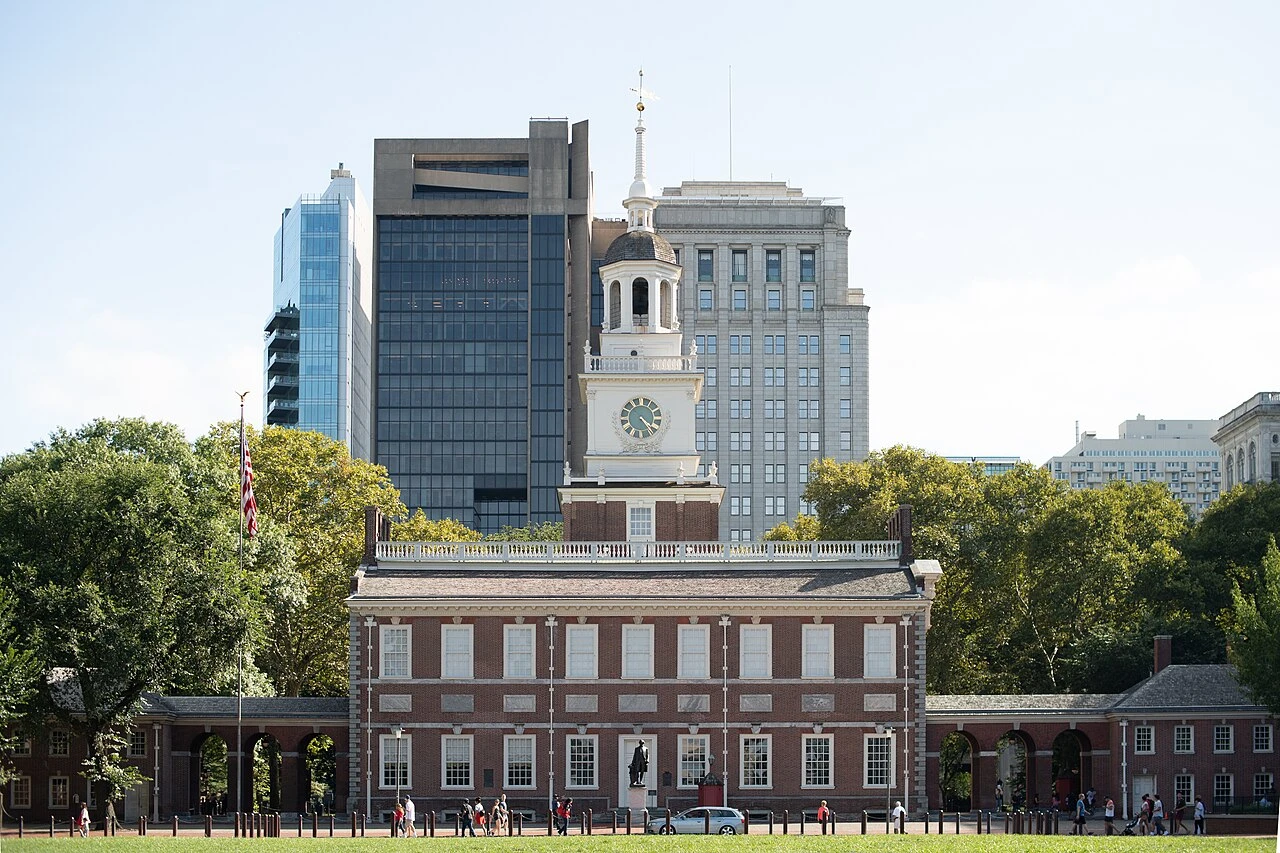
فيلادلفيا · 2 كم
قاعة الاستقلال
المحتوى والمصادر
Photo: Mys 721tx · CC BY-SA 3.0
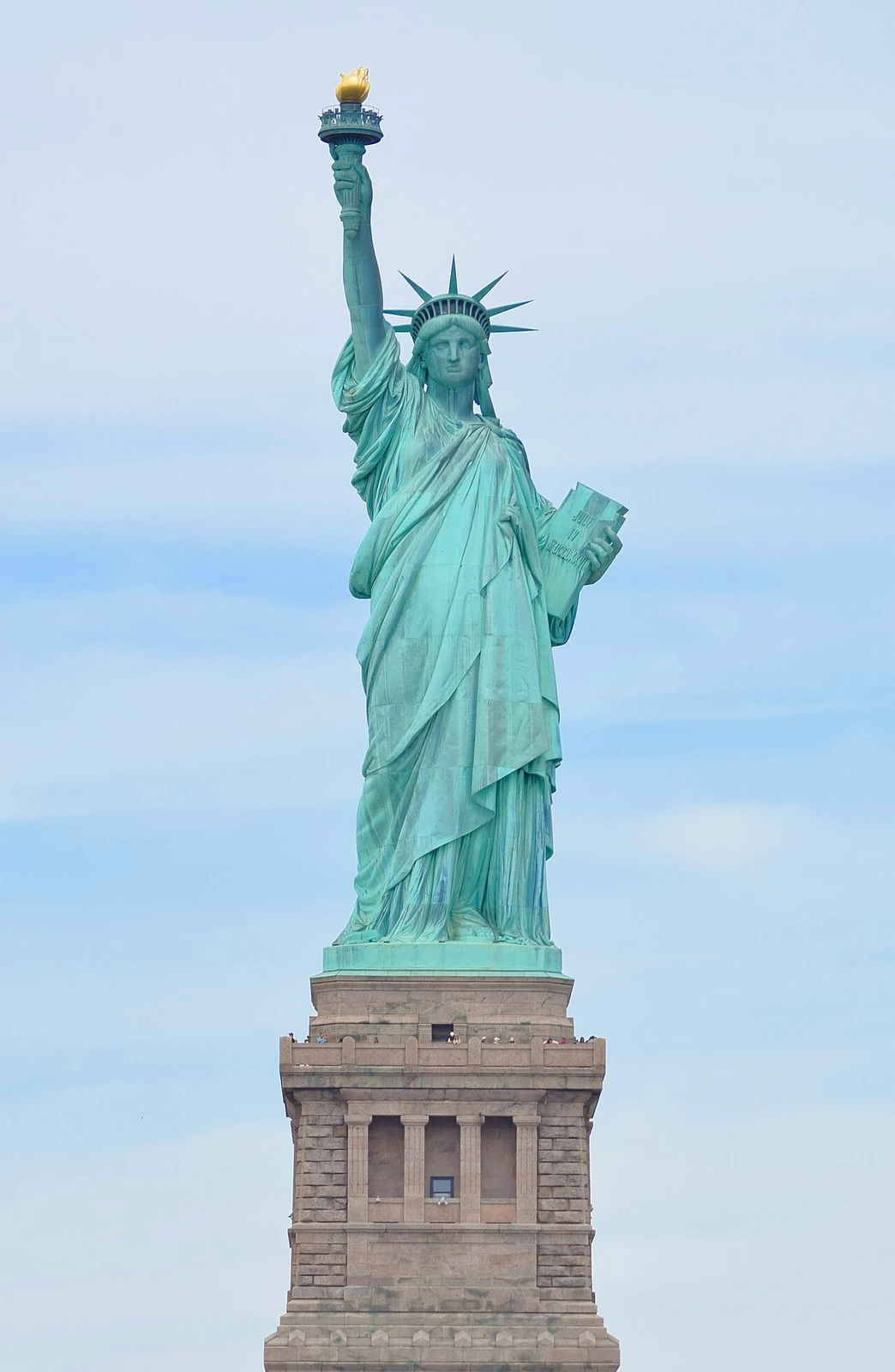
نيويورك · 125 كم
تمثال الحرية
المحتوى والمصادر
AskALotl · CC0
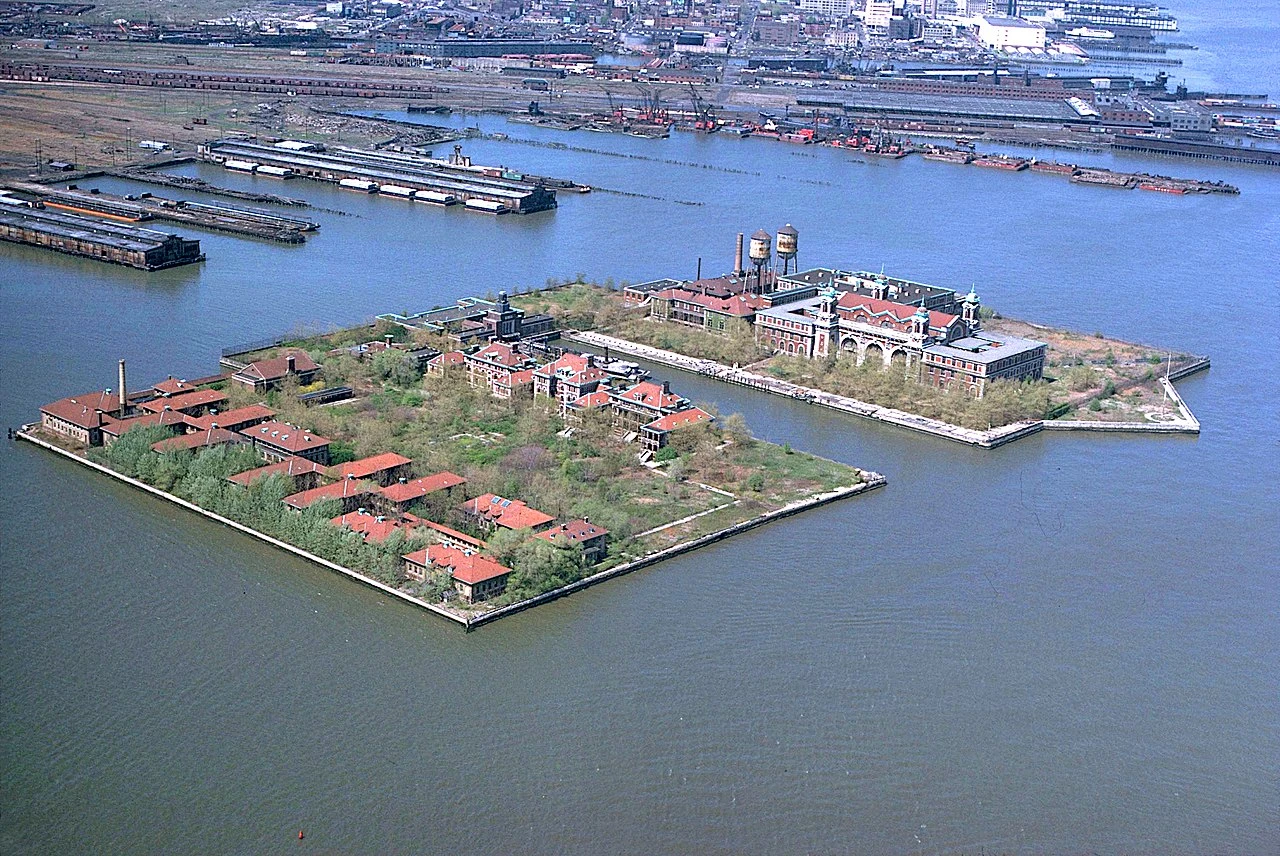
جيرسي سيتي · 126 كم
جزيرة إيليس
المحتوى والمصادر
Photo: WikiPedant · Public domain
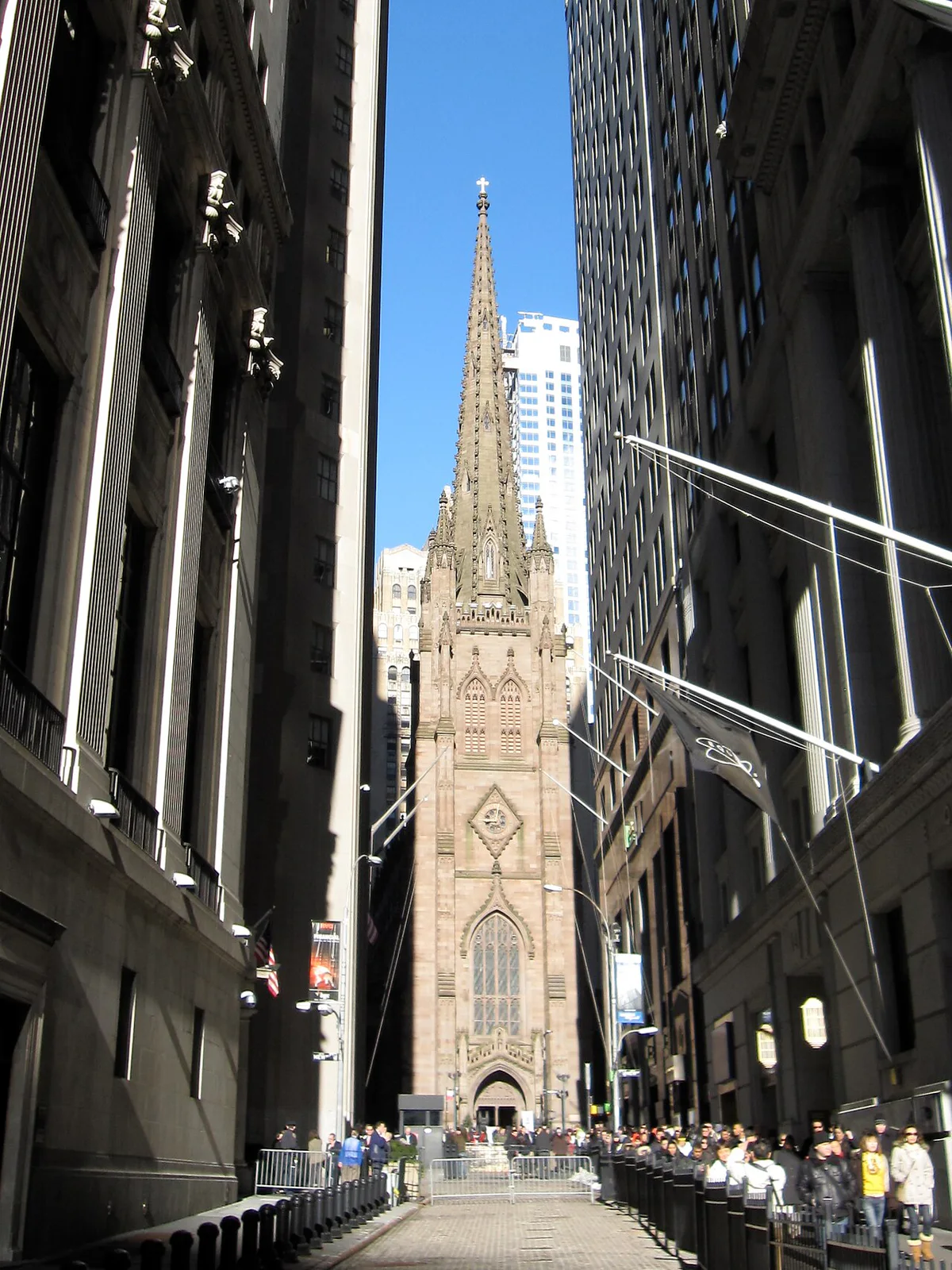
نيويورك · 129 كم
كنيسة ترينيتي
المحتوى والمصادر
Photo: Gryffindor · Public domain