Stories & history/Rome, Italy
The Colosseum, beyond the postcard
Look past the famous silhouette. The most interesting stories are often written into the smallest details.
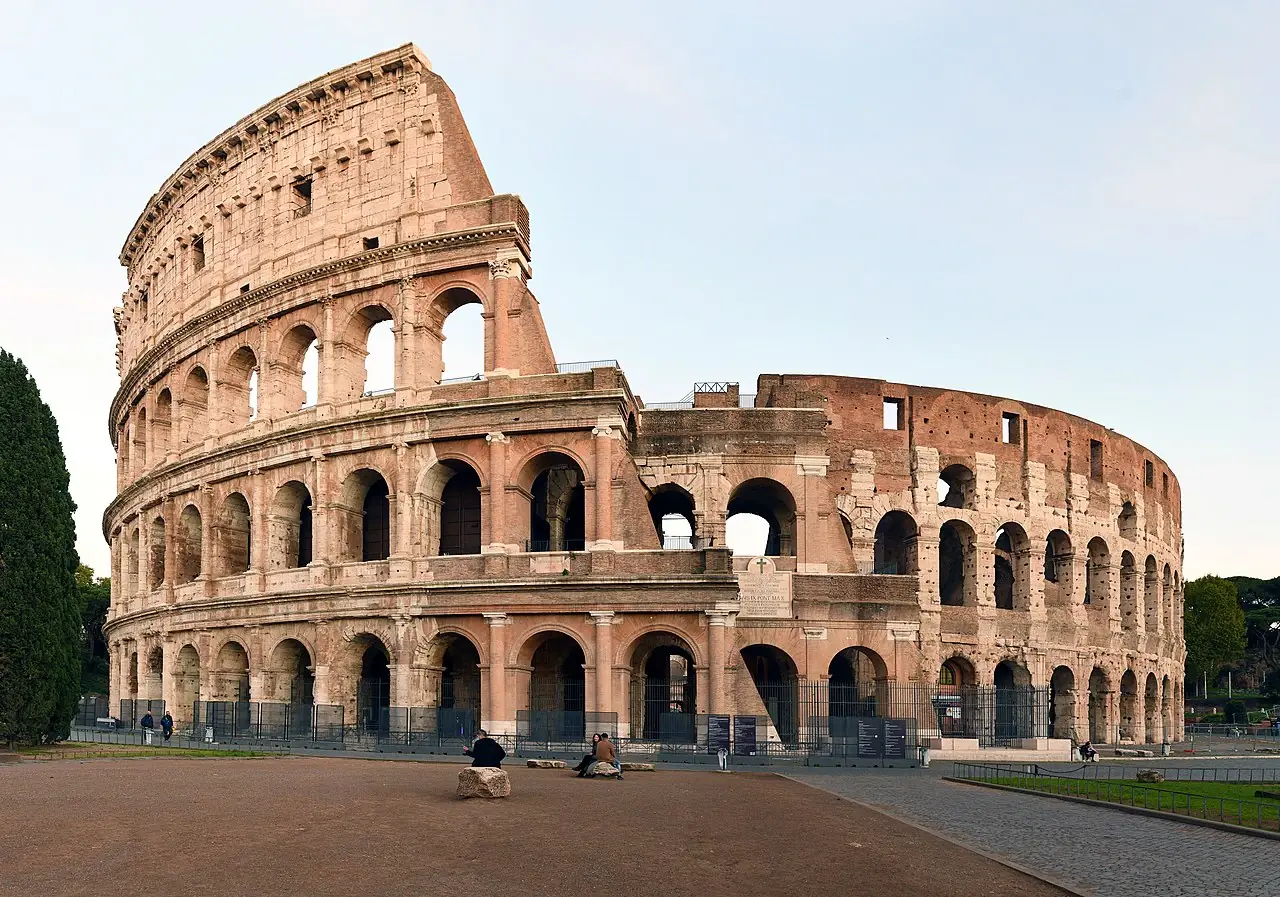
You probably know the outline before you arrive: tiers of arches, pale stone, a piece of the outer wall open to the sky. Familiarity can make a place feel already understood. At the Colosseum, it helps to start with a different question: what can this building tell you that a photograph cannot?
Look for the working building
Begin with the routes through it. Entrances, corridors and stairs turn a monumental shape into a building that people had to use. Follow one route with your eyes and consider how many different journeys could happen inside the same structure.
The arena was also a stage with machinery beneath it. The archaeological park describes an underground system that began in wood and was later rebuilt in masonry under Domitian. That history changes how you read the space: the surface of the arena was only part of the production.
Small marks can hold a big story
An inscription can reward as much attention as an arch. In its account of the Lampadius inscription, the park explains how holes in a stone slab preserve evidence of bronze lettering. The slab also records repairs after an earthquake in AD 443.
You do not need to read Latin to find that interesting. It is a reminder that a monument has a maintenance history as well as an opening day. Look for evidence of repair and ask what had to happen for the building to remain here.
Leave room for another chapter
The building’s story continued after its use for spectacles declined. The park’s research into the medieval Colosseum describes residential and leased spaces within it. The familiar ancient monument was also a place adapted by later inhabitants.
Try looking at the Colosseum as a sequence of uses rather than a single frozen moment. Before you leave, choose one detail you could describe to someone without showing them a photo. That is often the beginning of a story you will remember.
Sources & further reading
- Colosseum Archaeological Park: elevators and platforms
- Colosseum Archaeological Park: the Lampadius inscription
- Colosseum Archaeological Park: life in the Middle Ages
Questions or a correction? Let us know. Our content standards (English).