Stories & history/Alcobaça, Portugal
Alcobaça’s royal tombs: Pedro and Inês beyond the legend
The love story draws attention. The carved stone rewards it. Look closely at how two medieval tombs present royalty, death and the hope of resurrection.
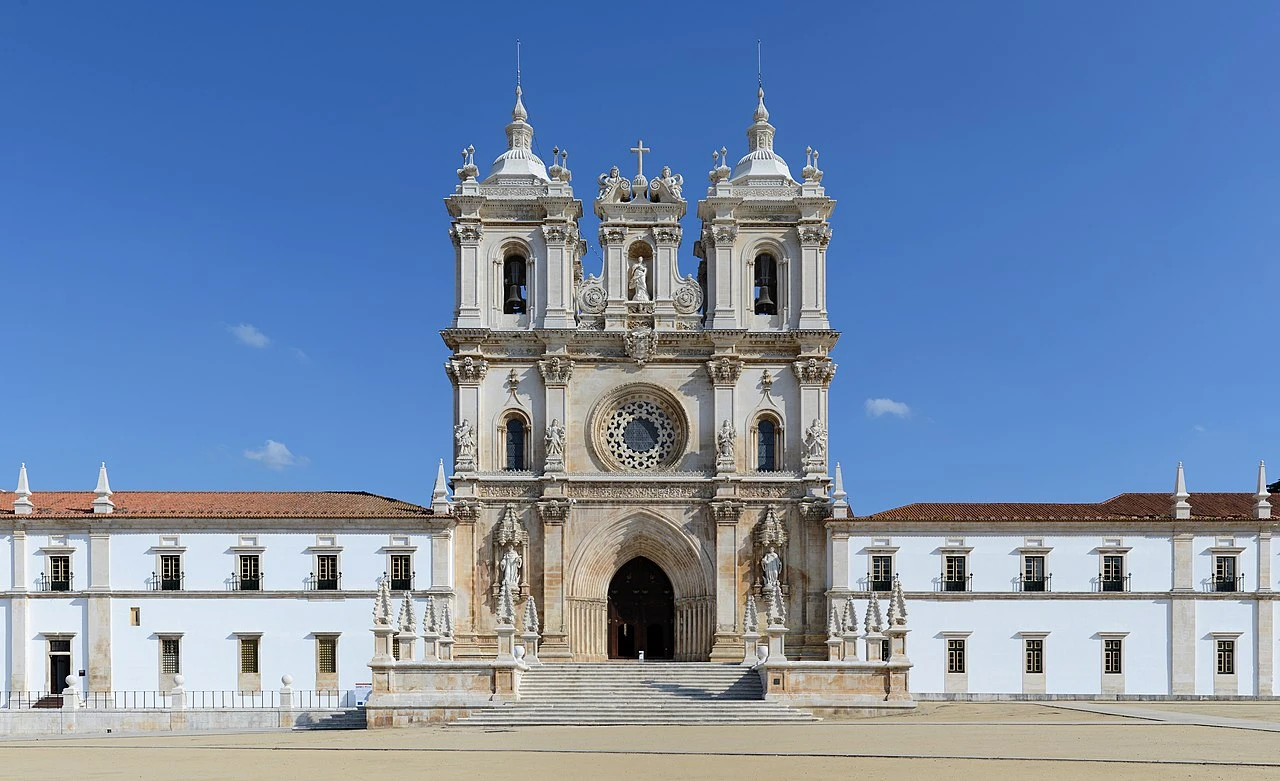
Alcobaça’s church invites you to look down its long, restrained interior. The tombs of Pedro I and Inês de Castro ask for the opposite: stop, change your viewpoint and notice small figures cut into stone. Their story is often told as a romance stronger than death. The monuments offer something more interesting than proof of a legend: evidence of how a medieval king wished love, status and remembrance to be seen.
What the story can—and cannot—establish
Inês was killed in 1355 on the orders of Pedro’s father, Afonso IV; Pedro became king in 1357 and died in 1367. He commissioned the tombs and had her remains transferred from Coimbra to Alcobaça. These broad historical events are different from the elaborate scenes later writers and artists added. His claim that they had married secretly should be described as a claim, rather than resolved by retelling a romance.
The 15th-century chronicler Fernão Lopes describes a richly worked tomb with a crowned image of Inês and the honour paid to her remains. His account is later than the events, not an eyewitness transcript. Crucially, it is a crowned effigy he describes. Scholarship distinguishes that commemoration and transfer from the later story of a coronation of her body and compulsory courtly homage. A sculpture can make a royal claim without proving that theatrical ceremony happened.
Inês: a crown above, judgement below
First look at the reclining figure, or effigy, on top. Inês wears a crown, with angels around her head and mantle. This is a constructed royal image, not a neutral record of appearance. Then, from the permitted viewing area, seek the Last Judgement at the foot end of the tomb. Its subject places an individual death within the Christian expectation of resurrection and divine judgement.
The sides carry New Testament scenes, while the head end presents Calvary. You need not identify every small figure to see the structure: the reclining person above, narratives along the chest and supporting creatures beneath. Compare these levels before moving on. Do not mistake the angels beside the effigy for the hybrid human-and-animal figures supporting the tomb below.
Pedro: follow the wheel without inventing a diary
Pedro’s tomb rests on lions. At its head end, look for the circular arrangement usually called the Wheel of Life, with concentric bands of small scenes. The heritage authority highlights this image as the counterpart to Inês’s Last Judgement. Original art-historical research connects it with the Ages of Man and the Wheels of Life and Fortune: established medieval ways of thinking about change, status and mortality.
It is tempting to turn every scene into a specific secret meeting or episode from the couple’s life. Do not assume that every identification is settled. Begin with what you can recognise: the wheel’s circular organisation, contrasts between a ruler in majesty and death, and the scale of the little scenes beside the full-length effigy. The sides also tell the life of Saint Bartholomew. These are religious and dynastic monuments as well as memorials to a relationship.
Step back: the church changes how the tombs read
Once you have studied the carving, step back into the transept and compare the tombs with the church’s relatively spare architecture. UNESCO recognises Alcobaça as a major work of Cistercian Gothic. The contrast helps explain why these intensely carved objects attract so much attention without needing to turn them into a modern romantic spectacle.
The familiar explanation that the pair face one another to meet first at the resurrection belongs to the tradition surrounding the monuments. It is not proof of an unchanged original arrangement: the monastery’s own online presentation records their move to the transept in 1957. Notice today’s relationship across the space while keeping placement history and the romantic explanation separate.
Give the tombs time, and verify the route
As an editorial suggestion, allow 20–30 minutes for an attentive comparison of the two tombs, in addition to the rest of the monastery. This is not a measured tour duration or a guarantee of unobstructed access. On 19 October 2026, the operator lists regular monastery admission at €15; April–October hours are 09:00–18:30, last entry 18:00, and November–March 09:00–17:30, last entry 17:00. Those general details do not establish separate free church access or unrestricted tomb viewing. Ask about your intended route, religious services and conservation work on +351 262 505 120.
Stanza’s independent Alcobaça guide has a public preview and commentary on the tombs within the wider monastery visit. Listen before deciding whether to buy, and download in the app before travel for offline listening. Audio and venue admission are separate. An audio stop does not guarantee physical access; the crown, carved panels and wheel already give you a useful way to look on your own.
A few more questions before you go
Sources & further reading
Visitor information checked .
Checked 19 October 2026 using Portuguese heritage and monastery sources, a published translation of Fernão Lopes and original scholarship on the legend. Tomb imagery, medieval narrative and later literary invention are distinguished. Confirm church and tomb access, services and any conservation restrictions for your date.
- Património Cultural: Alcobaça and the tombs’ principal imagery
- Alcobaça Monastery: online presentation of the tombs
- Fernão Lopes, Chronicle of King Pedro, chapter 44: published translation excerpt
- Portuguese Studies Review 28(1): Jordão on history and the later coronation legend, pp. 174–175
- Luís Urbano Afonso: Pedro’s tomb and the Wheel of Life and Fortune
- UNESCO: Monastery of Alcobaça
- Museus e Monumentos de Portugal: Alcobaça visitor information
Questions or a correction? Let us know. Our content standards (English).