Languages
15Mosteiro de Alcobaça Audio Guide
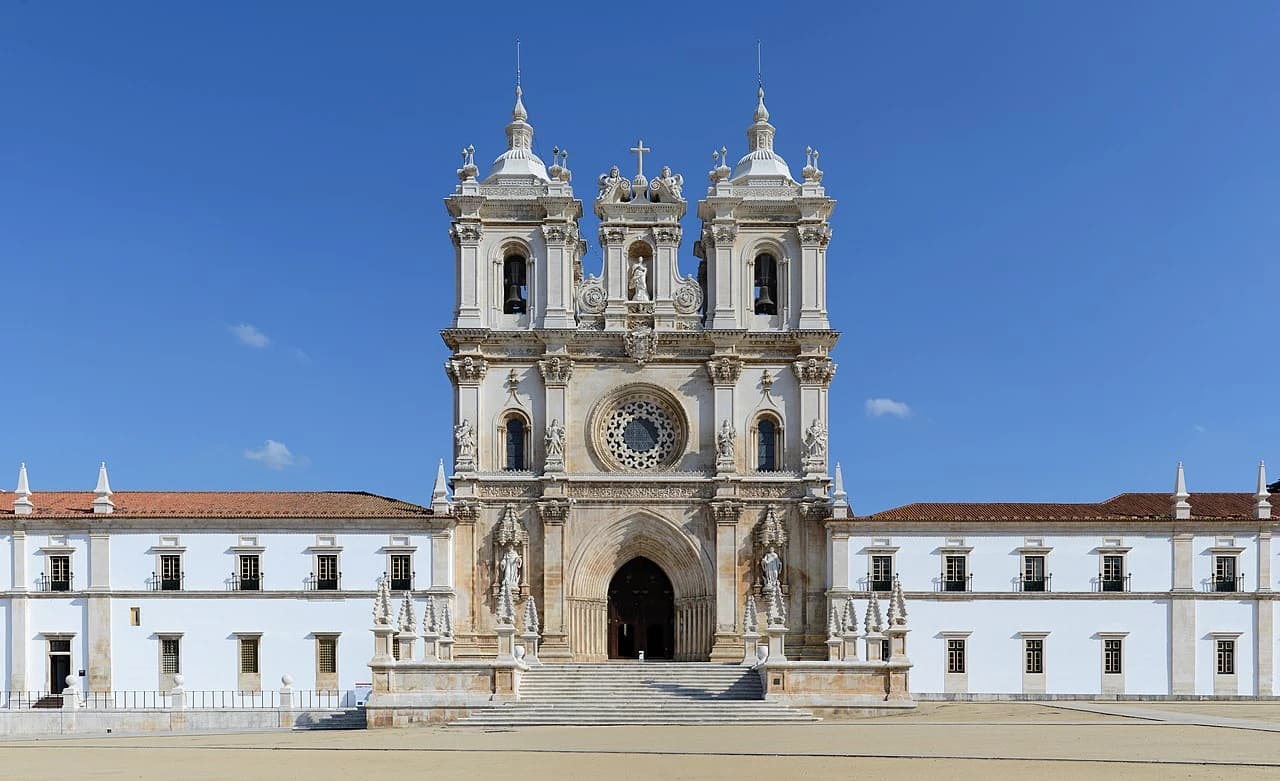
Mosteiro de Alcobaça is a landmark in Alcobaça, Portugal. Explore it with Stanza's GPS-triggered offline audio guide — available in 15 languages.
Quick Facts
33
Stops
15
Languages
100%
Offline
📍 Alcobaça, Portugal · 39.5486°N, -8.9786°E
About Mosteiro de Alcobaça
A medieval Roman Catholic monastery founded by the first Portuguese king, Afonso Henriques, in 1153. It is a UNESCO World Heritage site renowned for its early Gothic architecture and the tombs of King Pedro I and Inês de Castro.
Mosteiro de Alcobaça is also known as Alcobaça (klášter), Santa Maria de Alcobaça, Mosteiro de Santa Maria de Alcobaça, Real Abadia de Santa Maria de Alcobaça, and 1 other names in various languages.
This self-guided audio tour features 33 narrated stops organized across 8 sections. As a monastery, Mosteiro de Alcobaça offers a unique cultural experience in the heart of Alcobaça, Portugal.
The Stanza audio guide is available in 15 languages and works entirely offline — download the complete tour including audio narration, maps, and images before your visit. As you walk through Mosteiro de Alcobaça, GPS-triggered narration plays automatically at each point of interest.
Last updated:
What you will hear
The Grand Facade and Entrance
Establishing the arrival at the monastery with a wide view of the facade, the verified POI entry portal, and the main doors.
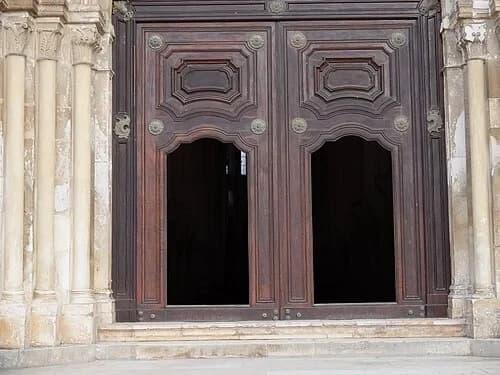
The Church Entrance Doors
Passing through these heavy wooden doors marks a transition from the bright, open square into the quiet, spiritual heart of the monastery. This threshold leads into a space designed specifically to reflect the French Cistercian model, closely following the architectural plans of the famous Abbey of Clairvaux. The monks who designed this interior wanted to create an environment that fostered meditation and prayer without distraction. Upon entering, the scale of the architecture immediately changes the atmosphere. You have just stepped into what was, at the time of its construction, the largest and most ambitious Gothic project in the kingdom. The design emphasizes height and light, a radical departure from the thick walls and small windows of earlier Portuguese buildings. The simplicity of the entrance reflects the Cistercian vow of poverty, where the beauty of the structure comes from its proportions rather than its decoration. This transition was meant to strip away the concerns of the outside world, preparing the monks for communal worship. The stone floor and high walls amplify even the smallest sounds, contributing to the solemnity of the space. Every stone was laid with the intention of creating a sanctuary that mirrored the order's strict monastic discipline.
The Gothic Nave
Illustrating the Cistercian philosophy of austerity through the stark, light-filled architecture of the nave.
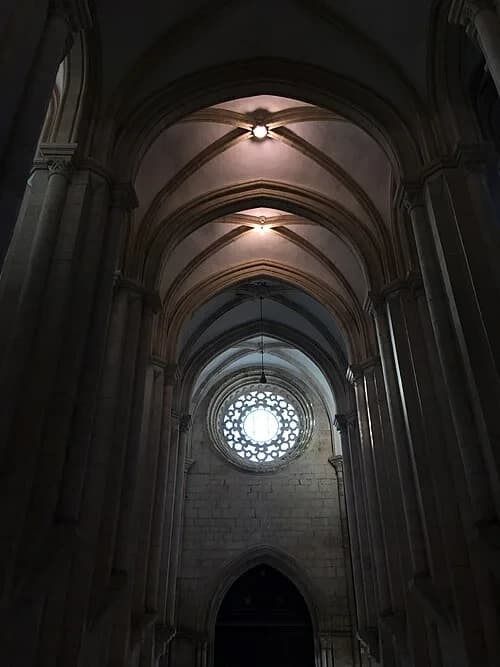
The Rose Window and Vaults
Gazing up toward the ceiling, you can see the intricate rib vaulting that supports the massive roof. These stark stone vaults are left entirely bare, following the strict Cistercian philosophy of austerity. Unlike the cathedrals of the same era in France or Italy, this interior is intentionally devoid of colorful paintings, frescoes, or gold leaf. The order believed that such decorations served only as a distraction from the purity of prayer and contemplation. Instead, the beauty of the church relies on the play of natural light on the bare stone surfaces. The simple rose window at the end of the nave acts as a primary source of illumination, casting patterns of light that shift across the floor as the sun moves. The geometry of the vaults is perfectly balanced, distributing the immense weight of the stone ceiling down through the pillars to the ground. This architectural honesty, where the structural elements are themselves the decoration, is a core tenet of Cistercian art. The lack of distracting images focuses the mind on the verticality of the space, intended to draw the spirit upward. Even the capitals on the pillars are mostly simple or feature basic geometric designs, eschewing the complex biblical scenes common in other medieval churches.
The Tomb of Inês de Castro
Focusing on the tragic 'Queen after Death' and her magnificent Gothic tomb, a verified POI.
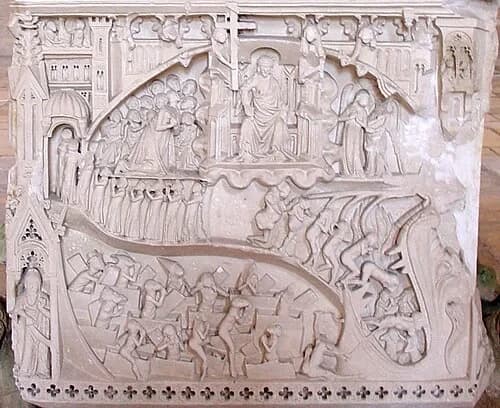
Reliefs of the Last Judgment
The sides of Inês de Castro's tomb are adorned with dense, complex reliefs that depict the Last Judgment. These scenes show the separation of the blessed from the damned, with figures emerging from tombs and facing divine justice. The level of detail in these small stone figures is extraordinary, capturing a wide range of human emotions from terror to serenity. These carvings served as a constant reminder to the monks and visitors of the 14th century about the fleeting nature of life and the permanence of the afterlife. However, the tombs themselves have suffered through history. During the Peninsular War in 1810, Napoleonic troops occupied the monastery and desecrated many of the royal graves, including those of Pedro and Inês, in a search for hidden treasures. They scattered the remains and damaged parts of the stone effigies. Remarkably, while some of the more delicate protruding elements were broken, the majority of the deep reliefs survived. You can still see where the stone was chipped or where small figures were partially destroyed. These scars are now part of the object's history, representing the intersection of medieval craftsmanship and the later violence of European conflict. The scenes remain remarkably legible, allowing us to see the medieval conception of heaven and hell.
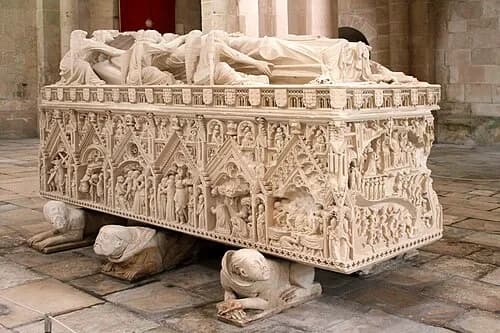
The Supporting Angels
At the base of the tomb of Inês de Castro, look for the six kneeling angels that hold the heavy stone structure aloft. These figures are masterpieces of detailed carving, with each angel possessing unique expressions and meticulously rendered robes and wings. The way their hands are positioned and the gentle curves of their feathers show a level of artistry that was rare for the period. These angels serve a symbolic purpose as well as a structural one; they represent the heavenly guardians watching over the soul of the departed queen. The placement of the tomb itself is highly specific. It sits in the transept of the church, directly opposite the tomb of her lover, King Pedro I. According to tradition, they were placed in this manner so that on Judgment Day, the first thing each of them would see upon rising from their graves would be the face of the other. The stone beneath the angels' knees is worn, and the contrast between their soft, rounded forms and the sharp architectural lines of the tomb box is striking. Their presence adds a sense of lightness and grace to a monument that weighs several tons, bridging the gap between the earthly weight of death and the hope of spiritual ascension.
The Tomb of King Pedro I
The counterpart to Inês's tomb, where the King lies facing his lover to rise and see her first on Judgment Day.
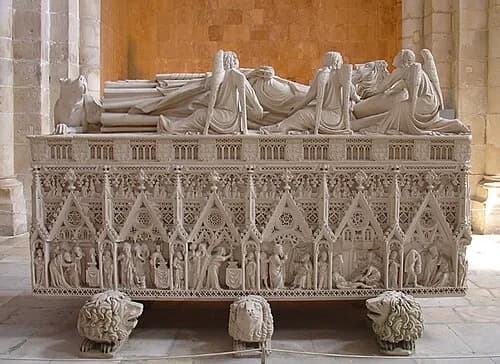
Tomb of King Pedro I
Facing the tomb of Inês de Castro is the final resting place of King Pedro I. Unlike many monarchs who left their burial arrangements to their successors, Pedro personally supervised the creation of these two tombs. He intended them to be the most magnificent funerary monuments in the kingdom, a lasting physical manifestation of his love and power. Notice the base of the tomb, which differs significantly from that of Inês. While hers is supported by angels, Pedro’s tomb is held up by six crouching lions. These animals symbolize strength, courage, and his royal status, contrasting with the more spiritual and delicate themes of Inês's side. The box of the tomb is covered in intricate Gothic tracery, featuring pointed arches and small statues of saints and apostles. Every inch of the stone surface is worked, creating a texture that almost resembles lace from a distance. The placement of these two tombs in the transept was a radical departure from the royal tradition of the time, emphasizing the personal bond between the two individuals rather than just their dynastic roles. The symmetry between the two monuments creates a powerful emotional center within the vast, austere church, drawing every visitor's attention to their shared fate.
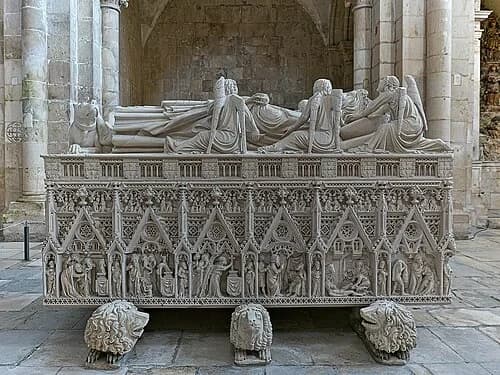
The King's Effigy
The recumbent statue of King Pedro I atop his tomb shows him in full regal attire. He is depicted with his hands resting by his sides, his head supported by cushions, and his feet resting against a dog, a common symbol of loyalty in medieval funerary art. He holds a sword, indicating his role as a warrior king and defender of the realm. The carving of his hair and beard is exceptionally fine, showing the fashionable styles of the mid-14th century. Perhaps most significant is the symbolic positioning of his body relative to Inês. He lies 'pé com pé,' or foot to foot, with her. The intention behind this specific arrangement was that when the dead are called to rise on the day of resurrection, they would both stand up and immediately be looking directly at one another. This romantic detail was central to Pedro's design for the space. The stone used for the effigy has a smooth, almost polished appearance, which contrasts with the deeper, more rugged carvings on the sides of the tomb. His expression is one of calm, stoic peace, a contrast to the turbulent and often violent events of his reign. Looking at the effigy, you can see the heavy folds of his cloak, which seem almost to have weight despite being carved from hard stone.
The Wheel of Fortune
A specific focus on the most famous carving on Pedro's tomb, symbolizing the cycle of their lives and tragic love.
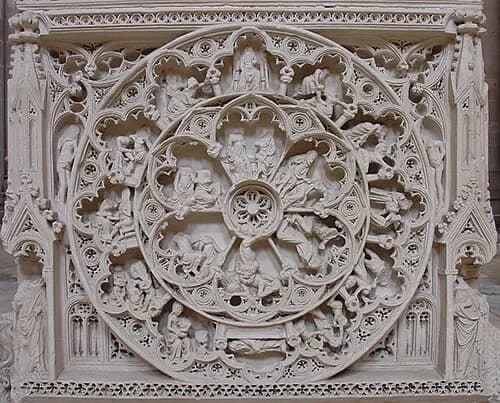
Moments of a Royal Life
The Wheel of Fortune on Pedro’s tomb contains 18 small scenes, each a tiny masterpiece of Gothic stone carving. These miniature vignettes depict different stages of life and, most notably, specific moments from the tragic romance between Pedro and Inês. If you look closely, you can identify scenes of their secret meetings and the subsequent events that led to their separation. The quality of these carvings is often described as 'lace-like' because of the incredible thinness of the stone and the complexity of the overlapping figures. Despite their small size, the emotions of the characters are clearly visible. You can see the skill required to hollow out the stone behind the figures to create a sense of three-dimensional space within a shallow relief. This level of detail was meant to be viewed up close, rewarding those who took the time to study the tomb’s surface. Over the centuries, some of the finer details have been lost to wear and the damage caused during the Napoleonic occupation, but the overall narrative remains clear. The transition from one scene to the next around the wheel reinforces the idea that life is a series of interconnected moments, leading inexorably to the finality of the tomb. It is one of the most intimate and detailed sections of the entire monastic complex.
The Royal Pantheon
Housing the remains of earlier monarchs and showcasing the evolution of funerary art in Portugal.
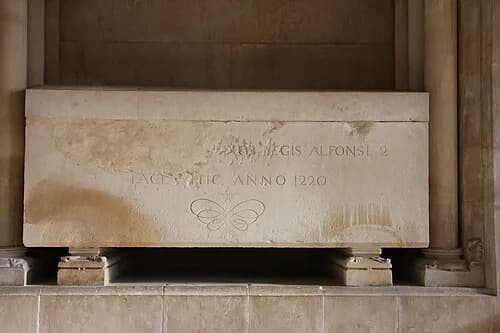
Tomb of Queen Urraca
The tomb of Queen Urraca of Castile, the wife of King Afonso II, is a significant example of early 13th-century funerary art. Located in the transept, it represents a more austere and traditional style compared to the later, more famous tombs nearby. The tomb features a clear Latin inscription that identifies the queen and provides the date of her death. The decorative elements are strictly early Gothic, with simple arches and stylized floral motifs that do not yet have the naturalistic detail seen in the 14th-century masterpieces. The effigy of the queen is carved with a sense of calm and rigidity that was typical of the era, focusing more on her status and piety than on individual portraiture. This monument provides an important historical context, showing what royal burial looked like before King Pedro I introduced his more personal and elaborate vision for the church. The stone used here has a different texture and color than the later tombs, and the wear on the inscription shows the passage of nearly eight hundred years. It is a well-preserved instance of royal devotion from the foundational years of the Portuguese state. Notice the heraldic symbols of both Portugal and Castile, which emphasize the political alliances that were central to her life as a queen consort.
The Kings' Hall
A room dedicated to the history of the Portuguese monarchy, featuring royal statues and descriptive azulejo tiles.
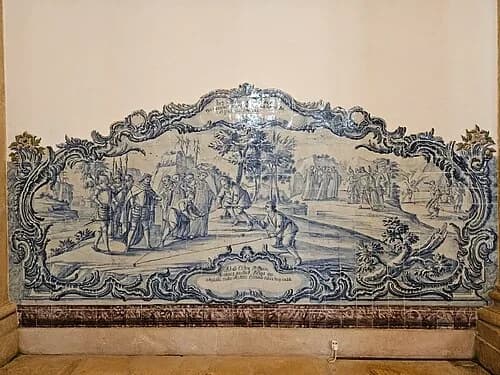
Azulejo History Panels
These striking blue and white panels, known as azulejos, offer a visual history of the monastery's very beginnings. Crafted in the 18th century, the tiles illustrate the legendary tale of King Afonso Henriques and the founding of this massive complex. According to tradition, the King made a solemn vow to Saint Bernard of Clairvaux while preparing for the siege of Santarém. He promised that if he successfully captured the city from the Moors, he would donate the surrounding lands to the Cistercian Order to build a monastery. The panels depict scenes of this conquest and the King’s subsequent fulfillment of his promise. This narrative style of tiling was a popular way to decorate large spaces in Portugal, turning walls into giant storybooks for visitors and monks alike. As you examine the scenes, look for the figures of the King and the monks amidst the intricately painted landscapes. The use of blue and white was particularly prized during this era, reflecting a style that became a signature of Portuguese decorative art. These panels serve as a bridge between the monastery's 12th-century origins and the artistic tastes of the Enlightenment period centuries later.
The Cloister of Silence
The spiritual heart of the monastery, where monks meditated in absolute silence.
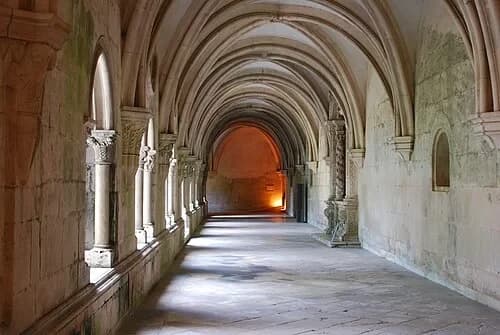
Cloister of Silence
The Cloister of Silence is the serene heart of the monastic complex. Commissioned by King Dinis in the early 14th century, it was the primary living and working area for the monks. Its name reflects the strict rule of silence that governed this space; here, the brothers would walk, read, and meditate without speaking a word. The architecture supports this contemplative atmosphere with its simple, strong Gothic arches. Notice the rhythmic repetition of the stone columns and the way the light filters through the openings into the covered walkways. While many medieval cloisters are cramped, this one is remarkably vast, reflecting the immense size of the community that once lived here. The lower level is a classic example of Portuguese Gothic style, emphasizing structural integrity and clear lines over excessive ornamentation. For the monks, the cloister was more than just a hallway; it was a physical representation of the spiritual journey, a place to turn inward away from the distractions of the outside world. The weight of the stone and the cool shade of the galleries provided the perfect environment for a life dedicated to prayer and study.
Want to hear the rest?
Download the Stanza app to unlock all 33 stops and full GPS-guided navigation.
Frequently Asked Questions
How long does the Mosteiro de Alcobaça audio tour take?
The Mosteiro de Alcobaça audio guide includes 33 narrated stops. Most visitors spend 45 minutes to 1.5 hours exploring the complete tour, though you can listen at your own pace and skip or revisit any stop.
Is the Mosteiro de Alcobaça audio guide available in my language?
Stanza supports 15 languages: English, Spanish, French, German, Italian, Portuguese, Russian, Japanese, Chinese, Korean, Arabic, Hindi, Polish, Dutch, Hebrew. Check the guide in the app to confirm the languages currently available for this tour.
Can I use the audio guide offline at Mosteiro de Alcobaça?
Yes! Download the complete Mosteiro de Alcobaça tour — including all audio, maps, and images — before your visit. The Stanza app works completely offline, so you don't need WiFi or mobile data at the venue.
How much does the Mosteiro de Alcobaça audio guide cost?
The Stanza app is free to download. Free and paid audio guides are available; current prices are shown in the app.
How do I use the Stanza audio guide at Mosteiro de Alcobaça?
Download the free Stanza app, search for "Mosteiro de Alcobaça", and download the tour. When you arrive at the venue, the app uses GPS to detect your location and automatically plays the relevant narration as you move between points of interest — completely hands-free.
What makes the Stanza audio guide different from other Mosteiro de Alcobaça tours?
Stanza offers GPS-triggered narration that plays automatically as you walk through Mosteiro de Alcobaça — no need to manually select stops. The tour is available in 15 languages, works fully offline, and includes 33 expertly narrated stops with images and historical context.
What other audio guides are available near Mosteiro de Alcobaça?
Stanza offers multiple audio guides in Alcobaça, Portugal and nearby areas. After downloading the app, browse the map to discover all available tours near Mosteiro de Alcobaça. Each guide can be downloaded for offline use.