Languages
15Castelo de Almourol Audio Guide
Castelo de Almourol is a landmark in Praia do Ribatejo, Portugal. Explore it with Stanza's GPS-triggered offline audio guide — available in 15 languages.
Quick Facts
18
Stops
15
Languages
100%
Offline
📍 Praia do Ribatejo, Portugal · 39.4619°N, -8.3838°E
About Castelo de Almourol
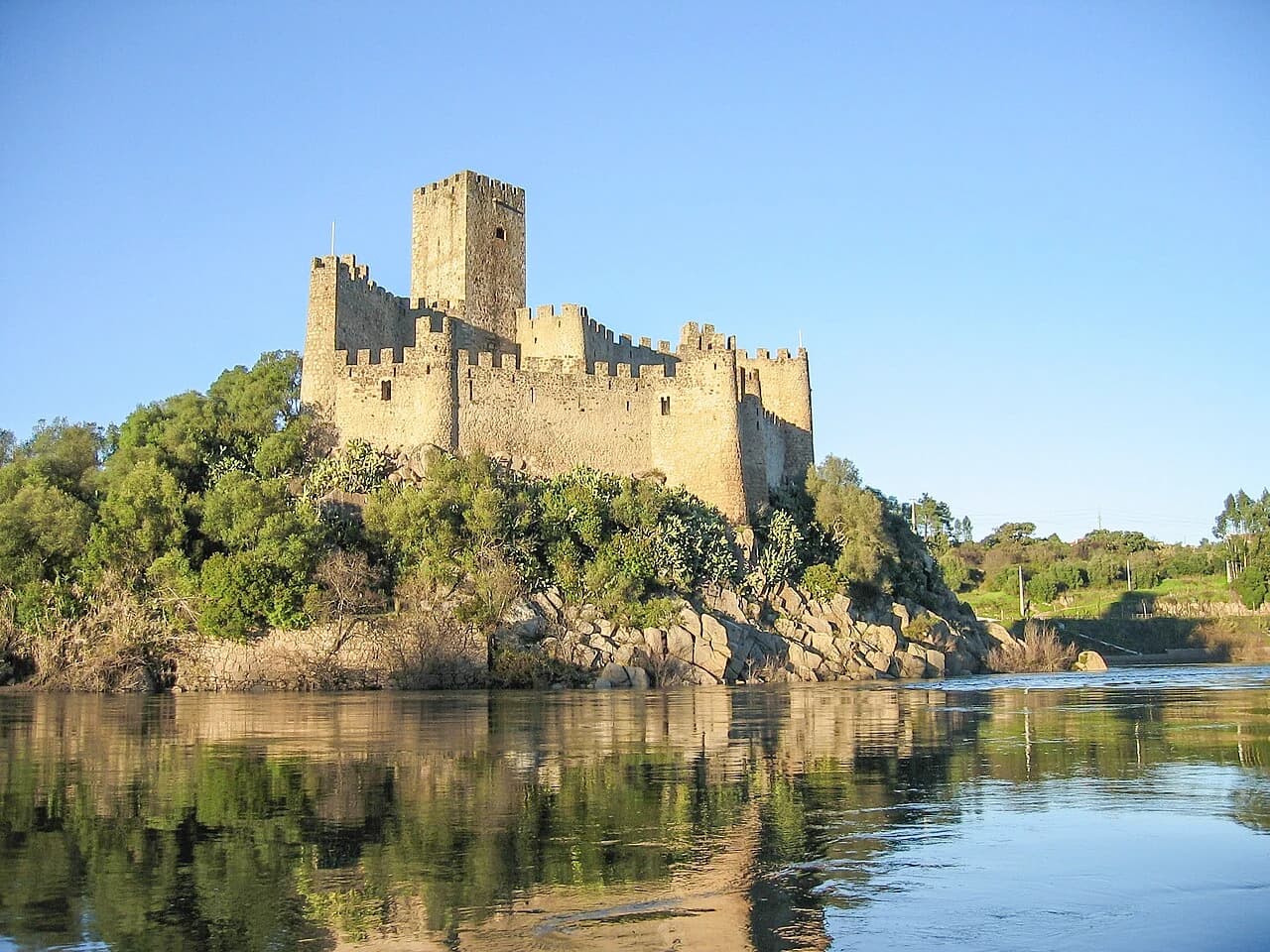
The Castle of Almourol is a medieval castle situated on a small rocky islet in the middle of the Tagus River. It is a prominent example of 12th-century military architecture in Portugal, historically associated with the Knights Templar.
Castelo de Almourol is also known as Almourol, Castelo de almorol, Castelo de Almourol.
This self-guided audio tour features 18 narrated stops organized across 8 sections. As a castle, Castelo de Almourol offers a unique cultural experience in the heart of Praia do Ribatejo, Portugal.
The Stanza audio guide is available in 15 languages and works entirely offline — download the complete tour including audio narration, maps, and images before your visit. As you walk through Castelo de Almourol, GPS-triggered narration plays automatically at each point of interest.
Last updated:
What you will hear
The Main Gate and the 1171 Epigraph
Focus on the castle's official founding. The inscription is historical proof of Gualdim Pais's work.
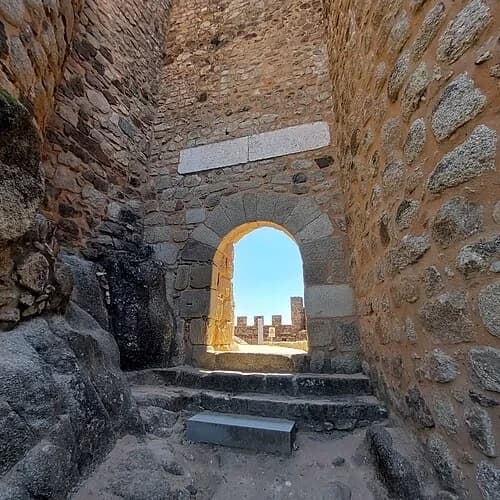
The Main Gate
Stepping through this entrance signifies a move from the natural, rugged landscape of the granite islet into the calculated environment of a medieval military fortress. The walk from the river’s edge up to this threshold follows the steep, uneven terrain of the rock, forcing any visitor—or potential attacker—to ascend at a disadvantage. This physical layout was intentional; by making the path to the gate difficult, the defenders gained more time to react. The archway itself is designed for maximum security, providing a narrow point of access that could be easily guarded by a small number of men. Once you pass through these walls, you leave the open space of the river behind and enter the confined, stony reality of Templar defense. It is here that the architectural genius of the twelfth century begins to reveal itself, showing how builders adapted their designs to the challenging and restricted space of a mid-river island. The height of the arch was carefully planned to restrict the size of objects and the number of people entering simultaneously.
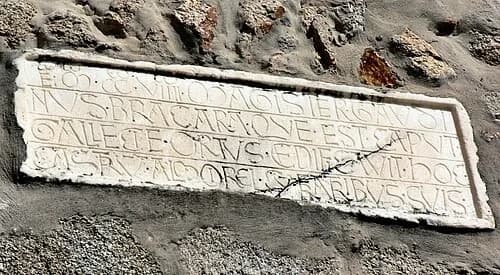
The Founding Inscription
This inscribed stone is one of the most significant historical documents at Almourol, as it provides an exact date for the structure’s origins. According to the Latin text, the castle was built in 1171. It credits Gualdim Pais, the famous Master of the Knights Templar in Portugal, for commissioning and overseeing the work. Pais was a legendary figure who fought alongside the first King of Portugal, Afonso Henriques, and he brought advanced military engineering techniques back from the Crusades in the Holy Land. Under his leadership, the construction was remarkably rapid, transforming the ruins of an earlier fortification into the formidable stronghold seen today. The plaque not only honors the Master but also asserts the Templar Order’s dominance and responsibility for the defense of the region. This inscription has survived the elements for centuries, standing as a permanent reminder of the castle's transition from a natural outcrop to a vital piece of the kingdom's military infrastructure. It remains one of the few surviving primary sources from the castle's initial Templar phase.
Lower Enclosure and the Nine Towers
Explaining Templar military architecture, specifically the circular towers and curtain walls.
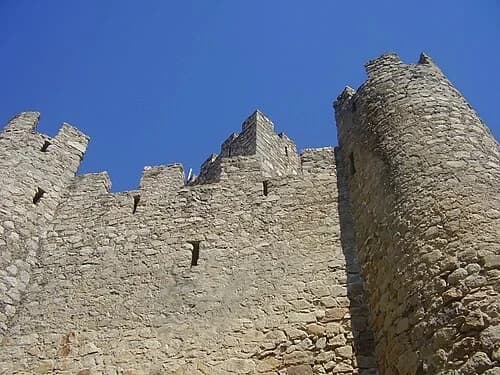
The Circular Towers
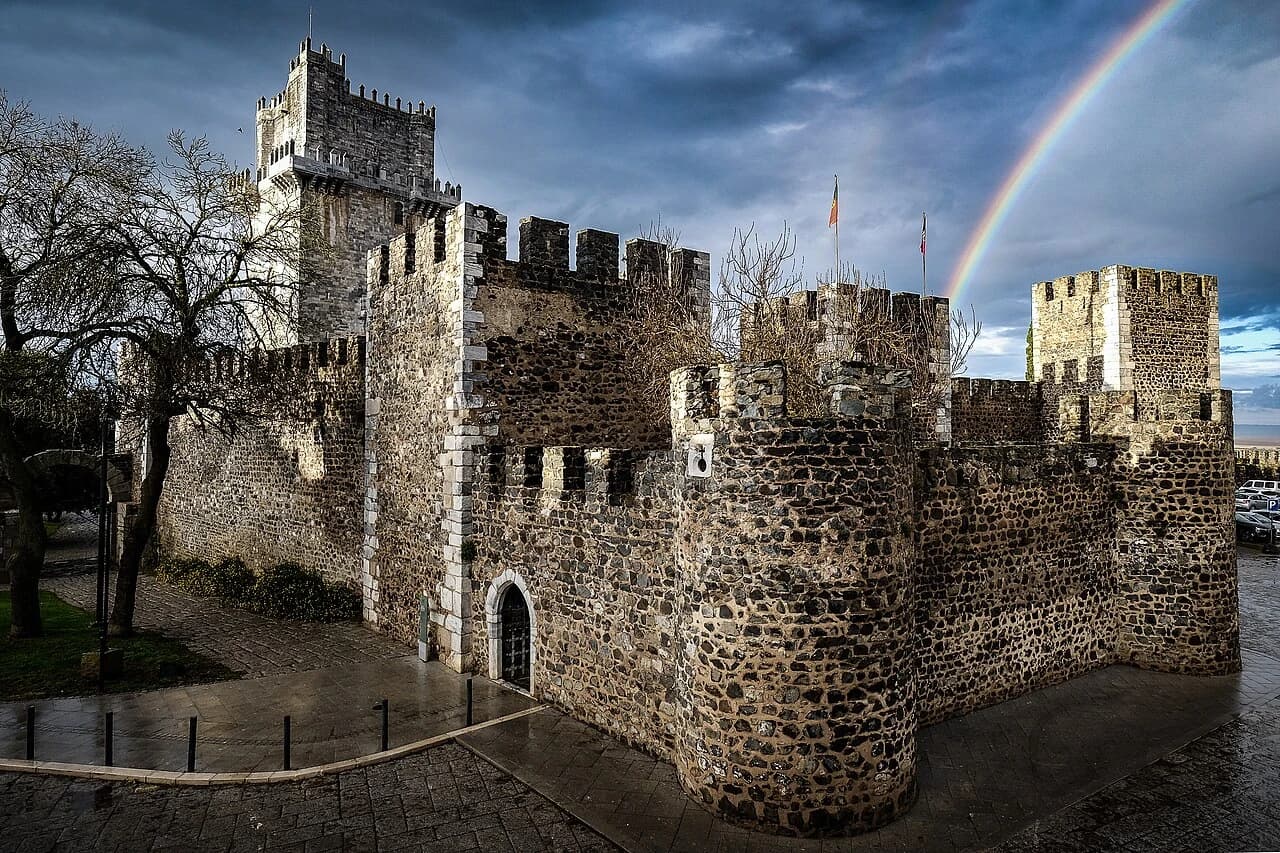
Unlike many earlier medieval fortifications that used square or rectangular towers, Almourol features a series of rounded structures. This was a signature of Templar architecture, influenced by the circular designs of fortifications seen in the East during the Crusades. Circular towers offered several major tactical advantages. Most importantly, they eliminated "blind spots" at the corners where attackers could hide from the defenders' view. A curved wall provided a continuous field of fire for archers and crossbowmen, allowing them to target enemies regardless of their angle of approach. Structurally, circular towers were also much more resilient against siege engines and attempts to undermine the walls; the rounded surface helped deflect projectiles and distributed the weight of the masonry more evenly. There are nine of these towers in total along the perimeter, spaced to allow defenders to provide covering fire for one another. This design turned the entire curtain wall into an active fighting platform, maximizing the defensive potential of the limited island space. Each tower was positioned to ensure the entire outer wall could be monitored.
The Traitors' Gate
Highlighting the secondary, discreet entrance used for supplies or escapes.
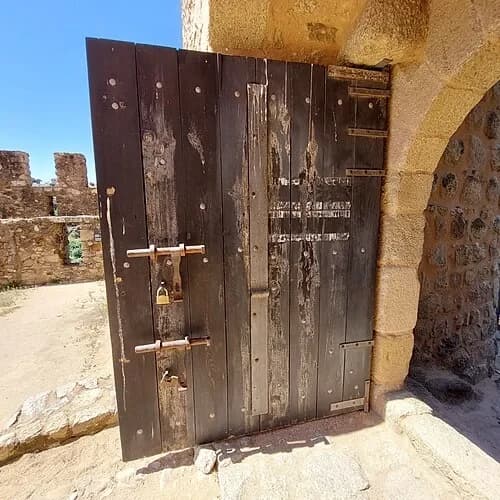
The Traitors' Gate
While the main gate was the primary point of entry and defense, this smaller entrance served several crucial tactical functions. In the terminology of medieval warfare, a postern was a hidden or secondary gate used for discreet movements. It allowed members of the garrison to leave or enter the castle without opening the massive main doors, which would have been a significant security risk during a siege. From here, soldiers could access small boats for fishing, communication, or receiving vital supplies. In a worst-case scenario, the gate could also serve as an escape route, allowing occupants to slip away into the river under the cover of darkness. The name "Traitors' Gate" is a common nickname for such exits in many castles, hinting at the potential for someone inside to secretly let an enemy through, though there is no record of such a betrayal happening here. Today, the weathered wood and heavy ironwork remind us of the constant need for both vigilance and flexibility in island defense. The gate opens directly toward a steep descent to the water's edge.
The Inner Courtyard
The transition between the lower defenses and the inner keep. Mentions the 20th-century use as an official residence.
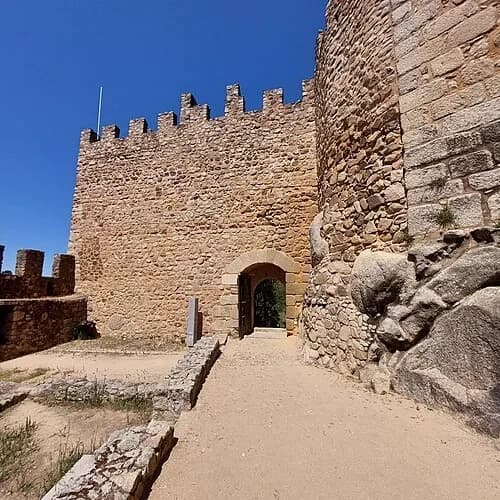
The Lower Enclosure
The interior of Almourol is divided into two distinct levels to maximize defensive capability. This lower enclosure served as the first line of defense inside the walls and was the busiest part of the castle during its military prime. Soldiers would have spent much of their time here, maintaining their equipment and standing watch. The ground is characterized by uneven, natural stone, as the builders followed the contours of the granite islet rather than leveling the terrain. This required the occupants to be intimately familiar with every step and slope of their home. If attackers managed to breach the main gate, they would find themselves trapped in this confined space, exposed to fire from the higher inner walls and the towers above. Today, the enclosure feels quiet, but it was once a crowded and functional military hub. The layout forced a strict hierarchy of movement, ensuring that even if this first area fell, the core of the fortress remained secure. You can see how the walls rise steeply on one side to the upper levels.
The Keep: Heart of the Citadel
The Torre de Menagem is the spiritual and military core of the castle.
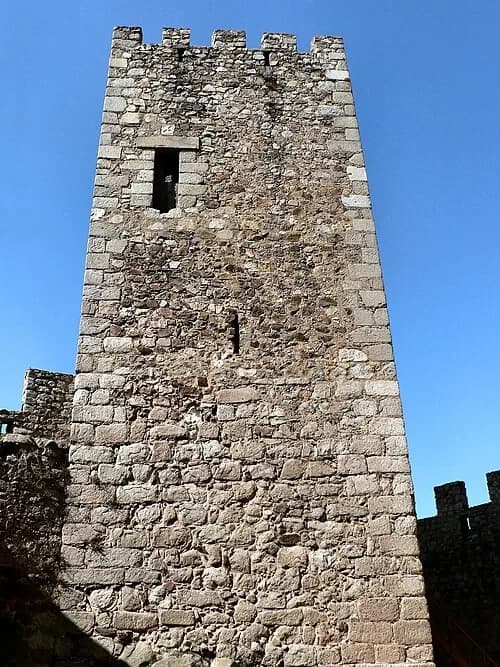
The Central Keep
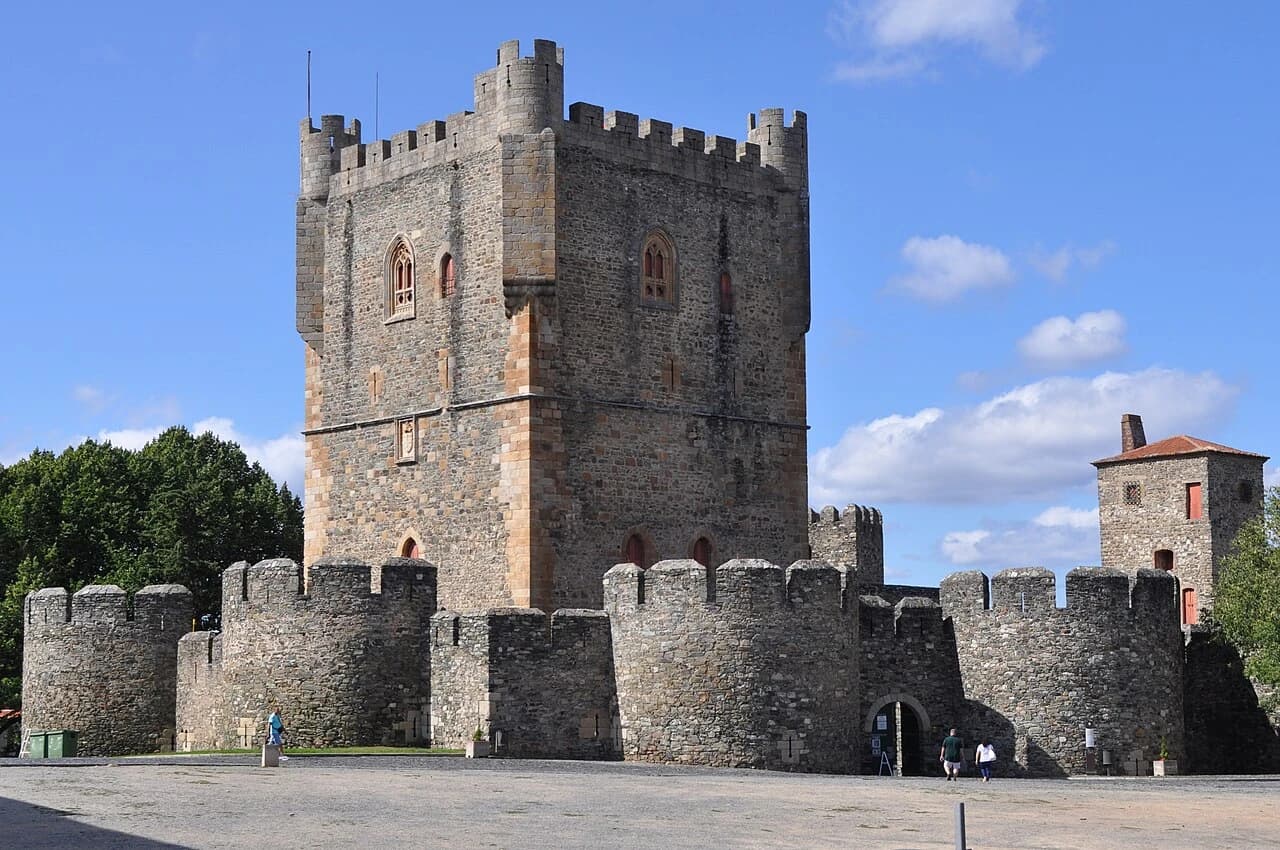
Known in Portuguese as the "Torre de Menagem," this massive rectangular structure is the heart of the fortification. If an enemy successfully breached the outer walls and captured the lower enclosure, the defenders would retreat here for a final stand. The Keep was designed to be entirely self-sufficient for a short period, with thick walls and limited access points that made it a fortress within a fortress. Its height provided the most commanding views of the entire island and the surrounding river, allowing commanders to direct the defense of the outer perimeter. Being the strongest and most protected building, it also served as the living quarters for the castle’s commander and held the most valuable supplies. The sheer scale of the Keep was intended to be intimidating, a visible symbol of power that could be seen from kilometers away. It remains the most dominant feature of the skyline, rising well above the nine circular towers that ring the island’s edge. The entrance was often elevated from the ground to make it even harder to reach.
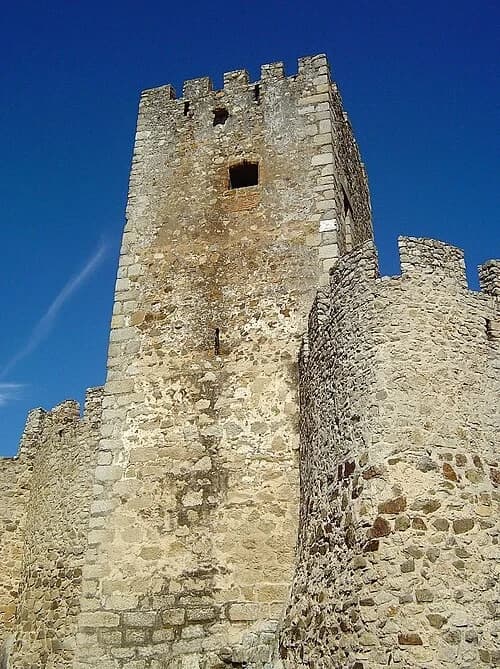
Three Stories of Defense
The Keep’s internal structure reveals its primary function as a military machine. It is divided into three levels, each serving a specific role in the castle’s defense. The ground floor was typically used for storage, while the upper floors provided living space and fighting platforms. Notice the windows; they are extremely narrow on the outside and widen on the inside. These are "arrow slits," designed to give archers a wide field of fire while presenting a tiny target to anyone shooting back from below. Because these openings let in very little light, the interior would have been perpetually dim and cool, even in the height of summer. This lack of natural illumination was a necessary trade-off for security. The walls here are exceptionally thick, capable of absorbing the impact of heavy projectiles from siege engines. Every architectural detail within the Keep emphasizes the reality of medieval combat, where the safety of the garrison took precedence over the convenience of the residents. The narrow stone stairs inside further restricted the movement of any intruder.
Inside the Keep: Museum and Knights
The interior of the keep now serves as a museum space detailing Templar history.
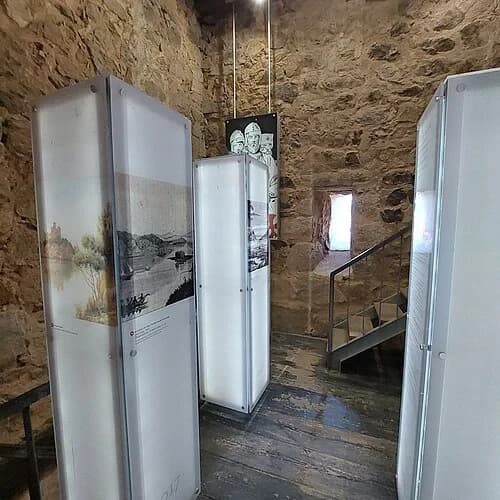
Keep Interior Museum
While the Keep was originally a Spartan military space, its interior underwent significant changes in the twentieth century. During the 1940s and 50s, the castle was used as an official residence for the Portuguese Republic, leading to modifications that made the space more habitable for high-ranking officials and guests. Today, the floors of the Keep serve a more public purpose, hosting exhibits that detail the island’s long and varied history. These displays help visitors understand the different groups who have occupied this rock over nearly a thousand years, from early Roman and Visigothic settlers to the Knights Templar and later military units. You can see informative panels that explain the castle's role in the formation of Portugal. Walking through these rooms, you can feel the transition from the building's rough medieval origins to its modern role as a site of national heritage. The museum provides a quiet space to reflect on the lives of the soldiers who once stood watch behind these same stones. Modern lighting and staircases now make the space accessible for education.
Legends in Tile: The Moorish Princess
Connecting the physical site to the folklore of the Moorish Emir and his daughter.
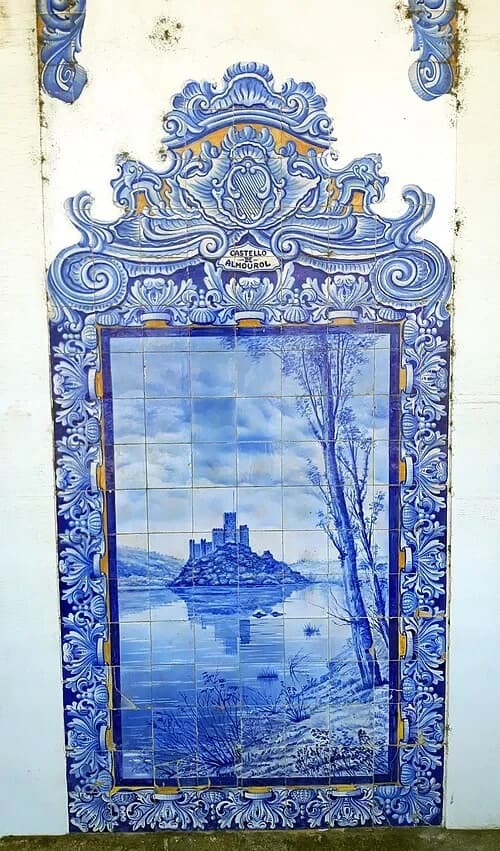
Legend of the Moorish Princess
The castle serves as the dramatic backdrop for a tale of forbidden romance between the daughter of a Moorish emir and a Christian knight from the besieging forces. Their secret meetings were eventually discovered, leading to a desperate choice between separation and death. Rather than live apart or face the wrath of their families, the couple is said to have leaped together from the battlements into the swirling waters of the Tagus below. This romantic tragedy has deeply colored the castle's local reputation for centuries. Many visitors and locals claim the site is haunted, with sightings of two spectral figures wandering the wall walk during moonlit nights. This folklore adds a layer of mystery to the harsh, military reality of the fortress. While the towers were built for defense and tactical advantage, these legends suggest they also witnessed the more human struggles of those trapped within the walls. Today, these stories are as much a part of the castle's identity as the stones themselves, drawing those interested in the softer, more mystical side of medieval history.
Departure and Reflection
Concluding the tour with a final look at the castle as the boat returns to the shore.
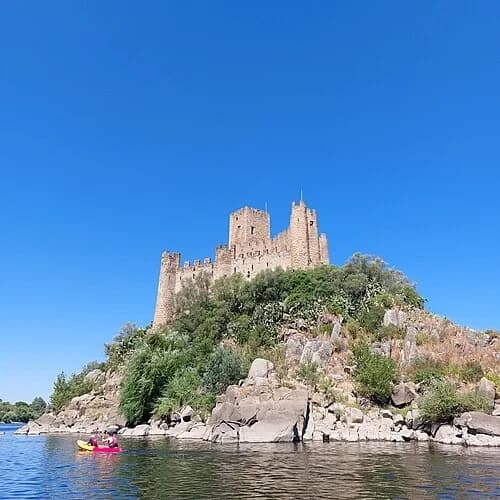
The Ghostly Lovers
A second layer of local folklore centers on the night of Saint John, or São João, in late June. Local tradition holds that on this specific night, the 'Ghostly Lovers' can be seen standing upon the highest point of the central Keep. They appear as faint, shimmering figures silhouetted against the dark sky, briefly reuniting where their earthly lives supposedly ended centuries ago. This enduring piece of folklore provides a final, haunting image for many who visit the island. It highlights the castle's transition from a place of active conflict to a silent observer of the passing centuries. Even as the sun sets and the visitors depart, the fortress remains an island apart. To this day, boat access remains the only way to reach or leave this site, just as it was for the knights and inhabitants nearly a thousand years ago. This physical separation ensures that the castle maintains its aura of mystery and solitude. As the boat carries you back to the mainland, the fortress recedes once more into the middle of the river, continuing its long watch over the flowing waters.
Want to hear the rest?
Download the Stanza app to unlock all 18 stops and full GPS-guided navigation.
Frequently Asked Questions
How long does the Castelo de Almourol audio tour take?
The Castelo de Almourol audio guide includes 18 narrated stops. Most visitors spend 45 minutes to 1.5 hours exploring the complete tour, though you can listen at your own pace and skip or revisit any stop.
Is the Castelo de Almourol audio guide available in my language?
Stanza supports 15 languages: English, Spanish, French, German, Italian, Portuguese, Russian, Japanese, Chinese, Korean, Arabic, Hindi, Polish, Dutch, Hebrew. Check the guide in the app to confirm the languages currently available for this tour.
Can I use the audio guide offline at Castelo de Almourol?
Yes! Download the complete Castelo de Almourol tour — including all audio, maps, and images — before your visit. The Stanza app works completely offline, so you don't need WiFi or mobile data at the venue.
How much does the Castelo de Almourol audio guide cost?
The Stanza app is free to download. Free and paid audio guides are available; current prices are shown in the app.
How do I use the Stanza audio guide at Castelo de Almourol?
Download the free Stanza app, search for "Castelo de Almourol", and download the tour. When you arrive at the venue, the app uses GPS to detect your location and automatically plays the relevant narration as you move between points of interest — completely hands-free.
What makes the Stanza audio guide different from other Castelo de Almourol tours?
Stanza offers GPS-triggered narration that plays automatically as you walk through Castelo de Almourol — no need to manually select stops. The tour is available in 15 languages, works fully offline, and includes 18 expertly narrated stops with images and historical context.
What other audio guides are available near Castelo de Almourol?
Stanza offers multiple audio guides in Praia do Ribatejo, Portugal and nearby areas. After downloading the app, browse the map to discover all available tours near Castelo de Almourol. Each guide can be downloaded for offline use.