Languages
15Casa do Despacho da Venerável Ordem Terceira de São Francisco Audio Guide
Casa do Despacho da Venerável Ordem Terceira de São Francisco is a museum in Porto, Portugal. Explore it with Stanza's visual scanner and offline audio guide — available in 15 languages.
Quick Facts
14
Stops
15
Languages
100%
Offline
📍 Porto, Portugal · 41.1410°N, -8.6163°E
About Casa do Despacho da Venerável Ordem Terceira de São Francisco
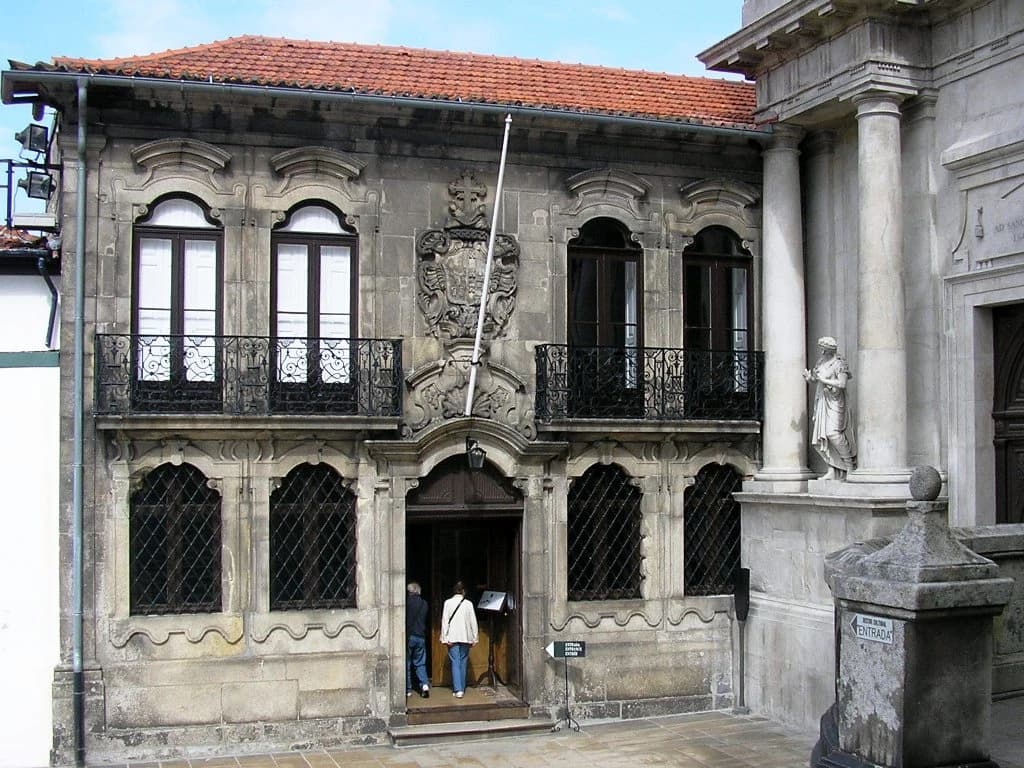
This historic building serves as the administrative headquarters and museum of the Third Order of Saint Francis in Porto. It is notable for its connection to the adjacent church and its preservation of religious and cultural heritage.
Casa do Despacho da Venerável Ordem Terceira de São Francisco is also known as Casa do Despacho da Venerável Ordem Terceira de São Francisco, Museu da Venerável Ordem Terceira de São Francisco, Casa do Despacho da Ordem Terceira de Sao Francisco, Casa do Despacho da venerável Ordem Terceira de São Francisco, and 2 other names in various languages.
This self-guided audio tour features 14 narrated stops organized across 6 sections, including The Grand Vestibule, The Boardroom (Sala das Sessões), The Administration Room, The Chapel of the Third Order, The Catacomb Cemetery, Heritage Context: The Square of Infante D. Henrique. As a museum, Casa do Despacho da Venerável Ordem Terceira de São Francisco offers a unique cultural experience in the heart of Porto, Portugal.
The Stanza audio guide is available in 15 languages and works entirely offline — download the complete tour including audio narration, maps, and images before your visit. As you walk through Casa do Despacho da Venerável Ordem Terceira de São Francisco, GPS-triggered narration plays automatically at each point of interest.
Last updated:
Artworks on display
The Grand Vestibule
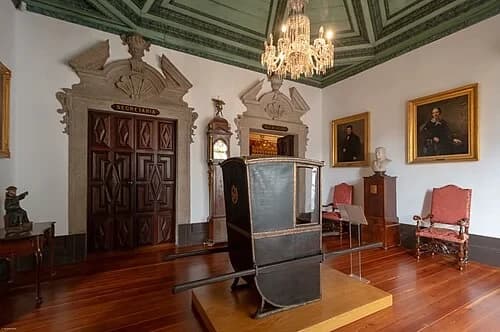
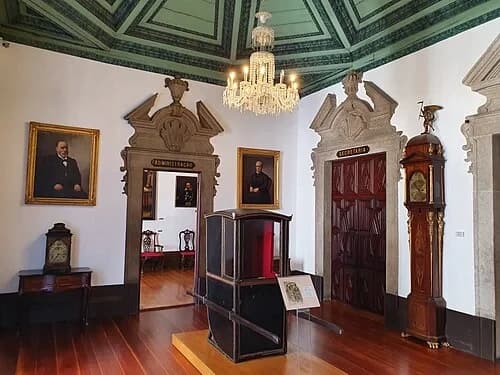
Transitioning into the interior, focusing on the entrance hall and the historic sedan chairs used by the Order.
The Secretary's Hall
The administrative life of the Third Order was managed in spaces like the Secretary's Hall, where the sounds of shifting papers and the steady ticking of the longcase clock once dominated the air. This clock stands as a reminder of the meticulous scheduling required to run the Order’s various charitable and financial ventures. On the walls, portraits of past secretaries look down, their likenesses preserved to honor their service and ensure institutional continuity. These men were responsible for the daily operations, correspondence, and record-keeping that kept the organization functioning through the decades. The architectural features here deserve close attention, particularly the heavy, ornate granite doorframes. Designed by Nicolau Nasoni, these frames are robust and intricately carved, providing a striking contrast to the warmth of the polished wood flooring. This juxtaposition of cold stone and warm timber creates a professional yet welcoming atmosphere, suitable for conducting the Order's official business. The stone frames are not merely structural; they are decorative statements that echo the Baroque elegance of the building's exterior. Together with the portraits and the clock, these elements define a workspace that was both deeply rooted in religious tradition and actively engaged in the contemporary management of the city’s social welfare.
The Grand Vestibule
The center of this entry hall features a sedan chair, or palanquin, which was an essential mode of transport in 18th-century Porto. Given the city’s notoriously narrow and steeply inclined streets, these chairs allowed for the dignified movement of high-ranking members of the Order or the careful transport of the sick to the nearby hospital. Two carriers would lift the chair using long poles, providing a relatively stable journey through the uneven cobbles. Looking at its enclosed design, you can appreciate the privacy and protection it offered from the elements and the bustle of city life. The ceiling above features geometric woodwork finished in a distinctive green hue. This style is an early precursor to the far more intricate and colorful designs found in the ceremonial rooms on the upper floors. While simpler, the repeating patterns and the use of color indicate that even the transition spaces of this building were intended to display a certain level of sophistication. The combination of the functional transport equipment and the decorated ceiling suggests a venue where practical social service and aesthetic beauty were constantly intertwined. This vestibule acted as a waiting area where the business of the day began, from planning charitable rounds to receiving influential donors.
The Boardroom (Sala das Sessões)
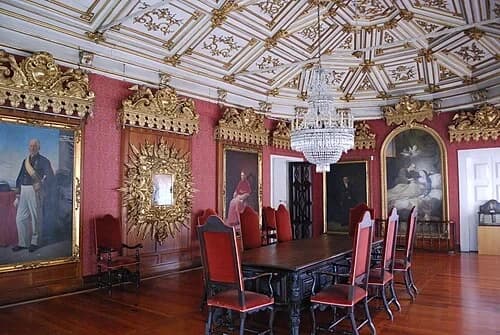
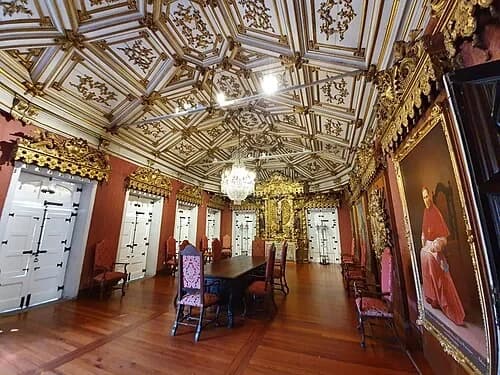
The artistic heart of the building, featuring the magnificent ceiling, gilded woodwork, and the unique mermaid table.
The Mermaid Table
The focal point for the Order's high-level deliberations is the large rosewood table. This impressive piece of furniture was crafted for durability and gravitas, but a closer look at the legs reveals a surprising detail: they are carved into the shapes of mermaids. This inclusion of mythological sea creatures in a religious administrative building highlights the creative freedom often found in 18th-century decorative arts, where secular and religious motifs frequently mingled in unique ways. The room is also a gallery of the Order's history, with portraits of major benefactors and monarchs lining the walls. Among them are King D. José and Queen D. Mariana Vitória, whose royal patronage was vital to the institution’s success. Their coats of arms appear on the ceiling above, cementing the link between the monarchy and the Order. These portraits served as constant reminders to the board members of the individuals who made their work possible through financial support and political protection. The use of rosewood, an expensive and exotic material at the time, combined with the royal imagery and the unique mermaid carvings, identifies this room as the most prestigious space in the building. It was a setting designed to impress visitors and inspire the brothers as they managed significant assets for the public good.
The Boardroom Altarpiece
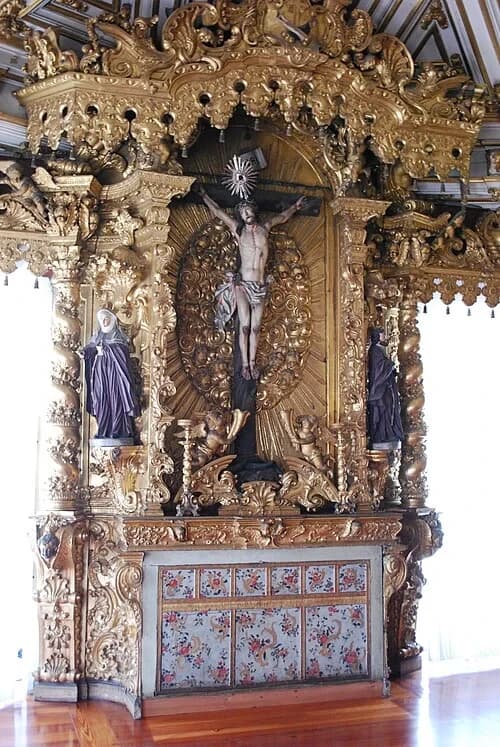
At the end of the boardroom stands a spectacular altarpiece, a prime example of 'talha dourada,' or Portuguese gilded woodwork. The presence of a religious altar in what is essentially a corporate meeting room highlights a fundamental aspect of the Third Order: for the brothers, there was no separation between their faith and their work. Every administrative decision, whether it involved managing property or funding a hospital, was seen as an extension of their religious duty. By placing the altar here, they ensured that their deliberations were always conducted in the presence of the divine. The carvings are incredibly detailed, featuring swirling foliage, cherubs, and architectural motifs that catch the light from the large windows. In the center, a figure of Christ on the cross serves as the spiritual anchor for the room. This altarpiece transformed the boardroom into a sacred space, allowing for prayer and reflection before or after meetings. The use of gold leaf on wood was a hallmark of the Portuguese Baroque, intended to evoke the splendor of heaven within an earthly setting. It represents the culmination of the room's decorative scheme, bridging the gap between the mundane business of the Order and its higher religious aspirations.
The Boardroom Ceiling
The magnificent ceiling in this boardroom is a rare survivor of the 'Joanine' style, named after King John V of Portugal. This elaborate aesthetic, characterized by rich gilding and intricate woodwork, was once common throughout the country but was almost entirely lost in the capital during the devastating Lisbon earthquake of 1755. Because Porto was largely spared from that disaster, interiors like this provide an essential look at the peak of Portuguese Baroque artistry. The ceiling is a complex assembly of geometric compartments, each detailed with fine carvings and subtle painted elements. Adding to the room's grandeur are the 14 gilded wood carvings, known as sanefas, situated above the windows. These ornate pieces served both a decorative and practical purpose, framing the windows and supporting heavy curtains. The walls themselves are covered in red damask, a luxurious fabric that signifies the high status and importance of the meetings held within these four walls. This rich color, combined with the gold of the ceiling and sanefas, creates an atmosphere of solemnity and prestige. It was here that the leaders of the Order made critical decisions, surrounded by a level of opulence that reflected their power and the divine nature of their mission.
The Administration Room
Focuses on the sophisticated geometric ceiling and the gallery of benefactors that demonstrate the Order's wealth and influence.
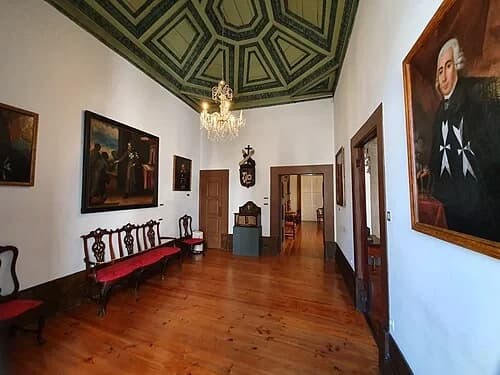
The Administration Hall
The Administration Hall is distinguished by its remarkable geometric ceiling, which uses painted wood to create a sophisticated illusion of architectural depth. This technique, typical of the period, allowed artists to suggest vaulted stone ceilings using much lighter and more affordable timber. The result is a space that feels grander and taller than its physical dimensions would otherwise suggest. Each panel is meticulously decorated, contributing to a sense of order and precision that was perfectly suited to the room's function. This area served as the financial engine room of the Third Order. It was here that the organization's wealth, derived from donations, legacies, and investments, was carefully managed. The funds overseen in this room were essential for maintaining the Order's hospitals and providing social support for Porto’s impoverished citizens. While the Boardroom was for high-level policy, this hall was for the rigorous work of accounting and resource allocation. The design of the room, with its focused light and structured decoration, reflects the seriousness of these tasks. It serves as a physical manifestation of the Order’s commitment to transparency and fiscal responsibility in its pursuit of charitable goals, ensuring that resources were used according to the donors' wishes.
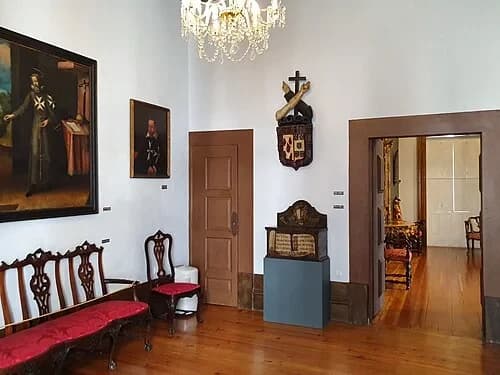
The Keeper of Records
Along the walls of this space, you will find a collection of heavy chests and cabinets specifically designed to hold the Order's extensive records. These pieces of furniture were the safes of their time, protected by complex locking mechanisms to ensure the security of vital documents. The Third Order maintained a rigorous and meticulous bureaucracy, a standard practice for religious organizations of the 18th century. Every donation received, every expense paid for the hospital, and every legal contract was recorded with both spiritual and legal gravity. The sheer volume of records once stored here testifies to the scale of the Order's operations and its long history of service in Porto. This meticulous approach to record-keeping ensured accountability across generations of brothers. To look at these cabinets today is to consider the ledger of a city's compassion, with thousands of individual entries detailing the support provided to the sick and poor. The furniture itself, crafted from sturdy wood and often decorated with functional ironwork, reflects the permanence the Order sought for its institutional memory. This hall reminds us that the success of their grand charitable missions relied on the quiet, consistent work of scribes and administrators who documented the life of the Order with unwavering precision.
The Chapel of the Third Order
The spiritual center within the administrative building, used for private devotion by the brothers.
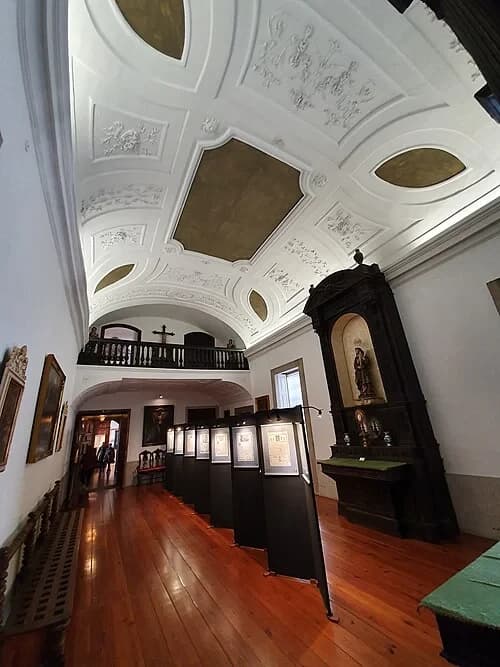
The Private Chapel
Moving into the private chapel, you'll notice a distinct shift in the architectural atmosphere. The exuberant gilded wood and red damask of the public rooms give way to clean white plasterwork and a serene barrel-vaulted ceiling. This space was designed for the brothers' private devotion, offering a quiet sanctuary away from the administrative bustle of the rest of the building. Here, they would gather for daily prayers, reflecting on their vows and the spiritual foundations of their social work. The simplicity of the decoration helps to focus the mind, creating an environment conducive to meditation. The chapel also serves as a small archive, displaying historical documents that trace the Order's legal and social evolution. Among these are records of official recognitions granted by monarchs and the papacy over the centuries. A particularly significant modern milestone noted here is the building's classification as a site of public interest in 1977, a designation that ensures its long-term preservation. These documents provide a paper trail of the institution’s enduring influence on Porto's civic life. The combination of a prayer space and a historical archive highlights the dual nature of the Third Order: a body committed to both eternal spiritual truths and the practical, documented realities of serving the city.
The Catacomb Cemetery
A descent into the subterranean level to explore the unique 18th-century burial customs of the Franciscan brothers.
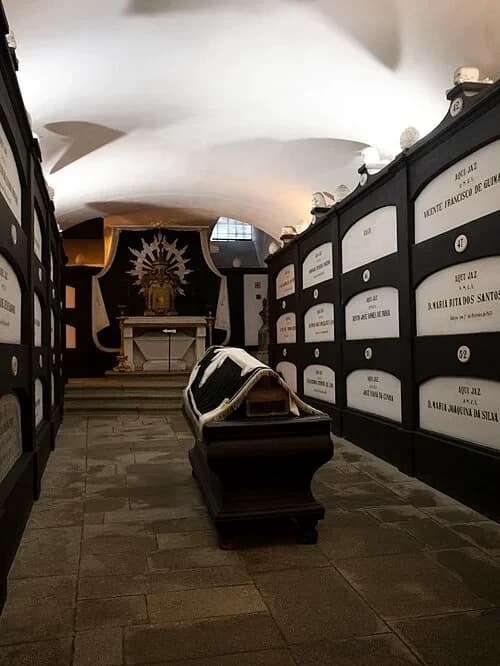
The Subterranean Altar
At the end of the main aisle in the catacombs stands a simple altar. This was the site where funeral masses and commemorative services for the departed brothers were held. The proximity of the altar to the tombs meant that the living and the dead were brought together in religious ritual, reinforcing the belief in the continuity of the soul. The services performed here were intended to offer comfort to the grieving and to pray for the souls of those interred within these walls. Notice the visual contrast between the dark wood of the grave structures and the white stone of the flooring. This deliberate aesthetic choice creates a somber, reflective atmosphere. The dark wood suggests the earthly transition and the gravity of death, while the white stone and the altar itself point toward spiritual light. The design of this underground chapel is intentionally restrained, avoiding the opulence found upstairs to encourage a focus on the essential mysteries of faith and the passage of time. It is a place designed for quiet contemplation, where the architecture itself guides the visitor toward a serious consideration of the life cycle and the legacy left behind by those who once walked the halls above.
Heritage Context: The Square of Infante D. Henrique
Conclusion of the tour, viewing the building from the rear to see its relationship with the Church of São Francisco and the Palácio da Bolsa.
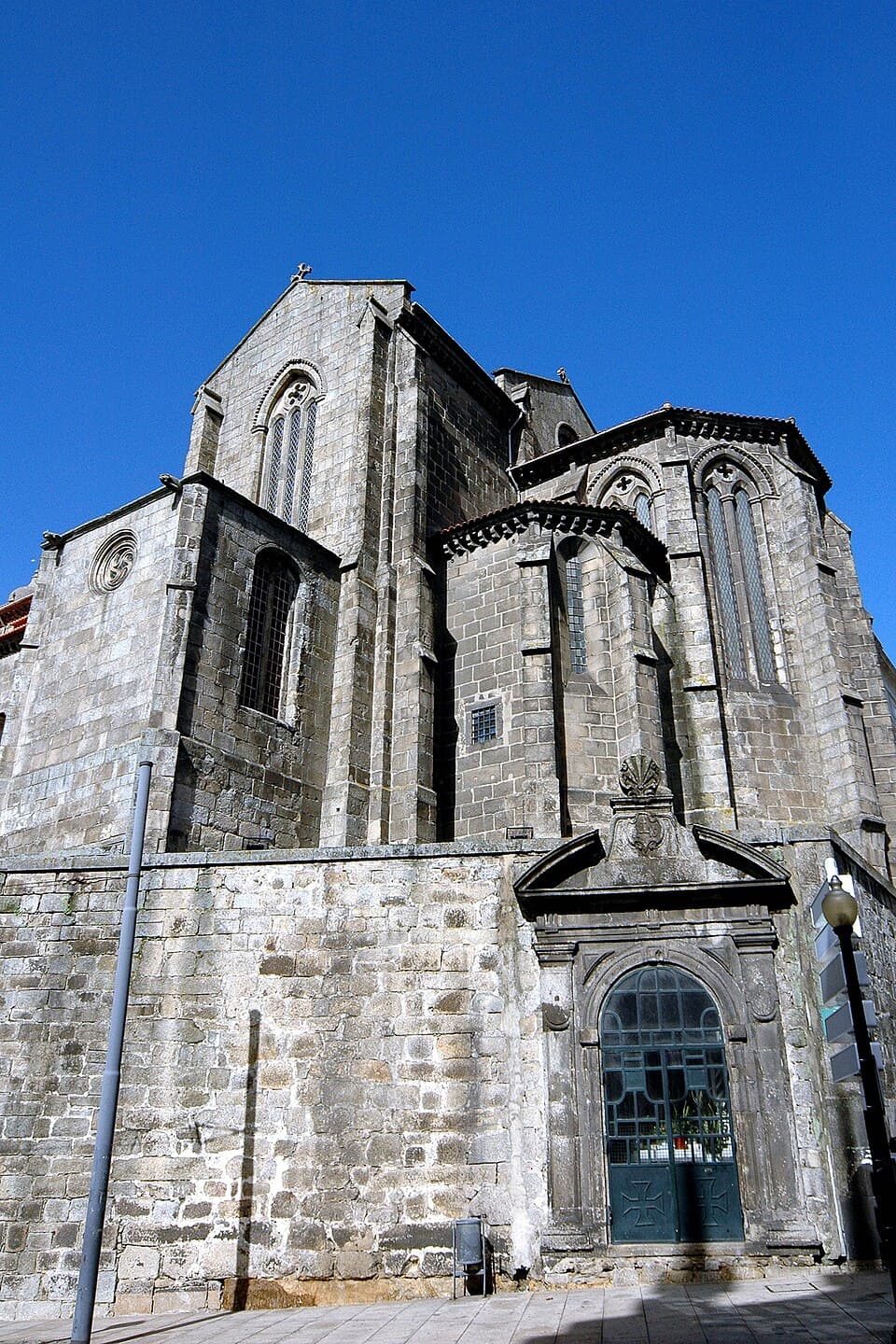
The Rear Facade
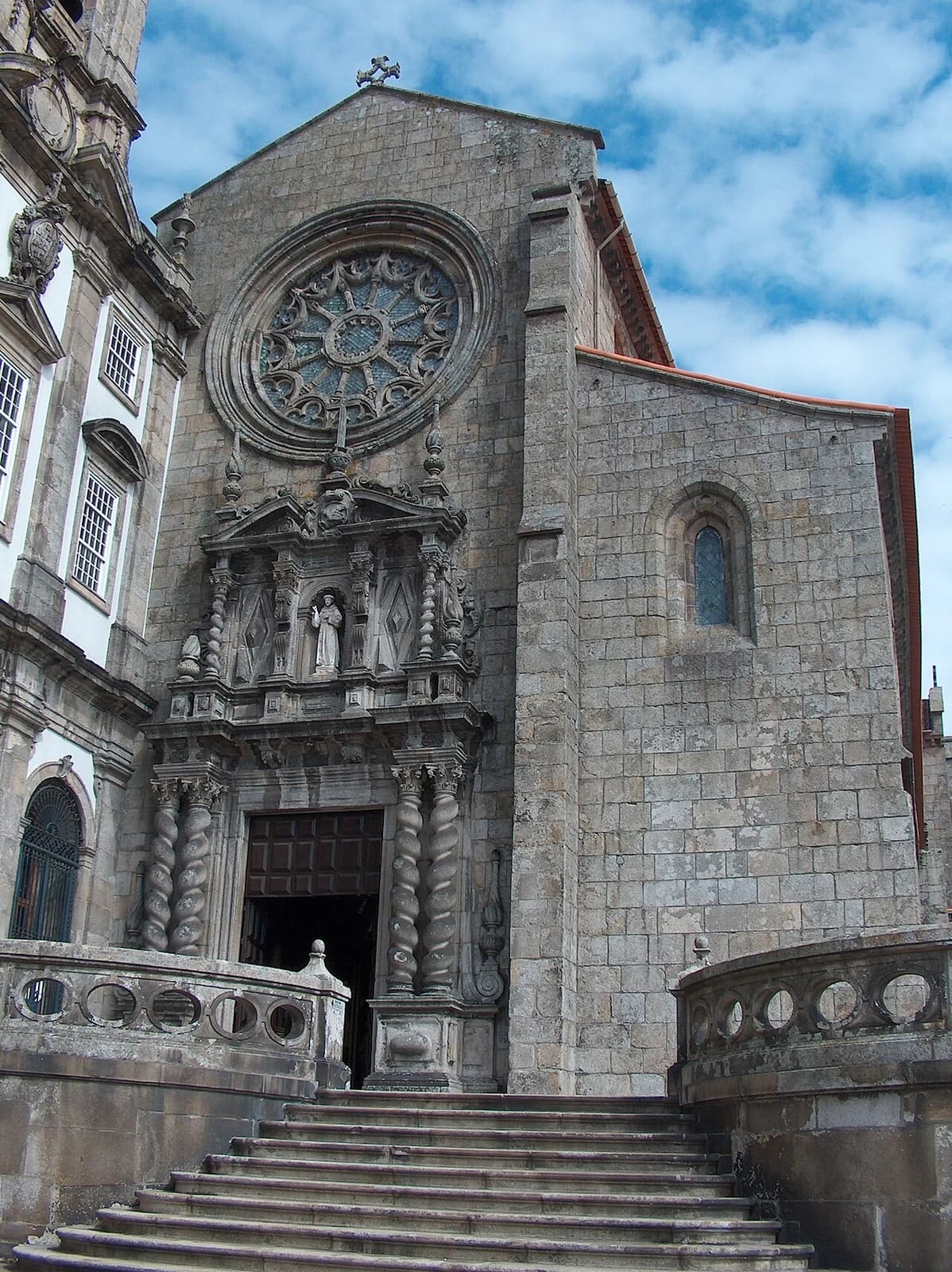
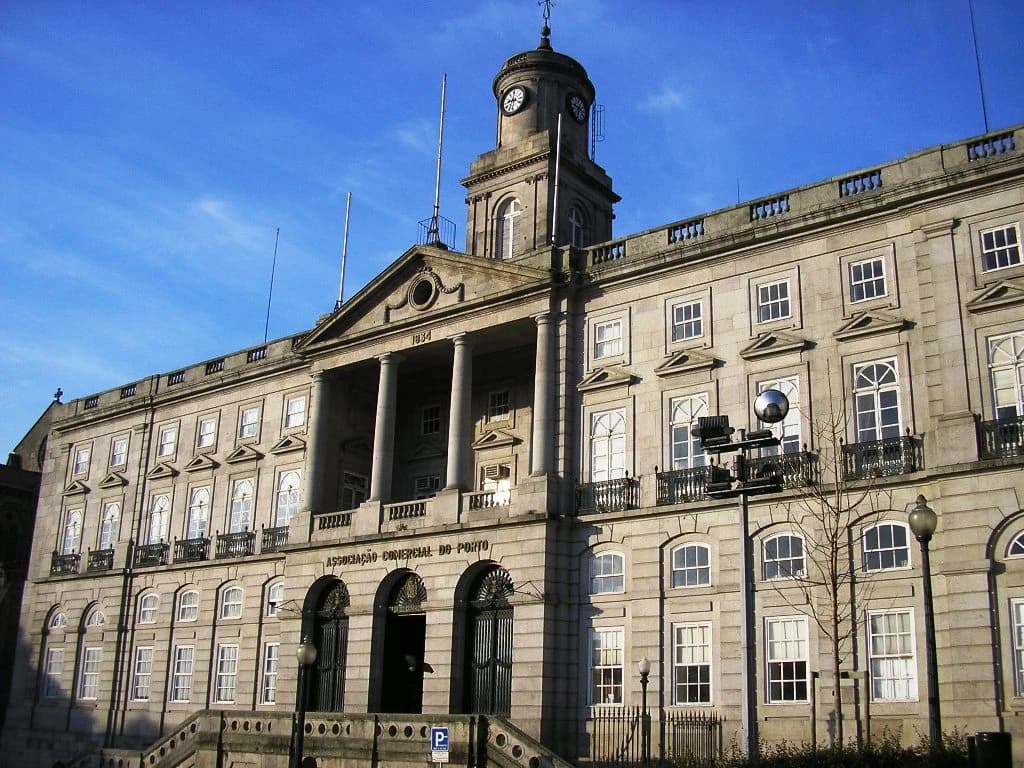
To conclude the tour, look at the building's place within the wider urban landscape of the Square of Infante D. Henrique. The Casa do Despacho occupies a unique position, physically and historically, between two other landmark structures. To one side is the ancient Gothic Church of São Francisco, with its medieval roots and soaring stone arches. To the other stands the neoclassical Palácio da Bolsa, built on the site of the former Franciscan convent after it was destroyed in the 19th century. This building serves as a bridge between these two distinct eras of Porto's history. The Casa do Despacho represents a pivotal moment in the 18th century when the city was expanding and its social institutions were becoming more formalized. Its Baroque facade, designed by Nasoni, contrasts with the rugged Gothic stone next door and the grand, secular symmetry of the Bolsa. Together, these three buildings tell the story of Porto's evolution from a medieval religious center to a modern commercial hub. The Third Order’s headquarters remained a constant through these changes, continuing its mission of social welfare as the city grew around it. By standing here, you can see how the architectural layers of Porto overlap, with the Casa do Despacho serving as a vital link in the city's complex social and cultural narrative.
Want to hear the rest?
Download the Stanza app to unlock all 14 artworks and the visual scanner feature.
Frequently Asked Questions
How long does the Casa do Despacho da Venerável Ordem Terceira de São Francisco audio tour take?
The Casa do Despacho da Venerável Ordem Terceira de São Francisco audio guide includes 14 narrated stops. Most visitors spend 45 minutes to 1.5 hours exploring the complete tour, though you can listen at your own pace and skip or revisit any stop.
Is the Casa do Despacho da Venerável Ordem Terceira de São Francisco audio guide available in my language?
Stanza supports 15 languages: English, Spanish, French, German, Italian, Portuguese, Russian, Japanese, Chinese, Korean, Arabic, Hindi, Polish, Dutch, Hebrew. Check the guide in the app to confirm the languages currently available for this tour.
Can I use the audio guide offline at Casa do Despacho da Venerável Ordem Terceira de São Francisco?
Yes! Download the complete Casa do Despacho da Venerável Ordem Terceira de São Francisco tour — including all audio, maps, and images — before your visit. The Stanza app works completely offline, so you don't need WiFi or mobile data at the venue.
How much does the Casa do Despacho da Venerável Ordem Terceira de São Francisco audio guide cost?
The Stanza app is free to download. Free and paid audio guides are available; current prices are shown in the app.
How do I use the Stanza audio guide at Casa do Despacho da Venerável Ordem Terceira de São Francisco?
Download the free Stanza app, search for "Casa do Despacho da Venerável Ordem Terceira de São Francisco", and download the tour. When you arrive at the venue, the app uses GPS to detect your location and automatically plays the relevant narration as you move between points of interest — completely hands-free.
What makes the Stanza audio guide different from other Casa do Despacho da Venerável Ordem Terceira de São Francisco tours?
Stanza offers GPS-triggered narration that plays automatically as you walk through Casa do Despacho da Venerável Ordem Terceira de São Francisco — no need to manually select stops. The tour is available in 15 languages, works fully offline, and includes 14 expertly narrated stops with images and historical context.
What other audio guides are available near Casa do Despacho da Venerável Ordem Terceira de São Francisco?
Stanza offers multiple audio guides in Porto, Portugal and nearby areas. After downloading the app, browse the map to discover all available tours near Casa do Despacho da Venerável Ordem Terceira de São Francisco. Each guide can be downloaded for offline use.