Stanza · Audio guide
Igreja de São FranciscoAudio guide
A place to remember. A story to take with you.
This Gothic church is renowned for its elaborate and opulent 18th-century Baroque wood carvings covered in gold leaf. It is a National Monument and one of the most significant historical religious buildings…
Download Stanza, then search for “Igreja de São Francisco”.
About the tour
One guide. Your kind of visit.
This Gothic church is renowned for its elaborate and opulent 18th-century Baroque wood carvings covered in gold leaf. It is a National Monument and one of the most significant historical religious buildings in Porto.
Ready when you are.
- 01Get the free Stanza app.
iOS & Android
- 02Find your guide.
“Igreja de São Francisco”
- 03Download before you go.
Works offline
Audio guide / 14 narrated stops
Inside the guide
Get to know a few of the stories before you go. Open a stop to read more.
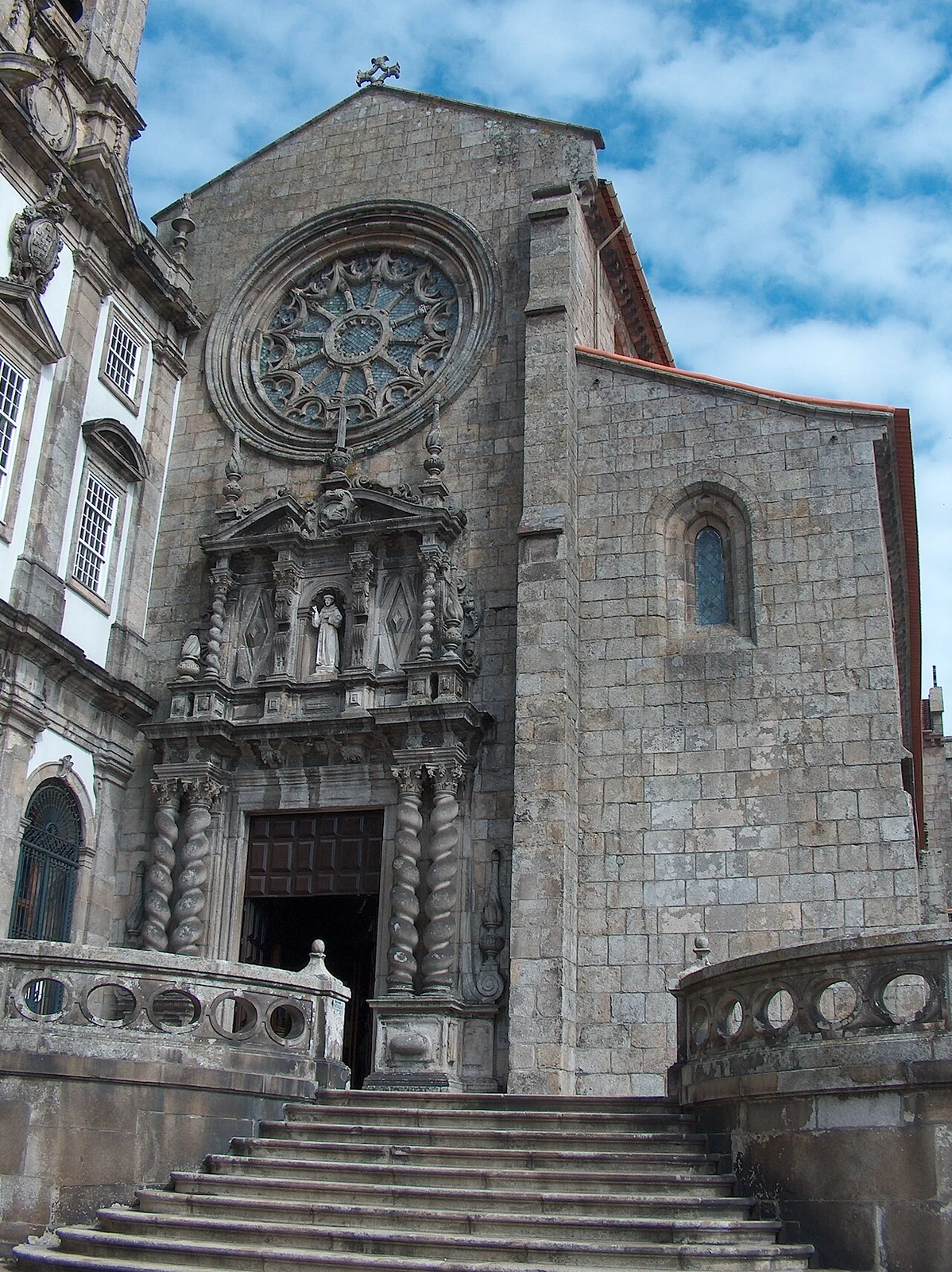
01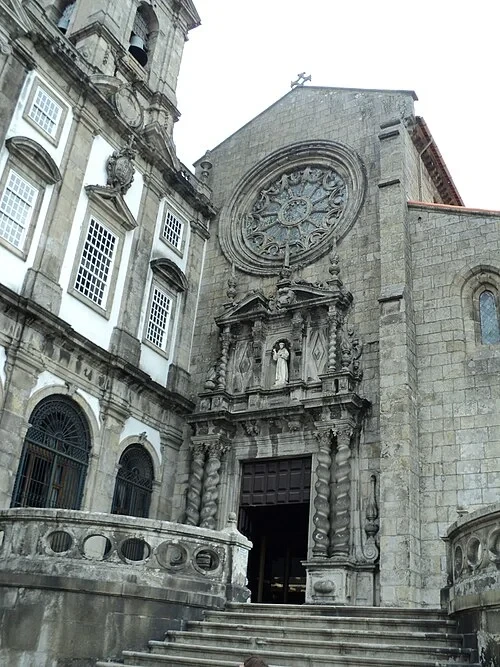 The Gothic Facade and Rose WindowThe Main Facade
Welcome to the Church of São Francisco, one of the most important religious sites in Porto. While construction on the main building began in 1383 under King Ferdinand I, the facade you see today tells a story of two very different architectural eras. The church was officially completed around 1410, after twenty-seven years of steady work, replacing a much smaller 13th-century structure that previously occupied this ground. Look closely at the main entrance, or portal. It creates a striking visual contrast: while the massive rose window above it remains a classic example of 14th-century Gothic design, the doorway itself was added in the 18th century. This later Baroque addition features ornate, twisting Solomonic columns that seem to spiral upward, framing the entrance with a sense of movement. This juxtaposition serves as a perfect introduction to what lies inside, where the original stone bones of the Gothic cathedral are almost entirely hidden by a layer of intricate, golden decoration. This site was designated a National Monument in 1910, reflecting its role as a key witness to the city's changing tastes and political power over five centuries.
Béria Lima de Rodríguez · CC BY-SA 3.0
02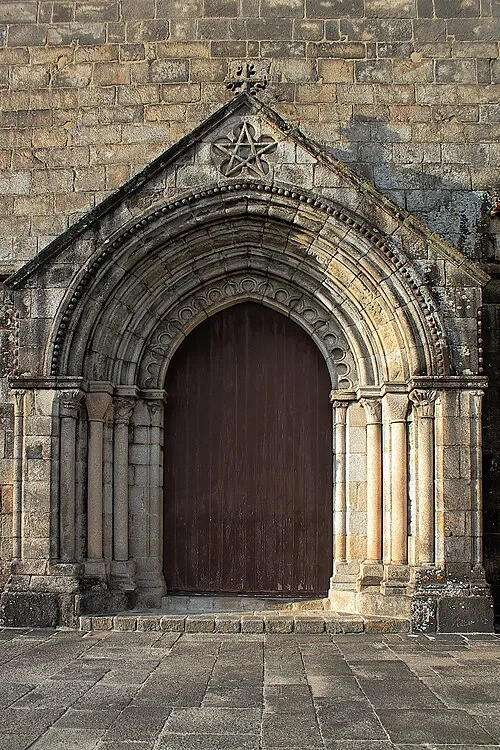 The Gothic South PortalThe South Portal
Moving toward the side of the building that faces the Douro River, you will find the South Portal. This entrance is a textbook example of 'mendicant Gothic' architecture. The mendicant orders, including the Franciscans, preached a life of poverty and simplicity, and their architectural style reflected this through a focus on clean lines and verticality rather than heavy ornamentation. Notice the series of receding pointed arches, known as archivolts, that frame the doorway. These arches are supported by slender, elegant columns, creating a sense of depth and inviting the eye upward. This style was designed to evoke a sense of spiritual height without the excessive luxury seen in more powerful cathedral styles of the time. High above the door, within the triangular stone pediment, is a small but significant detail: a carved pentagram. This symbol acts as a visual bridge to our next stop, where we can examine its specific meaning within the medieval world. The portal's weathered stone surface reveals the centuries of salt-tinged air rising from the nearby river, a constant companion to the church since its medieval founding.
John Samuel · CC BY-SA 4.0
03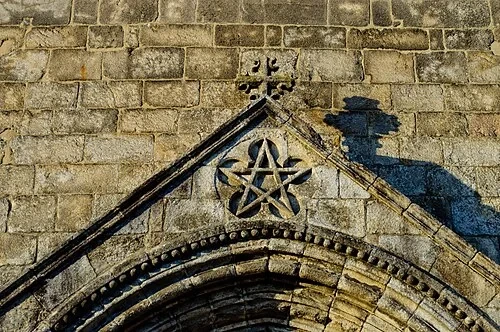 The Gothic South PortalThe Pentagram Seal
In the stone pediment above the south portal, a distinct five-pointed star is carved into the masonry. While modern viewers often associate the pentagram with the occult, its meaning in a medieval Christian context was quite different. During the 14th century, this symbol was widely understood as the 'Seal of Solomon' or as a representation of the five wounds suffered by Christ during the crucifixion. These carvings were more than just decoration; they served as symbolic protection for the sacred space within the church walls. The presence of the star was intended to mark the threshold between the secular world and the holy interior. This specific architectural detail contributed significantly to the church being named a National Monument in 1910, as it represents a remarkably well-preserved instance of medieval symbolic carving. The star remains sharp against the blocky granite of the facade, serving as a silent reminder of the complex spiritual language used by the master masons who built this church over six hundred years ago. Its position above the threshold ensured that every visitor entering the church would pass beneath this mark of divine guardianship.
Listen in the appFrédérique Voisin-Demery from Grenoble, France · CC BY 2.0
04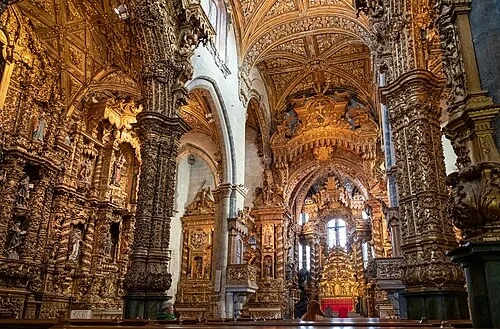 The Gilded NaveThe Gilded Nave
The transition from the church’s plain stone exterior to the interior of the nave is often described as the 'wow' moment of a visit to Porto. You have moved from a world of grey granite into a space almost entirely encased in 'talha dourada,' or gilded wood. In the 18th century, nearly every inch of the Gothic stone was covered with intricate carvings coated in thin layers of gold leaf. Experts estimate that hundreds of kilograms of gold were used to complete this transformation. The opulence here presents a fascinating paradox. The Franciscan friars were bound by a vow of poverty, yet their church became one of the most gilded spaces in Europe. This was possible because the city's wealthy families funded the decorations. By paying for these lavish displays, Porto's merchant elite could publicly demonstrate their religious devotion while simultaneously signaling their high social status. The resulting effect is a brilliant, reflective environment that completely changes character depending on the light filtering through the windows. Every surface, from the side altars to the columns, is part of this unified, golden vision that replaced the simple medieval aesthetic with Baroque grandeur.
Listen in the appxiquinhosilva from Cacau · CC BY 2.0
05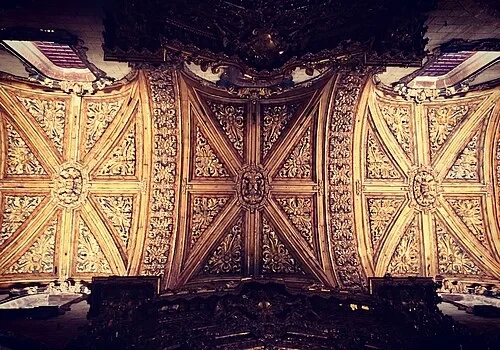 The Gilded NaveVaults of Gold
Look up toward the ceiling to see how the church's structural 'skeleton' was adapted during the 18th-century renovation. The underlying bones are traditional Gothic rib vaults, common in 14th-century architecture. However, instead of exposed stone, these ribs and the spaces between them are now entirely hidden behind a shimmering wooden shell. The process used here was incredibly labor-intensive. Local craftsmen first carved elaborate patterns into Brazilian wood, such as cedar, which was prized for its durability. Once the carving was finished, they applied a thin layer of gesso—a white plaster-like base—to smooth the surface. Finally, they hand-applied incredibly delicate sheets of 22-carat gold leaf. This technique was specifically chosen because the gilding catches and amplifies any available light, even on overcast days. The design was intended to simulate a divine, heavenly atmosphere for the worshippers below, creating the sensation that the roof of the church was made of celestial light rather than earthly stone. This golden canopy serves as a masterclass in the Portuguese Baroque style, demonstrating how a medieval structure could be completely reimagined for a new era of religious expression.
Listen in the appPatricia Santos · CC BY-SA 4.0
06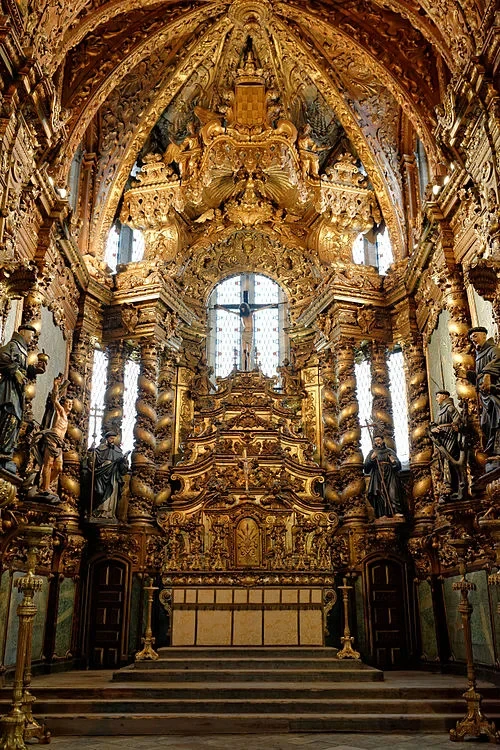 The Main AltarThe High Altar
At the far end of the central nave, the high altar functions as the spiritual and visual focal point of the entire church. This area showcases the full theatrical power of the Baroque style, characterized by high-relief carvings and deep, dramatic shadows. The layout of the church follows a traditional three-aisle nave divided into five bays, but the central nave rises significantly higher than the side aisles. This design choice creates a strong sense of verticality that draws your attention directly toward the altar. Flanking the altar are statues of prominent Franciscan saints, their figures integrated into the complex golden woodwork. The altar’s design was intended to create a powerful emotional impact, using the reflective quality of the gold and the complexity of the carvings to inspire awe in the congregation. Unlike the more balanced proportions of the Gothic period, this Baroque climax is deliberately overwhelming. It marks the transition from the communal space of the nave to the most sacred part of the building. The intricate layers of the altarpiece create a sense of depth that makes the golden figures appear to emerge from the darkness of the chancel, especially when lit by candles during a service.
Listen in the appSamFa from Paris, France · CC BY 2.0
07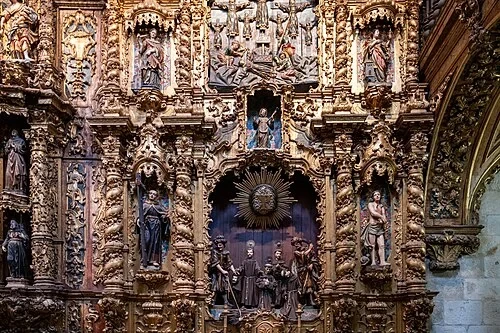 The Main AltarBaroque Woodwork Details
By looking closely at a small section of the carvings along the side walls, you can appreciate the sheer density of the craftsmanship. You will find a dizzying array of motifs: plump cherubs, winding vines, exotic birds, and curling acanthus leaves. This style is often referred to as 'horror vacui,' a Latin term meaning 'fear of empty spaces.' In the early 18th century, it was a fundamental principle of Portuguese Baroque art that every available surface should be filled with decoration. Most of this work was completed during the first half of the 1700s. Notice how the craftsmen used depth to their advantage; the deeper, un-gilded recesses of the wood remain dark, which provides a stark contrast that makes the golden figures in the foreground truly 'pop.' This play between light and shadow gives the walls a three-dimensional quality that seems to shift as you move through the building. These details weren't just for show; the natural motifs of vines and birds were intended to symbolize the richness and diversity of God's creation, brought into the church to be celebrated in gold. The precision required to carve such delicate feathers on a bird or the soft features of a cherub in such a hard material is a testament to the local workshops of the period.
Listen in the appxiquinhosilva from Cacau · CC BY 2.0
08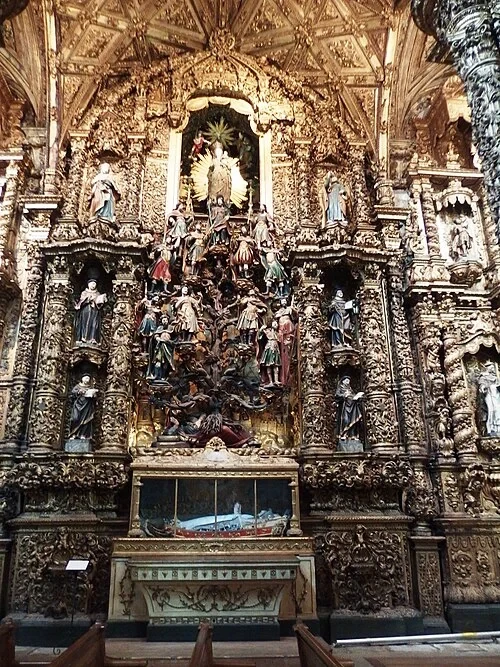 The Tree of Jesse AltarpieceTree of Jesse Altarpiece
One of the most famous and artistically significant objects in this church is the Tree of Jesse altarpiece. Carved between 1718 and 1721, this massive work of art presents the genealogy of Jesus in a unique three-dimensional format. At the very base of the sculpture, you can see the figure of Jesse, the father of King David, reclining. He is shown as if he is 'dreaming' the tree into existence, with its trunk and branches literally growing from his side. Perched among the golden branches are twelve kings of Judah, the ancestors of Christ, each rendered with distinct features and costumes. This piece is considered one of the finest examples of polychromed wood carving in the world, a technique where wood is carved, then painted and gilded to create a lifelike effect. The 'Tree of Jesse' theme was a popular subject in medieval and Renaissance art, but it is rarely executed with this level of Baroque complexity and scale. It transformed a complex theological concept into a dramatic, readable story for the faithful. The interplay of the naturalistic figures with the stylized golden branches makes it a centerpiece of the church's interior, drawing visitors from around the world who come specifically to see this masterwork of Portuguese carving.
Listen in the appPhoto: Palickap · CC BY-SA 4.0
09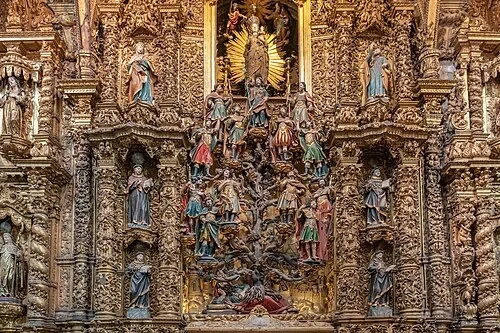 The Tree of Jesse AltarpieceGenealogy of Kings
Looking more closely at the individual figures within the Tree of Jesse, you can see the incredible level of detail the 18th-century carvers achieved. Each of the twelve kings is a unique character study, featuring distinct facial expressions, regal postures, and colorful robes—a technique known as polychromy. By using different colors for the fabrics and skin tones alongside the gold, the artists made the figures stand out against the shimmering background. The tree culminates at the very top with the figures of the Virgin Mary and the Christ child. This vertical arrangement tells the story of Christ's human lineage, leading from the dreaming Jesse at the bottom to the savior at the summit. In an era when a large portion of the population was illiterate, such a piece served as a 'visual Bible.' It allowed ordinary citizens to understand complex theological connections and biblical history through recognizable, dramatic figures. The kings are not just static statues; they appear to be interacting with one another within the branches, creating a sense of life and family history. This piece exemplifies how art was used as an educational tool, making abstract religious concepts tangible and memorable through high-quality sculpture and vibrant color.
Listen in the appxiquinhosilva from Cacau · CC BY 2.0
10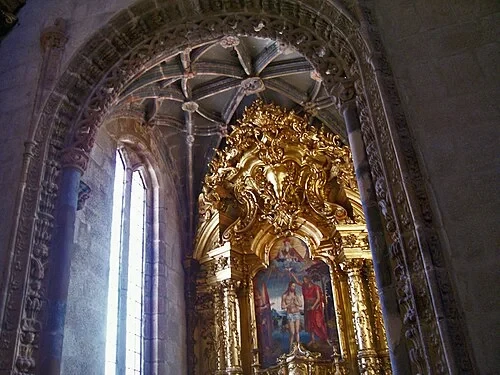 The Chapel of Saint John the BaptistChapel of Saint John the Baptist
The Chapel of Saint John the Baptist offers a different architectural flavor than the rest of the church. It is a key example of the Manueline style, which was Portugal's unique evolution of late Gothic architecture during the 16th century. This era coincided with the Age of Discovery, and the style often incorporates maritime motifs. Look up at the intricate stone rib vaulting on the ceiling; the designs resemble knotted ropes or delicate lace, a signature element of the Manueline period. This chapel was commissioned by the wealthy Carneiro family, reflecting the social structure of 16th-century Porto. The city’s merchant elite frequently competed for the most prestigious burial spots within the church, funding entire chapels to ensure their family's legacy. Unlike the heavy gold gilding found in the main nave, the beauty here is found in the refined masonry and the elegance of the stone-carving itself. This space highlights the transition from the simpler 14th-century Gothic to the highly decorative 16th-century style, before the Baroque gold rush completely changed the church’s aesthetic. The masonry remains a testament to the skill of the 16th-century stonecutters who could make heavy granite appear as light and flexible as rope.
Listen in the appamaianos from Galicia · CC BY 2.0
Igreja de São Francisco
Frequently asked questions
How much does the guide cost?
Free app download. Listed guide price: $3.99. Guide price shown in the app. Audio guide only. Venue admission is separate.
Can I listen without internet?
Yes. Download the guide’s audio, images, and maps in the app before your visit. Your downloaded content is then available offline.
Can I listen in my language?
Stanza supports 15 languages. Check the app for the languages available for this guide.
Do I need to follow a schedule?
No. This is a self-guided experience. Choose your stops, pause whenever you like, and return to a story at your own pace.
At your own pace
Explore Igreja de São Francisco.
Download Stanza, then search for “Igreja de São Francisco”.
Free app download · Guide price shown in the app
Keep exploring
Nearby audio guides
Porto
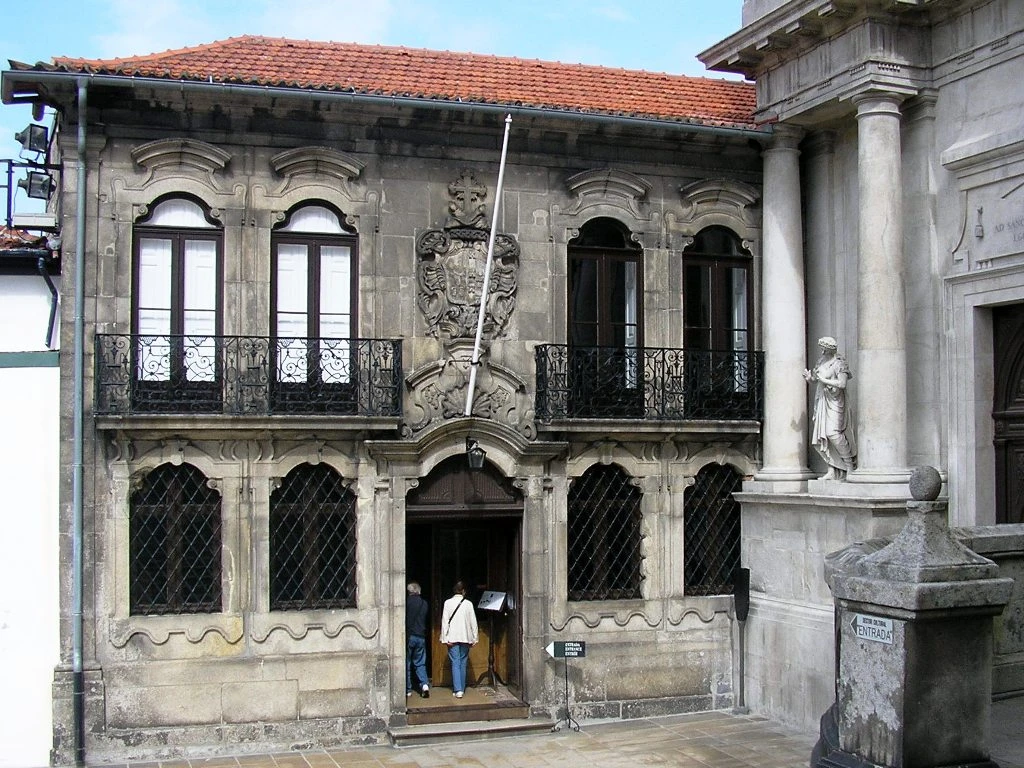
Casa do Despacho da Venerável Ordem Terceira de São Francisco
Content & sources
Photo: Manuel de Sousa · CC BY-SA 3.0
Porto
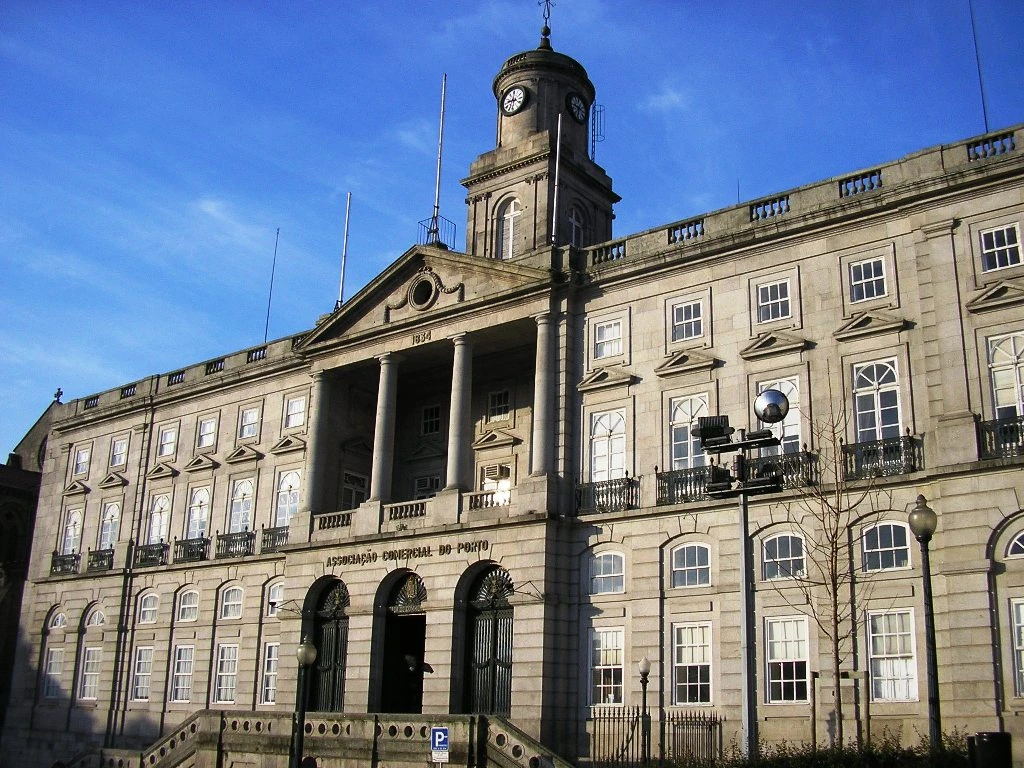
Palácio da Bolsa
Content & sources
Photo: Manuel de Sousa · Public domain
Porto
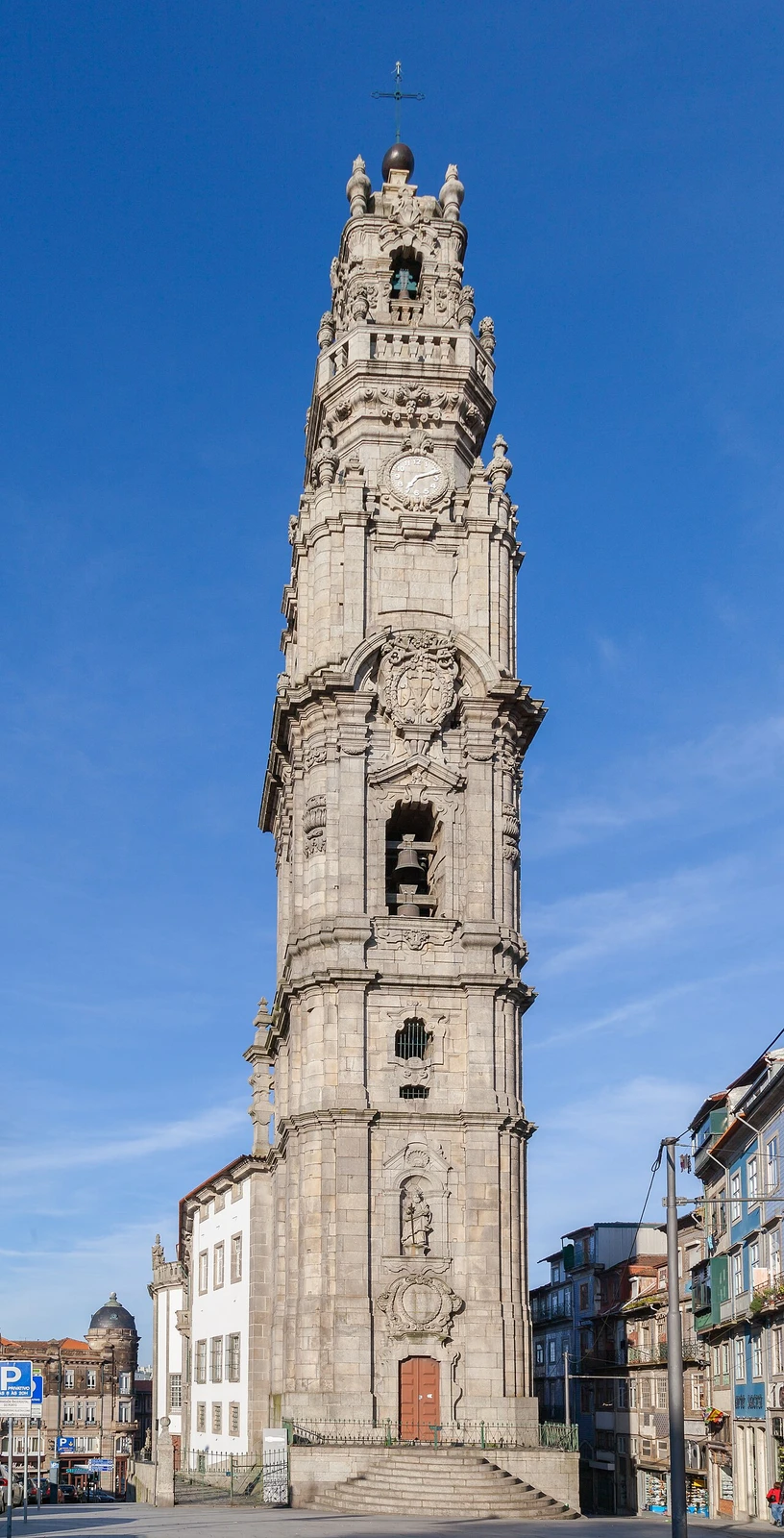
Torre dos Clérigos
Content & sources
Diego Delso · CC BY-SA 3.0
Coimbra
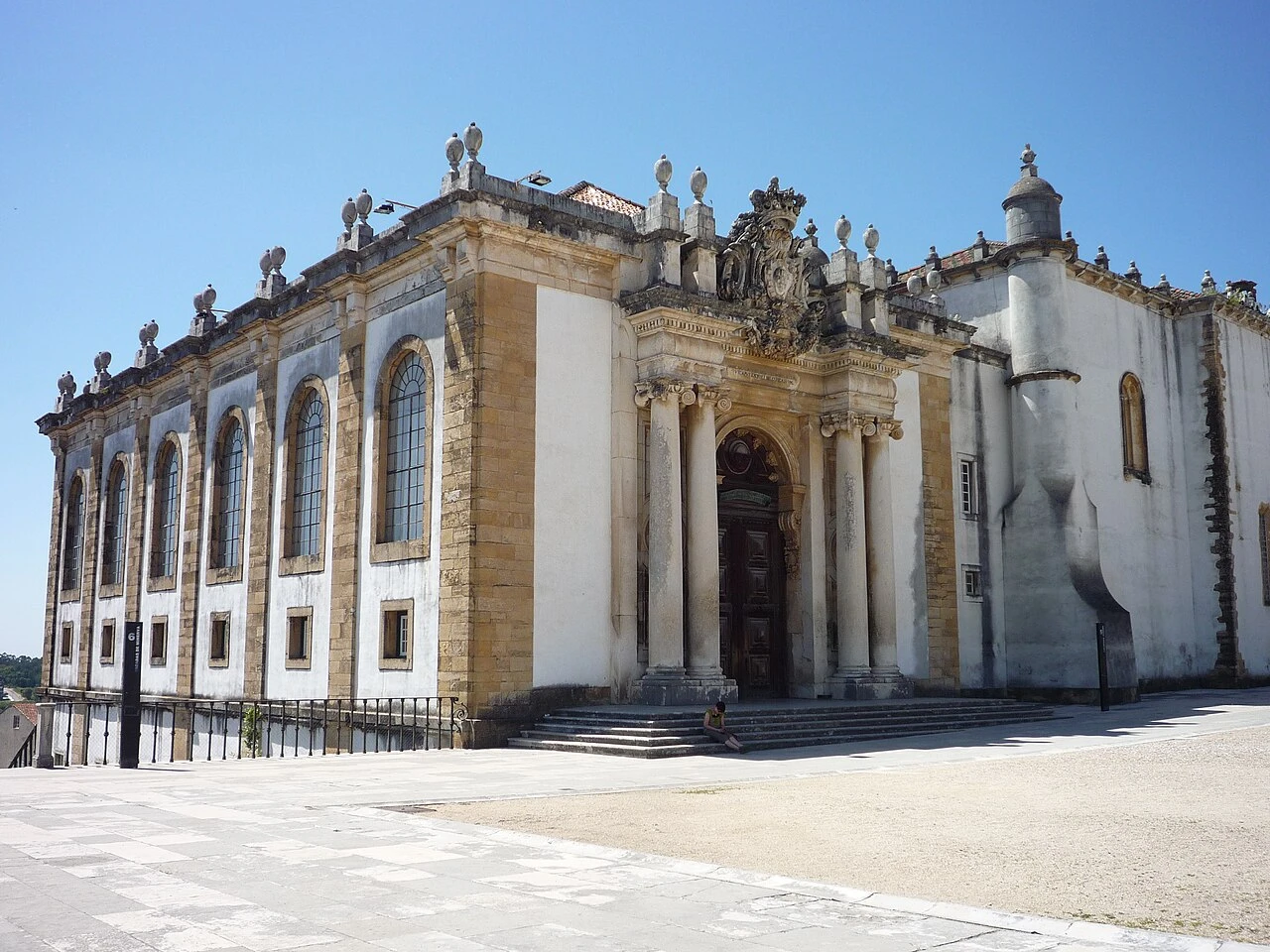
Biblioteca Joanina
Content & sources
Chris · CC BY-SA 2.0