Languages
15Forbidden City Audio Guide
Forbidden City is an archaeological site in Dongcheng District, China. Explore it with Stanza's guided offline audio tour — narrated in 15 languages.
Quick Facts
37
Stops
15
Languages
100%
Offline
📍 Dongcheng District, China · 39.9158°N, 116.3908°E
About Forbidden City
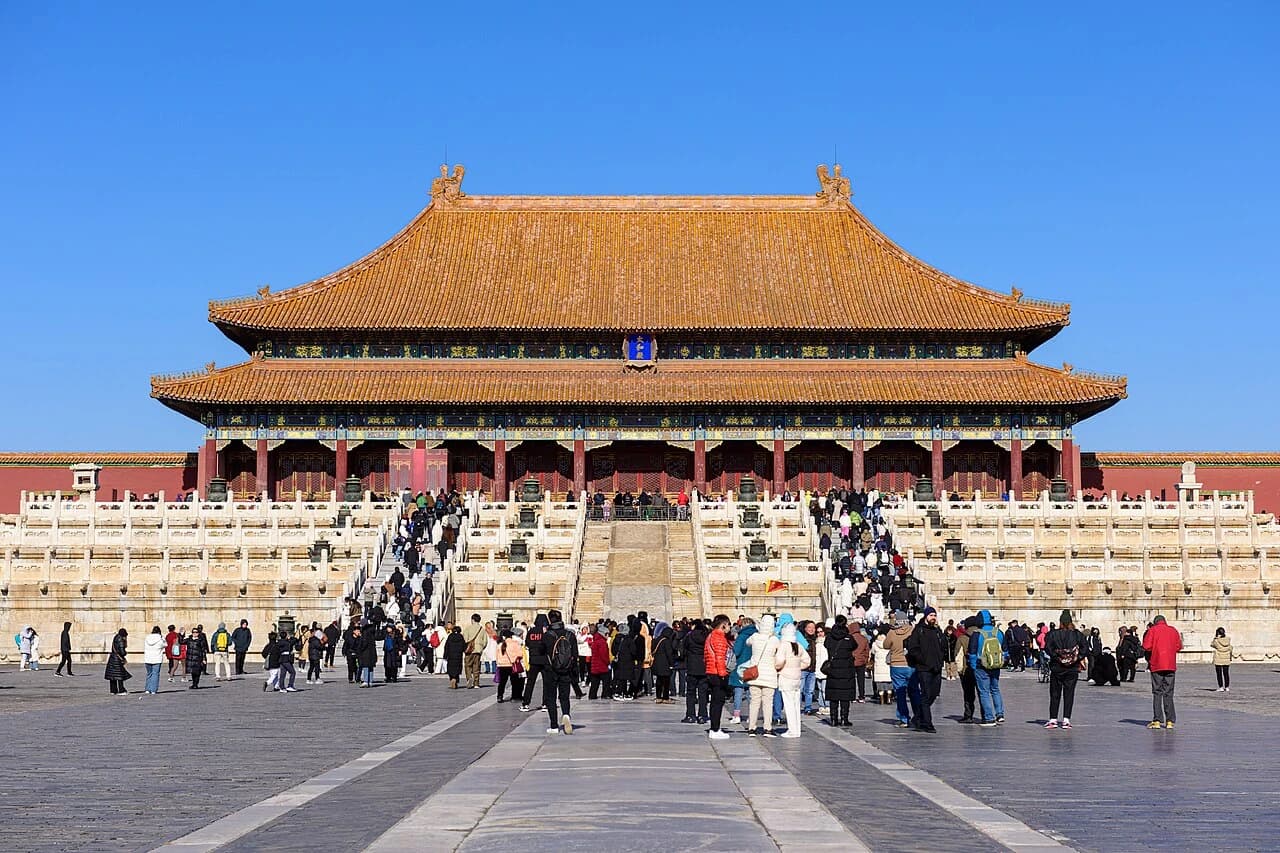
The Forbidden City is a Chinese imperial palace located in Beijing. It served as the ceremonial and political center of Chinese government for nearly 500 years.
This self-guided audio tour features 37 narrated stops organized across 10 sections. As a palace, Forbidden City offers a unique cultural experience in the heart of Dongcheng District, China.
The Stanza audio guide is available in 15 languages and works entirely offline — download the complete tour including audio narration, maps, and images before your visit. As you walk through Forbidden City, GPS-triggered narration plays automatically at each point of interest.
Last updated:
What you will hear
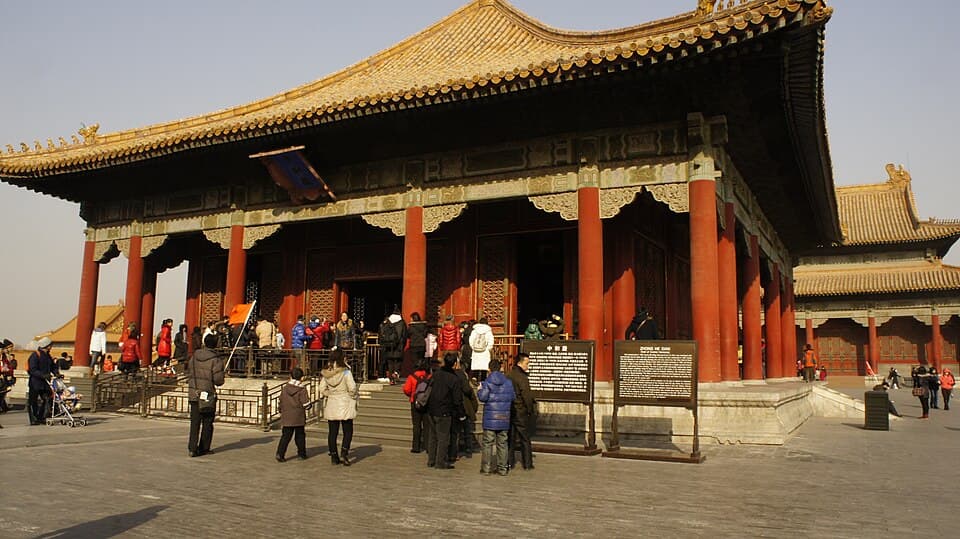
Hall of Central Harmony
A smaller, square hall where the Emperor would rest and receive officials before major ceremonies.
Hall of Central Harmony
Compared to the massive Hall of Supreme Harmony, this square building, the Hall of Central Harmony, feels much more intimate. Its smaller scale reflects its function as a transitional or preparation space. You might think of it as the Emperor's 'green room.' Before entering the grand ceremonies next door, the Emperor would stop here to rest and take a moment of quiet reflection. Within these walls, he would change into his formal ceremonial robes and rehearse the speeches or rituals he was about to perform. It was also here that he would inspect the seeds and tools for the annual spring plowing ceremony, or check the final drafts of messages to be read at the Temple of Heaven. While the larger halls were for public display and the projection of power, the Hall of Central Harmony was where the human being behind the title of 'Son of Heaven' prepared for his public roles. Its square shape symbolizes stability and balance, fitting for a space designed for mental and spiritual preparation.
Gate of Heavenly Purity
The main gate separating the public Outer Court from the private residential Inner Court.
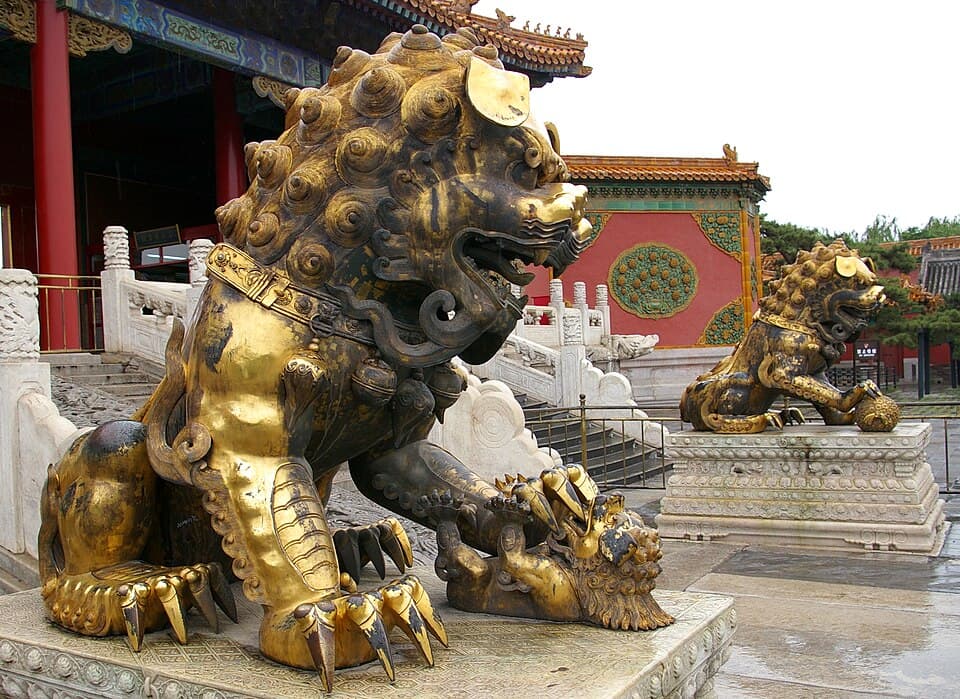
Golden Lions of the Inner Court
As you approach the Gate of Heavenly Purity, you will see a pair of magnificent gilded lions. While they resemble the bronze guardians you encountered at the Gate of Supreme Harmony, there are subtle yet meaningful differences in their appearance. Notice that these lions have ears that are perkier and eyes that seem much wider and more alert. In the symbolic language of the Forbidden City, this design was intentional. While the Outer Court lions represented the formal, unshakeable power of the state, these Inner Court versions symbolize the need for constant watchfulness within the private palace. Because the Inner Court was the residence of the imperial family, it was a place of intrigue and hidden secrets. The alert expressions on these lions served as a reminder to everyone who passed that within these private walls, one had to be perpetually mindful. Their bright, golden finish further distinguishes them, signaling the elevated status of the threshold they protect, leading into the most intimate quarters of the empire.
Hall of Union
Located between the residences of the Emperor and Empress, it symbolized the union of heaven and earth.
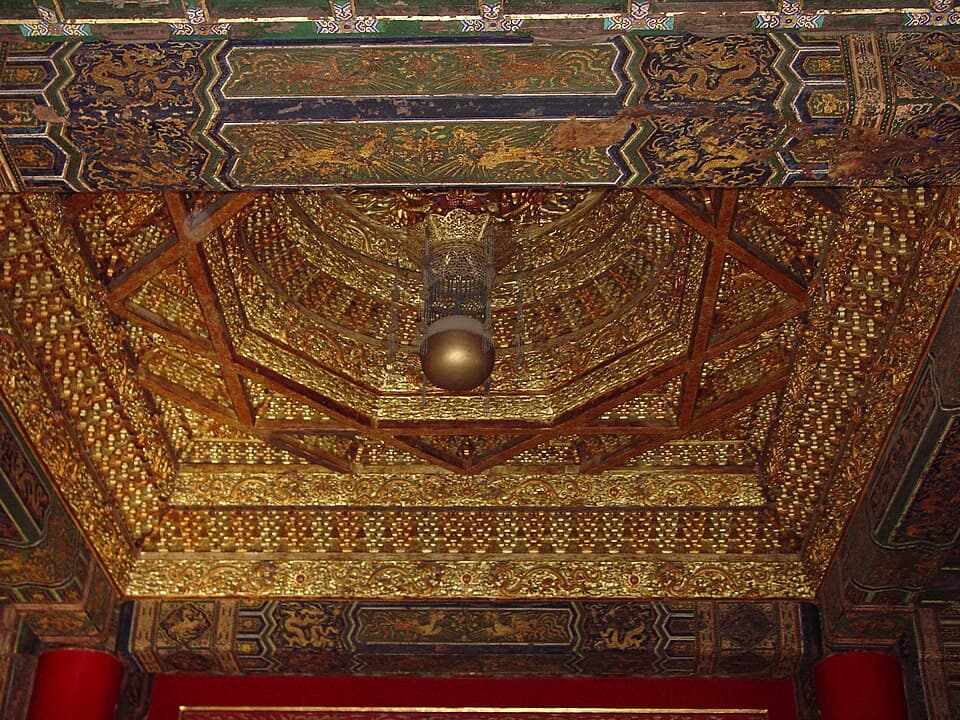
The Caisson Ceiling
Looking straight up, you’ll see one of the most complex and beautiful features of palace architecture: the caisson, or "spider," ceiling. This recessed, dome-like structure is designed to resemble a well opening into the sky. At its very center, a gold-colored dragon is carved in high relief, clutching a large pearl in its mouth. The pearl represents wisdom and the sun, while the dragon signifies imperial authority. Creating these ceilings was considered the ultimate test of a master carpenter's skill. They were built without any nails, instead using an incredibly intricate system of interlocking wooden brackets that spiral inward and upward. This was not just for beauty; the caisson was believed to possess protective spiritual power. Because the dragon is a water deity in Chinese mythology, having a "water well" in the ceiling was also a symbolic defense against fire, the greatest threat to these wooden structures. Standing directly beneath it, you can appreciate why this was reserved only for the most significant halls where the Emperor himself would sit.
Yanxi Palace (The Unfinished Crystal Palace)
Known for its unique Western-style 'Crystal Palace' structure, which was left unfinished after the fall of the Qing dynasty.
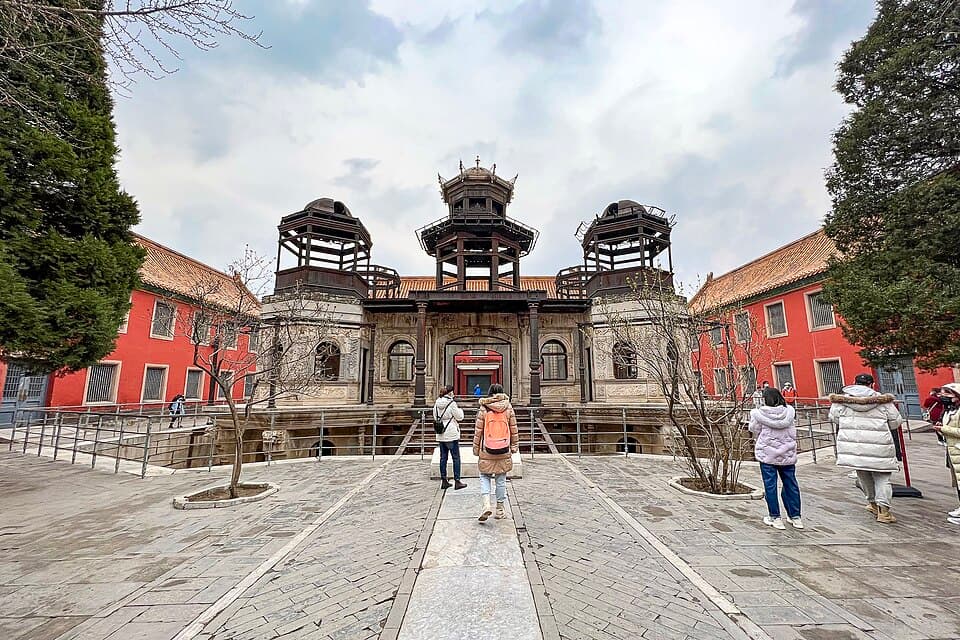
Yanxi Palace
You might be surprised to see these Western-style ruins sitting in the heart of the Forbidden City. This structure is known as the "Crystal Palace," and it stands as a stark visual contrast to the surrounding Ming and Qing architecture. Construction began in 1909 on what was intended to be a spectacular, three-story aquarium. The plan featured glass walls that would allow the imperial family to view fish swimming around them, with the basement level actually submerged in water. It was a project that combined traditional Chinese aesthetics with modern European engineering and materials like iron and stone. However, the empire fell in 1911, and the palace was never finished. Today, the skeletal remains serve as a reminder of the Qing Dynasty's final years of modernization efforts. It illustrates the transition from an ancient, isolated empire to a nation grappling with the influences of the outside world, standing as a permanent testament to the palace's final years before becoming a museum.
Nine Dragon Wall
A magnificent glazed-tile screen wall designed to protect the Palace of Tranquil Longevity from evil spirits.
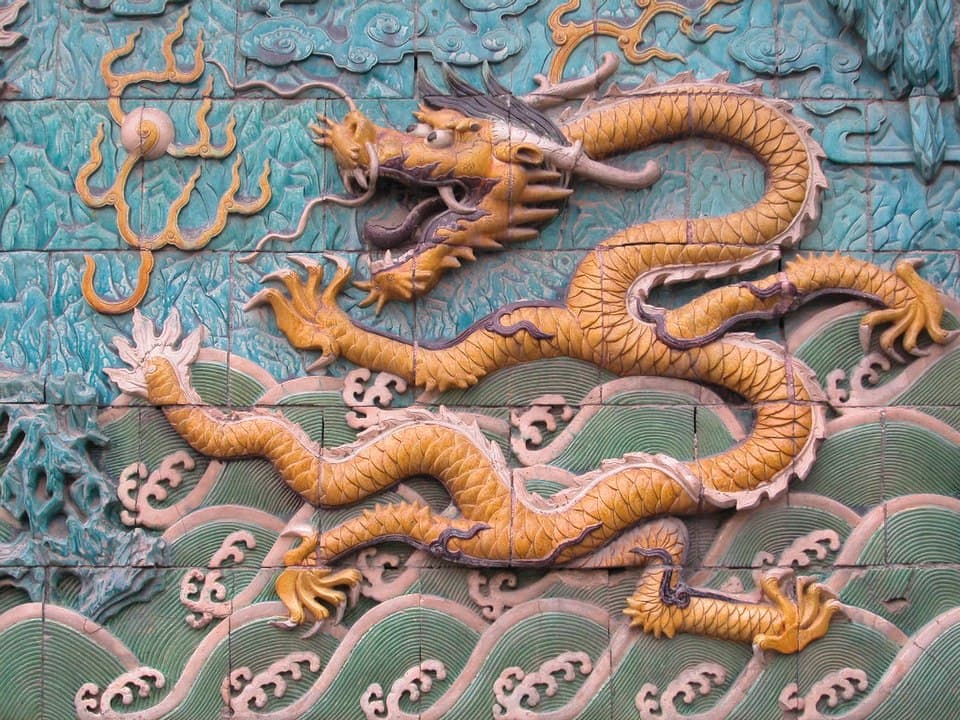
Nine Dragons Wall
This magnificent screen wall is one of only three such large-scale "Nine Dragon" walls in China. It is composed of hundreds of high-relief glazed tiles that have been meticulously assembled to create a seamless, three-dimensional scene of dragons playing with pearls amidst waves and clouds. However, there is a legendary secret hidden among the scales. Tradition holds that during the wall's construction, one of the intricate glazed tiles was accidentally broken. With the Emperor’s inspection looming and no time to fire a new ceramic piece, the master craftsman had to think quickly. He allegedly carved a replacement tile out of wood and painted it to match the shiny glaze of the others. Remarkably, the fix worked—the Emperor never noticed the difference. This story highlights the immense pressure and the incredible skill of the artisans who built the Forbidden City, where even a single broken tile could be a matter of life and death.
Palace of Tranquil Longevity (Treasure Gallery)
Built for the retirement of the Qianlong Emperor, this complex now houses the Forbidden City's most precious treasures.
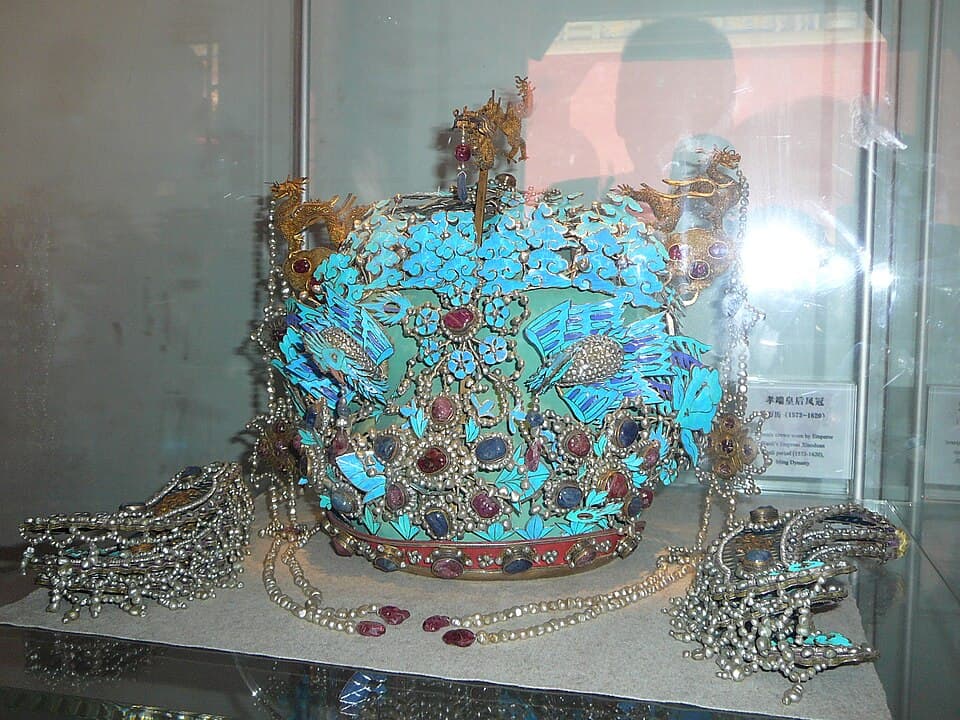
珍宝馆
The Treasure Gallery houses some of the most opulent artifacts in the entire palace, including the legendary phoenix crowns. Notice the incredible materials used in their construction. The vibrant, almost glowing blue color isn't from a mineral; it is made from thousands of tiny, iridescent kingfisher feathers applied to the metal base. This painstakingly slow technique, combined with the use of hundreds of pearls and gold, made these crowns exceptionally heavy. They were reserved only for the most formal palace ceremonies, such as weddings or the accession of an Empress. You’ll see the motif of the phoenix featured prominently here. Just as the dragon represented the Emperor, the phoenix was the symbol of the Empress, embodying grace and feminine power. These crowns were not merely jewelry; they were symbols of the highest rank in the land, designed to make the wearer appear as a celestial being on earth.
Well of Consort Zhen
A somber site where the 'Pearl Concubine' was reportedly thrown by order of Empress Dowager Cixi in 1900.
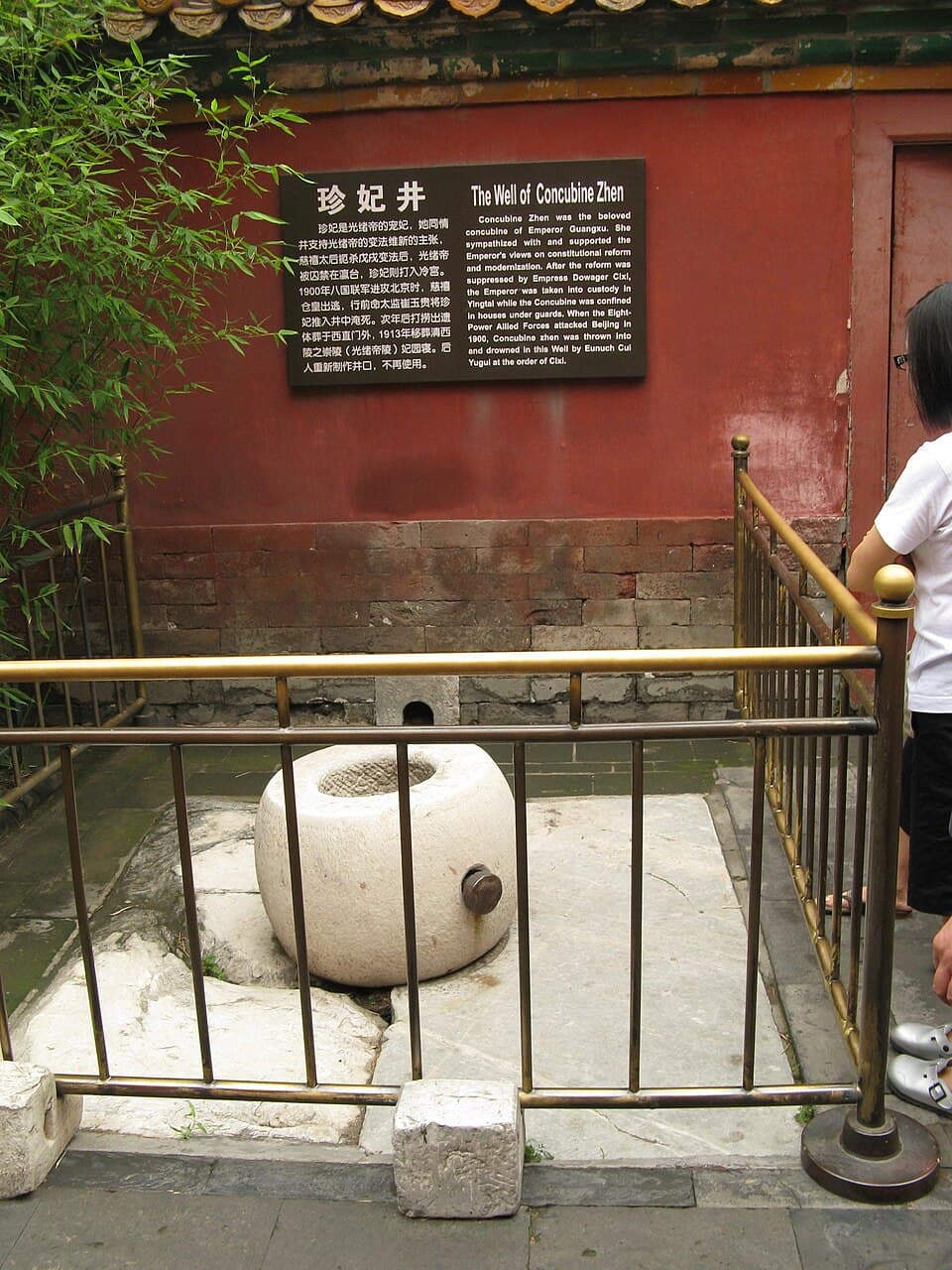
Well of Concubine Zhen
Tucked away in a quiet courtyard is a site of profound tragedy: the Well of Concubine Zhen, also known as the Pearl Concubine. In 1900, as foreign troops approached Beijing during the Boxer Rebellion, the imperial court prepared to flee. Before leaving, the Empress Dowager Cixi reportedly ordered that the young Concubine Zhen be thrown into this well. The conflict between the two women was both personal and political. Zhen was the favorite consort of the Guangxu Emperor and a staunch supporter of his attempts at modernizing the empire through the Hundred Days' Reform. These progressive views deeply angered the conservative Cixi, who had already placed the Emperor under house arrest. The well you see today looks quite different than it did then; the narrow stone opening is a later modification intended to commemorate her memory and prevent similar accidents, though it serves as a stark reminder of the ruthless power struggles that once occurred behind these palace walls. Her body was not recovered until a year later, after the court returned to the city.
Imperial Garden
A lush retreat at the northern end of the palace, featuring ancient cypresses, rockeries, and unique pavilions.
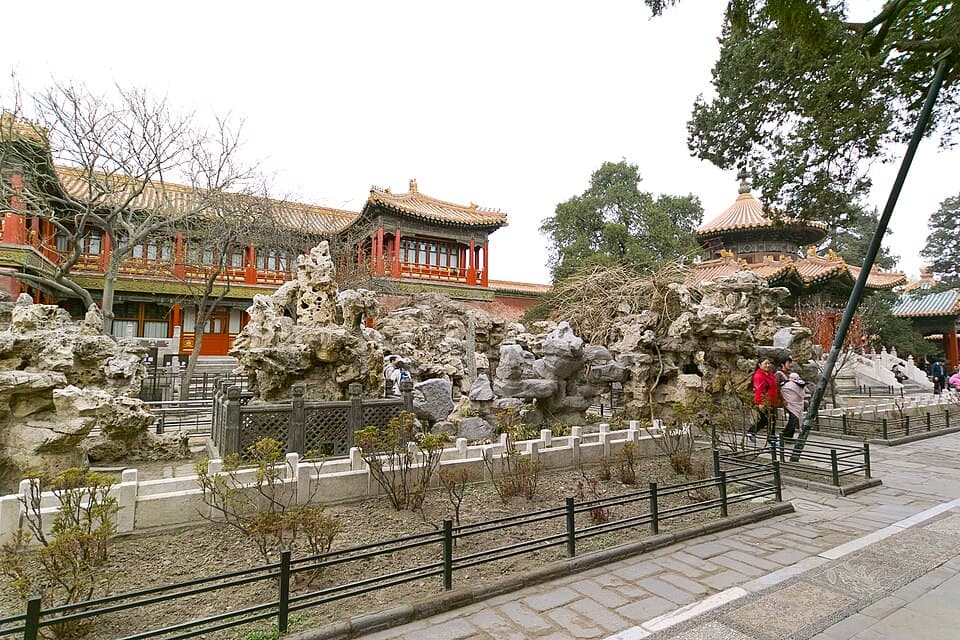
Imperial Garden
At the northern end of the palace lies the Imperial Garden, a space where the rigid symmetry of the Forbidden City finally gives way to organic forms. The most striking features here are the "artificial mountains" constructed from Taihu limestone. These craggy, weathered rocks were sourced from the bottom of Lake Tai and were highly prized by Chinese scholars and emperors alike. The specific aesthetic guiding their selection was "the more holes, the better." These perforations were not just visually interesting; they were believed to facilitate the smooth movement of Qi, or universal energy, throughout the garden. In a world where the Emperor and his family were largely confined for their own safety and status, these gardens served a vital psychological purpose. They provided a meticulously crafted simulation of the wild, untamed landscapes of China’s mountains and forests. By walking among these stone peaks and ancient cypress trees, the imperial residents could experience the essence of the natural world without ever having to step outside the protective, heavily guarded walls of their home.
Pavilion of One Thousand Autumns
One of the most architecturally complex pavilions in the Imperial Garden, known for its circular roof and exquisite ceiling.
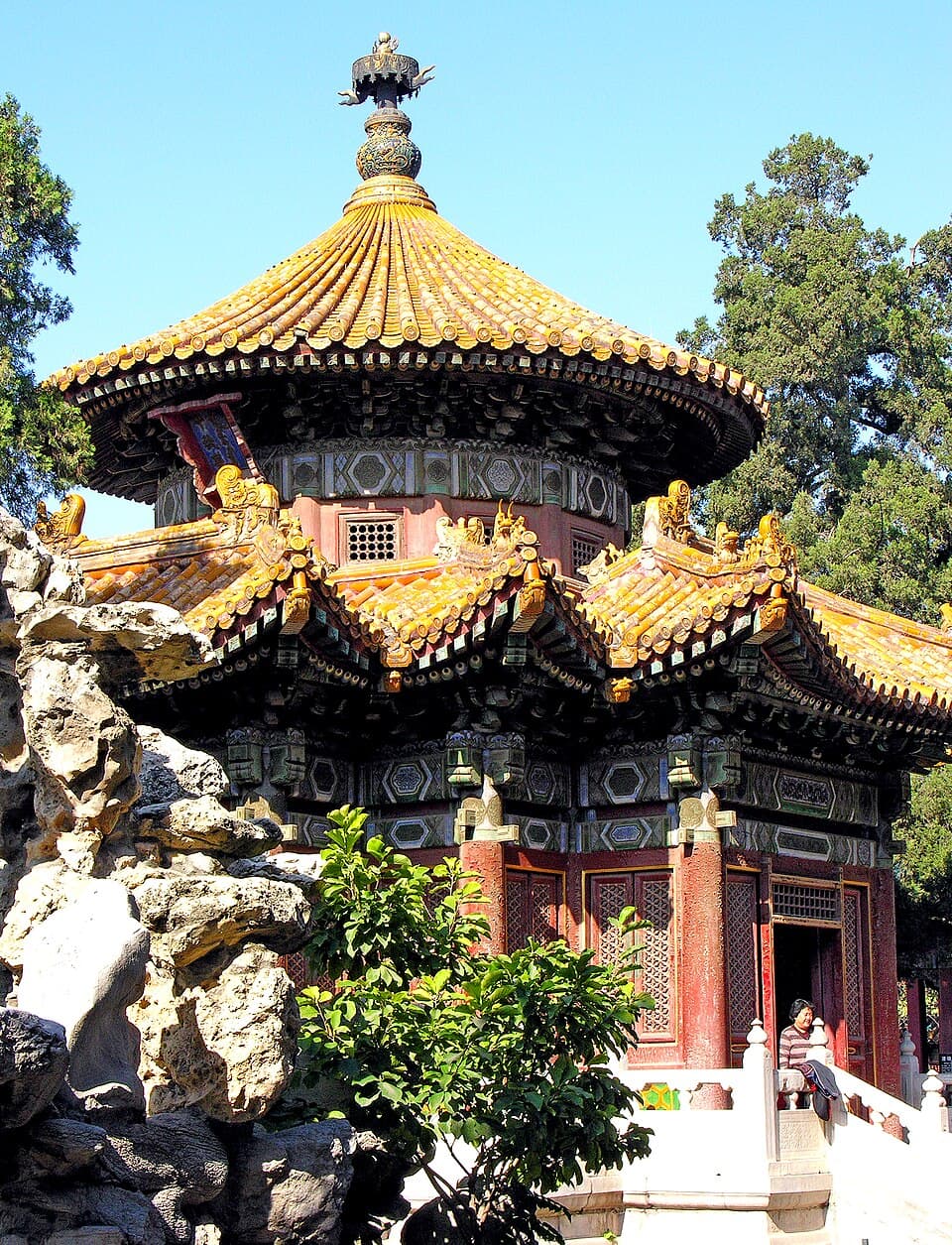
千秋亭
The Pavilion of One Thousand Autumns is one of the most structurally fascinating buildings in the Imperial Garden. At first glance, your eyes are drawn to its unique shape: a graceful, circular roof resting upon a solid, square base. This design is not merely decorative; it is a physical manifestation of ancient Chinese cosmology, which held that "heaven is round and the earth is square." By combining these two geometric forms, the pavilion symbolizes the harmony between the celestial and terrestrial realms. Achieving this transition in traditional wooden architecture was an immense technical challenge for Ming Dynasty craftsmen. Joining the curved rafters of the circular roof to the straight beams of the square structure required incredibly precise joinery and a deep understanding of structural loads. The result is a seamless flow from the corners of the base up toward the elegant peak of the roof. This pavilion served as a place for rest and reflection, where the Emperor could sit at the symbolic crossroads of the universe, surrounded by the quiet beauty of the garden.
Gate of Divine Might
The northern exit of the Forbidden City, once used by the imperial family for everyday travel.
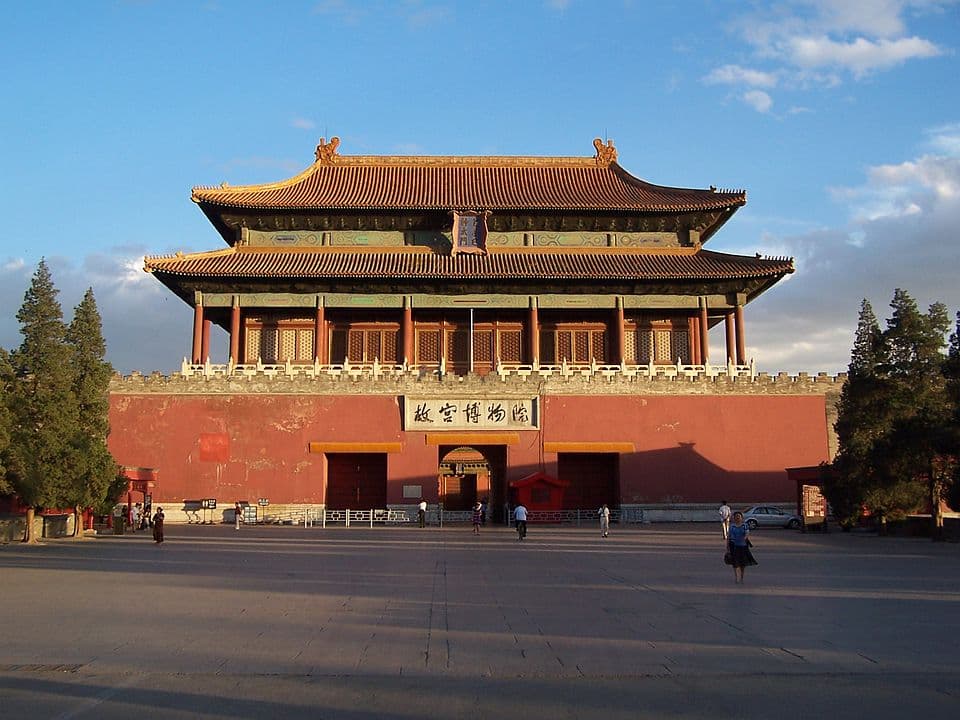
Gate of Divine Might
The Gate of Divine Might serves as the northern exit of the palace complex. In traditional Chinese cosmology, the north is associated with the "Black Tortoise," one of the four mythological guardians of the compass. Consequently, when the gate was first built during the Ming Dynasty, it was named the "Gate of the Black Tortoise." However, names in the Forbidden City were subject to strict rules. During the Qing Dynasty, the name was changed to its current form because of a linguistic taboo. The character for "Black"—or "Xuan"—was part of the personal name of the Kangxi Emperor. In imperial China, it was considered highly disrespectful to use any character that appeared in the Emperor's name for common buildings or documents. To avoid this taboo, the gate was renamed to honor "Divine Might" instead. While the southern Meridian Gate was the site of grand military parades, this northern gate was often used by the imperial family for more private exits and by court officials entering for their daily duties.
Want to hear the rest?
Download the Stanza app to unlock all 37 stops and the complete guided audio tour.
Frequently Asked Questions
How long does the Forbidden City audio tour take?
The Forbidden City audio guide includes 37 narrated stops. Most visitors spend 45 minutes to 1.5 hours exploring the complete tour, though you can listen at your own pace and skip or revisit any stop.
Is the Forbidden City audio guide available in my language?
Stanza supports 15 languages: English, Spanish, French, German, Italian, Portuguese, Russian, Japanese, Chinese, Korean, Arabic, Hindi, Polish, Dutch, Hebrew. Check the guide in the app to confirm the languages currently available for this tour.
Can I use the audio guide offline at Forbidden City?
Yes! Download the complete Forbidden City tour — including all audio, maps, and images — before your visit. The Stanza app works completely offline, so you don't need WiFi or mobile data at the venue.
How much does the Forbidden City audio guide cost?
The Stanza app is free to download. The current listed price for the Forbidden City audio guide is $4.99; app-store region and currency may affect the final price.
How do I use the Stanza audio guide at Forbidden City?
Download the free Stanza app, search for "Forbidden City", and download the tour. When you arrive at the venue, the app uses GPS to detect your location and automatically plays the relevant narration as you move between points of interest — completely hands-free.
What makes the Stanza audio guide different from other Forbidden City tours?
Stanza offers GPS-triggered narration that plays automatically as you walk through Forbidden City — no need to manually select stops. The tour is available in 15 languages, works fully offline, and includes 37 expertly narrated stops with images and historical context.
What other audio guides are available near Forbidden City?
Stanza offers multiple audio guides in Dongcheng District, China and nearby areas. After downloading the app, browse the map to discover all available tours near Forbidden City. Each guide can be downloaded for offline use.