Stanza · Audio guide
山海关 Audio Guide
A place to remember. A story to take with you.
The Shanhai Pass is a major fortified gateway at the eastern end of the Great Wall of China. It commands the narrowest choke point in the strategic Liaoxi Corridor, which is the only easily traversable…
Download Stanza, then search for “山海关”.
About the tour
One guide. Your kind of visit.
The Shanhai Pass is a major fortified gateway at the eastern end of the Great Wall of China. It commands the narrowest choke point in the strategic Liaoxi Corridor, which is the only easily traversable landway between North and Northeast China.
Ready when you are.
- 01Get the free Stanza app.
iOS & Android
- 02Find your guide.
“山海关”
- 03Download before you go.
Works offline
Audio guide / 9 narrated stops
Inside the guide
Get to know a few of the stories before you go. Open a stop to read more.
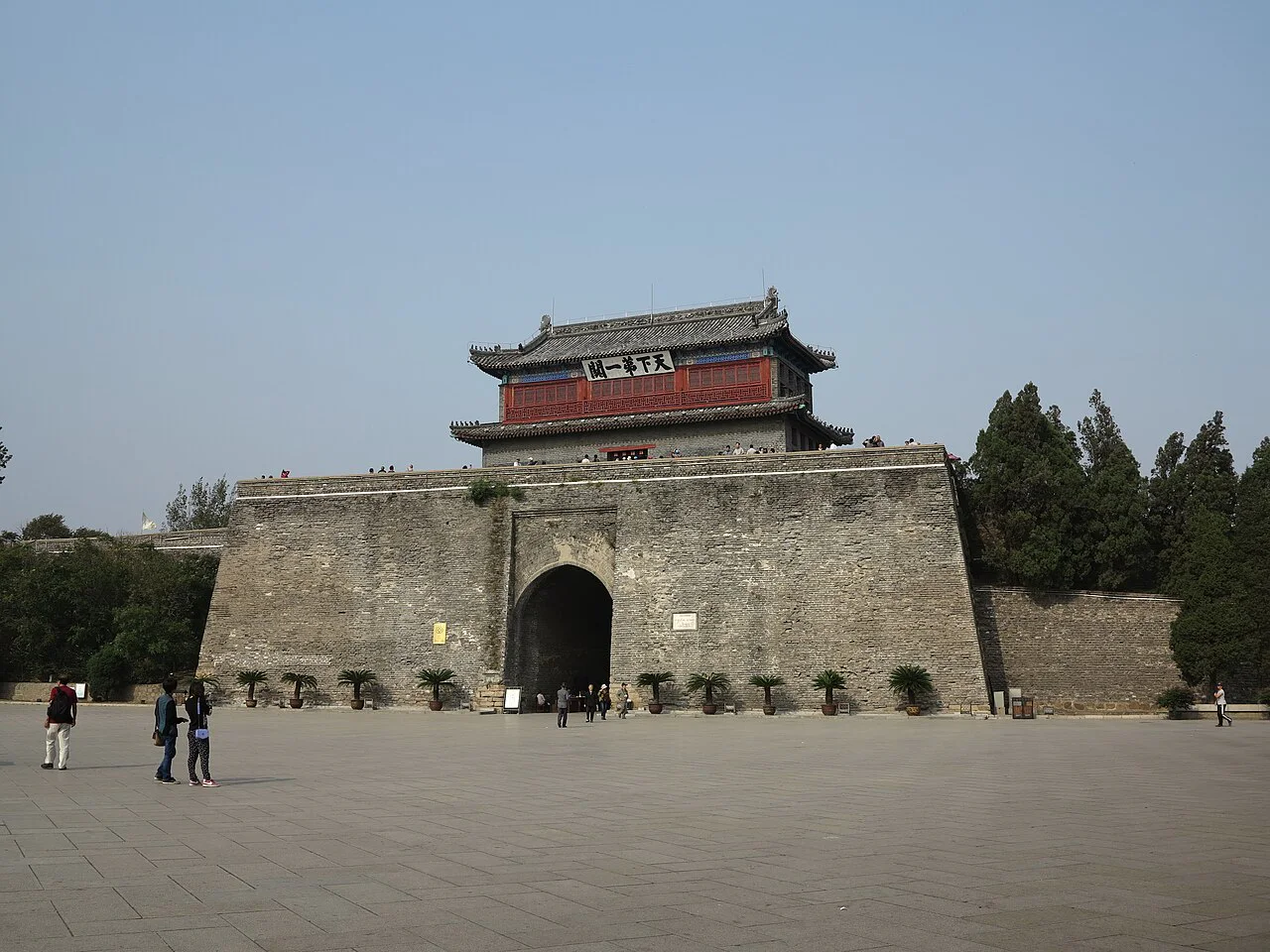
01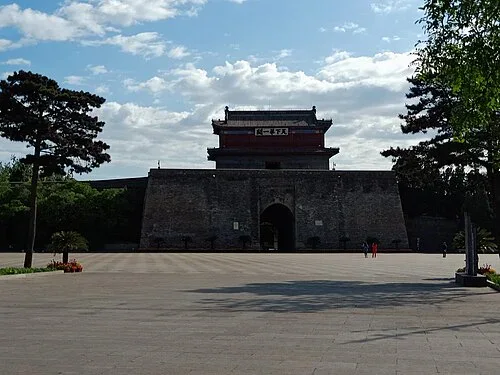 East Gate Plaza and Zhendong Gate
Zhendong Gate from the East Plaza
Shanhai Pass is a fortified gateway at the eastern end of the Great Wall, in Hebei province, nearly three hundred kilometres east of Beijing. Its name means Mountain Sea Pass. Mountains on one side and the sea on the other squeeze the land here. The gate, with its tiered tower and arched opening, is the pass's landmark. Between the foothills of the Yan Mountains and the Bohai Sea runs the Liaoxi Corridor, a long, narrow coastal plain. The pass commands its narrowest point. It also guards the only easy land route between North China and the Northeast. That is why it earned a famous nickname, the First Pass Under Heaven. A direct siege here would be very costly. The only way past was a detour through a few mountain passes deep in the Yan Mountains, so narrow they were treacherous. Supply lines through those passes were hard to keep, so large invasions were difficult. In 1987, UNESCO listed the pass as part of the Great Wall, a World Heritage Site.
Listen in the appPhoto: PQ77wd · CC BY-SA 4.0
02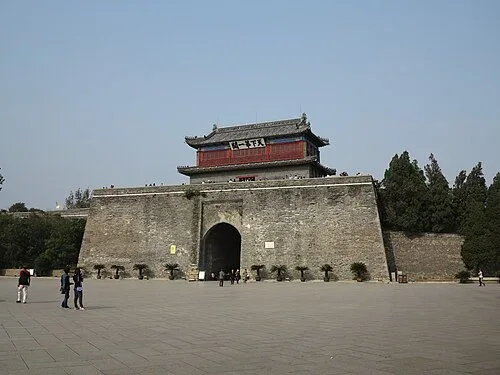 East Gate Plaza and Zhendong Gate
Zhendong Gate and the 'First Pass Under Heaven' Plaque
Four gates once opened through the pass's walls, one on each side. Zhendong Gate in the east was the most important of them, because of where it stood. It is the only one still standing, since the others were not repaired over the centuries. Its famous plaque, which carries the pass's nickname, has a history of its own. In 1920, Yang Baoqing made a fresh copy of the plaque, and it was hung beneath the eaves on the top floor of Zhendong Tower. The older plaque, from the Qing period, was moved indoors to that same top floor.
Listen in the appNyx Ning · CC BY-SA 3.0
03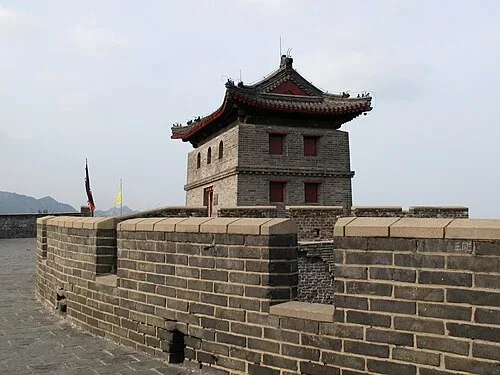 Fortress Ramparts and Garrison Quarters
Watchtower on the Fortress Wall (Linlu Tower)
The pass as it stands grew out of a repair job. In 1381, the Ming general Xu Da and his soldiers were ordered to mend the old Yongping and Jieling passes. Out of that work they built the present pass. After the Yongle Emperor moved the capital from Nanjing to Beijing, the pass was greatly reinforced. In the late sixteenth century, the Ming general Qi Jiguang began fortifying the pass and building a military city around it. Accounts put the walls at about twelve to fourteen metres tall, and many metres thick. Beside the walkway, Linlu Tower, a tiled-roof watchtower, rises from the wall top, its walls pierced with small openings. The parapet along the walkway is notched. A deep, wide moat, with drawbridges over it, surrounds the east, south and north sides.
Listen in the appPhoto: 颐园新居 · CC BY-SA 3.0
04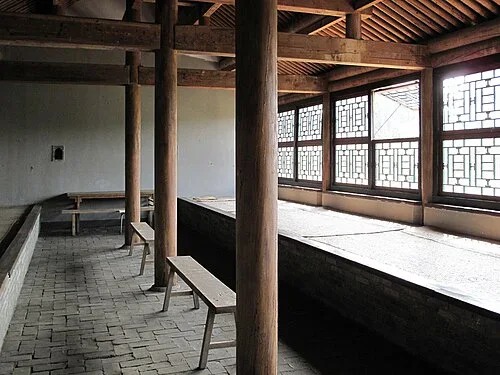 Fortress Ramparts and Garrison Quarters
Longwu Camp Interior
In 1644, the rebel leader Li Zicheng led his army into Beijing, and that marked the end of the Ming dynasty. Li then tried to win over the Ming general Wu Sangui, who commanded the Ningyuan garrison north of the Great Wall. Wu refused to submit to Li's new Shun dynasty. He contacted the Manchu Qing instead, and suggested they combine forces to drive the rebels from the capital. Dorgon, the Qing regent, marched his army to Shanhai Pass to meet Wu and join forces. Together, Wu and the Manchus defeated Li's army near the pass. Li was forced to abandon the capital. The Qing army then entered Beijing unopposed. This restored timber hall, Longwu Camp, has wooden columns, latticed windows and a long raised platform. In the Qing era, the pass was known as the Key to the Capitals.
Listen in the appPhoto: 颐园新居 · CC BY-SA 3.0
05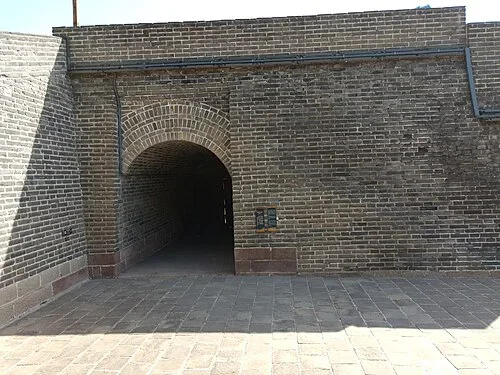 Ninghai Coastal Fortress and Imperial Retreat
Nanhaikou Pass Vaulted Passage
The pass was never a single wall with a single gate. It was a cluster of walled places built around the main pass city, a square nearly five kilometres around. Just outside its east gate, the Ming built the East Outer Town in 1584, a walled enclosure with corner towers and watchtowers. The West Outer Town lay inside the pass, and people were already living there before it was walled. It became the pass's centre of trade, with a mosque and temples. In 1633 the Ming official Yuan Chonghuan added the North and South Wing Towns, each about a kilometre from the main city, to hold soldiers, grain and munitions. A kilometre to the east, on high ground, stood a small lookout fort that people called the Wailing Fort. And four kilometres to the south, near Nanhaikou, where this brick passage is, the Ninghai fort guarded the coast.
Listen in the appPhoto: PQ77wd · CC BY-SA 4.0
06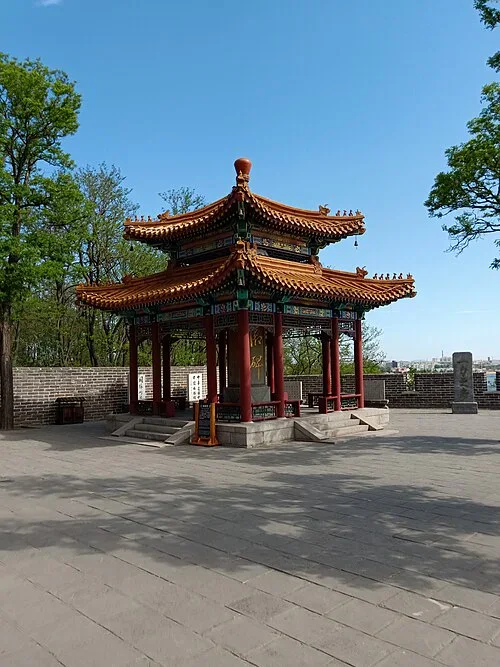 Ninghai Coastal Fortress and Imperial Retreat
The Stele That Was Pushed Over
This story is about a stone tablet, a stele, carved with four characters: Tian Kai Hai Yue. It stood at the Ninghai fort, the small coastal fort near the end of the wall, in front of the sea-watching tower. After the Boxer war, foreign powers won the right to keep troops at Shanhai Pass, and soldiers of several countries built camps around it, some staying until 1945. The British army took over the Ninghai fort. While building an ammunition store there, they pushed the tablet over. In 1927 Zhang Xueliang was touring Old Dragon's Head. Known as the Young Marshal, he was a general and the son of the Fengtian warlord Zhang Zuolin, whose army had taken the pass the year before. Zhang found the fallen stele and had it set upright again.
Listen in the appPhoto: PQ77wd · CC BY-SA 4.0
07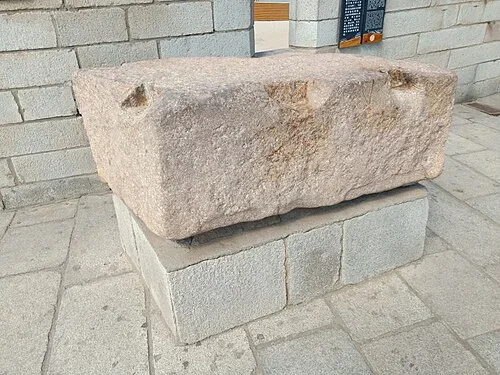 Old Dragon's Head: In-Sea Great Wall and Watchtowers
Dressed Stone Block from the Sea-Extending Wall
This block is linked to the stone wall that runs out into the sea at Old Dragon's Head. That stretch was built of stone, about twenty-two metres long and nine metres high, and it is the only part of the Great Wall in China that enters the sea. It was not laid on sand. It was built on natural rock reefs. Qi Jiguang, who had already put twenty-three watchtowers along this sector, had the stone city in the sea built in 1579. It was repaired in the 1980s.
Listen in the appPhoto: PQ77wd · CC BY-SA 4.0
08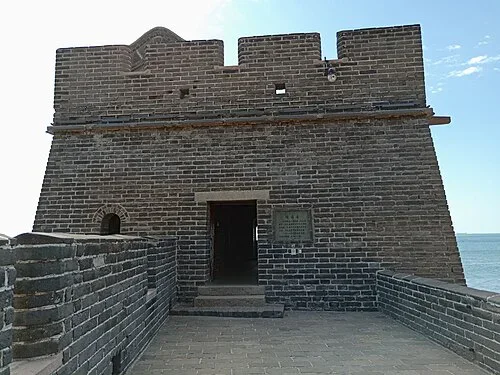 Old Dragon's Head: In-Sea Great Wall and Watchtowers
Sea-Edge Watchtower (Jinglu, per filename)
This watchtower stands at the sea's edge beside open water. Narrow openings pierce the upper walls of its grey brick. In the late Qing dynasty, many forts were built to strengthen the coast. In 1900, during the Boxer crisis, troops of the Eight-Nation Alliance landed at Shanhai Pass. Accounts differ on the details. One describes a large Japanese force landing in July, on its way to relieve the foreign legations in Beijing. Another dates the allied landing at Old Dragon's Head to the second of October. Few Chinese troops were present to oppose them.
Listen in the appPhoto: PQ77wd · CC BY-SA 4.0
09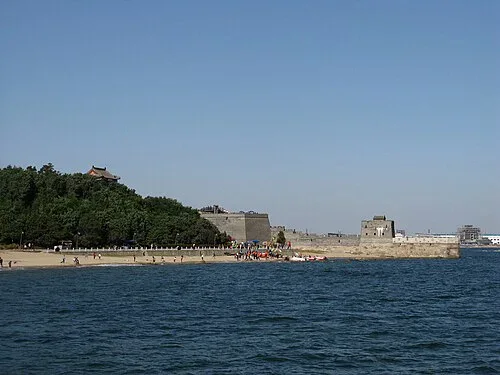 Old Dragon's Head: In-Sea Great Wall and Watchtowers
Old Dragon's Head: Where the Wall Meets the Sea
Here the Great Wall runs down to the Bohai Sea and meets it. The place is nicknamed Old Dragon's Head, and it is part of Shanhai Pass. A wooded hill rises on one side, topped by a pavilion-like roof. People gather on the sandy beach below the wall. For a time, this place was considered the starting point of the Great Wall.
Listen in the appCaitriana Nicholson from 北京 ~ Beijing, 中国 ~ China · CC BY-SA 2.0
山海关
Frequently asked questions
How much does the guide cost?
Free app download. Listed guide price: $0.99. Guide price shown in the app. Audio guide only. Venue admission is separate.
Can I listen without internet?
Yes. Download the guide’s audio, images, and maps in the app before your visit. Your downloaded content is then available offline.
Can I listen in my language?
This audio guide is available in 15 languages, including English.
Do I need to follow a schedule?
No. This is a self-guided experience. Choose your stops, pause whenever you like, and return to a story at your own pace.
At your own pace
Explore 山海关.
Download Stanza, then search for “山海关”.
Free app download · Guide price shown in the app
Keep exploring
Audio guides — China
Dongcheng District
Temple of Heaven
Content & sources
Photo: Shujianyang · CC BY-SA 4.0
Dongcheng District
Forbidden City
Content & sources
Photo: N509FZ · CC BY-SA 4.0
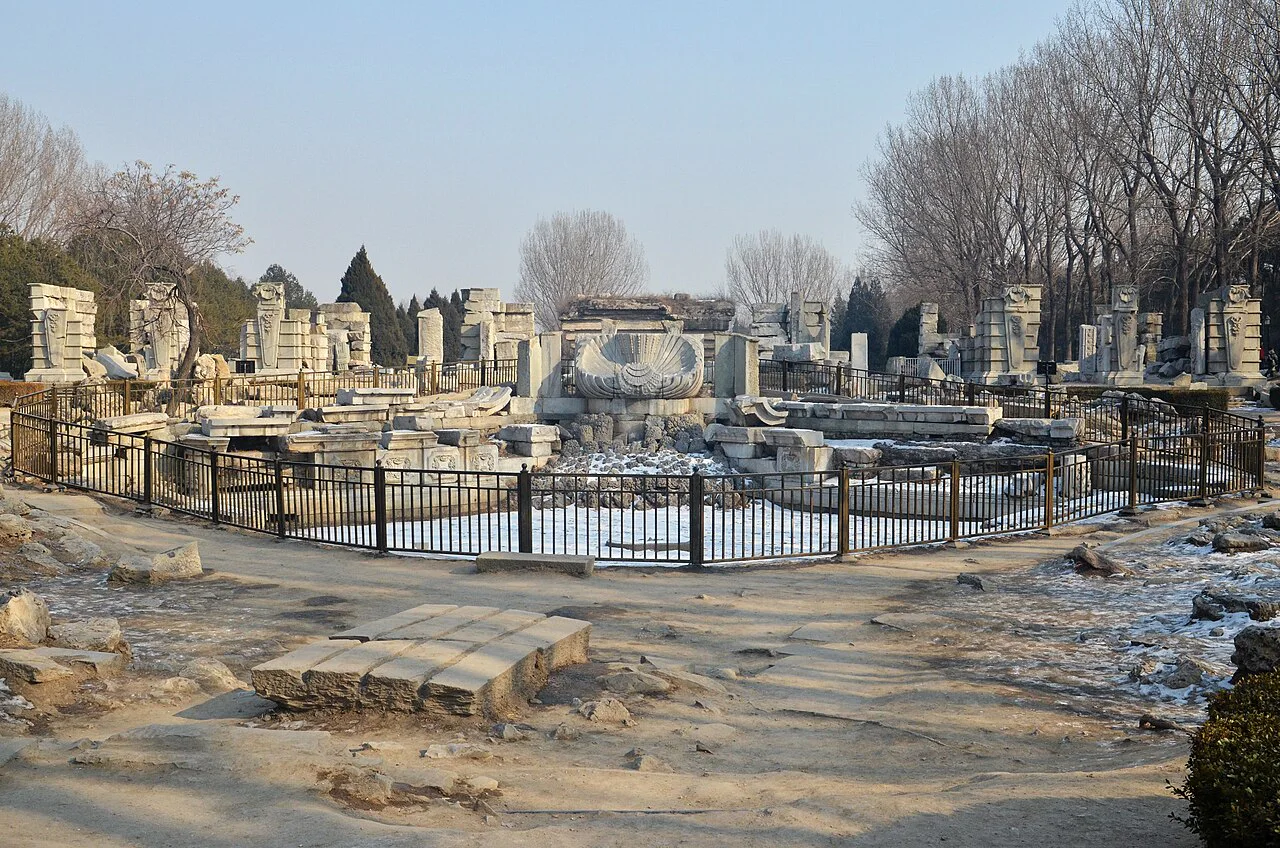
Beijing
圆明园
Content & sources
Photo: 颐园新居 · CC BY-SA 3.0

Beijing
Summer Palace
Content & sources
xiquinhosilva · CC BY 2.0
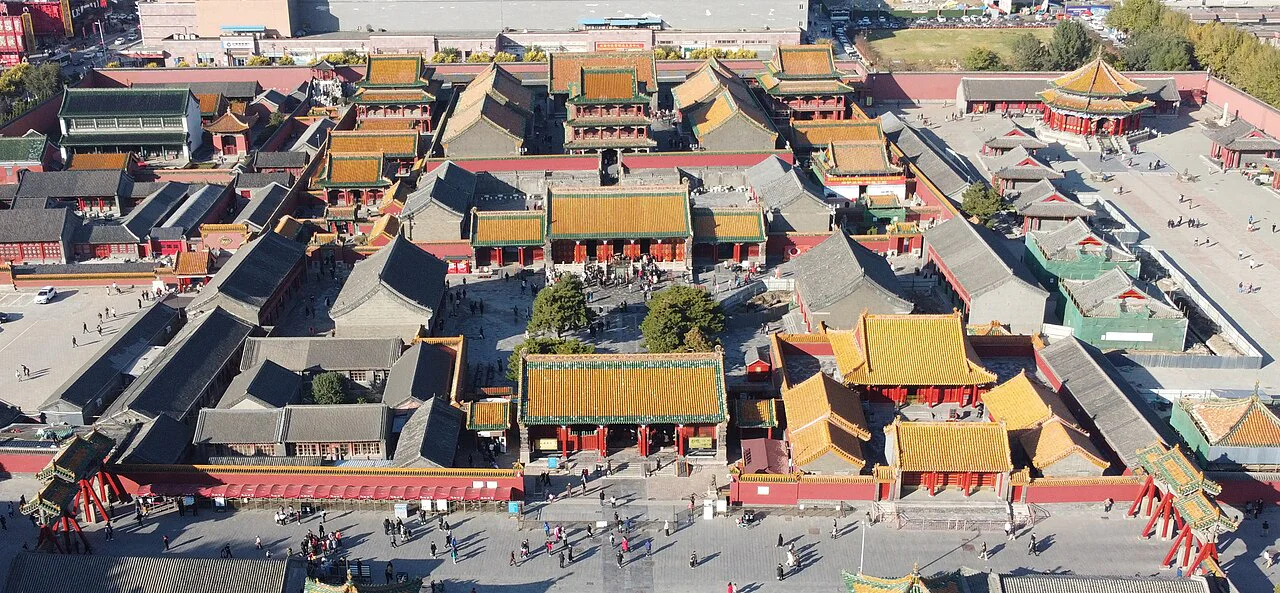
Shenyang
沈阳故宫
Content & sources
Photo: Techyan · CC BY-SA 4.0