Stanza · Audio guide
Katedrala sv. JakovaAudio guide
A place to remember. A story to take with you.
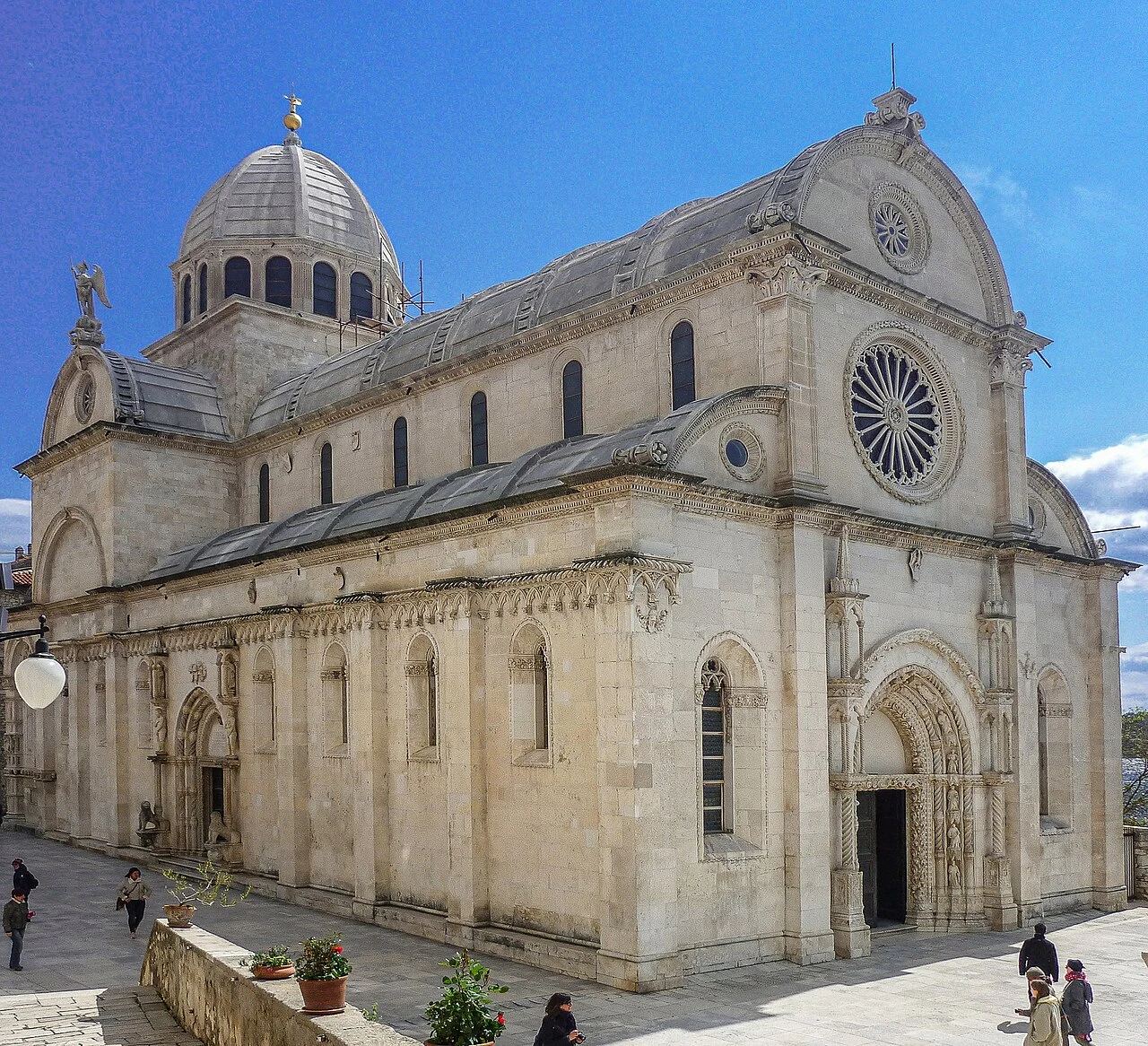
The Cathedral of St. James is a tri-naved basilica in Šibenik, recognized as a UNESCO World Heritage site for its unique construction entirely of stone. It is renowned for its transition from Gothic to…
Download Stanza, then search for “Katedrala sv. Jakova”.
About the tour
One guide. Your kind of visit.
The Cathedral of St. James is a tri-naved basilica in Šibenik, recognized as a UNESCO World Heritage site for its unique construction entirely of stone. It is renowned for its transition from Gothic to Renaissance architectural styles and its famous frieze of 71 sculpted heads.
Ready when you are.
- 01Get the free Stanza app.
iOS & Android
- 02Find your guide.
“Katedrala sv. Jakova”
- 03Download before you go.
Works offline
Audio guide / 29 narrated stops
Inside the guide
Get to know a few of the stories before you go. Open a stop to read more.
01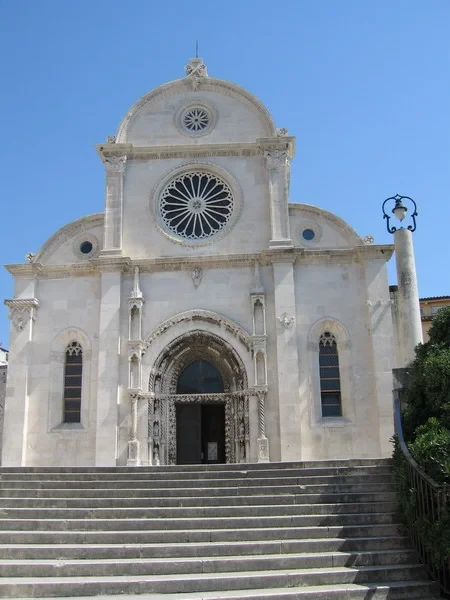 The Western Facade and Main PortalCathedral of St. James
Welcome to the Cathedral of St. James, a masterpiece of 15th-century engineering and a symbol of the city's golden age. This UNESCO World Heritage site is unique because it was built entirely of stone between 1431 and 1536. Measuring 38 meters long and 14 meters wide, the cathedral stands as a unified monument with no wood or brick used for structural support. The primary architect, Juraj Dalmatinac, envisioned a building that relied solely on the strength of precisely cut stone slabs and interlocking joints. This approach allowed the structure to endure for centuries despite the proximity to the salty Adriatic air. As you look at the exterior, you are seeing a blend of Northern Gothic and Italian Renaissance influences. The scale of the building dominates the surrounding square, reflecting the wealth and religious significance of Šibenik during the Venetian era. It remains one of the most important architectural achievements in the entire Dalmatian region.
Lacen · CC BY-SA 3.0
02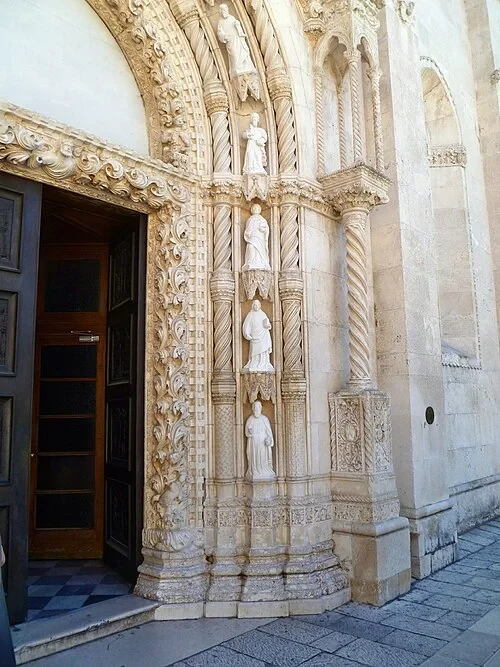 The Western Facade and Main PortalThe Main Portal
The Main Portal illustrates a pivotal moment in architectural history, capturing the transition from the elaborate Gothic style to the balanced Renaissance. As you examine the facade, look at the vertical arrangement of the twelve apostles housed within their dedicated stone niches. Each figure is positioned with a sense of depth and individuality that was innovative for its time. Encircling the archway is a complex web of stone foliage, where the sculptor’s precision is most evident. Notice how the leaves and vines twist and curl with such delicacy that the hard stone appears almost as fluid and workable as wood. This mastery is a hallmark of the primary architect, Juraj Dalmatinac, who blended his training in Venice with local traditions. The way the light catches the carved details creates a play of shadows that changes throughout the day, emphasizing the three-dimensional nature of the sculpture. This portal serves as the grand entrance, inviting you into a space where every inch of the building was conceived as a unified work of art.
Photo: JoJan · Public domain
03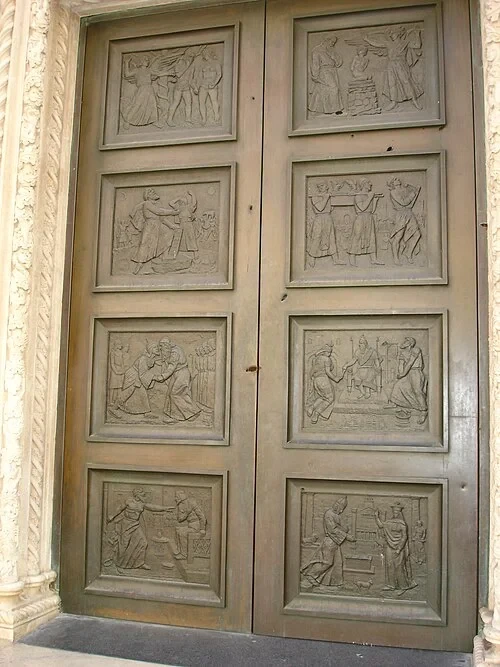 The Western Facade and Main PortalThe Biblical Bronze Doors
On the Biblical Bronze Doors, high-relief panels narrate foundational scenes from the Old and New Testaments. These doors provide a dark, textured contrast to the smooth, white Brač stone that makes up the rest of the cathedral’s facade. As you look closer, observe the figures within each square panel; they are cast with deep shadows and realistic proportions, bringing the biblical stories to life for every visitor who passes through. The weight of the metal and the complexity of the scenes illustrate the importance of the entrance to the sacred space within. This combination of heavy metalwork and light-colored stone creates a visual rhythm that is characteristic of Dalmatian coastal architecture. The figures seem to emerge from the background, their postures and expressions telling a story without the need for words. These doors were added much later than the original construction, yet they were designed to harmonize with the Renaissance spirit that defines the rest of the cathedral’s artistic program.
Listen in the appPhoto: Zeljkaz80 · CC BY-SA 4.0
04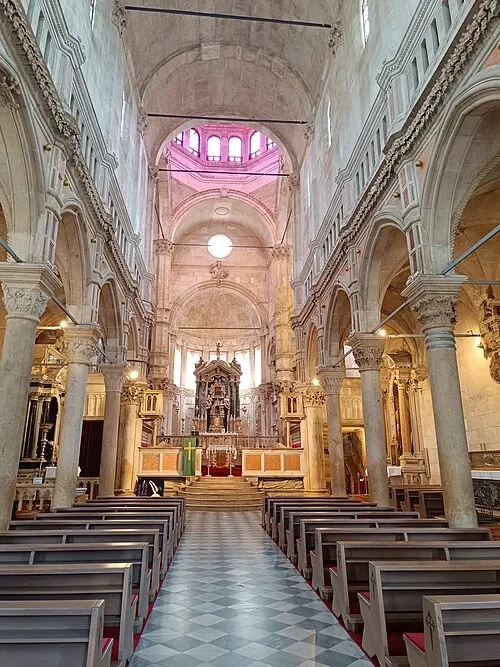 The Central Nave and Stone VaultingThe Central Nave
Step into the central nave to experience the immense scale of an interior designed to seat approximately 2,800 people. The space feels unified and grand, largely because the architectural elements used outside are repeated inside. One of the most fascinating aspects of this building is that the interior walls are actually the back of the exterior walls. There is no filler, no brick, and no wood hidden within the structure. What you see is exactly what is holding the building up. This transparency of construction creates a rare sense of honesty in the architecture. High above, the stone columns support the soaring vault, drawing the eye toward the altar at the far end. The light filtering through the high windows illuminates the stone's natural texture, which has been smoothed by centuries of use. This interior space reflects the civic pride of the Šibenik community, which funded the cathedral’s construction over many generations. The checkerboard floor pattern adds to the visual depth, leading your gaze toward the spiritual heart of the church.
Listen in the appPhoto: CroatianPalpatine · CC BY-SA 4.0
05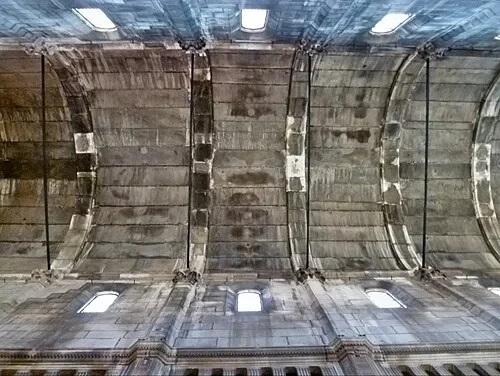 The Central Nave and Stone VaultingThe Interlocking Stone Vault
Looking up at the roof, you are seeing a marvel of 15th-century engineering that remains unique in the architectural world. The interlocking stone vault is constructed using a revolutionary system where massive stone slabs are joined together with a tongue-and-groove method. This technique, envisioned by Juraj Dalmatinac, meant that the entire roof could be built without the use of mortar, wooden beams, or brick supports. Instead, the weight of the stones themselves, combined with the precision of their carved edges, creates a self-supporting entity that has stood for over five hundred years. Because of this method, the cathedral is a rare example of a structure that is identical on the inside and the outside; the interior vaulting is simply the underside of the exterior roof slabs. This seamless integration of form and function results in a sense of structural purity. The engineering required to lift and place these heavy slabs with such accuracy remains a subject of study for historians and architects today. Each seam in the vaulting represents a perfect fit that keeps the elements out while holding the massive weight in place.
Listen in the appPhoto: JoJan · Public domain
06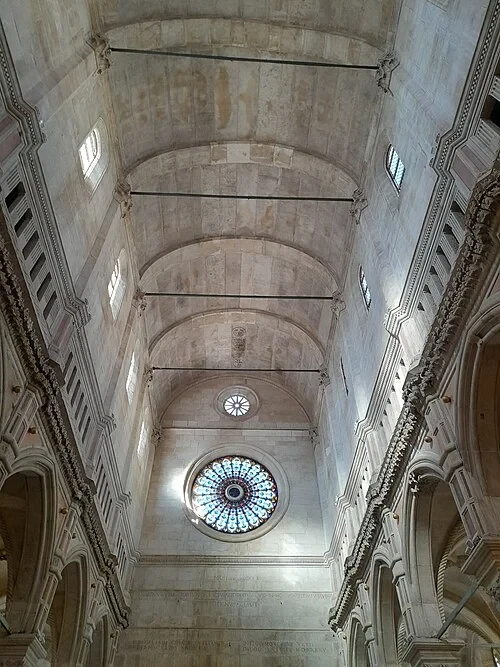 The Central Nave and Stone VaultingThe Nave Rose Window
The Nave Rose Window serves as a centerpiece of light, casting soft patterns across the interior stones of the nave. This delicate latticework is carved from solid stone, showcasing the skill of the masters who worked on the cathedral during its long construction period. The project spanned 105 years, which saw the cathedral's design pass through the hands of multiple masters and generations of stonemasons. The rose window is a testament to the persistence required to complete such a complex structure. Its circular form is divided into intricate segments that radiate from the center, creating a balanced and harmonious pattern. While the exterior of the window provides a focal point for the main facade, the interior view allows you to appreciate the thinness of the stone carvings against the bright sky. The construction of this window required immense precision, as any error in the stone cutting would have compromised the integrity of the entire circular frame. It remains one of the most celebrated decorative features of the cathedral, bridging the gap between Gothic detail and Renaissance symmetry.
Listen in the appPhoto: Argo Navis · CC BY-SA 4.0
07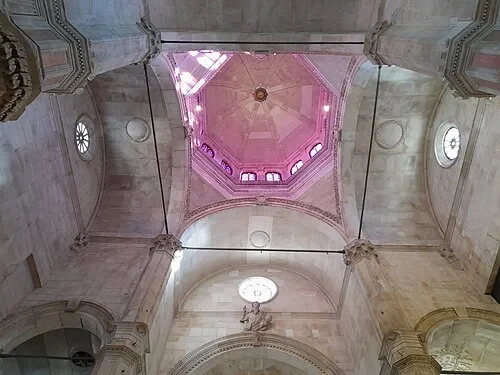 The Dome and Octagonal DrumThe Octagonal Dome
The octagonal dome rises to a height of 32 meters, dominating the skyline of Šibenik. While Juraj Dalmatinac laid the foundations and the lower levels of the cathedral, it was Niccolò di Giovanni Fiorentino who took over after Dalmatinac's death to complete the upper portions. Fiorentino was an expert in the Renaissance style, and his influence is visible in the transition from the square base to this octagonal drum. He used innovative techniques to ensure the dome's stability, maintaining the commitment to building entirely in stone. The dome features narrow windows that allow light to penetrate the highest reaches of the sanctuary, creating a sense of openness. Its exterior is covered in the same interlocking stone slabs found on the nave roof, creating a unified visual appearance. Rising high above the surrounding rooftops, the dome has served as a landmark for sailors and travelers for centuries. It represents the successful collaboration between two different masters, each bringing their own expertise to complete a singular vision. The interior of the dome provides a dramatic conclusion to the vertical climb of the cathedral's walls.
Listen in the appPhoto: Argo Navis · CC BY-SA 4.0
08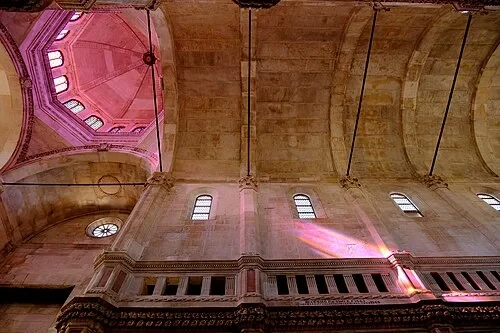 The Dome and Octagonal DrumTraces of the 1991 Shelling
Even a structure this solid was not immune to modern conflict, as evidenced by the damage sustained during the 1991 shelling of Šibenik. During the Croatian War of Independence, the cathedral was hit directly by artillery fire. The dome, in particular, suffered a direct hit that threatened the structural integrity of the stone roof. However, the cathedral has since been meticulously restored to its original glory. Craftsmen used the same traditional stone-cutting techniques that were employed by the original builders five centuries ago to repair the damage. This painstaking restoration ensured that the new stone slabs would interlock perfectly with the old ones, maintaining the mortarless construction. Today, it is difficult for the untrained eye to spot exactly where the shells struck, a testament to the skill of the restorers. This period of the building's history serves as a reminder of its resilience and the community's dedication to preserving their heritage. The stone walls continue to stand as they have since the 16th century, though they now carry the weight of more recent history.
Listen in the appPhoto: Elias Küpper · CC BY-SA 4.0
09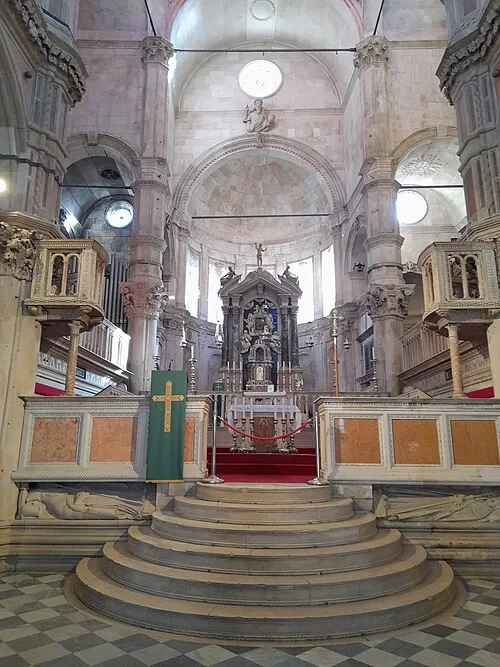 The Sanctuary and Altar of the Holy CrossThe Sanctuary Stairs
Approaching the high altar, the semi-circular sanctuary stairs signal the spiritual heart of the cathedral. This area is where the collaboration between local Dalmatian builders and Italian masters is most apparent. The steps lead up to a raised platform that houses the main altar and the marble-inlaid choir stalls. These stalls are finely decorated, providing a place for the clergy during liturgical celebrations. The use of marble here adds a layer of richness to the surrounding white stone, marking the importance of this space. The sanctuary was designed to be the focal point of the interior, with its lines and proportions drawing the visitor's eye forward. Looking around this area, you can see how the architectural details become more refined as you approach the altar. The sanctuary also houses several important tombs and religious artifacts, making it a place of both worship and historical memory. The mastery of the stone carving in the columns and arches surrounding the stairs demonstrates the high level of craftsmanship that was maintained throughout the century-long construction project. It remains a quiet, solemn space in the center of the city.
Listen in the appPhoto: Argo Navis · CC BY-SA 4.0
10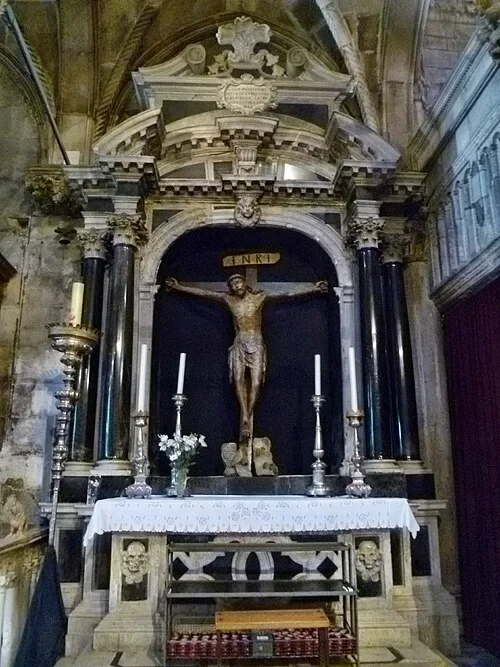 The Sanctuary and Altar of the Holy CrossAltar of the Holy Cross
The Altar of the Holy Cross holds a significant piece of religious art that has been a focal point for pilgrims for centuries. The centerpiece is a somber wood-carved crucifix, which stands in contrast to the stone surfaces that dominate the rest of the cathedral. This crucifix is framed by an architectural altar structure that reflects the Baroque and Renaissance tastes of the eras following the cathedral's initial construction. The work is associated with master Juraj Ćulinović, an influential artist of the period. Local pilgrims have long visited this altar to offer prayers, making it a site of deep communal significance. The expression on the figure and the detail of the carving are meant to evoke reflection and piety. Unlike the exterior of the cathedral, which focuses on architectural innovation and civic identity, this altar emphasizes personal devotion and the spiritual life of the congregation. Its presence within the stone walls adds a layer of warmth and wood-textured detail to the interior, reflecting the evolving artistic layers of the cathedral over its long history of use. It remains an active site of veneration today.
Listen in the appPhoto: JoJan · Public domain
Katedrala sv. Jakova
Frequently asked questions
How much does the guide cost?
Free app download. Listed guide price: $3.99. Guide price shown in the app. Audio guide only. Venue admission is separate.
Can I listen without internet?
Yes. Download the guide’s audio, images, and maps in the app before your visit. Your downloaded content is then available offline.
Can I listen in my language?
Stanza supports 15 languages. Check the app for the languages available for this guide.
Do I need to follow a schedule?
No. This is a self-guided experience. Choose your stops, pause whenever you like, and return to a story at your own pace.
At your own pace
Explore Katedrala sv. Jakova.
Download Stanza, then search for “Katedrala sv. Jakova”.
Free app download · Guide price shown in the app
Keep exploring
Nearby audio guides
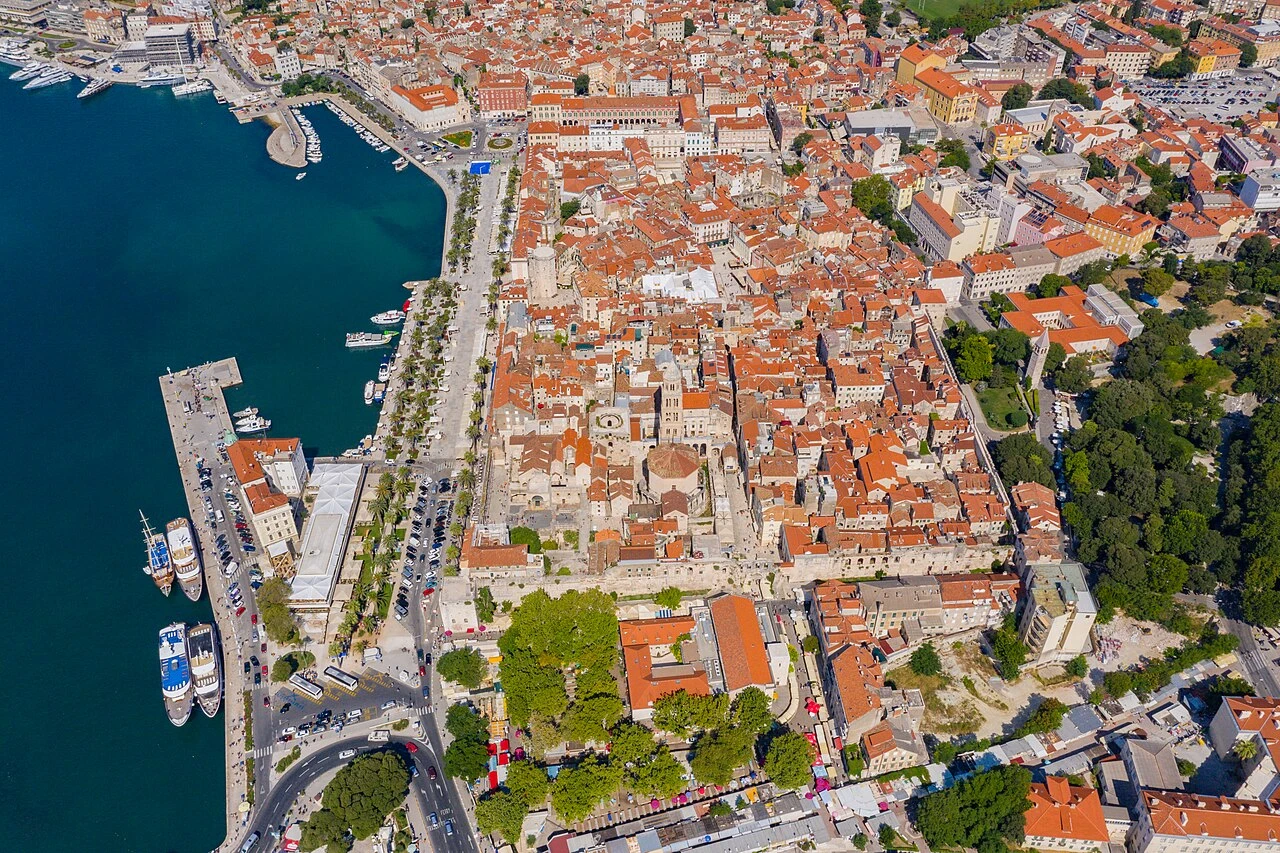
Split
Diocletian's Palace
Content & sources
Photo: Dronepicr · CC BY 2.0
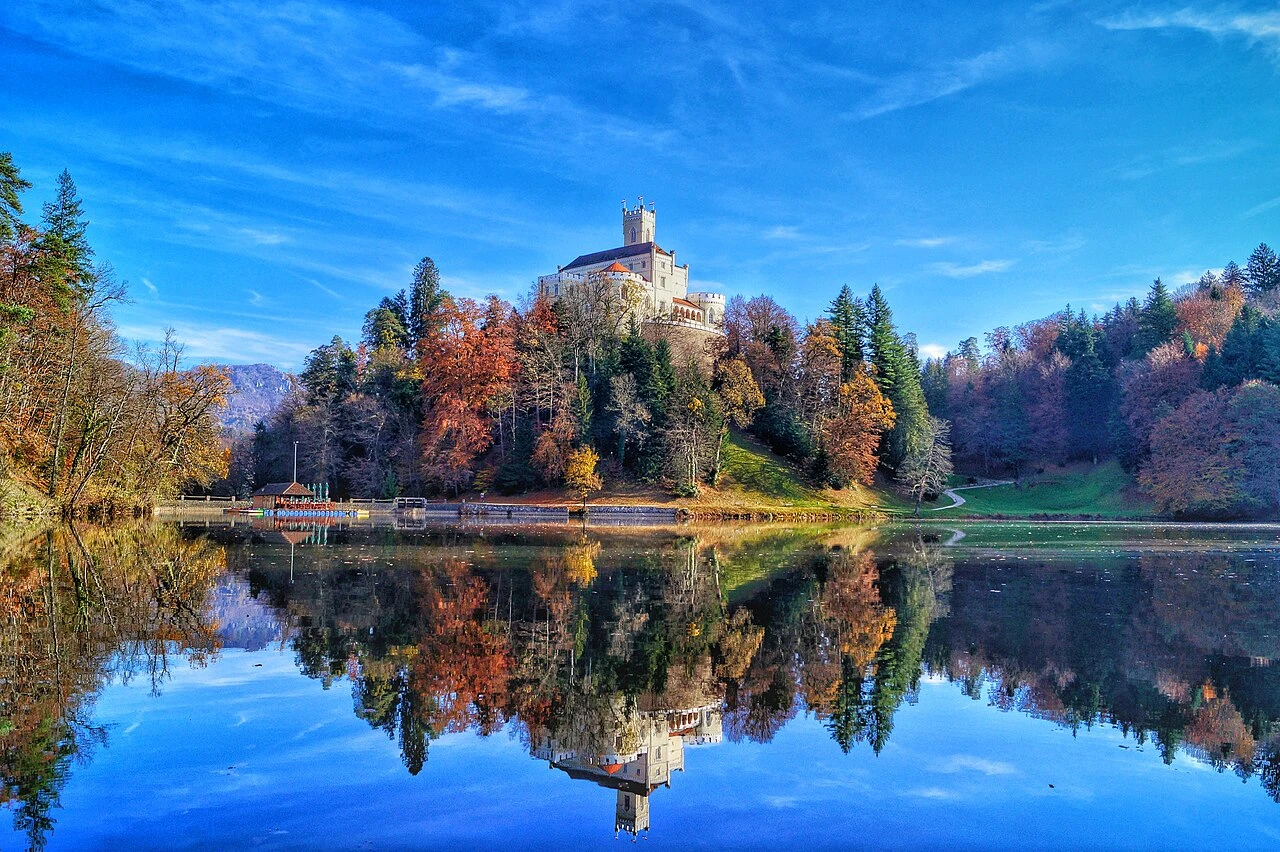
Trakošćan
Dvorac Trakošćan
Content & sources
Drazen Dombaj · CC BY-SA 4.0
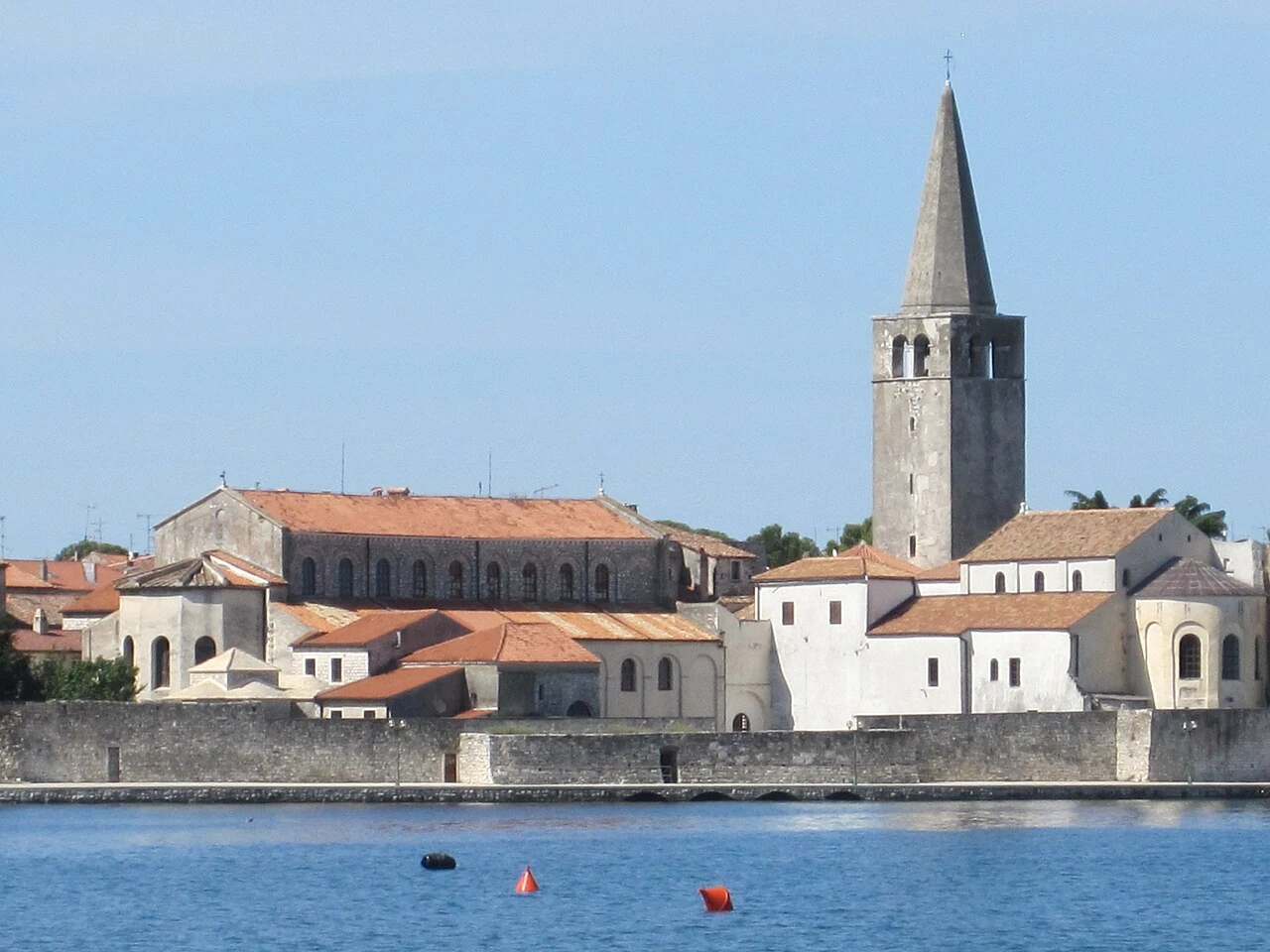
Grad Poreč
Eufrazijeva bazilika
Content & sources
Photo: Tiefkuehlfan · CC BY-SA 4.0
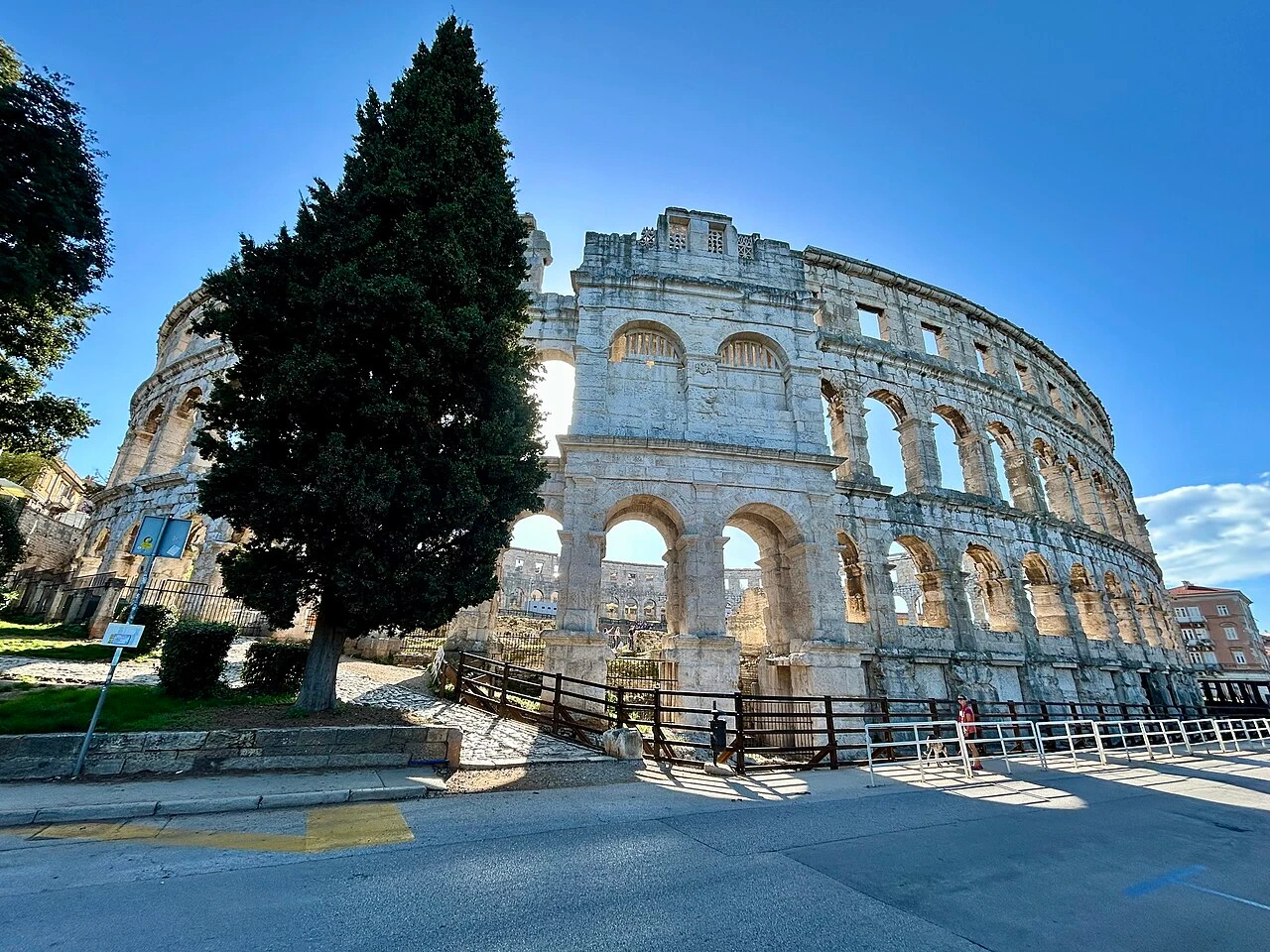
Grad Pula
Pula Arena
Content & sources
Photo: Olgierd Rudak · CC BY-SA 4.0