Stanza · Audio guide
Cathedral of St. Bartholomew, Plzeň Audio Guide
A place to remember. A story to take with you.
The Cathedral of St. Bartholomew is a Gothic church located on the Main Square in Plzeň. It was designated a national cultural monument of the Czech Republic in 1995.
Download Stanza, then search for “Cathedral of St. Bartholomew, Plzeň”.
About the tour
One guide. Your kind of visit.
The Cathedral of St. Bartholomew is a Gothic church located on the Main Square in Plzeň. It was designated a national cultural monument of the Czech Republic in 1995.
Ready when you are.
- 01Get the free Stanza app.
iOS & Android
- 02Find your guide.
“Cathedral of St. Bartholomew, Plzeň”
- 03Download before you go.
Works offline
Audio guide / 12 narrated stops
Inside the guide
Get to know a few of the stories before you go. Open a stop to read more.
01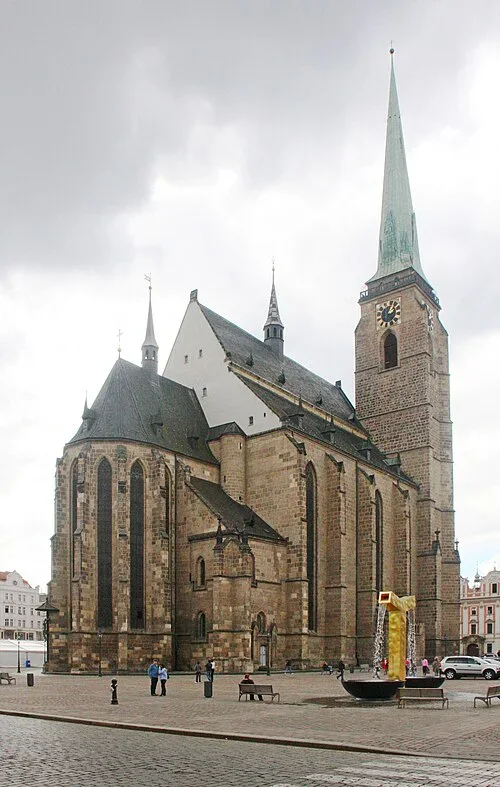 Republic Square and the West Portal
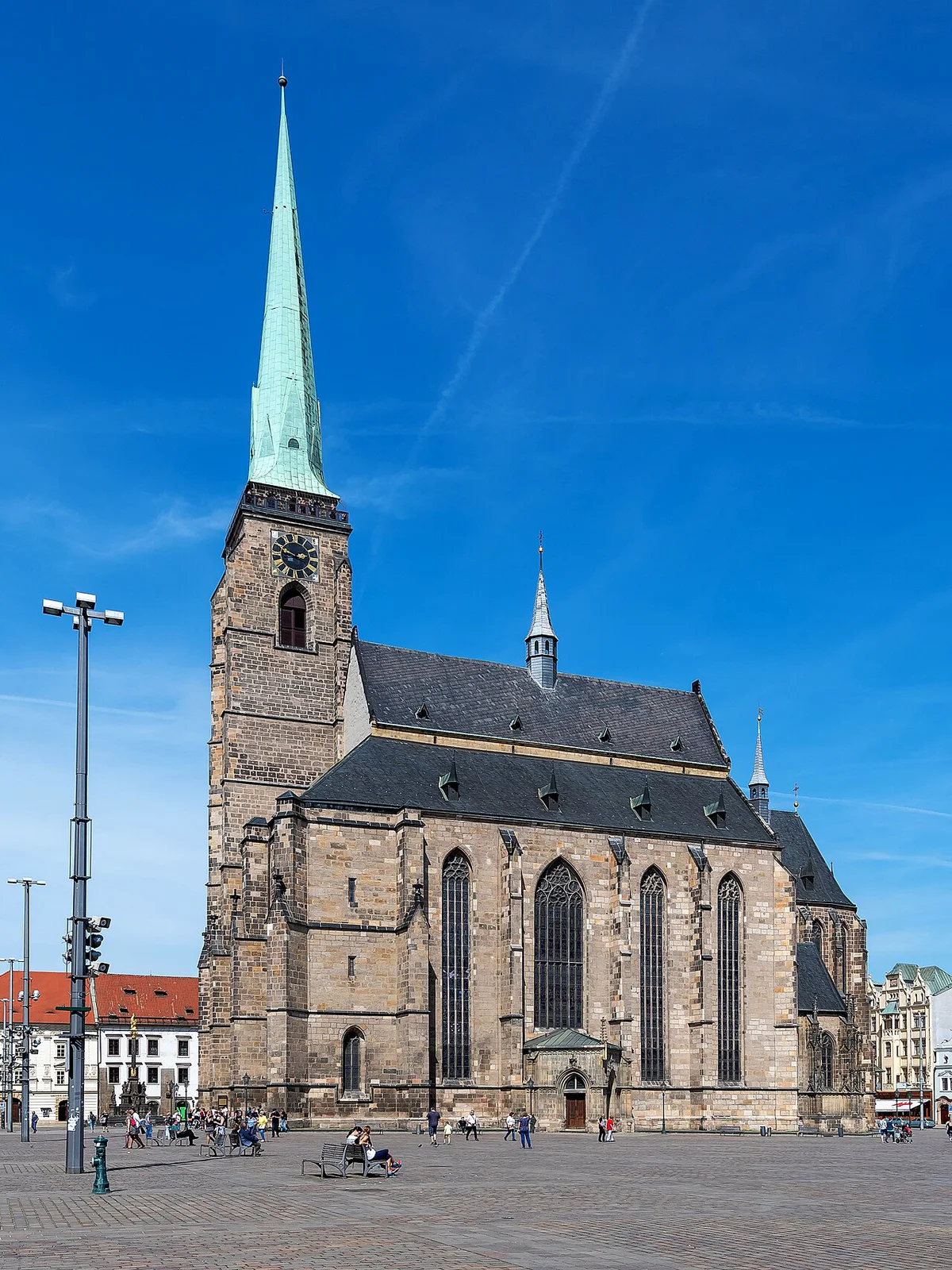
The Church on the Market Square
Welcome to the Cathedral of Saint Bartholomew, the great Gothic church of Plzeň. It was probably founded together with the city, around the year 1295. Most planned medieval towns pushed their churches out to the walls, away from the noise of trade. Plzeň did the opposite: this church stands right on the main square, beside the market stalls. Work on the great nave began around 1375, and the plan called for two towers at the west front. Only the northern one was ever finished. After the Hussite Wars, the southern tower was quietly dropped, because taste had turned against two-tower facades. So the city got a church with a single spire, leaning slightly off-centre, and that lopsided silhouette became its trademark. Inside, the story continues through sculpture, vaulting and a long restoration tale.
Tmv23 · CC BY-SA 3.0
02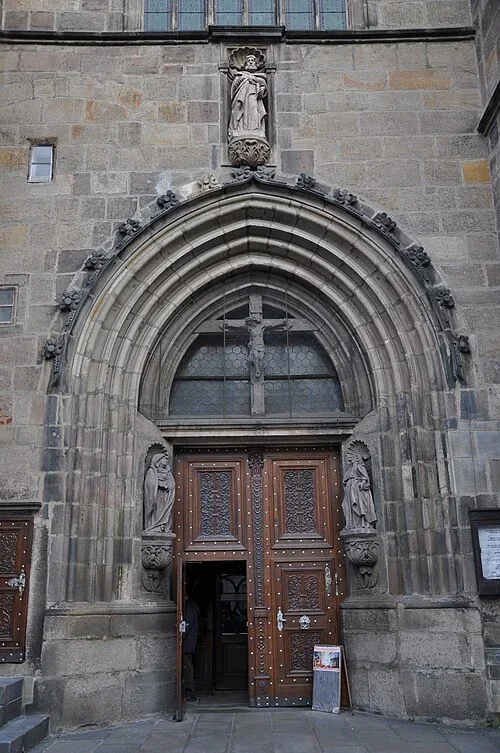 Republic Square and the West Portal
The West Portal and its Crucifixion
The west portal is the church's ceremonial face toward the square. Its pointed archivolt is ringed with crockets, small leafy hooks that spiral up to a finial at the top. The deep linings of the doorway were meant to carry statues, and the arrangement is telling: the Virgin Mary on one side, John the Evangelist on the other, with Christ on the cross above them. Together the three figures form a Crucifixion group, so the Passion scene presided over every entrance. Higher up, a niche holds a Baroque statue of Saint Bartholomew, the apostle the church is named for. Above the portal runs a pointed window with neo-Gothic tracery, set into the plain gable of the nave. Crossing this threshold meant stepping out of the marketplace and into sacred ground.
Ben Skála, Benfoto · CC BY-SA 3.0
03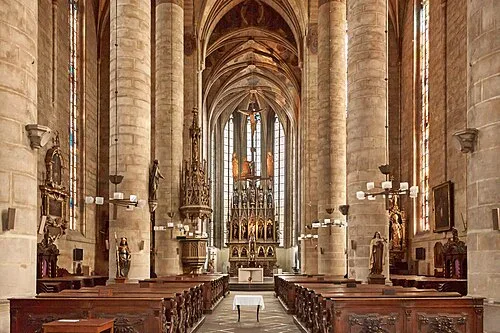 The Gothic Hall Nave
The Hall Church Nave
Inside, the first thing to notice is the shape of the space. This is a hall church, a type the late-Gothic builders loved: nave and side aisles rise to nearly the same height, so the interior feels like one tall, column-filled hall rather than a tall middle flanked by low corridors. The whole building runs almost fifty-eight meters from door to altar wall. Around the perimeter, a window-sill cornice runs like a string course and flows straight into the supports. Those supports are smooth cylindrical pillars, standing on round plinths, with no capitals to break the line. Four windows light each aisle, their linings cut with the same cylindrical profile. The columns march down the nave in pairs, drawing the eye toward the choir and the high altar at the far end.
Listen in the appLynx1211 · CC BY-SA 4.0
04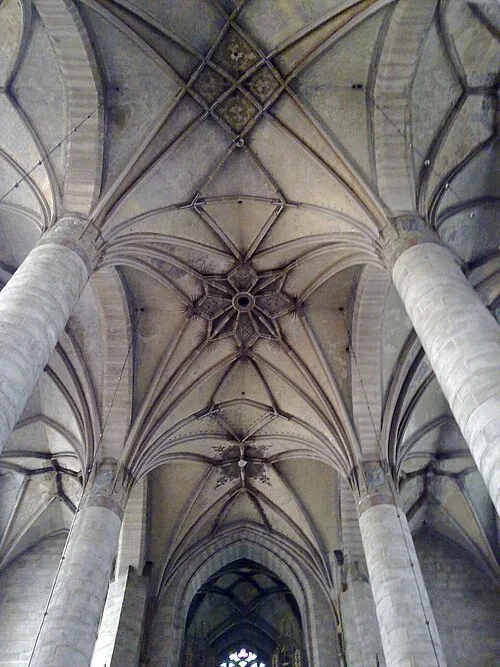 The Gothic Hall Nave
Net Vaults over the Nave
The ceiling is where this church shows off. After 1476, the nave and its aisles were roofed with net vaults, in which stone ribs interlace like the threads of a net. There is no dominating spine down the middle; the ribs cross and split at every field, turning pure structure into ornament. The man behind it was probably Master Erhard Bauer from Eichstätt, and he broke with the original design. The pillars had been planned as cornered, angular blocks. Bauer changed them to the round columns the nave uses today, and the net vault grew out of that decision. The change is still legible under the tower, where the rib springers betray the older plan of a cross vault, later turned and doubled to fit the new scheme. A building that switched plans halfway up, and the switch is written in the stonework.
Listen in the appPhoto: Holyhell · CC BY-SA 3.0
05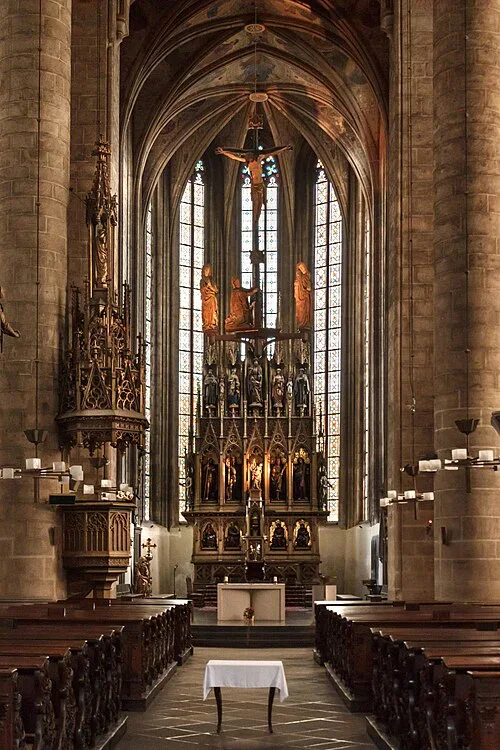 The Presbytery and Gothic Calvary
The Presbytery and Mocker's Restoration
The church as it stands began here, at the eastern end. The Teutonic Order had held the patronage since 1322, and in 1342 it won a long dispute over the clergy with the Church of All Saints in Malice. Winning that quarrel was probably what set the new building in motion, and the presbytery rose first. More than five centuries later, the weather nearly ended it. In 1870 a windstorm brought the eastern gable crashing down onto the presbytery and the Sternberg Chapel, throwing off the vault along with its keystone. The repair fell to Josef Mocker, a specialist in purist restoration who shaped Czech Gothic purism, who worked here from 1879 to 1883. Mocker rebuilt the vault and swept the interior clean, removing more than twenty-four mostly Baroque altars and the old Renaissance dormers from the roofs. In place of the main Baroque altar he set his own Neo-Gothic design, the tall canopy of statues and painted glass that fills the choir now. The vault paintings date from 1883, at the end of his campaign.
Listen in the appPhoto: Lynx1211 · CC BY-SA 4.0
06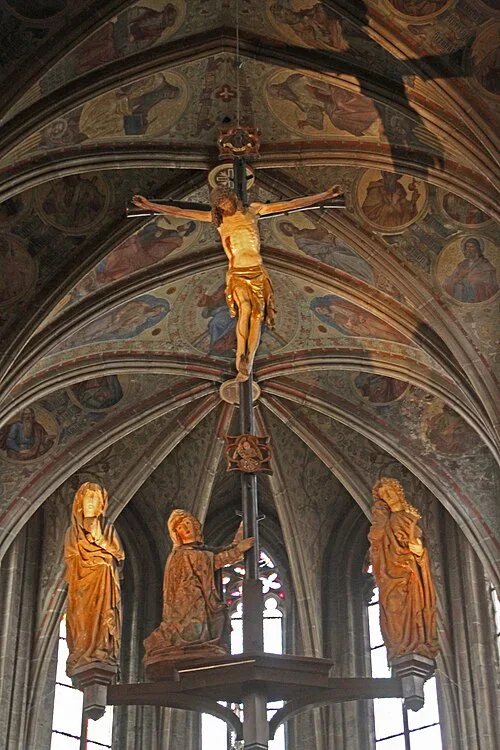 The Presbytery and Gothic Calvary
The Gothic Calvary
Suspended in the choir hangs a monumental Calvary, carved in the fourteen-sixties. Christ dies on the cross, with Mary and Saint John the Evangelist standing below at the foot of it. The group is counted an extraordinary work of Gothic woodcraft, and its figures still carry the soft, angular drapery of the late Gothic carvers. It belongs to the building's own story: the hall church was still being completed when this sculpture was made, so the carving watched the vaults close overhead. Behind it, the vault surfaces are covered with painting, a rich painted sky of figures that sets the Calvary against color rather than bare stone.
Listen in the appPhoto: Gerd Eichmann · CC BY 4.0
07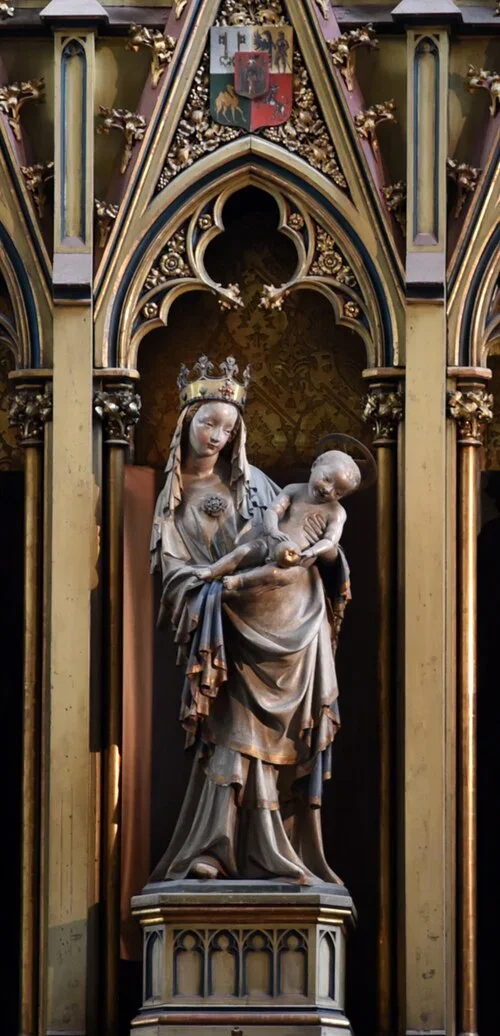 The Shrine of the Plzeň Madonna
The Plzeň Madonna
In the middle of the high altar stands the church's most valuable treasure, the Plzeň Madonna. She was carved around 1390 from opuka, a local marlstone, in the style art historians call the Beautiful Style, when Gothic sculptors softened every line into grace. The Virgin holds the Christ child on her arm, both figures swaying in the same gentle curve, her crown and flowing folds picked out in paint and gilding. The work is attributed to the Master of the Krumlov Madonna, a carver whose hand is traced across Bohemia. She sits enthroned at the center of the pseudo-Gothic altar designed by Josef Mocker, the nineteenth-century restorer, so a medieval image inside a neo-Gothic frame. For the people of Plzeň this is the devotional heart of the building, the image everything else gathers around.
Listen in the appJán Grajcár · CC BY-SA 4.0
08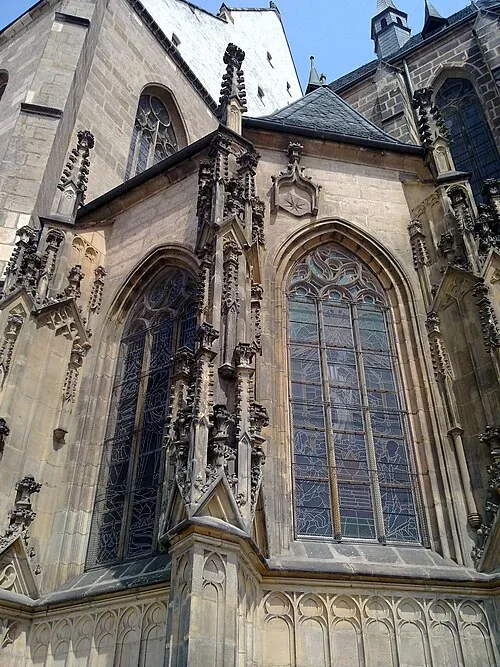 The Sternberg Chapel
Built onto the south side of the presbytery in the fourteen-seventies and eighties, the Sternberg Chapel was meant as the burial place of the Sternberg family. One possible author of the chapel is Hans Spiess, who at the time was working for King Vladislaus the Second at the castle of Křivoklát nearby. The family made sure everyone knew whose chapel this was. Outside, triangular pinnacles climb the clustered pillars, and one carries a circular eight-pointed star, the Sternberg coat of arms. Inside, the vault repeats the claim: seven suspended ribs spring from a star-shaped crown and meet deep below in a hanging pendant, which bears the same sign. Who actually carved all this is a puzzle. Art-historical analysis argues against the famous Czech builder Benedikt Rejt, and points instead toward Lusatia, because a church of the same era in Zwickau shows striking similarities. The Sternbergs had close ties to that region, so they may simply have hired the best master from where their contacts were strongest.
Listen in the appPhoto: Holyhell · CC BY-SA 3.0
09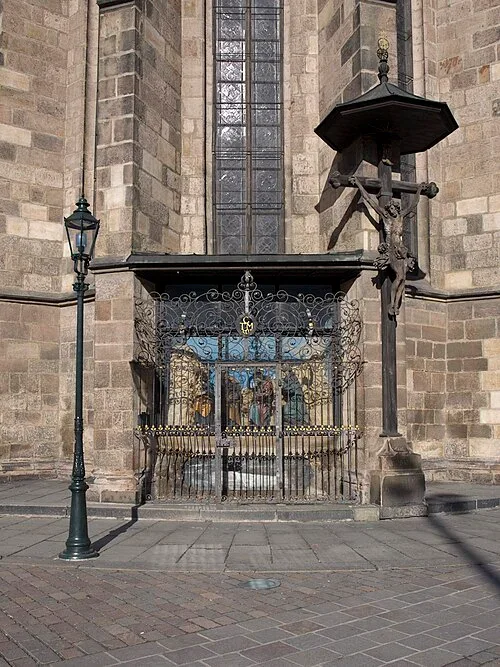 The Mount of Olives Shrine
The Exterior Shrine on the East Side
Outside on the east side, the great stone wall carries a small niche shrine, closed off by a wrought-iron grille of curling scrollwork. Beside it rises a tall standing crucifix, sheltered under its own little roof canopy, with the figure of Christ carved against the sky. A green lamp post stands nearby, ordinary street furniture next to a place of prayer. Shrines like this are a reminder that a church's life was never confined to its portals. People stopped here to pray on their way through the city, without ever stepping inside. Against the mass of Gothic masonry, the little shrine reads almost domestic in scale.
Listen in the appHonza Groh (Jagro) · CC BY-SA 3.0
10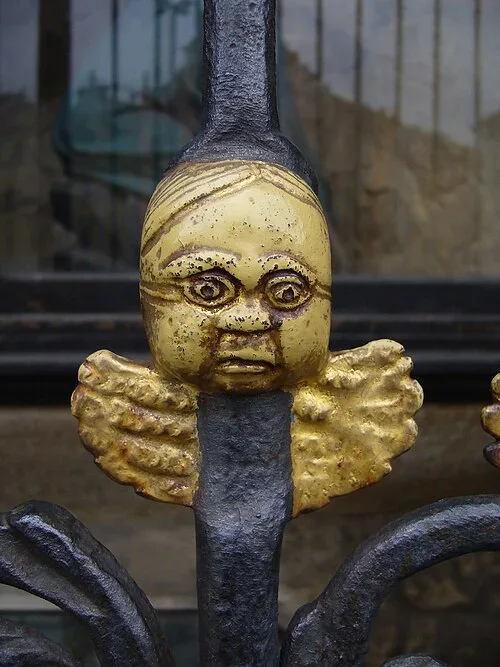 The Mount of Olives Shrine
Andělíček, the Little Angel
The shrine's iron grille hides its own small wonder. Set into the black scrollwork is a little cast angel's head, round-cheeked and wide-eyed, with gilded wings spreading on either side. Plzeň people know it affectionately as Andělíček, the little angel. Craftsmen worked touches like this into even the most functional ironwork, so a plain protective grille became a place where a face greets anyone who comes close. Where the little angel came from, and when it was set there, the records leave open. What is certain is the affection: a small gilded face that has watched over the shrine for generations.
Listen in the appPhoto: Jik jik · CC BY-SA 3.0
- 11
The Bell Chamber
The tower's working machinery: bells restored in 2014 and a climb of 299 wooden steps.
- 12
From the Tallest Spire in Czechia
From the tallest church tower in the Czech Republic, the story of the church that grew with its city.
Cathedral of St. Bartholomew, Plzeň
Frequently asked questions
How much does the guide cost?
Free app download. Listed guide price: $0.99. Guide price shown in the app. Audio guide only. Venue admission is separate.
Can I listen without internet?
Yes. Download the guide’s audio, images, and maps in the app before your visit. Your downloaded content is then available offline.
Can I listen in my language?
This audio guide is available in 15 languages, including English.
Do I need to follow a schedule?
No. This is a self-guided experience. Choose your stops, pause whenever you like, and return to a story at your own pace.
At your own pace
Explore Cathedral of St. Bartholomew, Plzeň.
Download Stanza, then search for “Cathedral of St. Bartholomew, Plzeň”.
Free app download · Guide price shown in the app
Keep exploring
Nearby audio guides
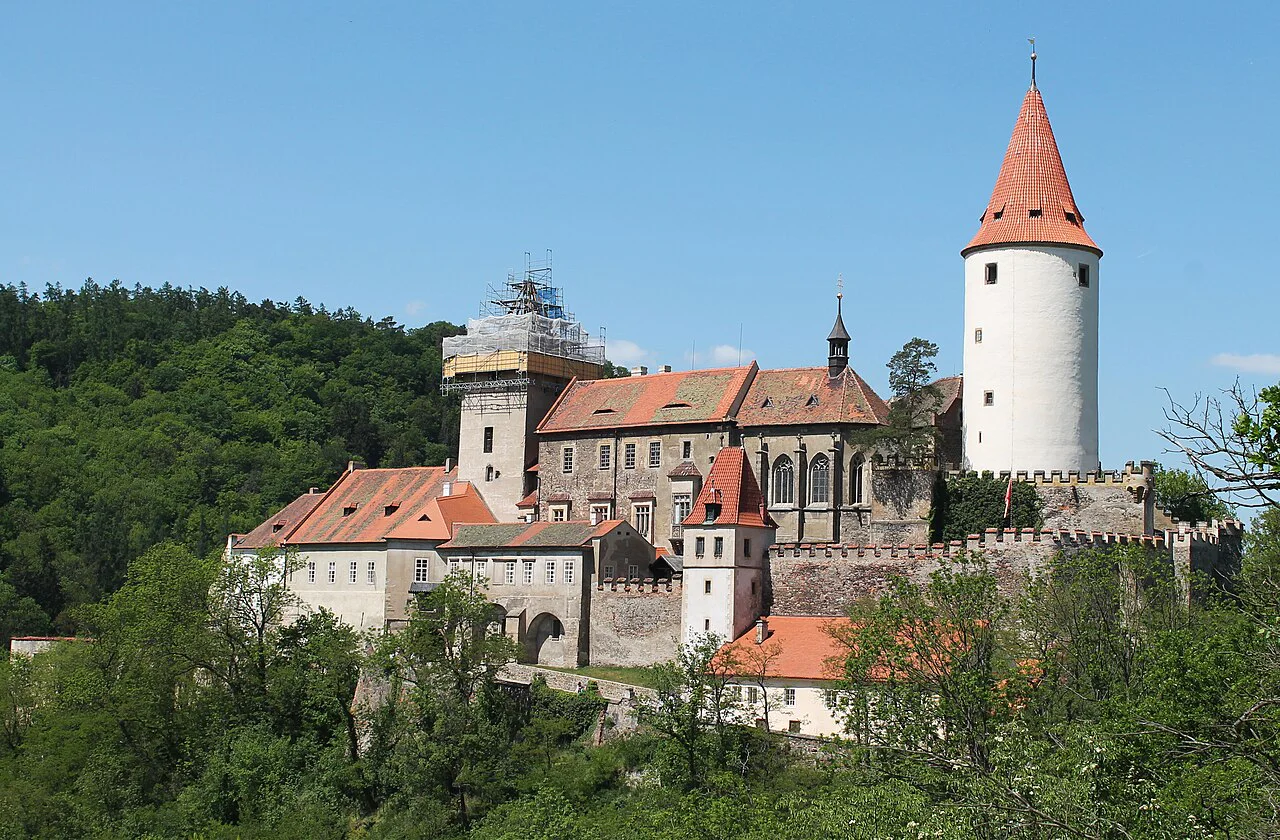
Křivoklát · 48 km
Křivoklát Castle
Content & sources
Photo: Harold · CC BY-SA 3.0
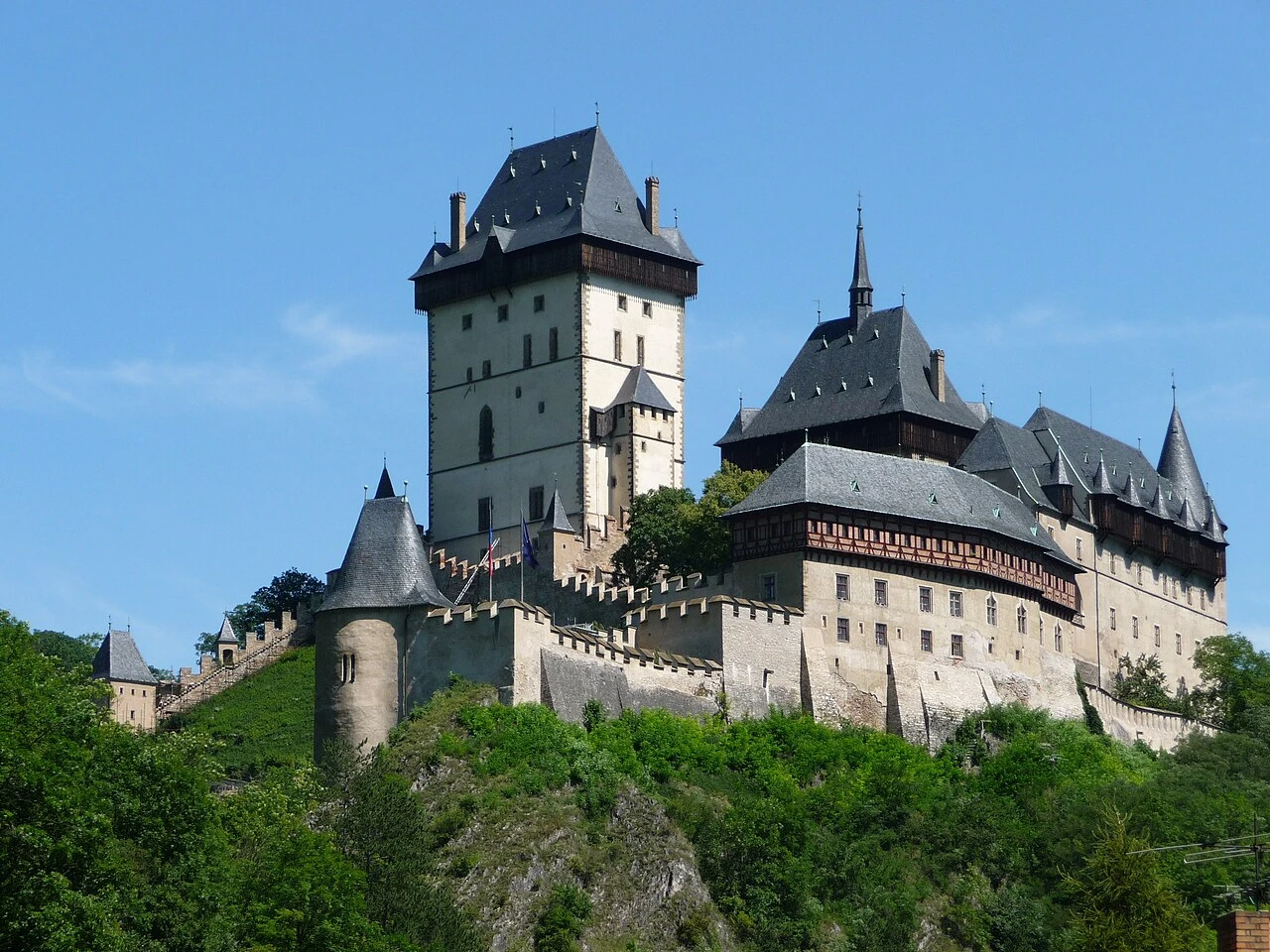
Karlštejn · 62 km
Karlštejn Castle
Content & sources
Jürgen Regel, Marian… · CC BY 3.0
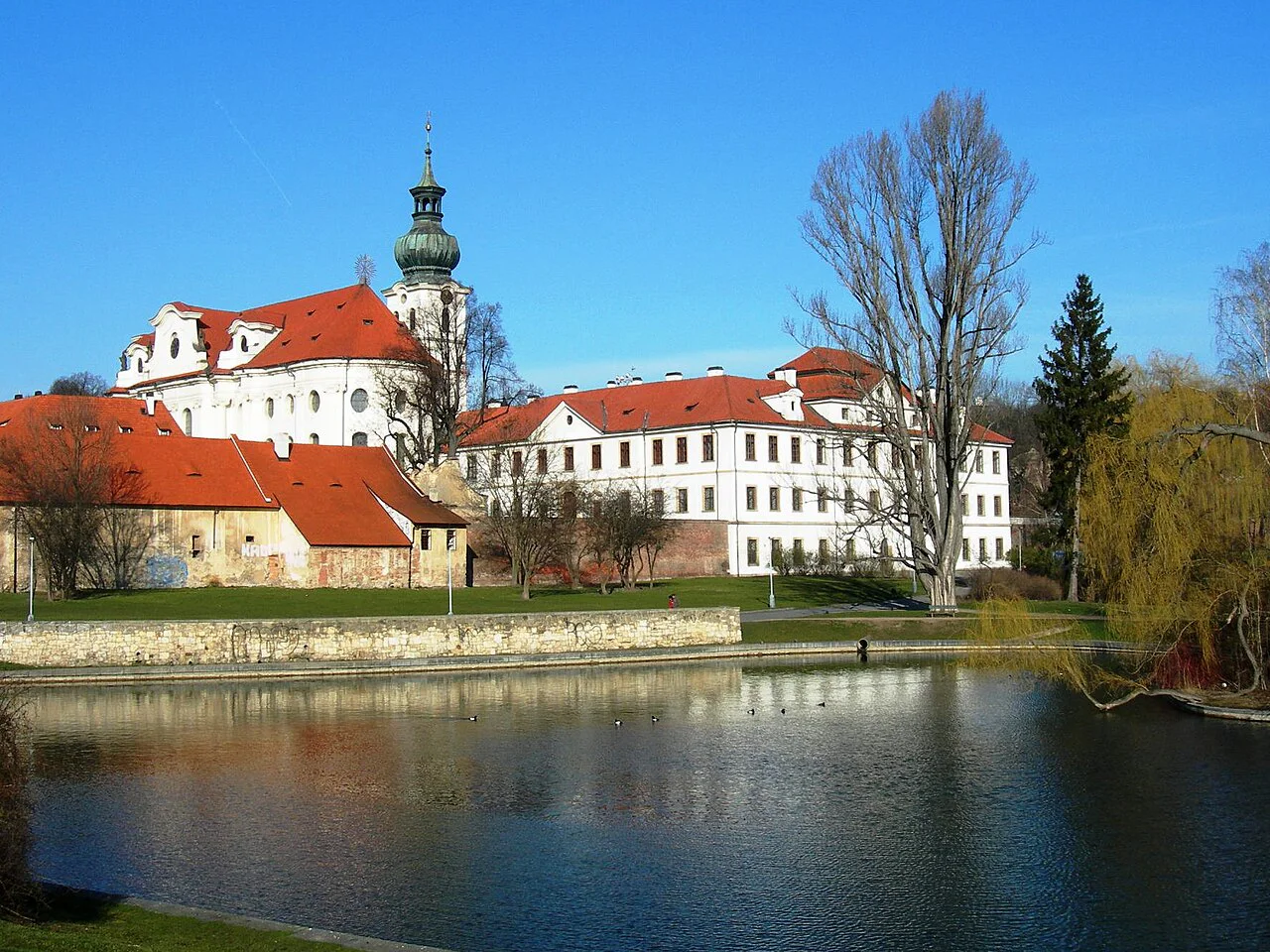
Prague · 79 km
Břevnov Monastery
Content & sources
No machine-readable author provided. Sokoljan assumed (based on copyright claims). · CC BY-SA 3.0
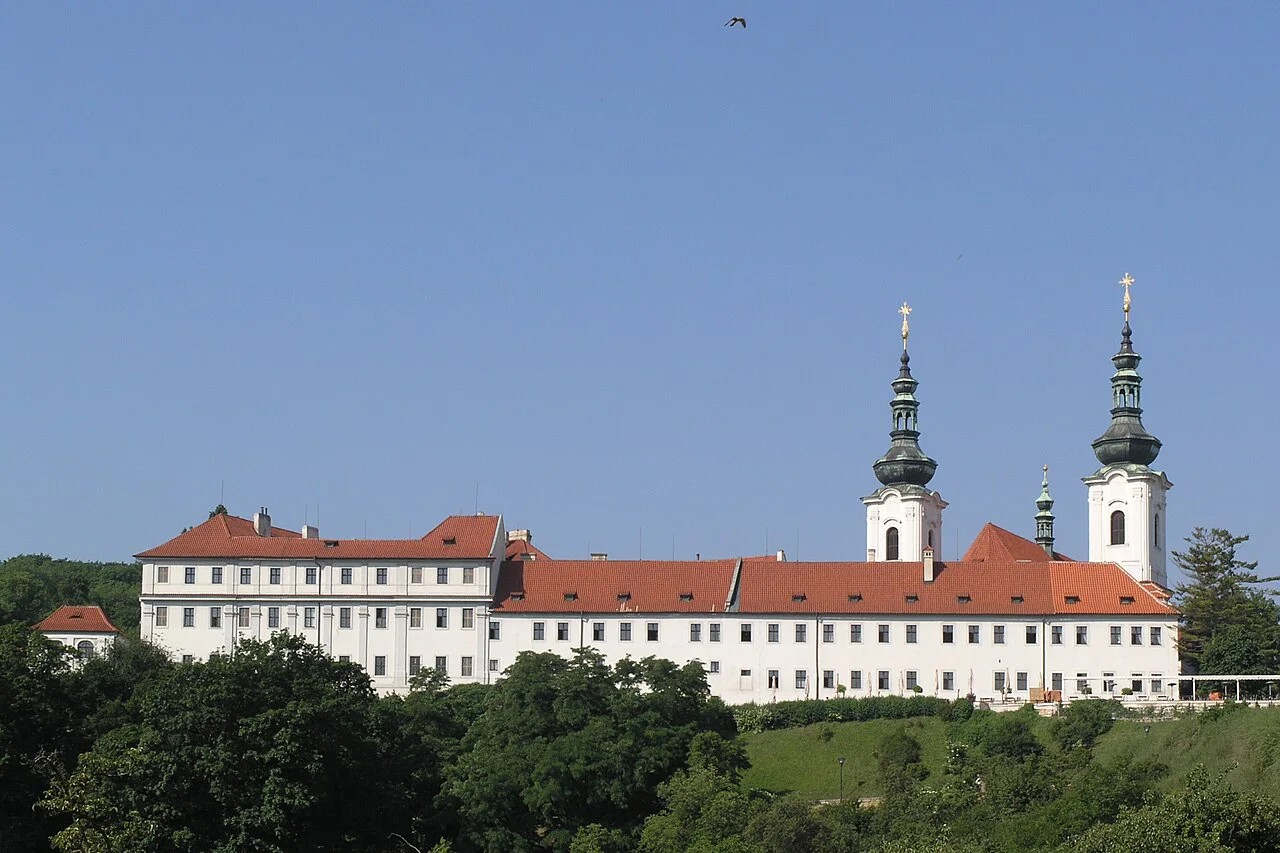
Prague · 82 km
Strahov Monastery
Content & sources
Matěj Baťha · CC BY-SA 2.0