Stanza · Audio guide
Jubilee Synagogue Audio Guide
A place to remember. A story to take with you.
The Jubilee Synagogue is an active Orthodox Jewish synagogue located on Jerusalem Street in Prague. It is currently the largest synagogue in the city.
Download Stanza, then search for “Jubilee Synagogue”.
About the tour
One guide. Your kind of visit.
The Jubilee Synagogue is an active Orthodox Jewish synagogue located on Jerusalem Street in Prague. It is currently the largest synagogue in the city.
Ready when you are.
- 01Get the free Stanza app.
iOS & Android
- 02Find your guide.
“Jubilee Synagogue”
- 03Download before you go.
Works offline
Audio guide / 7 narrated stops
Inside the guide
Get to know a few of the stories before you go. Open a stop to read more.
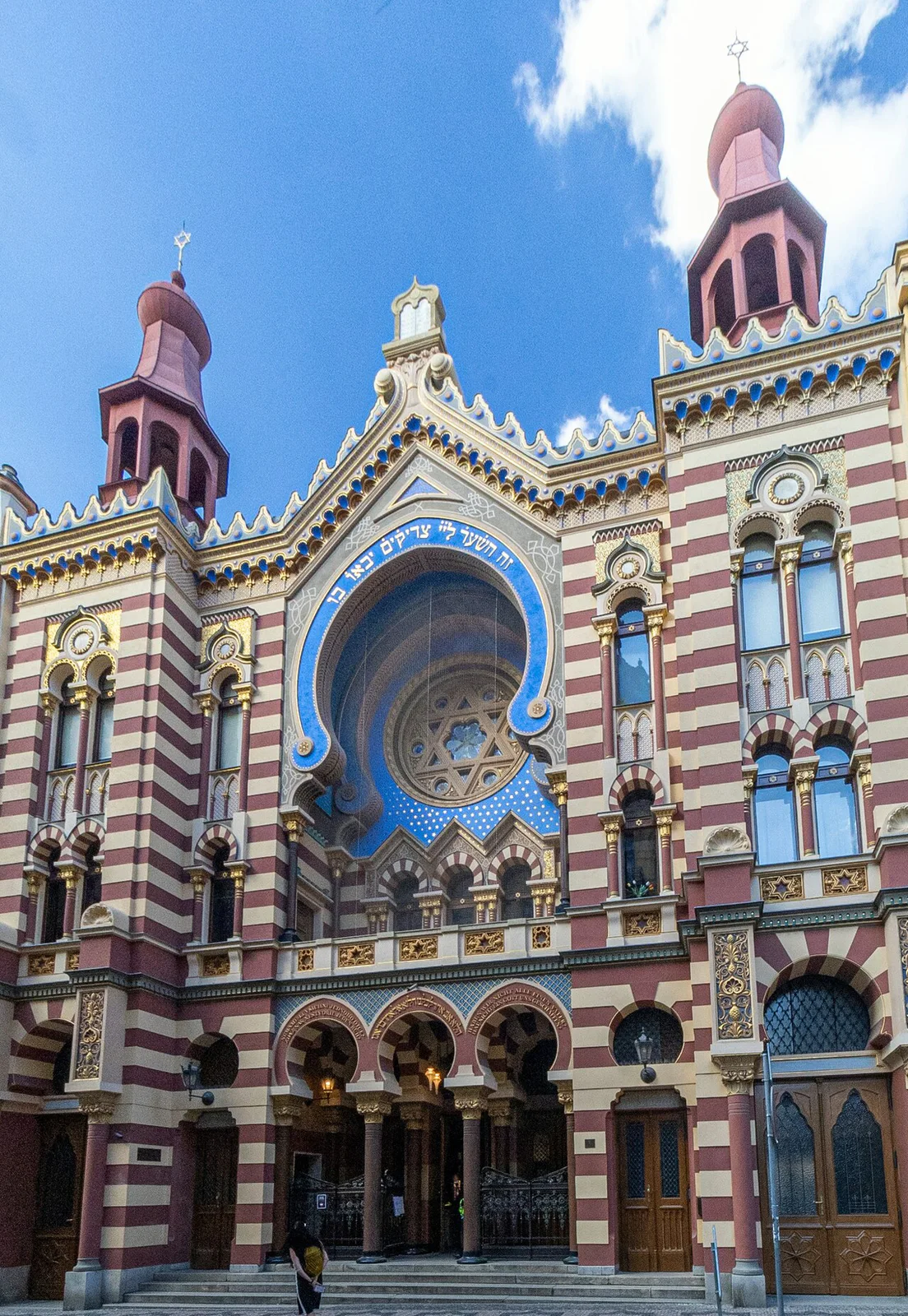
01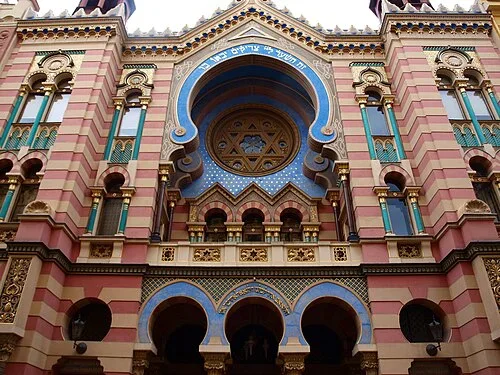 The Grand Facade on Jerusalem Street
Welcome to the Jubilee Synagogue, the largest surviving synagogue in Prague. Few buildings in the city look like this one. The facade wears bold stripes of red and white stone, in a style borrowed from Moorish Spain. Horseshoe arches frame the windows, and a great Islamic-style arch crowns the middle, flanked by slender towers. The blend is deliberate: Moorish Revival shapes softened with Art Nouveau detail. The story begins with the clearing of the old Prague Jewish ghetto. Three synagogues stood in the way of the demolition, the Zigeuner, the Velkodvorská and the New, and all three were to come down. So in 1896 a new congregation was founded to build their replacement. Its members bought an old house on Jerusalem Street in the New Town, and the search for a design began. One architect proposed a neo-Romanesque building, another a neo-Gothic one. Then in 1903 the Viennese architect Wilhelm Stiassny, who had already designed synagogues across the Austro-Hungarian empire, offered something bolder in the Moorish style. His plan was approved the following year. The builder Alois Richter raised the house between 1905 and 1906, and it faces west onto the street that gave it its second name.
Vit · CC BY-SA 3.0
02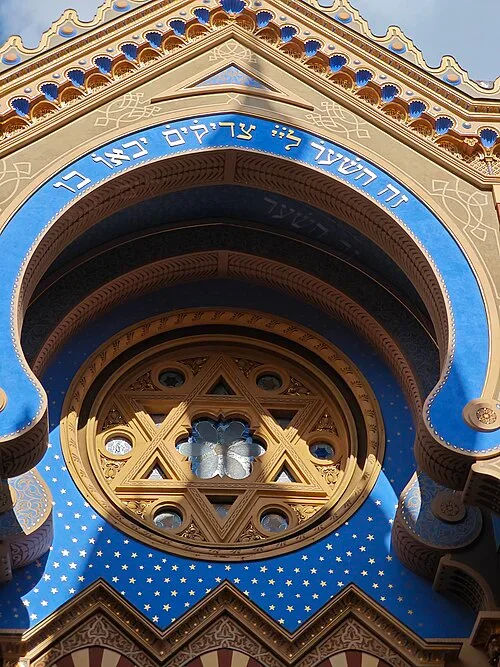 The Grand Facade on Jerusalem Street
The Rosette Window and Psalm Gate Inscription
Set into the great arch over the door is a round window built around a Star of David, its golden rays worked into a rosette. Around the arch runs a line of Hebrew in gilded letters. It is a verse from Psalm 118: This is the gate of the Lord, through which the righteous enter. A fitting welcome to a house of prayer. But the inscription carries a second message, hidden in plain sight. Certain letters of the Hebrew text are set slightly larger than the rest. Read on their own, they spell out the Jewish year 5666, the year that falls in 1906. The builders wrote the date of their new synagogue into the very words of welcome above its gate. Above the arch, the gable of the facade rises to a pair of marble tablets bearing the Ten Commandments, so that the whole front reads as one composition: the Law at the top, the psalm at the gate, and the Star of David glowing between them.
Photo: Intermerker · CC BY-SA 4.0
03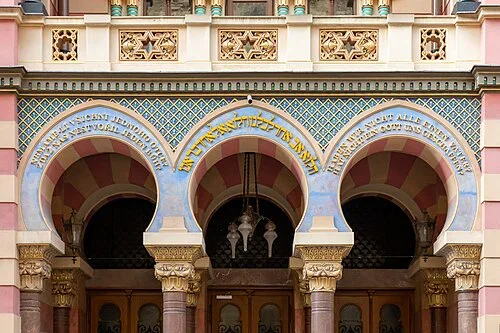 The Entrance Portico and Restored Inscriptions
The Portico of Three Inscriptions
The entrance portico opens through three horseshoe arches, and each one carries the same question. It comes from the prophet Malachi: Have we not all one Father? Has not one God created us? The Hebrew text fills the central arch. The two side arches once carried the same verse in Czech and in German, so that every worshipper could read it in his own tongue. Under the Nazi occupation those words became a target. First the German inscription was torn down, and the Czech text was split in two, stretched across the right arch and the left. Then, from 1941, the Czech inscription was stripped away as well. For decades the arches stood without their verse. Only in 2019, during a careful reconstruction, were the Czech and German inscriptions painted back where they had been. The question of the prophet now greets visitors in three languages again, much as it did when the building was new.
Listen in the appDietmar Rabich · CC BY-SA 4.0
04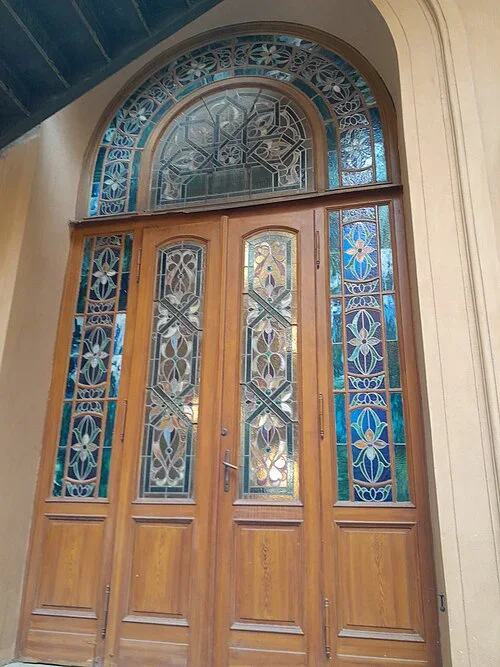 The Entrance Portico and Restored Inscriptions
Entering the Vestibule: From Jubilee to Jerusalem
The entrance doors are tall wooden leaves set with stained glass, their panes glowing in blue and green flower patterns under a semicircular transom. Beyond them lies the vestibule, and the vestibule holds a piece of history that has no business surviving. When the synagogue opened, it was named for the golden jubilee of Emperor Franz Joseph the First, marking fifty years since he took the throne. A marble memorial plaque to the emperor still hangs in the vestibule. After the republic was founded it was one of the very few imperial monuments in the Czech lands that was never torn down. The emperor's name fared differently. When Czechoslovakia declared independence in 1918, the old name recalled the defeated Austro-Hungarian monarchy, and it quietly gave way to a newer one, taken from the street outside: the Jerusalem Synagogue. That is the name that stuck, though both are still used for the same building.
Listen in the appPhoto: Ikcur · CC0
05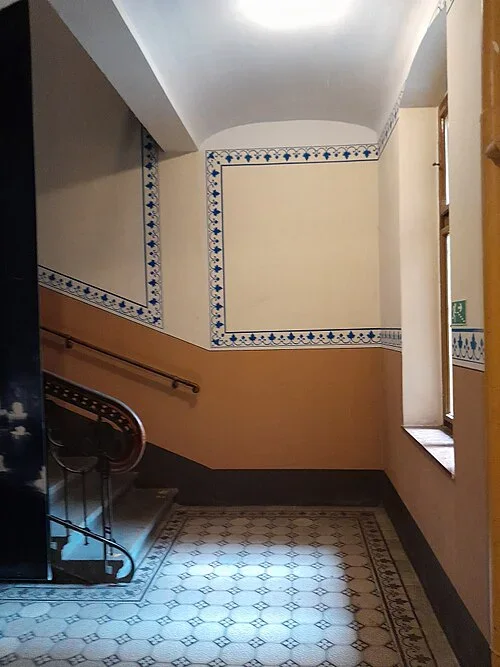 The Vienna Secession Interior Corridors
The Secession Painted Corridor
Inside, the synagogue changes character. The Moorish shapes of the facade give way to crisp painted borders in blue and white, geometric frames and stylized flowers, the language of the Vienna Secession. Much of this decoration had been covered over in earlier decades. A long restoration campaign brought it back to light, recovering the richly painted ornament the building was designed with. The World Monuments Fund supported that work for nearly two decades, from 1992 to 2010, and since the spring of 2008 the synagogue has welcomed regular visitors as well as worshippers. The restoration also turned up a secret. In January 2003, while examining the wall paintings, restorers lifted a marble slab to the left of the Holy Ark. Beneath it lay a hidden parchment scroll, the Final Document, written in 1906 when the building was finished. It recounts the history of the construction, names the builders, and lists the firms and craftsmen who made and decorated the synagogue. Its authors tucked it away for whoever would come looking.
Listen in the appPhoto: Ikcur · CC0
06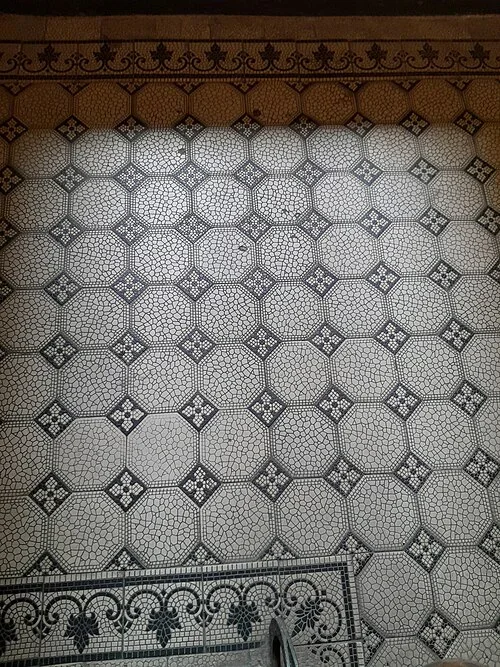 The Vienna Secession Interior Corridors
The Mosaic Floor of a Surviving Synagogue
Underfoot, the floor is a field of small mosaic tiles, octagons and diamonds set with dark flower rosettes, edged with a frieze of acanthus leaves. It is Secession-era work, and it has carried the building through its hardest chapter. The last Jewish wedding celebrated in this synagogue took place in April 1941. That September, on the order of the acting Reich Protector Reinhard Heydrich, the building was closed for worship. It was then used as a warehouse for confiscated Jewish property. The original synagogue furniture was moved out, first to the Spanish Synagogue, and was probably destroyed. The bitter irony is that this degrading reuse kept the building itself alive. Stored full of confiscated goods, it was largely spared from demolition and devastation through the war. As soon as the fighting ended, services began here again, and they have continued ever since.
Listen in the appPhoto: Ikcur · CC0
07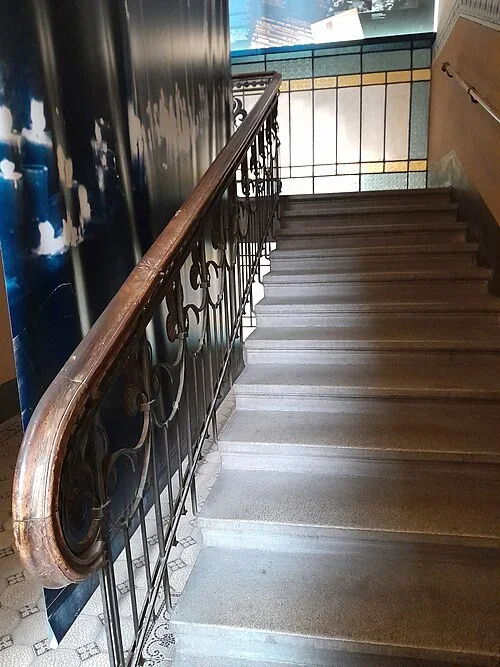 The Staircase to the Gallery
The Staircase to the Women's Gallery
This staircase, with its curving wooden handrail and wrought-iron scrollwork, climbs toward the women's gallery. The long hall of the synagogue is divided by two rows of seven Islamic horseshoe arches, and these carry the gallery on their backs. Its parapet is painted with biblical quotations in Hebrew, and large stained-glass windows light both levels. Services are still held here regularly, in the Orthodox rite, more than a century after the doors first opened. And the building guards something rarer still. It is described as the last place in the world where the liturgical melodies of Salomon Sulzer, the celebrated Viennese cantor-composer, survive in actual use, including his setting of Lecha dodi. From 1963 to 1994 those melodies were sung here by the cantor Dr Moše Blum, one of the last of the classical pre-war cantors. A community that lost three synagogues to the wreckers, built this one in their place, saw it closed and emptied, and restored it, still prays and sings under its arches today.
Listen in the appPhoto: Ikcur · CC0
Jubilee Synagogue
Frequently asked questions
How much does the guide cost?
Free app download. Listed guide price: $0.99. Guide price shown in the app. Audio guide only. Venue admission is separate.
Can I listen without internet?
Yes. Download the guide’s audio, images, and maps in the app before your visit. Your downloaded content is then available offline.
Can I listen in my language?
This audio guide is available in 15 languages, including English.
Do I need to follow a schedule?
No. This is a self-guided experience. Choose your stops, pause whenever you like, and return to a story at your own pace.
At your own pace
Explore Jubilee Synagogue.
Download Stanza, then search for “Jubilee Synagogue”.
Free app download · Guide price shown in the app
Keep exploring
Nearby audio guides
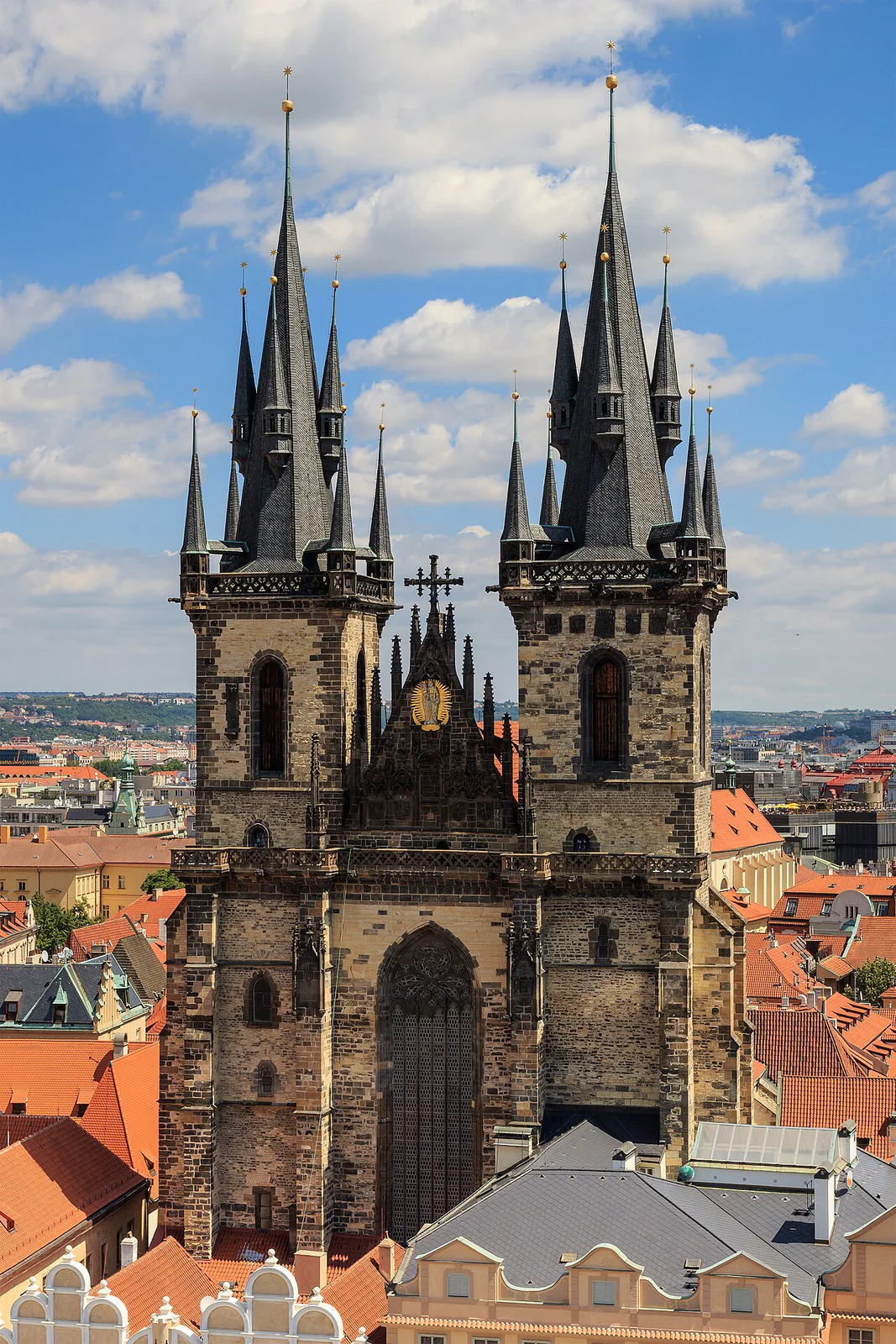
Prague · 1 km
Church of Our Lady before Týn
Content & sources
Photo: A.Savin · FAL
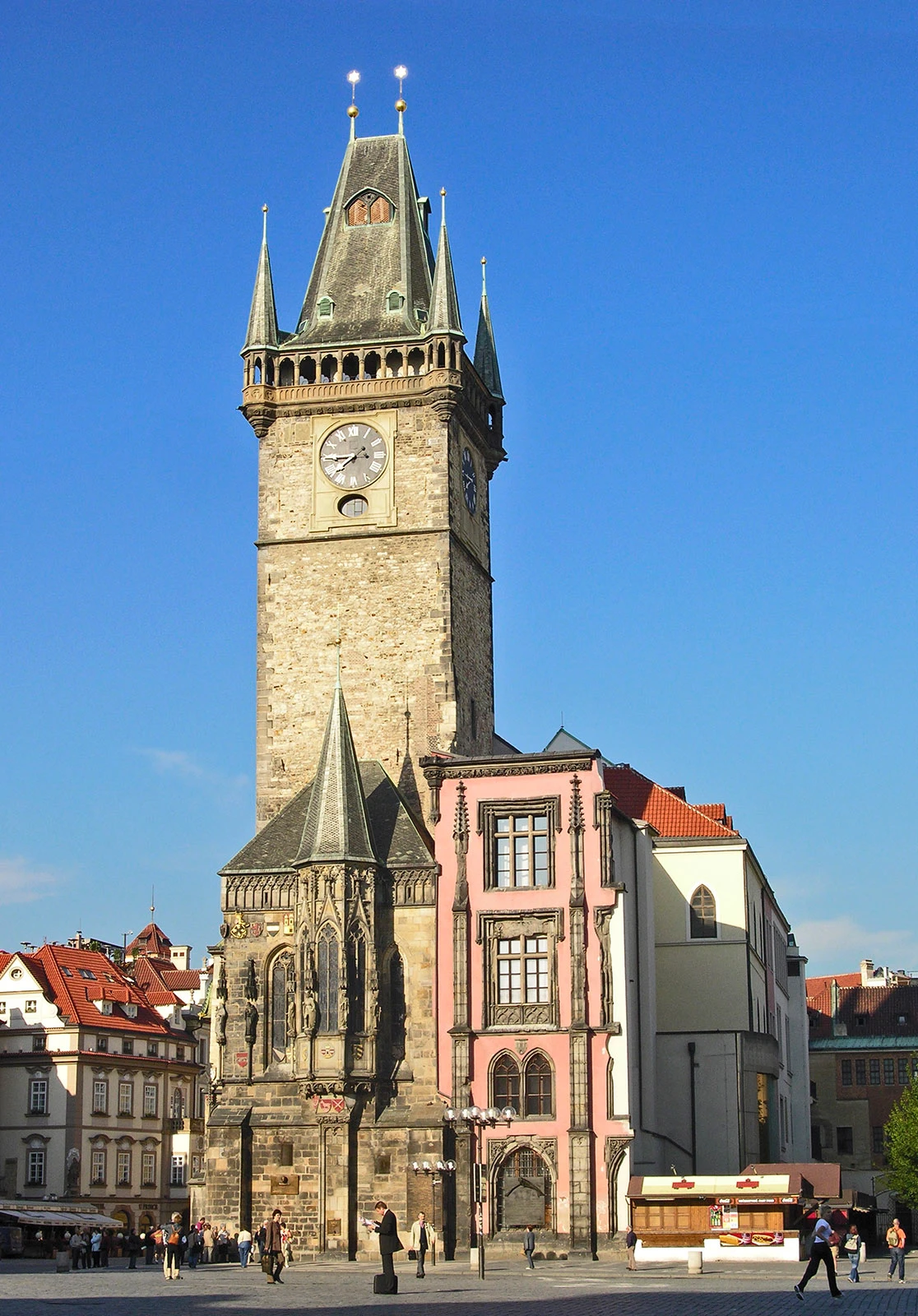
Prague · 1 km
Old Town Hall
Content & sources
Hans Peter Schaefer, http://www.reserv-a-rt.de · CC BY-SA 3.0
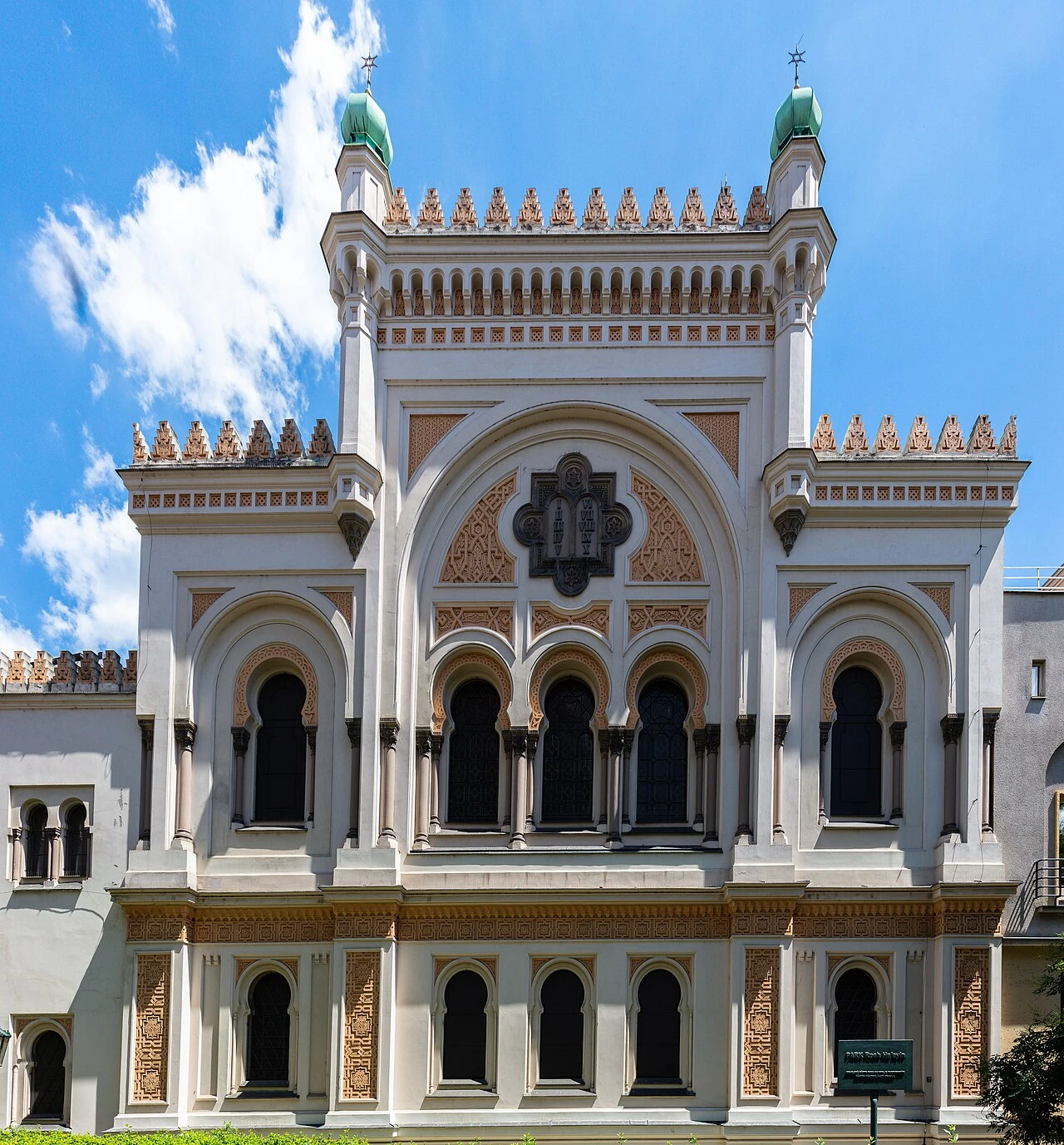
Prague · 1 km
Spanish Synagogue
Content & sources
Diego Delso · CC BY-SA 4.0
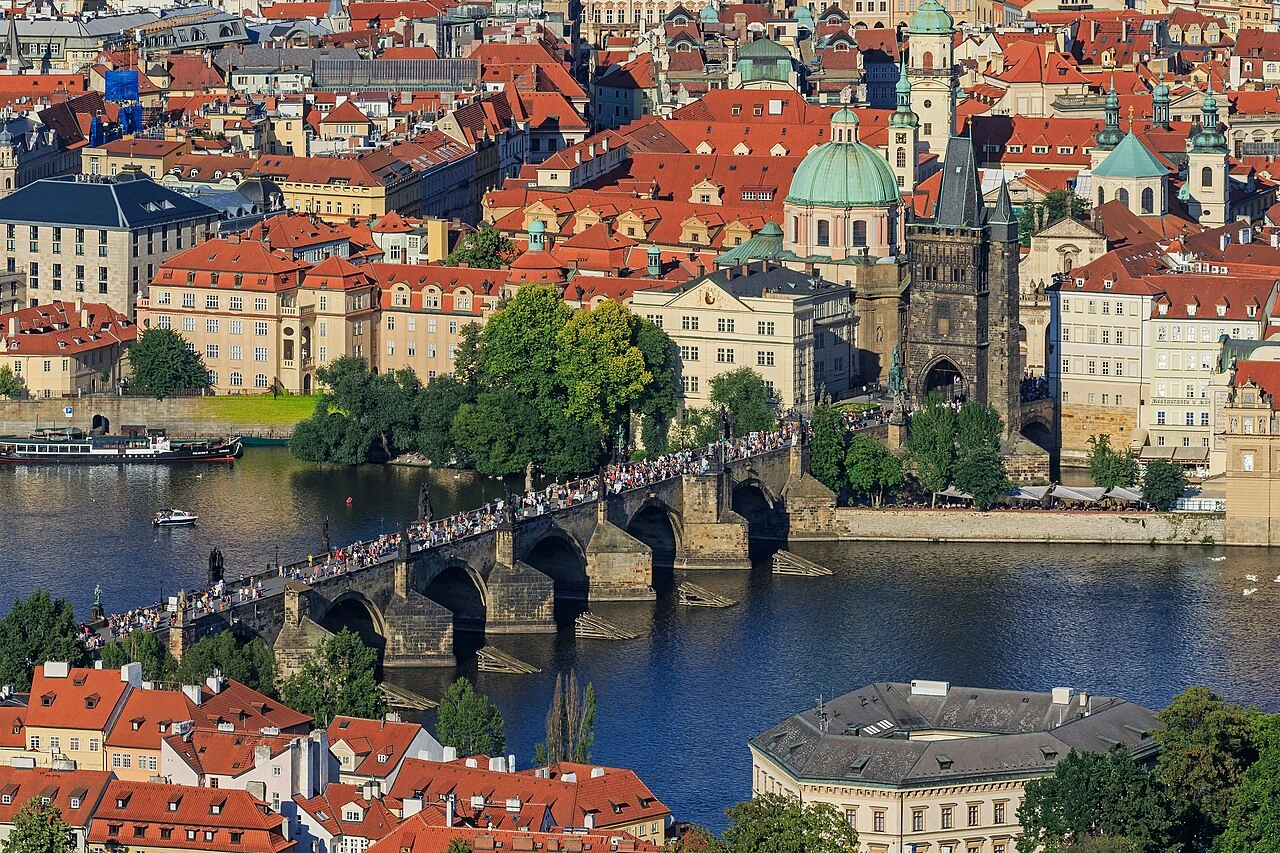
Prague · 1 km
Charles Bridge
Content & sources
Photo: A.Savin · FAL