Stanza · Audio guide
Catacombs of Kom El Shoqafa Audio Guide
A place to remember. A story to take with you.
The catacombs of Kom El Shoqafa are a historical archaeological site located in Alexandria, Egypt. They are considered one of the Seven Wonders of the Middle Ages.
Download Stanza, then search for “Catacombs of Kom El Shoqafa”.
About the tour
One guide. Your kind of visit.
The catacombs of Kom El Shoqafa are a historical archaeological site located in Alexandria, Egypt. They are considered one of the Seven Wonders of the Middle Ages.
Ready when you are.
- 01Get the free Stanza app.
iOS & Android
- 02Find your guide.
“Catacombs of Kom El Shoqafa”
- 03Download before you go.
Works offline
Audio guide / 12 narrated stops
Inside the guide
Get to know a few of the stories before you go. Open a stop to read more.
01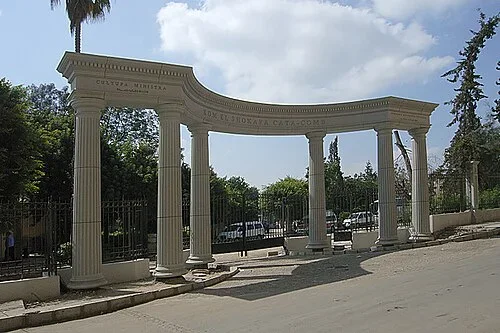 Surface Entrance and the Mound of Shards
Entrance to the Catacombs of Kom El Shoqafa
Welcome to the Catacombs of Kom El Shoqafa, one of the strangest burial places the ancient world left us. Somewhere below this gate lies a necropolis cut straight into the bedrock of Alexandria, begun in the second century under the Antonine emperors. It was used for burials from the second century into the fourth. It has been counted among the Seven Wonders of the Middle Ages, a rare title for a cemetery. It started small. The first tomb here is believed to have been meant for a single family, one household and its dead. Then it grew, and grew, until it held countless other people as well. Why it opened up to so many more burials is a question nobody has fully answered. That growth is the thread of this whole visit: an Egyptian tomb, built by Alexandrians, wearing Greek and Roman clothes. The way down is a stairway that winds deep into the rock, and the rooms at the bottom are the reward.
Roland Unger · CC BY-SA 3.0
02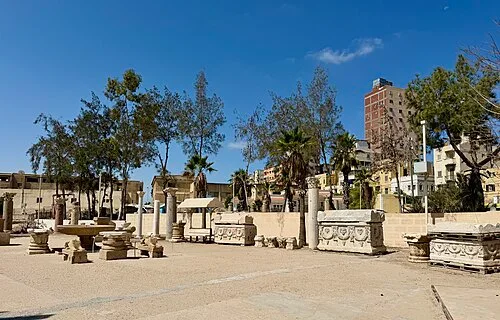 Surface Entrance and the Mound of Shards
The Site Grounds and the Rediscovery of 1900
The stone sarcophagi and broken column drums gathered in this open yard came out of the ground here, though their exact original spots are not recorded. They are the visible proof of what lies below. For centuries, nothing on the surface suggested it. Burial use ended in the fourth century, and the necropolis slipped out of memory. Diggers had been working in this district since 1892 without finding it. Then, on the twenty-eighth of September 1900, a donkey took a wrong step. It fell into a hidden opening about twelve metres deep. When people went looking for the reason the animal had vanished, they found the shaft, and behind it the tombs. That is how one of Alexandria's great burial complexes came back to light, thanks to a beast of burden and a bit of bad luck.
Photo: Slyronit · CC BY-SA 4.0
03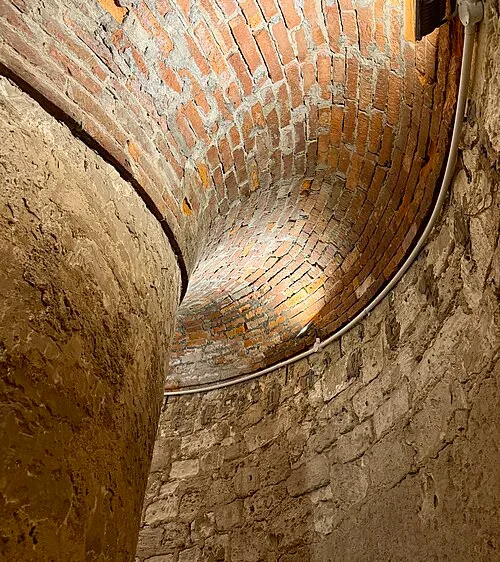 The Spiral Staircase and Central Light Well
The Spiral Stairway
Everything below was carved, not built. Workers cut the whole necropolis out of solid limestone bedrock, going down about thirty metres, a hundred feet of stone. The way is a circular stairway winding around a central opening. Guides put the steps at close to a hundred, though counts vary. The diggers tunnelled the tombs through the rock on three separate levels, one below the other. The lowest of the three sits so deep that groundwater found it, and it stayed flooded until recent restoration work. The climb back up is steep, and the air down here stays cool and damp, so it takes a bit of effort. Ancient mourners made this same descent carrying their dead, which makes a hundred steps of stone seem a small price.
Listen in the appPhoto: Slyronit · CC BY-SA 4.0
04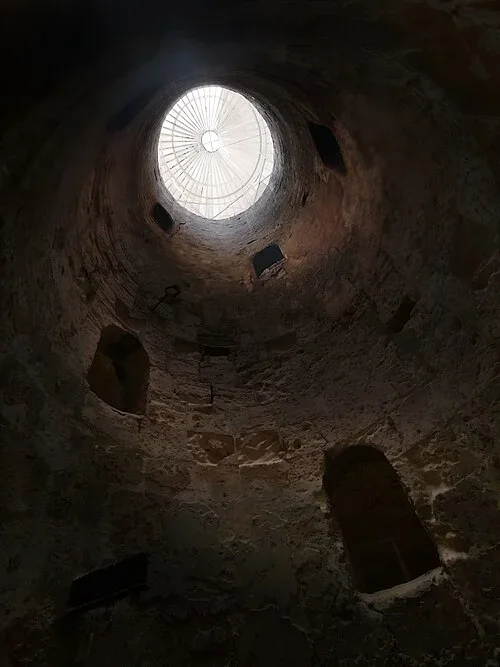 The Spiral Staircase and Central Light Well
The Central Light Well
The round opening overhead is the heart of the whole complex. The circular stairway ran down the middle of this shaft, and it was often used to transport the dead, lowered through the opening to the tombs below. The shaft also worked as a light well. Daylight came down here from the surface, and air moved through it to the upper levels, which mattered in rooms cut deep into rock. Around the walls, dark openings lead off into side passages and chambers. Most accounts put the shaft at about six metres across, a single wide throat connecting the world of the living above to the necropolis below. Every burial in the earliest days passed down through this one space.
Listen in the appPhoto: Bilal Detailz · CC BY-SA 4.0
05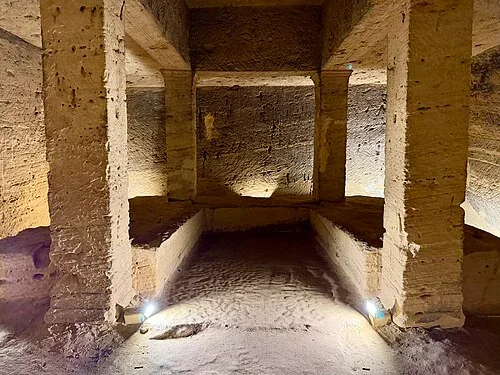 The Rotunda and the Triclinium Banquet Hall
The Triclinium Banquet Hall
The benches cut into the rock here belonged to a triclinium, a funeral banquet hall. Friends and family gathered on stone couches covered with cushions, both at the time of a burial and on later visits to remember the dead. Eating a meal beside the tomb was part of the ritual, not a picnic. Those visits explain the site's name. Kom El Shoqafa means Mound of Shards. Visitors brought food and wine in clay jars and plates, then broke the containers rather than carry anything home from a place of death. The broken pieces piled up into a mound of terracotta, heaps of which were still there when the site was found. Nearby, a rotunda with six pillars opens off the vestibule, the round room that anchors this first level.
Listen in the appPhoto: Slyronit · CC BY-SA 4.0
06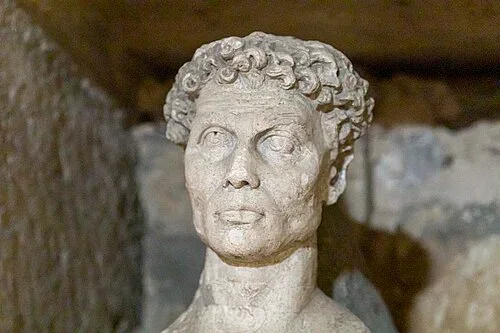 The Rotunda and the Triclinium Banquet Hall
Portrait Head in the Hybrid Style
One carved head here tells you how to read everything else at Kom El Shoqafa. The body is posed the ancient Egyptian way, stiff and frontal, the pose sculptors had used for centuries. But the face itself is modelled like a Greek portrait, lifelike and individual. Companion female figures carry the blend further, rigid in pose but wearing Roman hairstyles. In the second century, Alexandrian artists were serving Egyptian beliefs about the dead in a Greek and Roman visual language, and this is the result. Two traditions sit in the same block of stone without fighting each other. The reliefs waiting in the tomb chamber ahead do the same thing to the gods themselves.
Listen in the appPhoto: Mohamedsamah88 · CC BY-SA 4.0
07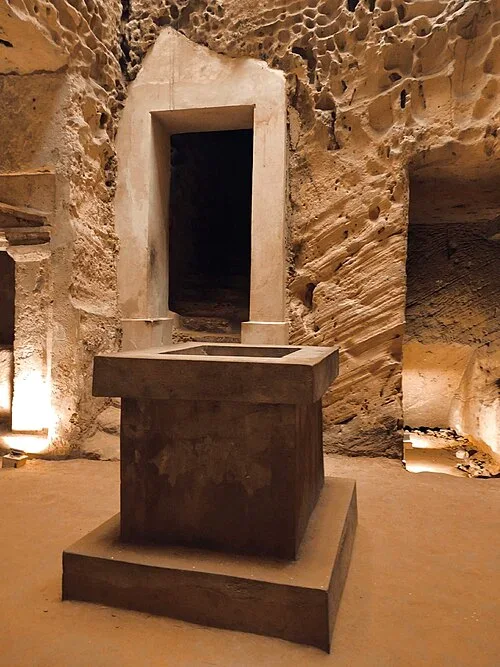 The Hall of Caracalla and Loculi Galleries
The Hall of Caracalla
The way into this hall is a breach in the rotunda wall, cut at some unknown date by people who wanted a new route in. The room is named for the emperor Caracalla, and it was created in the year 215. Bones of horses were found here, and bones of humans alongside them. Caracalla's name carried weight in Alexandria, and not a good kind; his rule left bitter memories in the city. The hall holds those remains, but the precise circumstances of the people and animals buried here are not fully known. What is certain is that bones of horses and of people were found together in a chamber of a private necropolis.
Listen in the appPhoto: Bilal Detailz · CC BY-SA 4.0
08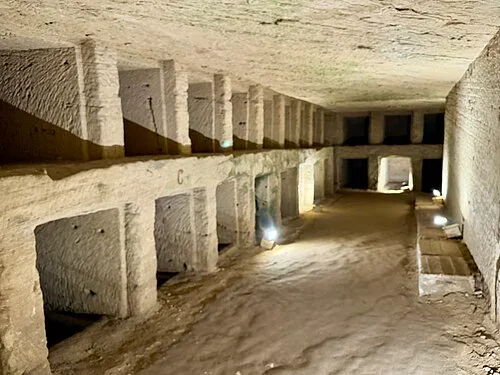 The Hall of Caracalla and Loculi Galleries
The Loculi Burial Galleries
Rows of dark rectangular openings line the walls of these galleries, cut one above the other like bunks. These are loculi, burial recesses carved into walls more than two metres deep. Each recess provided space for three mummies, laid side by side. This is where the original plan visibly gave way. The walls are honeycombed with graves for people whose names are gone, and the diggers simply kept cutting.
Listen in the appPhoto: Slyronit · CC BY-SA 4.0
09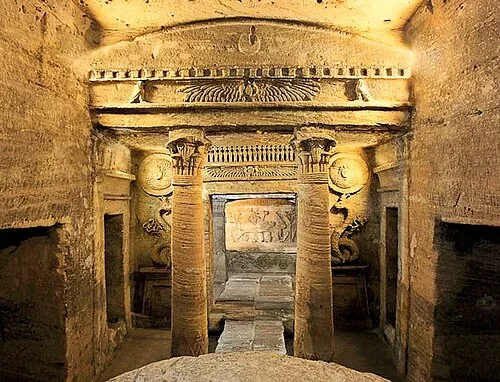 The Principal Tomb Vestibule and Hybrid Façade
The Principal Tomb Chamber Façade
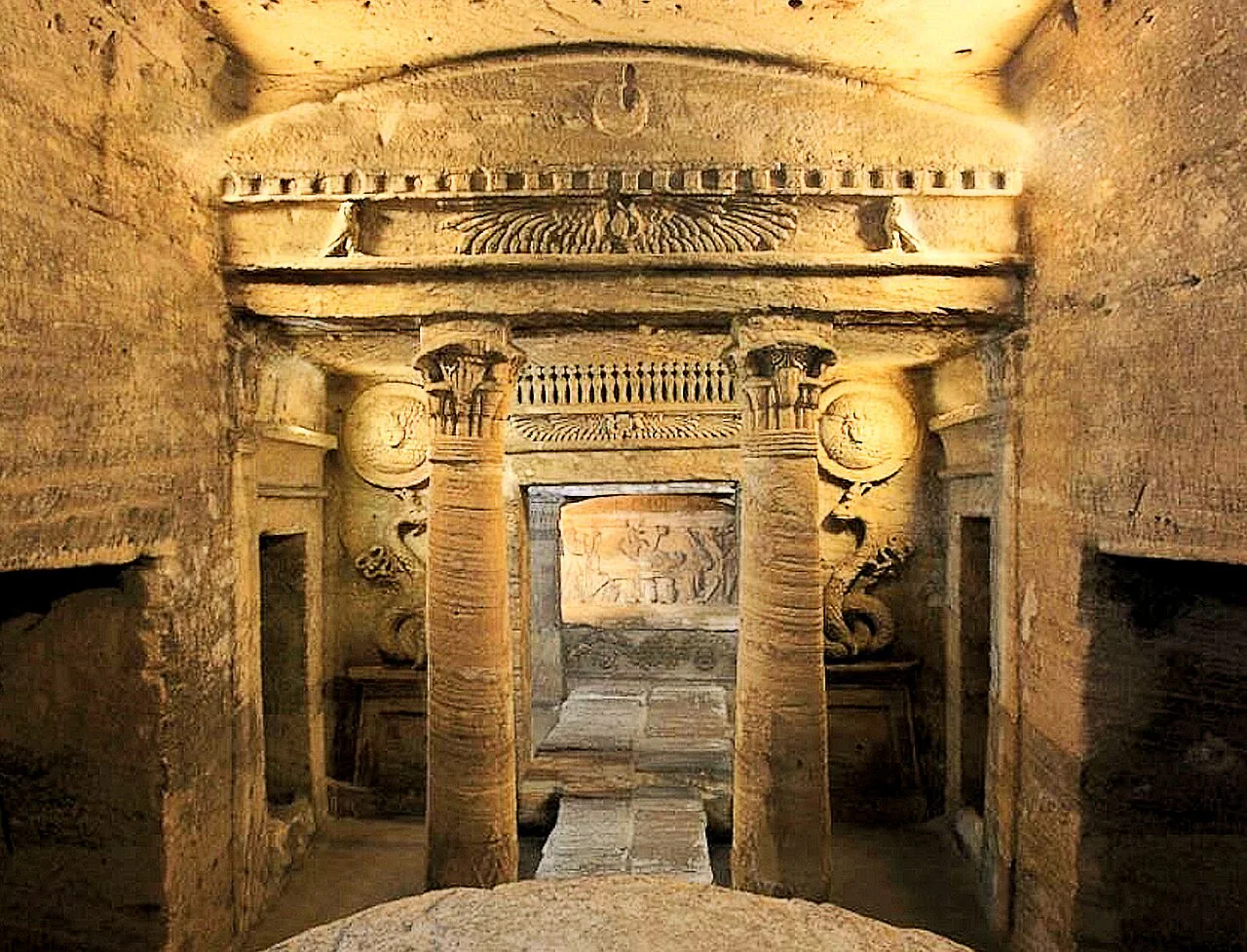
The entrance to the principal tomb chamber was carved to look like an Egyptian temple front. Two columns stand on either side, their capitals carved with papyrus, lotus and acanthus leaves, the classic plants of Egyptian architecture. Above them runs an architrave carrying a relief of the winged sun-disk, with falcons of the god Horus flanking it on either side. To mourners, these were the familiar signs of Egyptian protection for the dead, cut here deep underground. Yet the whole composition borrows its frame from classical building, a temple front in a tomb. At the entrance to the inner chamber, two carved serpents stand guard, and each of them carries a secret of its own.
Listen in the appFollowing Hadrian · CC BY-SA 2.0
10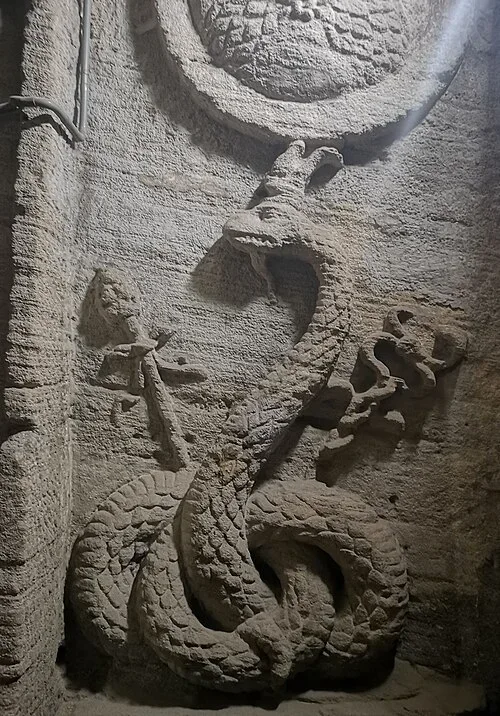 The Principal Tomb Vestibule and Hybrid Façade
The Agathodaemon Serpent
The serpent carved beside the entrance is an Agathodaemon, a benevolent spirit of Greek belief. What it wears is the remarkable part. Around the snake hangs a Roman caduceus, the staff of Hermes. In its coils it holds a Greek thyrsos, the fennel staff crowned with a pine cone. On its head sits the pschent, the double crown of Egypt. Above the whole figure rises a round shield showing the head of Medusa, the Greek monster whose gaze turned men to stone. One creature, carrying the emblems of Rome, Greece and Egypt at the same moment. What the original mourners believed this serpent was doing for their dead, the carvings do not say.
Listen in the appFollowing Hadrian · CC BY-SA 2.0
- 11
Anubis in Roman Dress
Anubis, the Egyptian god of embalming, carved in the uniform of a Roman soldier.
- 12
The Sarcophagi and the Apis-Bull Panels
Three sealed sarcophagi filled from behind, and the Apis bull receiving offerings on the side panels.
Catacombs of Kom El Shoqafa
Frequently asked questions
How much does the guide cost?
Free app download. Listed guide price: $0.99. Guide price shown in the app. Audio guide only. Venue admission is separate.
Can I listen without internet?
Yes. Download the guide’s audio, images, and maps in the app before your visit. Your downloaded content is then available offline.
Can I listen in my language?
This audio guide is available in 15 languages, including English.
Do I need to follow a schedule?
No. This is a self-guided experience. Choose your stops, pause whenever you like, and return to a story at your own pace.
At your own pace
Explore Catacombs of Kom El Shoqafa.
Download Stanza, then search for “Catacombs of Kom El Shoqafa”.
Free app download · Guide price shown in the app
Keep exploring
Nearby audio guides
Alexandria · 3 km
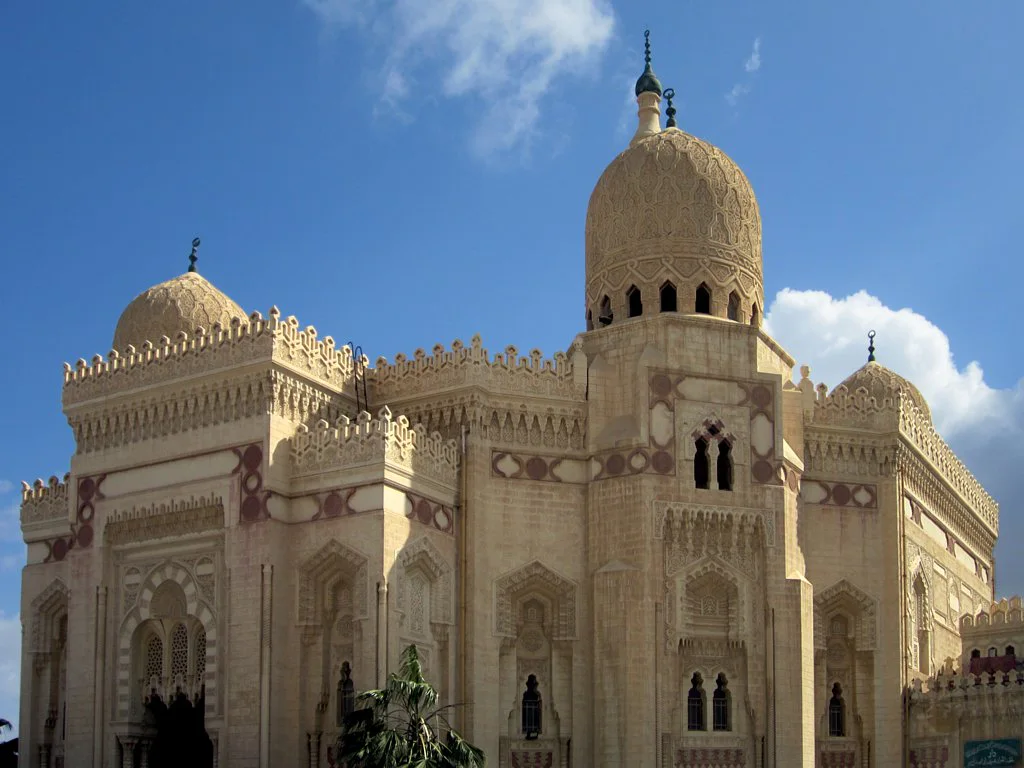
Abu al-Abbas al-Mursi Mosque
Content & sources
D-Stanley · CC BY 2.0
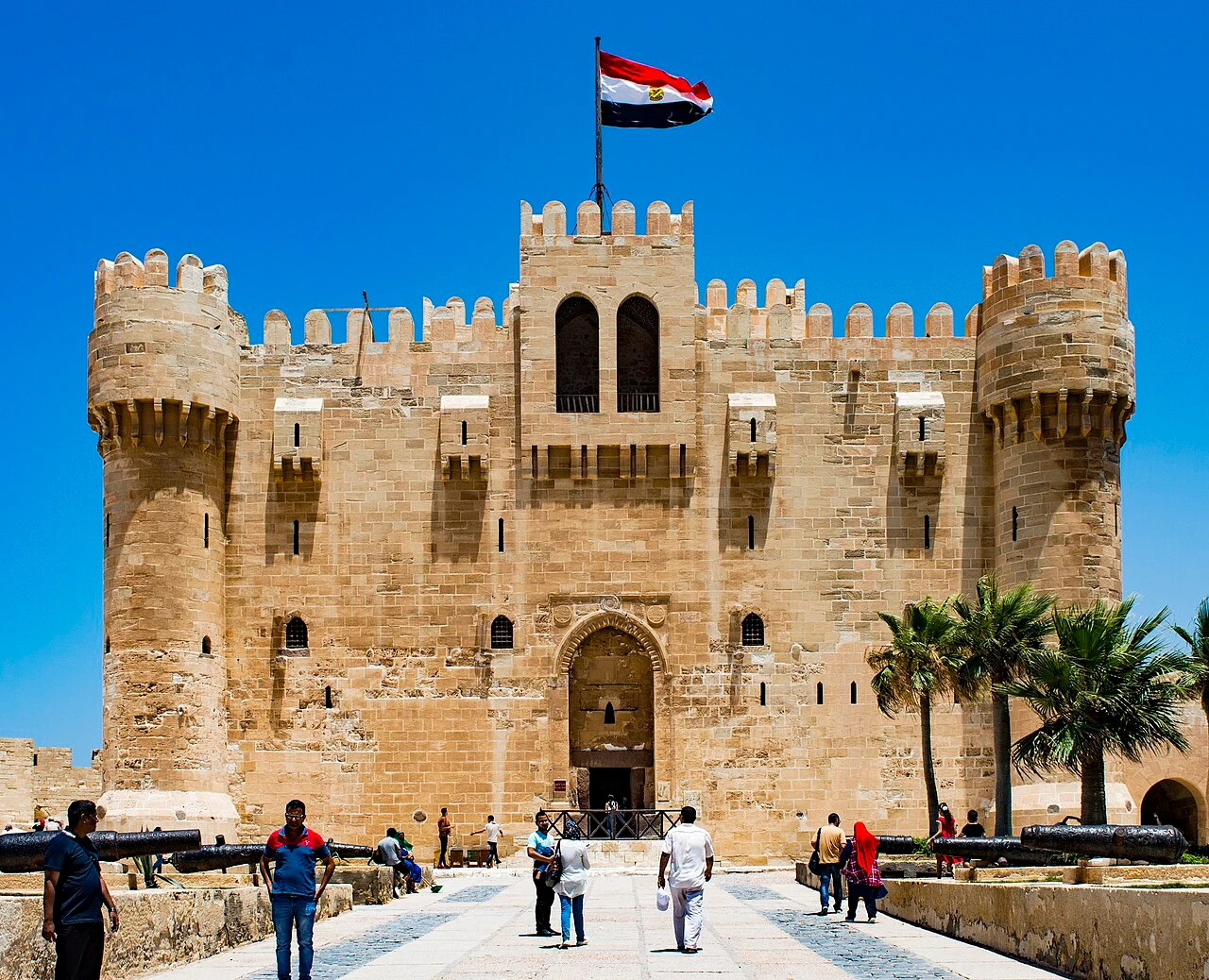
Alexandria · 3 km
Citadel of Qaitbay
Content & sources
Ahnaf Saber · CC BY 3.0
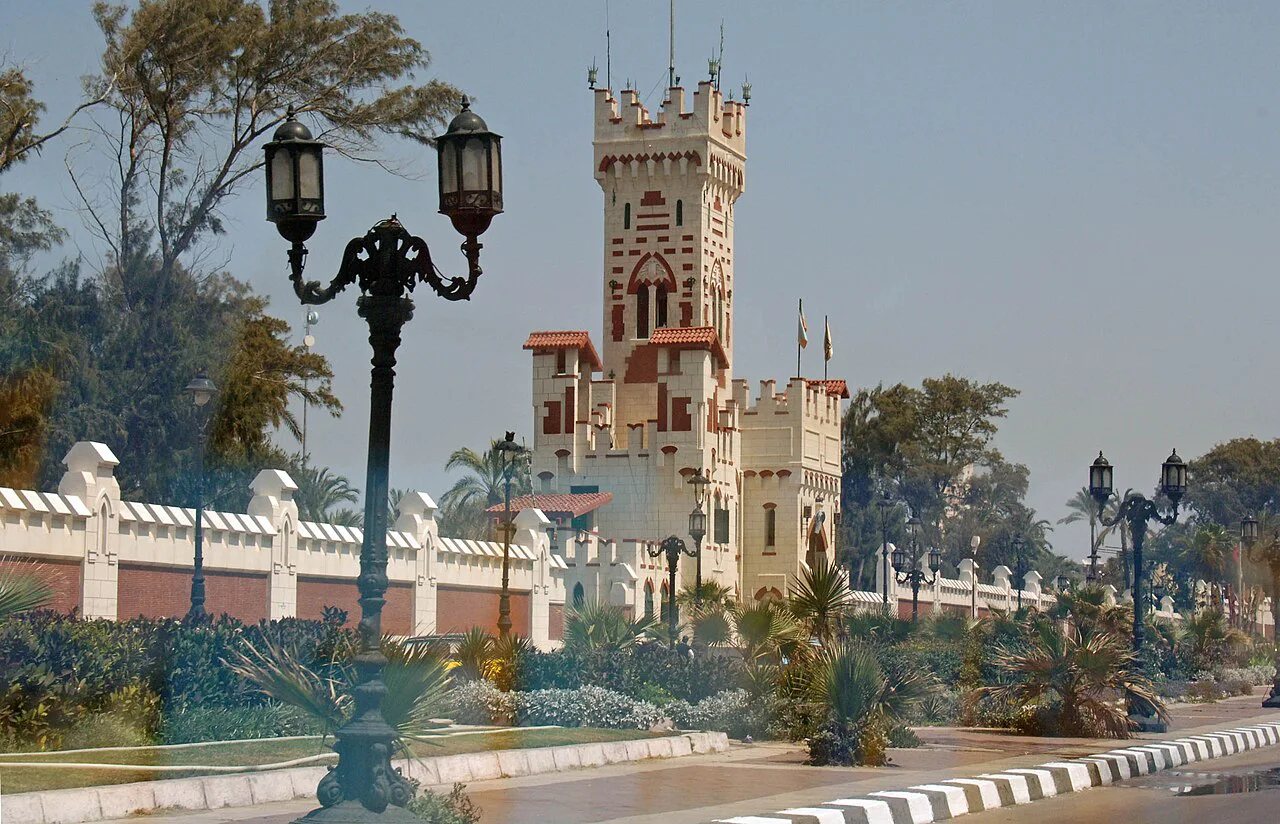
Alexandria · 15 km
Montaza Palace
Content & sources
Jerrye & Roy Klotz, MD · CC BY-SA 3.0
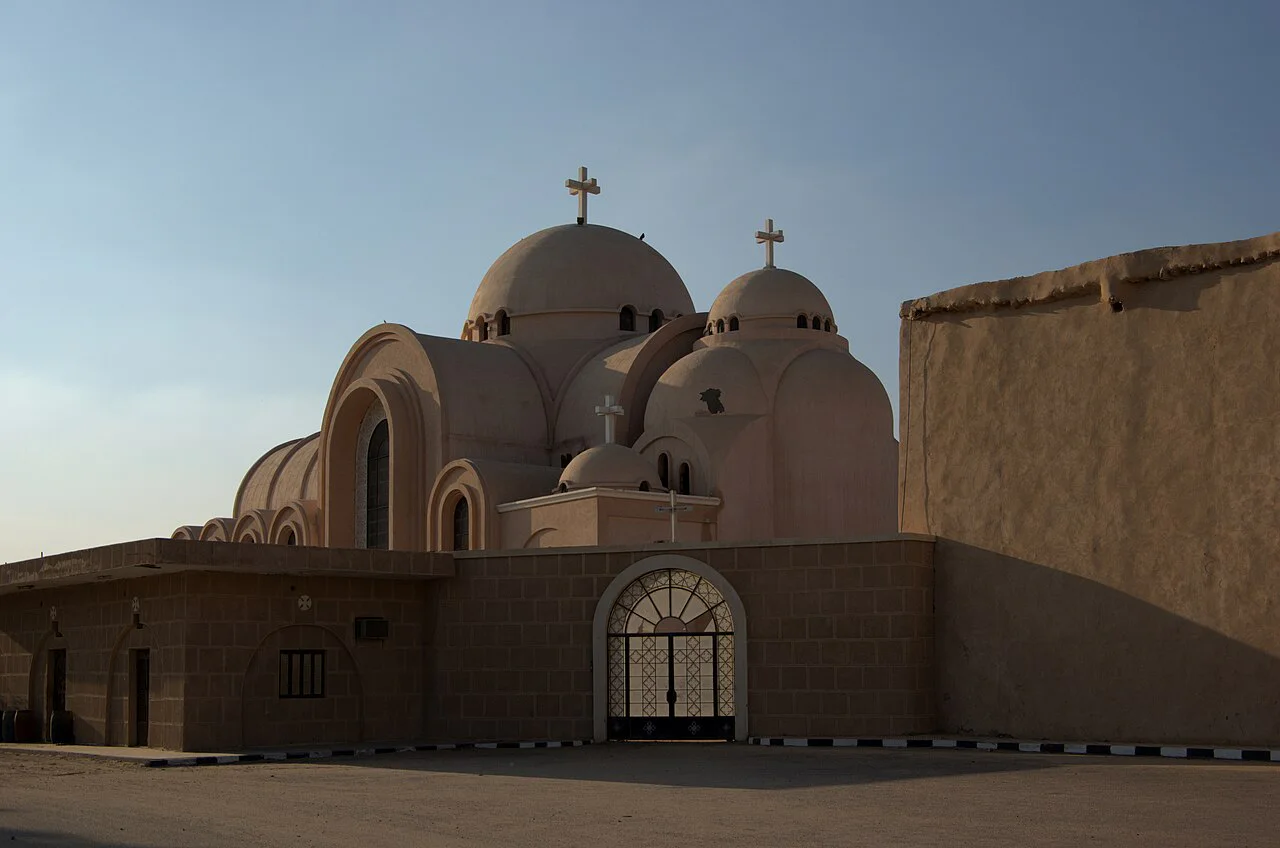
Beheira Governorate · 107 km
Monastery of Saint Pishoy
Content & sources
Photo: Berthold Werner · CC BY-SA 3.0