Stanza · Audio guide
Monastery of Saint Pishoy Audio Guide
A place to remember. A story to take with you.
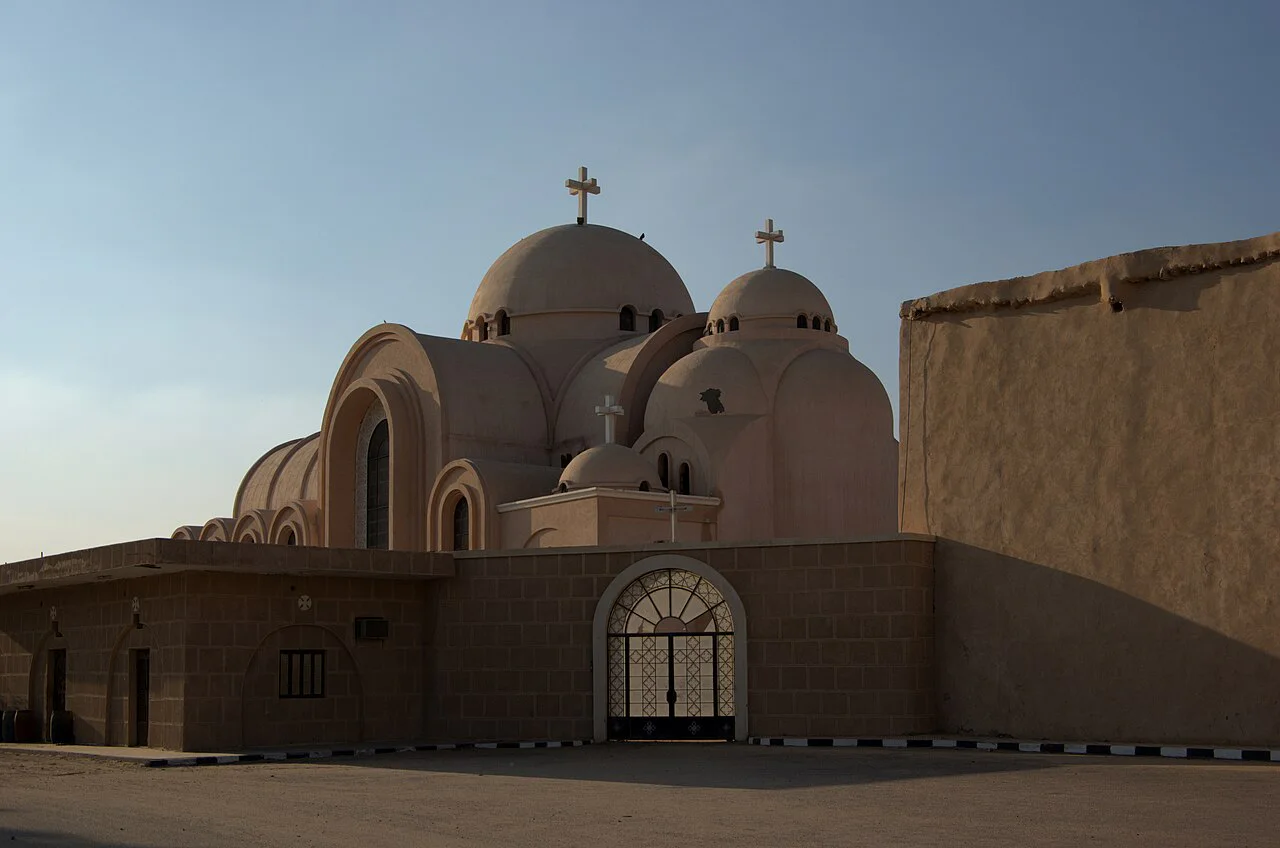
The Monastery of Saint Pishoy is a Coptic Orthodox monastery located in Wadi El Natrun in northern Egypt. Founded in the late 4th century AD, it is the largest active monastery in the region.
Download Stanza, then search for “Monastery of Saint Pishoy”.
About the tour
One guide. Your kind of visit.
The Monastery of Saint Pishoy is a Coptic Orthodox monastery located in Wadi El Natrun in northern Egypt. Founded in the late 4th century AD, it is the largest active monastery in the region.
Ready when you are.
- 01Get the free Stanza app.
iOS & Android
- 02Find your guide.
“Monastery of Saint Pishoy”
- 03Download before you go.
Works offline
Audio guide / 12 narrated stops
Inside the guide
Get to know a few of the stories before you go. Open a stop to read more.
01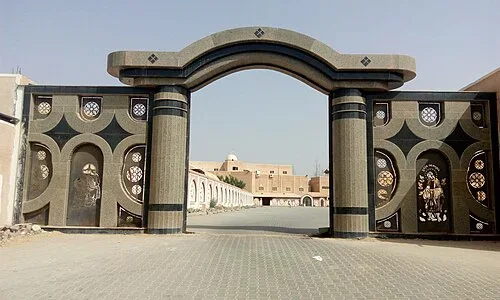 The Northern Gate and Approach
The Main Gate of the Monastery
Welcome to the Monastery of Saint Pishoy, in the desert valley of Wadi El Natrun, west of the Nile Delta. This is the largest active monastery in the region, and it is still very much alive. Its founder, Saint Pishoy, came here in the late fourth century as a disciple of Saint Macarius, seeking a life of prayer at the desert's edge. The gateway itself, with its carved stone and patterned panels, belongs to the monastery's modern expansions under Pope Shenouda the Third. In his day the monastery gained seven gates, each tower crowned with a cross. Over the next stops, the tour follows the whole story: a desert sanctuary, its martyrs, its fortress, and the community that never left.
Photo: ديفيد عادل وهبة خليل 2 · CC0
02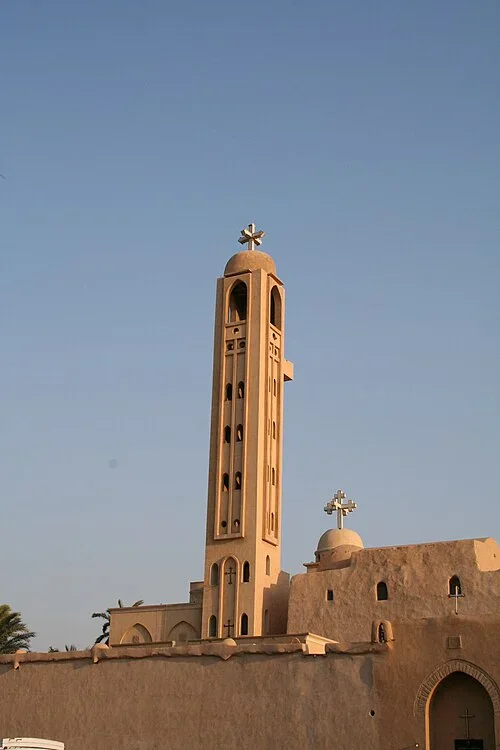 The Northern Gate and Approach
Bell Tower Above the Enclosure Walls
A slender bell tower rises above the enclosure walls, topped with a cross against the desert sky. The walls tell you what kind of place this had to be. They ring the monastery on all four sides, rising about ten metres high, with a thickness of roughly two metres. The first walls date to the ninth century, and most of those standing now were raised in the eleventh. Behind them lies a quadrilateral enclosure of roughly two feddans, a little less than a hectare. Inside stand five churches, along with monks' quarters, gardens and a fortress. The raids that made such walls necessary are a story of their own, waiting at the fortress later in the tour.
Photo: Einsamer Schütze · CC BY-SA 3.0
03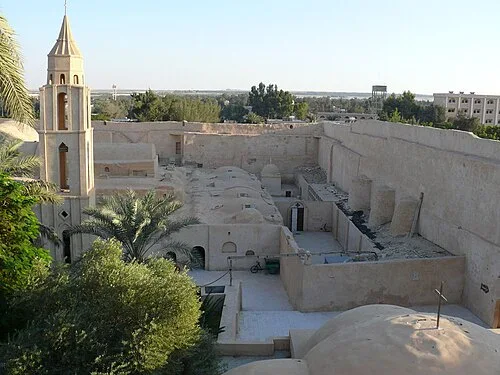 The Central Courtyard and Gardens
View Over the Central Courtyard
From above the roofs, the monastery's whole arrangement comes into view. The Church of Saint Pishoy sits in the southern part, ringed by annexes: a dining hall to its west, smaller churches and a baptistery to the south. Monks' apartments line the northern and eastern sides, built within living memory, while on the southern side the apartments go back to the ninth century and are still in use. The western side overlooks the monks' cemetery, known as the Taphos. At the centre lies a garden, the green heart of the complex. The mix of ages is no accident. Over some sixteen centuries, the monastery was damaged and rebuilt again and again, and each rebuilding left its own layer on the plan.
Listen in the appsomeone10x · CC BY 2.0
04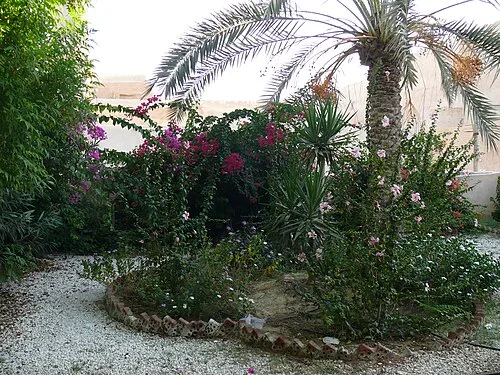 The Central Courtyard and Gardens
The Well of the Martyrs
Palms and flowering shrubs fill the monastery's central garden, green proof that water can coax a desert into bloom. This garden holds the monastery's most solemn story. Tradition tells that during a Berber raid, forty-nine elder monks of Scetis refused to abandon their cells. They were killed where they stood, and the raiders are said to have washed their blood-stained swords in the monastery's well. That well became known as the Well of the Martyrs, and monks have venerated it ever since. The account has been handed down through the generations rather than dug from the ground, and it is told here as tradition. Centuries later, Pope Shenouda the Third had the old well repaired, keeping the martyrs' memory at the centre of monastic life.
Listen in the appsomeone10x · CC BY 2.0
05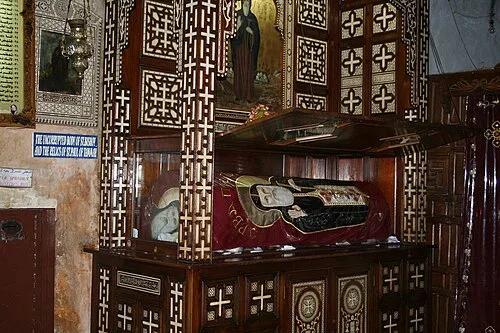 The Ancient Church of Saint Pishoy
The Reliquary of Saint Pishoy
Inside the Church of Saint Pishoy, beneath a half-barrel vault, stands an elaborately carved wooden reliquary with inlaid crosses and panels. It holds the body of Saint Pishoy himself, with relics of his companion Paul of Tammah beside him. Coptic tradition holds that the saint's body remained uncorrupted after his death in the fifth century. His remains did not always rest here. They were moved more than once to keep them safe from raiders, until Pope Joseph the First brought the relics of both saints back to the monastery. For Coptic pilgrims, the tomb of the Beloved of Christ is the goal of the journey, and it sits at the very heart of his own church.
Listen in the appPhoto: Einsamer Schütze · CC BY-SA 3.0
06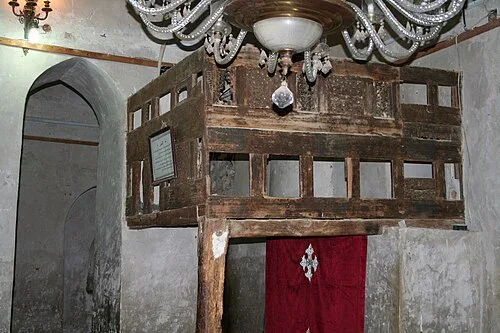 The Ancient Church of Saint Pishoy
Inside the Church of Saint Pishoy
The main church is the largest in Wadi El Natrun, and its walls carry the marks of many building campaigns. The church standing today was reconstructed in the ninth century, after the fifth Berber raid on the monastery, and is dated to about the year 840. Little trace remains of whatever first occupied the site. Look closer, though, and the layers show. The main sanctuary may go back to the sixth or seventh century, older than the walls around it. The high domes, the stained glass and the design of the nave probably belong to the tenth or eleventh. Further changes came at the end of the eleventh century and the start of the twelfth. Among the aged timberwork inside is a raised wooden pulpit of great age, the kind from which monks preached to the community below.
Listen in the appPhoto: Einsamer Schütze · CC BY-SA 3.0
07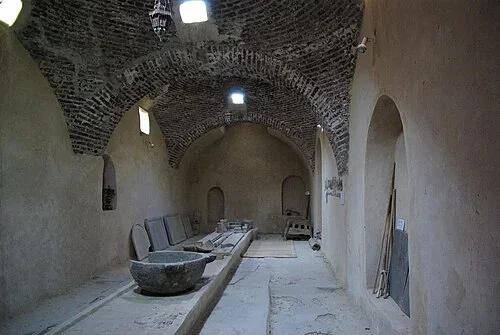 The Monastic Refectory
The Ancient Refectory (Al-Ma'eda)
Beside the western end of the main church lies Al-Ma'eda, the monastery's ancient dining hall. It dates to the late eleventh or early twelfth century, the same great building campaign that raised the fortress. A corridor separates it from the church, and its vaulted ceilings echo the vaults of the fort. The hall itself is long and narrow, running about twenty-seven and a half metres, and a little over four metres wide. At its centre stands a stone table, with benches on either side where the monks sat for common meals. At the northern end, a square room served as the hall's kitchen. Prayer, work and shared meals set the rhythm of the monastic day, much as they still do.
Listen in the appPhoto: Berthold Werner · CC BY-SA 3.0
08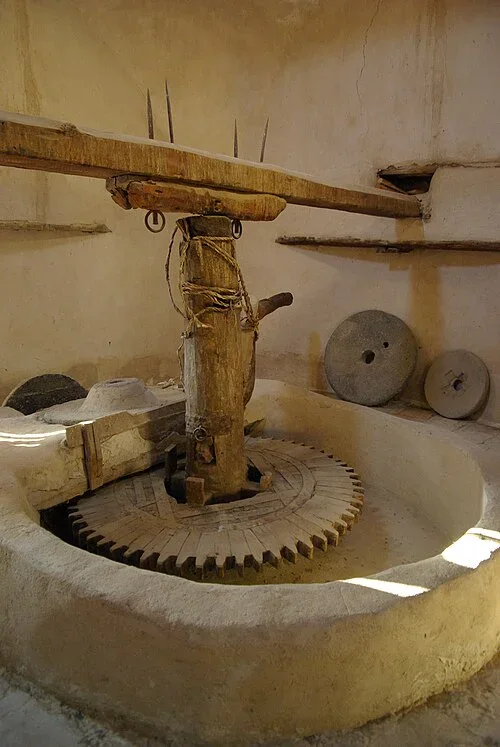 The Monastic Refectory
The Old Mill and the Monks' Working World
A monastery in the desert had to feed itself, and the southeast corner of the monastery holds the tools for that: a kitchen, an ancient bakery and an old mill. The great wooden gearwork and millstones preserved here show the machinery that turned the community's grain, though no one knows for certain which mill it belonged to. The monks' dwellings, called Alqalali, were built with the same practicality. Each apartment has two rooms, a bathroom and a small reception area. The inner room is the Mahbasa, a retreat where a monk withdraws for prayer and contemplation. The windows of both rooms open to the south, catching light and air in winter and summer alike.
Listen in the appPhoto: Berthold Werner · CC BY-SA 3.0
09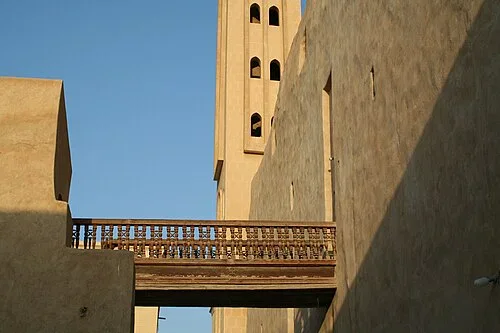 The Medieval Fortress and Keep
The Fortress and Its Drawbridge
In the northwest corner of the monastery stands its fortress, a keep of stone built for survival. The fortress standing today dates to the late eleventh century, raised after a Berber raid in 1096 destroyed the one before it. A wooden drawbridge links the first floor of the keep to the roof of the guardhouse next door, and from there stairs lead down. When raiders appeared, the monks withdrew inside and the bridge was raised behind them, sealing the fortress shut. The earlier fortress carries a legend of its own. The story goes that the Roman emperor Zeno commissioned it in the fifth century, after learning that his daughter, Princess Ilaria, had vanished from his palace and fled here to live as a nun.
Listen in the appPhoto: Berthold Werner · CC BY-SA 3.0
10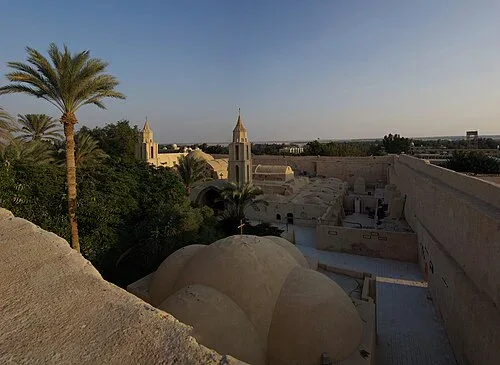 The Medieval Fortress and Keep
From the Fortress Roof: the Church of Archangel Michael
From the height of the keep, the view opens over domes, palms and distant towers, and the fortress reveals its second purpose. This was a place of prayer as well as refuge. The fortress once had a second upper floor, but it partially collapsed, leaving one sacred space standing: the Church of Archangel Michael, on the roof of the keep. Inside, a half-barrel vault opens the room into a spacious interior, and a single sanctuary is crowned by a low dome carried on small arches. The sanctuary's veil dates to 1782. Pope John the Nineteenth restored the church in 1935, and an inscription on its eastern wall records his work. Prayers are still held here.
Listen in the appPhoto: Berthold Werner · CC BY-SA 3.0
- 11
The Shrine of Pope Shenouda III
The pope who came here to be alone, and left the monastery transformed.
- 12
Vestments and the Living Heritage
Golden vestments and the holy oil that connects this desert monastery to Coptic churches around the world.
Monastery of Saint Pishoy
Frequently asked questions
How much does the guide cost?
Free app download. Listed guide price: $0.99. Guide price shown in the app. Audio guide only. Venue admission is separate.
Can I listen without internet?
Yes. Download the guide’s audio, images, and maps in the app before your visit. Your downloaded content is then available offline.
Can I listen in my language?
This audio guide is available in 15 languages, including English.
Do I need to follow a schedule?
No. This is a self-guided experience. Choose your stops, pause whenever you like, and return to a story at your own pace.
At your own pace
Explore Monastery of Saint Pishoy.
Download Stanza, then search for “Monastery of Saint Pishoy”.
Free app download · Guide price shown in the app
Keep exploring
Nearby audio guides
Beheira Governorate · 12 km
Monastery of Saint Macarius the Great
Content & sources
Faris El-Gwely · CC BY-SA 4.0
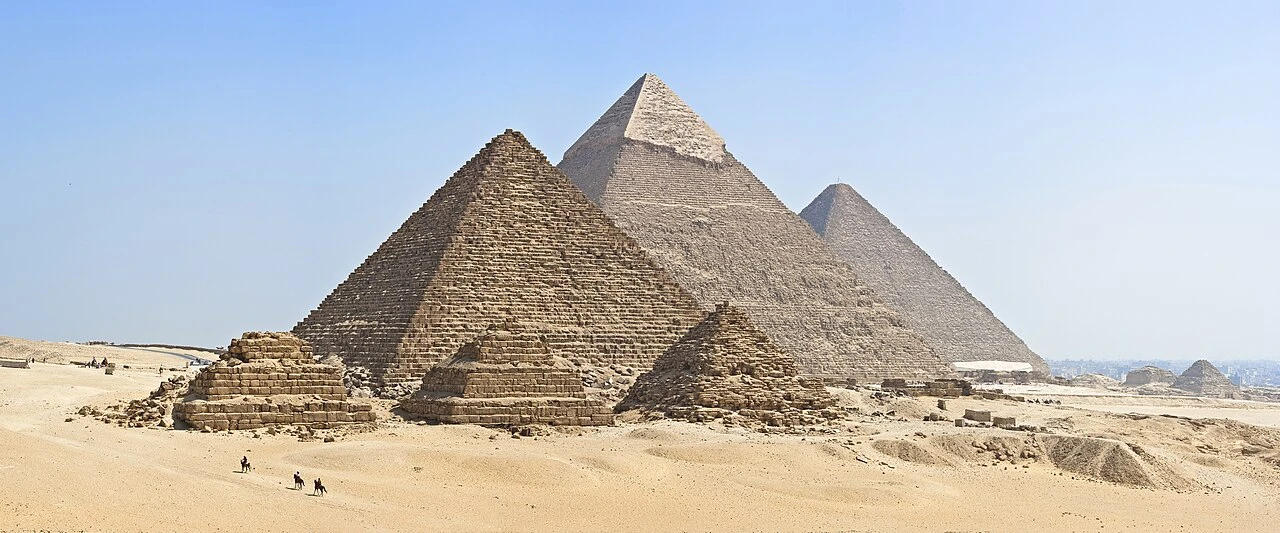
Giza · 83 km
Giza pyramid complex
Content & sources
KennyOMG · CC BY-SA 4.0
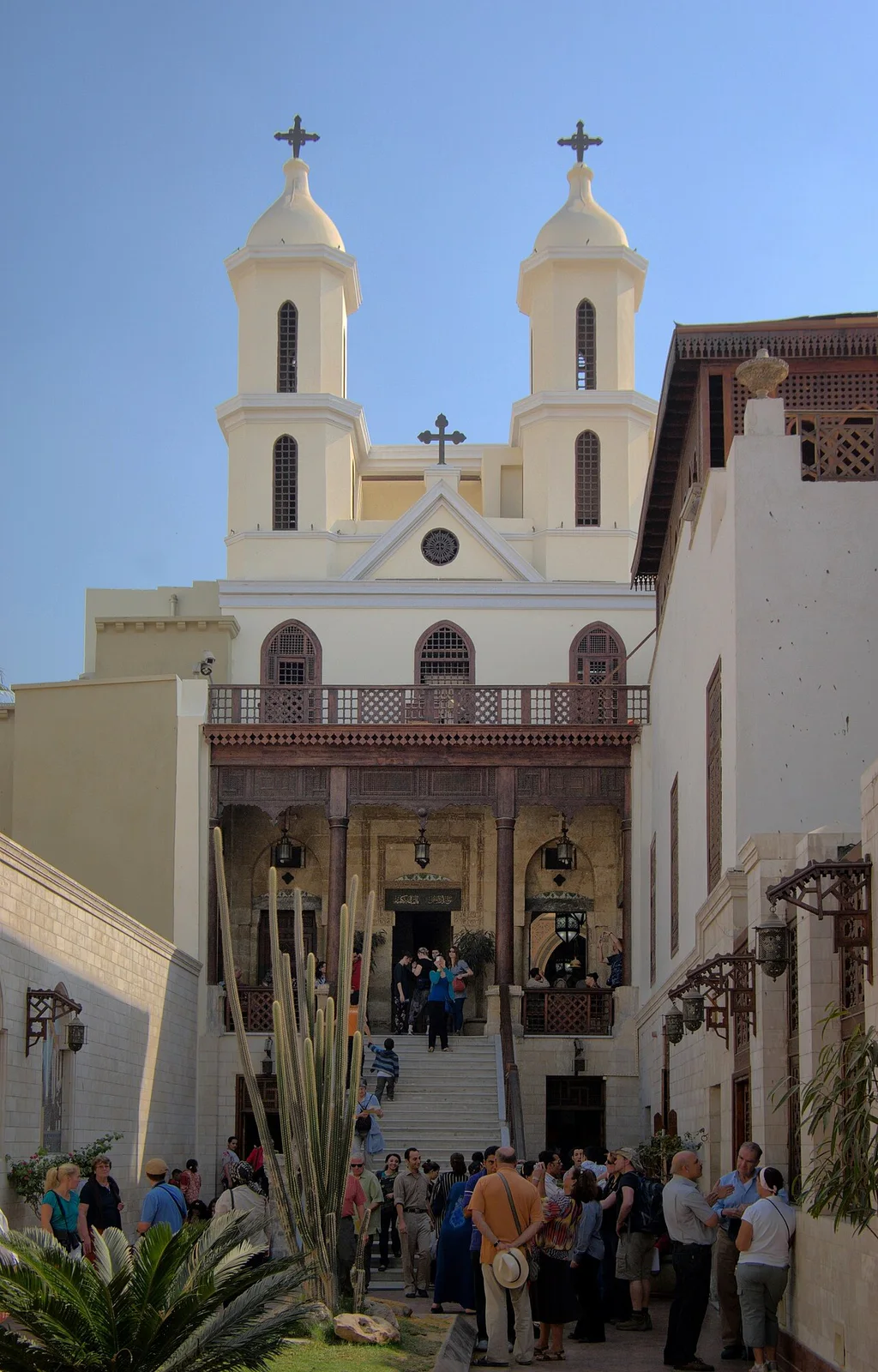
Cairo · 91 km
Hanging Church
Content & sources
Photo: Berthold Werner · CC BY-SA 3.0
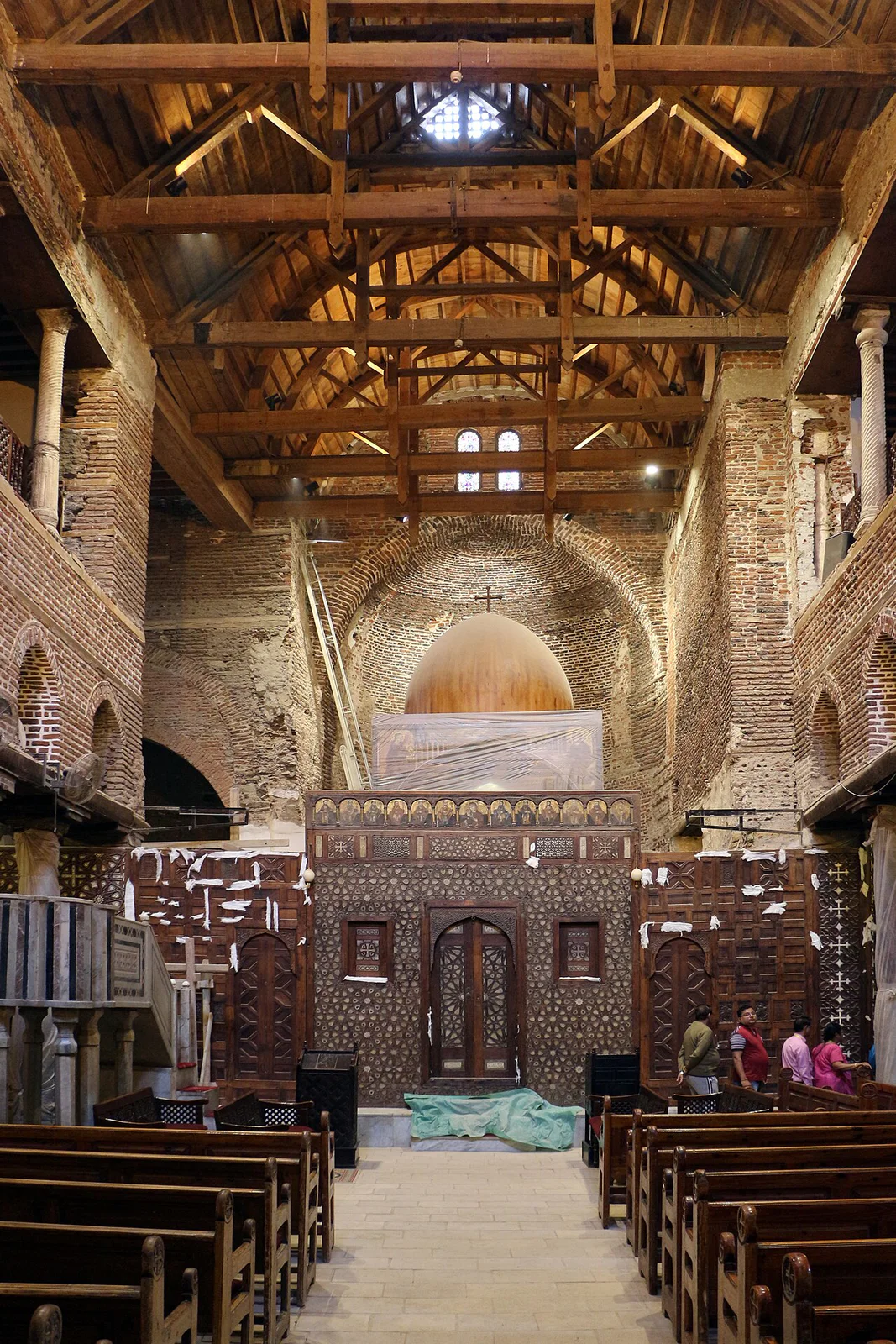
Cairo · 91 km
Saints Sergius and Bacchus Church
Content & sources
Photo: Sailko · CC BY 3.0