Stanza · Audio guide
Saints Sergius and Bacchus Church Audio Guide
A place to remember. A story to take with you.
Saints Sergius and Bacchus Church is one of the oldest Coptic Christian churches in Egypt, dating back to the 7th century. It is significant to Christians for its connection to the flight of the Holy Family…
Download Stanza, then search for “Saints Sergius and Bacchus Church”.
About the tour
One guide. Your kind of visit.
Saints Sergius and Bacchus Church is one of the oldest Coptic Christian churches in Egypt, dating back to the 7th century. It is significant to Christians for its connection to the flight of the Holy Family into Egypt.
Ready when you are.
- 01Get the free Stanza app.
iOS & Android
- 02Find your guide.
“Saints Sergius and Bacchus Church”
- 03Download before you go.
Works offline
Audio guide / 8 narrated stops
Inside the guide
Get to know a few of the stories before you go. Open a stop to read more.
01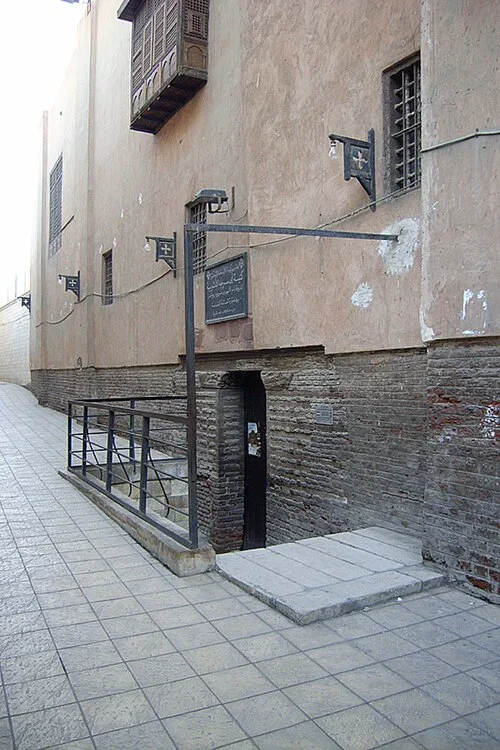 Babylon Fortress Alley and Western Entrance
Western Entrance from the Babylon Fortress Alley
Welcome to Abu Serga, one of the oldest Coptic Christian churches in Egypt, and the first stop of a walk that runs from these fortress walls down to the cave beneath the altar. The alley sinks below the level of the surrounding streets, because the church was raised inside the ancient Roman fortress of Babylon, in Old Cairo. The lower courses of brick and stone by the entrance are said to be part of a wall about six and a half metres high, a remnant of the entrance to a canal dug under the emperor Trajan in the second century. The church is named for two men, Sergius and Bacchus, officers martyred in the fourth century. Its Coptic name says more: the Church of the Martyrs Sergius and Bacchus in the Cave. Tradition holds that the Holy Family rested in that cave during the flight into Egypt. The basilica above it dates to the seventh century, and worship continues here today.
Roland Unger · CC BY-SA 3.0
02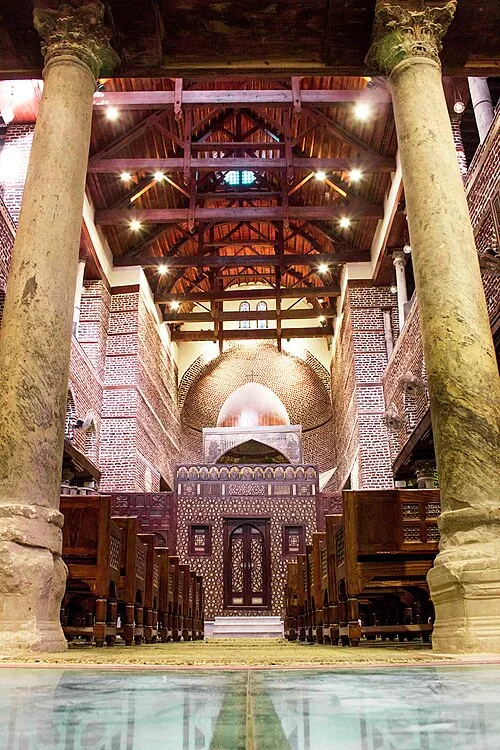 The Colonnaded Nave and Timber Ship-Hull Ceiling
The Colonnaded Nave and Timber Roof
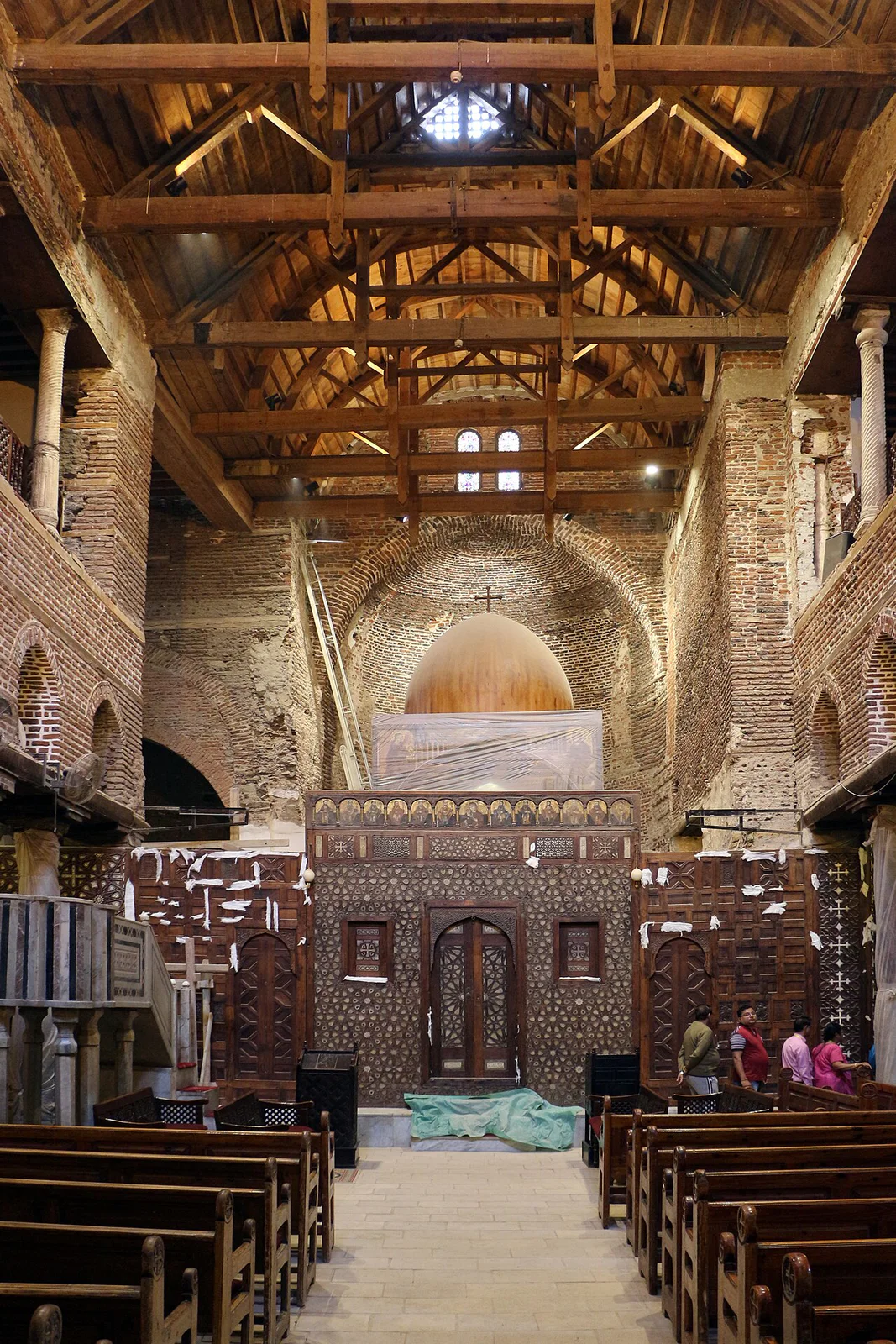
Inside, the church follows the basilica plan that early Christians borrowed from Roman assembly halls. The building is a rectangle about twenty-seven metres long and seventeen wide. Rows of marble columns divide the central nave from two side aisles. The nave rises through the full height of the building, roughly fifteen metres, while the side aisles have two storeys, with galleries overlooking the space below. Above it all runs the timber roof, arched like the hull of a ship turned upside down. That inverted hull is a hallmark of early Coptic woodwork, and it is usually read as a symbol of Noah's Ark, the vessel that carried the faithful through the flood. The timbers overhead have been renewed more than once over the church's long life, so the roof gathers work from several ages.
Photo: Mohamedsamir1994 · CC BY-SA 4.0
03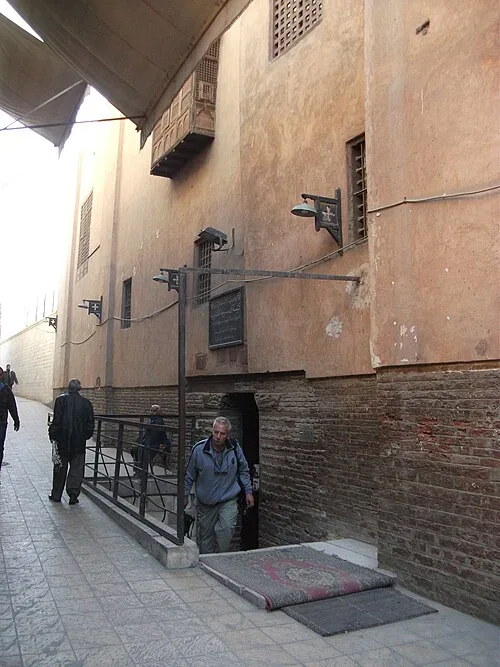 The Colonnaded Nave and Timber Ship-Hull Ceiling
The Western Doorway and Narthex
The doorway passes through a narthex, the entrance hall that early Christian basilicas set before the nave. The founding story begins with a scribe named Athanasius, a Christian from Edessa in Syria who served Abd al-Aziz ibn Marwan, the Umayyad governor of Egypt. In the late seventh century, Athanasius raised this church at the centre of the old Roman fortress and dedicated it to Sergius and Bacchus. Around the year 750, fire swept through Fustat, then the capital of Egypt, in the reign of Marwan II, and the church burned. The Coptic community restored it within the same century. Builders have been renewing it ever since, through the Middle Ages and beyond. What stands now is heavily restored, yet it remains a model of the early Coptic style.
Listen in the appMoushira · CC BY-SA 3.0
04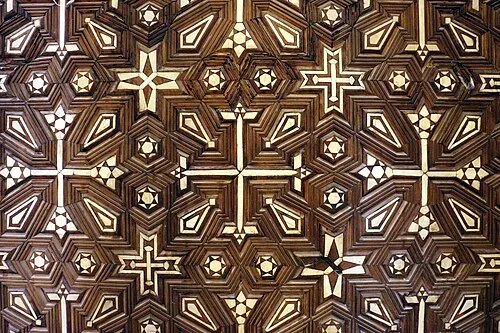 The Sanctuary and Ivory-Inlaid Iconostasis
The Ivory-Inlaid Iconostasis
Between the congregation and the sanctuary stands the iconostasis, a wooden screen that marks the holiest boundary in the church. Its panels are inlaid with ivory in geometric patterns: crosses, star shapes, and interlacing frames, pale against the dark wood. Work of this kind is counted among the highest achievements of medieval Coptic craftsmen. The screen is not mere ornament. In the liturgy it divides the nave, where the congregation gathers, from the sanctuary, where the altar stands and only the clergy serve. Every service here passes from one side of this screen to the other.
Listen in the appPhoto: Sailko · CC BY 3.0
05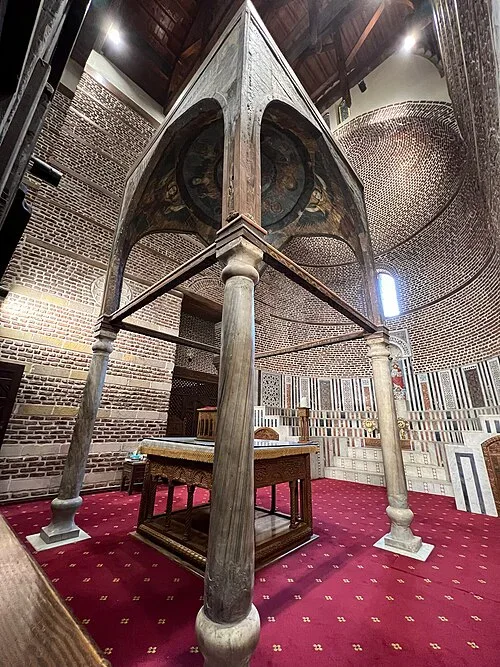 The Sanctuary and Ivory-Inlaid Iconostasis
The Sanctuary Ciborium and Three Altars
A few steps above the nave, the sanctuary holds three altars. The central one is dedicated to Sergius and Bacchus, the martyrs who gave the church its name. A southern altar belongs to Saint George, and a northern one to the Virgin Mary. Over the high altar rises the ciborium, a freestanding canopy carried on slender columns, domed at the top and painted with frescoes. It frames the altar the way a canopy frames a throne. Directly beneath this sanctuary floor lies the crypt, which the next stop enters.
Listen in the appPhoto: Onceinawhile · CC BY-SA 4.0
06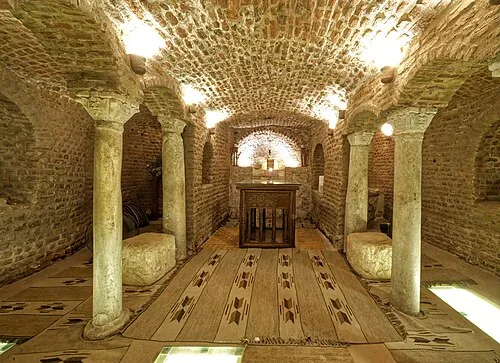 The Crypt of the Holy Family
Ten metres below the high altar, brick vaults rest on old stone columns in a chamber like a small underground church. This is the crypt, the cave of the church's other name. The belief has been handed down through generations of Coptic Christians, and it is the reason pilgrims have long made their way here. At the far end of the chamber a small altar stands against the vaulted brick, and services are still held in this buried room.
Listen in the appPhoto: Holger Uwe Schmitt · CC BY-SA 4.0
07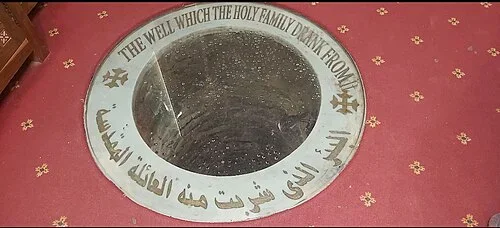 The Crypt of the Holy Family
The Well of the Holy Family
Set into the crypt floor is a well, ringed by a cover inscribed in both Arabic and English. The inscription reads: the well from which the Holy Family drank. That attribution rests on the same tradition as the cave itself, and pilgrims treat the well with the same reverence. The ground here tells a plainer story too. Old Cairo lies low and close to the Nile, and when the river rises, floodwater often seeps into the crypt. The same river that shaped this city still reaches into its holiest room.
Listen in the appPhoto: Sarah Kamal Abdelaziz · CC BY-SA 4.0
08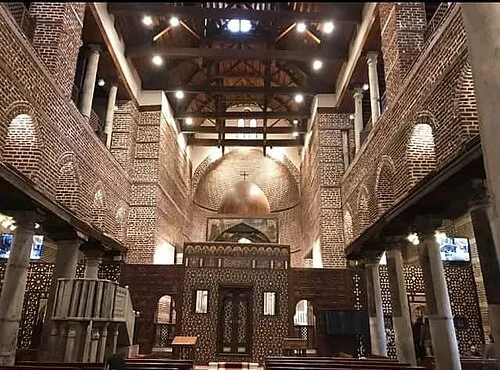 Southern Aisle and Coptic Papal Heritage
The Nave of the Patriarchs
From the late seventh century onward, this nave held more than daily prayer. It was here that the Coptic Church chose its leaders. The first election recorded in the church raised Patriarch Isaac, in the year 681. For nearly four centuries, until the mid-eleventh century, patriarchs and bishops of the Coptic Church were chosen here. Then, under Pope Christodoulos, the seat of the Coptic pope moved to the Hanging Church in Cairo, its official home from 1047, after power had shifted from Alexandria to the new capital. The southern wall of the church keeps some of its oldest icons. More than thirteen centuries after Athanasius founded it, the Coptic Church still worships at Abu Serga.
Listen in the appPhoto: Marianna emad · CC BY-SA 4.0
Saints Sergius and Bacchus Church
Frequently asked questions
How much does the guide cost?
Free app download. Listed guide price: Free guide. Guide price shown in the app. Audio guide only. Venue admission is separate.
Can I listen without internet?
Yes. Download the guide’s audio, images, and maps in the app before your visit. Your downloaded content is then available offline.
Can I listen in my language?
This audio guide is available in 15 languages, including English.
Do I need to follow a schedule?
No. This is a self-guided experience. Choose your stops, pause whenever you like, and return to a story at your own pace.
At your own pace
Explore Saints Sergius and Bacchus Church.
Download Stanza, then search for “Saints Sergius and Bacchus Church”.
Free app download · Guide price shown in the app
Keep exploring
Nearby audio guides
Cairo · 1 km
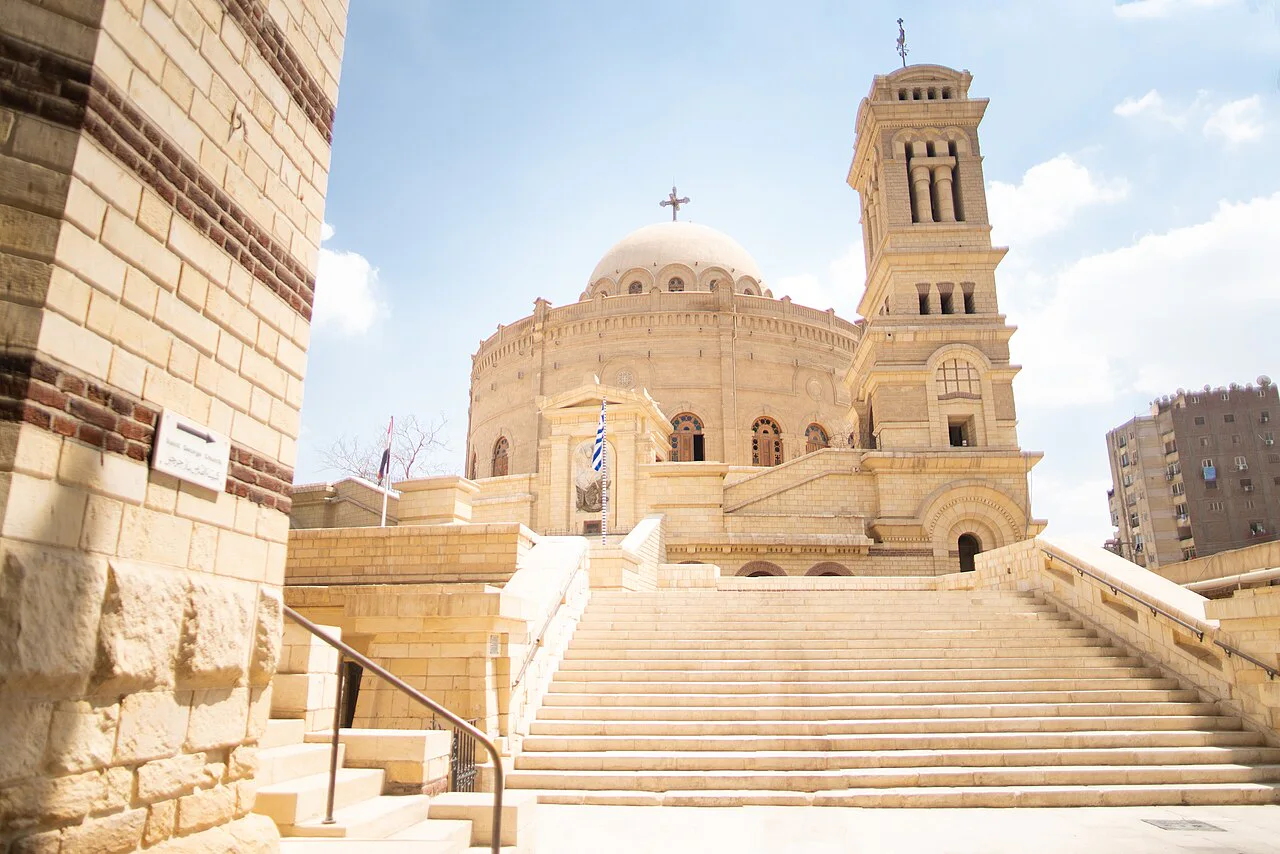
Church of St. George
Content & sources
Московская духовная академия · CC BY-SA 2.0
Cairo · 1 km
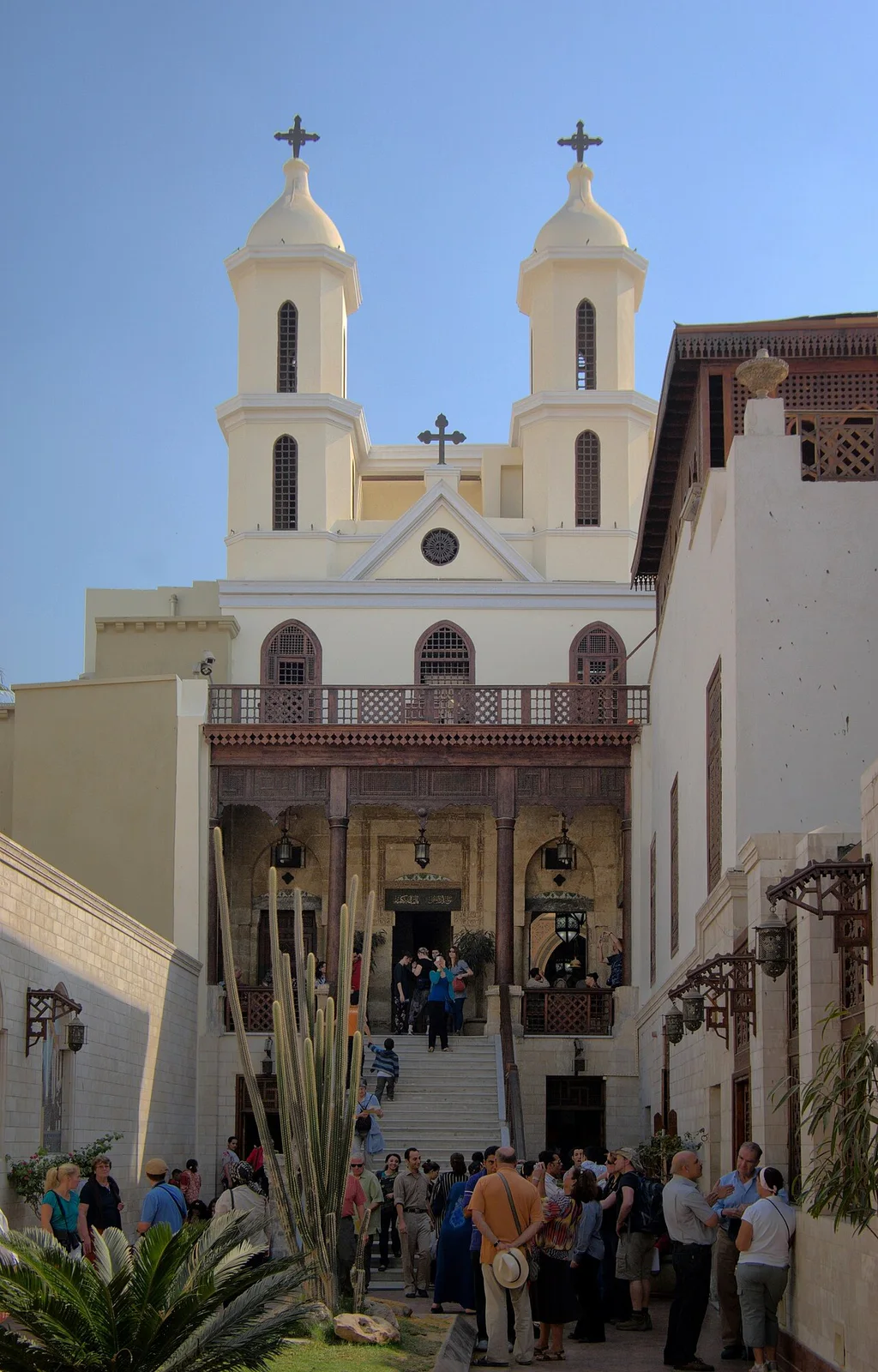
Hanging Church
Content & sources
Photo: Berthold Werner · CC BY-SA 3.0
Cairo · 1 km
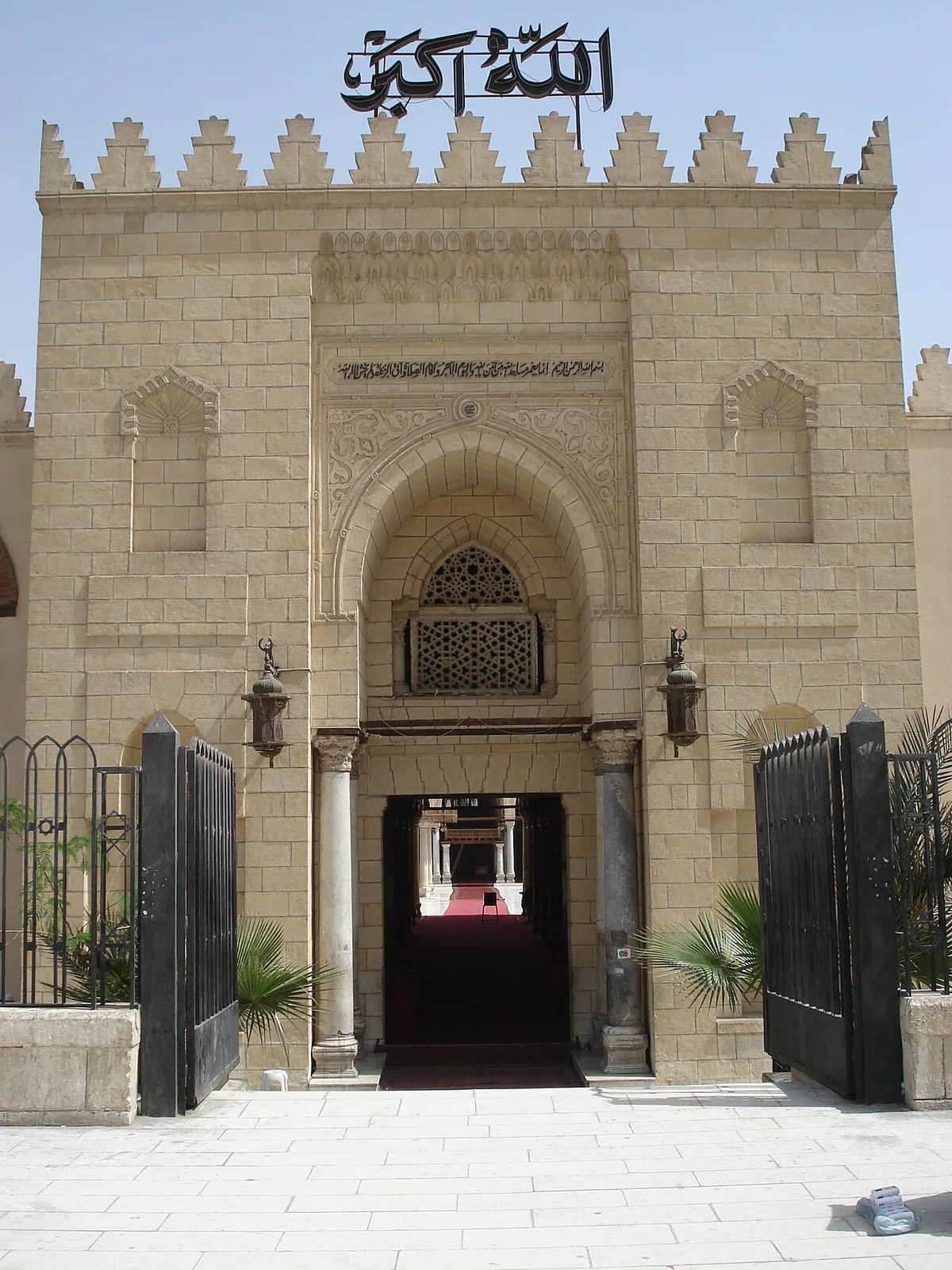
Amr ibn al-As Mosque
Content & sources
Photo: Buyoof · CC BY-SA 3.0
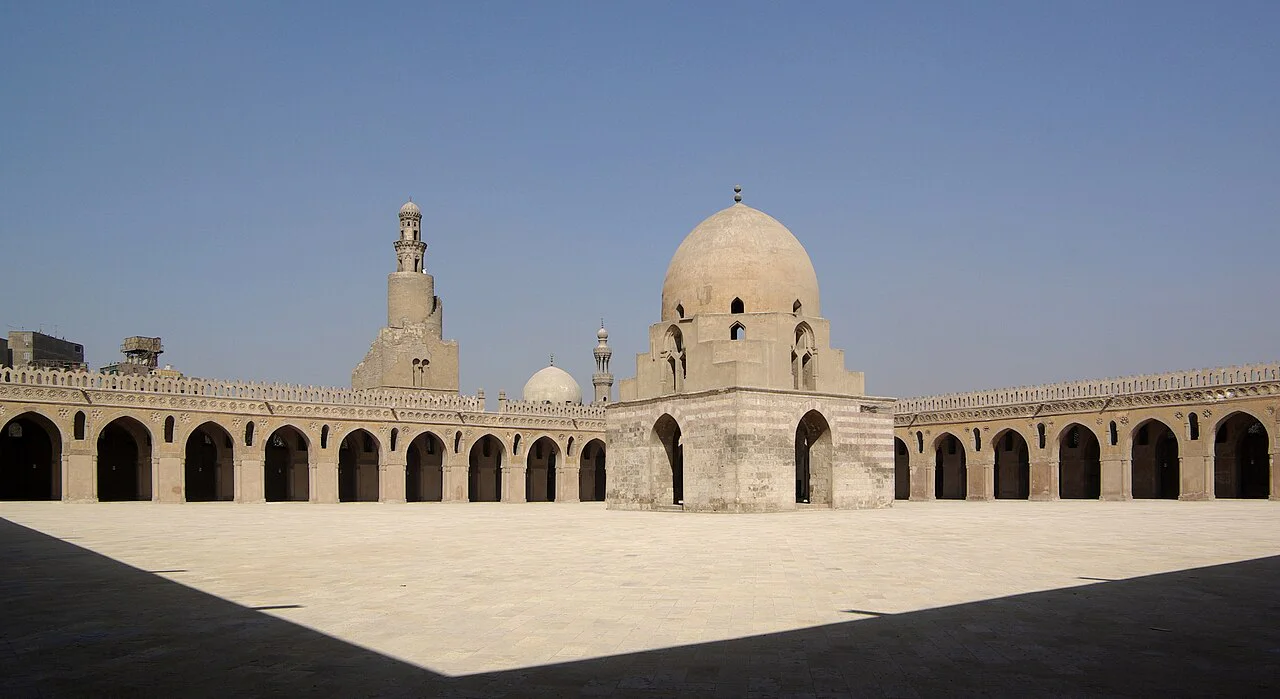
Cairo · 3 km
Mosque of Ibn Tulun
Content & sources
User:Berthold Werner · CC BY 3.0