Stanza · Audio guide
Monastery of Saint Macarius the Great Audio Guide
A place to remember. A story to take with you.
The Monastery of Saint Macarius the Great is a Coptic Orthodox monastery located in Wadi El Natrun, Egypt. It is situated off the highway between Cairo and Alexandria.
Download Stanza, then search for “Monastery of Saint Macarius the Great”.
About the tour
One guide. Your kind of visit.
The Monastery of Saint Macarius the Great is a Coptic Orthodox monastery located in Wadi El Natrun, Egypt. It is situated off the highway between Cairo and Alexandria.
Ready when you are.
- 01Get the free Stanza app.
iOS & Android
- 02Find your guide.
“Monastery of Saint Macarius the Great”
- 03Download before you go.
Works offline
Audio guide / 12 narrated stops
Inside the guide
Get to know a few of the stories before you go. Open a stop to read more.
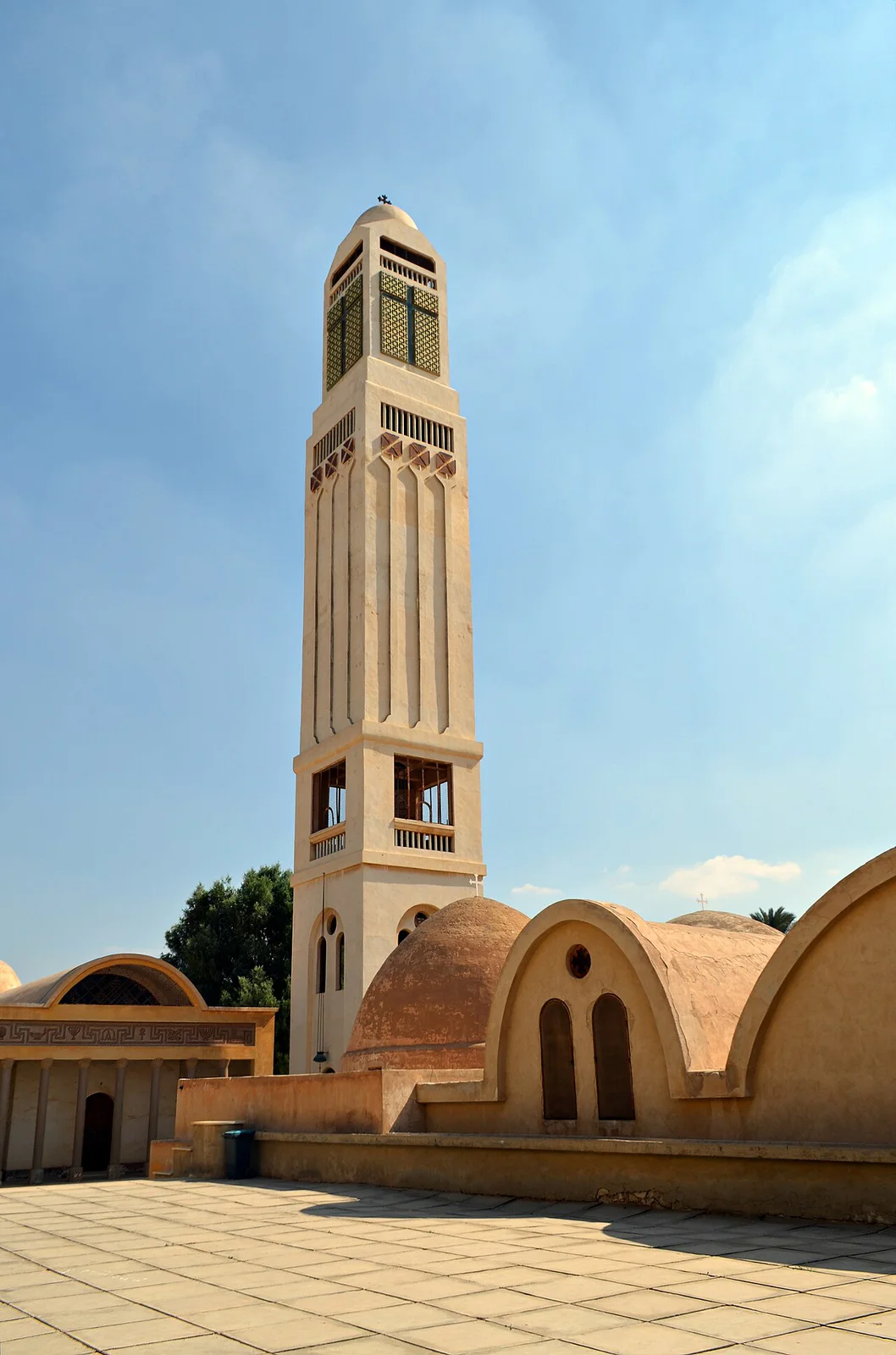
01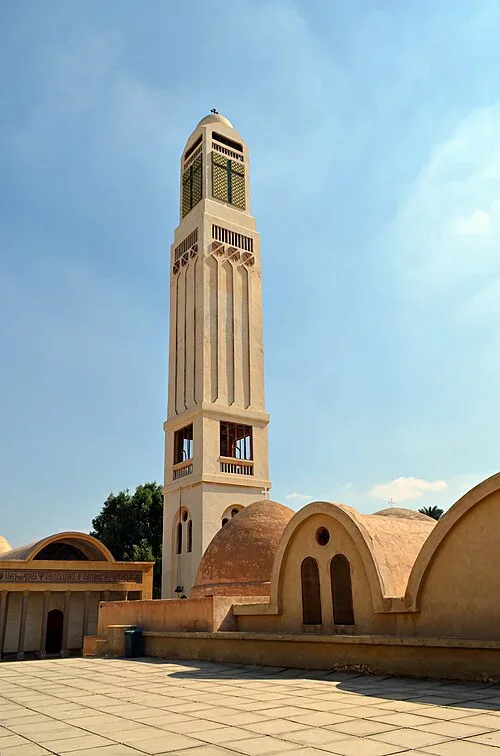 Main Courtyard and Historic Bell Tower
The Bell Tower over the Old Church Domes
Welcome to the Monastery of Saint Macarius the Great, in the desert region of Wadi El Natrun. This is one of the ancient monasteries of Scetis, the desert where Egyptian monasticism took root. Saint Macarius the Great settled here in the last third of the fourth century, and monks have lived on this ground ever since without a break. The tall tower rising over the domed roofs is younger than it appears. It was added in 1929, together with the church nave beside it. A new tower on a medieval complex is a quiet sign that this place never became a ruin. It is a working monastery, still growing and still changing. Ahead lie three ancient churches, a fortress, a cave and the green grounds of a living community.
Faris El-Gwely · CC BY-SA 4.0
02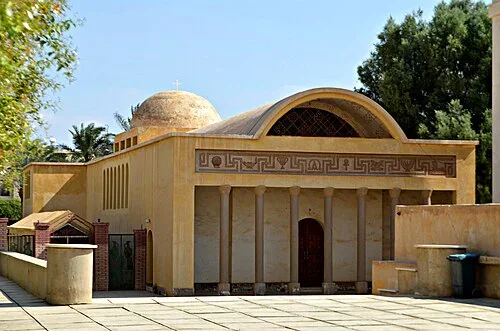 Main Courtyard and Historic Bell Tower
A Church Facade with Columns and Domes
This facade, with its columns and broad dome, belongs to a story the monastery has told for centuries. In the late fifth century, Princess Hilaria, daughter of the Emperor Zeno in Constantinople, fled the imperial palace in secret. She made her way to Scetis and lived there as a nun in the desert. When her identity came to light, the story goes, her father honored the place that had received her. Zeno sent financial support to the monasteries of Wadi El Natrun. His patronage paid for renovations, fortified towers, churches and buildings with marble columns. He also ordered the Church of Saint Macarius itself rebuilt. The account is tradition rather than archaeology, but the marble columns of these churches carry its memory.
Faris knight · CC BY-SA 4.0
03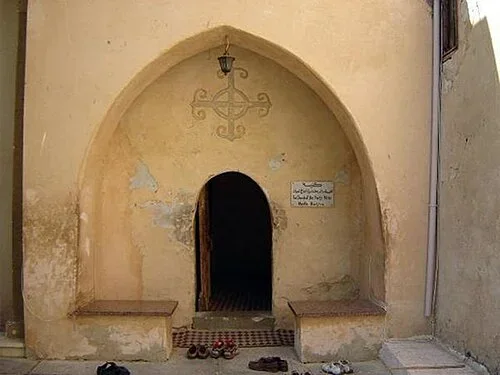 Church of Saint Macarius and Sanctuary Domes
Entrance to the Church of Saint Macarius
It began with one man praying alone. As disciples gathered around Macarius, they built their own cells near his, and the settlement outgrew solitary prayer. So a church was raised for communal worship, the building this arched doorway leads into. Around it came the practical things a community needs. A water well, a bakery, a kitchen for cooking. In time the monastery added storage rooms, a guesthouse and a refectory, where the monks shared what they called the Agape Meal, the Meal of Love. The Coptic cross carved above the arch marks this as a sacred threshold. The sandals left outside say the rest. This is an entered, living church, and prayer here remains the monastery's original work.
Listen in the appFaris knight · CC BY-SA 4.0
04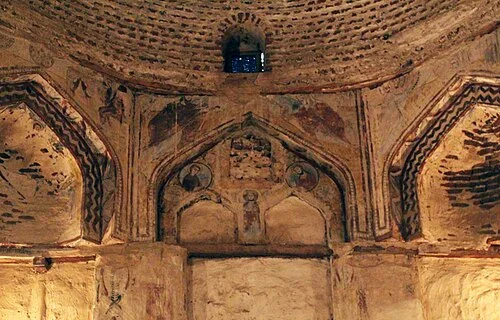 Church of Saint Macarius and Sanctuary Domes
Under the Sanctuary Dome
Coptic churches are built sideways, and this one is a fine example. The nave of the Church of Saint Macarius runs north to south rather than east to west, and it ends in three sanctuaries. The building itself is the remains of an older structure, patched and layered across the centuries. The middle and northern sanctuaries date back to the medieval period. The painted walls and blind arches of the sanctuary have faded with age, their figures softened beyond naming. And the building is not finished with its history. Between 1976 and 1978 the community added a new Sanctuary of the Three Youths, shaped and sized to match the central one. Sixteen centuries on, hands are still shaping this church.
Listen in the appPhoto: Ibrahim El-Mezayen · CC BY-SA 4.0
05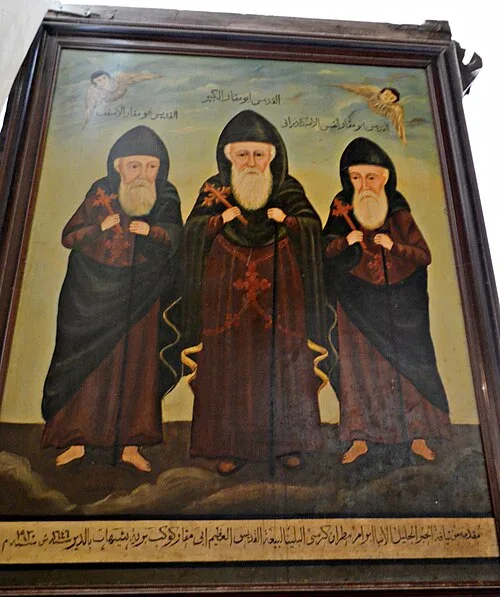 Shrines of the Three Macariuses and Biblical Relics
Icon of the Three Macariuses
Three saints share the name Macarius, and this icon shows them side by side in their dark monastic habits. There is Macarius the Great, founder of this place. There is Macarius of Alexandria, and Macarius of Edku. In 793, under Pope John IV, the relics of Macarius the Great were brought here in a wooden casket. The relics of Macarius of Alexandria were already at the monastery, waiting for him. The remains of Macarius of Edku arrived later, in the time of Pope Michael III. The three bodies rest together now in a new shrine in the second nave of the church, alongside the bodies of Coptic patriarchs. For the monks, these three are the spiritual fathers of the house.
Listen in the appFaris knight · CC BY-SA 4.0
06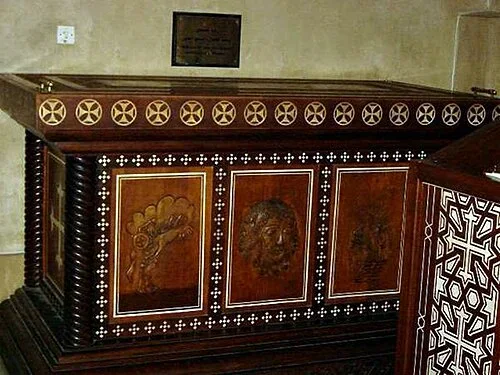 Shrines of the Three Macariuses and Biblical Relics
The Reliquary of the Prophets
For generations, the elders of the monastery passed down a belief. Near the northern wall of the Church of Saint Macarius, they said, lay the burial place of John the Baptist and the prophet Elisha. The spot was marked by a small protruding column, and incense was offered before it, though the grave itself stayed hidden. In April 1976, restoration works reached the church's original floor. Excavation first uncovered the coffin of a nineteenth-century abbot. Below it, more than a metre and a half down, skeletal remains came to light, some laid out in the Coptic burial rite, others neatly stacked. Beneath the bones lay reddish soil, the trace of wooden coffins long decayed. The find was announced in 1978 and drew controversy, and the monastery itself hesitated, saying the evidence was not conclusive. When Pope Shenouda III asked why it had not been made public, Father Matta gave his reason, and the Pope answered, "There is also no evidence to deny it!" The remains are honoured here as the purported relics of the two prophets, a treasure held with its question marks.
Listen in the appFaris knight · CC BY-SA 4.0
07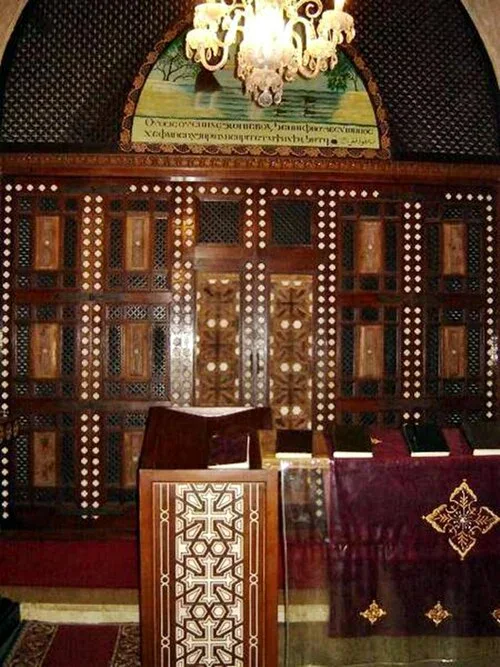 Church of the Forty-Nine Elders and Ancient Vaults
Iconostasis of the Church of the Forty-Nine Elders
Behind that inlaid wooden screen lies the reason this church exists. In the year 444, Berber raiders attacked the monasteries of Scetis for the third time. Forty-nine elders had taken refuge in the Bayamon Fortress, and according to the tradition behind this church, they were killed near its walls, together with an imperial messenger and his son. Their remains were first buried in a nearby cave. In the seventh century they were transferred to a church within the monastery dedicated to their memory. Other accounts place their deaths with the monastery community itself; the tradition of the fortress is the one this church carries. Inside, past the choir barrier, the floor rises into a raised platform. The remains of the forty-nine are interred there, and the church is their memorial.
Listen in the appFaris knight · CC BY-SA 4.0
08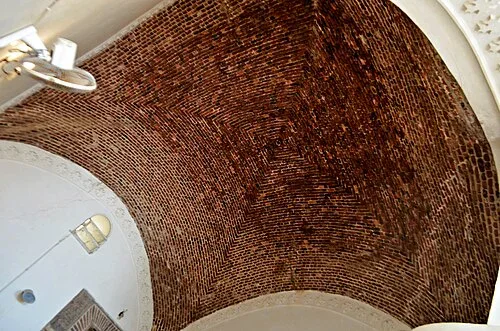 Church of the Forty-Nine Elders and Ancient Vaults
Brick Vaults overhead
The ceiling tells its own story. Courses of brick sweep upward in a spiral, closing into a dome, one of the vaulted roofs that cover the nave and choir of this church. The builders spanned the bays in pairs with semi-cylindrical vaults, each pair resting on a transverse arch, and set a dome before the sanctuary. It is simple, strong logic, and it has kept these spaces standing for centuries. Survival here has never been automatic, though. Parts of the monastery's ancient wooden roofs and domes have needed reinforcement over time, and buttresses and new vaults sit beside the oldest fabric. A building this old is kept alive by continual repair.
Listen in the appFaris El-Gwely · CC BY-SA 4.0
09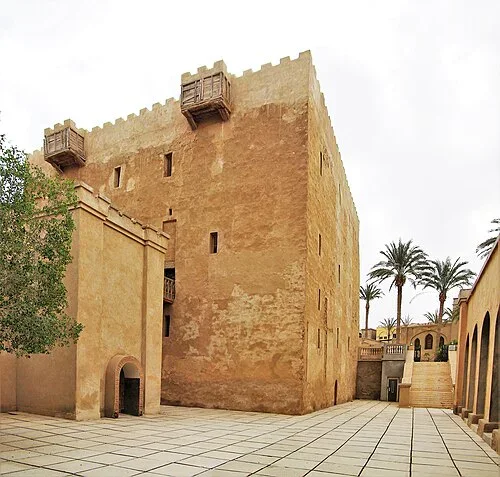 The Medieval Defensive Fortress and Drawbridge
The Medieval Fortress
Raiders came to Scetis again and again, the first attack recorded in 407 and a second in 434. The desert communities answered with architecture. Across the region they built fortified towers where monks could shelter until danger passed. This fortress is a square keep, about twenty-one and a half metres on each side and sixteen metres tall, raised from large rough stone blocks and coated in plaster. It has three levels of rooms. The ground floor held storerooms, their vaulted bays divided by stone pillars, likely for grain, and one room held an oil press. A water well and a small church meant the monks could wait out a siege with food, water and prayer. The martyrs remembered in the Church of the Forty-Nine Elders show what could happen when shelter came too late.
Listen in the appPhoto: Berthold Werner · CC BY-SA 3.0
10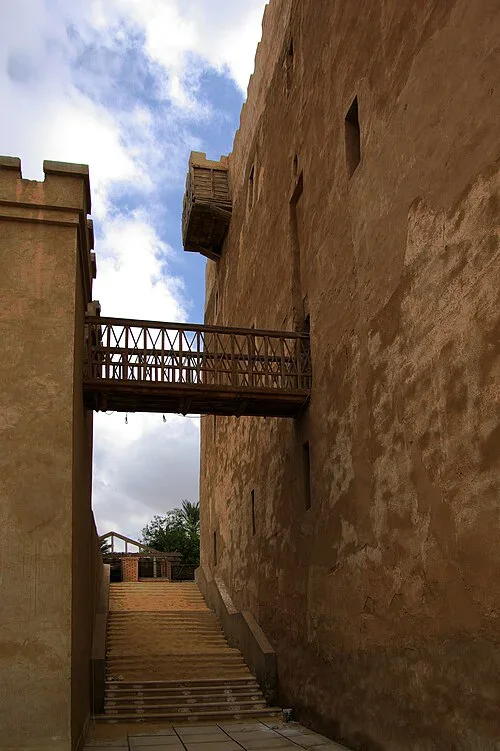 The Medieval Defensive Fortress and Drawbridge
The Drawbridge
A fortress is only as strong as its entrance, and this one kept its entrance out of reach. The only door into the keep sits on the first floor, a small rectangular opening high above the ground. Historically, monks reached it by a wooden drawbridge that could be raised or cut away, leaving raiders facing bare stone. The bridge in place today was connected to the fortress in 1935, and it no longer moves. Visitors now cross on the fixed bridge and climb the narrow historic stone steps beyond it, which is why access to the upper floors stays limited. The design is a single idea, carried out simply: when the bridge went up, the desert stayed outside.
Listen in the appPhoto: Berthold Werner · CC BY-SA 3.0
- 11
The Cave of Saint Macarius
The cave where Macarius began, roofed with palm fronds, from which a desert full of monasteries grew.
- 12
Gardens, Towers and the Modern Revival
Twelve monks arrived in 1969 from ten years of cave isolation, and the desert around them turned green.
Monastery of Saint Macarius the Great
Frequently asked questions
How much does the guide cost?
Free app download. Listed guide price: $0.99. Guide price shown in the app. Audio guide only. Venue admission is separate.
Can I listen without internet?
Yes. Download the guide’s audio, images, and maps in the app before your visit. Your downloaded content is then available offline.
Can I listen in my language?
This audio guide is available in 15 languages, including English.
Do I need to follow a schedule?
No. This is a self-guided experience. Choose your stops, pause whenever you like, and return to a story at your own pace.
At your own pace
Explore Monastery of Saint Macarius the Great.
Download Stanza, then search for “Monastery of Saint Macarius the Great”.
Free app download · Guide price shown in the app
Keep exploring
Nearby audio guides
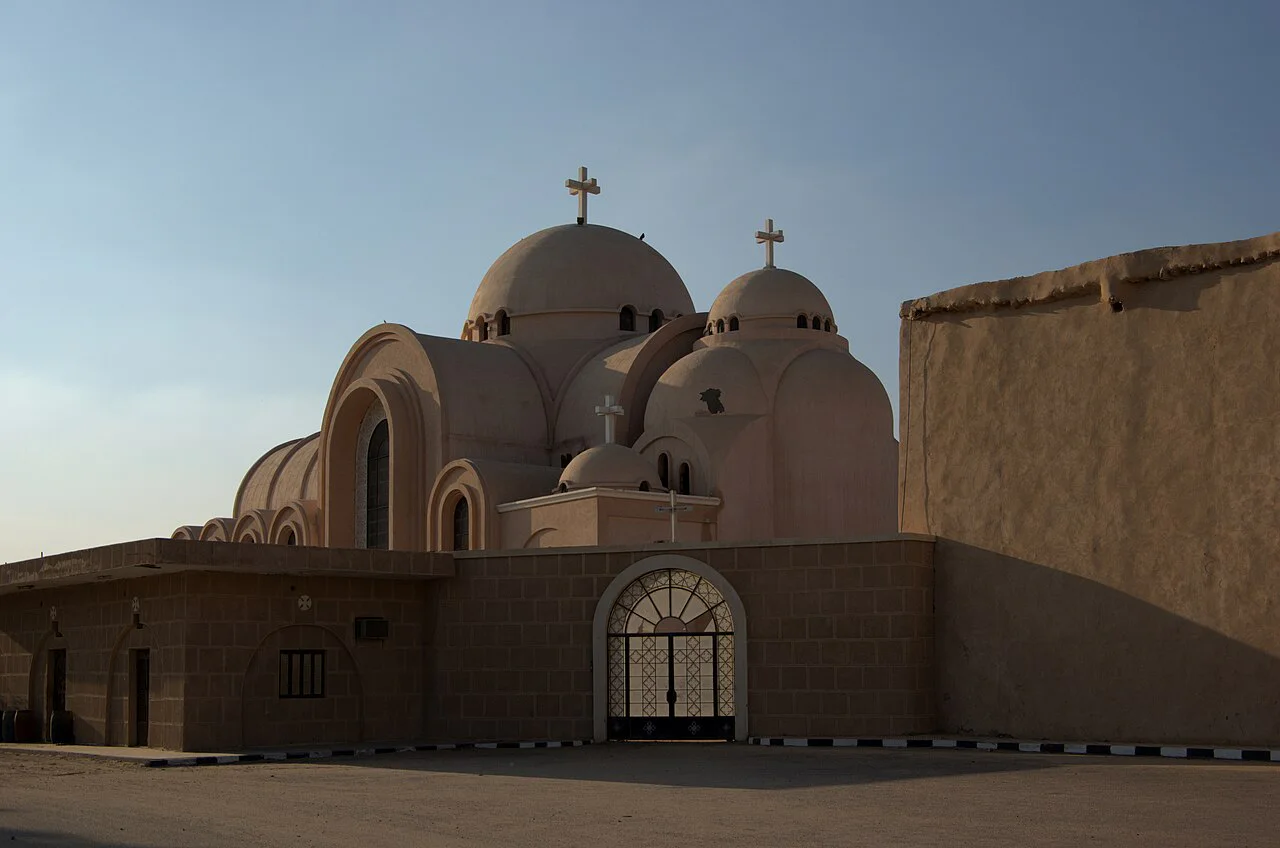
Beheira Governorate · 12 km
Monastery of Saint Pishoy
Content & sources
Photo: Berthold Werner · CC BY-SA 3.0
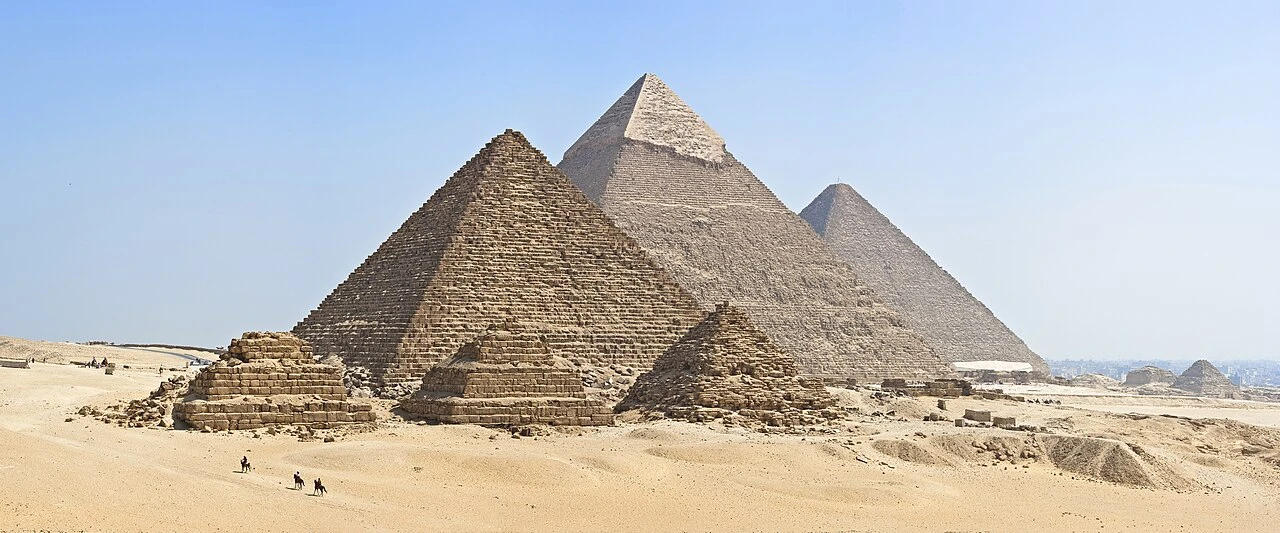
Giza · 72 km
Giza pyramid complex
Content & sources
KennyOMG · CC BY-SA 4.0
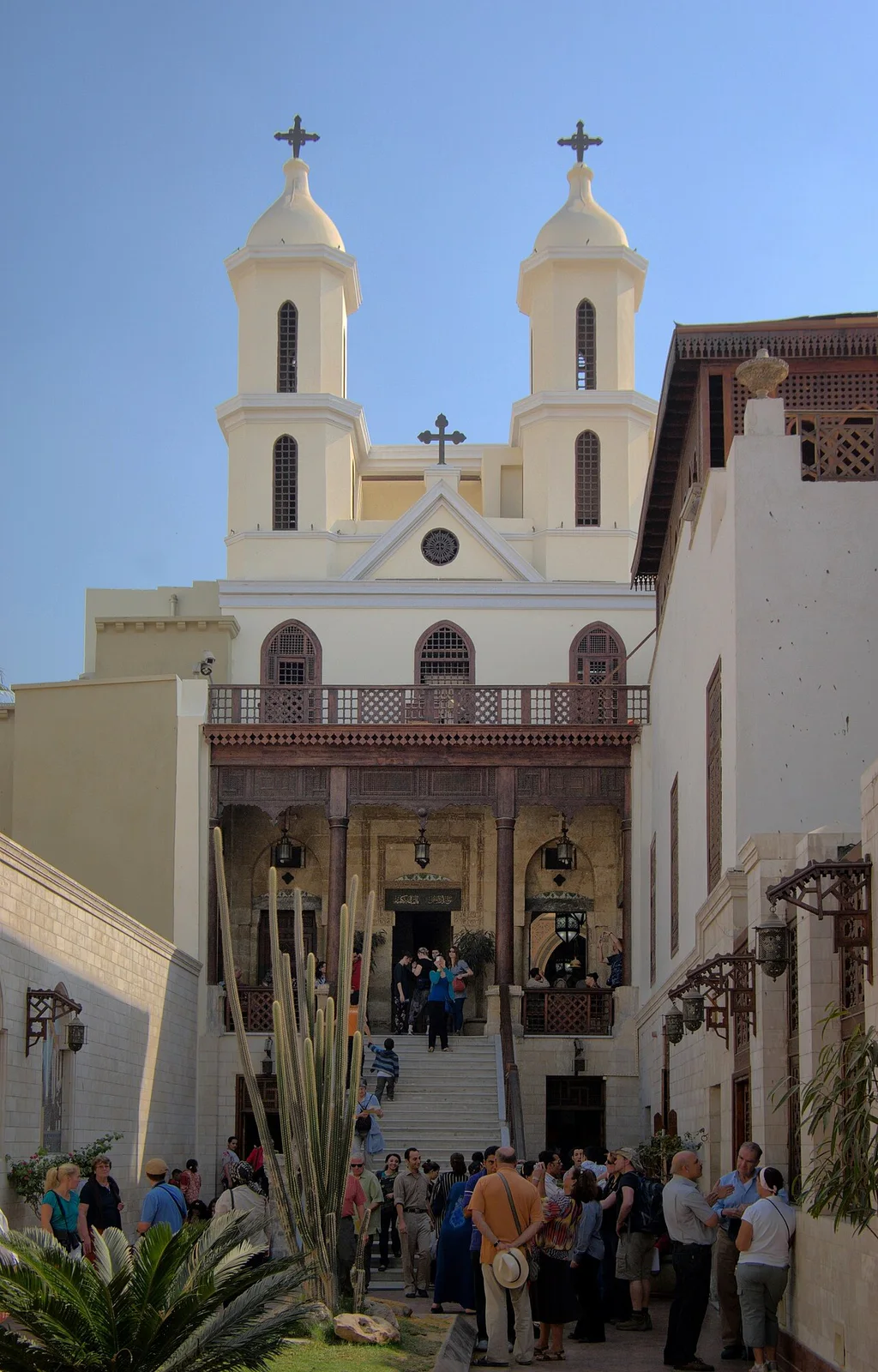
Cairo · 79 km
Hanging Church
Content & sources
Photo: Berthold Werner · CC BY-SA 3.0
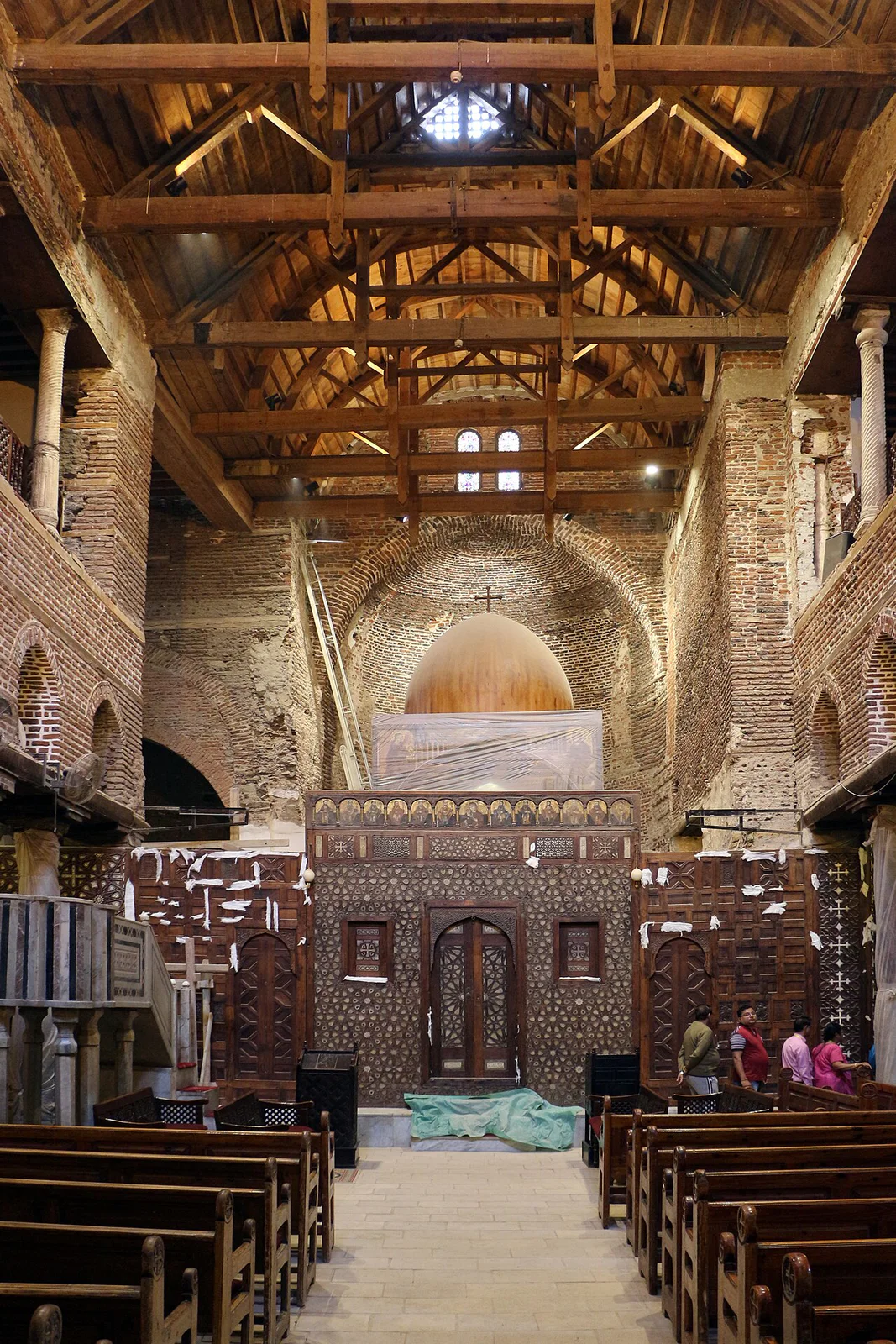
Cairo · 79 km
Saints Sergius and Bacchus Church
Content & sources
Photo: Sailko · CC BY 3.0