Stanza · Audio guide
Memphis, Egypt Audio Guide
A place to remember. A story to take with you.
Memphis was the ancient capital of the first nome of Lower Egypt. Its ruins are located in the vicinity of the present-day village of Mit Rahina.
Download Stanza, then search for “Memphis, Egypt”.
About the tour
One guide. Your kind of visit.
Memphis was the ancient capital of the first nome of Lower Egypt. Its ruins are located in the vicinity of the present-day village of Mit Rahina.
Ready when you are.
- 01Get the free Stanza app.
iOS & Android
- 02Find your guide.
“Memphis, Egypt”
- 03Download before you go.
Works offline
Audio guide / 58 narrated stops
Inside the guide
Get to know a few of the stories before you go. Open a stop to read more.
01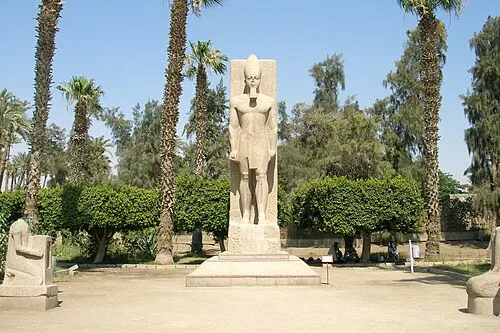 Mit Rahina Open-Air Museum
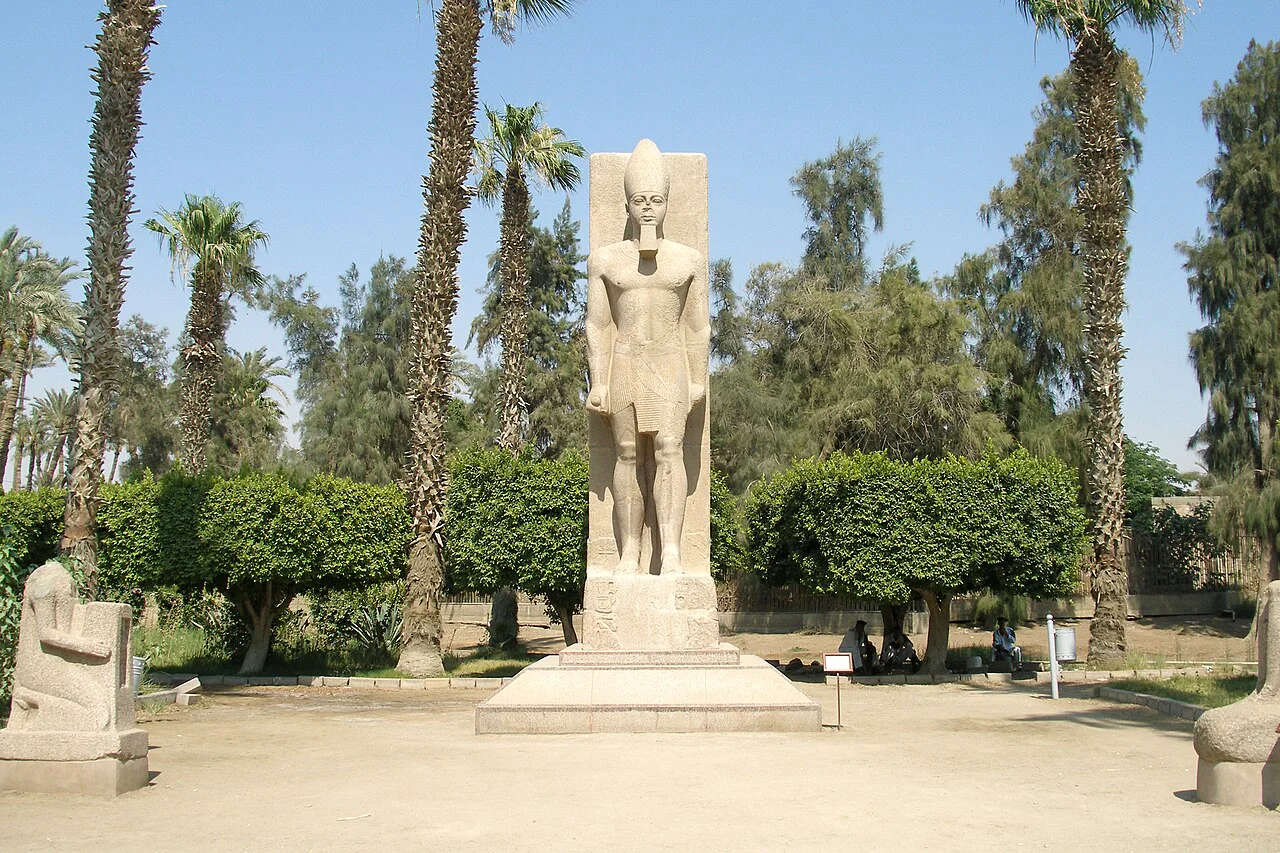
Memphis was the first capital of a united Egypt, on the west bank of the Nile about twenty kilometres south of Cairo. The city stood at the very point where Upper and Lower Egypt met, and it was already in existence before the thirty-first century BC. Tradition says the founder was Menes, the king who joined the Two Lands. The old accounts claim he built his capital here by diverting the Nile with dikes, to keep the floodwaters out. That story comes from the Egyptian priest Manetho and from Herodotus, and it is legend rather than settled history. Many scholars doubt there was ever a single founder at all. A discovery in 2012 pushed the city's age back further still. An inscription in the Sinai records a visit by King Iry-Hor, who lived two generations before Narmer, so Memphis was already standing during Iry-Hor's reign. The ancients called the city Inebu-hedj, the White Walls, a fortress likely raised to control the new union of the two rival kingdoms. It stayed a living place from the First Dynasty into the early Middle Ages. Only fragments of it survive above ground, so the statues that once filled its temples were gathered here, in the open-air museum at Mit Rahina. A royal figure stands among the palm trees of the garden, and a giant lies indoors nearby.
Vyacheslav Argenberg · CC BY 4.0
02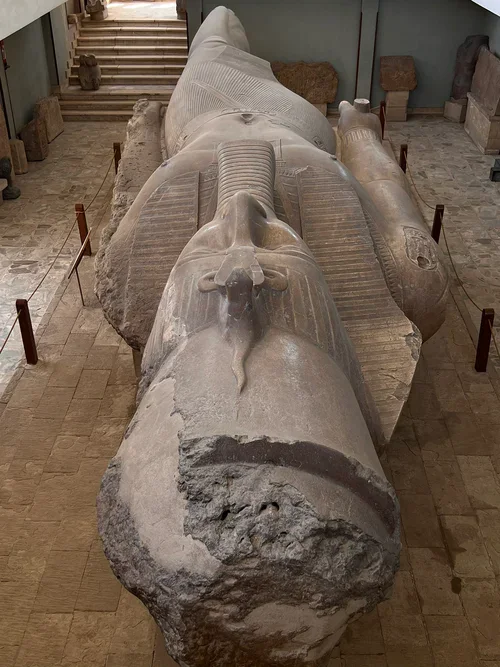 Mit Rahina Open-Air Museum
Face of the Recumbent Colossus
Seen from above, the whole length of the colossus runs away in one line, from the calm face down the folded arms to the broken feet. This is the face of Ramesses II, carved in monumental limestone. Traces of the original colour still cling to the stone in places, faint reminders that the statue was once painted, not left bare. What survives best is the modelling itself. The sculptors caught the complex, subtle forms of the human anatomy with a precision that is easy to miss at ground level. The heavy eyelids, the mouth, the set of the jaw all read clearly from this angle. The king wears the white crown of Upper Egypt, the Hedjet, the tall bulbous crown that marked him as ruler of the southern kingdom. The statue was meant to be seen from below, towering along the southern axis of a temple. Lying flat, it offers something the sculptor never planned: a portrait at reading distance.
Photo: 陳寅恪 · CC BY-SA 4.0
03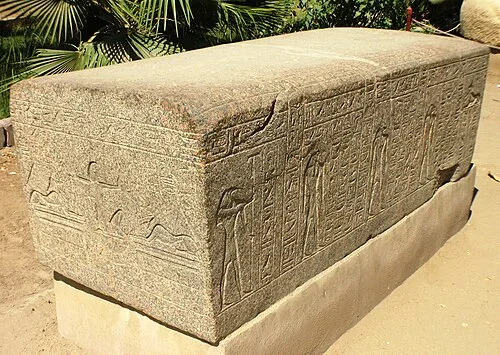 Mit Rahina Open-Air Museum
Sarcophagus of Amenhotep
Not everything here was made to honour a living king. This massive box of granite is a sarcophagus, a coffin carved from a single block of stone. Its surfaces are covered with incised figures and columns of hieroglyphic text, gods and protective scenes cut into the hard granite for a burial. Sarcophagi like this belonged to people of the highest rank, since stone of this size and quality was expensive to quarry and harder to carve. It carries the name Amenhotep, though which holder of that common royal name it belonged to is not settled. The museum gathers temple sculpture above all, colossi and sphinxes and gods. A piece like this shows the other half of its collection: funerary monuments, the equipment meant to carry a person safely into eternity. It sits outdoors on a low plinth, an object built for a hidden chamber now resting in the open air.
Listen in the appDaniel Mayer · CC BY-SA 4.0
04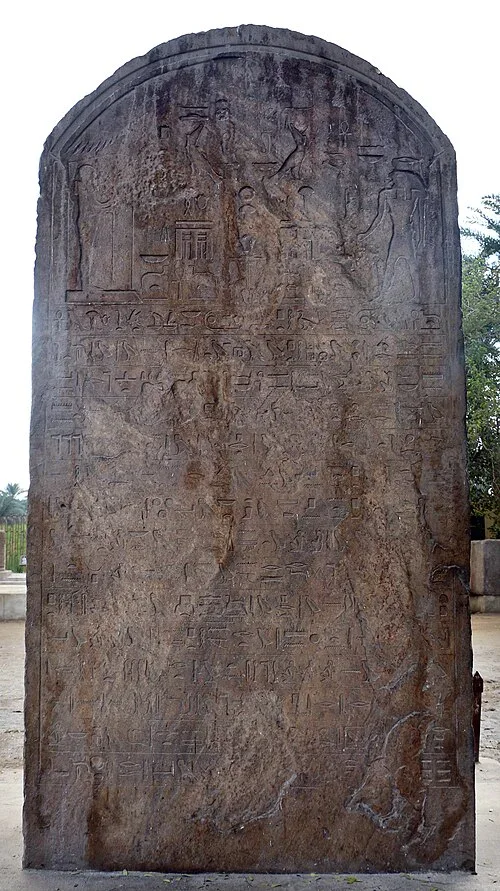 Mit Rahina Open-Air Museum
26th-Dynasty Stele
In Memphis, the god Ptah was believed to live among people in the form of a bull. The animal, called Apis, was kept in the city and honoured as a living manifestation of the god while it lived. When a bull died, the event mattered enough to be carved in stone. Commemorative stelae like this one, rounded at the top and covered in hieroglyphs, recorded the events of the cult, and this example belongs to the Twenty-sixth Dynasty, the late centuries of native rule. The cult grew so important that its records became a key to understanding the whole period. Inside the grounds of the great temple of Ptah, the archaeologist Ahmed Badawy found the first remains of Apis at Memphis in 1941. The site turned out to be a mortuary chamber built for one purpose only: the embalming of the sacred bull. A stele from Saqqara shows that the king Nectanebo II later ordered its restoration. The bulls themselves were buried in catacombs in the necropolis at Saqqara, northwest of the city, where their tombs eventually grew monumental in size.
Listen in the appPhoto: Sailko · CC BY 3.0
05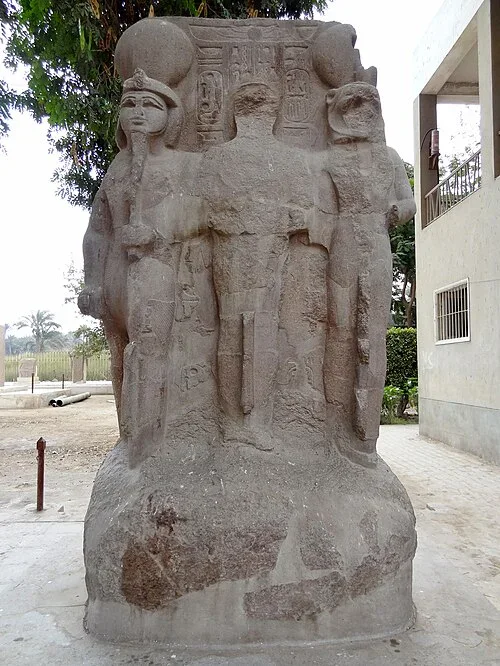 Mit Rahina Open-Air Museum
Triad Statue in the Memphis Museum
Memphis worshipped its gods as a family, and this sculptural group shows the pattern. The Memphis triad consisted of the creator god Ptah, his consort Sekhmet, and their son Nefertem, and together they formed the main focus of the city's worship. Ptah was the patron of craftsmen, the god of creation and artworks, and the protector of Memphis itself. Sekhmet was his fierce partner, shown with the head of a lioness. Their son Nefertem completed the three. In groups of this type, a king stands flanked by the deities, placed inside the divine family as their equal in scale. Here the lioness-headed goddess rises on one side of the central figure, wearing the solar disk. The stone is worn and the faces damaged, but the composition still reads plainly. The same triad had an Upper Egyptian counterpart at Thebes, where Amun, Mut and Khonsu played the matching roles. Memphis built its own theology around its own creator.
Listen in the appOlaf Tausch · CC BY 3.0
06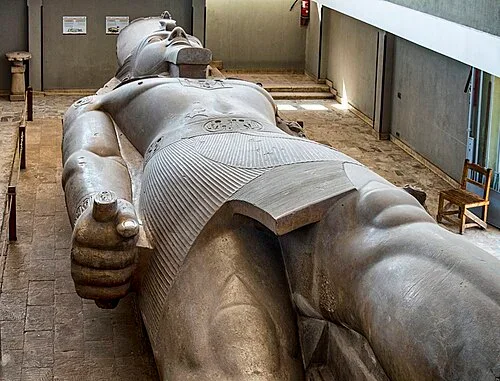 Colossal Statue of Ramesses II
Colossus of Ramesses II
Ramesses II turned Memphis into a showcase of his own glory. He adorned the city with monuments and colossal symbols of royal power, and the ruins have yielded a very large number of sculptures of him. The greatest of them lies in this museum. The colossus is a giant statue of the king carved from monumental limestone, about ten metres in length. It was discovered in 1820 near the southern gate of the temple of Ptah, by the Italian archaeologist Giovanni Caviglia, in the first excavations of the site. Time has not been kind to its lower half. The base and the feet broke away from the rest of the body, so the statue cannot stand. It is displayed lying on its back instead, stretched out on a purpose-built platform. Even broken, it dominates the hall. The white crown of Upper Egypt rises at one end, the carved kilt at the other, and between them runs a body of flawless detail. It is the signature piece of the museum, and of the king who built half of Memphis in his own name.
Listen in the appPhoto: Ovedc · CC BY-SA 4.0
07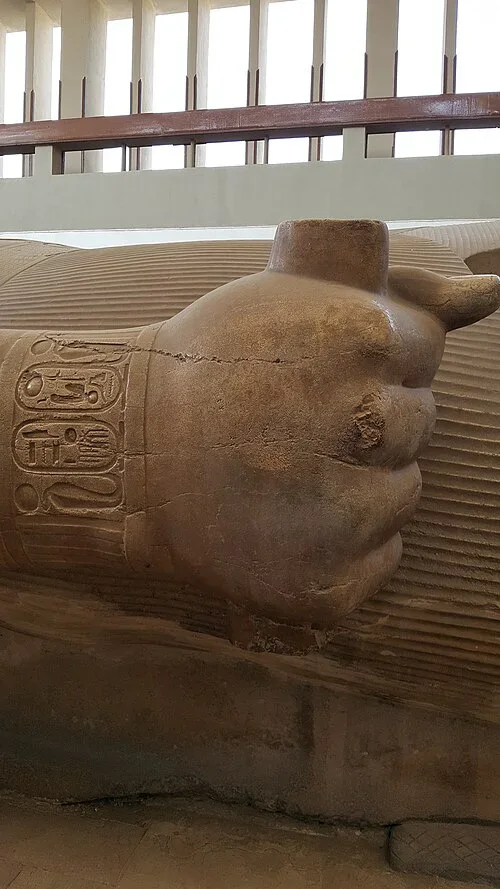 Colossal Statue of Ramesses II
Cartouches on the Colossus's Fist
The fist of the colossus is clenched, and on the wrist below it runs a band of incised decoration. Into that band the sculptors cut the king's names, each one enclosed in an oval ring of hieroglyphs called a cartouche. The cartouche was the sign reserved for royal names, a loop of rope said to protect everything written inside it. Carving it here meant the statue declared its owner even without a face or a crown. It is a ruler literally signing his own monument, his name fastened to his own wrist for anyone standing close enough to read. The lines are crisp enough to trace with the eye, the hieroglyphs small against the enormity of the hand above them. Most visitors come for the ten metres of limestone. The detail that stays with them is often this one: a name in a ring, cut into the king's own flesh of stone.
Listen in the appPhoto: Ovedc · CC BY-SA 4.0
08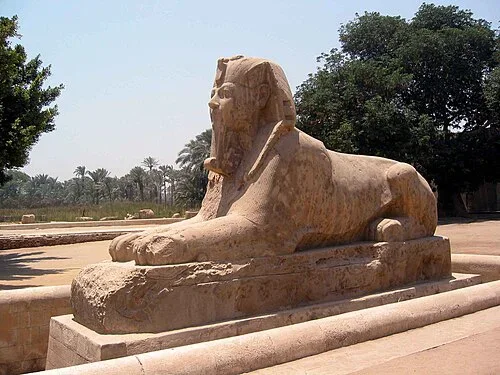 The Alabaster Sphinx of Memphis
Alabaster Sphinx of Memphis
A lion with a human face lies on its paws outside the temple precinct, carved from a single massive block of calcite, the pale stone the Egyptians called alabaster. This is the alabaster sphinx of Memphis, and its material alone makes it remarkable. Sculptors usually worked sphinxes in granite or limestone. Carving one from a single block of calcite, a soft, luminous stone that is difficult to find in such sizes, was an extraordinary undertaking. The sphinx dates from the Eighteenth Dynasty, and most likely from the reign of either Amenhotep the Second or Thutmose the Fourth, both kings who gave considerable royal attention to Memphis. Which of the two commissioned it remains an open question. It is counted one of the finest examples of this kind of statuary still present on its original site, guarding the Temple of Ptah where it was set up. Most of Memphis's finds were carried off to museums around the world, many of them to the Egyptian Museum in Cairo. This one never left.
Listen in the appPhoto: Amr-hany · CC BY-SA 4.0
09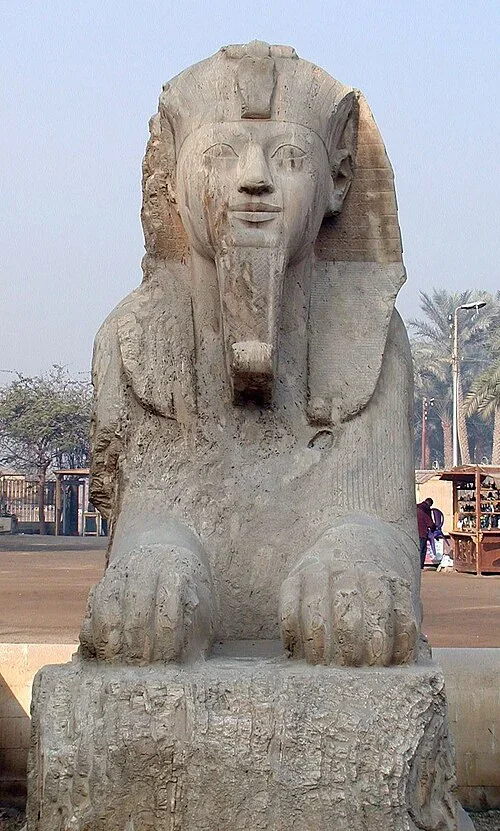 The Alabaster Sphinx of Memphis
Face of the Alabaster Sphinx
The face of the sphinx has the serenity the Egyptians gave their guardian lions, the wide mouth, the heavy lids, the nemes headdress framing it. It also carries the damage of ages, the nose and surfaces worn and chipped by weather and by time. For centuries the monolith lay hidden, buried where it had fallen, while the city above it vanished into fields and villages. It came to light again in the nineteenth century, when excavators working the ruins of Memphis uncovered it once more. Its rediscovery was part of the same wave of digging that brought the rest of the city's sculpture out of the ground. The stone has a warmth that granite lacks, a creamy glow that changes with the light across the day. Standing close, the face reads almost gently, an odd quality for a guardian. It has watched the temple precinct for some three and a half thousand years, most of them underground.
Listen in the appPhoto: Aoineko · CC BY-SA 2.5
10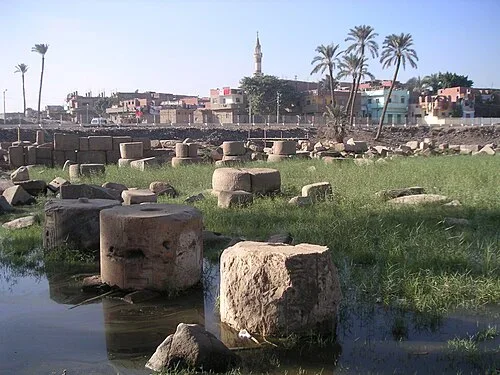 Great Temple of Ptah
The most famous building of ancient Memphis is now almost invisible. The great temple of Ptah, called Hut-ka-Ptah, the Enclosure of the ka of Ptah, was one of the most prominent structures in the city, and today its ruins lie as a waterlogged field of broken column stumps and grass. The name of this temple is believed to be the origin of the name of the country itself. Rendered in Greek as Aigyptos, it passed into other languages and became the modern word Egypt. The temple was the religious heart of the capital. Coronations and jubilees of the unified state were celebrated here, including the Sed festival, and the golden age of such ceremonies began with the Fourth Dynasty, when rulers received the double crown, the divine sign of the union of the Two Lands. Royal gifts kept arriving across the centuries. A large granite offering table records Amenemhat the First of the Middle Kingdom erecting a shrine to Ptah, master of Truth. Blocks registered in the name of Amenemhat the Second were later reused as foundations for the great monoliths before the pylons of Ramesses the Second. A block of Senusret the Second records a building commission given as a gift to the deities of Memphis. Layer upon layer, a thousand years of kings left their names in this one enclosure, and the searches of the site are still adding to the map of the ancient religious city.
Listen in the appNo machine-readable author provided. Neithsabes assumed (based on copyright claims). · Public domain
- 11
Granite Sphinx of Ramesses II
The granite sphinx that watched Alexander take Egypt, and the body that never left quietly.
- 12
Temple of Ptah and Sekhmet of Ramesses II
Ramesses II is honoured in a temple for Ptah and the lioness goddess, and declared himself beloved of Sekhmet.
- 13
Triad of Ramesses II
A king standing inside the divine family, carved in granite for the city of Ptah.
- 14
Temple of Hathor at Memphis
A small temple of Hathor, with Ptah on its walls and a larger shrine still missing.
- 15
Hathoric Column Capital
Hathor's face with cow's ears, the column capital made only for her.
- 16
Palace of Apries
The fortified palace of Apries on its high mound, once a walled compound of barracks and armouries.
- 17
Relief from the Palace of Apries
A palace wall torn into fragments, and the story of how Memphis itself was quarried away.
- 18
Imhotep Museum
The museum at the gate of Saqqara, named for the architect of the Step Pyramid.
- 19
Blue Faience Inlays from Djoser's Complex
Glazed blue-green tiles that show how colourfully the first stone buildings were finished.
- 20
Relief of a Queen of Pepy II
A carved fragment of a queen of the late Old Kingdom, wearing the vulture headdress.
- 21
Seated Scribe Statue
A seated figure with a scroll on his lap, and the officials who ran the capital.
- 22
Wooden Statues of Officials
Painted wooden figures of officials, bright with colour after thousands of years.
- 23
Step Pyramid of Djoser
The oldest monumental stone building in the world, six great steps rising from the desert.
- 24
The 'T' Temple, Djoser's Complex
The jubilee courts of Djoser's complex, built for the ceremony that renewed a king's rule.
- 25
Cobra Frieze of the Enclosure Wall
A crowned wall of carved cobras, with the Step Pyramid rising behind it.
- 26
Underground Corridors of the Step Pyramid
The hidden half of Djoser's pyramid: corridors and chambers deep beneath the mound.
- 27
Relief of Djoser
A rare image of King Djoser himself, striding in ritual among faience tiles.
- 28
Pyramid of Unas
A ruined-looking mound that holds the oldest religious texts in Egypt.
- 29
Causeway of Unas
The walled stone road that carried a royal funeral up to Unas's mortuary temple.
- 30
Burial Chamber of Unas
Inside the burial chamber: spells in fine columns around a black sarcophagus, under a ceiling of stars.
- 31
Inner Chamber of Unas' Pyramid
A companion view inside Unas's pyramid: more spells, and a ceiling of carved stars.
- 32
Relief of Destitute Bedouins
A rare Old Kingdom relief of starving desert dwellers, long linked with the causeway of Unas.
- 33
Tomb of Horemheb
The grand tomb Horemheb built as a general, before an improbable turn made him king.
- 34
Pillared Court of Horemheb's Tomb
The tomb's open court of massive papyrus columns, borrowed from temple architecture.
- 35
Pet Monkey Relief
A pet monkey on a leash, walking in procession among the great figures of the tomb.
- 36
Asiatic Captives Relief
Bound foreign captives carved on the walls, the mark of the owner's military career.
- 37
Limestone Dyad of a Man and His Wife
A husband and wife carved side by side for eternity, private commemoration in stone.
- 38
Serapeum of Saqqara
The underground cemetery where the sacred bulls of Memphis were buried with royal honours.
- 39
Dromos of the Serapeum
The walled processional approach and the Greek-age remaking of the Serapeum under the Ptolemies.
- 40
Galleries of the Serapeum
Inside the Serapeum: a vaulted tunnel of rock with giant burial vaults opening off it.
- 41
Sarcophagus in the Serapeum Gallery
One colossal sarcophagus in its niche, and the political story written on another like it.
- 42
Statue of the Apis Bull
The living Apis bull, honoured in Memphis as the earthly presence of Ptah.
- 43
Apis Bull Death Stele of Taharqa
A stele that dates an Apis bull's death to year 24 of the pharaoh Taharqa.
- 44
Pyramid of Teti
A royal pyramid that now looks like a heap of sand, built by the first king of the Sixth Dynasty.
- 45
Pyramid Texts in the Pyramid of Teti
Teti's burial chambers, their walls covered in finely carved funerary spells under a starry ceiling.
- 46
Mastaba of Kagemni
The grandest private tomb in Teti's pyramid cemetery, built for the king's chief justice and vizier.
- 47
Relief of Kagemni
The tomb's owner carved in shallow relief, staff in hand and dressed for high office.
- 48
Butchery Relief, Mastaba of Kagemni
Butchers at work on a carcass, carved with anatomical precision to feed the dead forever.
- 49
Milking Scene Relief, Mastaba of Kagemni
A herdsman milking a cow while her calf waits beneath her, carved on a vizier's tomb wall.
- 50
Harpist Relief, Mastaba of Kagemni
A seated harpist on the tomb wall, one of the musicians who fill Old Kingdom tomb chapels.
- 51
Bent Pyramid of Sneferu
Sneferu's pyramid at Dahshur, with a rare surviving patch of the polished limestone that once covered every pyramid.
- 52
The Bent Pyramid's Double Slope
Why the profile breaks: a steep start flattened halfway up, an experiment frozen in stone.
- 53
Inside the Bent Pyramid
The Bent Pyramid is hollow: steep passages and corbelled chambers hidden inside the stone.
- 54
Sed-Festival Relief of Sneferu
A king seated in full regalia, a relief tied to Sneferu's jubilee.
- 55
Red Pyramid of Sneferu
The first true smooth-sided pyramid, rising in one unbroken slope after the lessons of the bent one.
- 56
Masonry of the Red Pyramid
The bare corner of the Red Pyramid, where the lost casing once met the rough core.
- 57
Corbelled Passage of the Red Pyramid
The long, high corbelled passage that carries the weight of the Red Pyramid overhead.
- 58
Burial Chamber of the Red Pyramid
The chamber built to receive Sneferu, and the question of whether he ever lay there.
Memphis, Egypt
Frequently asked questions
How much does the guide cost?
Free app download. Listed guide price: $4.99. Guide price shown in the app. Audio guide only. Venue admission is separate.
Can I listen without internet?
Yes. Download the guide’s audio, images, and maps in the app before your visit. Your downloaded content is then available offline.
Can I listen in my language?
This audio guide is available in 15 languages, including English.
Do I need to follow a schedule?
No. This is a self-guided experience. Choose your stops, pause whenever you like, and return to a story at your own pace.
At your own pace
Explore Memphis, Egypt.
Download Stanza, then search for “Memphis, Egypt”.
Free app download · Guide price shown in the app
Keep exploring
Nearby audio guides
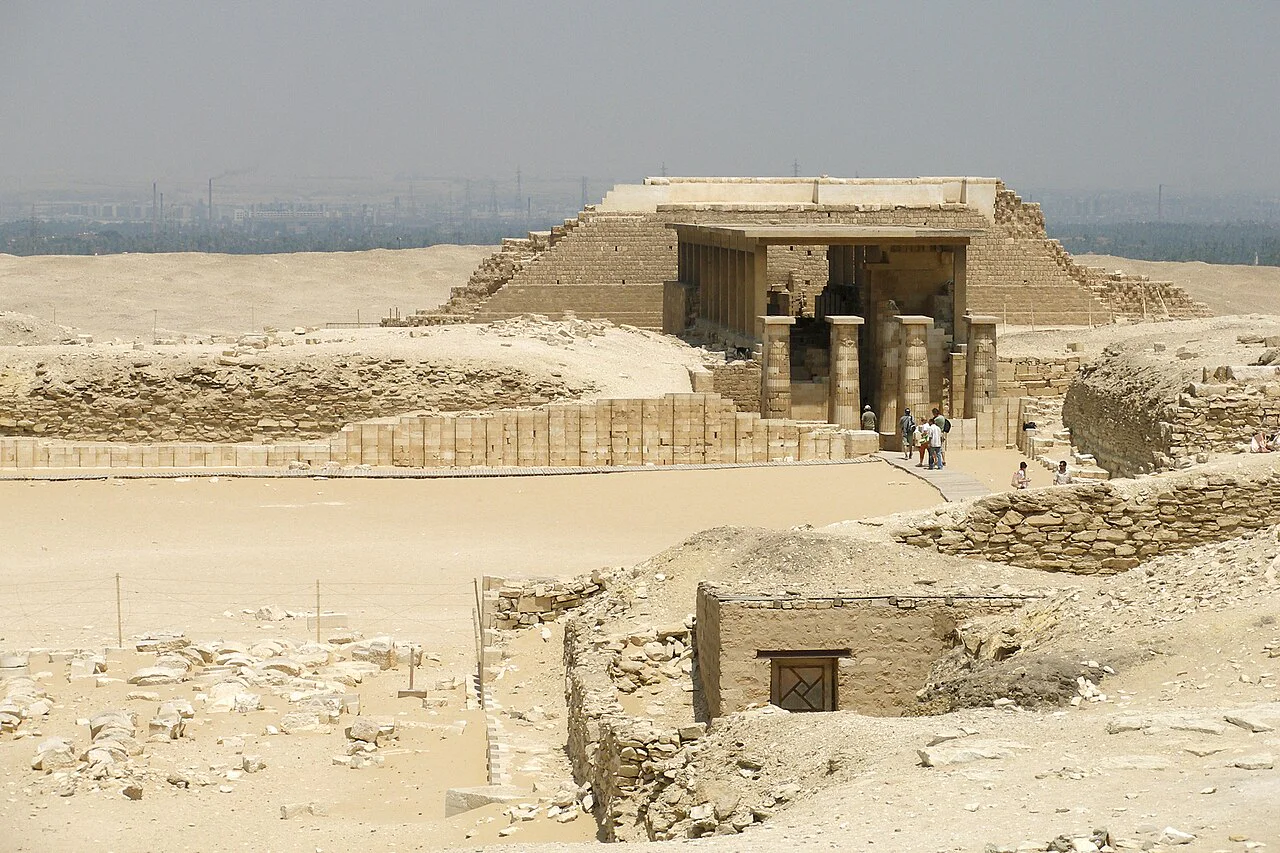
Saqqara · 2 km
Saqqara
Content & sources
Vyacheslav Argenberg · CC BY 4.0
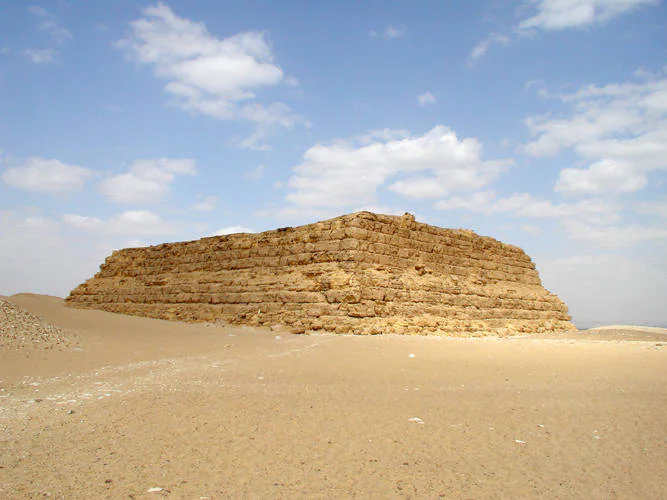
Saqqara · 3 km
Mastabat al-Fir'aun
Content & sources
Jon Bodsworth · Copyrighted free use
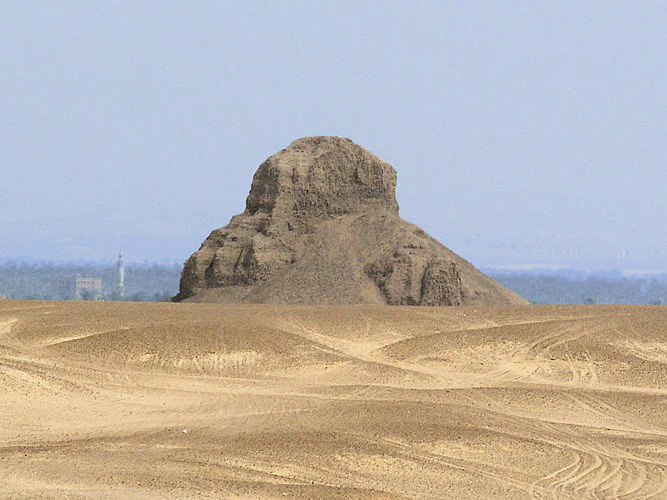
Minshat Dahshur · 6 km
Black Pyramid
Content & sources
Jon Bodsworth · Copyrighted free use
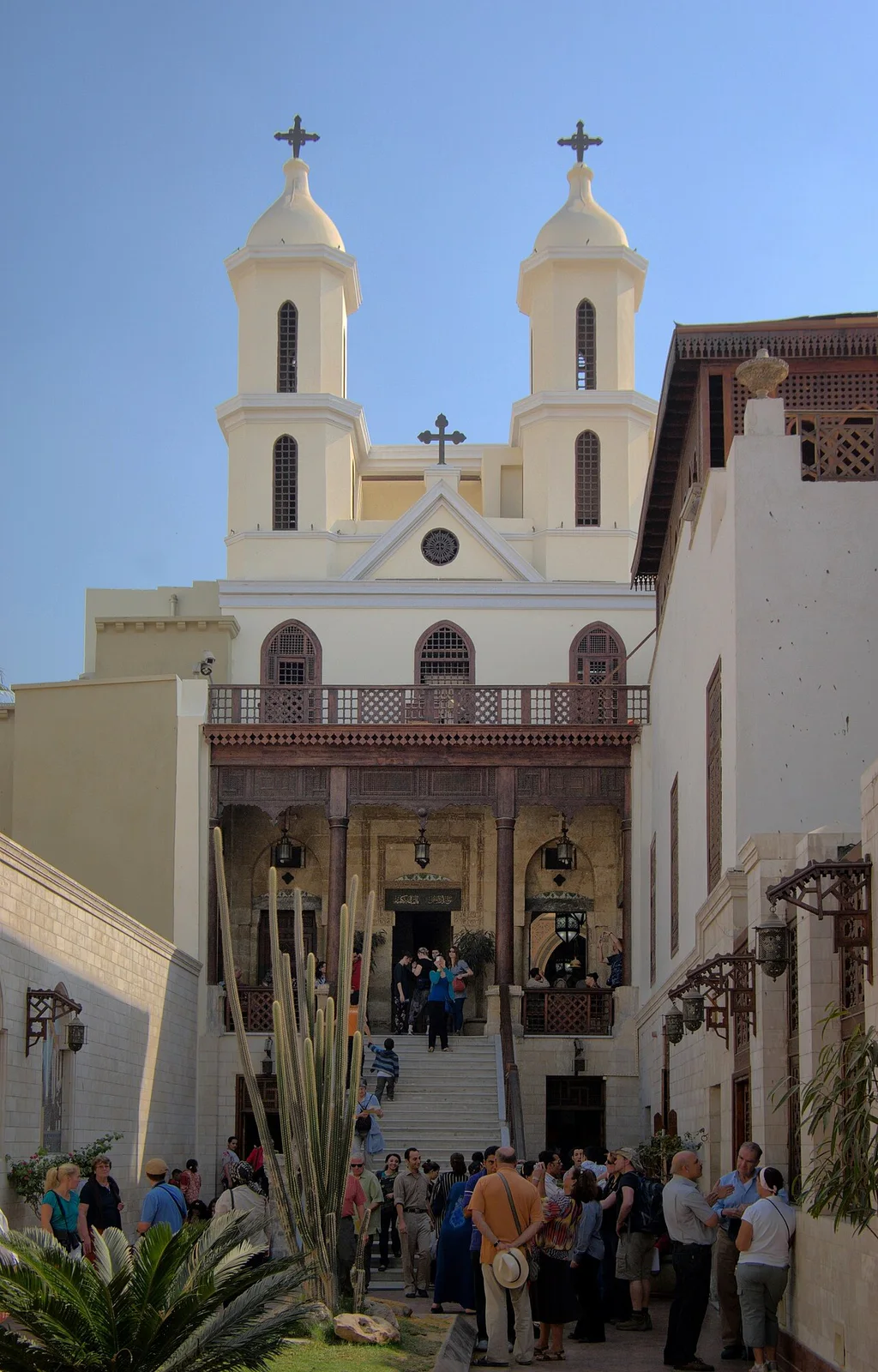
Cairo · 18 km
Hanging Church
Content & sources
Photo: Berthold Werner · CC BY-SA 3.0