 Stanza / Audio guide
Content & sources
Stanza · Audio guide
Joya de Cerén Audio Guide
A place to remember. A story to take with you.
Joya de Cerén is an archaeological site in El Salvador that contains the remains of a pre-Columbian Maya farming village. It is known as the Pompeii of the Americas because it was preserved beneath volcanic…
Download Stanza, then search for “Joya de Cerén”.
About the tour
One guide. Your kind of visit.
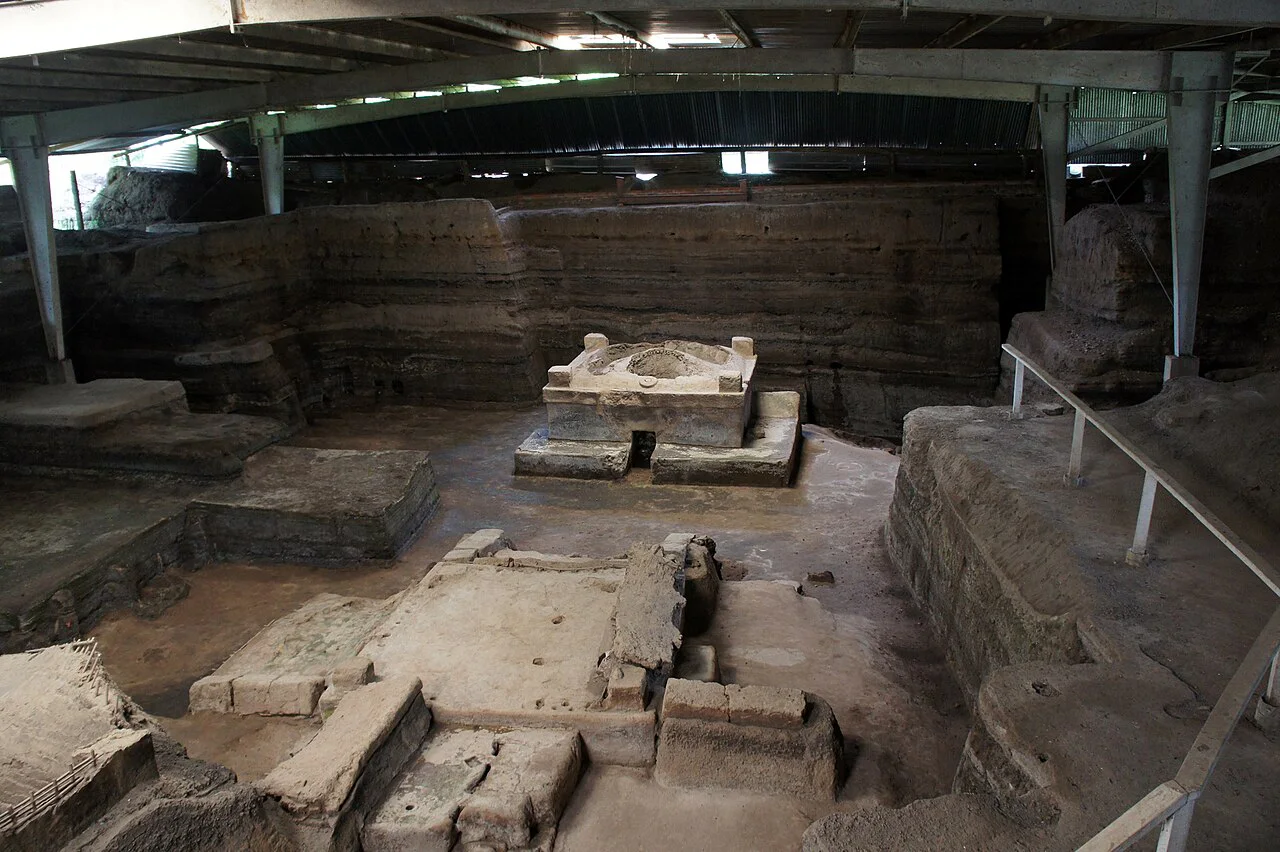
Joya de Cerén is an archaeological site in El Salvador that contains the remains of a pre-Columbian Maya farming village. It is known as the Pompeii of the Americas because it was preserved beneath volcanic ash.
Ready when you are.
- 01Get the free Stanza app.
iOS & Android
- 02Find your guide.
“Joya de Cerén”
- 03Download before you go.
Works offline
Audio guide / 10 narrated stops
Inside the guide
Get to know a few of the stories before you go. Open a stop to read more.
01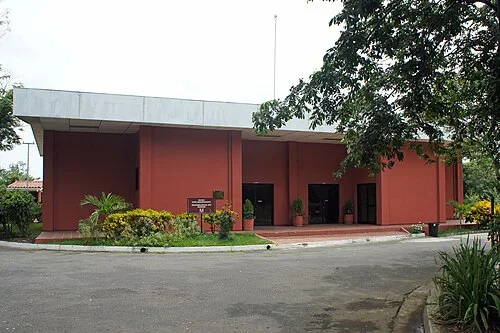 Visitor Center and Site Museum
Joya de Cerén Site Museum
Welcome to Joya de Cerén, often called the Pompeii of the Americas. It sits in the Zapotitán Valley, about thirty-six kilometers northwest of San Salvador. Around the year 660, ash from the Loma Caldera volcano buried a Maya farming village here, and the ash kept almost everything it touched. There are no stone pyramids at this site, because this was a village of commoners, not of kings. Its discovery in 1976 was pure accident. A bulldozer driver was leveling ground for a government agricultural project when his machine struck the first clay structures. Payson Sheets, an anthropologist at the University of Colorado in Boulder, began digging in depth in 1978 and returned in 1980. Excavation resumed at the end of the 1980s. In 1993 UNESCO placed Joya de Cerén on the World Heritage List. The visit runs from these museum halls out to the covered excavation areas, where the buildings still stand in the ash. Inside, the ash preserved what stone never keeps: food, plants, and the ordinary things of daily life.
Mariordo (Mario Roberto Durán Ortiz) · CC BY-SA 3.0
02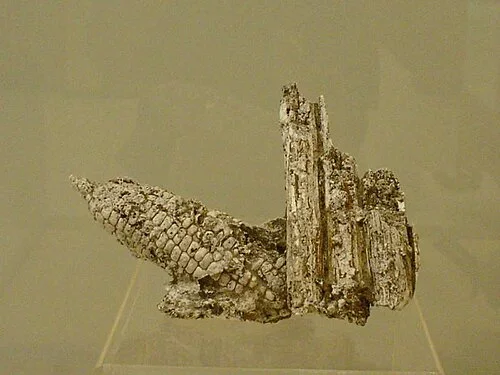 Visitor Center and Site Museum
Preserved Maize Cast in Ash
A pale grey corncob, complete with its stalks, sits in a case here. It is not stone and not wood. When the volcano's ash fell, it entombed the village's plants whole. The plants themselves later rotted away, leaving hollow shapes in the hardened ash. Archaeologists filled those hollows with plaster, the same casting method used at Pompeii, and the plants reappeared as exact casts. Thanks to this, we know what the villagers grew: maize, beans, guava, agave, cacao, and manioc. The manioc field found here is the earliest known evidence of manioc cultivation at an archaeological site anywhere in the New World. The casts even date the disaster. The maize was mature and at harvest stage, which points to an eruption in August or September.
Diego Tirira from Quito, Ecuador · CC BY-SA 2.0
03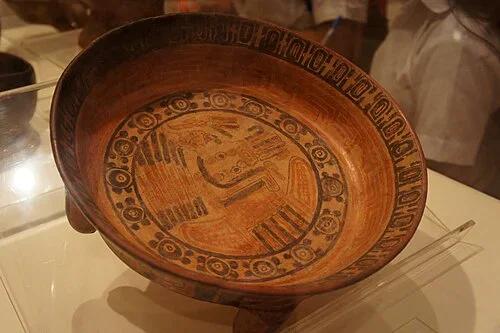 Visitor Center and Site Museum
Polychrome Ceramic Bowl
A painted bowl stands at the center of this story. It rests on three legs, and a band of geometric patterns runs around its rim, with a figure painted at its heart. Even a village of farmers owned work this fine. Each household here kept about seventy ceramic vessels for cooking, serving, and storing food and drink. Much of what the village needed it made itself: pottery, agave fiber, and the hand stones and grinding bases called manos and metates. Other things came from far away. Cutting tools of obsidian and chert arrived by trade, along with jade from the Sierra de las Minas to the north and fancy pottery from Copán, presumably through markets managed by elites. Households with a surplus also traded sideways, exchanging goods with neighbors in the village and nearby.
Listen in the appMariordo (Mario Roberto Durán Ortiz) · CC BY-SA 3.0
04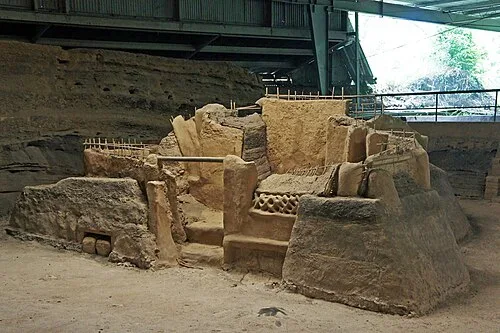 Area 1: Household 1 Domestic Compound
Structure 1: A Maya Family Compound
Structure 1 shows how a Maya family actually lived, and it was not in a single house. A compound here held several separate buildings: a dwelling used mainly for sleeping, a kitchen set apart, and a storehouse. Some compounds added a fourth building for a specialized task, such as a workshop or the village sauna. Ordinary farmers built all of this themselves, without architects or quarried stone. The walls were earth and wattle, raised with standardized techniques passed from household to household, on columns of adobe. Each compound also had its own cultivation plots, and some were fenced off with wood. The row of posts visible at the compound's edge marks exactly that kind of fence line.
Listen in the appMariordo (Mario Roberto Duran Ortiz) · CC BY-SA 3.0
05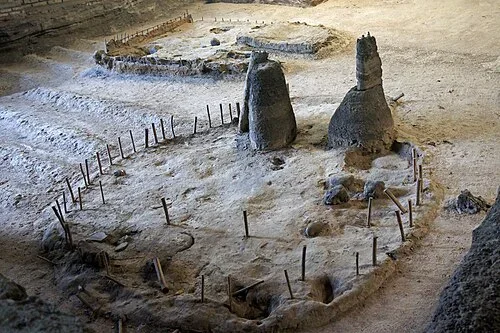 Area 1: Household 1 Domestic Compound
Structures 11 and 6: Kitchen and Garden of Area 1
A curved line of short posts crosses the ground here, recording where a light wall once stood. This was the working end of Household 1. Cooking happened in its own dedicated building, apart from the sleeping quarters, a pattern repeated across the village. The kitchen of Household 1 presumably did more than feed one family. Archaeologists believe it produced masa, the maize dough, on its supply of metates, to supply ceremonies held in Structures 10 and 12 nearby. How do scholars know what a building was for? One clue was the hearths. The amount of wear on them showed which buildings saw heavy daily cooking, and which served ritual purposes instead.
Listen in the appMariordo (Mario Roberto Duran Ortiz) · CC BY-SA 3.0
06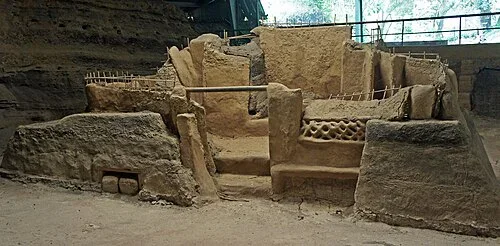 Area 1: Structure 12 (The Shaman's House)
Structure 12: The Shaman's House
Structure 12 controlled who came in. A single doorway and two lattice windows directed and restricted everyone moving through the building, and its lattice work still shows in the standing walls. It stands about five meters from Structure 10, and like that building it is associated with religious activity. In the back rooms, and through a window of the west room, a diviner is thought to have held divinatory activities. The famous find came from the niche of an earthen bench: ceramic figurines, shell fragments, beans, and antlers. Scholars read these as possibly a woman's supernatural tool kit, hidden where only the owner would reach it. Whether the diviner was indeed a woman is their inference, drawn from the female-associated objects, not a recorded life.
Listen in the appMariordo (Mario Roberto Duran Ortiz) · CC BY-SA 3.0
07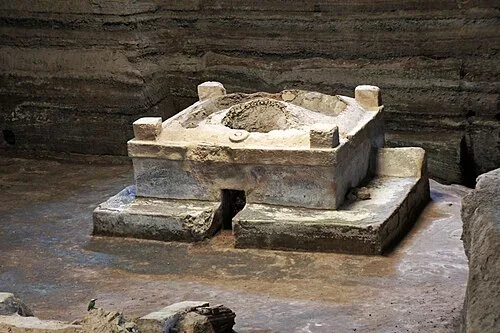 Area 2: The Temazcal (Structure 9)
Structure 9: The Temazcal
Structure 9 is the village's sweat bath, known in Mesoamerica as a temazcal. It appears as a small domed building on a platform, set within a household compound. Here the task of that fourth building was the sauna. Sweat baths served hygiene and healing, and, as they did widely across ancient Mesoamerica, purification as well. This one is remarkably complete, with its entrance passage and platform still in place after centuries under the ash. It shows that communal bathing had its own dedicated architecture even among commoner farmers.
Listen in the appMariordo (Mario Roberto Duran Ortiz) · CC BY-SA 3.0
08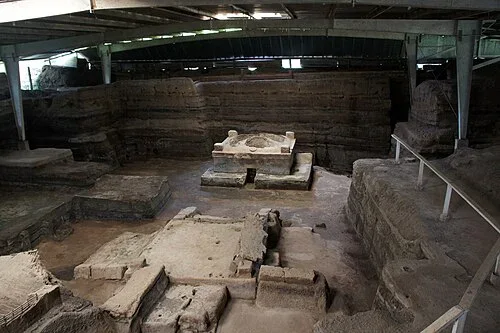 Area 2: The Temazcal (Structure 9)
Area 2 Under the Ash Layers
The banded walls of this trench are the eruption itself, layer upon layer. Loma Caldera, a volcano less than a kilometer from the village, buried it under fourteen layers of ash that fell in several waves. The temperature of that ash ranged from about 100 to 500 degrees Celsius. Several meters of it blanketed the village within a few hours. That speed, and the ash's relatively low heat, are what preserved the site so completely. The village held an estimated two hundred people at the time of its abandonment. It was a farming settlement that paid tribute to San Andrés, the larger center nearby.
Listen in the appMariordo (Mario Roberto Duran Ortiz) · CC BY-SA 3.0
09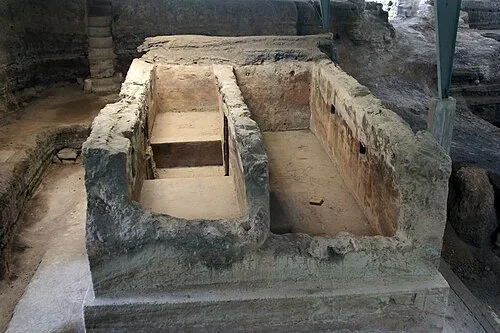 Area 3: Structure 3 (Civic Assembly Hall)
Structure 3: The Community Hall
Structure 3 is the largest building at Cerén. Its broad excavated platform, with two large compartments inside, dwarfs the family compounds of Area 1. This was the village's civic space. It probably served for special occasions and for resolving disputes, which means a village of commoner farmers had its own ways of settling conflict, without any elite living among them. A plaza connects it to Structure 13, forming a shared open space at the heart of community life. Nearby in Area 1, Structure 10 is interpreted as the village's religious or festival building, so public and sacred life each had a place of their own here.
Listen in the appMariordo (Mario Roberto Durán Ortiz) · CC BY-SA 3.0
10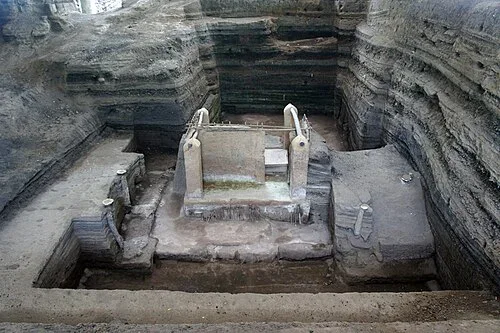 Area 3: Structure 4 and the Eruption Strata
Structure 4 and the Volcanic Burial
Structure 4 sits at the bottom of the deep trench, and here the story turns to the people themselves. Crack patterns in the quake-resistant wattle-and-daub walls and adobe columns suggest an earthquake of about magnitude 4 struck before the eruption. That shaking may have been the warning that let the villagers flee. Steamy emissions from the volcano may also have alerted them, though only inferences can be made about what exactly warned them. The positions of the artifacts point to an escape in the early evening. Shovels and agricultural tools stood stored by the houses. Fires had been lit in the hearths. Sleeping mats had not yet been rolled out on the floors. No human remains have ever been found at Joya de Cerén. What the ash preserved here is not palaces or kings, but the full ordinary life of Maya farming families.
Listen in the appMariordo (Mario Roberto Durán Ortiz) · CC BY-SA 3.0
Joya de Cerén
Frequently asked questions
How much does the guide cost?
Free app download. Listed guide price: $1.99. Guide price shown in the app. Audio guide only. Venue admission is separate.
Can I listen without internet?
Yes. Download the guide’s audio, images, and maps in the app before your visit. Your downloaded content is then available offline.
Can I listen in my language?
This audio guide is available in 15 languages, including English.
Do I need to follow a schedule?
No. This is a self-guided experience. Choose your stops, pause whenever you like, and return to a story at your own pace.
At your own pace
Explore Joya de Cerén.
Download Stanza, then search for “Joya de Cerén”.
Free app download · Guide price shown in the app
Keep exploring
Nearby audio guides
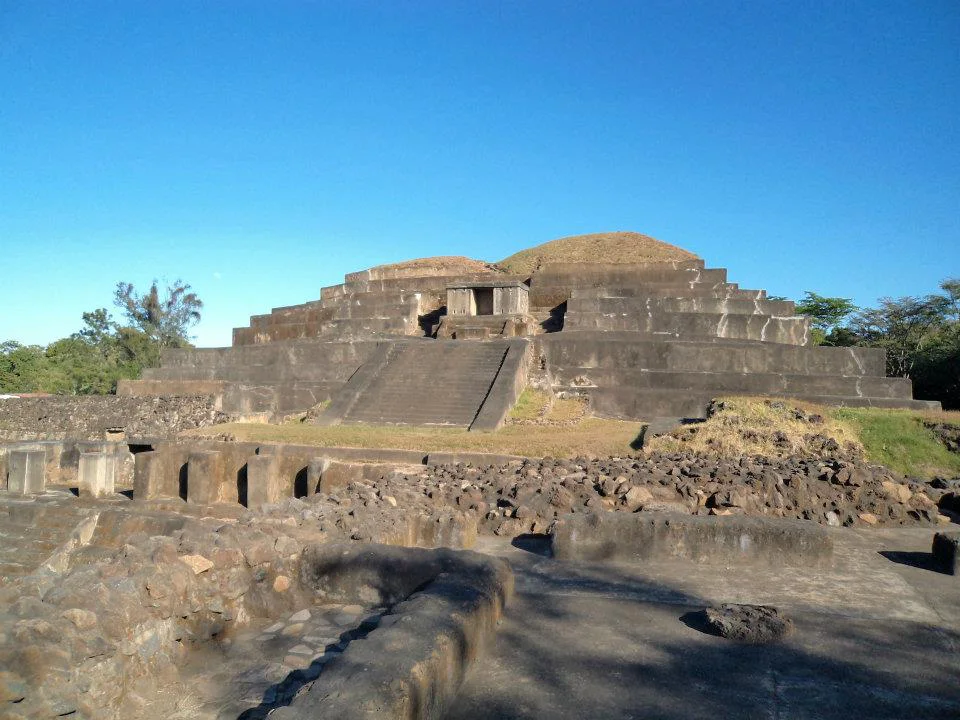
Chalchuapa · 38 km
Tazumal
Content & sources
Photo: ARamirez69 · CC BY-SA 3.0
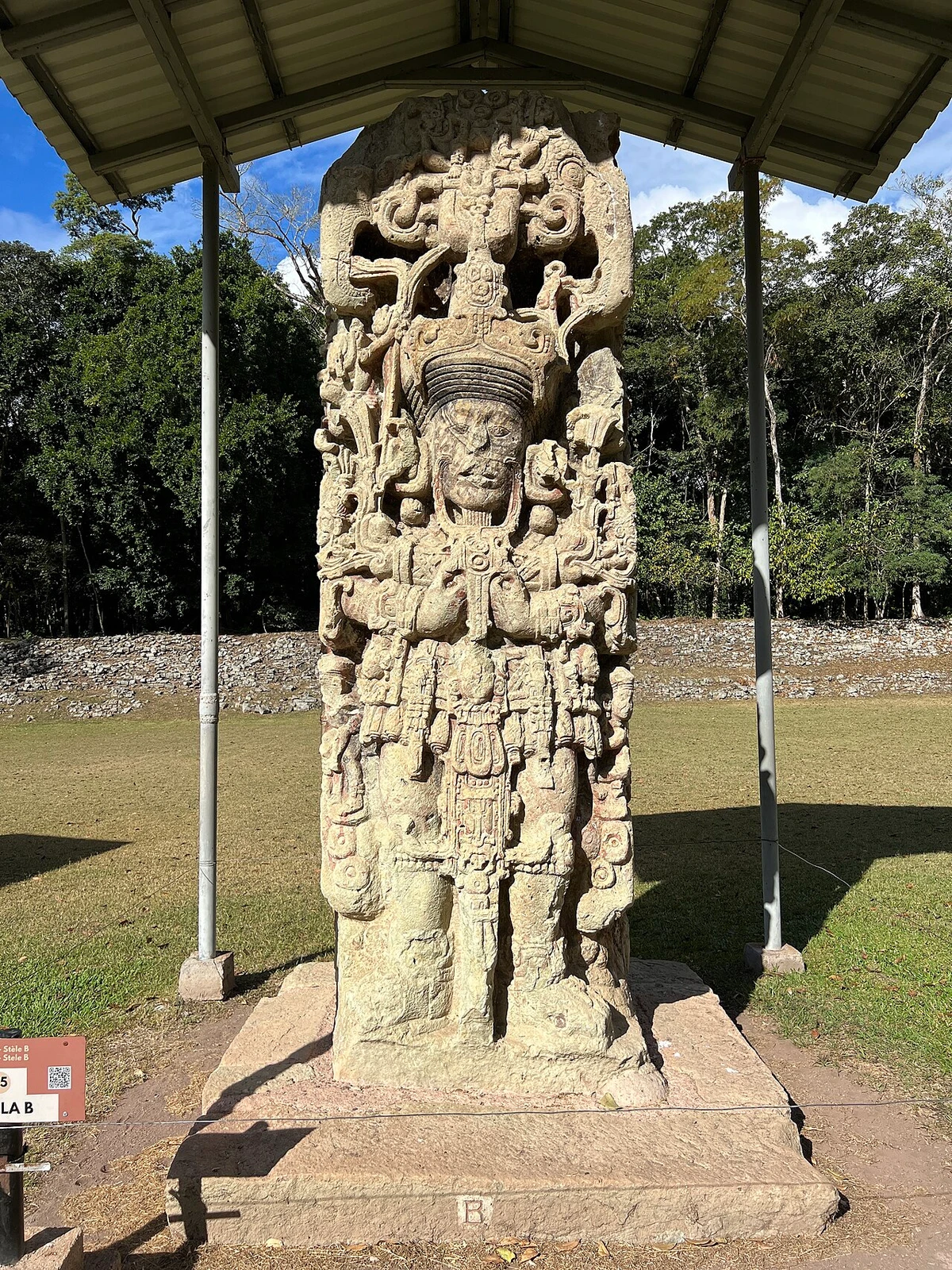
Copán Ruinas · 115 km
Copán Archaeological Site
Content & sources
Photo: Nosferattus · CC0