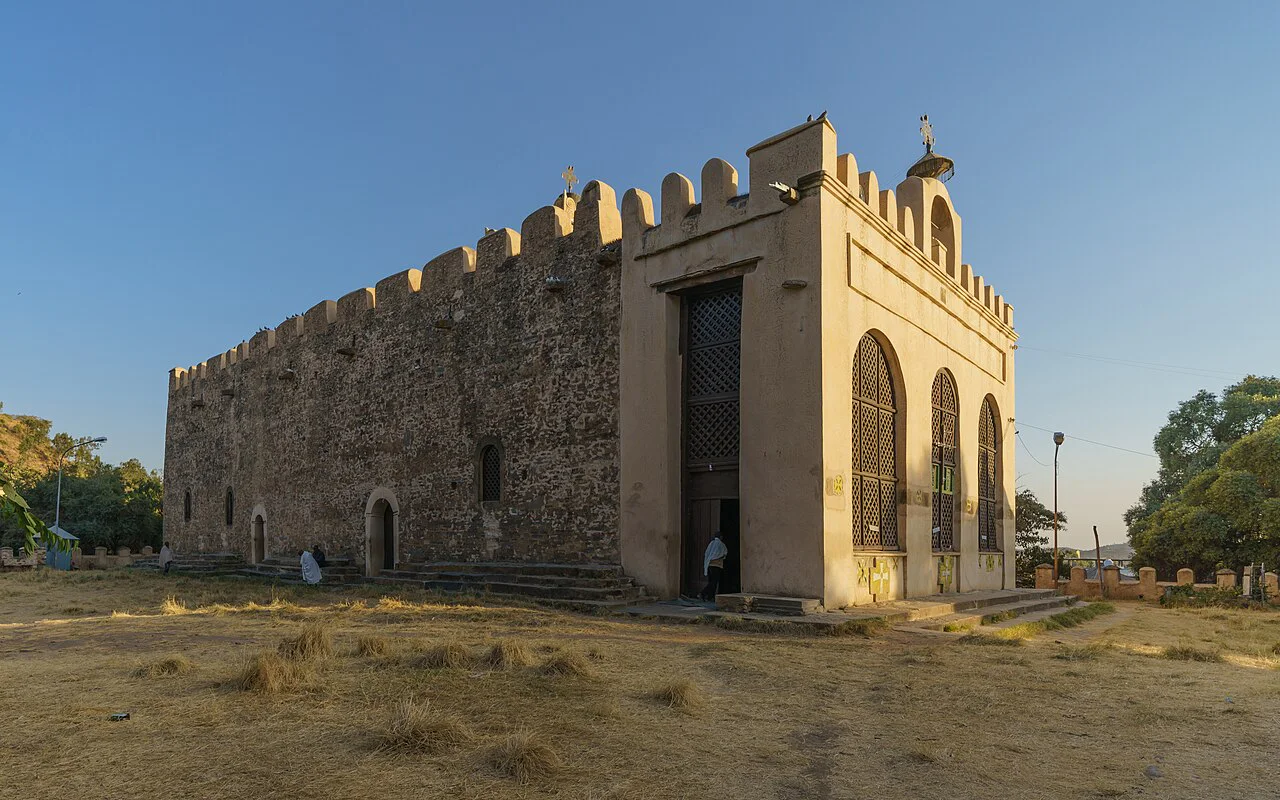
Stanza · Audio guide
Church of Our Lady Mary of Zion Audio Guide
A place to remember. A story to take with you.
The Church of Our Lady, Mary of Zion is regarded as the holiest Ethiopian Orthodox Tewahedo Church. It is claimed to contain the Ark of the Covenant.
Download Stanza, then search for “Church of Our Lady Mary of Zion”.
About the tour
One guide. Your kind of visit.
The Church of Our Lady, Mary of Zion is regarded as the holiest Ethiopian Orthodox Tewahedo Church. It is claimed to contain the Ark of the Covenant.
Ready when you are.
- 01Get the free Stanza app.
iOS & Android
- 02Find your guide.
“Church of Our Lady Mary of Zion”
- 03Download before you go.
Works offline
Audio guide / 13 narrated stops
Inside the guide
Get to know a few of the stories before you go. Open a stop to read more.
01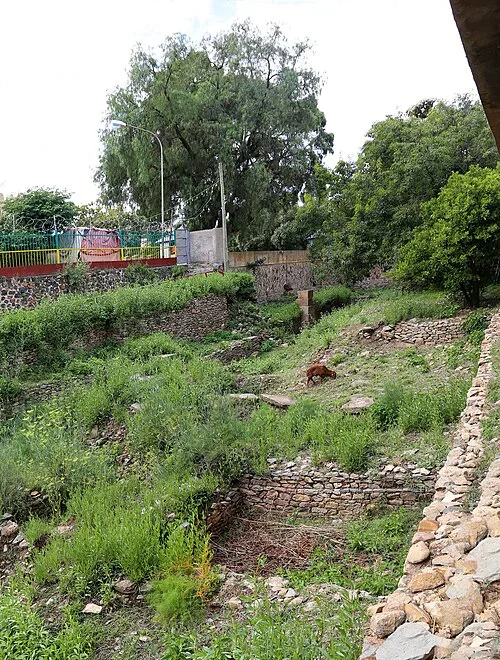 Compound Grounds and Ancient Axumite Foundations
Ruins of the Earliest Church of King Ezana
Welcome to the church compound of Our Lady Mary of Zion, in Axum in northern Ethiopia, the holiest church of the Ethiopian Orthodox Tewahedo faith. The grass here hides low lines of wall, the remains of the oldest sanctuary on this ground. It was founded in the fourth century under King Ezana, the first Christian ruler of the kingdom of Axum. Its first bishop was Frumentius, remembered in Ethiopia as Abune Selama Kesatie Birhan, Our Father of Peace the Revealer of Light. Since that founding the church has been destroyed and rebuilt at least once, and by tradition twice. More than sixteen hundred years of prayer, ruin and rebuilding lie within these walls. Ahead lie the coronation stone, the seventeenth-century Old Church, the chapel said to hold the Ark of the Covenant, the treasury, and the great modern basilica.
Photo: Sailko · CC BY 3.0
02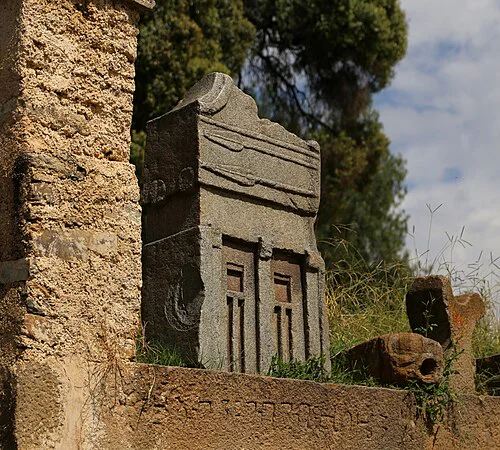 Compound Grounds and Ancient Axumite Foundations
Remnant of an Axumite Stele
Christianity did not arrive in an empty field. Aksum was already a city of carved stone monuments, and its kings raised great stelae long before the kingdom turned Christian. One of those older stones still stands beside the church, carved with doorways and beams like a miniature building. The sacred ground of the old kingdom simply continued in use, its Christian sanctuary set among the monuments of earlier faiths. The famous stelae park of Axum lies close by, part of the same ancient landscape.
Photo: Sailko · CC BY 3.0
03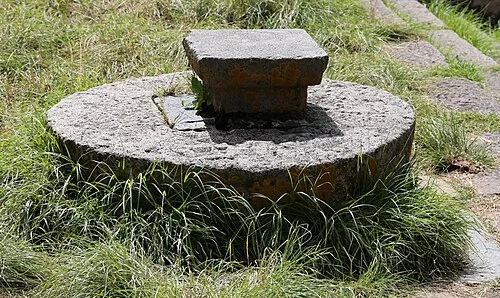 Imperial Coronation Court and Seat Stones
Imperial Coronation Stone
In this courtyard stands a plain round stone seat, and by tradition it carried more power than its size suggests. St. Mary of Zion was the place where Ethiopian emperors came to be crowned. The rule was strict. An emperor not crowned at Axum, or at least not ratified by a special service here, could not bear the title of Atse. So kings travelled to this church to make their rule legitimate before God and people. Church and crown were bound together on this stone for hundreds of years.
Listen in the appPhoto: Sailko · CC BY 3.0
04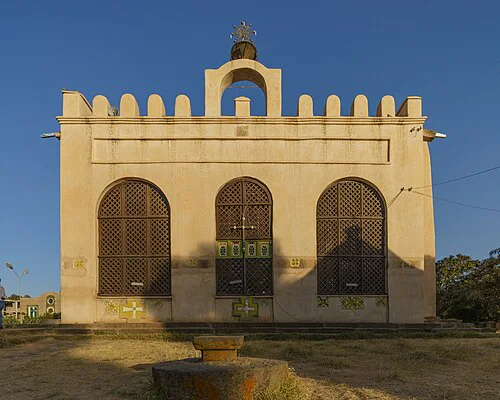 Old Church of St. Mary of Zion Exterior
Old Church of St. Mary of Zion - Fortress Facade
The old church looks more like a fortress than a parish church. Its walls rise in crenellated battlements, built of local cut stone set in mortar, with timber doing the work of beams. Emperor Fasilides raised this building in the seventeenth century, in the style of his capital at Gondar. The great arched windows are covered with screens, and the whole precinct reads as a place built for defense as well as worship. Entry to the interior has long been restricted, and the reasons for that belong to the story inside.
Listen in the appPhoto: A.Savin · FAL
05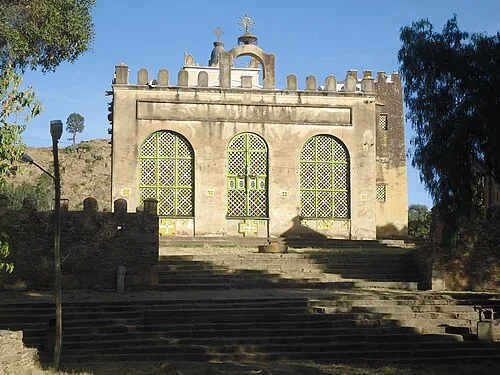 Old Church of St. Mary of Zion Exterior
Old Church and the Lost Cathedral
The church standing here replaced something far grander. A Portuguese priest named Francisco Álvares saw the earlier cathedral before its fall, and his words give us a picture of it. He counted five wide aisles, vaulted above and all painted. There were seven chapels with ornamented altars, and an enclosure walled like a great town. In the fifteen-thirties the forces of Ahmad ibn Ibrahim al-Ghazi destroyed it. The clergy had carried the sacred treasures out in advance. Emperor Gelawdewos began the rebuilding, and Fasilides later enlarged the church into the structure seen here. In December 2020, during the Tigray War, reports described people who had sheltered in the church being killed. Those reports have not been confirmed by independent investigation, and the full account remains unresolved.
Listen in the appPhoto: Fell · CC BY-SA 3.0
06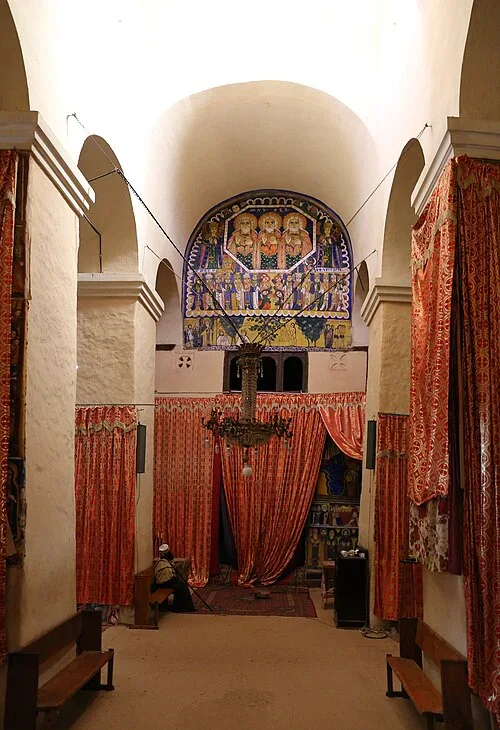 Old Church Sanctuary and Sacred Murals
Old Church Interior
Inside, the seventeenth-century walls hold a living parish. The nave runs under a vaulted ceiling, and a painted mural fills the upper wall above the sanctuary. Red drapery veils the sanctuary, lamps hang from wires, and wooden benches line the floor. Worship continues here much as it has for generations. Two traditions shape every visit. All who enter remove their shoes, and women are not permitted inside the Old Church at all. That restriction is the reason a second, larger church was one day built on this ground.
Listen in the appPhoto: Sailko · CC BY 3.0
07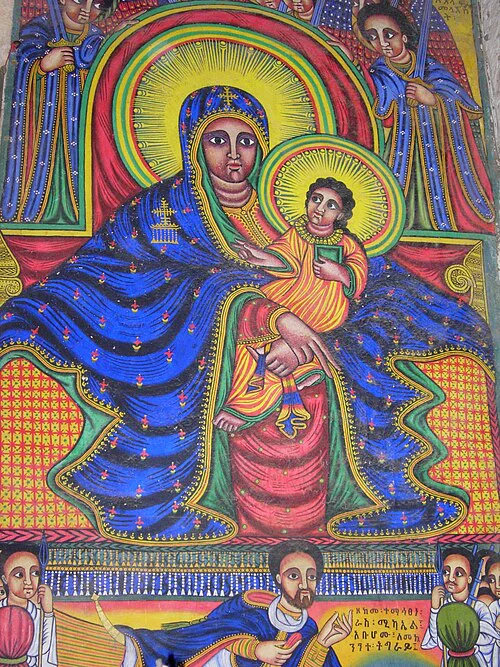 Old Church Sanctuary and Sacred Murals
Fresco of the Virgin and Child
Mary fills this church, in name and in paint. The fresco shows her enthroned in deep blue and red, the Christ child on her lap, angels crowding the border. The dedication goes back to a tradition recorded by Álvares. The church is called Mary of Syon because its altar stone was said to have been sent from Mount Sion by the apostles themselves. In Ethiopia, churches take their name from the altar stone, since the patron saint's name is written on it. The Virgin matters doubly here, because she is honored as the archetype of the Ark, the bearer who carried the divine presence.
Listen in the appMiko Stavrev · CC BY 3.0
08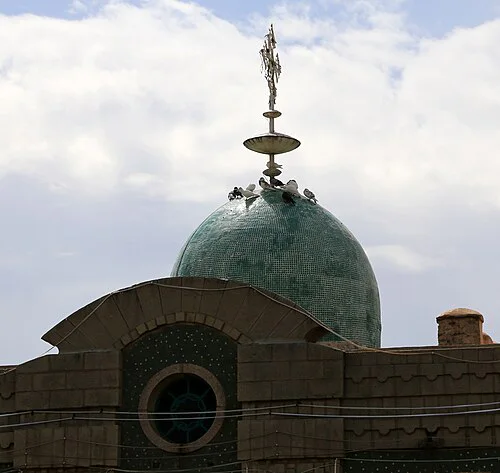 Chapel of the Tablet Enclosure
Chapel of the Tablet
Behind a green-tiled dome topped by a cross, this small chapel holds the claim that makes the church famous. St. Mary of Zion claims to contain the original Ark of the Covenant. The story says the Ark was moved here from the old church's inner sanctum, because a divine heat from the Tablets had cracked its stones. Empress Menen paid for the chapel's construction. Only one man may see the Ark, a guardian monk appointed for life by his predecessor. If no successor is named, the monastery's monks elect a new guardian. He spends his life confined to the chapel, praying before it and offering incense. That sealed door is exactly why doubt persists, for Ethiopians and foreign scholars alike have questioned a claim no one else can check. How the Ark was said to reach Ethiopia is told at the painting of Menelik in the modern basilica, where this tour ends.
Listen in the appPhoto: Sailko · CC BY 3.0
09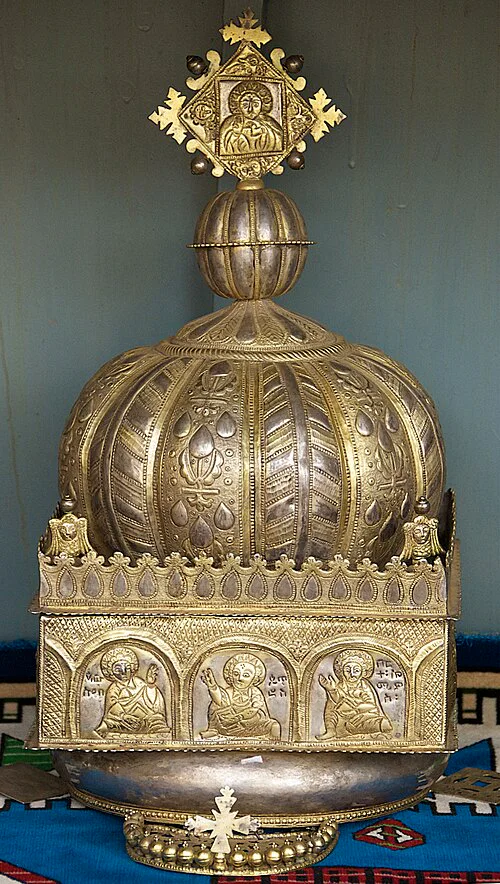 Church Treasury and Manuscript Museum
Treasury of the Church - Imperial Crown
A crown of gold and silver work, embossed with sacred figures under a domed lid, sits in the church treasury. The treasury grew out of the church's role as coronation church, as heard at the coronation stone. Each reign left gifts at the mother church, and crowns, crosses and manuscripts accumulated here over the centuries. The pieces in the treasury are the residue of that long habit of royal giving.
Listen in the appA. Davey from Where I Live Now: Pacific Northwest · CC BY 2.0
10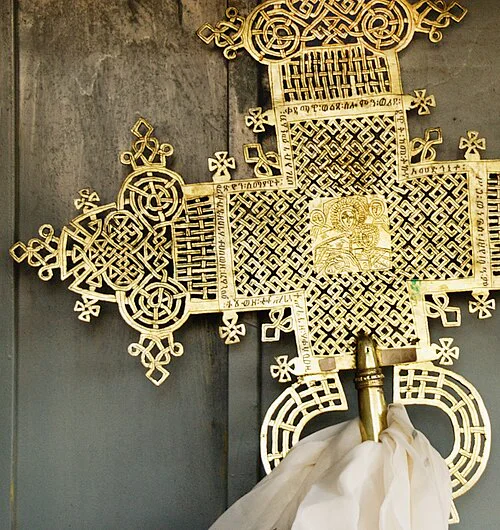 Church Treasury and Manuscript Museum
Ethiopian Processional Cross
Once a year this church draws the Ethiopian Orthodox world to Axum. On the thirtieth of November, the twenty-first of Hidar on the Ethiopian calendar, comes the Festival of Zion Mariam. Pilgrims gather in enormous numbers, and processions fill the compound. A cross like this one is made for exactly those days. It is carried aloft on a staff, its openwork arms and lattice patterns catching the light as it moves. The church that crowned emperors remains a great center of pilgrimage for the Ethiopian Orthodox Tewahedo faith.
Listen in the appA. Davey from Where I Live Now: Pacific Northwest · CC BY 2.0
- 11
Modern Basilica of Haile Selassie
The domed basilica Haile Selassie built so that women could finally worship on this site.
- 12
Modern Basilica Interior
The wide circular prayer hall under the dome, open to every worshipper.
- 13
Painting of Menelik I Bringing the Ark to Ethiopia
The painting of Menelik bringing the Ark to Ethiopia, the legend at the root of this church's claim.
Church of Our Lady Mary of Zion
Frequently asked questions
How much does the guide cost?
Free app download. Listed guide price: $0.99. Guide price shown in the app. Audio guide only. Venue admission is separate.
Can I listen without internet?
Yes. Download the guide’s audio, images, and maps in the app before your visit. Your downloaded content is then available offline.
Can I listen in my language?
This audio guide is available in 15 languages, including English.
Do I need to follow a schedule?
No. This is a self-guided experience. Choose your stops, pause whenever you like, and return to a story at your own pace.
At your own pace
Explore Church of Our Lady Mary of Zion.
Download Stanza, then search for “Church of Our Lady Mary of Zion”.
Free app download · Guide price shown in the app
Keep exploring
Audio guides — Ethiopia
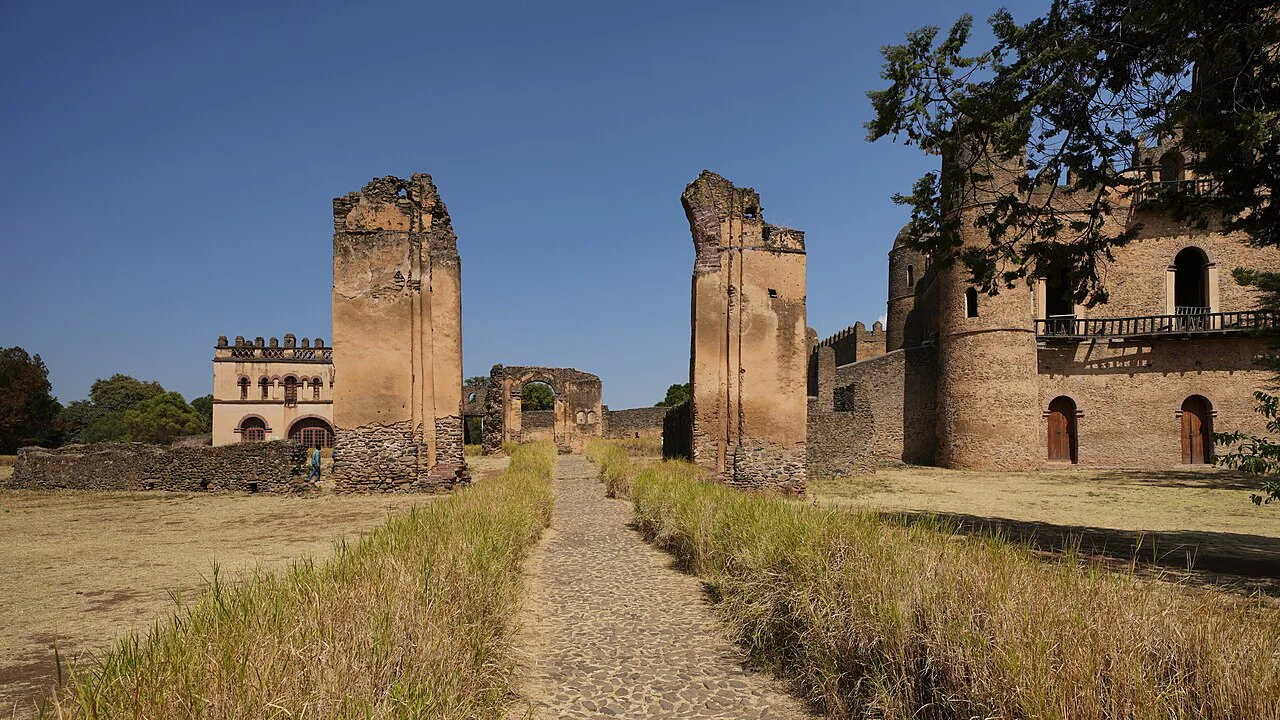
Gondar
Fasil Ghebbi
Content & sources
Photo: A.Savin · FAL
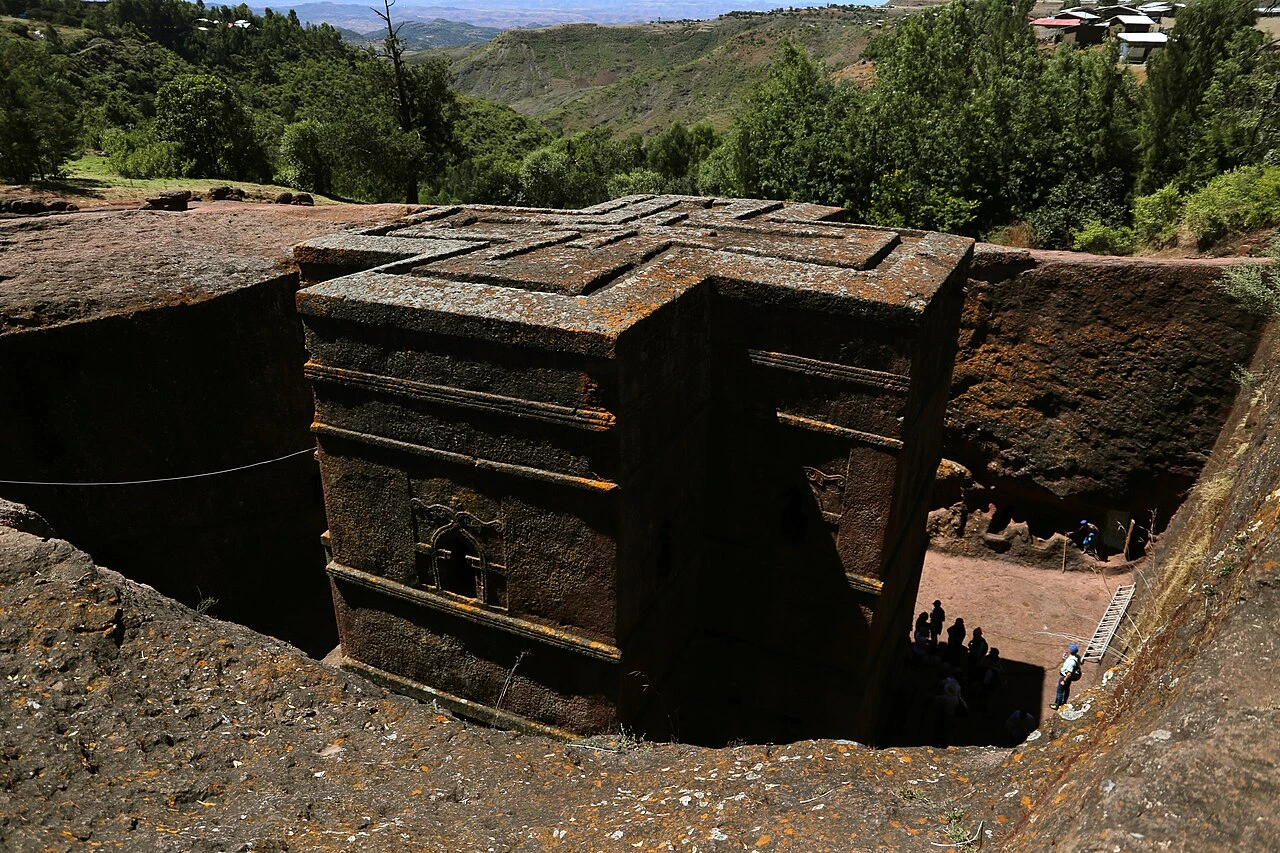
Lalibela
Monolithic Churches of Lalibela
Content & sources
Photo: Sailko · CC BY 3.0
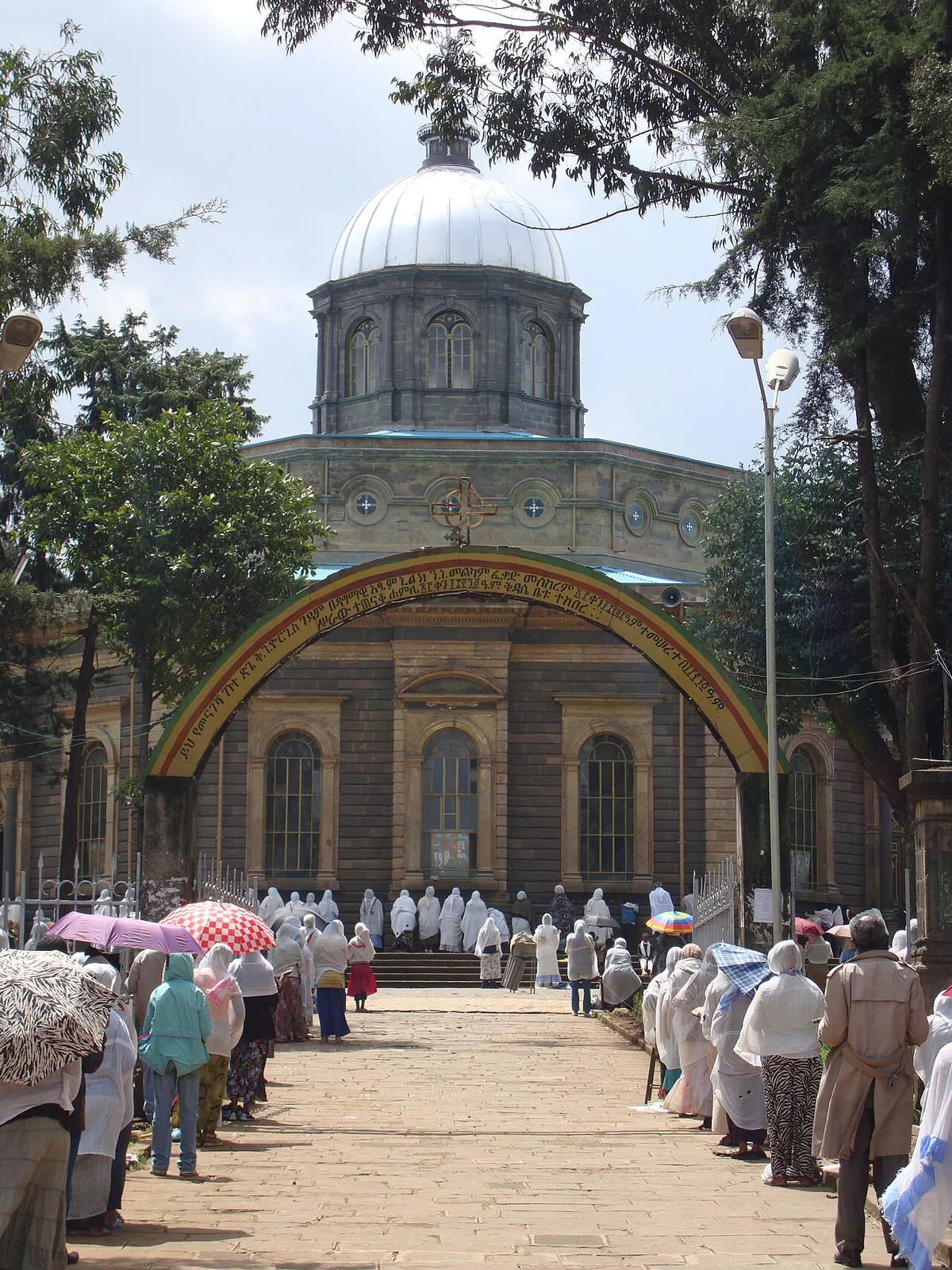
Addis Ababa
St. George's Cathedral, Addis Ababa
Content & sources
Photo: Vob08 · CC BY-SA 3.0