Stanza · Audio guide
St. George's Cathedral, Addis Ababa Audio Guide
A place to remember. A story to take with you.
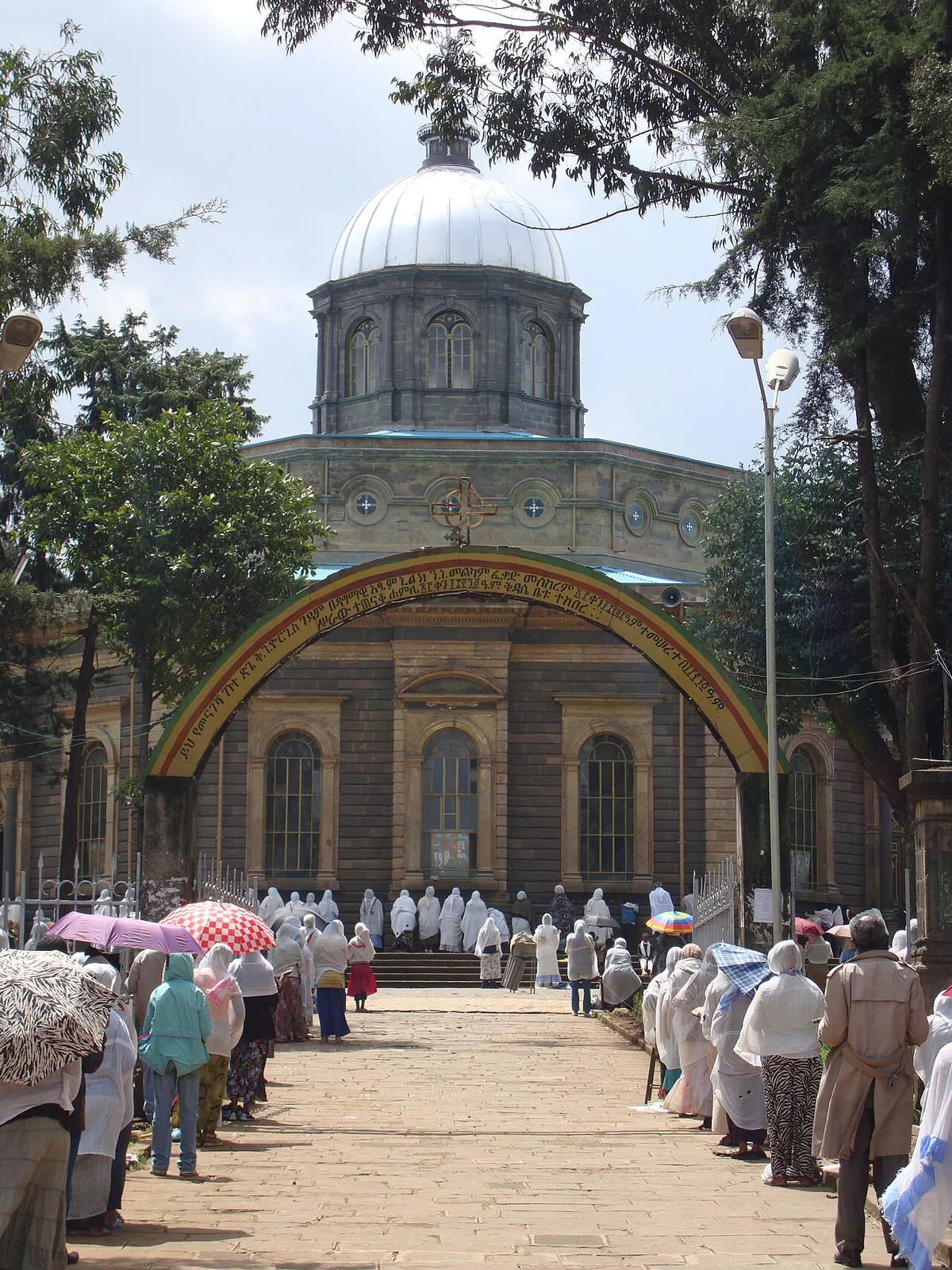
Saint George's Cathedral is an Ethiopian Orthodox church located in Addis Ababa, Ethiopia. The cathedral is noted for its distinctive octagonal form.
Download Stanza, then search for “St. George's Cathedral, Addis Ababa”.
About the tour
One guide. Your kind of visit.
Saint George's Cathedral is an Ethiopian Orthodox church located in Addis Ababa, Ethiopia. The cathedral is noted for its distinctive octagonal form.
Ready when you are.
- 01Get the free Stanza app.
iOS & Android
- 02Find your guide.
“St. George's Cathedral, Addis Ababa”
- 03Download before you go.
Works offline
Audio guide / 8 narrated stops
Inside the guide
Get to know a few of the stories before you go. Open a stop to read more.
01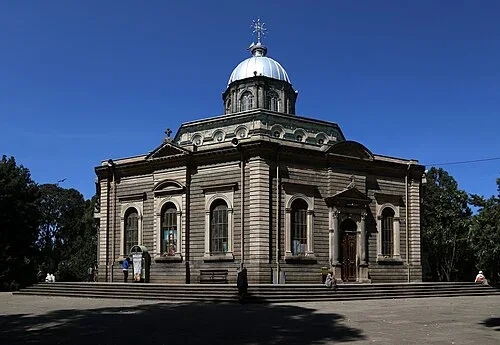 Cathedral Courtyard and Octagonal Exterior
St. George's Cathedral: The Octagonal Landmark
Welcome to St. George's Cathedral, at the northern end of Churchill Road in Addis Ababa. This stop begins a short tour of the building, its murals, its glass, and the imperial treasures in its museum. The first thing to know is the shape. Most cathedrals follow a cross, but this one rises as an octagon, eight sides all round, and that form has become its signature. The walls are grey stone, dressed with neoclassical columns and cornices. An Italian engineer, Sebastiano Castagna, designed and built the church, and the work was completed in 1911. It stood on the ruins of an older church, one that had been here since the fifteenth century. And the reason a new cathedral was raised at all comes down to a victory, won in 1896. The murals inside tell that story in full, and the tour reaches them in a few stops. One practical note for the interior: shoes come off before the sanctuary, and modest dress is expected. The octagon itself, though, rewards a slow look from outside first.
Sailko · CC BY 3.0
02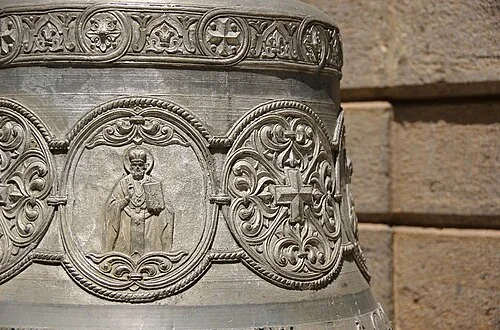 Cathedral Courtyard and Octagonal Exterior
The Courtyard Bell
Before the doors, the courtyard keeps a bell worth a closer look. The metal is cast rather than hammered, and the founder worked holy images straight into the surface. A robed saint stands in a round medallion, crosses fill the panels beside him, and scrollwork runs between them. In Orthodox practice the bell is the church's voice. It calls the faithful to prayer and marks the hours of the liturgical day, so the whole neighbourhood keeps time by it. Here that call to worship is cast in metal, image and instrument in one. The relief of the saint was meant to be read as well as heard, devotion pressed into bronze for anyone standing close enough to look.
A. Davey from Where I Live Now: Pacific Northwest · CC BY 2.0
03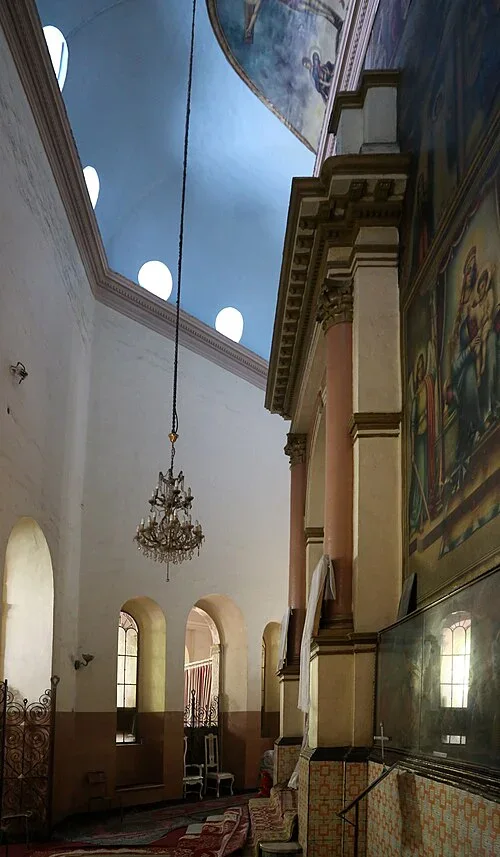 Sanctuary Interior and Devotional Frescoes
Inside the Sanctuary
Inside, the character of the place changes at once, because this is a working church, not a monument. The Ethiopian Orthodox liturgy is celebrated here day after day, and the building is arranged for worship first and viewing second. The interior is tall and painted from top to bottom. Whitewashed walls rise to a pale blue dome, arched windows let in narrow shafts of light, and a chandelier hangs from a long cable down the middle of the space. As a general note on Ethiopian churches: they traditionally arrange their sacred space in concentric rings, moving inward toward the sanctuary at the centre, the holiest point of the building. Worship moves around that core rather than along a single aisle. The walls along the way are covered in pictures, and they carry the stories this cathedral cares about most. The next stops follow them, first the cathedral's own saint, then the battle that gave the building its purpose.
Listen in the appPhoto: Sailko · CC BY 3.0
04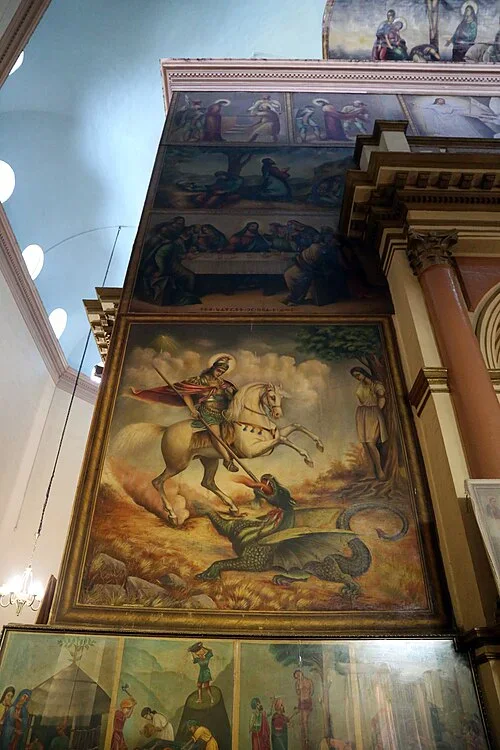 Sanctuary Interior and Devotional Frescoes
Saint George and the Dragon
The great panel here shows the cathedral's patron at his most famous moment: Saint George on a rearing white horse, driving his spear into the dragon. The legend travelled across the whole Christian world, but the reason his name hangs over this church is not the dragon. It is a battle. When the Ethiopian army marched out to face the Italians, the Tabot of this church went with it. The Tabot is the replica of the Ark of the Covenant that every Ethiopian church keeps in its sanctuary, and it is the holiest object the church possesses. After the campaign, the church took Saint George's name in his honour. Around the dragon scene, smaller panels stack the sacred stories in rows, one above the other, teaching scripture in pictures for those who could not read. These walls were painted in the mid-twentieth century, and the paintings further along carry the battle itself.
Listen in the appPhoto: Sailko · CC BY 3.0
05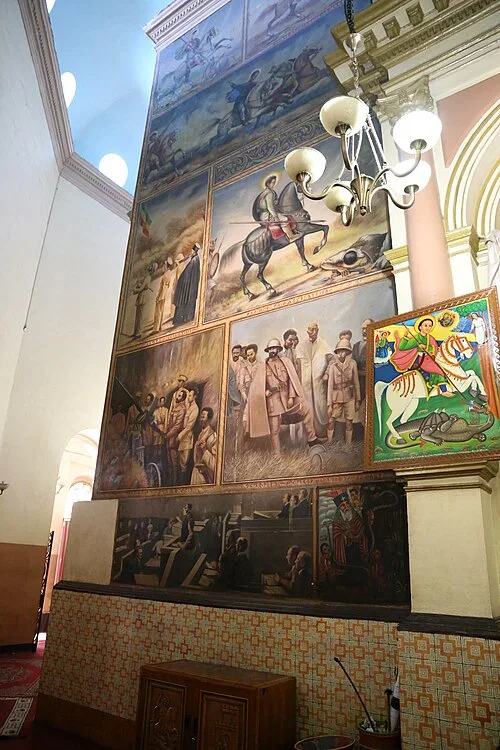 Battle of Adwa Murals and Imperial Legacy
The Battle of Adwa Murals
Here is the story the whole cathedral was raised to remember. In 1896 an invading Italian army met the forces of Ethiopia at Adwa, in the north of the country. The Ethiopians won. This cathedral was founded as a monument to that victory and to the independence it secured. The paintings tell it in stacked frames climbing the wall: soldiers marching, cannon hauled into position, horsemen charging into the fight. Beside them sits a small icon of Saint George on his white horse, as though the saint rode with the army too. The cycle was painted in the mid-twentieth century, and it does something unusual. It turns national history into sacred history, a war memorial and a saint's deed sharing the same wall. Fittingly, the cathedral also keeps weapons from those wars against the Italians, curved swords, tridents, and giant helmets crowned with lions' manes.
Listen in the appA. Davey from Where I Live Now: Pacific Northwest · CC BY 2.0
06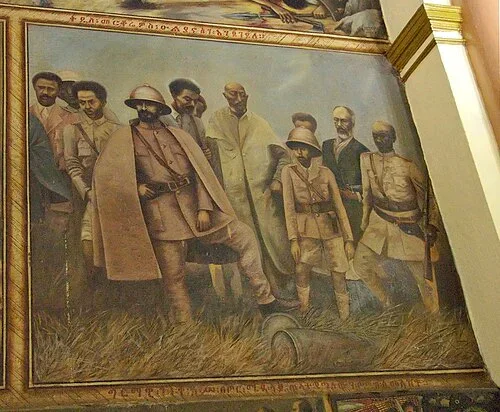 Battle of Adwa Murals and Imperial Legacy
The Emperor at War
The man in the campaign cloak at the centre of this mural is Emperor Haile Selassie, and his story runs straight through this building. He was crowned here in 1930, and the cathedral later became a place of pilgrimage for Rastafarians, who honour him to this day. Then came the Italian occupation. In 1937 the Fascist authorities set the cathedral on fire. The church built to mark the defeat of one Italian invasion was burned during another. After the liberation, it was Haile Selassie himself who restored the cathedral, beginning in 1941. So the walls hold a double record. The same painted cycle that celebrates the victory of 1896 also carries the man who led the resistance some forty years later. He stands among his commanders in a plain campaign cloak, painted onto the building he rebuilt, in the church where he was crowned.
Listen in the appA. Davey from Where I Live Now: Pacific Northwest · CC BY 2.0
07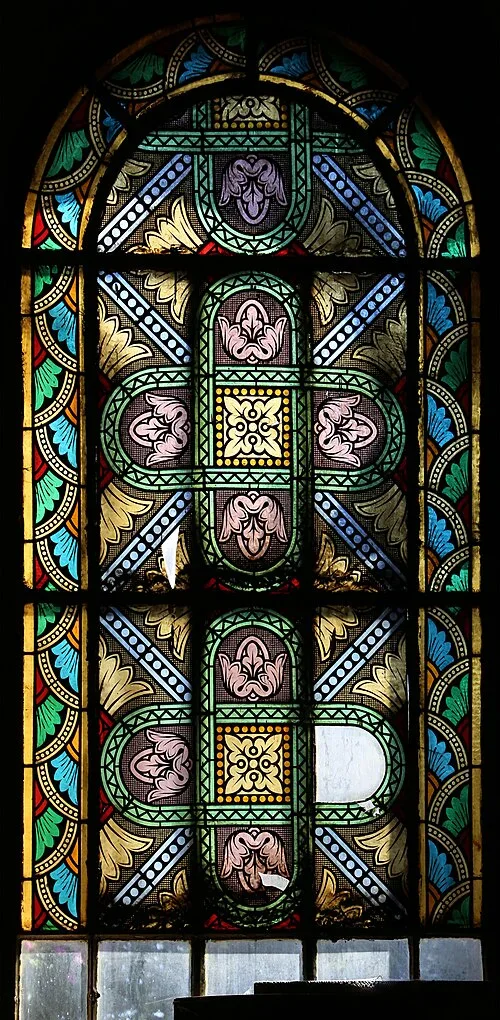 Stained Glass Art of Afewerk Tekle
Stained Glass by Afewerk Tekle
The restoration of the cathedral brought new art with it, and the finest of that art is glass. The arched windows here are the work of Afewerk Tekle, the celebrated Ethiopian artist whose stained glass this cathedral is known for. The window glows with crosses and stylised floral medallions, set in green, gold and deep blue, the leadwork drawing a lattice of pattern across the light. It belongs to the mid-twentieth-century enrichment of the restored church, made when the building was being made whole again. Sunlight falling through colour became the visible sign of that renewal. The pattern reads almost like textile, medallion answering medallion up the arch, and it changes with every hour of the day.
Listen in the appPhoto: Sailko · CC BY 3.0
08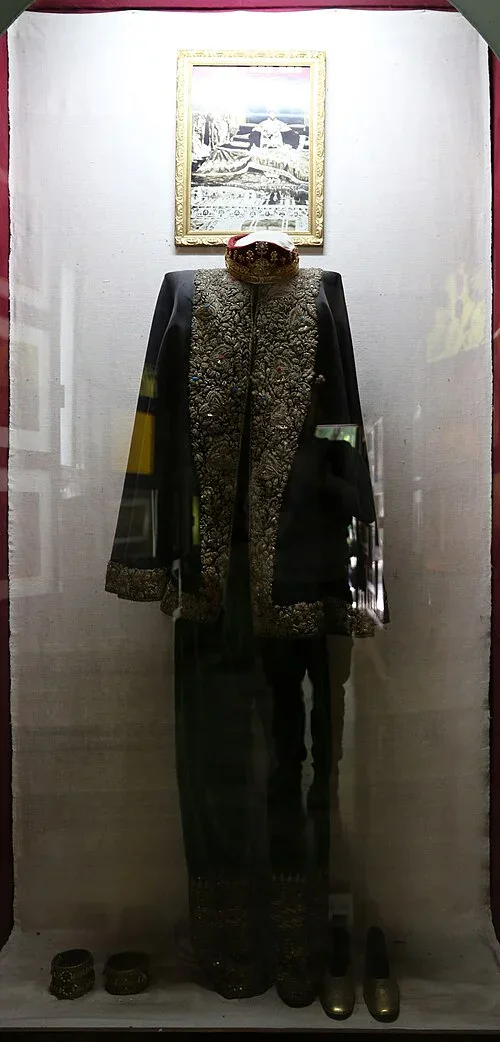 Cathedral Museum and Coronation Relics
The Coronation Robe of Empress Zewditu
In 1917 this cathedral crowned an empress. Zewditu took the throne of Ethiopia here, and the glass case holds what she wore for it. The coronation robe is heavy with embroidered gold over dark cloth, and beside it sit her crown and her gilded shoes, all set beneath a framed picture of the ceremony itself. The museum around it keeps the material memory of the great imperial events that took place under the cathedral's dome, and its collections include an Imperial throne. Emperor Haile Selassie's coronation, in 1930, belongs to the story told earlier, at his mural at war. What the robe makes plain is how much happened inside this one building. A church raised for a victory, crowned by an empress and an emperor, burned and rebuilt, and still at prayer, all of it kept here under one octagonal roof.
Listen in the appPhoto: Sailko · CC BY 3.0
St. George's Cathedral, Addis Ababa
Frequently asked questions
How much does the guide cost?
Free app download. Listed guide price: $0.99. Guide price shown in the app. Audio guide only. Venue admission is separate.
Can I listen without internet?
Yes. Download the guide’s audio, images, and maps in the app before your visit. Your downloaded content is then available offline.
Can I listen in my language?
This audio guide is available in 15 languages, including English.
Do I need to follow a schedule?
No. This is a self-guided experience. Choose your stops, pause whenever you like, and return to a story at your own pace.
At your own pace
Explore St. George's Cathedral, Addis Ababa.
Download Stanza, then search for “St. George's Cathedral, Addis Ababa”.
Free app download · Guide price shown in the app
Keep exploring
Audio guides — Ethiopia
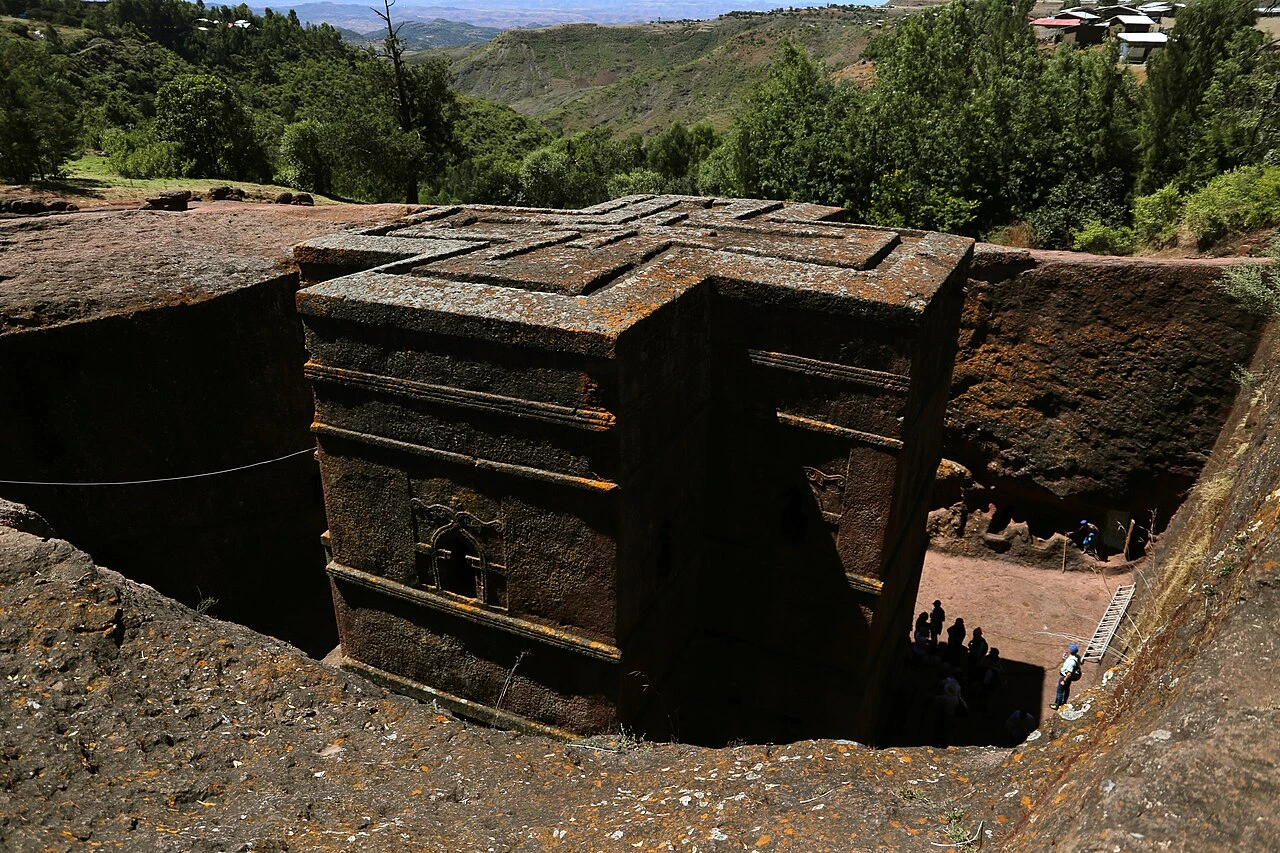
Lalibela
Monolithic Churches of Lalibela
Content & sources
Photo: Sailko · CC BY 3.0
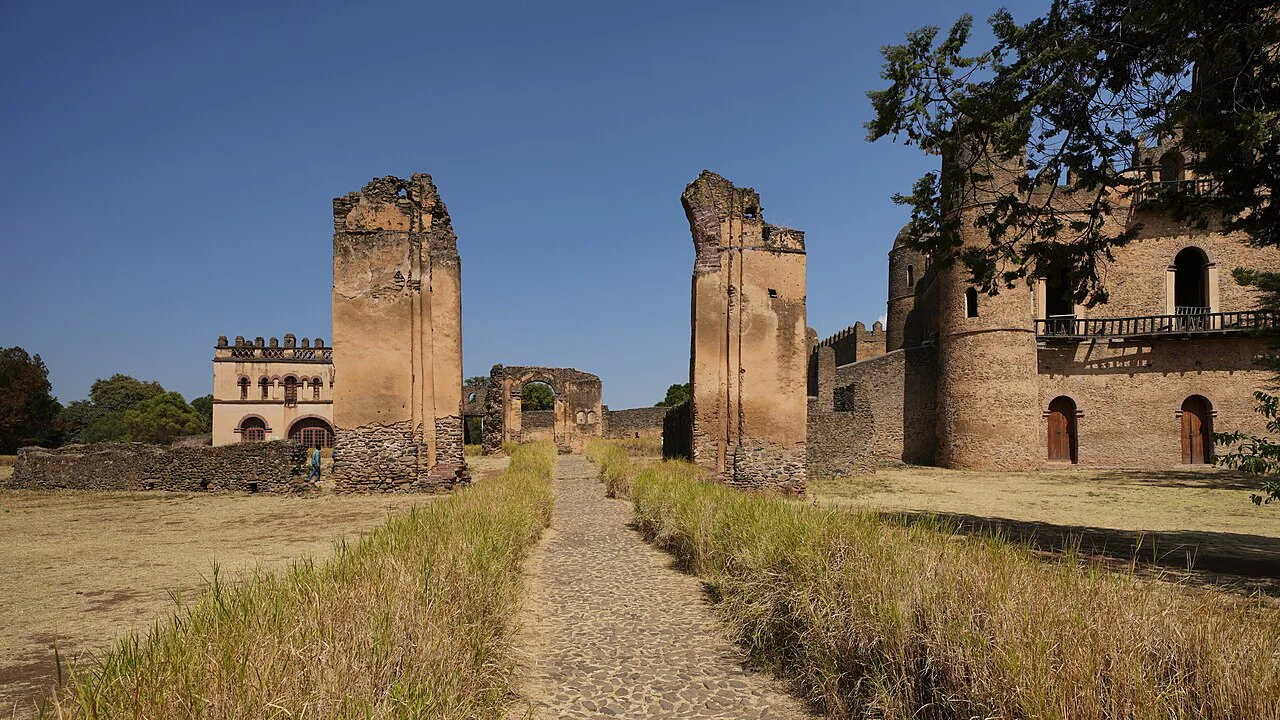
Gondar
Fasil Ghebbi
Content & sources
Photo: A.Savin · FAL
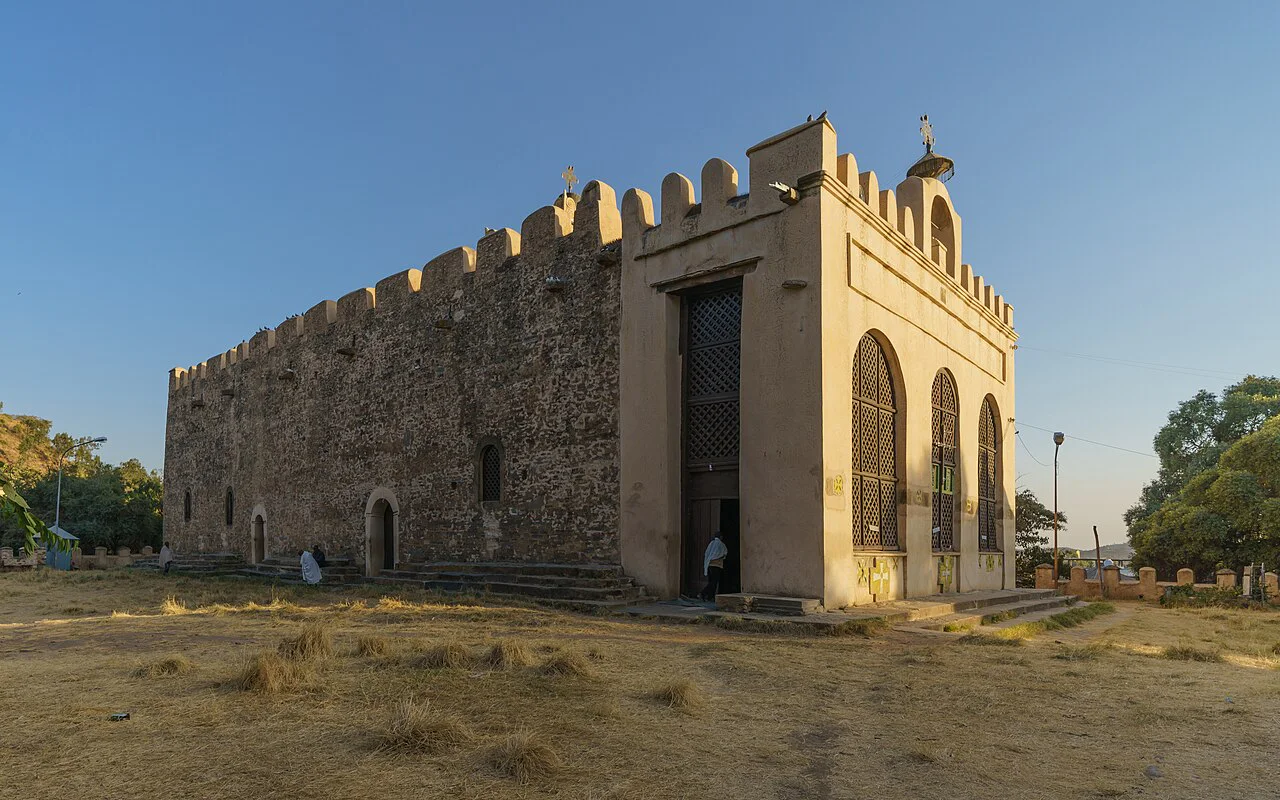
Axum
Church of Our Lady Mary of Zion
Content & sources
Photo: A.Savin · FAL
Kampala
Kasubi Tombs
Content & sources
Photo: Z thomas · CC BY 4.0