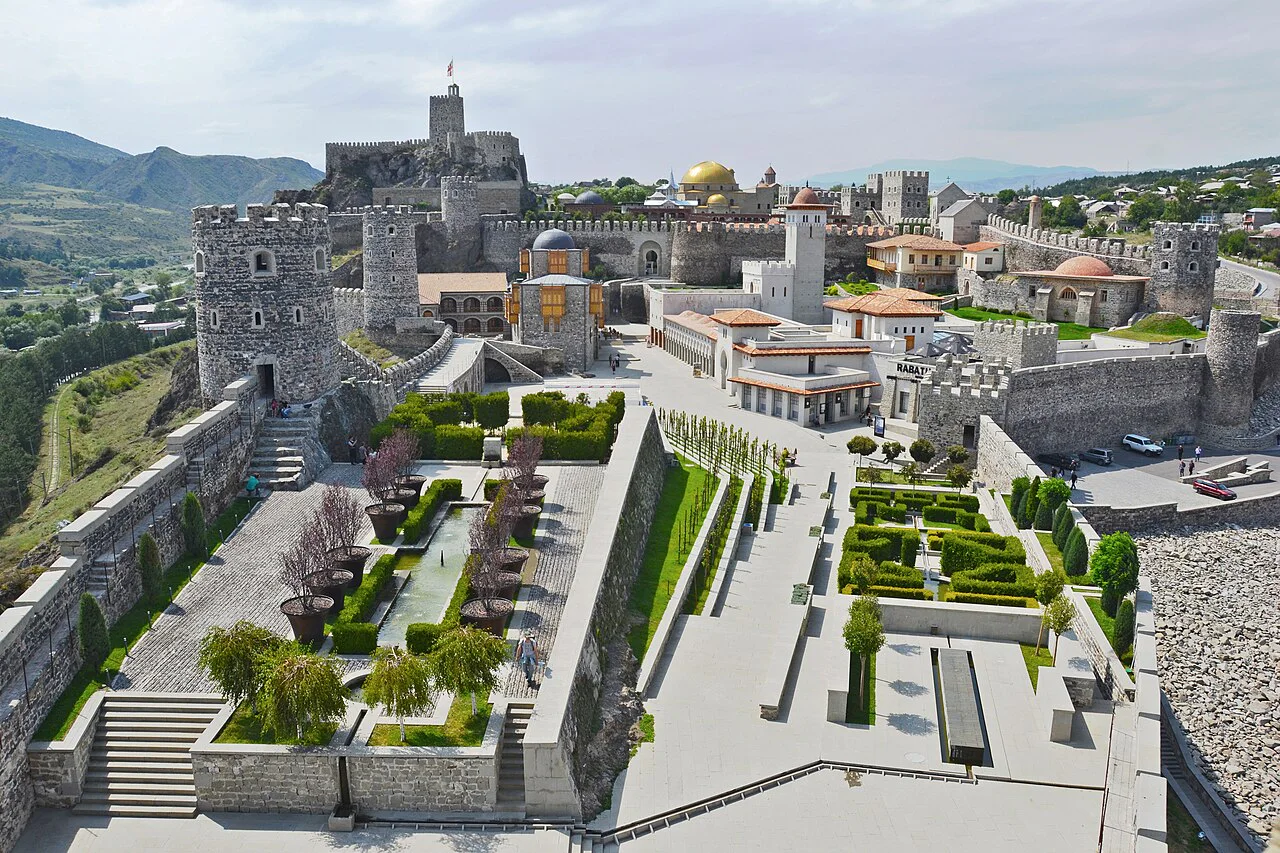
Stanza · Audio guide
Akhaltsikhe Castle Audio Guide
A place to remember. A story to take with you.
Akhaltsikhe Castle is a medieval fortress built in the 9th century in southern Georgia. It is one of the main attractions of the Samtskhe-Javakheti region.
Download Stanza, then search for “Akhaltsikhe Castle”.
About the tour
One guide. Your kind of visit.
Akhaltsikhe Castle is a medieval fortress built in the 9th century in southern Georgia. It is one of the main attractions of the Samtskhe-Javakheti region.
Ready when you are.
- 01Get the free Stanza app.
iOS & Android
- 02Find your guide.
“Akhaltsikhe Castle”
- 03Download before you go.
Works offline
Audio guide / 16 narrated stops
Inside the guide
Get to know a few of the stories before you go. Open a stop to read more.
01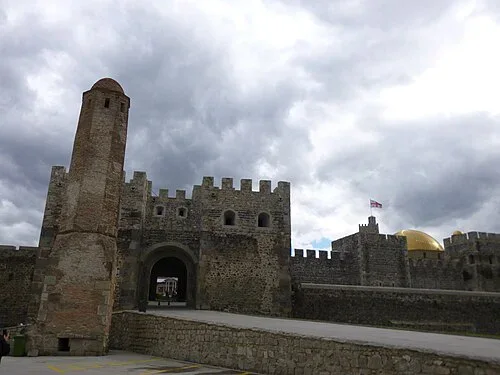 Lower Fortress Gate and Rabat Quarter
Main Gateway and Defensive Walls
Akhaltsikhe Castle, also known as Rabati, is a medieval fortress on the bank of the Potskhovi River. It sits about a thousand metres above sea level. Along with Vardzia, it is one of the main attractions of the Samtskhe-Javakheti region. An arched gateway pierces the crenellated walls, and a tall round-topped tower rises at the left. The Georgian Chronicles say the place was founded in the ninth century by Guaram Mampali, son of the King of Tao. It was first called Lomsia, a name that can be translated from Georgian as lion. In the twelfth century it took a new name, Akhal-tsikhe, meaning New Fortress.
James Emery from Douglasville, United States · CC BY 2.0
02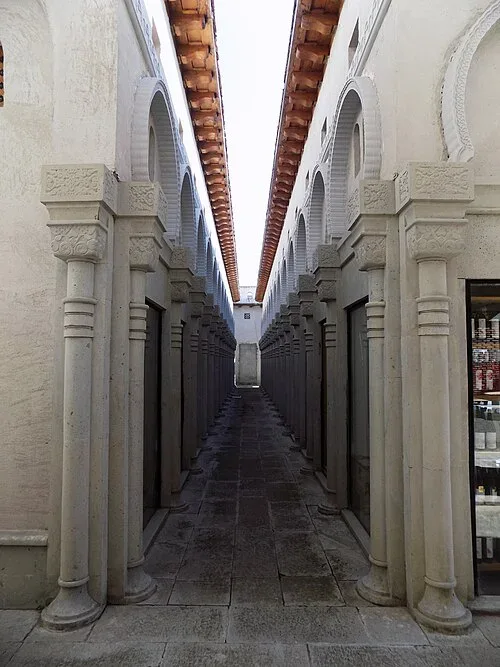 Lower Fortress Gate and Rabat Quarter
Colonnaded Street in the Rabati Castle Complex
The name Rabati comes from an Arabic word meaning fortress. Usually it named the trading quarter at the fortress. The lane here lies inside the castle complex, lined on both sides by rows of arches on pale stone columns. Each column ends in a carved capital, and the roof edges above are tiled. Earlier, mostly Jewish merchants and craftsmen lived in the Rabat quarter. After the reconstruction, the name spread to cover the whole fortress.
Photo: Lasha ge · CC BY-SA 4.0
03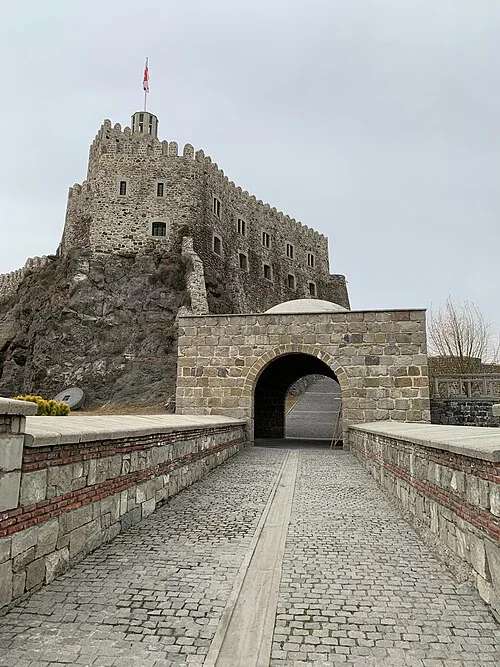 Inner Citadel Gate and Arcaded Courtyard
Citadel Gate and Cobbled Approach
In 1393, the armies of Tamerlane attacked the city. Despite the Turko-Mongol invasions, the fortress held and went on to thrive. The town had high walls and guarded gates, and the castle itself was surrounded by three ramparts. The cobbled approach leads to an arched gate in a stone wall. Above it, the crenellated fortress stands on the rock, with a flag flying from its tower.
Listen in the appPhoto: Robot8A · CC BY-SA 4.0
04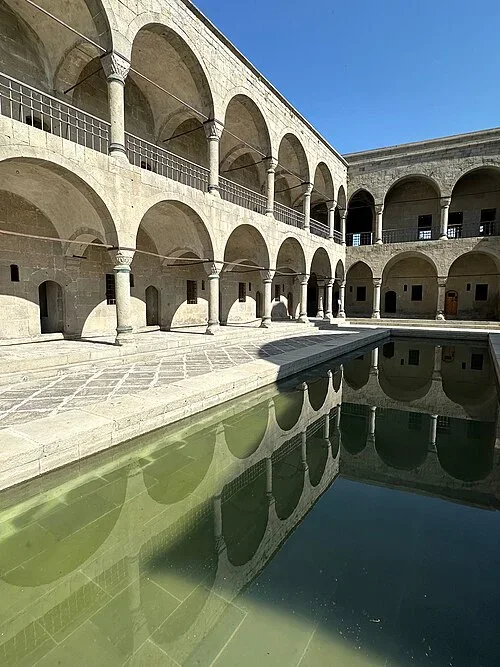 Inner Citadel Gate and Arcaded Courtyard
Arcaded Courtyard with Reflecting Pool
Two levels of arches run around this courtyard, one above the other, on stone columns. The upper gallery has a metal railing, and doorways open off the lower walk. The long pool in the middle reflects the arcades, so the whole court appears twice. The mosque complex also had a madrasah, a school for religious study, added to it.
Listen in the appPhoto: Lohen11 · CC BY 4.0
05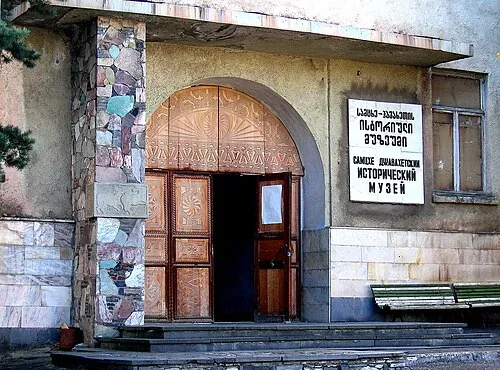 Jaqeli Palace and Samtskhe-Javakheti History Museum
Samtskhe-Javakheti Historical Museum Entrance
The castle became the residence of the Jaqeli princes in the twelfth and thirteenth centuries. From the thirteenth to the end of the fourteenth century, it was the capital of Samtskhe-Saatabago, ruled by the princely House of Jaqeli. A sign beside this doorway names the Samtskhe-Javakheti Historical Museum in Georgian and Russian. The arched entrance has carved wooden doors, and the stone pier beside it is faced with stones of many colours. The Jaqeli palace now houses the museum's exhibition hall.
Listen in the apphenribergius · CC BY-SA 2.0
06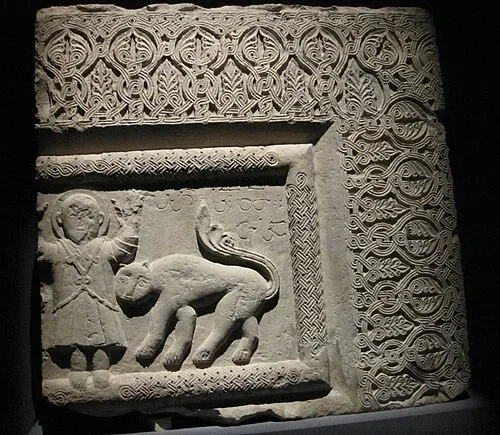 Jaqeli Palace and Samtskhe-Javakheti History Museum
Carved Stone Relief with Animal and Figure
A figure stands on the left of this carved stone panel, next to an animal that may be a lion. The design is carved in relief, which means the figure and the animal stand raised from the stone around them. The animal's long tail curls up over its back. Borders of interlaced knots and leaves frame the scene.
Listen in the appPhoto: Kober · CC BY-SA 3.0
07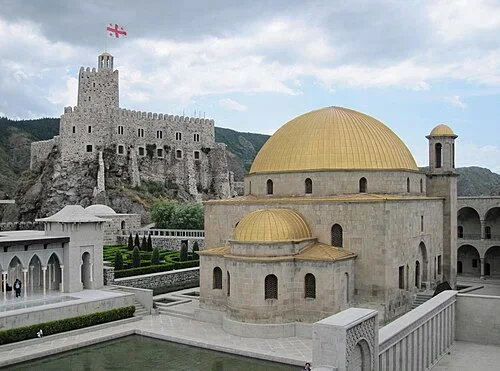 Ahmadiyya Mosque and Madrasa
Akhmediye Mosque and Minaret
A Georgian ruler named Haji Ahmed-Pasha Jaqeli had a mosque built within the castle walls in 1752. By then the region was under Ottoman rule. The building also got a minaret. The mosque was in use for seventy-six years. Its gold-coloured dome sits on a stone drum, and the fortress rises on the rock behind it. Gardens and water basins lie at the foot of the building.
Listen in the appKober · CC BY-SA 3.0
08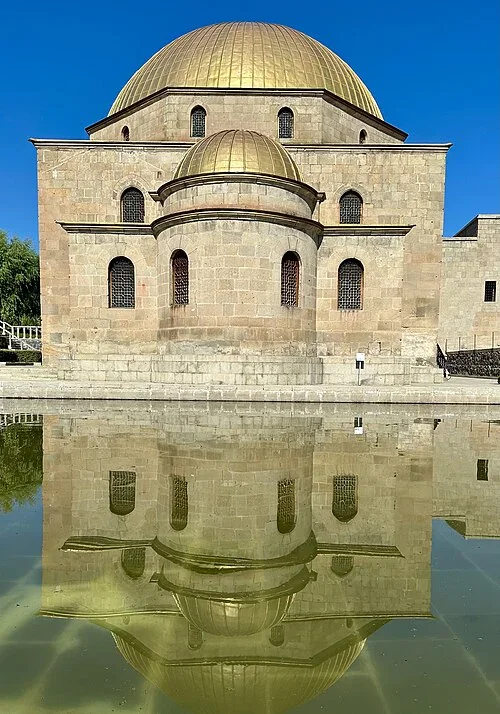 Ahmadiyya Mosque and Madrasa
Dome of the Akhmediye Mosque
The mosque was built in the style of the Hagia Sophia of Constantinople, a Byzantine Orthodox church. That means its design refers to the church. It is not a copy of it. Its large gold-coloured dome rises on a windowed drum, and a smaller dome sits over a rounded projection beside it. The windows have grilles, and the still water below doubles the whole front.
Listen in the appPhoto: Lohen11 · CC BY 4.0
09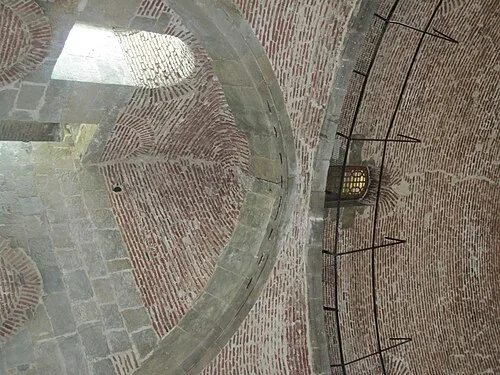 Ahmadiyya Mosque and Madrasa
Interior of the Akhmediye Mosque
Who prayed in this building changed over time. For a long stretch it was the Akhmediye Mosque. Later it was consecrated to the Virgin Mary, by order of the Russian emperor, and it served as a church. That church use ended in 1920. The ceiling curves overhead in red brick laid in patterns, with bands of pale stone running through it. Thin dark metal lines follow the curve beside a small grilled window, which catches the light.
Listen in the appPhoto: Kober · CC BY-SA 4.0
10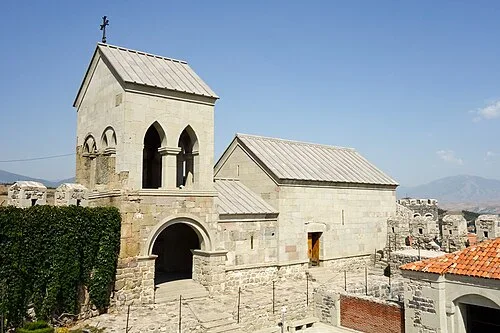 Church of Saint George
The 9th–10th Century Orthodox Church
In the late eighteenth century, Metropolitan John wrote about the fortress town. Much of the population had become Muslim, he noted, yet a functioning Orthodox church remained. The Orthodox church inside the fortress is dated to the ninth and tenth centuries. Its belfry rises in stone, with tall arched openings and a cross on top. Stone steps climb to a broad arched doorway beneath it, and the walls around are built of the same pale blocks.
Listen in the appYasuhiro Kojima · CC BY-SA 4.0
- 11
Church Courtyard and Mixed Masonry
A courtyard where stone and brick meet, and what that join can suggest about old walls.
- 12
Citadel Keep Above the Rock
How the fortress was built in three nested parts, with its castle on the rock.
- 13
Citadel Watchtower
A round stone tower of the kind that often served as a lookout on old walls.
- 14
View over the Restored Complex from the Eastern Tower
How a state-funded reconstruction reshaped the fortress, and the reason it was undertaken.
- 15
Ramparts Overlooking the Town
The ramparts above the town, and the 1828 attack that changed who held them.
- 16
Stone Bridge over the Gorge
A stone bridge over a gorge near the castle, and the tunnels that linked the fortress to nearby areas.
Akhaltsikhe Castle
Frequently asked questions
How much does the guide cost?
Free app download. Listed guide price: $1.99. Guide price shown in the app. Audio guide only. Venue admission is separate.
Can I listen without internet?
Yes. Download the guide’s audio, images, and maps in the app before your visit. Your downloaded content is then available offline.
Can I listen in my language?
This audio guide is available in 15 languages, including English.
Do I need to follow a schedule?
No. This is a self-guided experience. Choose your stops, pause whenever you like, and return to a story at your own pace.
At your own pace
Explore Akhaltsikhe Castle.
Download Stanza, then search for “Akhaltsikhe Castle”.
Free app download · Guide price shown in the app
Keep exploring
Nearby audio guides
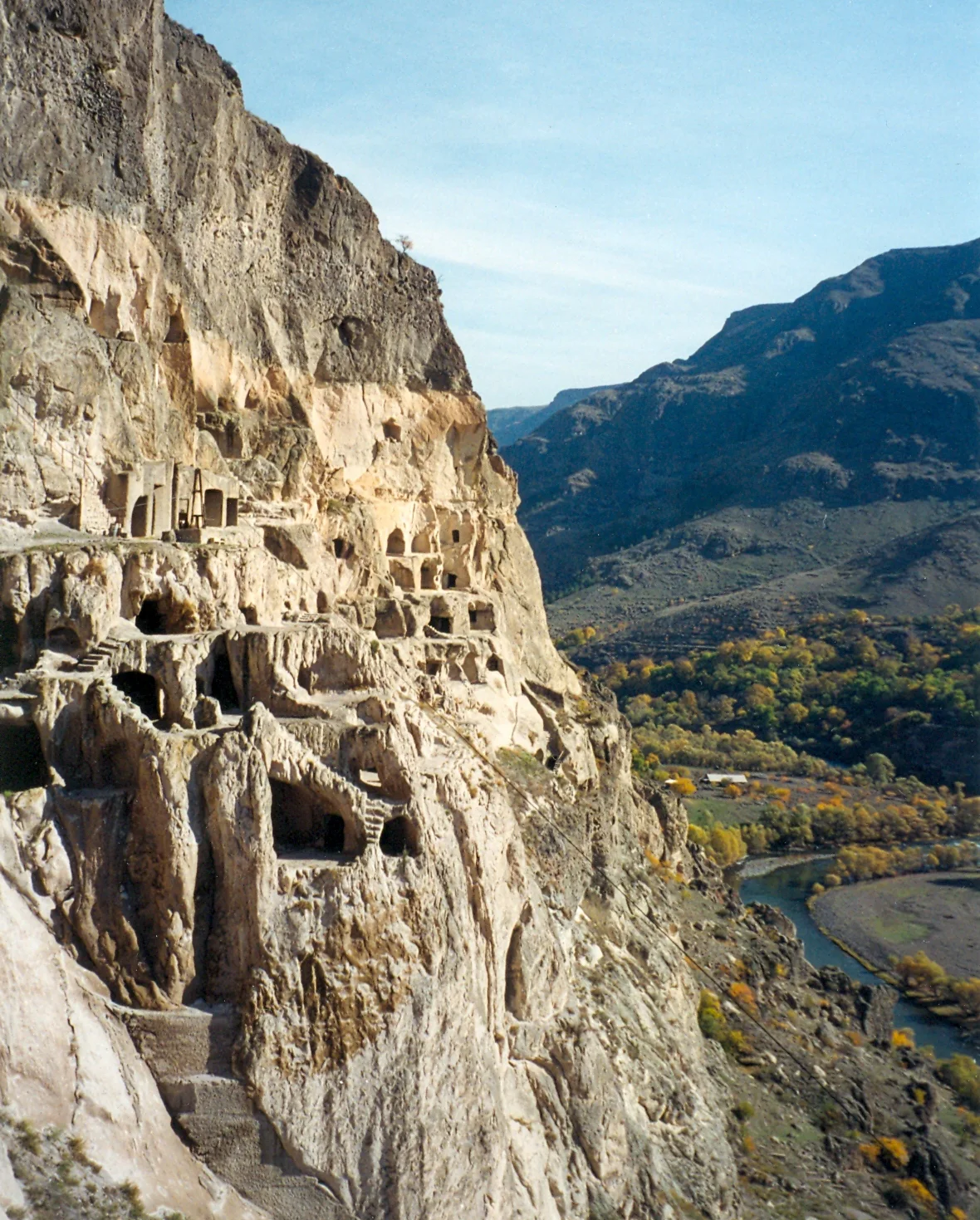
Vardzia · 39 km
Vardzia
Content & sources
Photo: Doron · CC BY-SA 3.0
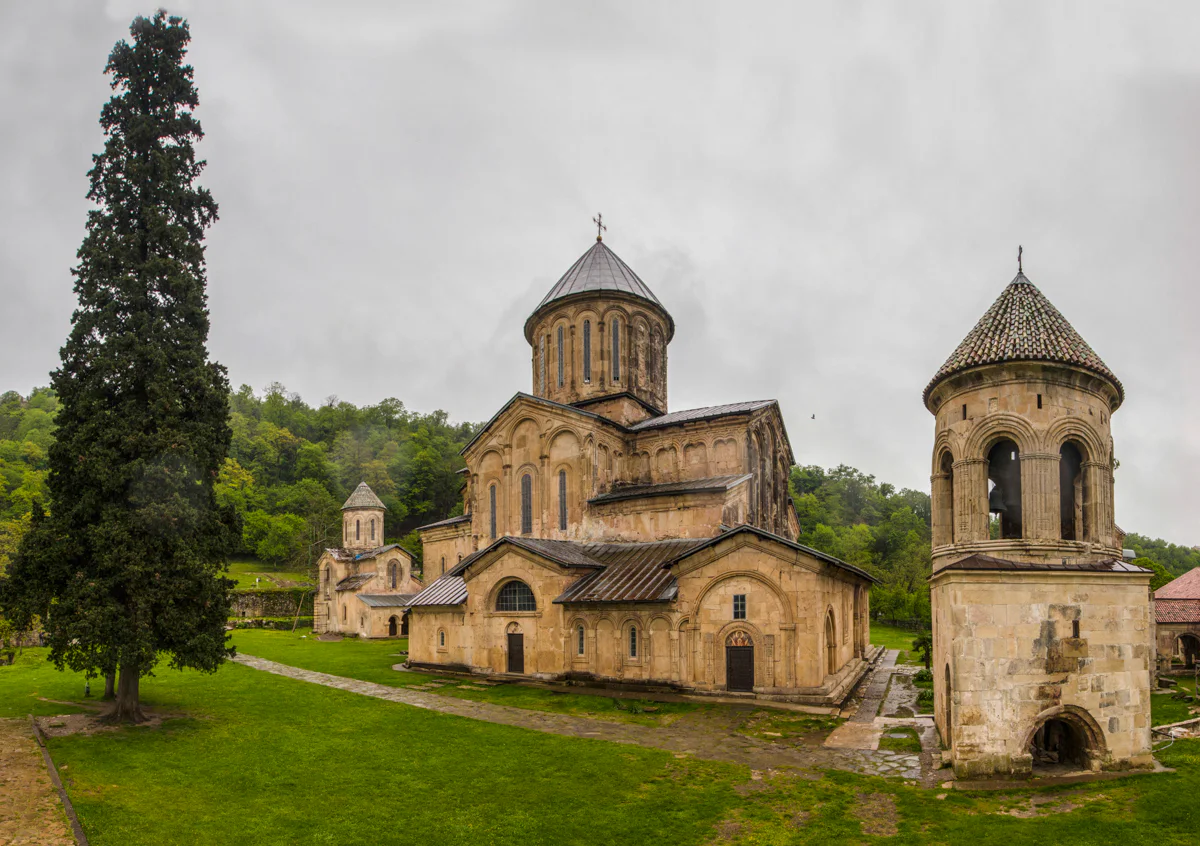
Kutaisi · 75 km
Gelati Monastery
Content & sources
Ihor Burliai · CC BY-SA 3.0
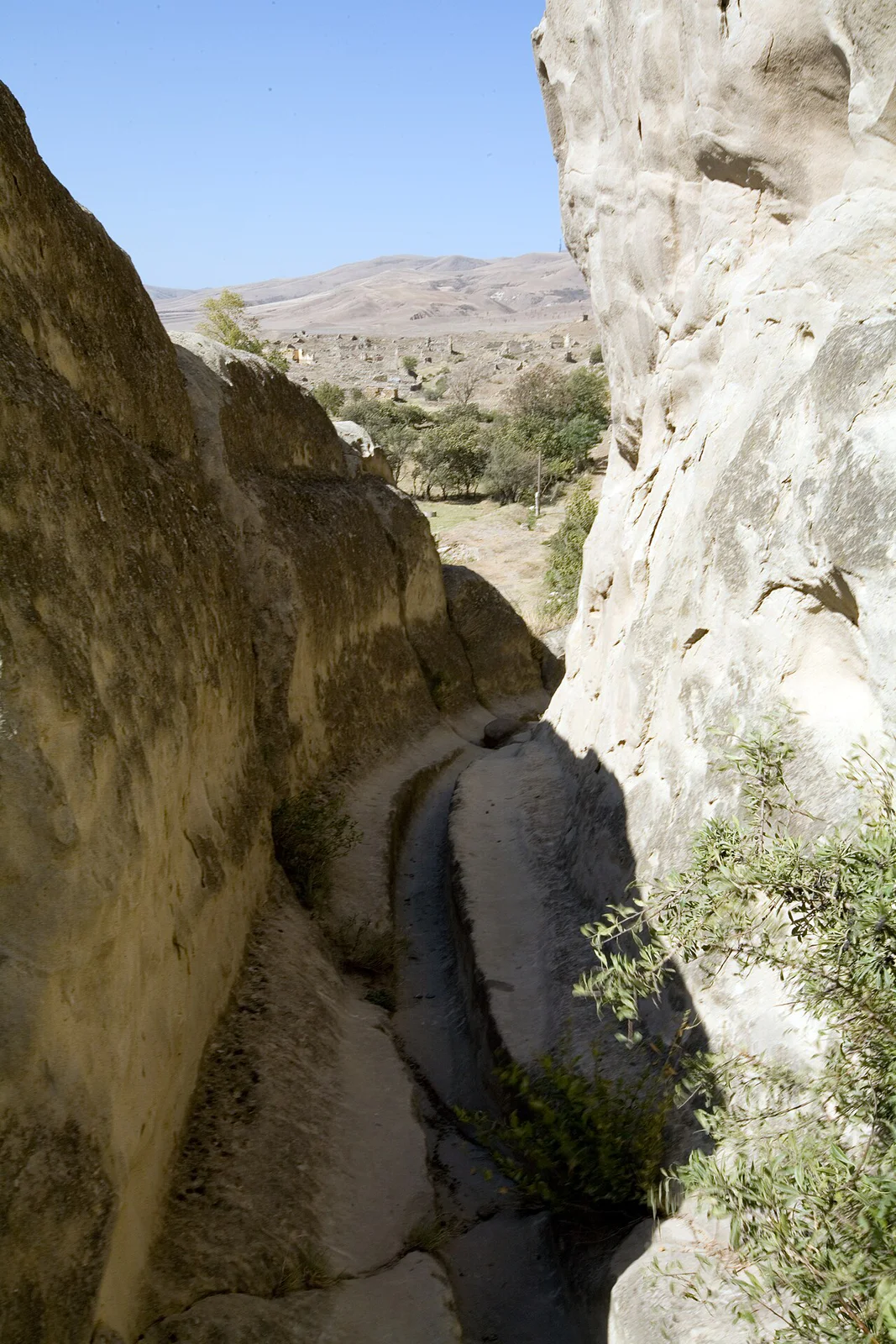
Uplistsikhe · 108 km
Uplistsikhe
Content & sources
Photo: EvgenyGenkin · CC BY-SA 3.0
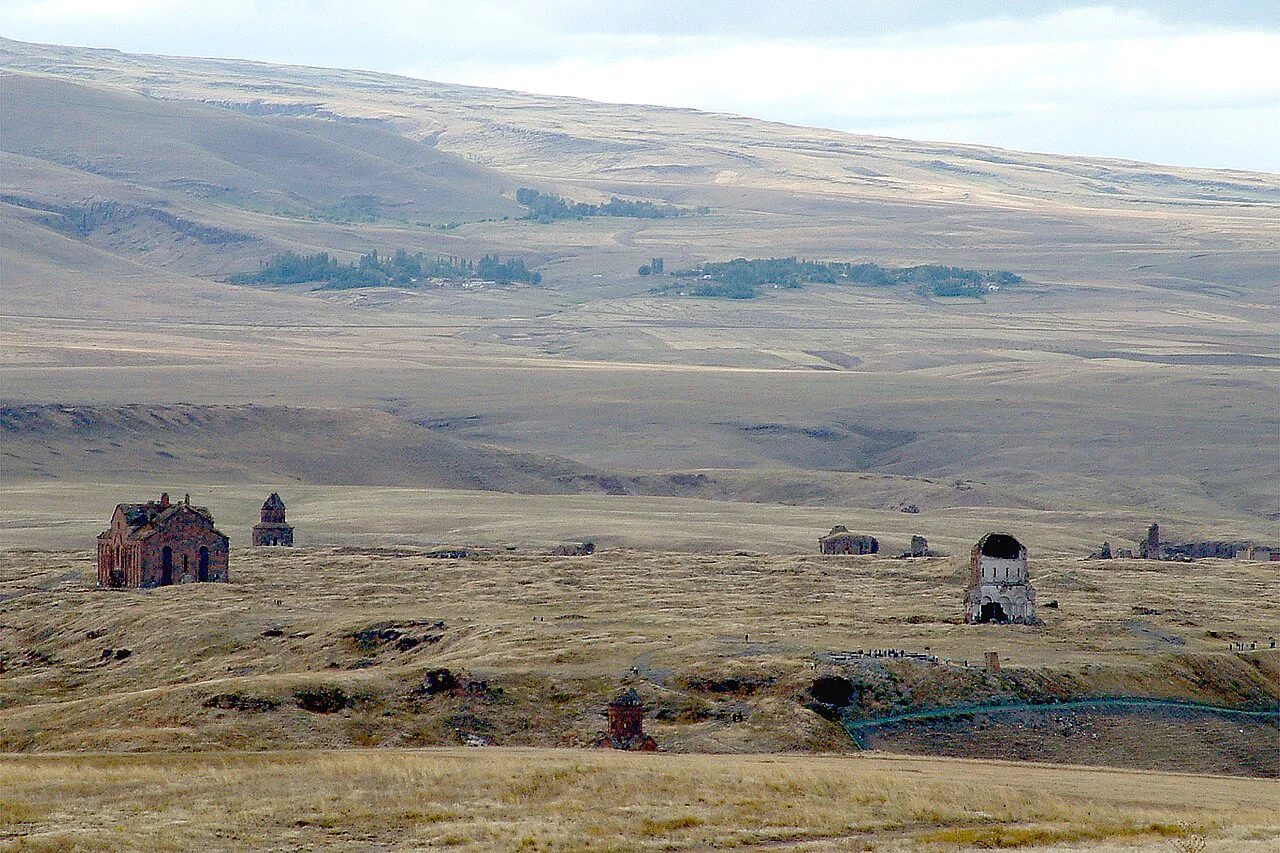
Kars · 136 km
Ani
Content & sources
haigoes · CC BY-SA 3.0