Stanza · Audio guide
Ani Audio Guide
A place to remember. A story to take with you.
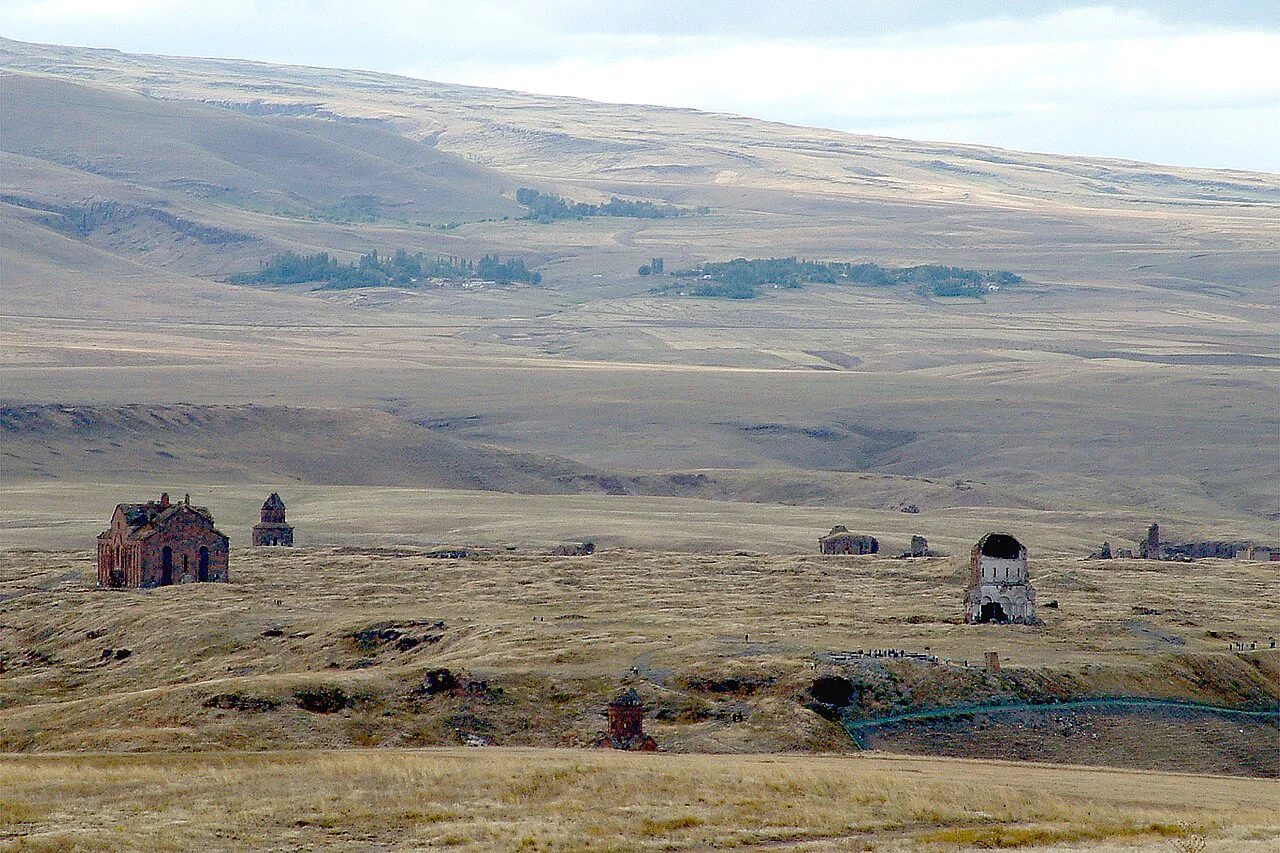
Ani is a ruined medieval Armenian city situated in the province of Kars, Turkey. It is a UNESCO World Heritage Site located next to the closed border with Armenia.
Download Stanza, then search for “Ani”.
About the tour
One guide. Your kind of visit.
Ani is a ruined medieval Armenian city situated in the province of Kars, Turkey. It is a UNESCO World Heritage Site located next to the closed border with Armenia.
Ready when you are.
- 01Get the free Stanza app.
iOS & Android
- 02Find your guide.
“Ani”
- 03Download before you go.
Works offline
Audio guide / 41 narrated stops
Inside the guide
Get to know a few of the stories before you go. Open a stop to read more.
01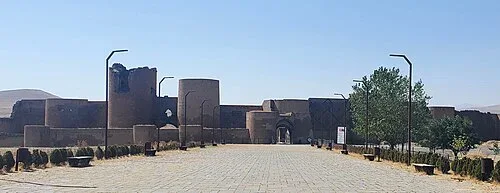 The Northern Fortifications and Lion Gate
Ani City Walls at the Lion Gate
Ani is a ruined medieval Armenian city in Turkey's Kars province, beside the border with Armenia, which has been closed for decades. Its site is a natural stronghold: a triangle of high ground, roughly thirteen hundred meters above sea level, guarded on the east by the ravine of the Akhurian River and on the west by the Bostanlar valley. In 961 King Ashot the Third of the Bagratuni dynasty moved his capital here from Kars, and Ani grew into one of the great cities of its age. Medieval writers called it the city of a thousand and one churches. The excavated reality is smaller, though still astonishing: fifty churches have come to light so far, along with thirty-three cave chapels and twenty chapels. The city's size is harder to pin down. At its height the population may have reached a hundred thousand, though historians doubt so many could have lived within these walls. The excavator Nikolai Marr thought most people probably lived just outside them. Another scholar judged that Ani held unquestionably more people than the contemporary cities of Western Europe. The Lion Gate, where the road now enters the site, is the modern way in.
Photo: Rəcəb Yaxşı · CC BY-SA 4.0
02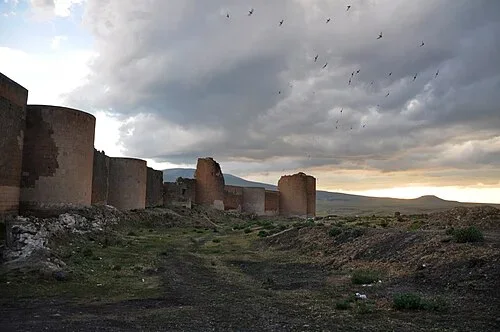 The Northern Fortifications and Lion Gate
Ani City Walls
Every building at Ani rises from the same stone: a volcanic tufa that carves easily and comes in colors from creamy yellow to rose-red to jet black. The city's defenses show it at its most powerful. On the north, the only side without a river or ravine, a double line of walls protected the city, the inner wall much taller and studded with large, closely spaced semicircular towers. Chroniclers wrote that King Smbat built these walls in the late tenth century. Later rulers raised and thickened them and added more towers, and inscriptions from the twelfth and thirteenth centuries show that private individuals paid for some of them. Three gateways pierced the northern walls: the Lion Gate, the Kars Gate, and the Dvin Gate, also called the Chequer-Board Gate for the panel of red and black squares over its entrance. In 1064 a large Seljuk army under Alp Arslan attacked. After a siege of twenty-five days the city fell, and its population was slaughtered. The historian Sibt ibn al-Jawzi passes on the words of an eyewitness: the dead were so many that they blocked the streets, and there was no way to walk without stepping over them.
Panegyrics of Granovetter · CC BY-SA 2.0
03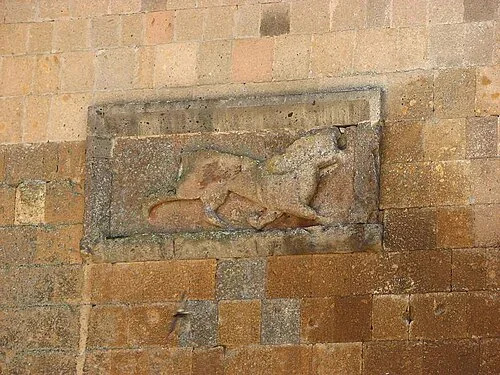 The Northern Fortifications and Lion Gate
The Animal Relief on the Gates of Ani
Set into the gate masonry is a single carved animal, caught mid-stride. It is described as a leopard with a cross above it, and is believed to be the symbol of the city or of the Bagratuni dynasty that ruled from Ani. If so, it gave the royal house a face in stone at the very entrance to its capital. The carving is worn, and the cross above the animal is said rather than easily seen. Ani's fame in the Middle Ages earned it grander nicknames too: the city of forty gates, and the city of a thousand and one churches. It also became the burial place of the Bagratuni kings.
Listen in the appreibai · CC BY 2.0
04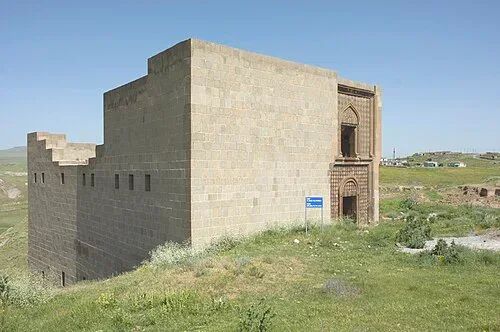 Seljuk Palace
The Bagratuni kings were long gone when this palace went up in the twelfth century against the western ravine, in the time of Ani's Muslim rulers. Its message is scale: a grand secular building, raised with the same confidence as the city's churches. The plain, powerful stone facing belongs to the masons' tradition that built everything at Ani, now serving new patrons. Exactly when in the century it rose, and which ruler commissioned it, is not settled. What is clear is that a change of dynasty and of faith did not end the ambition of the city's architecture.
Listen in the appPhoto: Dosseman · CC BY-SA 4.0
05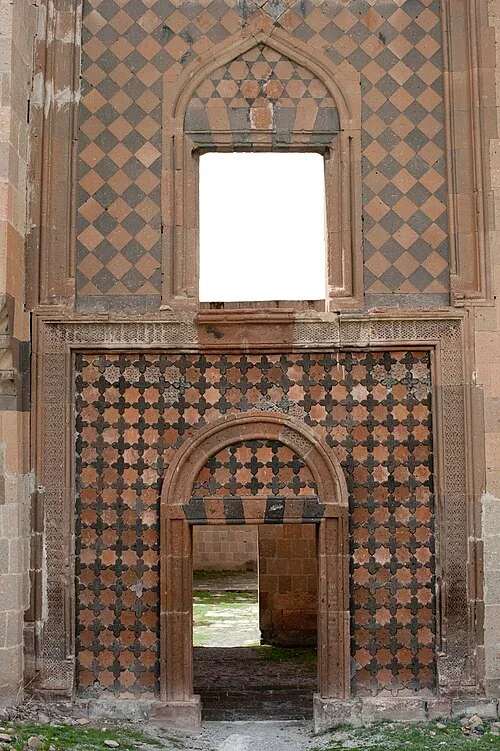 Seljuk Palace
 Portal Stonework
Around the palace's doorway and window, the stonework turns to pattern: blocks of red and black stone set in a checkerboard, framed by carved geometric ornament. This is Ani's cultural blending made visible. The masonry craft is the city's own, the geometric idiom is the one associated with Seljuk design, and here the two speak in a single wall. Scholars read the mixing from the style itself; the names of the craftsmen are unknown.
Listen in the appUser:Ggia · CC BY-SA 3.0
06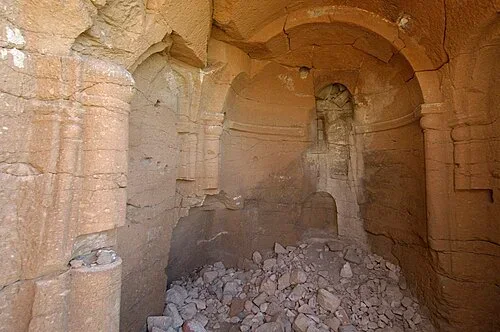 Rock-Cut Chapel of Ani
Rock-Cut Chapel
Outside the walls of Ani, the cliffs themselves were inhabited. A whole settlement zone was cut into the rock, and scholars think it may have served as overflow, a place for people when the city grew too large for its walls. Chapels were hollowed out among the dwellings. This one has architectural detail carved from the living stone: pilasters, arches, and a rounded apse at its head. Traces of frescoes survive on the walls and ceiling of one cave church in this zone. The caves keep a cool, steady temperature, and today goats and sheep shelter in them.
Listen in the appPhoto: Dosseman · CC BY-SA 4.0
07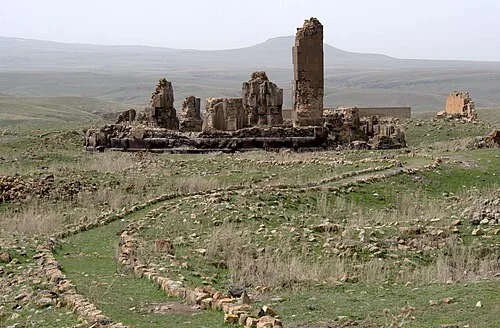 Church of Saint Gregory of Gagkashen
King Gagik the First wanted a church that would recall the most celebrated sacred building of his people: the cathedral of Zvartnots at Vagharshapat, already a ruin by his day. Between 1001 and 1005 his architect Trdat, the most famous of medieval Armenia, raised the Gagkashen to answer that wish. Its design follows Zvartnots closely, in size and in plan: a quatrefoil core ringed by a circular walkway. The church did not last long. It collapsed a relatively short time after its construction, and houses were later built over its ruins. By modern times all that showed above ground was a huge earthen mound. In 1905 and 1906 the archaeologist Nikolai Marr dug into that mound and uncovered the foundations, a landmark campaign in the modern excavation of Ani.
Listen in the appPhoto: Ggia · CC BY-SA 3.0
08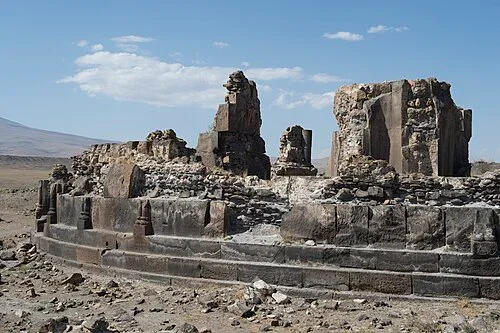 Church of Saint Gregory of Gagkashen
Gagkashen Church Remains
The base alone tells the size of what stood here. A circular platform, stepped like a wedding cake, spreads wide enough to have held a church of real ambition. At one side a fragment of the drum still rises, dark stone against the sky. The rest collapsed long ago, and for centuries the whole structure hid under a mound of earth. What remains is the footprint, and from it the shape of the building can still be traced on the ground.
Listen in the appPhoto: Dosseman · CC BY-SA 4.0
09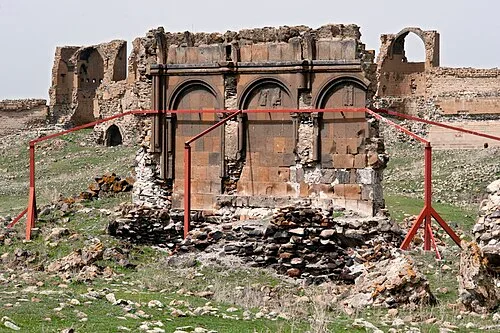 Georgian Church of Ani
No inscription dates the building of this church. What records its community is a Georgian edict of 1218. In Ani at that time, Georgian meant a faith as much as a nation: it designated Christians who followed the Chalcedonian creed, and most of them were Armenians. The Georgian Church controlled this single-nave church, but the people who prayed in it would have been largely Armenian. It is a small window onto a city that held several Christian communities at once. Red steel frames now brace what is left of its arched front.
Listen in the appGgia · CC BY-SA 3.0
10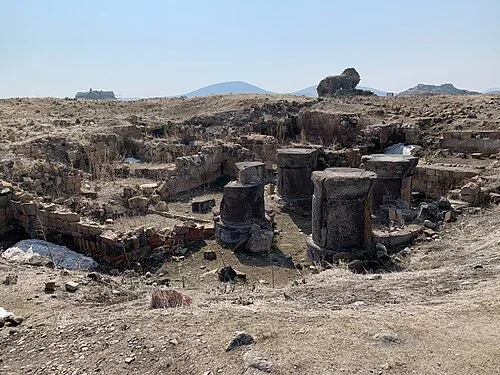 The Zoroastrian Fire Temple
Long before the churches, this ground was already sacred. These massive drum-like piers belong to an open-air temple, one of the oldest surviving structures at Ani. The dating is loose: estimates run from around the first century before Christ to the fourth century after. Its identification as a Zoroastrian fire temple rests on the form of the remains rather than on any inscription. Whatever its exact age and use, the point stands: ritual happened here centuries before the first Christian king made Ani his capital. The churches that fill this site are the younger layer of a much longer story.
Listen in the appPhoto: Robot8A · CC BY-SA 4.0
- 11
Fire Temple Remains
Up close with the fire temple: carved columns, a sunken floor, and a name that may echo an older sanctuary.
- 12
Church of the Holy Apostles
The Church of the Holy Apostles: what it once was, and how little of it is left.
- 13
Holy Apostles: the Seljuk-Style Gavit Portal
Seljuk honeycomb vaulting carved over the door of a Christian church.
- 14
Ebu'l Muammeran Mosque
The ruins of a second mosque, from the late twelfth century under the Shaddadids.
- 15
The Fallen Minaret of Ebu'l Muammeran
A whole minaret lies toppled on its side, one massive block of stone resting against the rock.
- 16
Church of Saint Gregory of Abughamrents
A nearly complete tenth-century chapel, built as the private place of worship of a noble family.
- 17
Abughamrents: Inside the Dome
Looking straight up into the little church's dome, ringed by windows and streaked with dark traces of plaster.
- 18
Abughamrents Interior
Tall arched windows and weathered plaster in a space barely wider than a room.
- 19
The Citadel of Ani
The city's royal stronghold, and the best vantage for the whole arc of Ani's decline and rediscovery.
- 20
Palace Chapel on the Citadel
Broken arches of red and black stone, all that is left of the royal compound's own chapel.
- 21
Saint Grigor Monastery of Aghkaberd (Kizkale)
A lone church on a vertical rock finger at the far southern edge of Ani's territory.
- 22
Kizkale and the Gorge
The gorge view that explains why this monastery was all but impossible to attack.
- 23
Menüçehr Mosque
The mosque of Ani's second Muslim ruling dynasty, its minaret still intact with Kufic lettering high on its face.
- 24
Menüçehr Mosque: Prayer Hall
The vaulted prayer hall, half survived, that later served Ani's excavators as a museum.
- 25
Menüçehr Mosque: Ceiling Geometry
A star-patterned ceiling pieced together from warm and dark stone, with no ornament beyond the stone itself.
- 26
Menüçehr Mosque: Muqarnas
Honeycomb vaulting at the spring of the dome, a form shared by Ani's mosque and its churches alike.
- 27
Silk Road Bridge, Ani
The broken piers of a medieval bridge that once carried caravans across the Akhurian River.
- 28
The Bridge on the Closed Border
The river below the bridge is a closed border, and for decades the ruins sat on the Cold War front line.
- 29
Monastery of the Virgins
A rose-red convent perched on a rock in the river canyon, dedicated to the Hripsimian virgins.
- 30
Virgins' Monastery Carving
Interlace and blind arches on a convent drum — fine carving far from the city's great churches.
- 31
The Cathedral of Ani
Ani's cathedral, begun in 989 by Trdat, the most celebrated architect of medieval Armenia.
- 32
Cathedral Interior: Arches and Piers
Pointed arches and clustered piers that look Gothic, centuries before Gothic existed.
- 33
Cathedral: the Open Dome
The open circle of sky where the cathedral's dome fell in the 1319 earthquake.
- 34
Cathedral: Carved Blind Window
A deeply carved circular window on the cathedral's south wall, ornament at its finest.
- 35
Small Baths of Ani
The remains of a twelfth-century bathhouse, a glimpse of everyday life in medieval Ani.
- 36
Church of the Holy Redeemer
A church built for a fragment of the True Cross, cut in half by a storm nine centuries later.
- 37
Holy Redeemer: the Standing Half
The standing half of the Holy Redeemer, and the international effort to keep it up.
- 38
Church of Saint Gregory of Tigran Honents
A merchant's church of 1215, the best-preserved monument at Ani, raised in the Zakarian revival.
- 39
Tigran Honents: the Frescoed Interior
Rare surviving fresco cycles: the Life of Christ and the Life of Saint Gregory, wall after wall.
- 40
The Dome Frescoes and Ani's Legacy
The painted dome of Tigran Honents' church, and the UNESCO recognition it helped earn for Ani.
- 41
Saint Gregory in the Well: The Fresco Scene
The fresco of Saint Gregory in the serpent-filled well — the founding story of Armenian Christianity, painted on these walls.
Ani
Frequently asked questions
How much does the guide cost?
Free app download. Listed guide price: $4.99. Guide price shown in the app. Audio guide only. Venue admission is separate.
Can I listen without internet?
Yes. Download the guide’s audio, images, and maps in the app before your visit. Your downloaded content is then available offline.
Can I listen in my language?
This audio guide is available in 15 languages, including English.
Do I need to follow a schedule?
No. This is a self-guided experience. Choose your stops, pause whenever you like, and return to a story at your own pace.
At your own pace
Explore Ani.
Download Stanza, then search for “Ani”.
Free app download · Guide price shown in the app
Keep exploring
Nearby audio guides
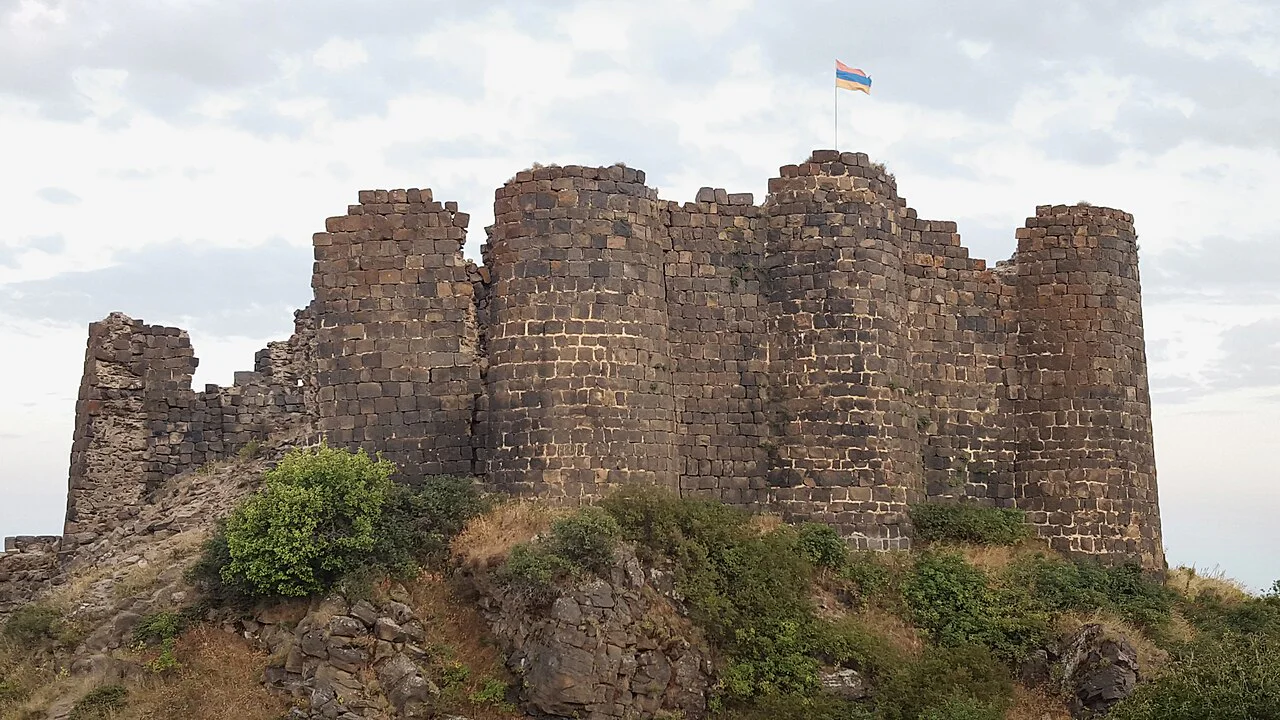
Byurakan · 57 km
Amberd
Content & sources
Yerevantsi · CC BY-SA 4.0
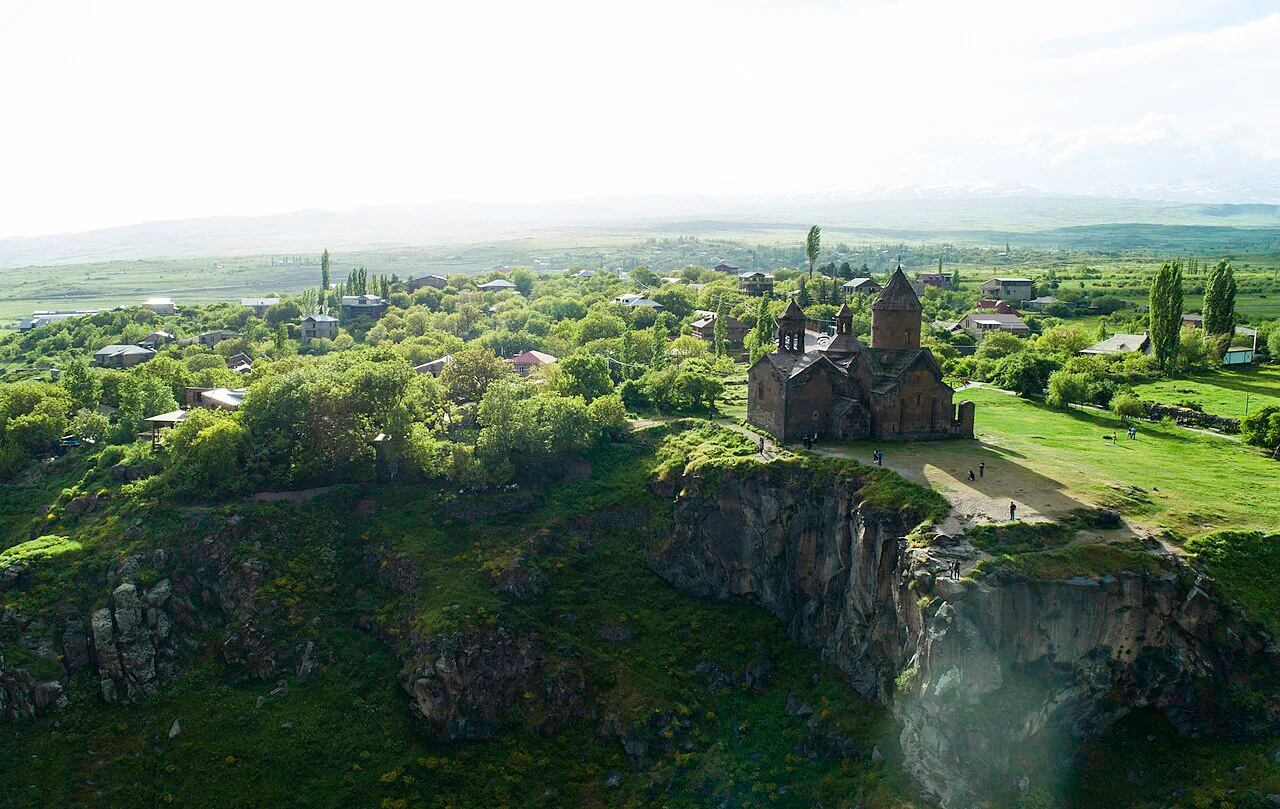
Artashavan · 71 km
Saghmosavank
Content & sources
Vahagn Grigoryan · CC BY-SA 4.0
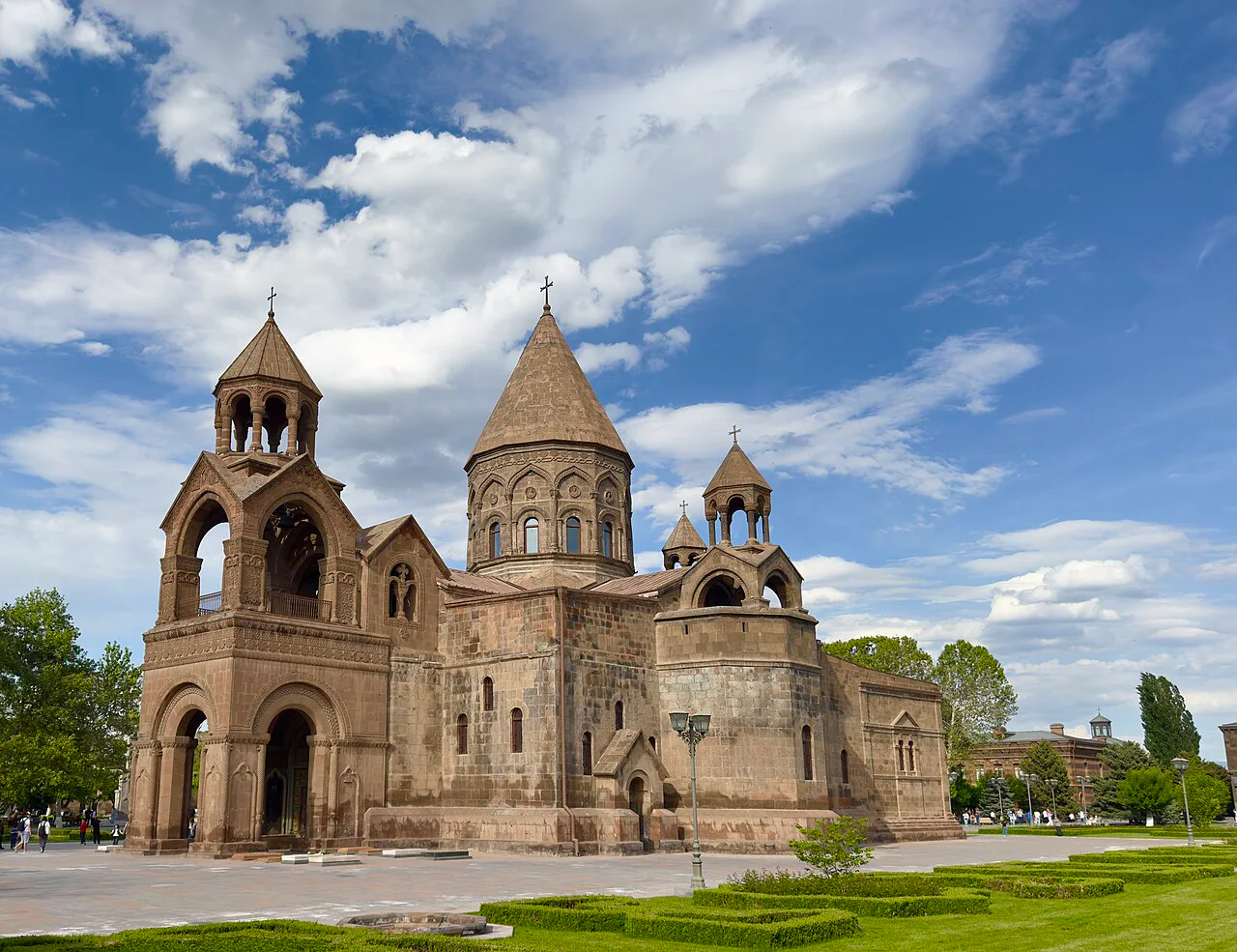
Vagharshapat · 72 km
Etchmiadzin Cathedral
Content & sources
Photo: Well-read MountainMan · CC BY-SA 4.0
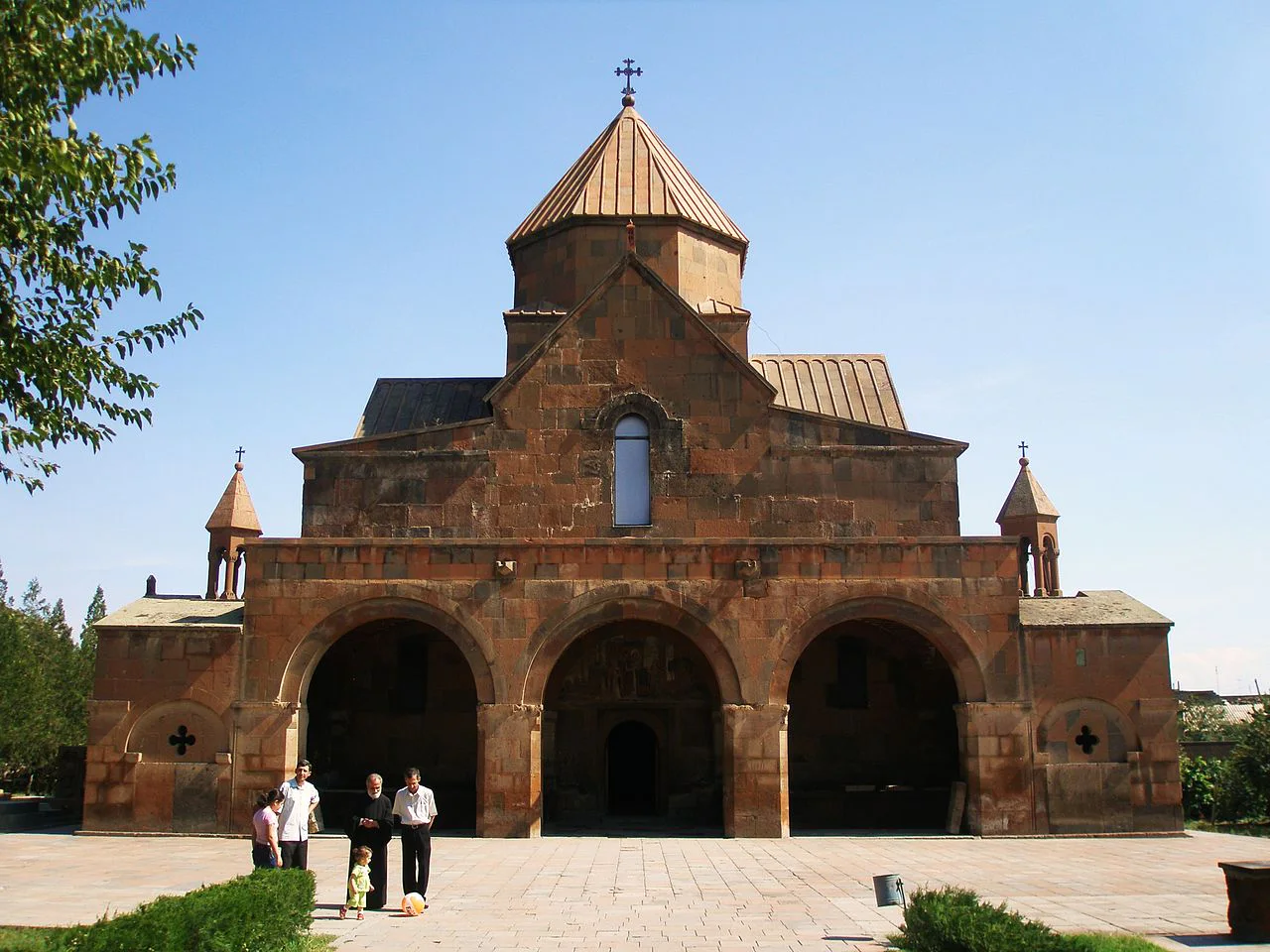
Vagharshapat · 72 km
Saint Gayane Church
Content & sources
Liveon001 © Travis K. Witt · CC BY-SA 3.0