Stanza · Audio guide
Amberd Audio Guide
A place to remember. A story to take with you.
Amberd is a 10th-century fortress located on the slopes of Mount Aragats in the province of Aragatsotn, Armenia. The name translates to fortress in the clouds in Armenian.
Download Stanza, then search for “Amberd”.
About the tour
One guide. Your kind of visit.
Amberd is a 10th-century fortress located on the slopes of Mount Aragats in the province of Aragatsotn, Armenia. The name translates to fortress in the clouds in Armenian.
Ready when you are.
- 01Get the free Stanza app.
iOS & Android
- 02Find your guide.
“Amberd”
- 03Download before you go.
Works offline
Audio guide / 11 narrated stops
Inside the guide
Get to know a few of the stories before you go. Open a stop to read more.
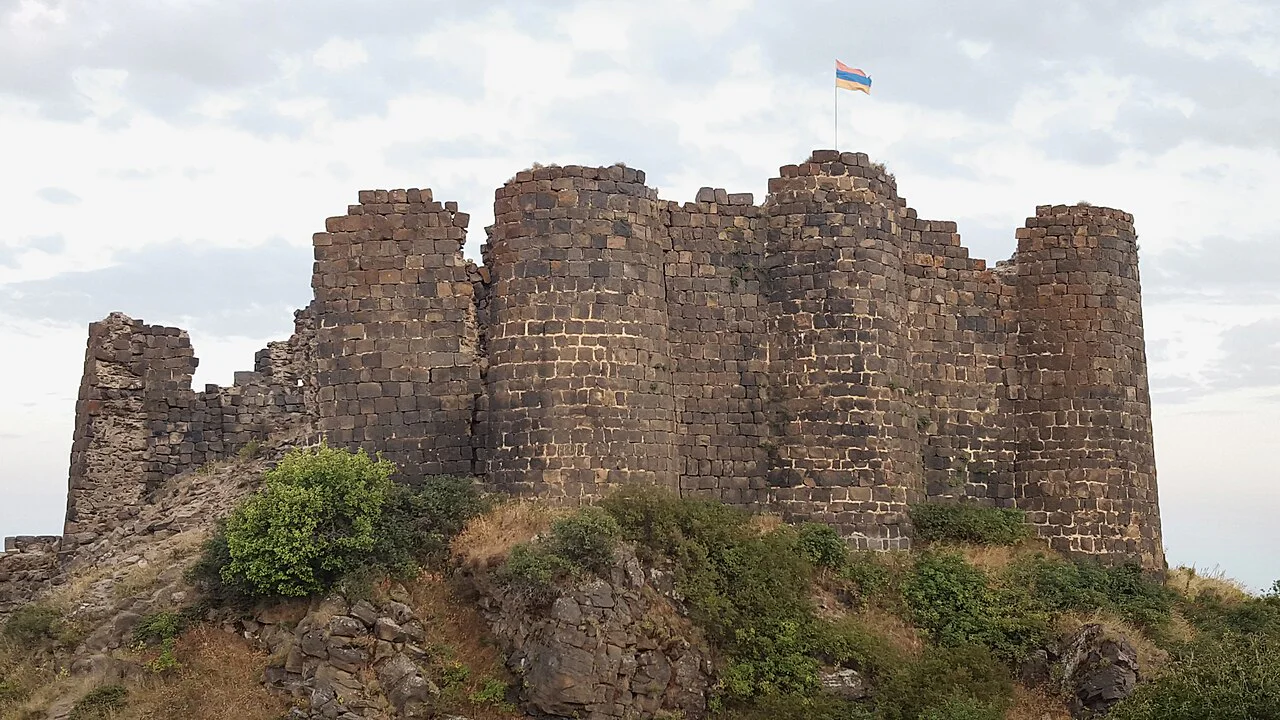
01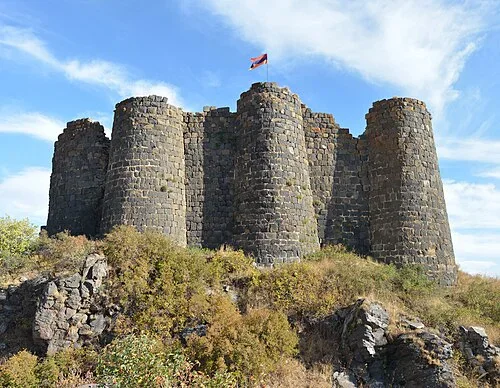 Northern Approach and Outer Fortifications
Amberd Fortress Walls and Round Towers
The name Amberd translates from Armenian as fortress in the clouds. It stands on the slopes of Mount Aragats, roughly two thousand three hundred metres above sea level. Two rivers meet nearby, the Arkashen and the Amberd, in the province of Aragatsotn. Some say the site was once a summer residence for kings. Later it became the most important centre in the defensive system of the Shirak region and the kingdom of Ani. Dark stone walls and round towers rise from the hilltop, with a flag flying above them. A large part of the fortress walls survives, along with the bath house and the church. In 2024, the pan-European federation Europa Nostra put Amberd on its list of the most endangered monuments and heritage sites in Europe. Seven sites were on that list, and Amberd was one of them. The buildings may collapse with age, and erosion, earthquakes and a lack of money for repairs add to the danger.
Photo: Thomas Wozniak · CC BY-SA 4.0
02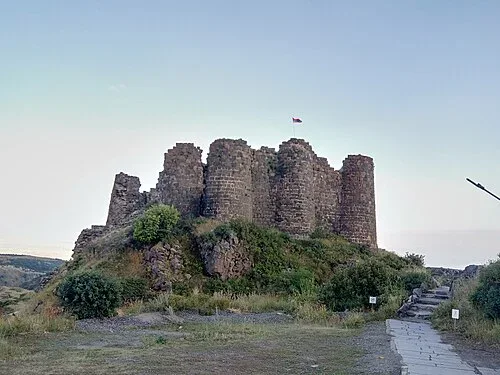 Castle Exterior and Main Entrance Portal
The Princely Castle (Dghyak): Exterior
The tower walls here are built at a slant. It is thought that the slant made it easier to fire on invaders below. The walls are roughly hewn basalt, set in mortar. In 1196, the Zakarian brothers, Ivane and Zakare, freed the fortress from Seljuk rule. Through the twelfth century, the Zakarian family restored and completed the fortress. An inscription at the Haghartsin monastery marks the victory. Then, in 1236, the Mongols captured Amberd and destroyed it.
Photo: Tigran Ovanyan · CC BY-SA 4.0
03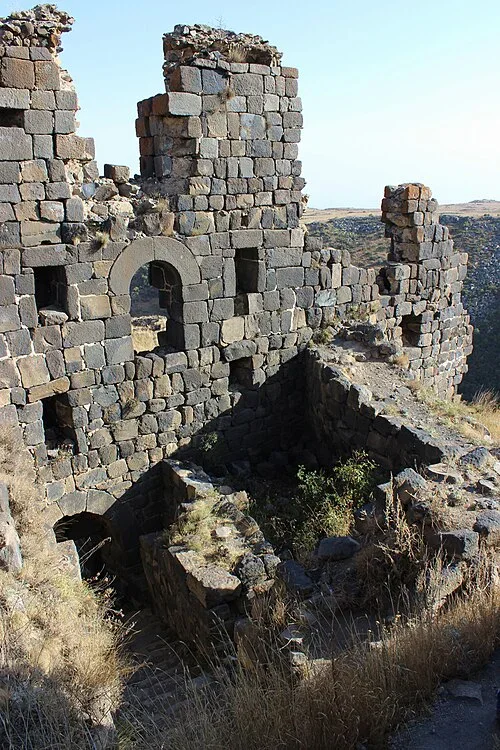 Upper Chambers of the Princely Castle
The castle had three floors, and the top one held the royal household's reception rooms and private quarters. Arched and square openings still pierce these walls, though the wall tops have broken away. Wooden planks, fixed on logs, separated one floor from the next. The rooms on the lower floors ran in a row, and to reach each one, a person passed through the room before it. Excavations have shown the rooms were quite lavish. The carvings were elegant, and the walls were decorated with silks and brocades. The rooms also held oil lamps, incense holders and bronze, gold and silver ornaments. In 1215, Vache the First Vachutian bought Amberd from Ivane Zakarian. In the thirteenth century, the Vachutians rebuilt the fortress and made it their family residence. In 1254, the king of Armenian Cilicia, Hethum, stopped at the fortress. He was the guest of Kurd the Second Vachutian, on his way to the court of the Mongol khan to sign a pact of alliance.
Listen in the appTravis K. Witt · CC BY-SA 4.0
04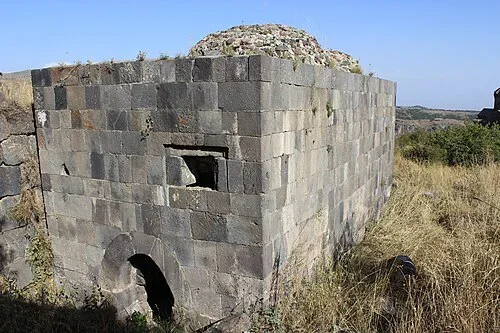 The Medieval Hypocaust Bathhouse
The Medieval Bathhouse: Exterior
A bath house is an unusual thing to find in a military fortress, yet one stood south of the fortress. It dates from the tenth and eleventh centuries, the same period as the nearby church. The building has two bathing rooms, each covered by its own dome. Its walls are squared stone blocks, and a low arch sits near the base. The bath is moderately intact, though only the remains of its domes sit on top now.
Listen in the appTravis K. Witt · CC BY-SA 4.0
05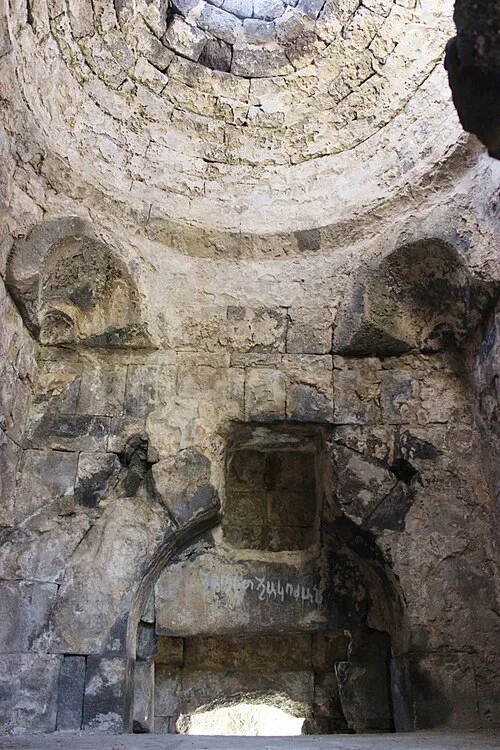 The Medieval Hypocaust Bathhouse
The Bathhouse Interior and Dome
The bath was warmed from underneath. A fire was built under the floor, and its heat travelled through pipes that ran through the floors and walls. The heat then spread through the bathing rooms. The system is called hypocaust heating, which means underfloor heating. It had its origins in Roman times, and at one time this bath used it to heat the floors. Above the bathing room, the dome narrows to a small round opening at the top. Hot water reached the baths through metal pipes.
Listen in the appTravis K. Witt · CC BY-SA 4.0
06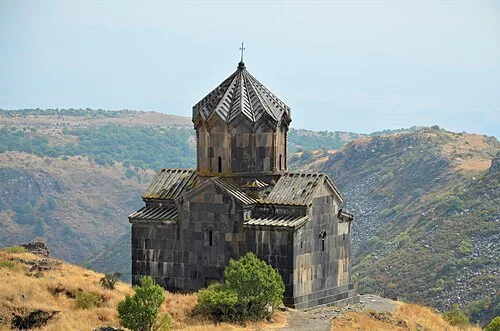 Vahramashen Church Exterior and Umbrella Dome
Vahramashen Church of Surb Astvatsatsin: Exterior
In 1026, the Pahlavuni family came to hold Amberd, along with a heavy duty. They were leading nobles at the Bagratuni court, and they had to make the military commitments the country's defence needed. That same year, Prince Vahram Pahlavuni built the Church of Surb Astvatsatsin and inaugurated it as the castle's church. An inscription inside the church, on its north wall, marks the occasion. The church and the fortress were now in the hands of one noble family. Prince Vahram and his son Grigor later fell in battle at the foot of Dvin, in 1045.
Listen in the appPhoto: Dav Sargsyan · CC BY-SA 4.0
07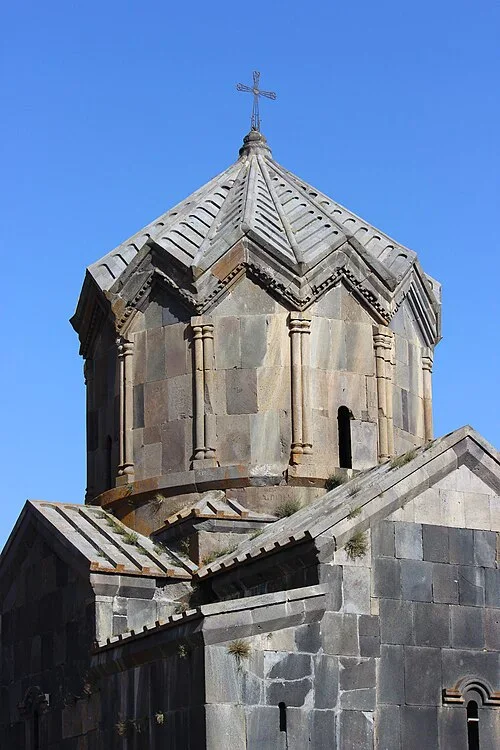 Vahramashen Church Exterior and Umbrella Dome
Church Drum and Umbrella Roof
A tall roof of stone slabs rises to a point above the church, with a cross on top. Some describe it as umbrella-shaped, since the slabs fan out from the peak. Beneath the cone sits the drum, the upright stone section the roof rises from. Slender columns stand in pairs at its corners. Small arched openings pierce the drum between them.
Listen in the appTravis K. Witt · CC BY-SA 4.0
08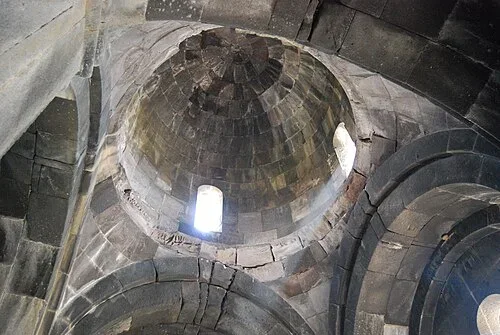 Vahramashen Church Interior and Altar
Church Interior Dome
The ceiling over the middle of the church rises into a dome, built up in rings of stone. Each ring steps a little inward from the one below, so the curve closes toward the top. Small openings in the walls let in light, and it falls across the rough curve of the stone above. Where the light falls, the joints between the stones stand out.
Listen in the appGill M L · CC BY-SA 2.0
09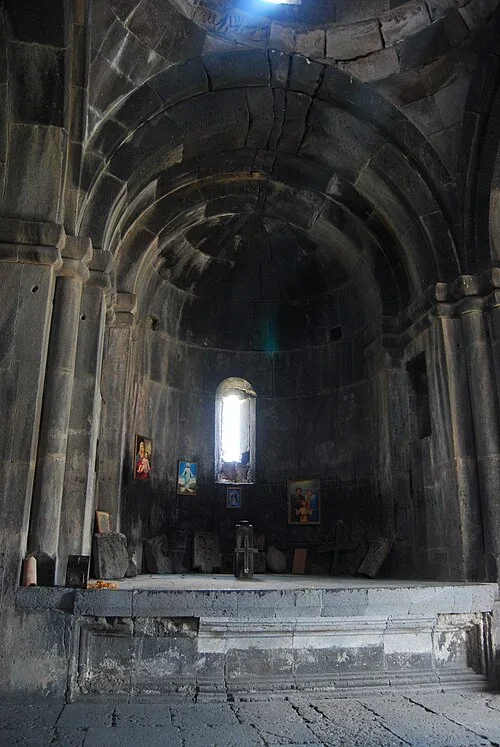 Vahramashen Church Interior and Altar
Church Interior and Sanctuary
The church was built for worship, and its main hall rises to a dome at its centre. At the far end, a raised stone platform holds a small cross. The platform is the sanctuary, the part of the church set apart for the service. Icons hang on the side walls, painted panels of holy figures. A window in the end wall lights the sanctuary.
Listen in the appGill M L · CC BY-SA 2.0
10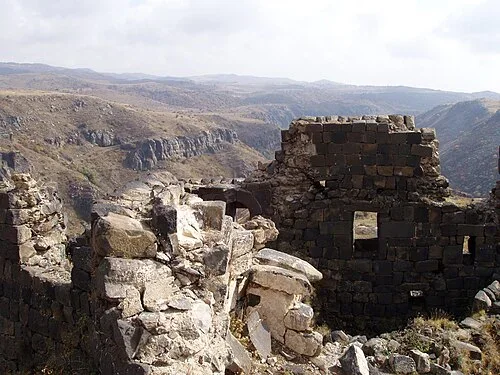 Arkashen Gorge and the Secret Water Passage
Gorge Overlook from the Fortress Ruins
Three bastions were added along the ridge above the Arkashen canyon. A constant water supply mattered just as much to the people inside. The main supply was a pipeline of terracotta, baked clay. It ran four to five kilometres from the fortress to reservoirs that gathered spring water and melting snow from higher ground. If the fortress came under attack, that pipeline would likely be destroyed. So a second, hidden supply was needed. A covered passage ran from the fortifications down a steep path, through a cleft in the rocks, to the Arkashen River. Excavations in 1936, with experts from the Hermitage Museum and the Academy of Sciences of Soviet Armenia, found that passage.
Listen in the appTamara Areshian from London, UK · CC BY 2.0
- 11
Amberd Fortress with Mount Ararat in the Distance
Mount Ararat in the distance, and a fortress that combined defence, royal residence, bathing, worship and refuge.
Amberd
Frequently asked questions
How much does the guide cost?
Free app download. Listed guide price: $0.99. Guide price shown in the app. Audio guide only. Venue admission is separate.
Can I listen without internet?
Yes. Download the guide’s audio, images, and maps in the app before your visit. Your downloaded content is then available offline.
Can I listen in my language?
This audio guide is available in 15 languages, including English.
Do I need to follow a schedule?
No. This is a self-guided experience. Choose your stops, pause whenever you like, and return to a story at your own pace.
At your own pace
Explore Amberd.
Download Stanza, then search for “Amberd”.
Free app download · Guide price shown in the app
Keep exploring
Nearby audio guides
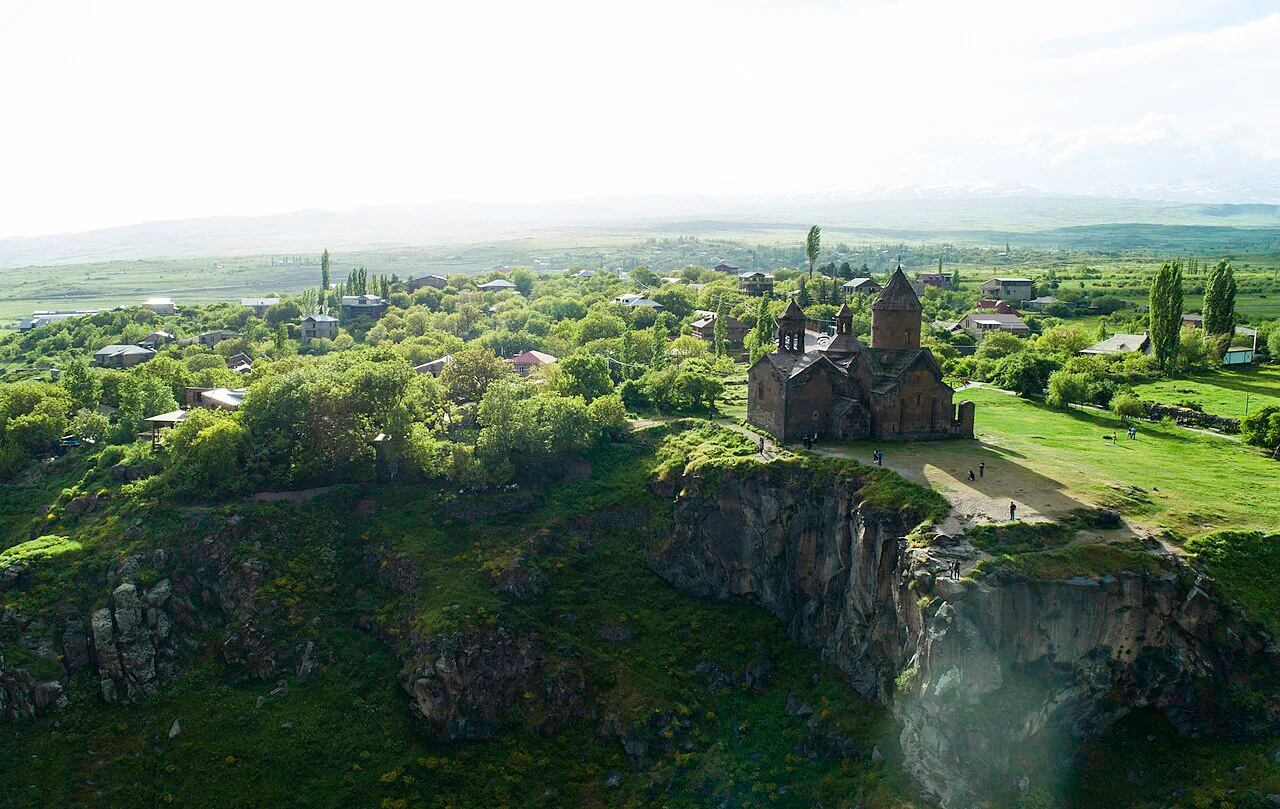
Artashavan · 14 km
Saghmosavank
Content & sources
Vahagn Grigoryan · CC BY-SA 4.0
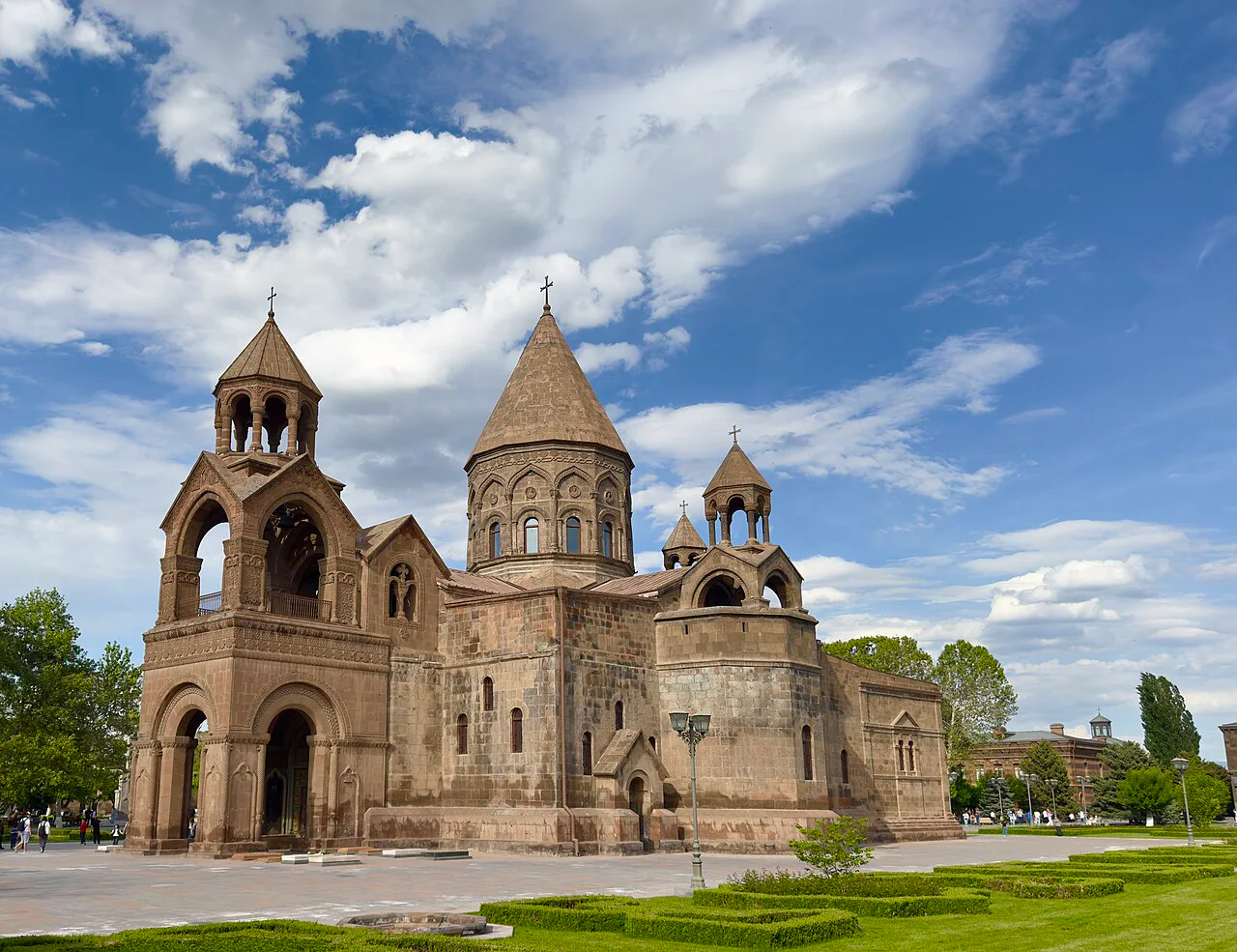
Vagharshapat · 26 km
Etchmiadzin Cathedral
Content & sources
Photo: Well-read MountainMan · CC BY-SA 4.0
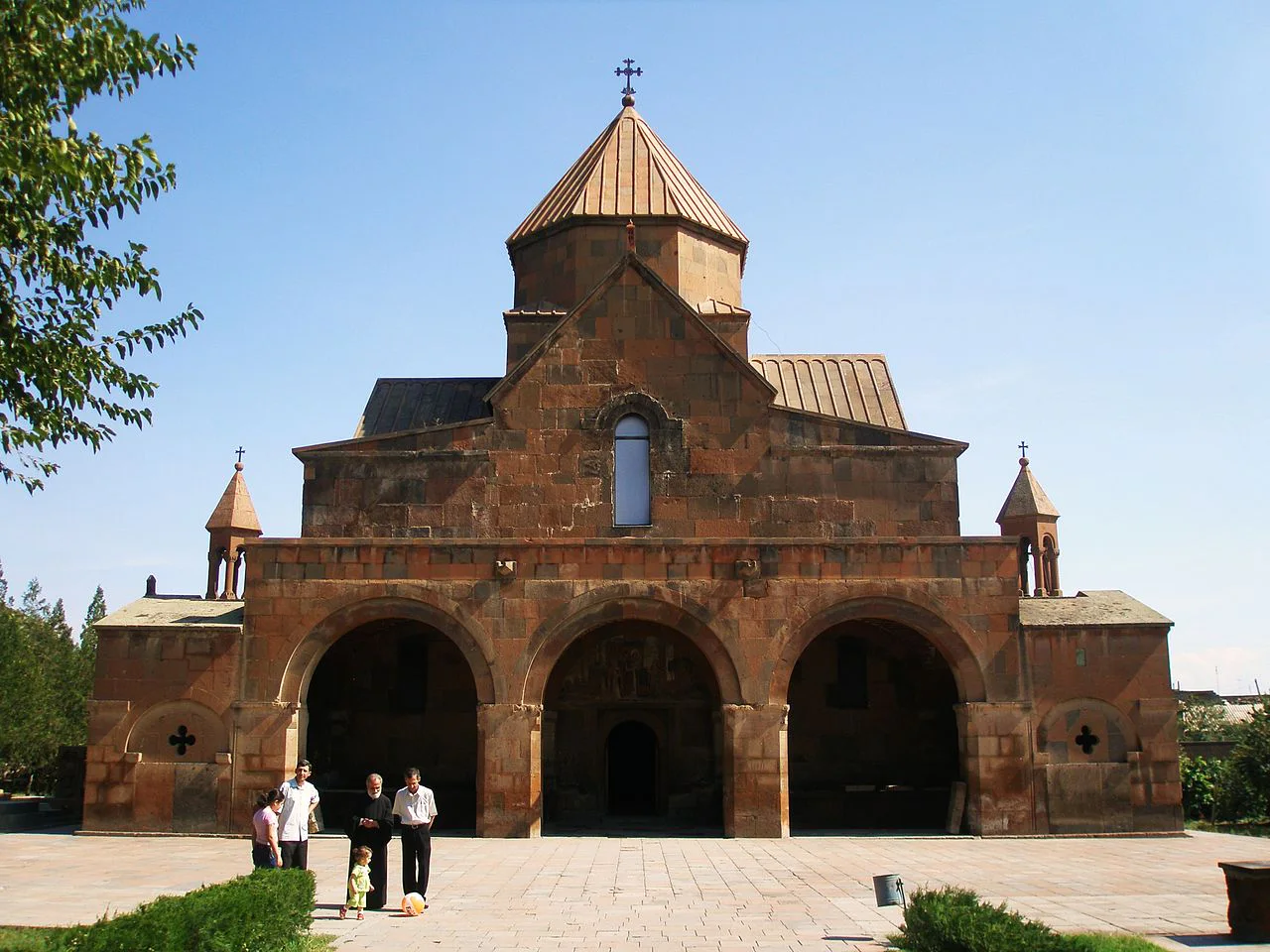
Vagharshapat · 26 km
Saint Gayane Church
Content & sources
Liveon001 © Travis K. Witt · CC BY-SA 3.0
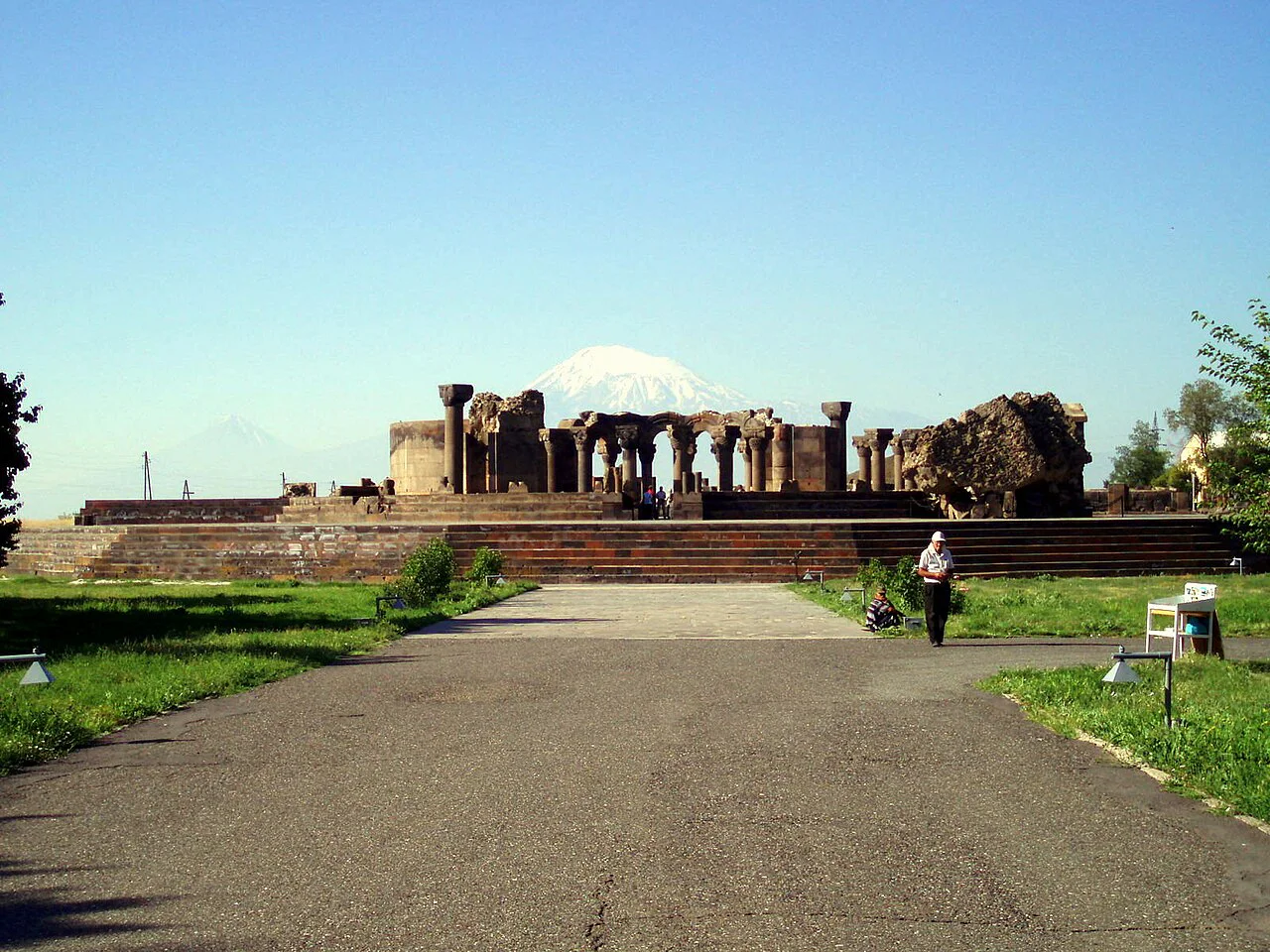
Vagharshapat · 27 km
Zvartnots Cathedral
Content & sources
DAVID HOLT · CC BY-SA 2.0