Stanza · Audio guide
Jvari Monastery Audio Guide
A place to remember. A story to take with you.
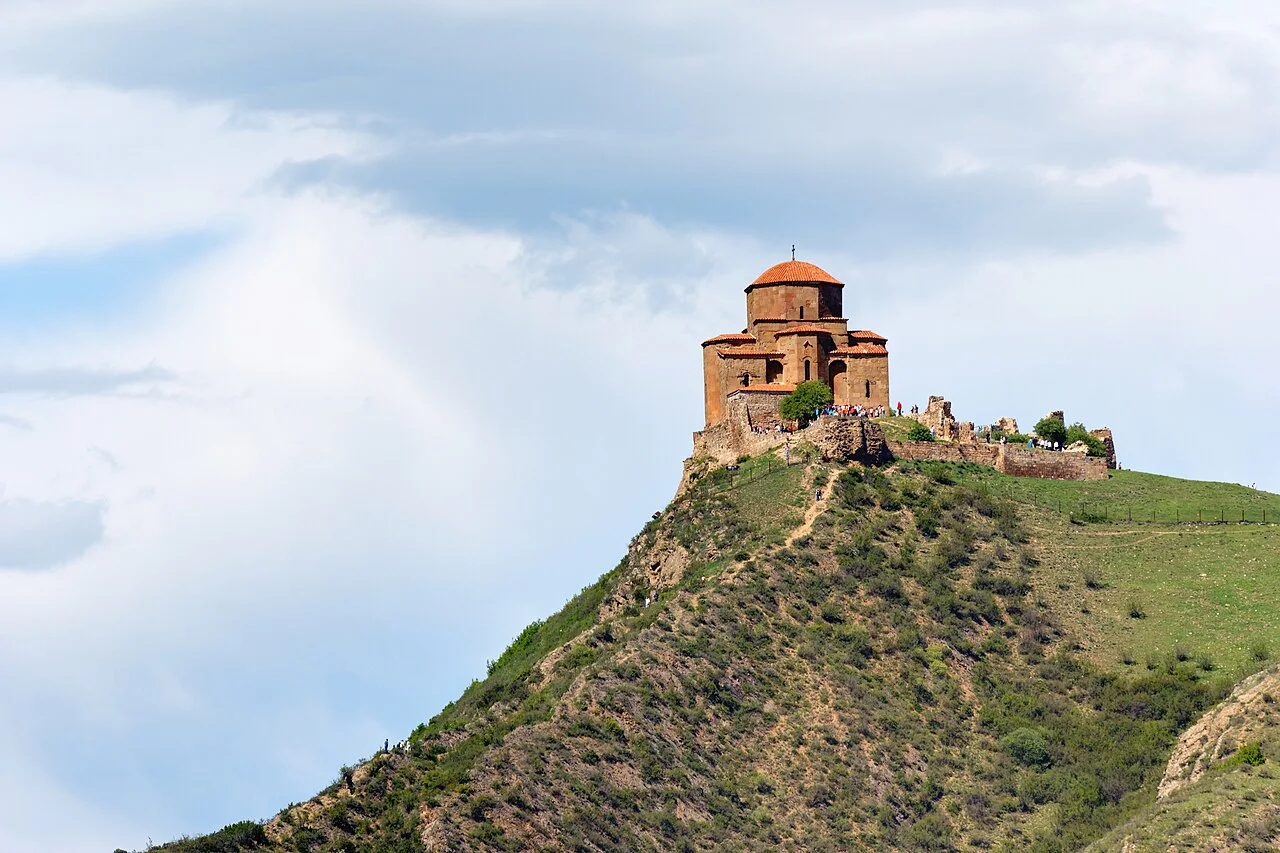
Jvari Monastery is a sixth-century Georgian Orthodox monastery located near Mtskheta. It is a rare example of an Early Medieval Georgian church that has survived to the present day almost unchanged.
Download Stanza, then search for “Jvari Monastery”.
About the tour
One guide. Your kind of visit.
Jvari Monastery is a sixth-century Georgian Orthodox monastery located near Mtskheta. It is a rare example of an Early Medieval Georgian church that has survived to the present day almost unchanged.
Ready when you are.
- 01Get the free Stanza app.
iOS & Android
- 02Find your guide.
“Jvari Monastery”
- 03Download before you go.
Works offline
Audio guide / 8 narrated stops
Inside the guide
Get to know a few of the stories before you go. Open a stop to read more.
01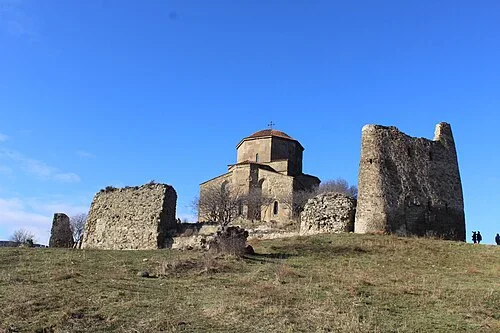 Eastern Fortified Gateway and Enclosure
Eastern Fortified Gateway and Courtyard
Welcome to Jvari, the Monastery of the Cross, one of the oldest churches in Georgia. It stands on a rocky mountaintop, six hundred and fifty-six metres above the sea, where the Mtkvari and Aragvi rivers meet. Below it lies Mtskheta, the old capital of the ancient kingdom of Iberia. The church you see rising over these ruined walls was built to glorify a cross that stood here long before it. In the early Middle Ages the monks walled the whole hilltop in, with a gate on the eastern side, because the shrine drew crowds and needed guarding. Those walls were tested in 914, when Arab armies swept through Georgia in the Sajid invasion and set the monastery on fire. The building burned, yet the dry stone walls held, and small repairs brought it back. That is why this church still looks much as it did fourteen hundred years ago.
Photo: Soghomon Matevosyan · CC BY-SA 4.0
02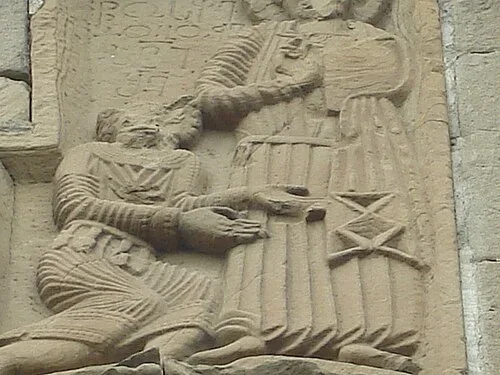 Eastern Façade Donor Reliefs
Donor Relief of Adarnase on the Eastern Façade
On the eastern wall of the church, a man kneels with his hands open before Christ. Above him fly the archangels Gabriel and Michael, and beside him stands his son. This is a donor portrait, the medieval way of saying who paid for the building. The princes of Iberia carved themselves onto the very church they financed, at the eye level of pilgrims, presenting their rule as blessed from above. The carving names him Adarnase the Hypatos, a Byzantine court title the Georgian princes carried. But which Adarnase he was, the stone does not say. Some scholars connect him with Adarnase the First, others with Adarnase the Second, and the debate has never been settled. Whoever he was, he chose to be shown here forever, small and kneeling, under a Christ far larger than himself.
Photo: Kober · Public domain
03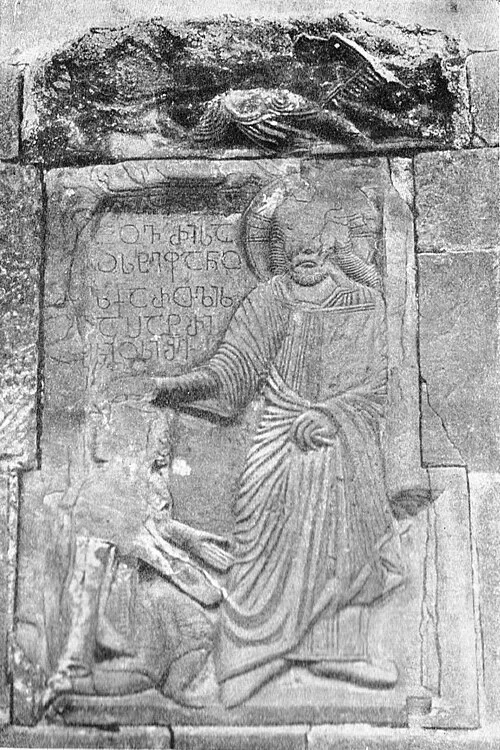 Eastern Façade Donor Reliefs
Stepanoz I Relief and Asomtavruli Inscription
In the middle panel of the eastern wall, Christ stands above a kneeling prince, with writing beside them in the ancient Asomtavruli script. This is among the oldest monumental Georgian writing that survives anywhere. The inscription names the builders of this church, and it anchors the whole chronology. By the traditional account, the Great Church of Jvari rose between 586 and 605, paid for by Erismtavari Stepanoz the First, the prince who presided over Iberia. His brother Demetre appears on the panel to the left, and Adarnase on the panel to the right, each named in the façade inscriptions as a co-builder. The scholar Cyril Toumanoff, though, read the same inscriptions differently. He argued these figures were Stepanoz the Second, Demetre, the brother of Stepanoz the First, and Adarnase the Second, a generation later. Most historians stay with the traditional dates, but the stone keeps some of its secrets.
Listen in the appDmitri Yermakov · Public domain
04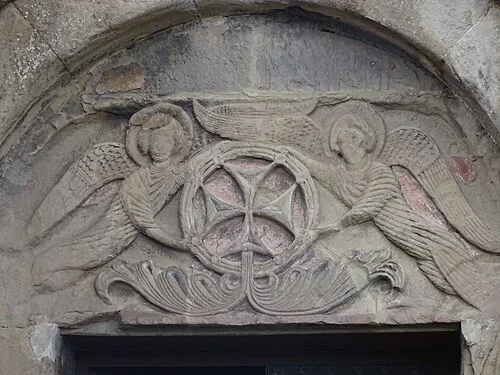 Southern Portal and Angels Tympanum
Southern Portal Tympanum: Angels with the Cross
Over the southern doorway, two angels carry a cross between them, holding it aloft in a round medallion. This carving is called the Glorification of the Cross, and the cross itself is the traditional Bolnisi type, with flared and curved arms. It sits above the entrance pilgrims used, so everyone who came here for the miraculous cross passed directly beneath an image of that cross being exalted by angels. The message needed no words. The same southern wall also carries a relief of the Ascension of Christ, a theme that appears again and again in Early Christian art. For a building whose whole reason was a venerated cross, the doorway made the point before a visitor had even stepped inside.
Listen in the appPhoto: Giftzwerg 88 · CC BY-SA 3.0
05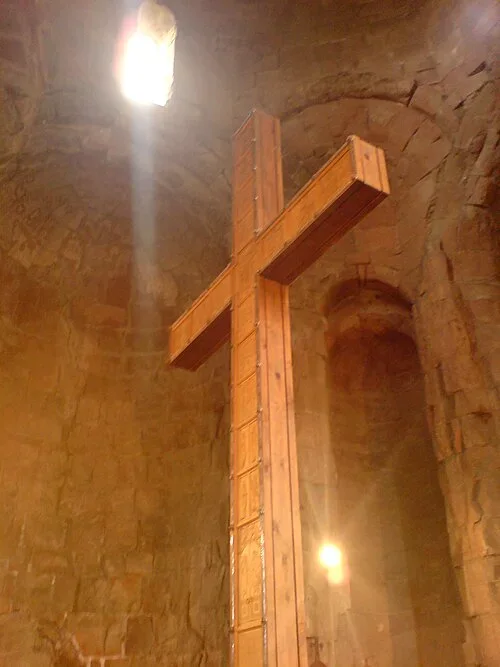 Central Domed Sanctuary and Holy Cross Base
The Holy Cross and Its Ancient Pedestal
Here, under the dome, stands an octagonal stone pedestal, and this is the reason the monastery exists. The story goes that in the early fourth century Saint Nino, the woman who converted King Mirian the Third of Iberia to Christianity, raised a great cross on this hilltop, on the site of a former pagan temple. The traditional accounts say it was made of wood, though some tell of a cross of vine wood instead. Behind it lies the legend of the miraculous tree. A great tree on this spot was said to heal wounded animals that licked its leaves, and after the king's baptism, in the 320s, it was cut down to make three crosses. One was raised here. That cross was believed to work miracles, and pilgrims came to it from every corner of the Caucasus. The original cross is gone, but its stone base remains, and a later wooden cross stands on it now.
Listen in the appMorten Oddvik from Trondheim, Norway · CC BY 2.0
06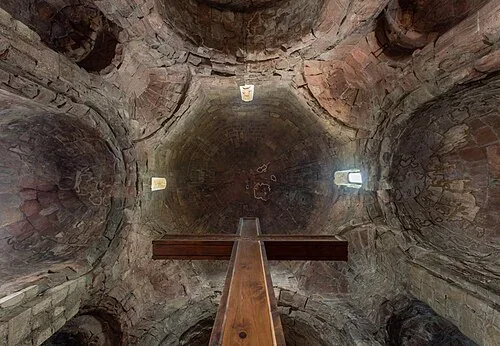 Central Domed Sanctuary and Holy Cross Base
Under the Dome: Squinches and the Jvari-Type Church
Looking up into the dome, the stonework climbs in three rising tiers from the square room below to the round drum above. Four large squinches make the first step, two rows of smaller ones follow, and then a ring of thirty-two facets carries the dome. Because of this, the dome rests on the walls themselves, with no pillars anywhere. The whole interior is one uninterrupted space, and although the church stands less than twenty-five metres high, it feels much larger. The architect even eased the transition between the big central room and the four small corner chambers, so the contrast never jars. This solution became the model for the Jvari type of church, a domed tetraconch with four apses and four niches, copied across Georgia and Armenia for centuries. And on the southern facet of the drum, some art historians see a small kneeling figure that may be the master builder's self-portrait. His name was never written down.
Listen in the appDiego Delso · CC BY-SA 4.0
07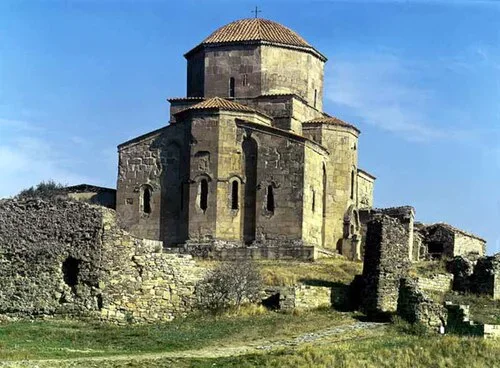 Ruins of the Small Church of Jvari
The Small Church of Jvari
Before the Great Church, there was a much humbler building here. Around 545, under Prince Guaram the First, a small church was raised over the remnants of the venerated wooden cross. You can still see it adjoining the Great Church from the north. It is a modest structure, about eight metres long and five and a half wide, cross-shaped inside, its walls built of finely dressed blocks. Its conch was once covered in mosaic, of which only a fragment survives, and a decorated niche was reserved for the katolikos, the head of the Georgian church. But the crowds kept coming, and a small shelter over the cross could no longer hold them. Within a single lifetime the pilgrimage had outgrown it, and the Great Church rose beside it, built to enclose the cross instead.
Listen in the appmanana kvirkvelia · CC BY-SA 2.5
08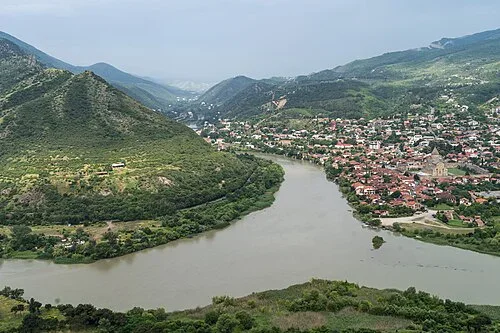 Western Clifftop Overlook
 over Mtskheta
From this western side, the whole point of the place opens up. Below lies Mtskheta, the former capital of the kingdom of Iberia, spread along the river. The Aragvi runs down from the mountains to meet the siltier Mtkvari, and the two waters keep their colours separate for a stretch. The builders set the church on this crag so that it seems to grow out of the mountain itself, and the western wall, braced by a buttress, nearly hangs over the precipice. Faith and landscape were made to speak together, the new church rooted above the ancient royal town. A folk legend ties the two shores as well. It tells of an iron chain, so thin it could hardly be seen, that once spanned the valley between this monastery and the Svetitskhoveli cathedral below, until a monk glanced down at bathers in the river and it snapped. Seventeen hundred years after a cross was first raised on this hill, the mountain and the town still belong to each other.
Listen in the appPhoto: Alexkom000 · CC BY 4.0
Jvari Monastery
Frequently asked questions
How much does the guide cost?
Free app download. Listed guide price: $0.99. Guide price shown in the app. Audio guide only. Venue admission is separate.
Can I listen without internet?
Yes. Download the guide’s audio, images, and maps in the app before your visit. Your downloaded content is then available offline.
Can I listen in my language?
This audio guide is available in 15 languages, including English.
Do I need to follow a schedule?
No. This is a self-guided experience. Choose your stops, pause whenever you like, and return to a story at your own pace.
At your own pace
Explore Jvari Monastery.
Download Stanza, then search for “Jvari Monastery”.
Free app download · Guide price shown in the app
Keep exploring
Nearby audio guides
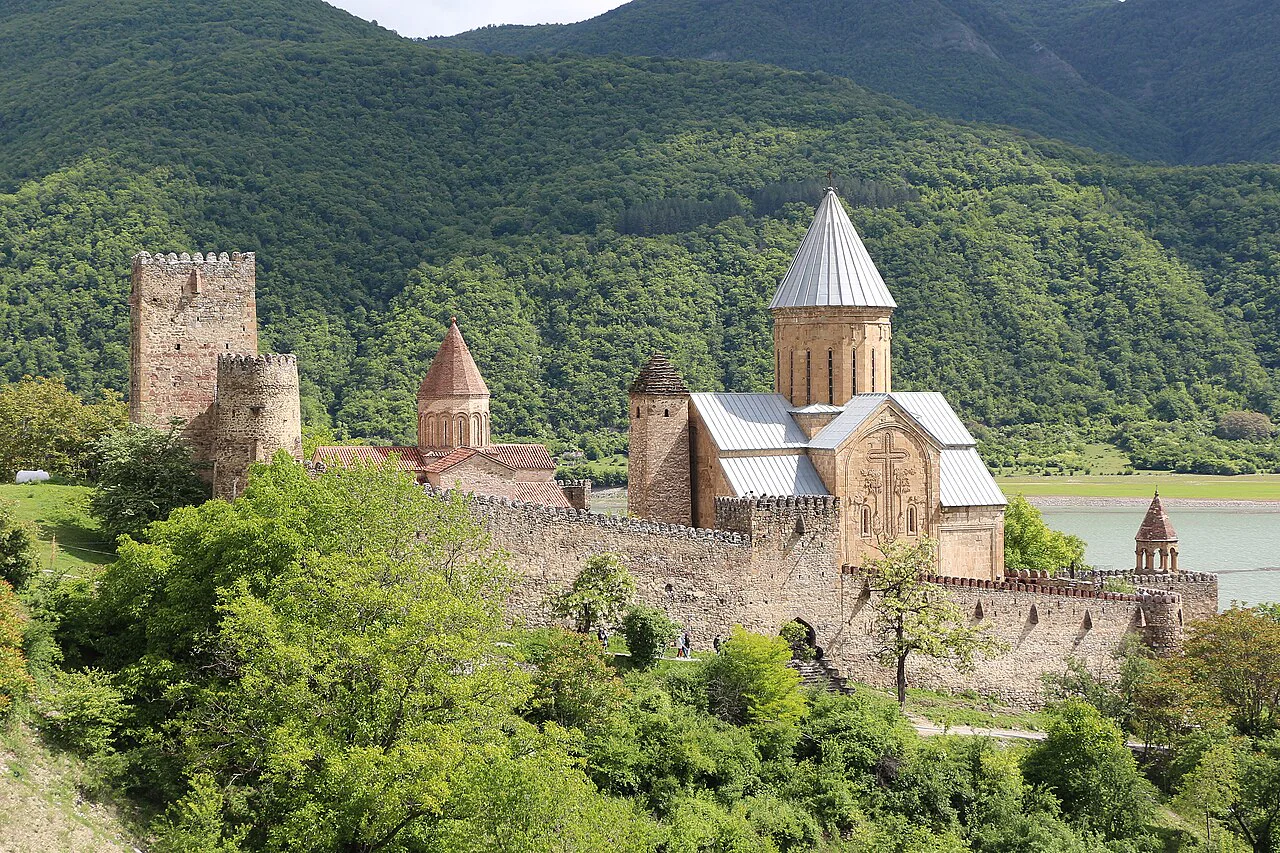
Shalikiantkari · 36 km
Ananuri
Content & sources
Bernard Gagnon · CC BY 4.0
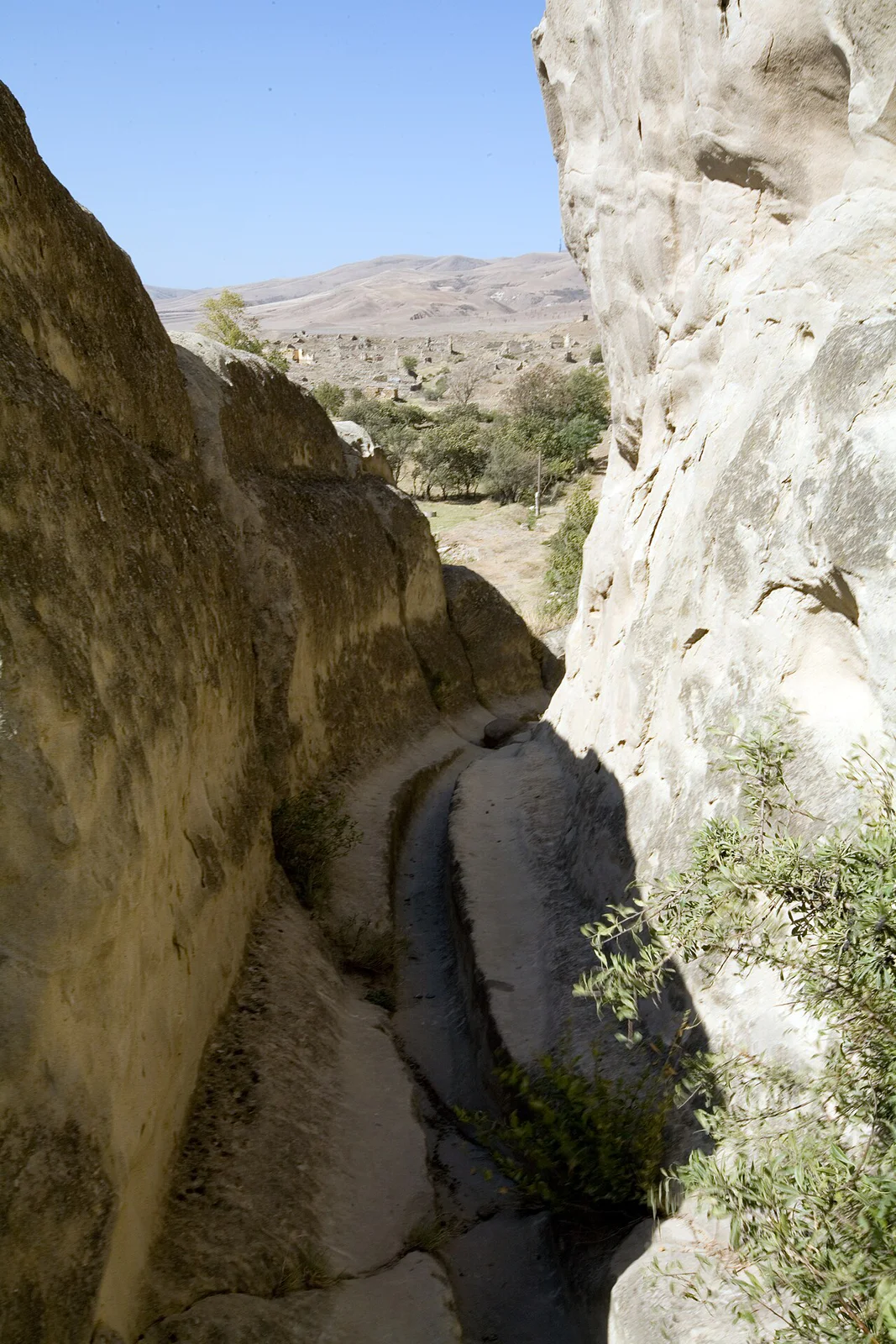
Uplistsikhe · 46 km
Uplistsikhe
Content & sources
Photo: EvgenyGenkin · CC BY-SA 3.0
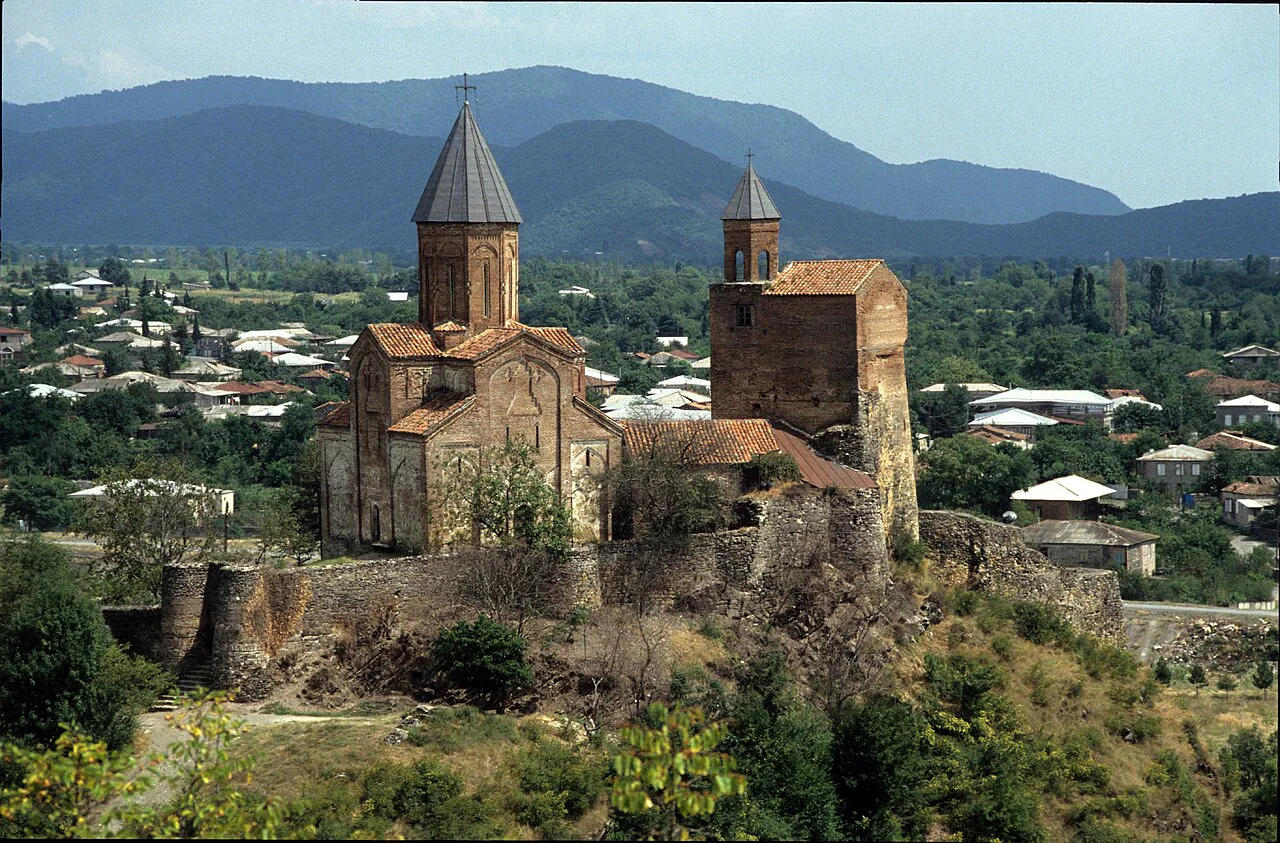
Gremi · 80 km
Gremi
Content & sources
Zangala at Georgian Wikipedia · Public domain
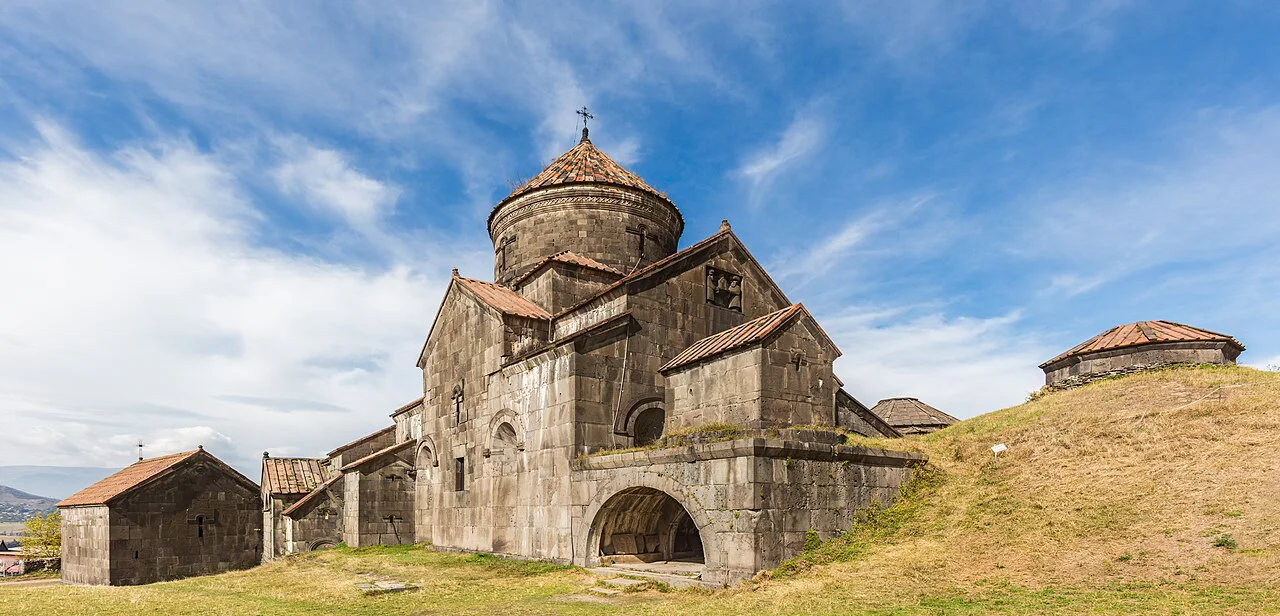
Haghpat · 83 km
Haghpat Monastery
Content & sources
Diego Delso · CC BY-SA 4.0