Stanza · Audio guide
Haghpat Monastery Audio Guide
A place to remember. A story to take with you.
Haghpat Monastery is a medieval Armenian monastery complex located in Haghpat. It was built between the 10th and 13th century and is a cultural heritage monument of Armenia.
Download Stanza, then search for “Haghpat Monastery”.
About the tour
One guide. Your kind of visit.
Haghpat Monastery is a medieval Armenian monastery complex located in Haghpat. It was built between the 10th and 13th century and is a cultural heritage monument of Armenia.
Ready when you are.
- 01Get the free Stanza app.
iOS & Android
- 02Find your guide.
“Haghpat Monastery”
- 03Download before you go.
Works offline
Audio guide / 14 narrated stops
Inside the guide
Get to know a few of the stories before you go. Open a stop to read more.
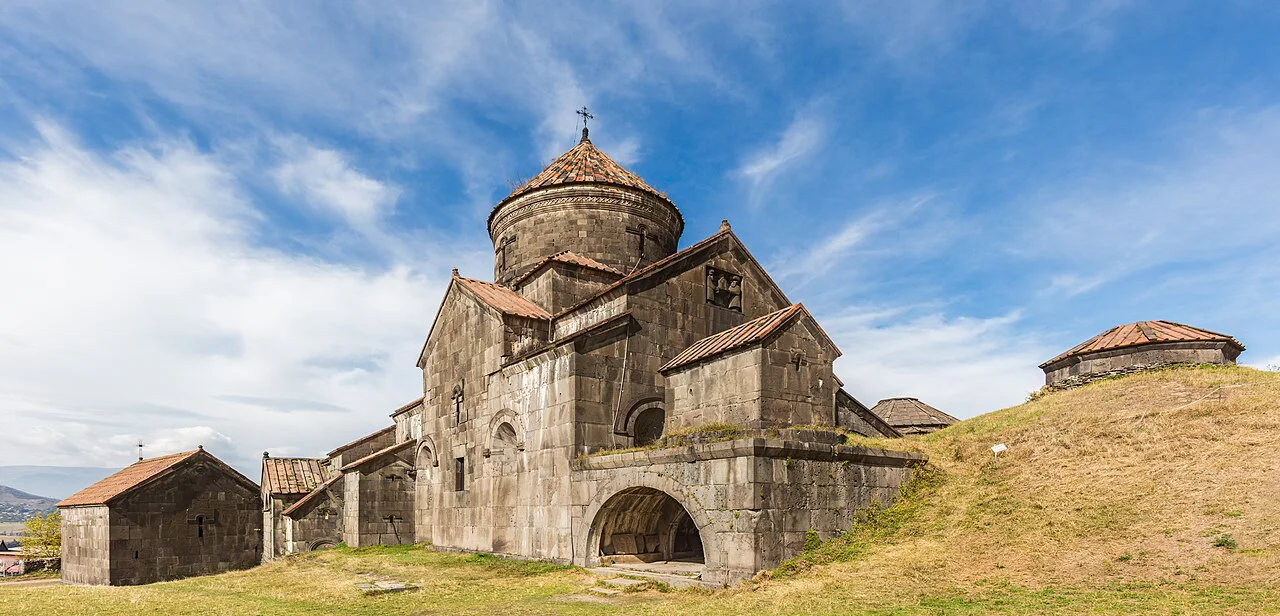
01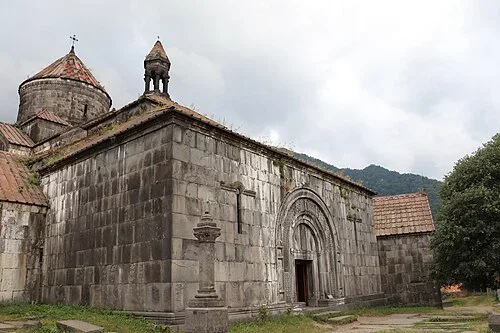 Fortified Gateway and Monastic Courtyard
Welcome to Haghpat Monastery, a medieval Armenian complex built between the tenth and thirteenth centuries. Queen Khosrovanuysh founded it around 976, as the wife of King Ashot the Third of the Bagratid house. Nearby Sanahin rose around the same time, and the two monasteries joined the UNESCO World Heritage List in 1996. The site itself was chosen with care. The monastery stands on a fertile promontory partway up a hillside, overlooking the Debed River in northern Armenia's Lori region. Builders picked the spot for protection and concealment, so the complex sits inconspicuous among the surrounding hamlets. The name carries a legend of its own. The story goes that a father tested his son's masonry by striking a newly built wall. Seeing it hold firm, he exclaimed 'Hagh pat!' — a strong wall. That, people say, is how Haghpat got its name.
Photo: Dav Sargsyan · CC BY-SA 4.0
02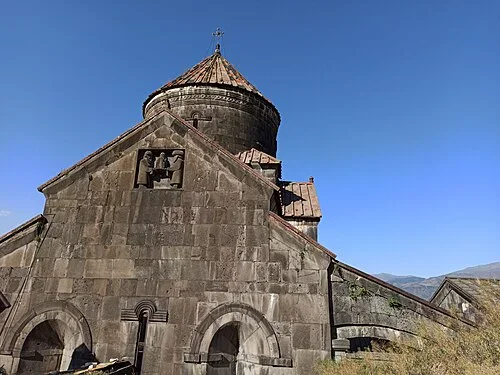 Cathedral of Surb Nshan (Holy Sign)
The largest church in the complex is the Cathedral of Surb Nshan, the Holy Sign. Queen Khosrovanuysh probably began it between 967 and 976. King Smbat the Second completed the church in 991. It is a typical example of tenth-century Armenian architecture. The central dome rests on four large pillars set into the lateral walls. From outside, the walls are dotted with triangular recesses, a pattern the stone still carries. Centuries later, the cathedral gained an unexpected resident. The tradition records that the exiled poet and musician Sayat-Nova took vows here under the name Ter-Stephanos, and served this church as its sexton in the late eighteenth century. It is under that vow name that he is remembered at Haghpat.
Photo: VardanMn · CC BY-SA 4.0
03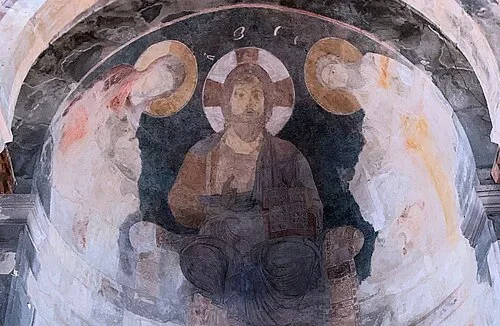 Cathedral of Surb Nshan (Holy Sign)
Deesis Fresco of Surb Nshan
Inside the cathedral, the walls still carry their medieval paint. In the apse, a fresco shows Christ Pantocrator, the all-ruler. In the semi-dome, an early thirteenth-century Deesis shows Christ flanked by his intercessors. These paintings have outlasted earthquakes and armed attacks across the building's tumultuous centuries. The southern wall holds something rarer still. There, Prince Khutulukhaga had himself portrayed in the late thirteenth century. Medieval patrons often placed their own faces into the sacred picture, and at Haghpat the practice survives in stone and pigment.
Listen in the appRobot8A · CC BY-SA 4.0
04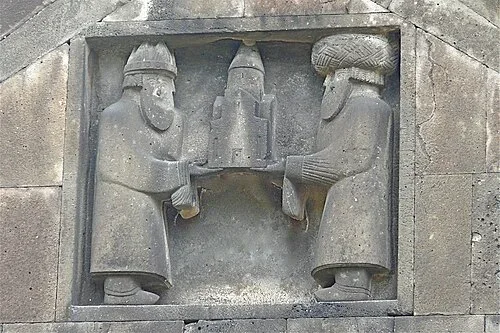 The Royal Donors Bas-Relief
On the east gable of the cathedral, two robed figures hold a model of a domed church between them. The carving shows Princes Smbat and Kurike, sons of the founders, Queen Khosrovanuysh and King Ashot the Third. The little building in their hands matches the cathedral itself, dome and all. Cut into the stone at the moment of building, it is one of the clearest images anywhere of medieval donors presenting their foundation. The patrons stand in stone exactly where their gift stands in masonry.
Listen in the appRita Willaert from 9890 Gavere, Belgium · CC BY 2.0
05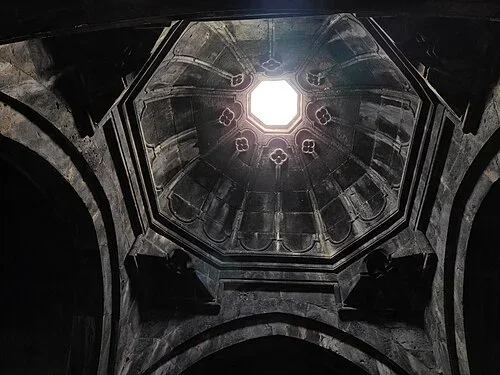 Gavit of Surb Nshan
West of the cathedral opens the gavit of Surb Nshan, built between 1210 and 1225. A gavit is a hall for gatherings, a distinctive Armenian development that grew onto the west front of churches. This one replaced an earlier funeral hall founded in 1185 by Princess Mariam, daughter of King Kiurike the Third. The builders skillfully worked her hall's eastern and western end-sections into the new structure. The roof is the marvel. Two pairs of arches cross one another overhead, resting against the church wall on the east and on free-standing columns on the west. At the crossing, a central skylight called an erdik drops light into the vast hall below.
Listen in the appPhoto: Soghomon Matevosyan · CC BY-SA 4.0
06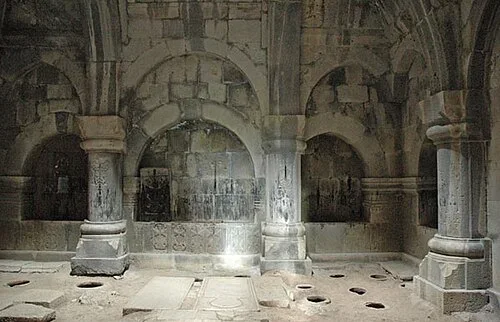 The Medieval Scriptorium and Library
The library is the intellectual heart of the monastery. The hall dates from the eleventh century and was rebuilt between 1258 and 1262. Its original wooden post-and-beam roof gave way to crossing stone arches, carried on pilasters added against the walls. An octagonal, tent-shaped skylight crowns the center. Deep niches along the walls served as bookcases, and a single entrance opens from the west. Large clay storage jars were later sunk into the floor, turning the hall into a storeroom. In its writing days, monks copied and illuminated manuscripts here, work that made Haghpat a major center of learning in the Middle Ages.
Listen in the appPhoto: Baldiri · CC BY-SA 3.0
07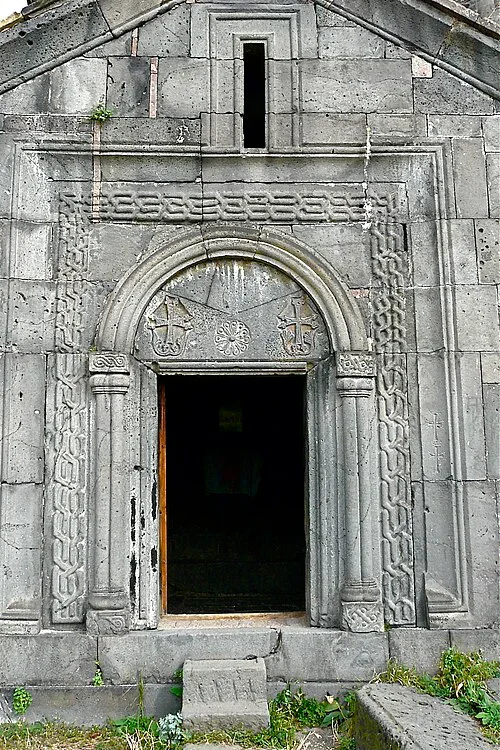 The Chapels of Surb Grigor and Surb Astvatsatsin
The smaller buildings show how the complex grew. The small domed church of Surb Grigor dates from 1005. Two side chapels were later added to it, the larger at the start of the thirteenth century, the smaller in 1257 and known as Hamazasp House. The thirteenth century also brought the chapel of Surb Astvatsatsin, whose portal carries a richly carved frame, interlace patterns framing the arched doorway. With these additions the monastery reached its final form.
Listen in the appRita Willaert · CC BY 2.0
08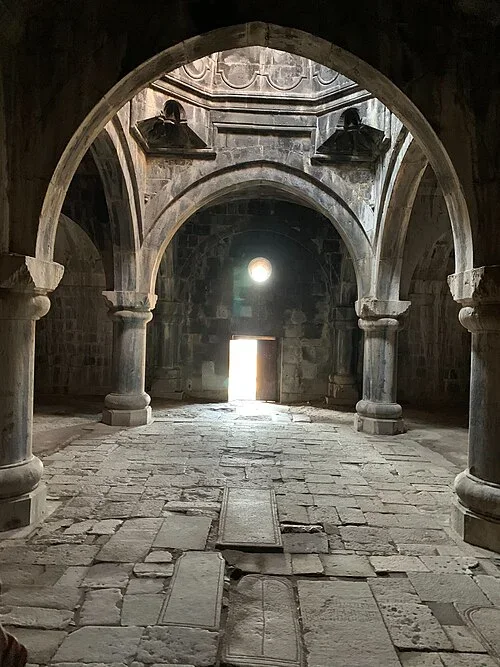 Hamazasp's Gavit (Hamazaspi Zhamatun)
North of the cathedral stands a second gavit, built in 1257 by Abbot Hamazasp of Ani. It belongs to the widespread four-pillar central type, and it is the largest of its kind, covering about 330 square meters. Attached to its east side is a tiny single-nave church of barely 20 square meters. That pairing is strange enough that scholars long treated the gavit as an independent assembly hall, overlooking the little church beside it. The hall belongs to the monastery's thirteenth-century zenith. In 1260, Armenian and Georgian forces fought alongside the Mongol troops of Hulegu at the siege of Mayyafariqin. When the city fell, the Christians were spared, and Christian relics were collected and carried back to Armenia. Many came to Haghpat, which received the hand of the Apostle Bartholomew.
Listen in the appPhoto: Robot8A · CC BY-SA 4.0
09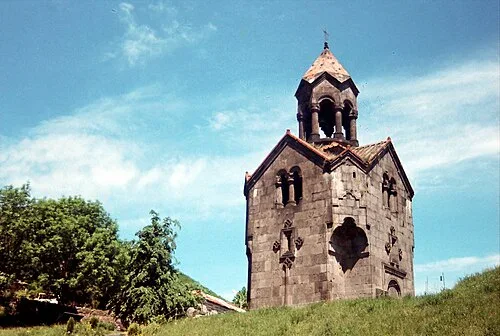 The Freestanding Three-Story Bell Tower
Standing apart from the main group, near the library's north-east corner, is the bell tower of 1245. It rises about 25 meters and counts among the earliest and finest freestanding bell towers of its kind. The two-story main mass is crowned by a columned rotunda that holds the bells. Deep niches at the corners are topped by stalactite tromps, giving the tower its light, soaring proportions. One course of stones at mid-height runs unbroken around the whole building. There the blocks interlock with toothed projections, a belt built to resist the tensile forces of an earthquake. Stone stairs climb inside from floor to floor. Two prayer chapels occupy the first story and four the second, which is why the inscriptions call the tower itself a church.
Listen in the appPhoto: Antilopa-gnu · CC BY-SA 3.0
10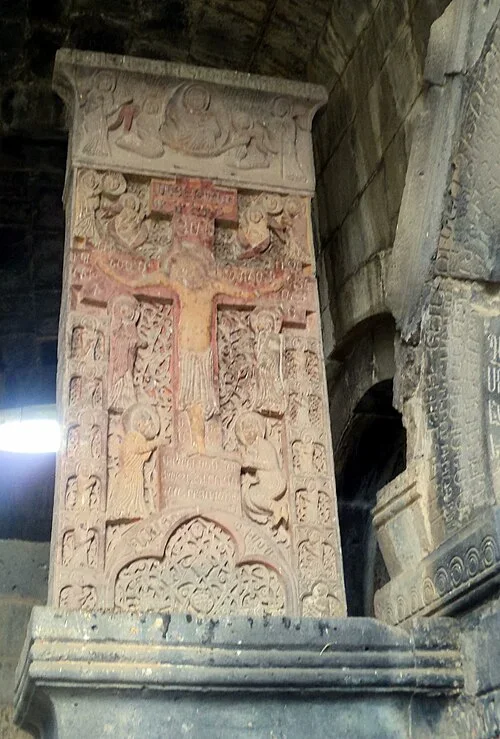 The Amenaprkich (All-Savior) Khachkar
The most famous stone at Haghpat is the Amenaprkich, the All-Savior khachkar, standing since 1273 in the gallery of the library. A khachkar is a cross-stone, a tall slab carved with a cross. Most rely on geometric and floral ornament. This one, worked in tufa, is different. Full human figures cover the stone, gathered around a detailed Crucifixion scene, Christ on the cross with mourners at its foot. Figure sculpture of this richness is rare on khachkars, and it is this carving that makes the All-Savior the best known of Haghpat's cross-stones.
Listen in the appPhoto: Armineaghayan · CC BY-SA 3.0
- 11
Khachkars of the Monastery Grounds
Faint red paint on carved saints, a clue that Haghpat's cross-stones were once in color.
- 12
The Medieval Refectory
A rare survivor among medieval monastic buildings: the hall where the brotherhood ate together every day.
- 13
The Spring Pavilion
The monastery's own waterworks: a vaulted spring house with six stone basins in a row.
- 14
Valley Overlook: Farewell to Haghpat
Nine centuries of earthquakes and attacks, and the monastery still standing whole against the mountains.
Haghpat Monastery
Frequently asked questions
How much does the guide cost?
Free app download. Listed guide price: $0.99. Guide price shown in the app. Audio guide only. Venue admission is separate.
Can I listen without internet?
Yes. Download the guide’s audio, images, and maps in the app before your visit. Your downloaded content is then available offline.
Can I listen in my language?
This audio guide is available in 15 languages, including English.
Do I need to follow a schedule?
No. This is a self-guided experience. Choose your stops, pause whenever you like, and return to a story at your own pace.
At your own pace
Explore Haghpat Monastery.
Download Stanza, then search for “Haghpat Monastery”.
Free app download · Guide price shown in the app
Keep exploring
Nearby audio guides
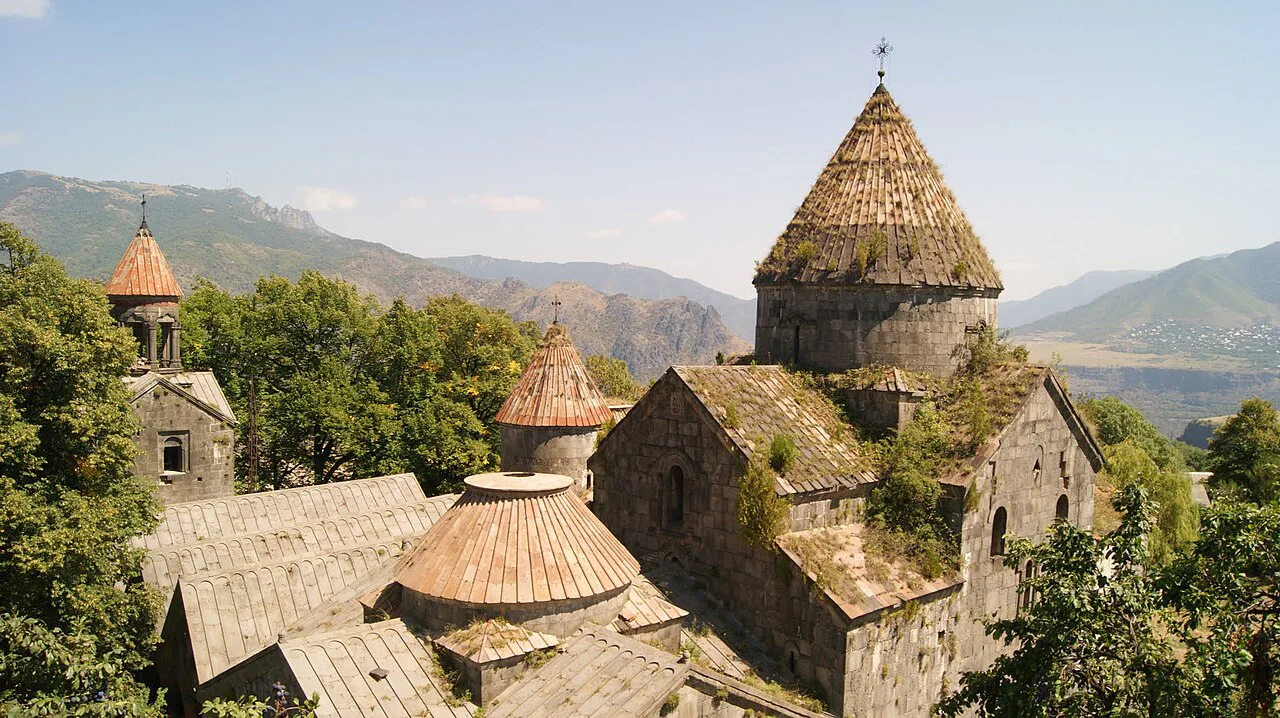
Alaverdi · 4 km
Sanahin Monastery
Content & sources
Photo: Vahag851 · CC BY-SA 3.0
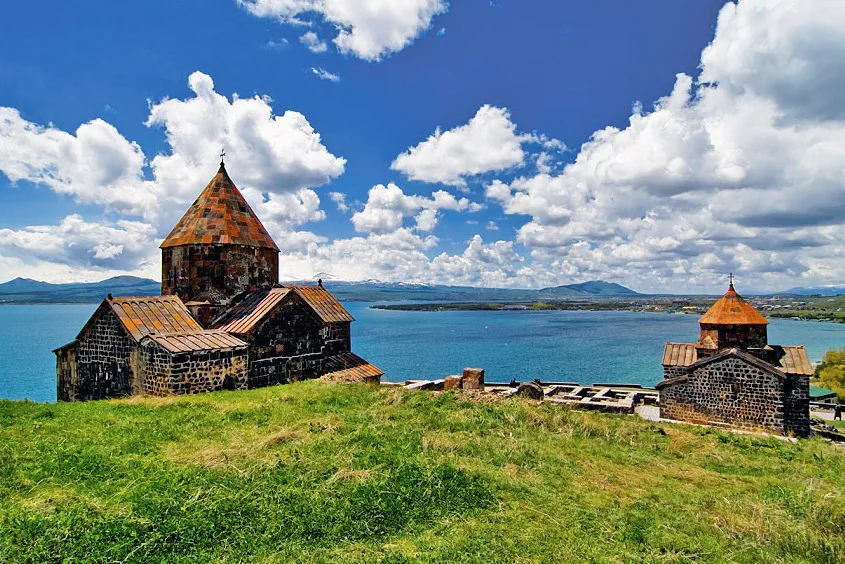
Sevan · 64 km
Sevanavank
Content & sources
Vigen Hakhverdyan · CC BY-SA 3.0
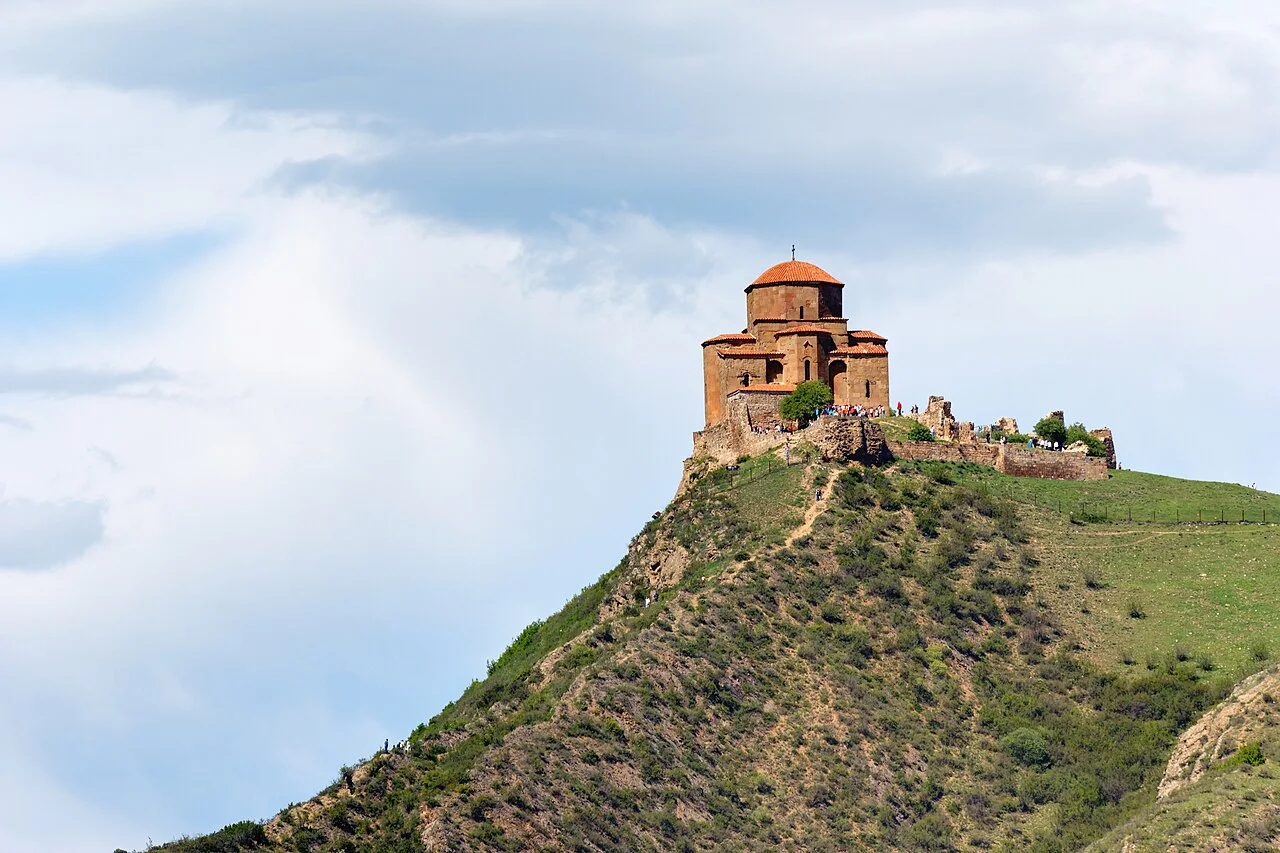
Mtskheta Municipality · 83 km
Jvari Monastery
Content & sources
Photo: Alexxx1979 · CC BY-SA 4.0
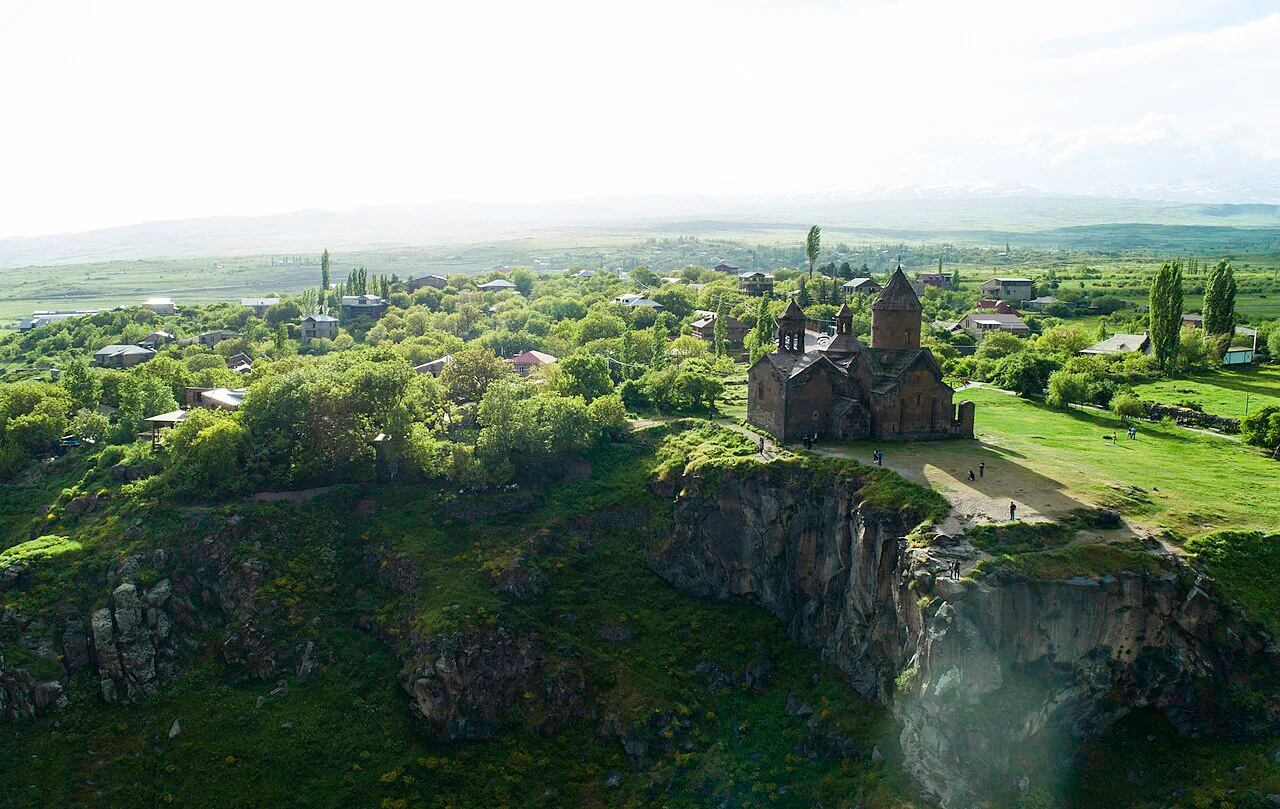
Artashavan · 84 km
Saghmosavank
Content & sources
Vahagn Grigoryan · CC BY-SA 4.0