Stanza · Audio guide
Sevanavank Audio Guide
A place to remember. A story to take with you.
Sevanavank is a monastic complex located on a peninsula at the northwestern shore of Lake Sevan in Armenia. The site is historically significant as it was originally built on an island that transformed into a…
Download Stanza, then search for “Sevanavank”.
About the tour
One guide. Your kind of visit.
Sevanavank is a monastic complex located on a peninsula at the northwestern shore of Lake Sevan in Armenia. The site is historically significant as it was originally built on an island that transformed into a peninsula following the artificial draining of the lake.
Ready when you are.
- 01Get the free Stanza app.
iOS & Android
- 02Find your guide.
“Sevanavank”
- 03Download before you go.
Works offline
Audio guide / 9 narrated stops
Inside the guide
Get to know a few of the stories before you go. Open a stop to read more.
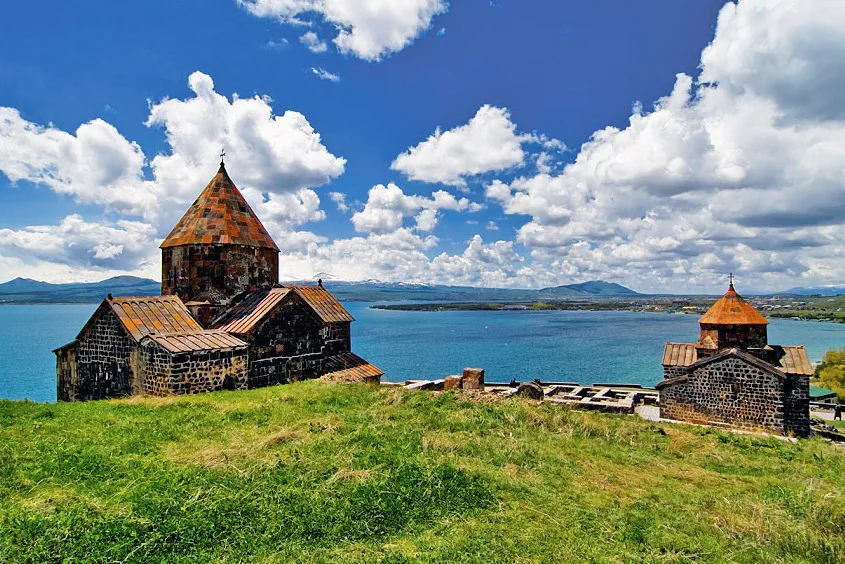
01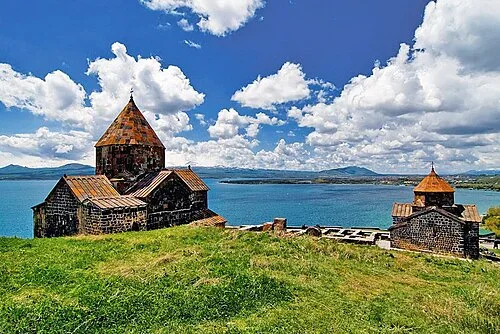 Sevan Peninsula Base and Parking Area
Sevanavank Above the Lake
Welcome to Sevanavank, a monastery of dark stone set high above Lake Sevan in eastern Armenia. Two churches stand at its heart, the Holy Apostles and the Holy Mother of God. Tradition holds that St. Gregory the Illuminator himself founded a monastery here in the year 305. The buildings that survive today are far younger, and their story comes later on this tour. What changed most dramatically was not the monastery but the water around it. Sevanavank began life on the southern shore of a small island, cut off from the mainland by open lake. In the Soviet era, under Stalin, engineers set out to drain Lake Sevan for irrigation and power. The water level fell by about twenty metres. The island joined the shore, and the monastery found itself on a peninsula. That is why the walk in today is dry, when for a thousand years the only approach was by boat. The lake is smaller than it once was, and the monastery is easier to reach. It is now one of the most visited places in Armenia.
Vigen Hakhverdyan · CC BY-SA 3.0
02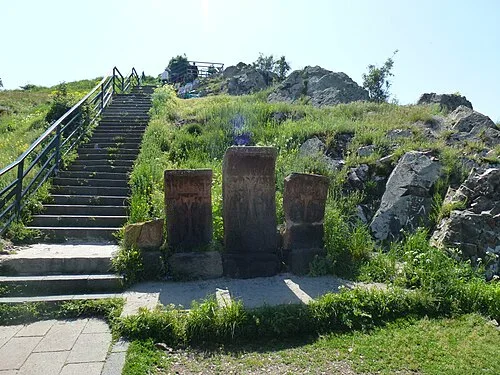 The Great Stone Staircase Climb
The Climb to the Monastery
The climb to the churches was once part of the punishment. Sevanavank was no ordinary monastery. It served mainly as a place of penance, where monks from Etchmiadzin who had sinned were sent to live out their discipline far from the world. The isolation was the point. An island in a cold mountain lake leaves very little room for temptation. In 1830 the French explorer Jean-Marie Chopin travelled through the Caucasus and visited the monastery. He wrote of a regime that restrained the monks from meat, wine, youth and women. The long climb and the wind off the water were part of that discipline. The stone steps past the cross-stones lead up the same steep hill the penitent monks once climbed.
Arman musikyan · CC BY-SA 4.0
03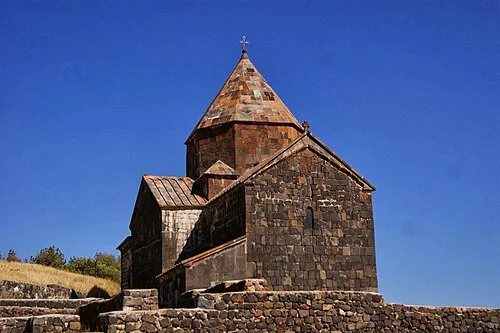 Surp Arakelots (Holy Apostles) Church
The dark walls of this church are the oldest fabric in the complex. They are built of black volcanic tufa, a stone quarried close by, which gives Sevanavank its sombre colour against the sky and water. An inscription records that the churches were founded in 874 by Princess Mariam. She was the daughter of Ashot the First, a man who became king only a decade later, and the wife of Vasak Gabur, a prince of Syunik. Her family had made this island their stronghold in the ninth century. Armenia at the time was still struggling to free itself from Arab rule, so a royal woman endowing a monastery on a remote island was an act of faith and of politics at once. The founding inscription survives on the eastern facet of the drum, the eight-sided wall beneath the dome. It has been reading out the year 874 for well over a thousand years.
Listen in the appSue Powell · CC BY-SA 2.0
04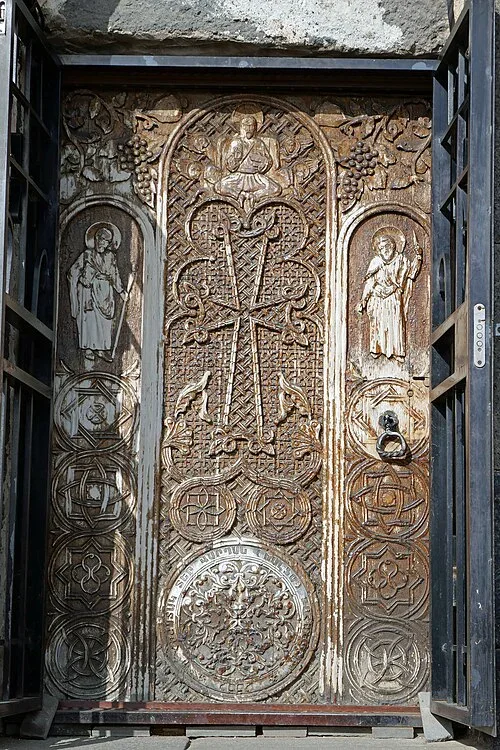 Surp Arakelots (Holy Apostles) Church
The Carved Walnut Door (1486)
Wood carving flourished here alongside the work in stone. The door of the Holy Apostles church is carved from walnut and carries the date 1486. At its top sits a figure of Christ within a carved arch. Below, the surface is a dense web of ornament: a great interlaced cross at the centre, vines and grape clusters trailing around it, and roundels of geometric knotwork filling the corners. Saints stand in arched niches along the sides, each with a halo and a book or staff. An iron ring hangs at the right for lifting the latch. Every panel was cut by hand from a single warm-brown wood, a craft tradition as refined here as the masonry around it. The carvers of Sevanavank worked in more materials than stone, as the ruins nearby make plain.
Listen in the appSue Powell · CC BY-SA 2.0
05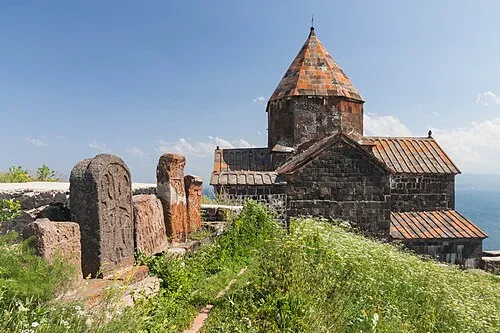 Ruined Gavit and Khachkar Sanctuary
The Ruined Gavit
The low walls and fallen stones beside the church are all that remain of the gavit, the entrance hall that once served the church as a narthex. Its roof was carried by six wooden columns, each crowned with a carved capital. The gavit was ancient, and it stood until the 1930s. When it came down, its finest pieces were saved. The carved wooden capitals were rescued and carried off to safety, and they are kept today in the State History Museum in Yerevan and in the Hermitage in St. Petersburg. They are counted among the valuable surviving examples of medieval Armenian woodcarving. Some scholars suppose the capitals were not made for the gavit at all, but brought here from some palace building. Whatever their origin, the columns that once held them left the hill, and the hall they supported never rose again.
Listen in the appMarcin Konsek · CC BY-SA 4.0
06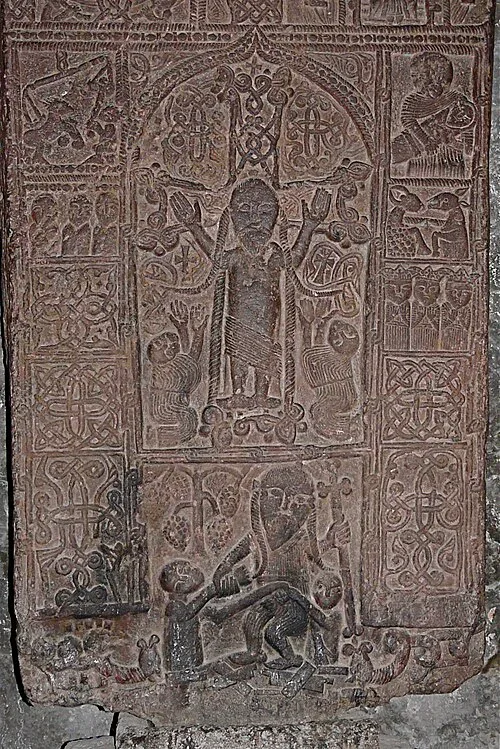 Ruined Gavit and Khachkar Sanctuary
A Khachkar Up Close
Khachkar means cross-stone, and the khachkar is Armenia's own form of memorial. A khachkar is a standing slab carved with a cross, framed by bands of ornament, raised in memory of a person or a prayer. Hundreds of them survive across the country, and several stand here among the gavit ruins. This one goes well beyond ornament. At its centre a large figure of Christ stands with arms outstretched, rendered in a folk style with wide eyes and long hair. Small figures reach up toward him, likely the donors who paid for the stone. Around the central panel run narrative scenes and rows of smaller heads, so the slab reads almost like a page of stories. Most khachkars keep to the cross and its lacework of patterns. A stone like this shows how far a carver could go when a patron asked for more.
Listen in the appRita Willaert from 9890 Gavere, Belgium · CC BY 2.0
07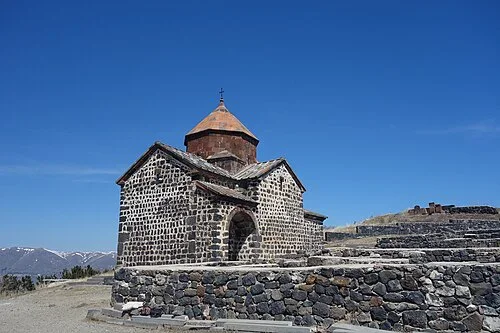 Surp Astvatsatsin (Holy Mother of God) Church
The two churches of Sevanavank are close to twins. Both stand on a cruciform plan, a cross shape marked out in the masonry, and both carry an octagonal tambour, the eight-sided drum that lifts the cone of the roof. Each is a compact building only a few metres across, small enough that a handful of worshippers fill it. The two are so alike in appearance that even the original dedication of this second church is debated. The Holy Apostles church, a short walk away, holds the founding story of Princess Mariam. This one repeats it in form rather than in words: the same dark tufa, the same tall proportions, the same cross rising against the sky. Seen together from the lake, the pair made a single unmistakable silhouette.
Listen in the appPhoto: Serein · CC BY-SA 4.0
08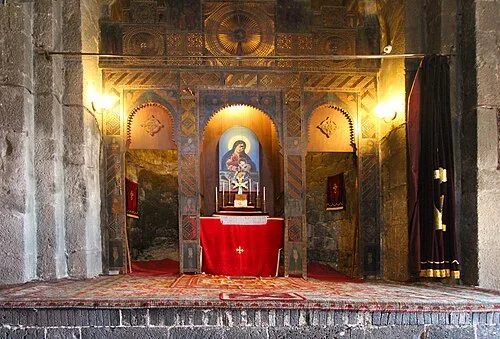 Surp Astvatsatsin (Holy Mother of God) Church
Inside Surp Astvatsatsin: A Living Altar
The altar of the Holy Mother of God church is furnished, lit and in use. A painting of the Virgin with the child Christ hangs above it, framed by carved and painted woodwork, with a red cloth spread across the altar table. This is a working church, and worship has continued here through every turn of the monastery's fortunes. The buildings were carefully restored in 1956 and 1957, after decades of neglect. Even in 1850, an explorer recorded that manuscripts were still being copied by hand at the monastery, the old monastic labour of the scriptorium carried on beside the liturgy. The same small interior that holds this quiet altar once held that quiet work.
Listen in the appPhoto: Gerd Eichmann · CC BY-SA 4.0
09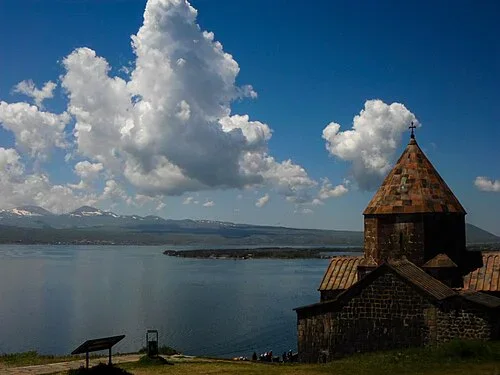 Hilltop Viewpoint of Lake Sevan
The Lake from the Hilltop
From the top of the peninsula the lake runs to the horizon, with snow-marked mountains far off under heavy clouds. It takes little to see why the builders chose this spot. A lonely island offered hardship, silence and distance, and medieval Armenians planted a monastery here precisely for that. The community endured a kingdom's fall, centuries of penitent monks, a collapsed narthex and even the lowering of the lake that reshaped its island into shore. Through all of it, the black stone kept its place above the blue water, and the prayers never stopped.
Listen in the appPhoto: Stranger81 · CC BY-SA 4.0
Sevanavank
Frequently asked questions
How much does the guide cost?
Free app download. Listed guide price: $0.99. Guide price shown in the app. Audio guide only. Venue admission is separate.
Can I listen without internet?
Yes. Download the guide’s audio, images, and maps in the app before your visit. Your downloaded content is then available offline.
Can I listen in my language?
This audio guide is available in 15 languages, including English.
Do I need to follow a schedule?
No. This is a self-guided experience. Choose your stops, pause whenever you like, and return to a story at your own pace.
At your own pace
Explore Sevanavank.
Download Stanza, then search for “Sevanavank”.
Free app download · Guide price shown in the app
Keep exploring
Nearby audio guides
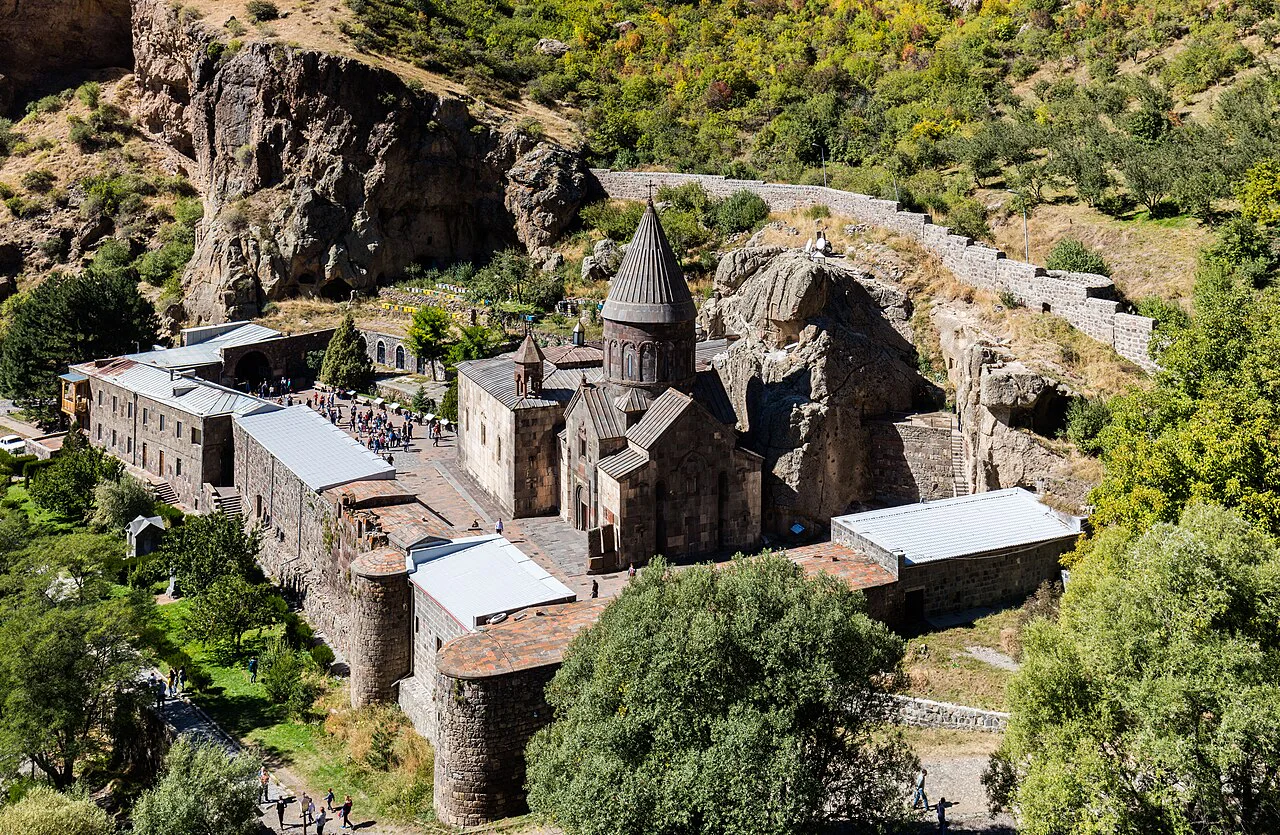
Goght · 50 km
Geghard
Content & sources
Diego Delso · CC BY-SA 4.0
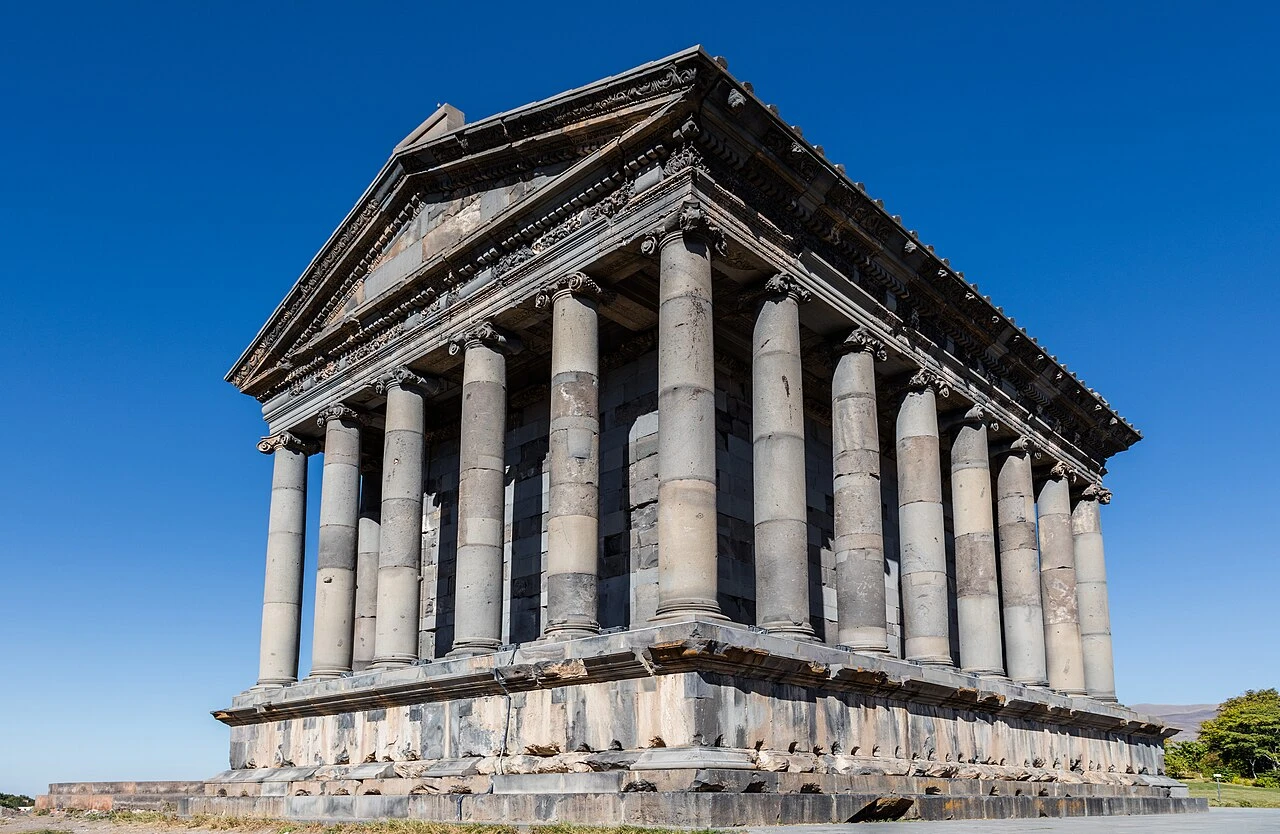
Garni · 56 km
Garni Temple
Content & sources
Diego Delso · CC BY-SA 4.0
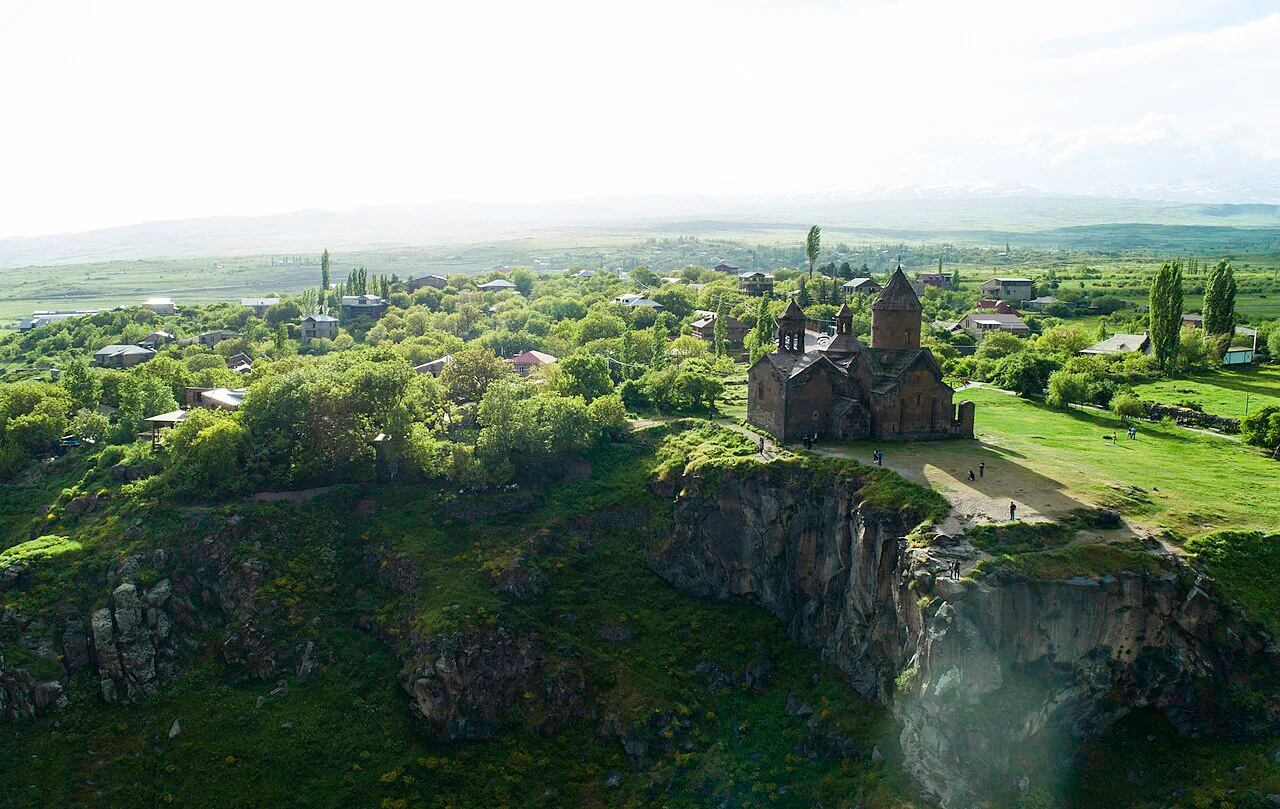
Artashavan · 56 km
Saghmosavank
Content & sources
Vahagn Grigoryan · CC BY-SA 4.0
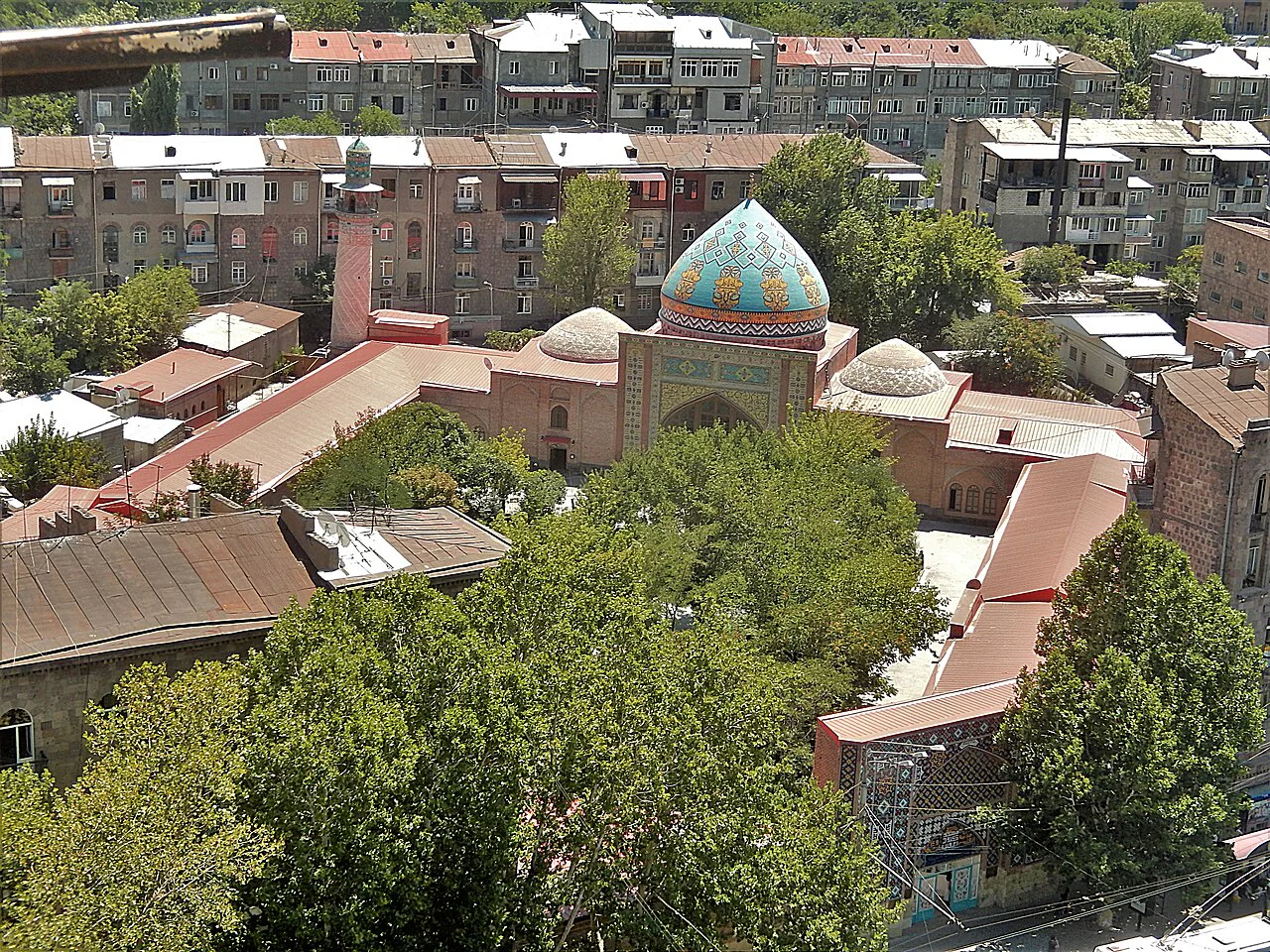
Yerevan · 61 km
Blue Mosque, Yerevan
Content & sources
Armineaghayan · CC BY-SA 4.0