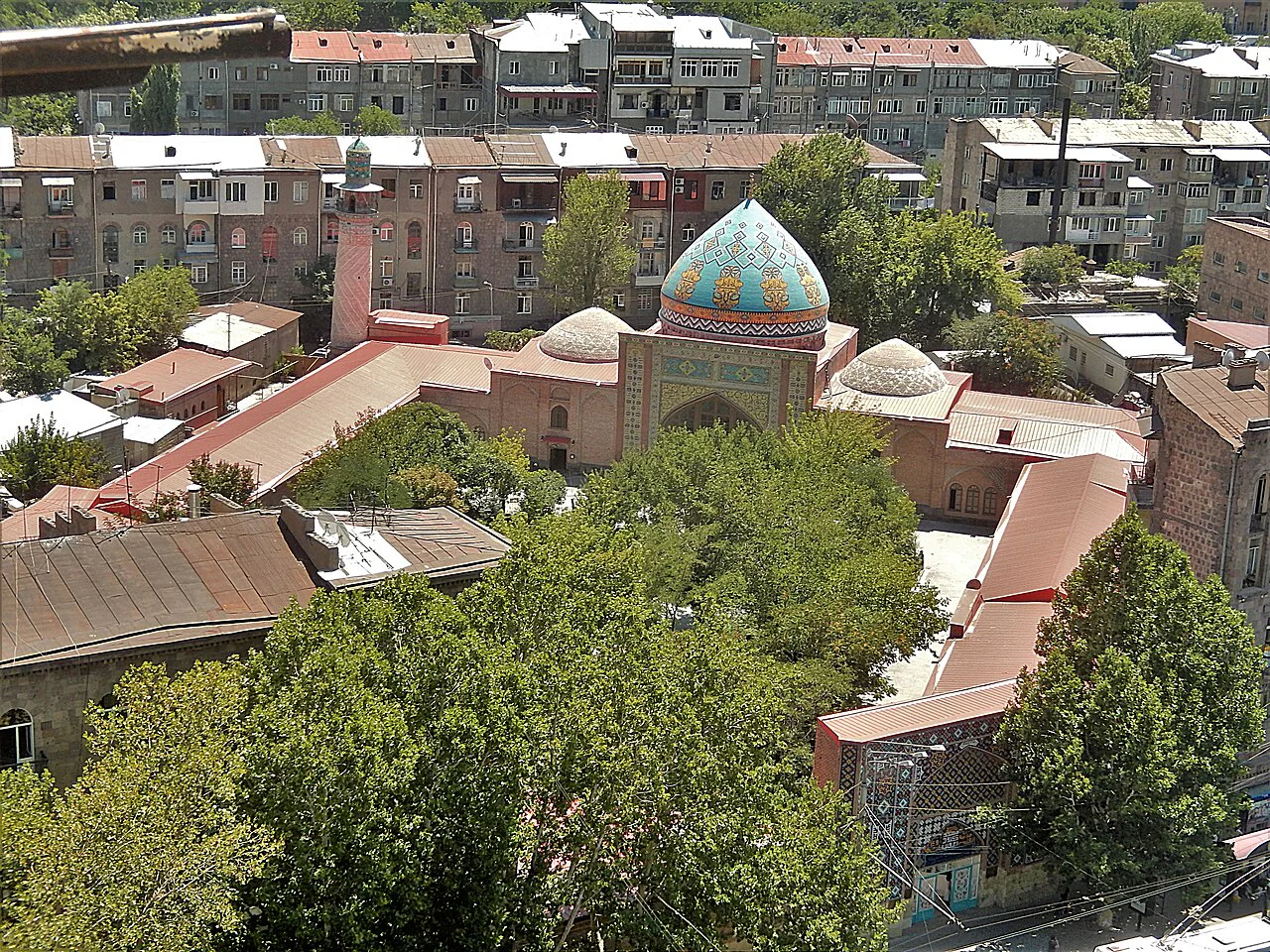
Stanza · Audio guide
Blue Mosque, Yerevan Audio Guide
A place to remember. A story to take with you.
The Blue Mosque is an 18th-century Iranian Twelver Shia mosque located in Yerevan, Armenia. It is one of the oldest extant structures in central Yerevan and the only active mosque in Armenia today.
Download Stanza, then search for “Blue Mosque, Yerevan”.
About the tour
One guide. Your kind of visit.
The Blue Mosque is an 18th-century Iranian Twelver Shia mosque located in Yerevan, Armenia. It is one of the oldest extant structures in central Yerevan and the only active mosque in Armenia today.
Ready when you are.
- 01Get the free Stanza app.
iOS & Android
- 02Find your guide.
“Blue Mosque, Yerevan”
- 03Download before you go.
Works offline
Audio guide / 8 narrated stops
Inside the guide
Get to know a few of the stories before you go. Open a stop to read more.
01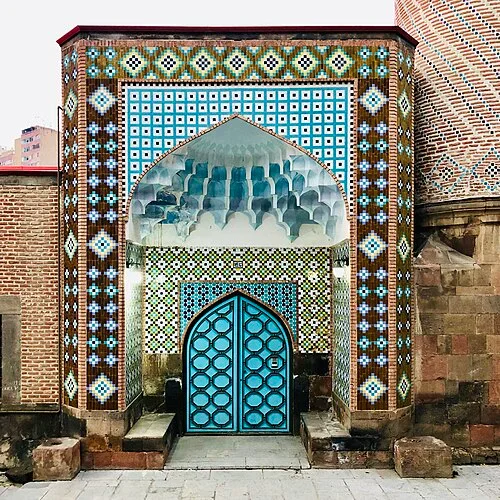 Northern Entrance Gate
The Northern Entrance from Mashtots Avenue
Welcome to the Blue Mosque, on Mashtots Avenue in central Yerevan. The doorway ahead glows with tile: diamonds and small white squares in turquoise and brown, around a vaulted niche carved into honeycombed stalactites. The door itself is a panel of turquoise lozenges, set in brick. This doorway opens onto an eighteenth-century Iranian mosque, the most significant building left from Yerevan's Iranian period. It was built in 1765 and 1766 by Hoseyn Ali Khan, ruler of the Erivan Khanate, then part of Iran, to serve as the city's main Friday mosque. In the nineteenth century it was the largest of Yerevan's eight mosques, and today it is the only active mosque in all of Armenia. One oddity meets every visitor here: the whole complex lies more than two meters below the street. That goes back to Alexander Tamanian's master plan of 1924, which fixed the grade of Mashtots Avenue around the old walls. So the way in runs downward, down a flight of steps to the courtyard level. Few buildings in central Yerevan are older.
Photo: GeoO · CC BY-SA 4.0
02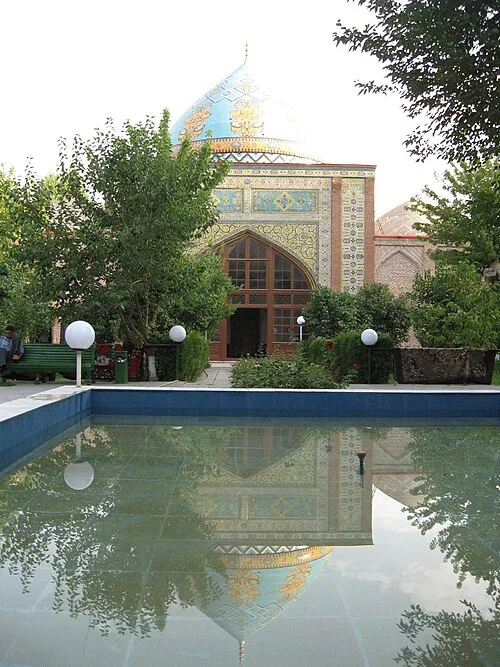 The Oasis Courtyard and Central Pool
The Courtyard, Pool and Shaded Garden
At the center of the complex lies a walled courtyard, with a rectangular pool and a rose garden around it. The whole mosque grounds cover about seven thousand square meters, and the courtyard itself measures seventy by forty-seven. Large elm and plane trees once closed over it, giving the hot, dusty city a shaded refuge. In the Soviet decades the garden took on a second life. It became a gathering place for Armenian artists and writers, and its teahouse turned into a hub of intellectual life in Yerevan. The poet Yeghishe Charents was a regular, along with the painter Martiros Saryan. Visiting authors sought it out too, among them the Russian poet Osip Mandelstam and the Armenian-American writer William Saroyan. Local artists hung exhibitions here, and the courtyard served as a laboratory for a new socialist spirituality. On a still day the pool gives that older self back: the turquoise dome and the trees mirrored in the water.
Sasha India · CC BY 2.0
03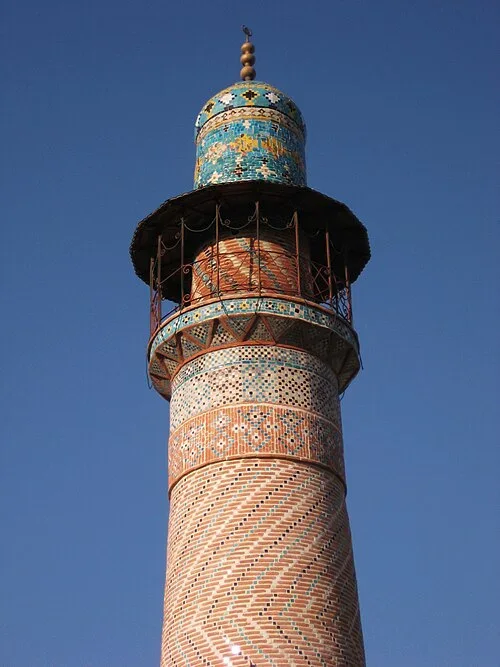 The 24-Meter Leaning Minaret
The Leaning Minaret
The minaret rises twenty-four meters, and for the whole nineteenth century it was the tallest structure in the city. It leans about seven degrees out of true, a tilt that engineers judge architecturally safe. Inside, a staircase winds up the shaft. The muezzin once climbed it five times a day to call the faithful to prayer, though the stairs are closed to visitors now. The shaft itself is dressed in stacked bands of ornament, each one different: zigzag brickwork, then geometric tile in blue and white, then more brick laid in herringbone patterns. Near the top a balcony runs around the tower, with iron railings under a small wooden roof. Above it sits a tiled cap in turquoise and gold, finished with a metal finial that catches the sky.
Listen in the appLiveon001 ©Travis Witt · CC BY-SA 3.0
04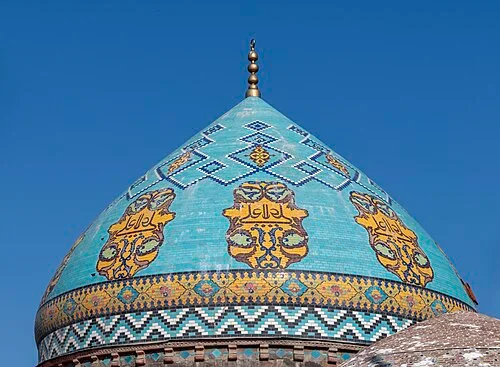 The Sky-Blue Tiled Dome
The Sky-Blue Dome and Qajar Tilework
The dome is the reason for the name. It is sheathed in turquoise tile, the blue of a clear sky, with yellow medallions of calligraphy set into the curve and a zigzag band of white, blue and yellow around its base. Armenian speakers call it Kapuyt mzkit, the Blue Mosque. Persian speakers say Masjed-e Kabud, and Western visitors of the Russian era used the Turkic name Gök Jami, which means the same thing: the sky-blue mosque. The tilework anticipates the Qajar style of early nineteenth-century Iran. The art historian Markus Ritter has called this mosque the main model for early Qajar mosque architecture. Its facade, its tile patterns, its brickwork and the layout of its prayer hall set it apart from both Sunni and Ottoman mosques. Under Russian administration, the tiles were renewed in a redecoration campaign around 1887 and 1888. The dome has been retiled since then too, so the blues overhead carry work from more than one era.
Listen in the appPetar Milošević · CC BY-SA 4.0
05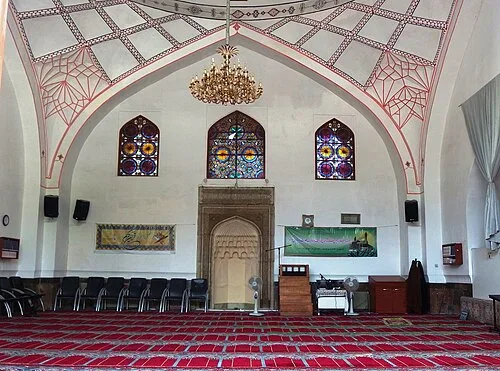 Main Prayer Hall and Mihrab
The Prayer Hall and Mihrab
Inside the prayer hall the light comes through stained glass, over a floor of red carpet and rows of chairs against the walls. At the front stands the mihrab, the arched niche that marks the direction of Mecca. Every prayer here faces it. The mosque holds three prayer halls, each with its own mihrab, along with the other traditional fittings of a Shia mosque: the minaret outside, holy inscriptions on the walls. Worship stopped here in the Soviet era and returned late. After Armenia's independence the building was renovated with support from the Iranian government, and in 1996 it reopened as a mosque. It now serves the Muslims living in Armenia, among them Iranian residents and visitors. By 2009, as many as five hundred people were attending periodically on Thursdays.
Listen in the appPhoto: Palickap · CC BY 4.0
06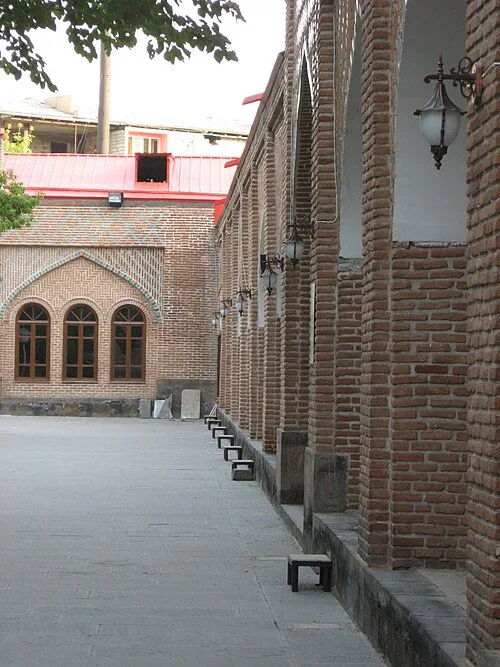 The Arched Madrasa Cells
Along the arcade runs a row of arched cells, twenty-four of them, all facing the pool. From the late eighteenth century they housed a madrasa, a school, and it was the largest and steadiest operating mosque school in Erivan. In the 1840s the German scholar August von Haxthausen visited and described what he saw. About thirty boys sat cross-legged in a row against the walls, with two teachers seated facing them, and water jugs and inkstands standing in the middle. The boys were called up two at a time to repeat their lessons. They were local Muslim children, yet the only language of instruction was Persian; they never learned to read or write their own. Their books were manuscripts, copied by hand, and mastering a foreign script could take years. The historian Tadevos Hakobyan later noted that such conditions were common to the schools attached to churches and mosques across Erivan, and that only a small share of the city's children attended any school at all.
Listen in the appSasha India · CC BY 2.0
07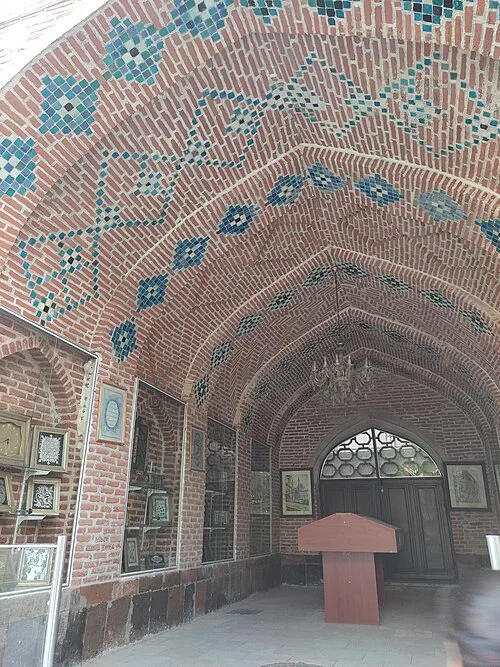 Exhibition Gallery and Cultural Center
Cultural Center and the Hafez Library
The vaulted corridor, brick above and scattered blue tile in the arches, now serves cultural life instead of study cells. In December 2015 the Armenian government leased the entire mosque complex to the Iranian embassy for ninety-nine years, to run as a cultural center. The library arrived first. It opened in October 2014, holding more than eight thousand items in Persian, and it carries the name of the poet Hafez. The cultural center draws young Armenians who come here to learn Persian, a quiet continuation of the courtyard's long life as a place of learning. In 2015 the mosque marked two hundred and fifty years since its founding, and officials of both countries spoke of putting it forward for the UNESCO World Heritage list.
Listen in the appPhoto: Մարի Ավետիսյան · CC BY-SA 4.0
08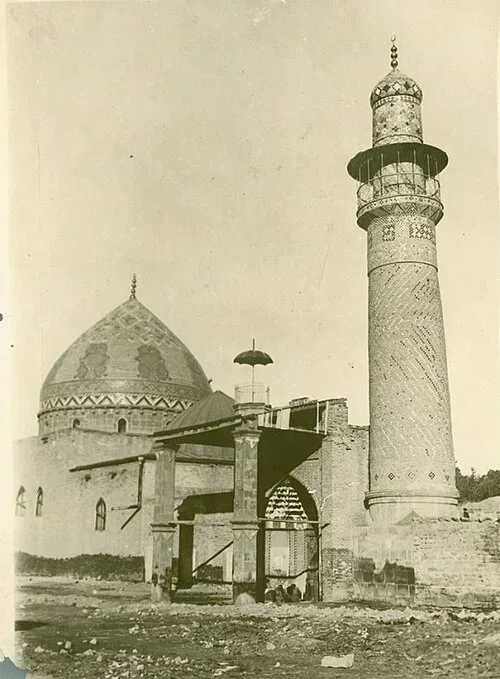 Historical Legacy and Soviet Salvation
Survival: The Historical Photograph and the Soviet Years
In the late nineteenth century, dome and minaret still stood intact above the low brick buildings, much as the founder had left them. Religious life ended here in the mid-1920s, and the Soviet years changed the building's face. The southern gate, beside the minaret, was blocked up. The western gate was absorbed into a residence and became hard to recognize as an entrance at all. Only the northern gate on Mashtots Avenue, where this tour began, was left standing as the sole way in. The halls filled with museums instead: in the 1930s the Anti-Religious Museum, then the Museum of Antifascism, and from 1936 the Museum of Natural Sciences, with a planetarium installed inside the main prayer hall, alongside the Yerevan History Museum. An adviser at the Iranian cultural center later credited the building's survival to Armenian intellectuals, above all Yeghishe Charents, the same poet who took his tea in this courtyard. In the late 1980s, during the Nagorno-Karabakh conflict, the mosque came through undamaged, regarded as Persian rather than Azerbaijani and sheltered by its role as the city's history museum. In Azerbaijan it is often claimed as Azerbaijani heritage, a reading Armenia's accounts do not share. Of the eight mosques of nineteenth-century Yerevan, this is the one that remains.
Listen in the appUnknown author · Public domain
Blue Mosque, Yerevan
Frequently asked questions
How much does the guide cost?
Free app download. Listed guide price: $0.99. Guide price shown in the app. Audio guide only. Venue admission is separate.
Can I listen without internet?
Yes. Download the guide’s audio, images, and maps in the app before your visit. Your downloaded content is then available offline.
Can I listen in my language?
This audio guide is available in 15 languages, including English.
Do I need to follow a schedule?
No. This is a self-guided experience. Choose your stops, pause whenever you like, and return to a story at your own pace.
At your own pace
Explore Blue Mosque, Yerevan.
Download Stanza, then search for “Blue Mosque, Yerevan”.
Free app download · Guide price shown in the app
Keep exploring
Nearby audio guides
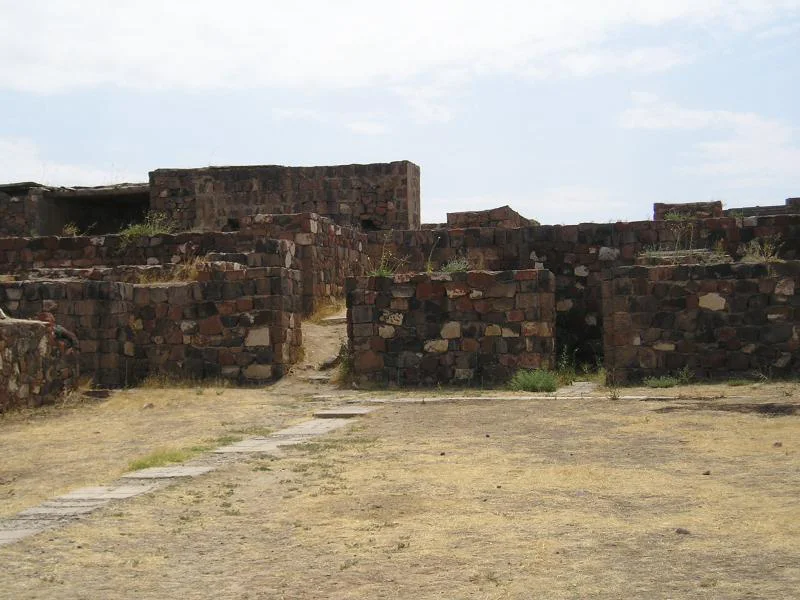
Yerevan · 5 km
Erebuni Fortress
Content & sources
Photo: Numerius Negidius · Public domain
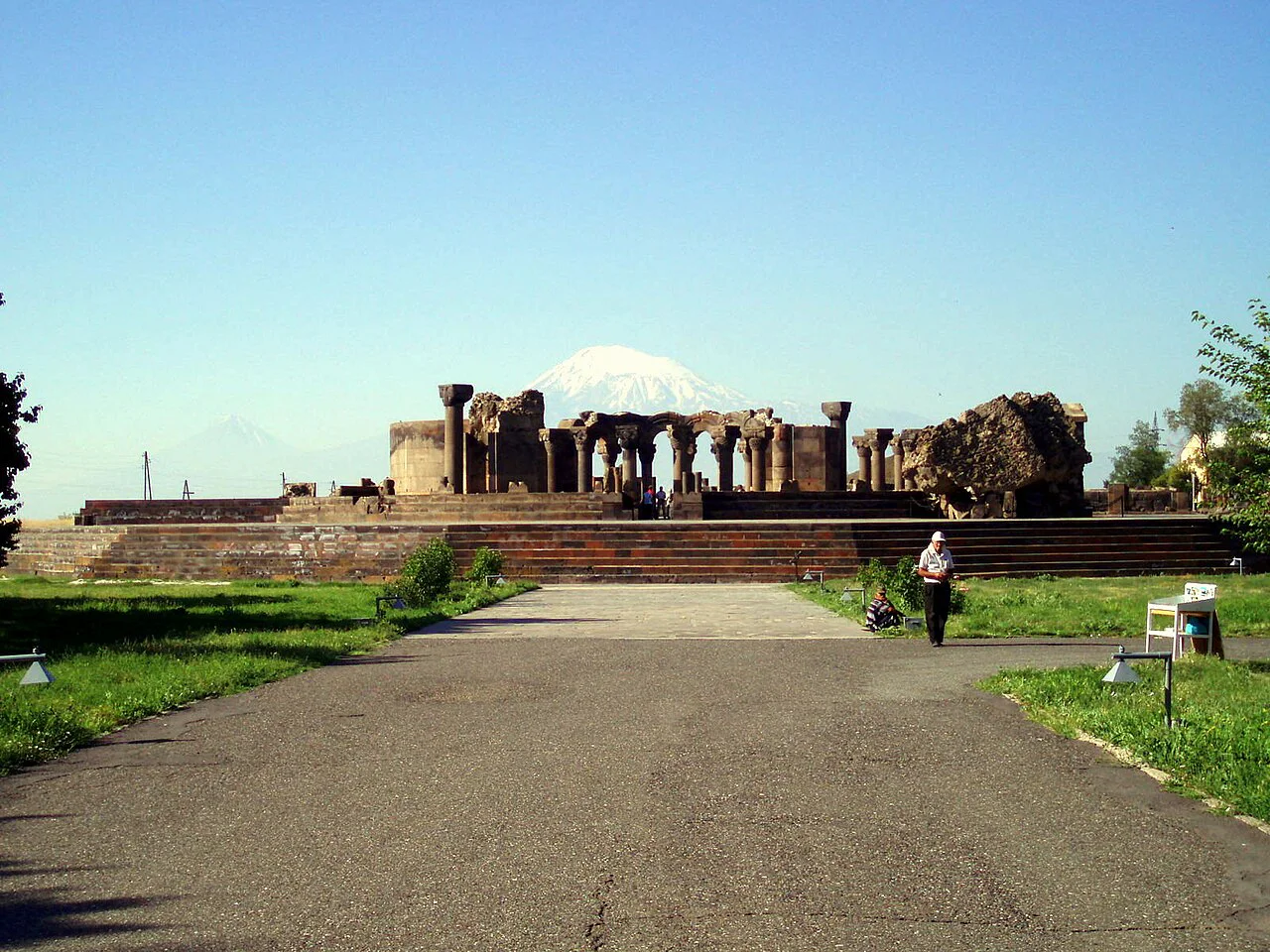
Vagharshapat · 15 km
Zvartnots Cathedral
Content & sources
DAVID HOLT · CC BY-SA 2.0
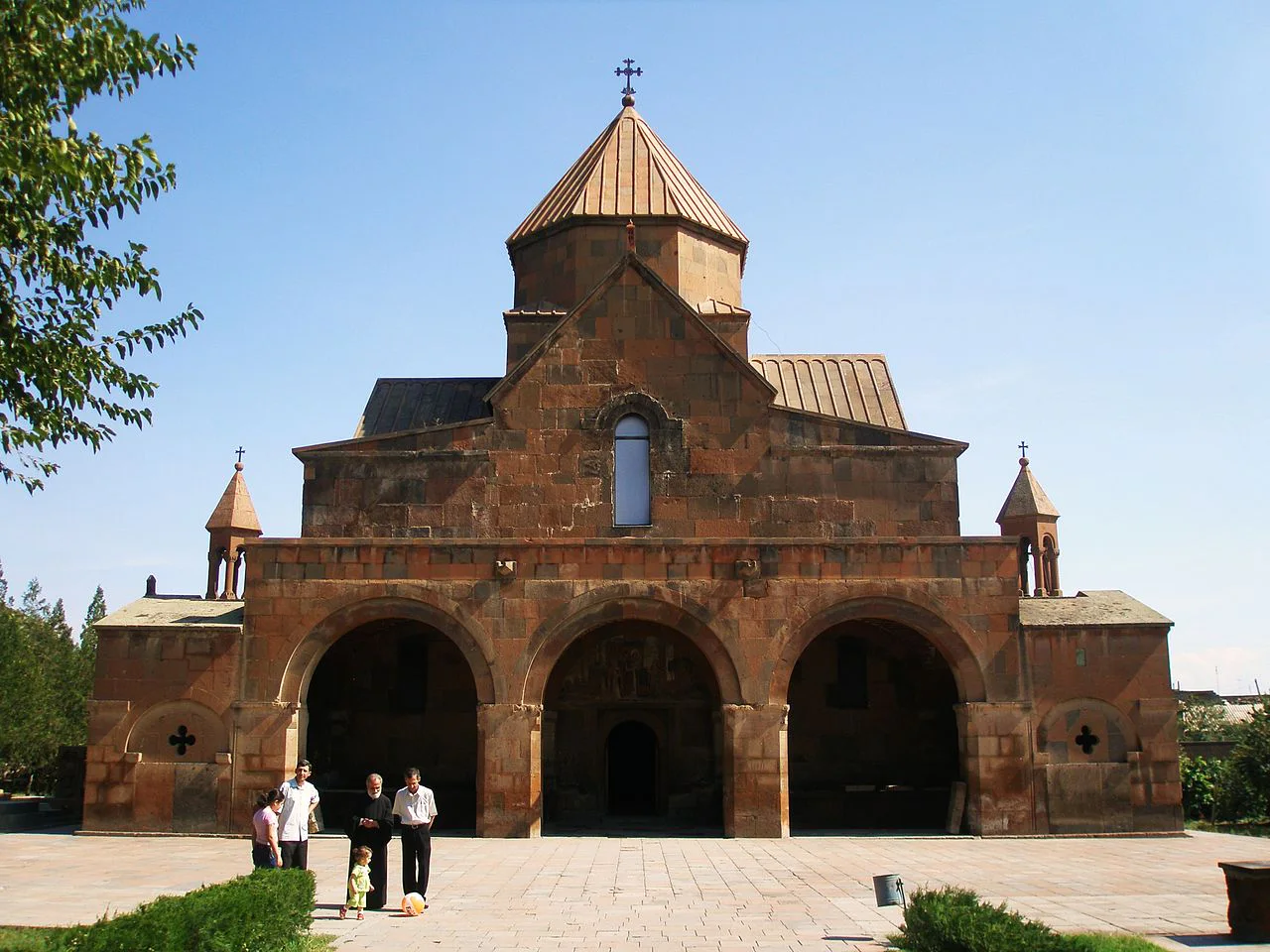
Vagharshapat · 18 km
Saint Gayane Church
Content & sources
Liveon001 © Travis K. Witt · CC BY-SA 3.0
Vagharshapat · 18 km
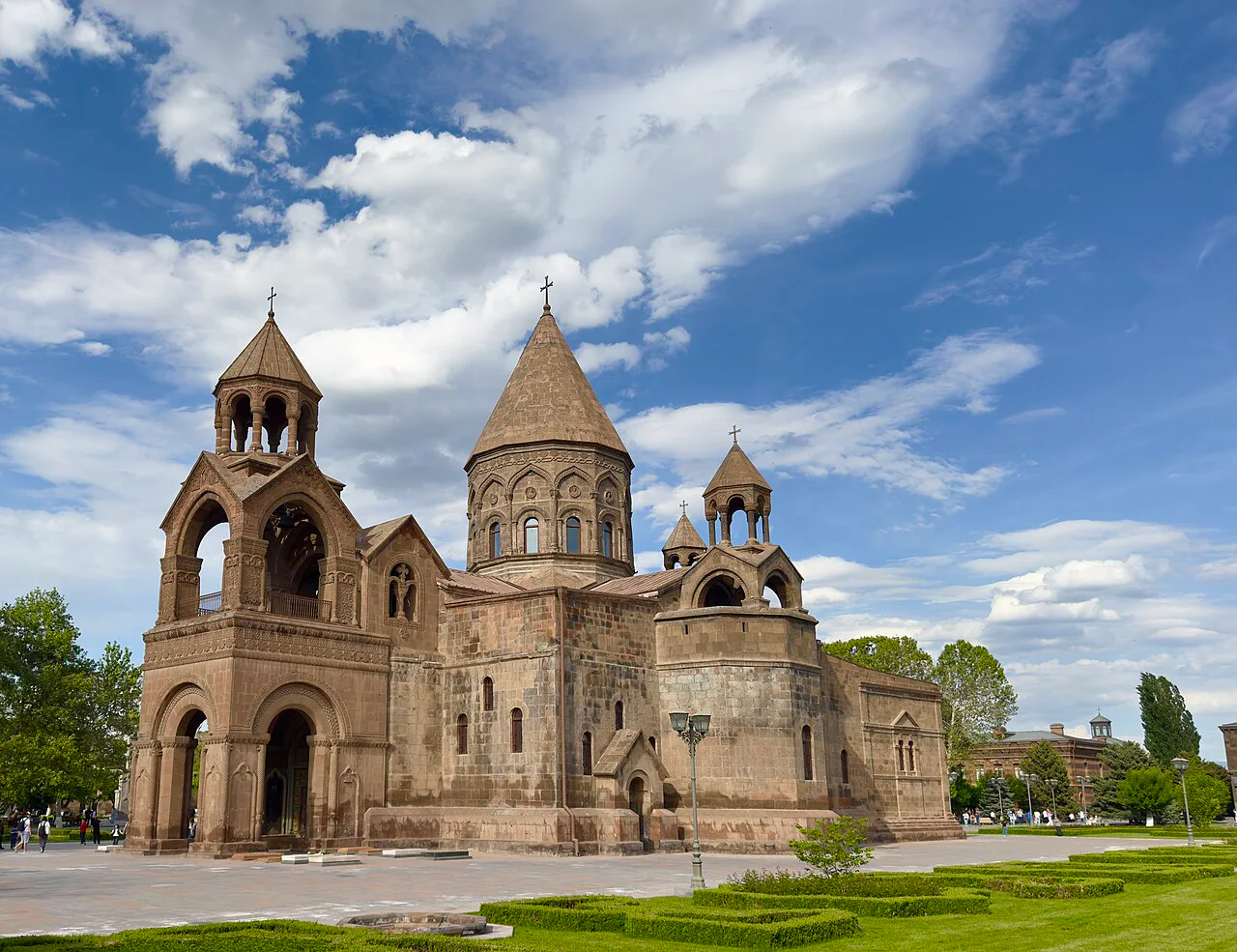
Etchmiadzin Cathedral
Content & sources
Photo: Well-read MountainMan · CC BY-SA 4.0