Stanza · Audio guide
Erebuni Fortress Audio Guide
A place to remember. A story to take with you.
Erebuni Fortress is an Urartian fortified city located in Yerevan, Armenia. It served as one of the most important political, economic, and cultural centers of the Urartian kingdom.
Download Stanza, then search for “Erebuni Fortress”.
About the tour
One guide. Your kind of visit.
Erebuni Fortress is an Urartian fortified city located in Yerevan, Armenia. It served as one of the most important political, economic, and cultural centers of the Urartian kingdom.
Ready when you are.
- 01Get the free Stanza app.
iOS & Android
- 02Find your guide.
“Erebuni Fortress”
- 03Download before you go.
Works offline
Audio guide / 13 narrated stops
Inside the guide
Get to know a few of the stories before you go. Open a stop to read more.
01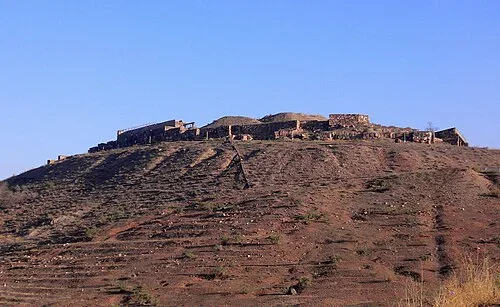 Arin Berd Hill & Museum Forecourt
Arin Berd Hill - The Fortress from Afar
Welcome to Erebuni, the ancient fortress on the hill the locals call Arin Berd. From a distance it reads as a low, flat crown of walls on a rise above the Ararat plain. That hill climbs about sixty-five meters above the surrounding ground, and everything on top of it was built by order of one man. King Argishti the First of Urartu founded the stronghold in 782 BC. He planted it here to guard the northern frontier of his kingdom and to command the fertile valley and its roads. Erebuni grew into a royal capital, an administrative and religious center for the whole region. And the name never quite left. Modern Yerevan takes its very name from Erebuni, so this unassuming hill is where the city's story starts.
Photo: Menua456 · CC BY-SA 4.0
02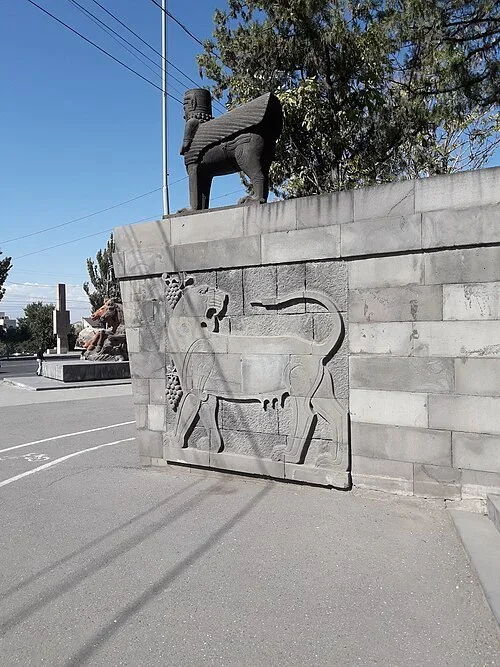 Arin Berd Hill & Museum Forecourt
Museum Forecourt Sculptures
The winged figure standing over the wall here is a modern monument, not something the excavators dug up. It echoes the guardian bulls and lions of the ancient Near Eastern world, the imagery the digs here kept turning up. Probing at the hill began back in the nineteenth century, but the real work came later. From 1950 to 1968 a joint team dug systematically into the citadel. Konstantine Hovhannisyan led it, with the Russian archaeologist Boris Piotrovsky advising on site. Season by season they exposed a palace, temples and more than a hundred rooms. The finds went on display when the Erebuni Museum opened in 1968, timed for the 2750th anniversary of Yerevan. That museum at the foot of the hill is where a visit usually starts.
Photo: Gor Tonoyan · CC BY-SA 4.0
03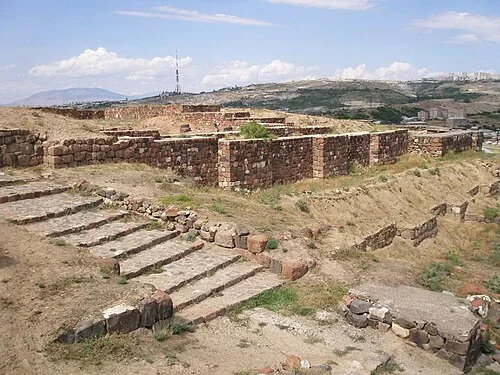 Southeastern Citadel Gate & Foundation Inscription
Southeastern Gate - The Climb to the Citadel
The easiest way up the hill has always been from the southeast, and that is where the main entrance was set. The climb leads straight toward the central yard of the citadel. The man who ordered all this was Argishti the First, and he was frank about how the city came to be. He had just conquered the lands north of Yerevan and west of Lake Sevan. His own inscriptions say he brought 6,600 prisoners of war from the lands of Khate and Tsupani to populate his new city. Those captives, men and women alike, built the walls and filled the houses. Argishti recorded it without embarrassment. For him, the deportations were part of the founding, as much as the stones.
Listen in the appLiveon001 ©Travis K. Witt · CC BY-SA 3.0
04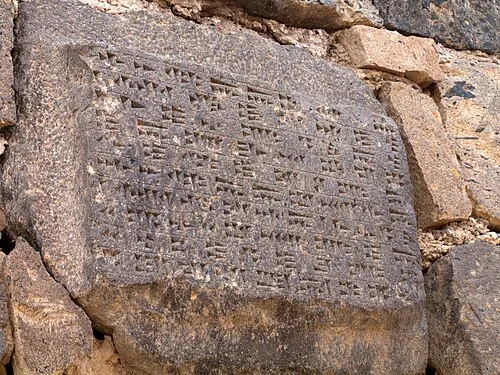 Southeastern Citadel Gate & Foundation Inscription
The Foundation Inscription - Birth Certificate of Yerevan
Carved into this dark block of basalt is the document that settled an old question. In the autumn of 1950, an expedition led by Konstantine Hovhannisyan uncovered a foundation inscription here, cut during the reign of Argishti the First. It reads, in essence: 'By the greatness of the God Khaldi, Argishti, son of Menua, built this mighty stronghold and proclaimed it Erebuni.' Then the king adds a line of pure pride: 'The land was a desert, before the great works I accomplished upon it.' The stone identified Arin Berd as the Erebuni of the ancient texts, which later finds confirmed, and it fixed the city's founding in 782 BC. Scholars also wonder about the name itself. The Urartian verb erebu-ni seems to mean to seize or capture, so some think Erebuni originally meant conquest, or victory. Several of these basalt inscriptions survive, some in the museum and some still set in the walls.
Listen in the appShaun Dunphy from Lindfield, United Kingdom · CC BY-SA 2.0
05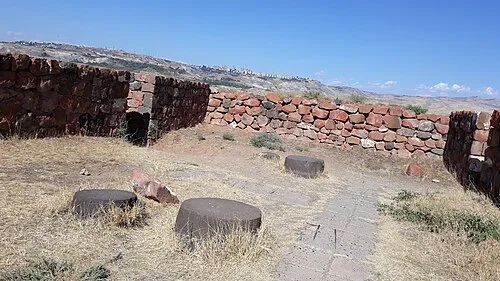 Central Parade Courtyard & Persian Apadana
Central Courtyard of the Citadel
The main gate delivered visitors into this broad open court, the ceremonial heart of the citadel. Here the personal guards of Argishti the First held their ceremonies, together with the men of the fortress garrison. This was the stage where the stronghold's military and administrative life played out, day after day. The round stone bases set into the ground mark where columns once stood, holding up roofed colonnaded spaces around the court. Behind the low walls you can trace how the buildings were divided off by central and inner walls. In Urartian times the space would have been busy with soldiers, officials and messengers moving between the palace, the temples and the storerooms.
Listen in the appPhoto: Նաիրա87 · CC BY-SA 4.0
06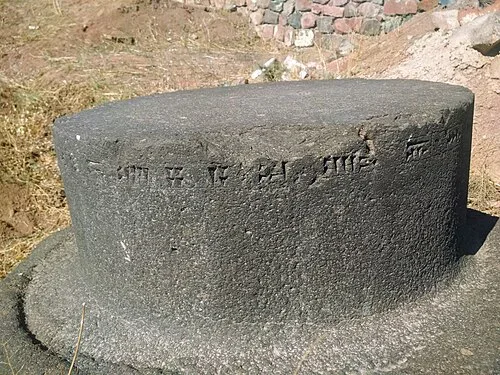 Central Parade Courtyard & Persian Apadana
Column Base of the Persian Era
This dark basalt column base carries incised marks on its side, and it speaks to the citadel's second life. The Urartian state collapsed in the early sixth century BC, worn down by constant invasion. The region fell to the Achaemenid Persians, but Erebuni's position did not lose its value. It became an important center of the satrapy of Armenia. In the sixth and fifth centuries BC, part of the fortress was rebuilt. The builders raised a columned apadana, a Persian-style reception hall, and a temple for fire worship. They adapted the standing Urartian structures rather than sweeping them away. So Persian authority settled into Urartian walls, and the citadel kept working under new masters.
Listen in the appPhoto: Ավետիսյան91 · CC BY-SA 4.0
07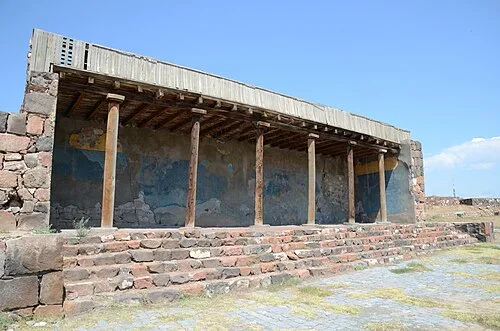 Temple of the God Khaldi & Sacred Frescoes
Temple of the God Khaldi - The Colonnaded Portico
In the southwest corner of the citadel stood the temple of Khaldi, the supreme god of Urartu. The plan is a long oblong hall, with a staircase that climbed to the roof of a ziggurat-type tower and a side room on the lower floor. Around the hall ran an open portico, a double row of twelve columns, with benches along the walls where people could sit. At the left wall stood the altar for sacrifices. One detail sets the temple apart from everything else in the citadel. Its floor was made of small wooden planks, while the other rooms had clay floors faced with stone slabs. The portico standing today is a reconstruction, raised on the excavated foundations.
Listen in the appPhoto: Ecritures · CC0
08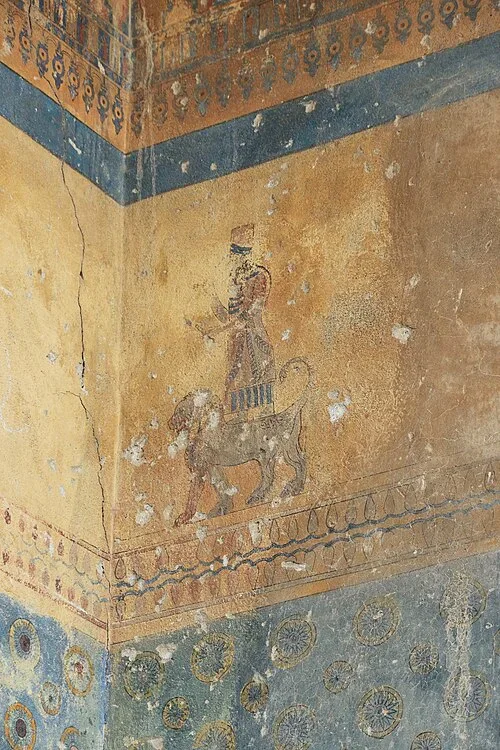 Temple of the God Khaldi & Sacred Frescoes
The God on the Lion - Wall Paintings of Erebuni
The figure on this wall is the god Khaldi himself, shown standing on a lion. He holds a warder in his left hand, and a horned crown sits on his head. It is a typical image of Khaldi, matching representations found at other Urartian sites. What you see now is a modern reproduction, repainted after the original fragments came out of the ground. Those fragments preserved a remarkable range. There were processions of gods, sacred animals and trees of life on the religious walls. Other rooms showed everyday scenes of hunting, cattle breeding and agriculture. Inner walls across the citadel were richly decorated like this, which says a great deal about the wealth of the place. Wall paintings this old rarely survive anywhere in the ancient Near East.
Listen in the appMarcin Konsek · CC BY-SA 4.0
09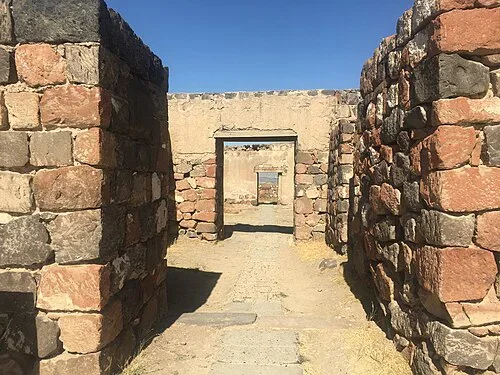 Royal Palace of King Argishti I
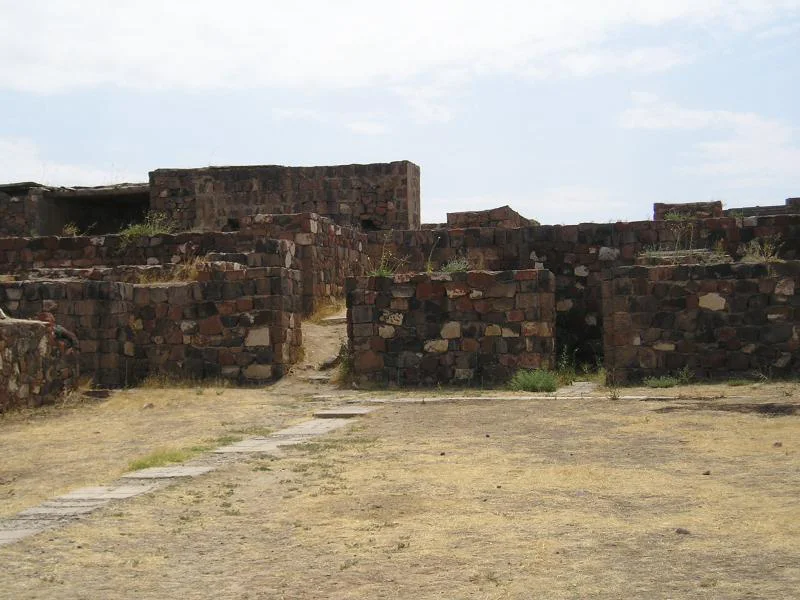
Argishti built himself a grand palace here, and his successors kept using it. Successive Urartian kings made Erebuni their residence during military campaigns against invaders from the north. Two of them, Sarduri the Second and Rusa the First, staged new wars of conquest northward from this very base. The excavated complex gives a sense of its scale. There was a colonnaded royal assembly hall, temples, garrison quarters, dormitories and storerooms, more than a hundred rooms in all. These aligned stone doorways show how the corridors ran from one suite to the next. This was both a home for the king and a headquarters where the affairs of a frontier province were decided.
Listen in the appPhoto: AKB7 · CC BY-SA 4.0
10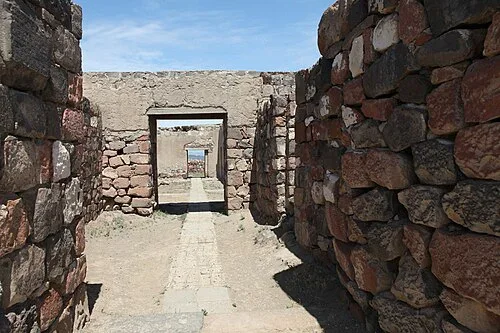 Royal Palace of King Argishti I
Storerooms of the Citadel
A fortress full of soldiers and officials has to be fed, and the storerooms of the citadel show how it was done. The excavations brought out enormous ceramic jars, known as karas, used for wine and for oil. The big ones were buried halfway into the soil, which kept the contents naturally cool. Near the top of each jar, small circular markings were pressed into the clay to show how much it could hold. Smaller vessels found in the digs were used in brewing beer from barley. Alongside them came pottery, drinking vessels and other ordinary household finds. Provisioning a hilltop citadel was a serious business, and the Urartians engineered it down to the gauge line.
Listen in the appPhoto: Menua456 · CC BY-SA 4.0
- 11
Susi Temple - Shrine of the Foreign God Ivarsha
A temple built for a god nobody in Urartu had heard of, honoring the king's western warriors.
- 12
The Ramparts - Basalt and Mudbrick Engineering
How the ramparts were engineered: a basalt plinth carrying massive walls of mudbrick.
- 13
Ararat Overlook - What Erebuni Left Behind
Why Erebuni was never burned, and how its walls and frescoes survived under the earth.
Erebuni Fortress
Frequently asked questions
How much does the guide cost?
Free app download. Listed guide price: $0.99. Guide price shown in the app. Audio guide only. Venue admission is separate.
Can I listen without internet?
Yes. Download the guide’s audio, images, and maps in the app before your visit. Your downloaded content is then available offline.
Can I listen in my language?
This audio guide is available in 15 languages, including English.
Do I need to follow a schedule?
No. This is a self-guided experience. Choose your stops, pause whenever you like, and return to a story at your own pace.
At your own pace
Explore Erebuni Fortress.
Download Stanza, then search for “Erebuni Fortress”.
Free app download · Guide price shown in the app
Keep exploring
Nearby audio guides
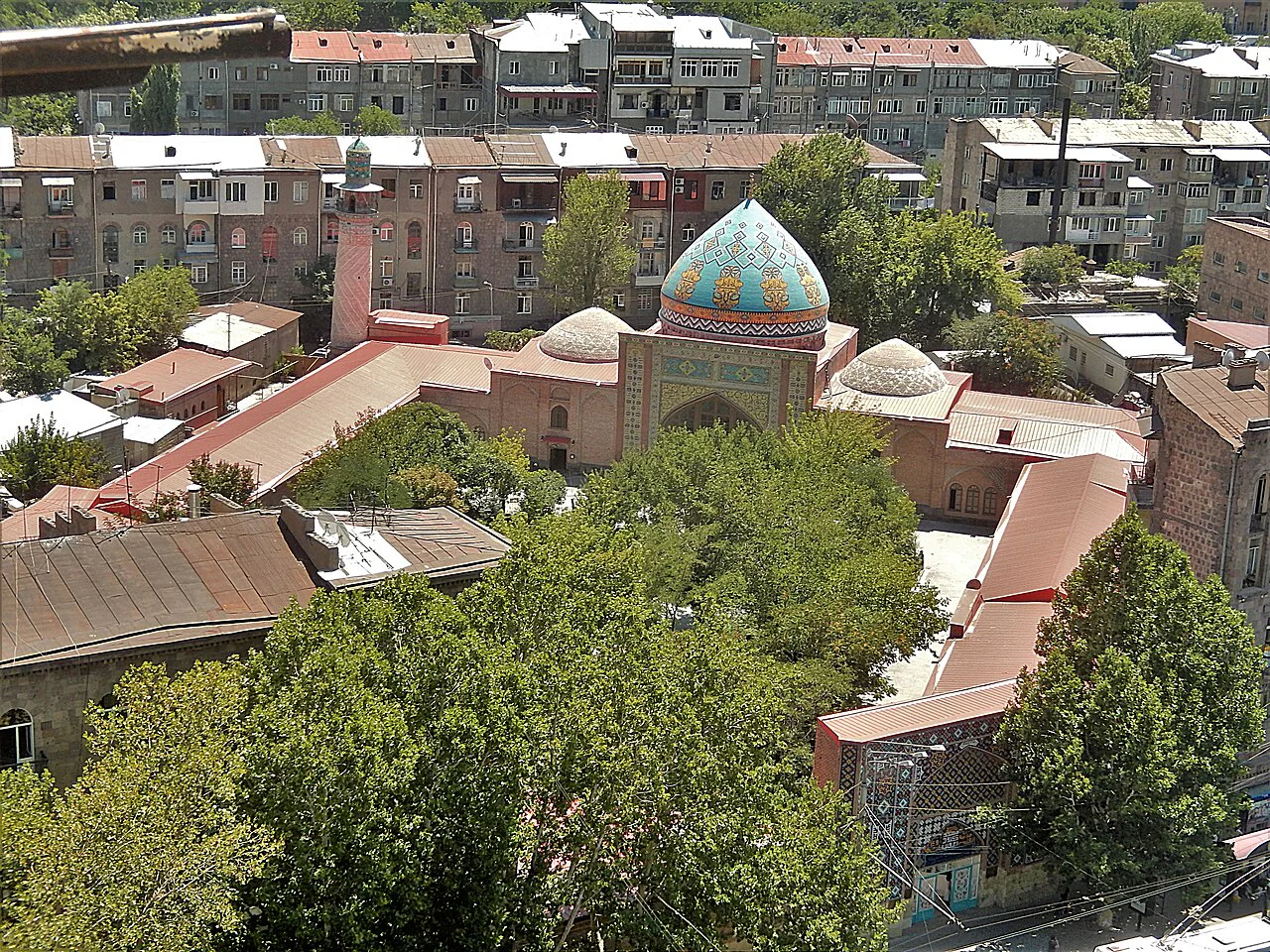
Yerevan · 5 km
Blue Mosque, Yerevan
Content & sources
Armineaghayan · CC BY-SA 4.0
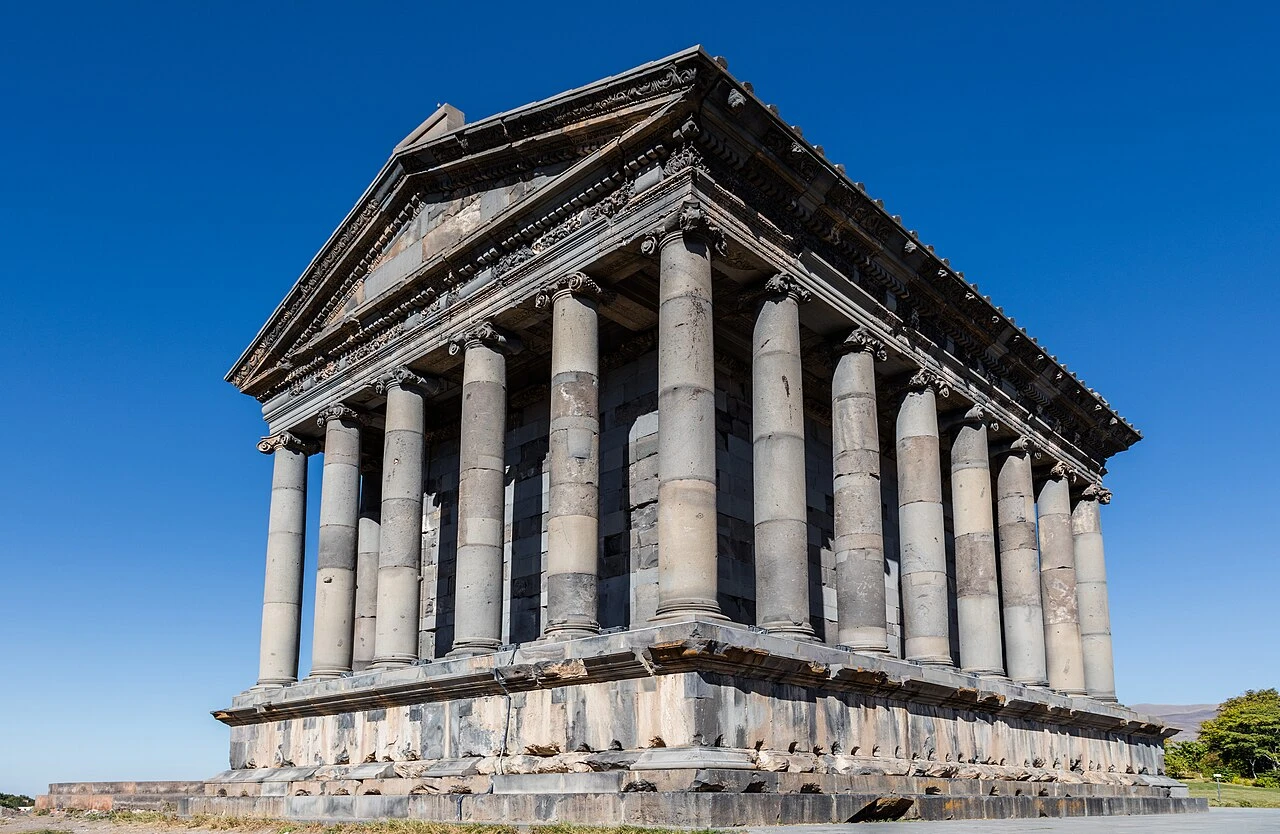
Garni · 17 km
Garni Temple
Content & sources
Diego Delso · CC BY-SA 4.0
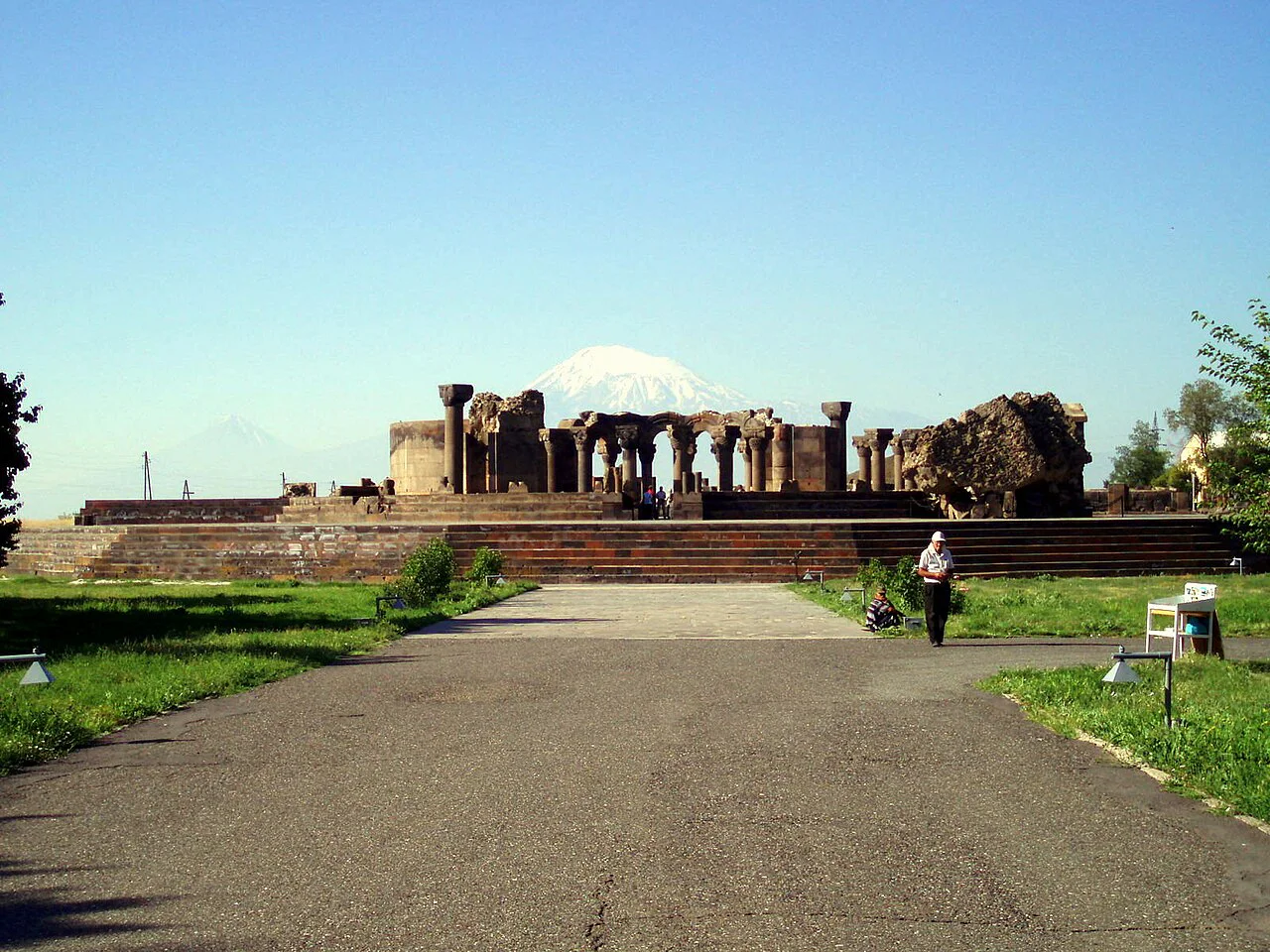
Vagharshapat · 17 km
Zvartnots Cathedral
Content & sources
DAVID HOLT · CC BY-SA 2.0
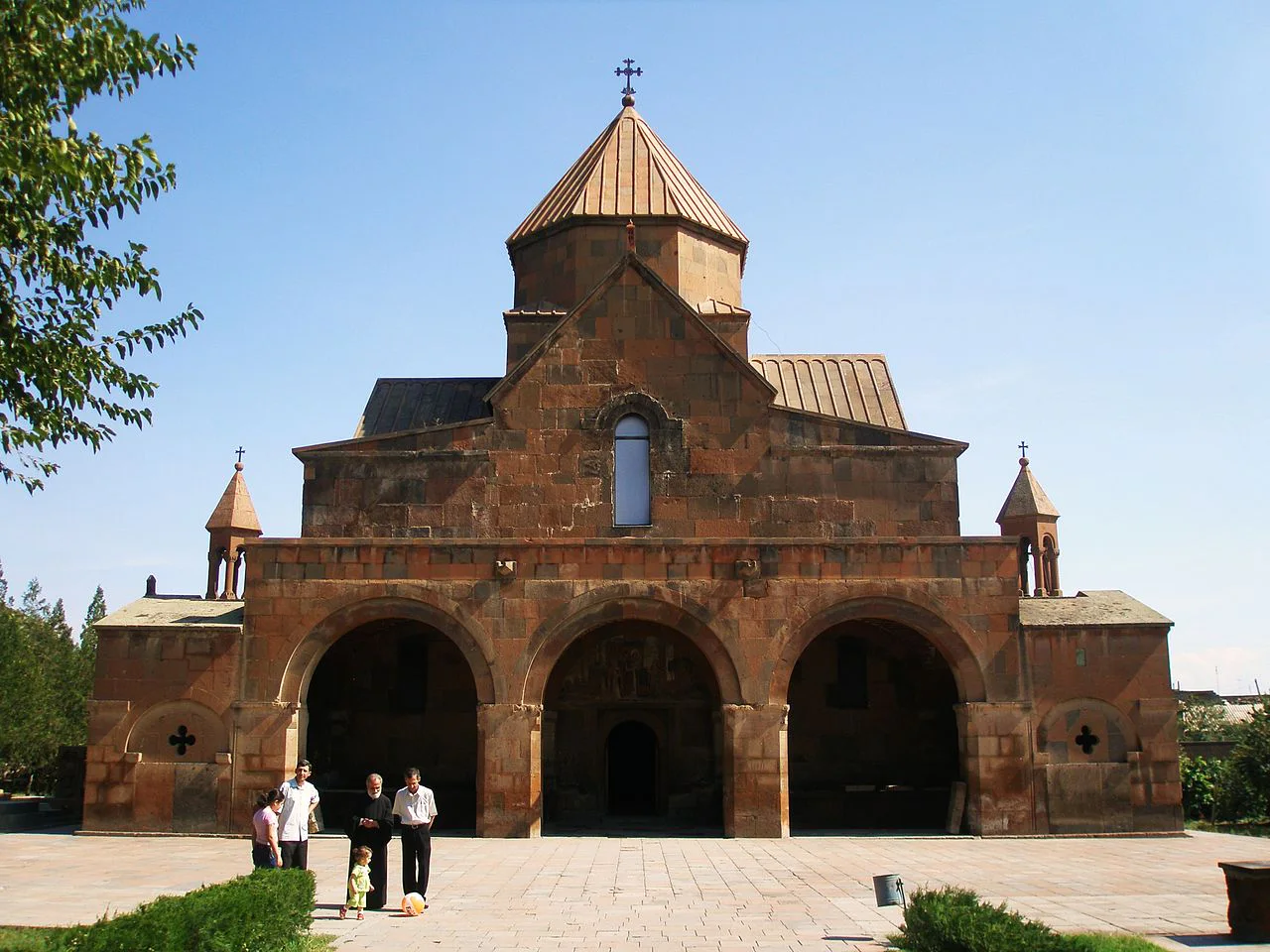
Vagharshapat · 21 km
Saint Gayane Church
Content & sources
Liveon001 © Travis K. Witt · CC BY-SA 3.0