Languages
15Gedenkstätte Berliner Mauer Audio Guide
Gedenkstätte Berliner Mauer is an archaeological site in Berlin, Germany. Explore it with Stanza's guided offline audio tour — narrated in 15 languages.
Quick Facts
26
Stops
15
Languages
100%
Offline
📍 Berlin, Germany · 52.5350°N, 13.3897°E
About Gedenkstätte Berliner Mauer
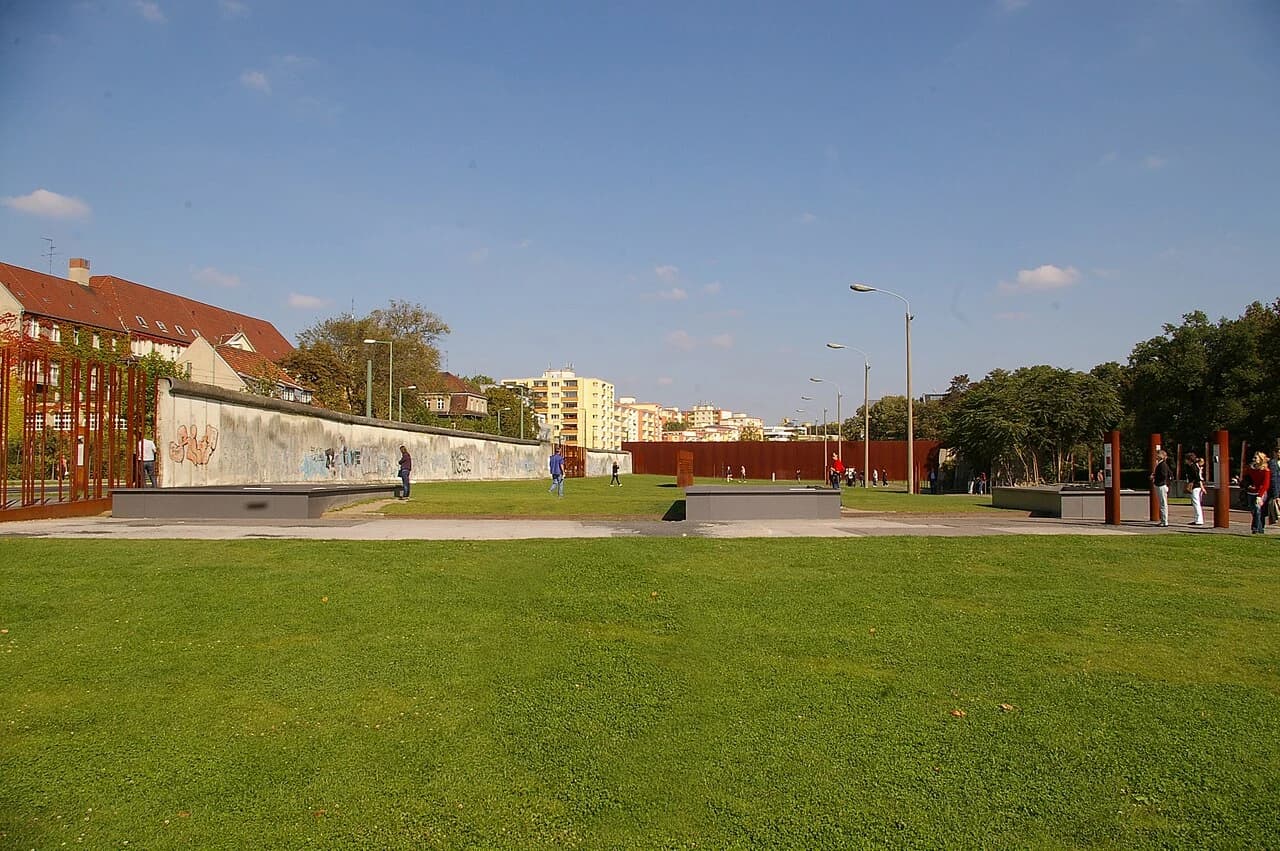
The Berlin Wall Memorial is the central German memorial site dedicated to the Berlin Wall, preserving a section of the original border fortifications. It commemorates the victims and details the history of Germany's division at this historic location.
This self-guided audio tour features 26 narrated stops organized across 10 sections. As a memorial, Gedenkstätte Berliner Mauer offers a unique cultural experience in the heart of Berlin, Germany.
The Stanza audio guide is available in 15 languages and works entirely offline — download the complete tour including audio narration, maps, and images before your visit. As you walk through Gedenkstätte Berliner Mauer, GPS-triggered narration plays automatically at each point of interest.
Last updated:
What you will hear
Berlin Wall
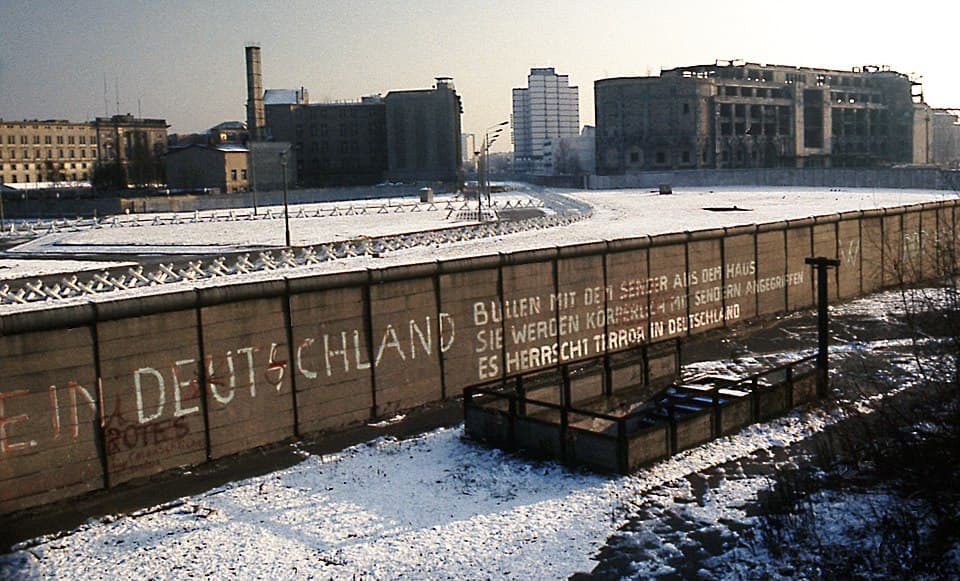
A preserved section of the original Wall, showcasing the concrete barrier that once divided a nation.
Berlin Wall
This photograph from 1975 provides a clear look at the reality of the 'Death Strip.' It is a common misconception that the Berlin Wall was just a single wall. In reality, it was a complex, multi-layered military system designed to be impossible to cross. Moving from East to West, a person would first encounter an 'inner wall' or fence, then a signal fence that triggered alarms when touched. There were also anti-vehicle trenches to stop cars from crashing through, and rows of 'Spanish riders' or hedgehog obstacles. One of the most chilling features was the wide lane of finely raked sand. This wasn't for aesthetics; it was a tracking system. Border guards would rake the sand perfectly smooth so that any footstep would be instantly visible, allowing them to see if anyone had attempted to cross or if their own colleagues were derelict in their duties. Finally, there was the iconic outer wall, the 'Grenzmauer 75,' which was the white concrete barrier visible to the West. This entire system was illuminated by floodlights and patrolled by dogs and armed guards in towers. By understanding these layers, you can grasp the psychological and physical barrier that residents lived with every day, where the simple act of walking could lead to a lethal confrontation with an entire military infrastructure.
Ackerstraße
A street that became famous for being split down the middle, where neighbors were suddenly separated by barbed wire.
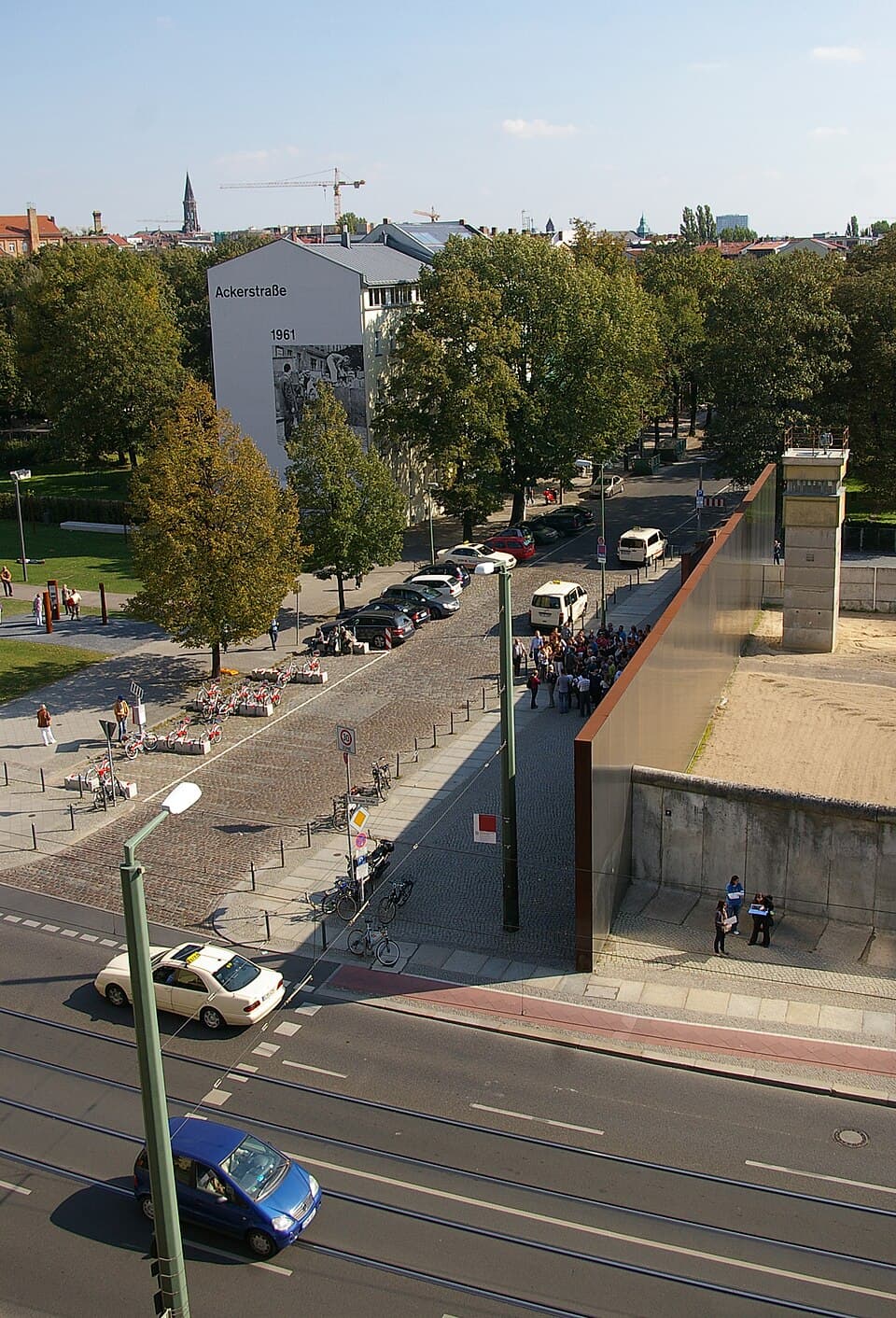
Ackerstraße
Ackerstraße provides a heart-wrenching example of how the Berlin Wall functioned on a residential level. In August 1961, this street was a normal city thoroughfare where neighbors chatted and families lived on both sides. Almost overnight, a barrier appeared that physically severed the road. Families who lived just across the street from one another were suddenly citizens of two different, hostile worlds. In the early days, before the wall was fully reinforced, people would stand at their windows and wave to their relatives on the other side, sometimes even shouting messages or throwing small items across. As the border became more militarized, those windows were eventually bricked up, and the street was permanently blocked by concrete slabs and barbed wire. The sight of neighbors waving to each other became a symbol of the human tragedy of the division. This wasn't just a political border; it was a surgical cut through the social fabric of the city. The separation caused decades of missed birthdays, funerals, and daily interactions. Today, the street has been reopened, and the pavement marks where the Wall once stood, but the memory of that sudden, forced separation remains a powerful part of the local history. It reminds us of how quickly the world can change and the lasting impact that political decisions have on the lives of ordinary people.
Chapel of Reconciliation
A modern, rammed-earth chapel built on the foundations of the demolished church, symbolizing peace and memory.
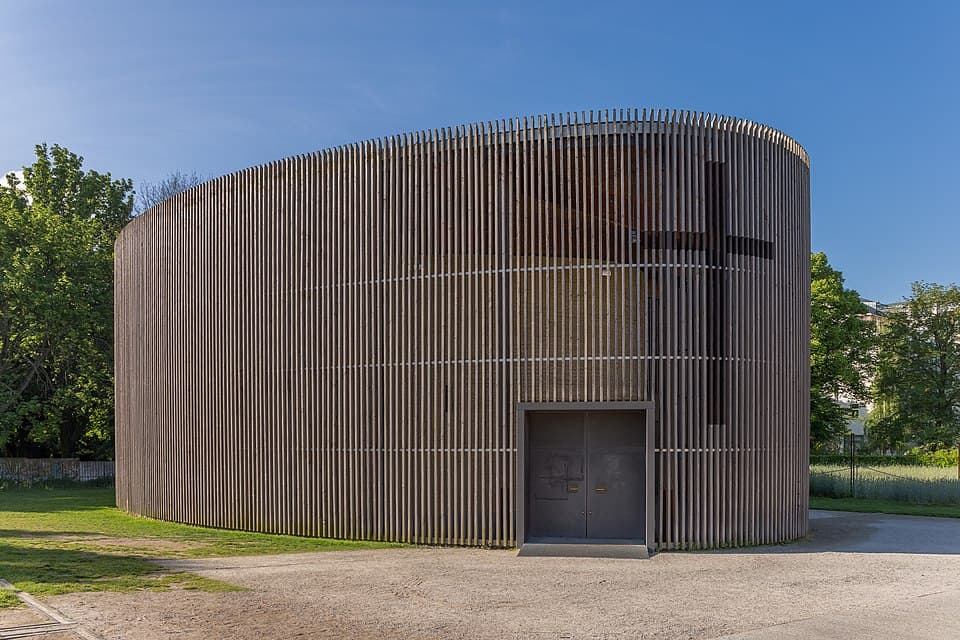
Chapel of Reconciliation
The Chapel of Reconciliation is a remarkable piece of modern architecture with a deeply symbolic foundation. It was built directly on the site where the original Neo-Gothic church was destroyed in 1985. The design of the chapel is a radical departure from the past, featuring an oval shape and an exterior of vertical wooden slats. However, the most significant aspect of its construction is the material used for the inner walls: rammed earth. This earth was mixed with the pulverized rubble and brick dust from the demolished original church. This choice of material creates a powerful connection between the past and the present. The very walls of the chapel are made from the remains of what was once lost, representing a process of healing and 'reconciliation'—the chapel's namesake. Inside, the space is quiet and meditative, designed to be a place of prayer and reflection for all visitors, regardless of their background. It stands as a living memorial, proving that while a regime could destroy a building, it could not destroy the spirit of the community or the memory of the site. The chapel is not just a replacement for the old church; it is a monument to the possibility of transformation and the importance of remembering history as we build for the future. It serves as a peaceful heart for the memorial grounds, offering a space to process the difficult history you have explored today.
Tunnel 57
The site of one of the most successful escape tunnels, where 57 people reached West Berlin in 1964.
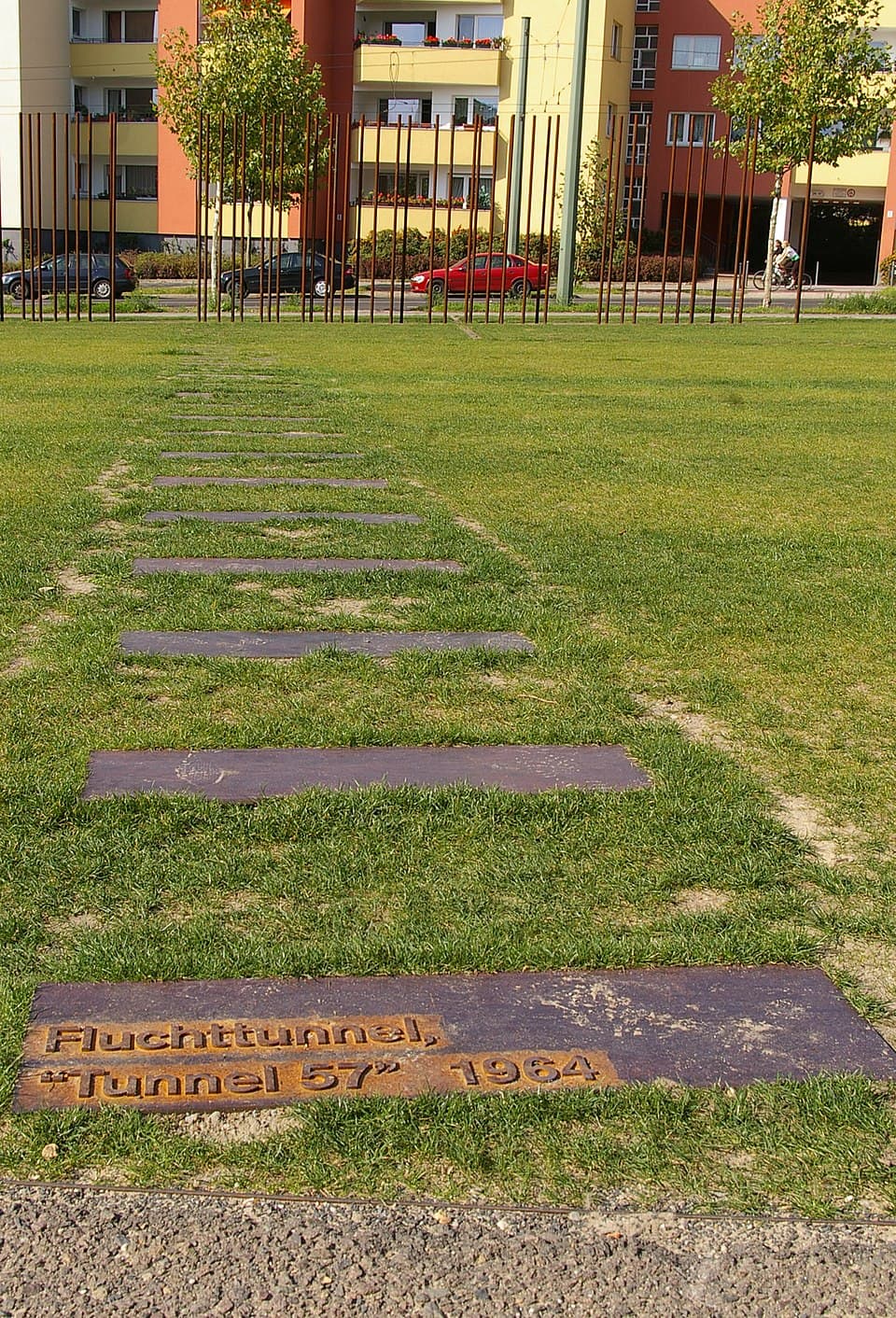
Tunnel 57
Following the line of steel markers in the ground, you are tracing the exact trajectory of 'Tunnel 57.' In October 1964, a group of brave West Berlin students undertook a perilous engineering feat, digging a tunnel 145 meters long from the basement of a former bakery on the West side to this very spot in the East. Working in secret and under constant threat of discovery by border guards, they managed to complete the passage. Over the course of two nights, they successfully guided 57 people through the narrow, dark crawlspace to freedom in West Berlin. It was the largest mass escape in the Wall's history. The operation ended in tragedy when East German border guards discovered the tunnel, leading to a confrontation where a guard was accidentally killed by friendly fire. These markers serve as a permanent record of that subterranean route, reminding us of the lengths to which individuals would go to reunite with loved ones and escape the constraints of the GDR.
Deutsche Höfe
A nearby architectural complex that provides a glimpse into the historic residential character of the area before the Wall.
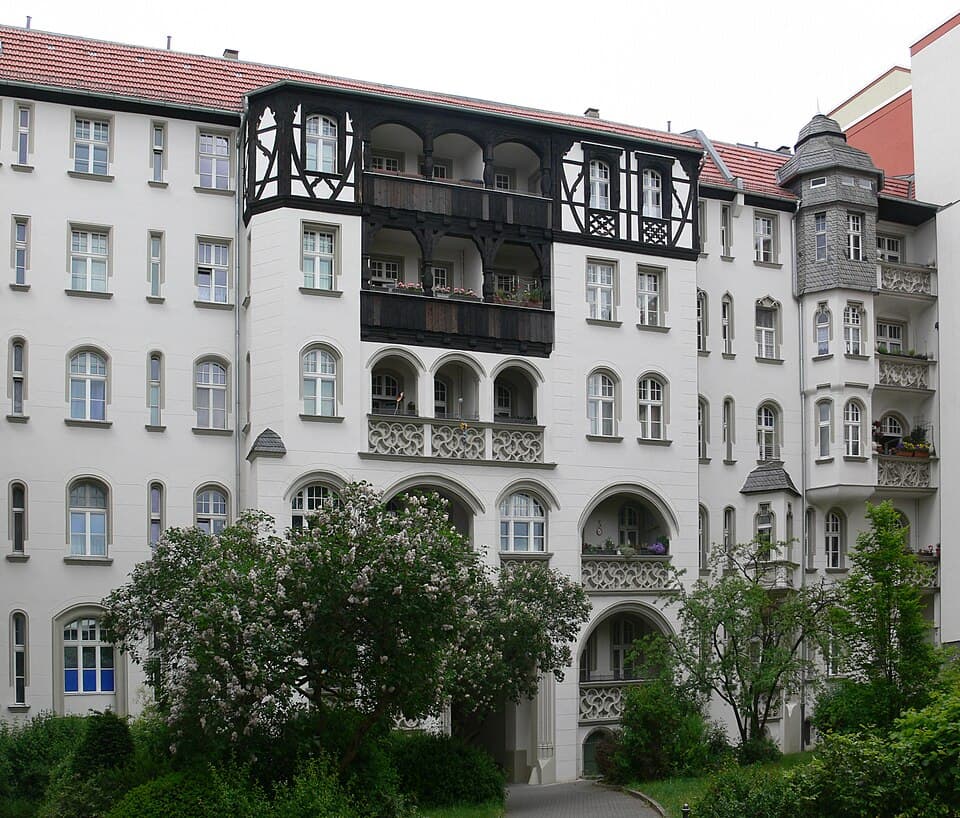
Deutsche Höfe
The 'Deutsche Höfe' complex stands as a rare surviving example of the traditional residential architecture that once defined this neighborhood. Notice the intricate details of the Art Nouveau and Neo-Baroque facades, with their decorative moldings, arched windows, and varied textures. Before 1961, Bernauer Straße was a vibrant urban street, lined with buildings just like this, where neighbors interacted across the sidewalk. When the Wall was built, the character of the area changed overnight. Residential buildings on the border were evacuated, their windows bricked up, and in many cases, entire structures were demolished to create a clear 'death strip.' The survival of the Deutsche Höfe allows us to visualize the street as it was meant to be—a place of beauty and community life rather than a site of surveillance and division. It serves as an architectural anchor, grounding the memorial in the reality of the city's pre-war and pre-division past.
Factory Berlin
A modern tech campus housed in the former border area, showing how the 'Death Strip' has been reclaimed for innovation.
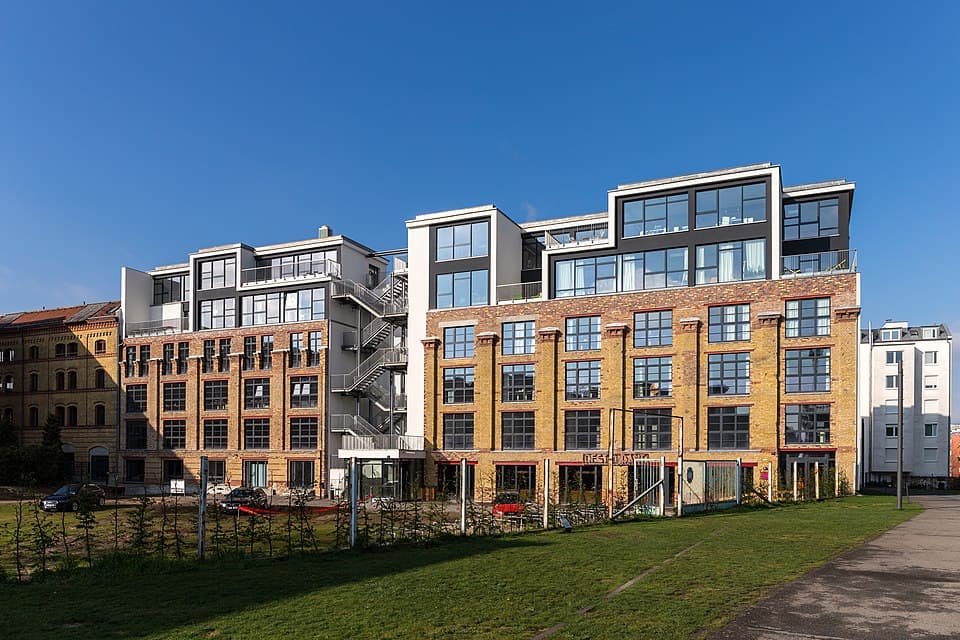
Factory Berlin
Looking at the modern architecture and bustling activity of the Factory Berlin campus, it is hard to imagine that this land was once part of the desolate and dangerous 'death strip.' This area was historically industrial, but the division of the city essentially paralyzed it, turning productive spaces into high-security zones. Following the reunification of Germany, the focus shifted toward reclaiming these empty spaces for the future. Factory Berlin represents this shift perfectly. It is now a hub for innovation, housing hundreds of startups and tech entrepreneurs from around the world. The transformation from a militarized vacuum into a collaborative workspace demonstrates how Berlin has chosen to move forward. Instead of leaving the former border as a permanent scar, the city has integrated it into its modern identity, using it as a foundation for creativity, economic growth, and technological advancement.
Bernauer Straße station
Another former 'Ghost Station' on the U8 line, where trains from the West passed through East Berlin without stopping.
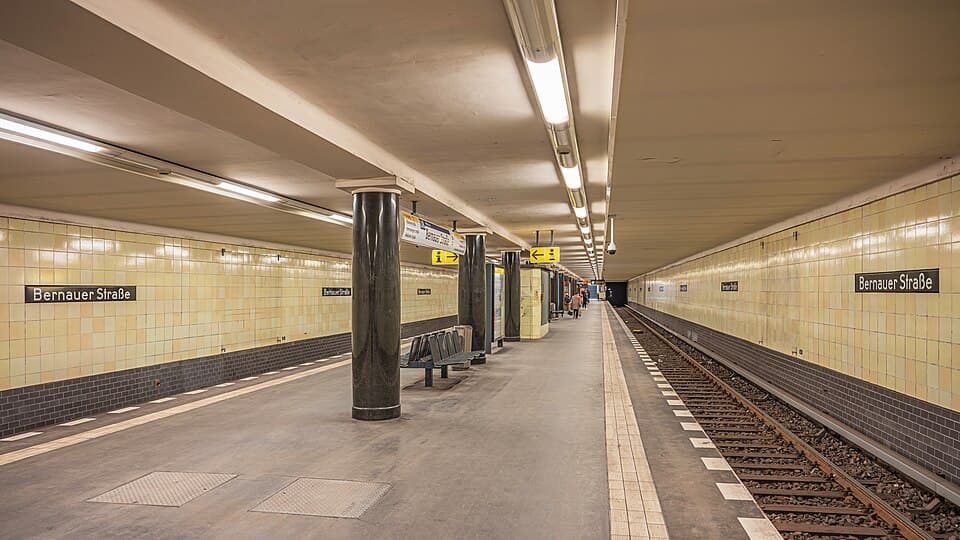
Bernauer Straße station
The Bernauer Straße station on the U8 line is a prime example of Berlin’s 'ghost stations.' When the Wall was erected in 1961, the city’s underground transport network was severed. Because the U8 line ran from West Berlin, through East Berlin territory, and back into the West, the stations located in the East—like this one—were closed to the public. For nearly three decades, West Berlin commuters would sit in trains that slowed to a walking pace as they entered the dimly lit, patrolled platforms. They were forbidden from stopping, and the station entrances above ground were sealed. In the shadows of the platforms, East German border guards stood in booths, watching the passing trains to ensure no one attempted to jump on or off. The station became a subterranean no-man's land, a place everyone passed through but no one could reach. Today, the station is fully operational, but its tiled walls remain as reminders of that suspended era.
Monument of the Jumping Soldier
A mural/sculpture commemorating Conrad Schumann, the border guard who famously defected by jumping over barbed wire in 1961.
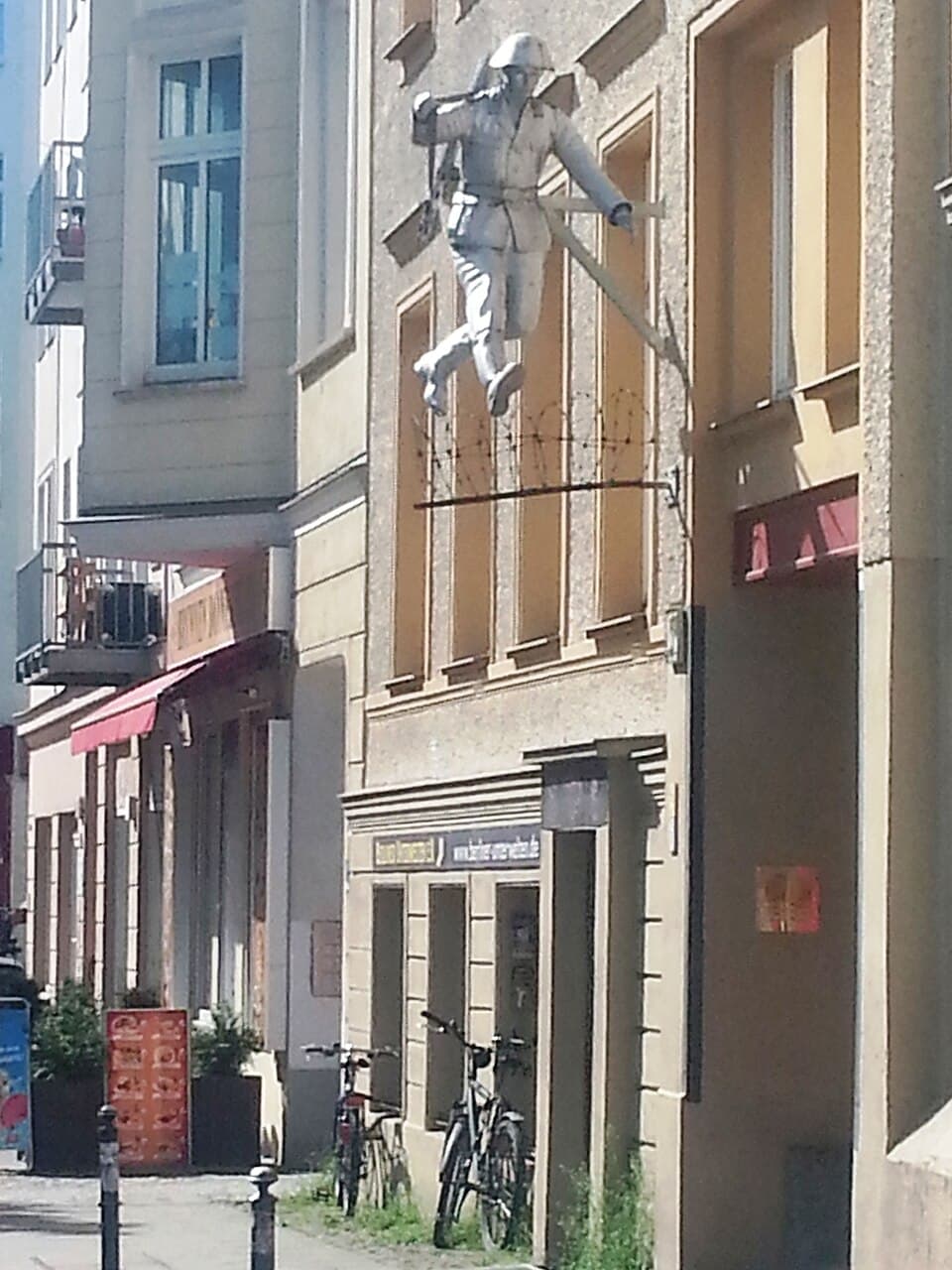
The Jump for Freedom
This relief is based on one of the most famous photographs ever taken in Berlin. It depicts the moment on August 15, 1961, when Conrad Schumann, a 19-year-old East German border guard, decided to defect. At that time, the Wall was not yet a concrete monolith; it was merely a coil of barbed wire. Urged on by onlookers from the West who shouted 'Come over!', Schumann dropped his cigarette, unslung his rifle, and leaped over the barrier into West Berlin. A photographer named Peter Leibing captured the jump at the exact moment Schumann was mid-air. The image was published globally, becoming an instant symbol of the desire for freedom and the fragility of the new border. This mural honors that individual act of defiance. Schumann’s jump occurred just three days after the border was closed, showing that even those tasked with guarding the divide were often desperate to cross it themselves. The artwork allows us to reflect on the immense personal risk individuals took to change their destiny.
Brunnenstraße
A major thoroughfare that was severed by the Wall, now restored and featuring prominent memorial murals.
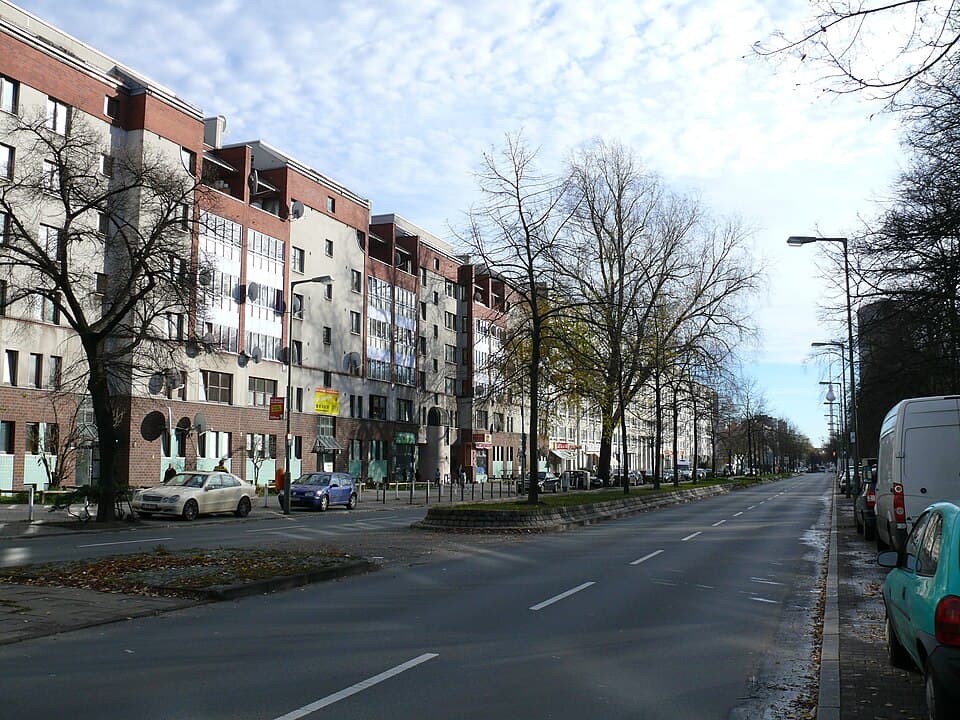
Brunnenstraße
Brunnenstraße was historically one of Berlin’s most significant shopping and transit streets, a vital connection between the city's northern and central districts. In 1961, the construction of the Wall cut this artery in half, creating a stark dead end that lasted for twenty-eight years. What was once a place of commerce and constant flow became a site of silence and surveillance. Since reunification, there has been a concerted effort to restore the street's natural rhythm and reconnect the two sides of the city. As you walk along, you may notice various murals and markers that serve as 'sentinels' of memory. These artistic interventions are designed to prevent the history of the division from being entirely erased by modern development. They remind passersby that the seamless street they see today was once a site of profound separation. Re-establishing the flow of Brunnenstraße has been about more than just paving roads; it has been about healing the urban fabric and restoring a sense of normalcy.
Commemorative column for Ida Siekmann
A monument to the first victim of the Berlin Wall, who died attempting to jump from her window to West Berlin shortly after the border closed.
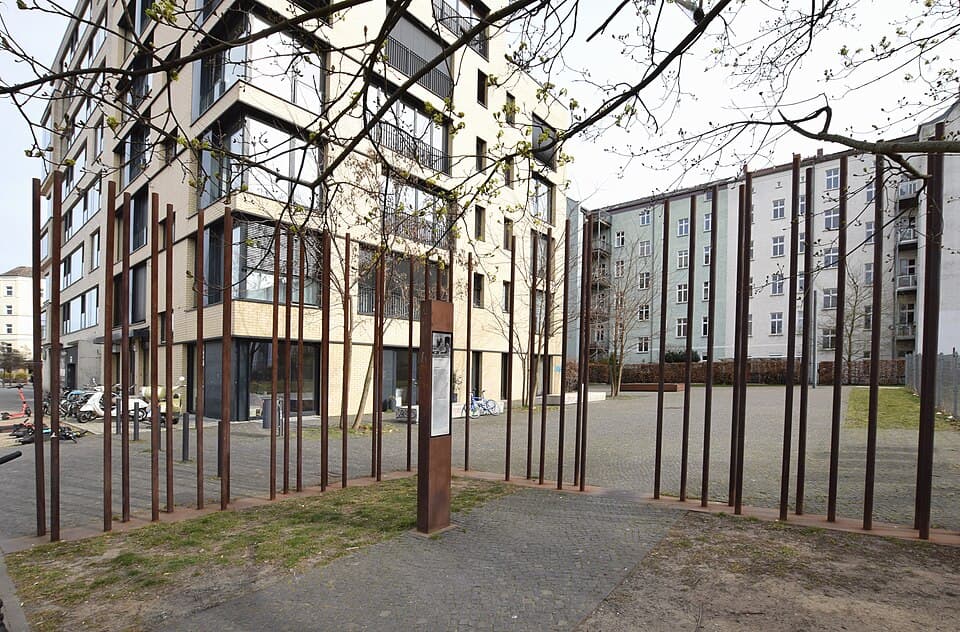
Commemorative column for Ida Siekmann
This commemorative column tells the heartbreaking story of Ida Siekmann. On August 22, 1961, she lived in an apartment building on Bernauer Straße where the front door opened into the East, but the windows looked directly out onto the sidewalk of West Berlin. Just nine days after the border was sealed, the authorities began to board up these front doors, effectively trapping residents. Desperate to reach her family in the West, Ida threw her bedding out of her third-floor window and prepared to jump. Members of the West Berlin fire brigade were on the sidewalk below, attempting to position jumping sheets to catch her. Tragically, they were not in place in time. Ida jumped and suffered fatal injuries upon impact. She was 58 years old. Her death was the first recorded fatality at the Berlin Wall, a somber milestone that highlighted the immediate and lethal consequences of the city's division. This memorial ensures that her name and the circumstances of her loss are not forgotten.
Want to hear the rest?
Download the Stanza app to unlock all 26 stops and the complete guided audio tour.
Frequently Asked Questions
How long does the Gedenkstätte Berliner Mauer audio tour take?
The Gedenkstätte Berliner Mauer audio guide includes 26 narrated stops. Most visitors spend 45 minutes to 1.5 hours exploring the complete tour, though you can listen at your own pace and skip or revisit any stop.
Is the Gedenkstätte Berliner Mauer audio guide available in my language?
Stanza supports 15 languages: English, Spanish, French, German, Italian, Portuguese, Russian, Japanese, Chinese, Korean, Arabic, Hindi, Polish, Dutch, Hebrew. Check the guide in the app to confirm the languages currently available for this tour.
Can I use the audio guide offline at Gedenkstätte Berliner Mauer?
Yes! Download the complete Gedenkstätte Berliner Mauer tour — including all audio, maps, and images — before your visit. The Stanza app works completely offline, so you don't need WiFi or mobile data at the venue.
How much does the Gedenkstätte Berliner Mauer audio guide cost?
The Stanza app is free to download. The current listed price for the Gedenkstätte Berliner Mauer audio guide is $3.99; app-store region and currency may affect the final price.
How do I use the Stanza audio guide at Gedenkstätte Berliner Mauer?
Download the free Stanza app, search for "Gedenkstätte Berliner Mauer", and download the tour. When you arrive at the venue, the app uses GPS to detect your location and automatically plays the relevant narration as you move between points of interest — completely hands-free.
What makes the Stanza audio guide different from other Gedenkstätte Berliner Mauer tours?
Stanza offers GPS-triggered narration that plays automatically as you walk through Gedenkstätte Berliner Mauer — no need to manually select stops. The tour is available in 15 languages, works fully offline, and includes 26 expertly narrated stops with images and historical context.
What other audio guides are available near Gedenkstätte Berliner Mauer?
Stanza offers multiple audio guides in Berlin, Germany and nearby areas. After downloading the app, browse the map to discover all available tours near Gedenkstätte Berliner Mauer. Each guide can be downloaded for offline use.