Stanza · Audio guide
Schloss LinderhofAudio guide
A place to remember. A story to take with you.
Linderhof Palace is a 19th-century royal palace located in Bavaria, Germany. It was the smallest of the three palaces built by King Ludwig II of Bavaria and is now also operated as a museum.
Download Stanza, then search for “Schloss Linderhof”.
About the tour
One guide. Your kind of visit.
Linderhof Palace is a 19th-century royal palace located in Bavaria, Germany. It was the smallest of the three palaces built by King Ludwig II of Bavaria and is now also operated as a museum.
Ready when you are.
- 01Get the free Stanza app.
iOS & Android
- 02Find your guide.
“Schloss Linderhof”
- 03Download before you go.
Works offline
Audio guide / 18 narrated stops
Inside the guide
Get to know a few of the stories before you go. Open a stop to read more.
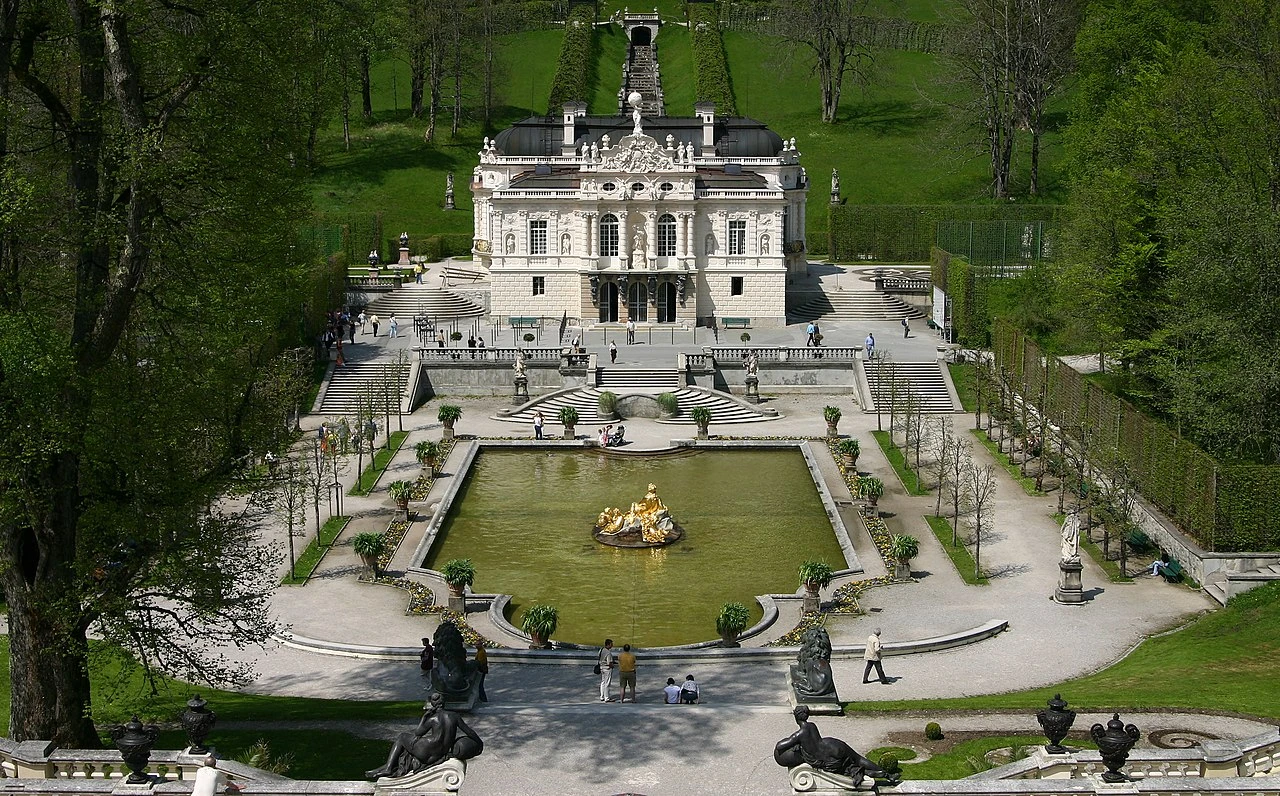
01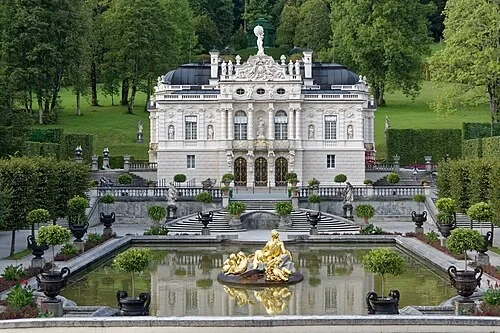 Arrival at the Palace FacadeLinderhof Palace Facade
Welcome to Schloss Linderhof, King Ludwig II's most personal creation and the only palace project he saw to fruition during his lifetime. Construction began in 1870 under the direction of architect Georg von Dollmann. This site holds a unique place in history as the private sanctuary of the 'Night-King.' Ludwig lived here in almost total seclusion, famously turning night into day to escape his public duties and the political pressures of Munich. The facade showcases the Neorokoko style, a nineteenth-century revival of the Rococo aesthetic that reflects the King's deep obsession with the French 'Sun King,' Louis XIV. Every ornament and curve of the exterior was designed to evoke the grandeur of the French monarchy, which Ludwig admired above all else. Unlike the massive scale of his other projects, Linderhof was intended for the King alone, serving as a stage for his private fantasies. The building grew from a small hunting lodge into this refined residence, becoming the centerpiece of a vast landscaped park. It remains a rare example of a royal residence designed specifically for isolation rather than for the display of power to a court or public.
Photo: Bjs · CC0
02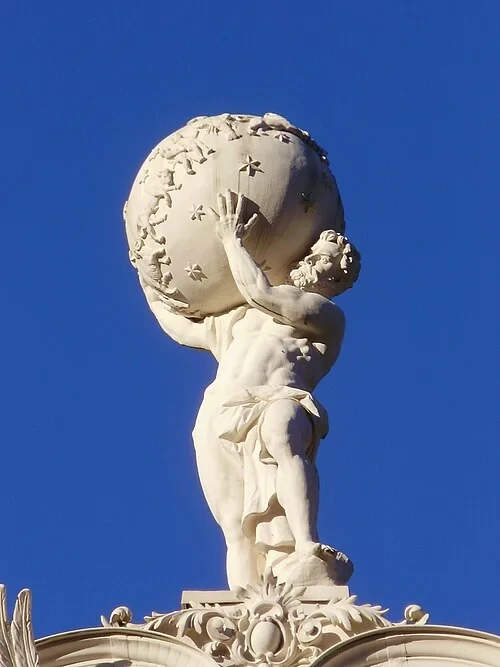 Arrival at the Palace FacadeThe Atlas Statue
Perched atop the palace facade, the figure of Atlas carries the celestial globe upon his shoulders. This statue serves as a visual metaphor for King Ludwig’s own complex psychological state: a man who felt the crushing weight of kingship while simultaneously identifying with the divine. While Linderhof is modest in size compared to his other building projects, such as Neuschwanstein, these intricate external details signal the grand ambitions contained within. The presence of a Titan from Greek mythology suggests that even this private retreat was conceived as a cosmic stage. Ludwig saw himself not just as a king of Bavaria, but as a ruler in the mold of the absolute monarchs of the past, tasked with a burden too heavy for ordinary men. As you look at the facade, you can see how every sculpture and architectural element works together to create a cohesive royal image. This figure represents the tension between royal duty and the King's desire for a mythic, idealized existence far removed from the political realities of the late nineteenth century. It is one of many statues that elevate the palace from a simple residence to a monument of the King's inner world.
Gustavo Trapp · Public domain
03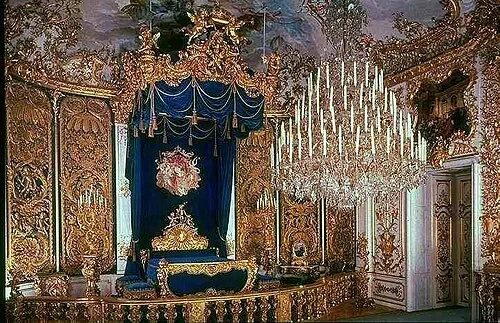 The State ApartmentsThe Royal Bedchamber
The Royal Bedchamber holds the distinction of being the largest room in the entire palace. Its design draws direct inspiration from the bedroom of the French 'Sun King,' Louis XIV, at Versailles, whom Ludwig admired as the ultimate symbol of absolute monarchy. At the center of the room sits a massive bed on a raised dais, draped in rich blue velvet and topped with the Bavarian royal crown. A heavily gilded balustrade separates the royal sleeping area from the rest of the room, a feature borrowed from French court etiquette where the King’s rising was a public ceremony. However, in Ludwig's case, no courtiers were allowed; he used this room primarily as a throne room for his private rituals. The walls are covered in intricate carvings and tapestries that emphasize his reverence for the Bourbon dynasty. The sheer scale and opulence of this space were intended to assert his status as a sovereign, even if his audience consisted only of his own imagination and a few trusted servants. It stands as a monument to a king who felt more at home in the centuries-old traditions of French royalty than in his own contemporary Bavarian government.
Listen in the appThe original uploader was Daniel71953 at French Wikipedia. · CC BY-SA 3.0
04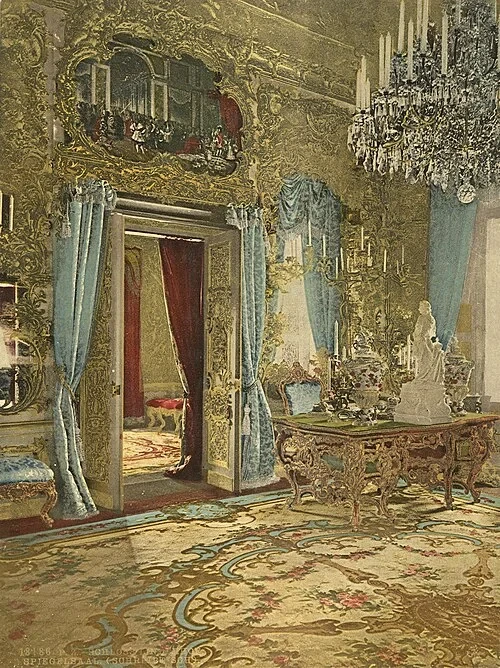 The State ApartmentsThe Hall of Mirrors
The Hall of Mirrors served as King Ludwig's drawing room, designed with a focus on light and reflection. Parallel mirrors line the walls, creating a visual trick of an infinite avenue of light stretching into the distance. This clever use of glass made the room appear much larger than its actual dimensions, a favorite technique of the Rococo era. The King's nocturnal habits defined the use of this space; he would often sit here alone until dawn, reading by the light of hundreds of candles. These candles were reflected endlessly in the mirrors, bathing the room in a constant, shimmering glow that hid the darkness of the surrounding forest. One of the room's most distinctive features is the Indian ivory candelabra, which adds to the exotic and luxurious atmosphere. Every surface is covered in delicate gold leaf and fine carvings, creating a dense, glittering environment. For Ludwig, this room was a retreat where the boundaries of the physical space were blurred by the reflections, allowing him to lose himself in his thoughts and books. The Hall of Mirrors perfectly captures the King's desire to surround himself with beauty that felt boundless and ethereal.
Listen in the appP.Z. (Photochrom Zürich) · Public domain
05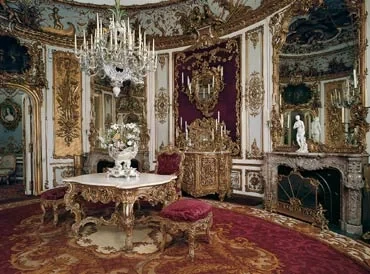 The Dining Room and Magic TableThe Palace Dining Room
The palace dining room features the 'Tischlein deck dich'—the 'table set yourself' mechanism. This innovative engineering allowed a floor section to lower into the kitchen below, where staff would fully set the table with fine porcelain and gourmet meals. The table was then raised back up into the dining room, allowing the King to eat in total solitude without ever seeing a servant. Ludwig was notoriously shy and preferred his own company, or rather, the company of his historical idols. He often ordered the table set for three or four imaginary guests, typically historical figures like Marie Antoinette or Louis XIV. He would hold conversations with these ghosts of the past, feeling a deeper kinship with the deceased French royalty than with his living subjects. The room itself is decorated with rich carvings and scenes of hunting and feasting, typical of a royal dining hall, yet the lack of chairs for real guests tells the story of the King's profound isolation. This mechanical table was not just a luxury; it was a necessary tool for a man who viewed the presence of others as an intrusion into his carefully constructed private reality.
Listen in the appThe original uploader was Daniel71953 at French Wikipedia. · CC BY-SA 3.0
06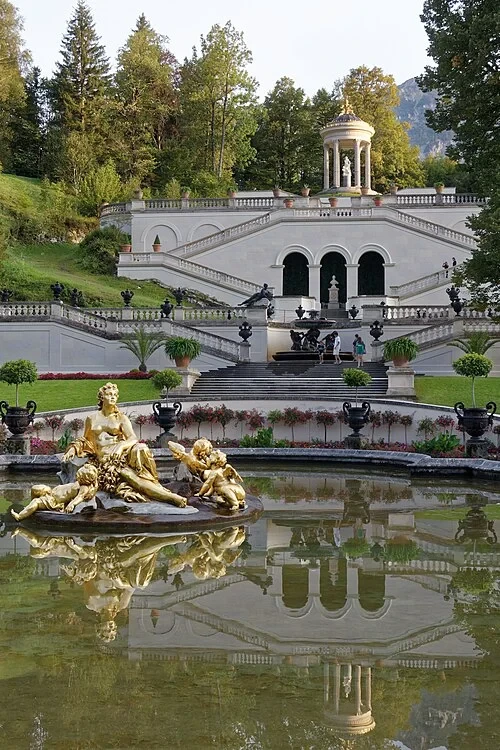 The Water Parterre and Golden FloraThe Water Parterre
The formal gardens surrounding the palace were designed by Carl von Effner, showcasing a blend of strict French Baroque geometry with the rugged Alpine scenery of the Graswang valley. The palace sits at the perfect center of this landscape, acting as the primary stage for the King's private outdoor dramas. The gardens are organized into symmetrical parterres, with clipped hedges and neatly arranged flowerbeds that contrast sharply with the wild, unmanaged forest beyond the palace grounds. This layout was intended to symbolize the monarch's control over nature, a common theme in the great gardens of Europe like those at Versailles. However, at Linderhof, the mountains always remain visible, providing a dramatic and untamed backdrop to the refined greenery. The water parterre features large basins and fountains that are perfectly aligned with the palace windows, ensuring that even from inside, the King could enjoy the view of perfectly ordered nature. This area serves as a transition between the artificial world of the palace interiors and the mountain wilderness, reflecting the King's dual love for royal formality and the quiet majesty of the Bavarian Alps.
Listen in the appPhoto: Bjs · CC0
07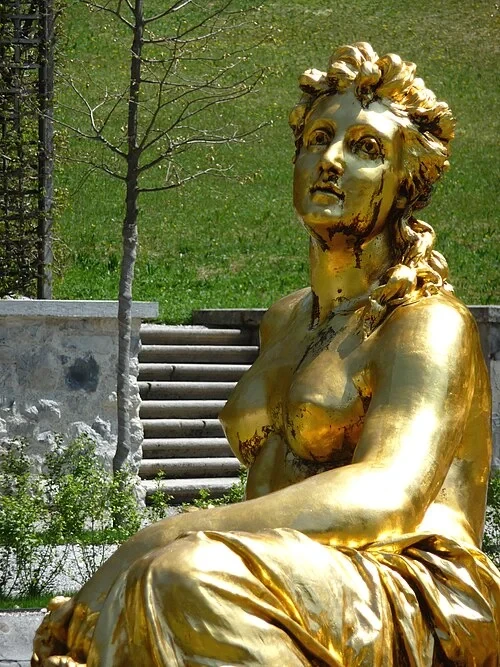 The Water Parterre and Golden FloraThe Flora Statue
At the heart of the garden's water features stands the gilded sculpture of the Flora-Brunnen fountain. This figure is not merely ornamental; it is the centerpiece of a sophisticated engineering display. When the fountain is activated, the water jet can project twenty-two meters into the air, a remarkable height that utilized the natural water pressure from the surrounding mountains. King Ludwig particularly enjoyed the contrast between the quiet, static gold of the statue and the dynamic, surging power of the water. During his solitary garden walks, often at night or in the early morning, he would watch the play of light on the spray. The sculpture itself represents Flora, the goddess of flowers and spring, which is fitting for a garden that was meticulously maintained to remain in bloom throughout the summer months. The use of gold leaf on the statue ensures that it remains a bright focal point even on overcast days. This fountain display was one of the many spectacles designed to entertain the King in his isolation, providing a sense of movement and life to the otherwise still and formal garden parterres.
Listen in the appPhoto: GraceKelly · CC BY-SA 3.0
08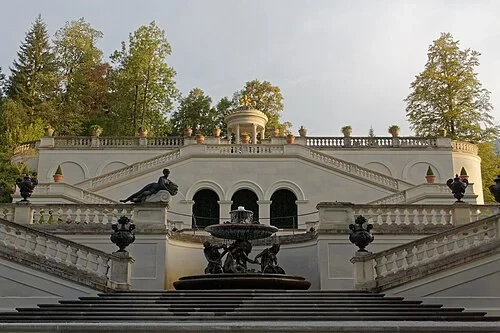 The South Terrace and Venus TempleThe South Terrace
Climbing the southern terraces reveals the strict central axis upon which the entire garden is built. This design ensures that every element, from the flowerbeds to the sculptures, aligns perfectly with the palace at its core. While the entire park covers fifty-seven hectares, it is designed with the same obsessive level of detail found in the palace's small, ornate rooms. The terraces are reached by stone staircases, punctuated by sculptures and decorative urns. As you move higher, the view of the palace below becomes more symmetrical and controlled. This vertical expansion of the garden was meant to provide a series of different viewpoints for the King to enjoy during his walks. Each level of the terrace offers a new perspective on the water features and the surrounding forest. The rigid organization of the space reflects the late nineteenth-century desire to impose order on the landscape, creating a series of 'outdoor rooms' that felt as private and structured as the interiors. The terraces also help to bridge the gap between the low-lying palace and the high mountain peaks, integrating the architecture into its dramatic natural setting.
Listen in the appPhoto: Bjs · CC0
09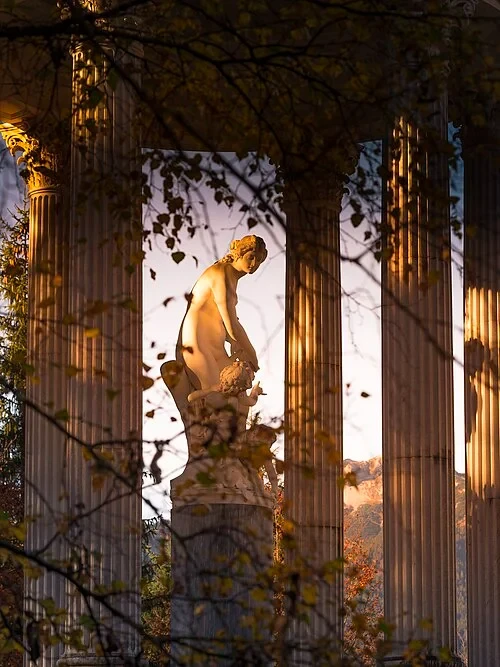 The South Terrace and Venus TempleThe Temple of Venus
At the summit of the terrace stands the Temple of Venus, a classical rotunda that houses a statue of the goddess. This structure reflects King Ludwig's deep-seated interest in classical mythology, which he studied as extensively as the history of the French monarchy. The temple serves as a visual anchor for the southern end of the garden, providing a clear focal point at the top of the long central axis. It is perfectly balanced by the northern cascade on the opposite side of the palace, creating a sense of symmetry that spans the entire valley. The circular form of the temple, with its slender columns and domed roof, was a popular feature in eighteenth-century landscape gardens, and Ludwig used it here to evoke a sense of timeless elegance. From this position, the goddess Venus looks down over the parterres toward the palace, symbolizing love and beauty. It was a place where the King could pause during his walks, surrounded by the quiet mountains and the idealized forms of antiquity. The temple's white structure stands out sharply against the deep green of the Bavarian forest, marking the highest point of the formal garden design.
Listen in the appJan Obi · CC BY-SA 4.0
10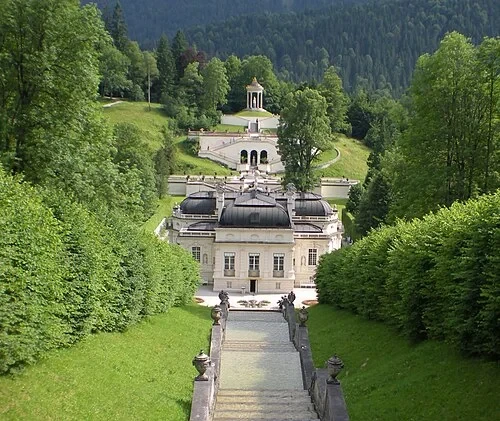 The Northern Cascade and Music PavilionThe Palace Vista
From this elevated vantage point, the full extent of the royal sanctuary becomes apparent. King Ludwig intentionally managed the surrounding forests to act as a screen, shielding his private world from any sight of the outside world. Between 1863 and 1886, over 8.4 million marks were spent to transform this former hunting ground into a royal sanctuary of unparalleled detail. The view shows how the palace is nestled into the valley, completely surrounded by nature that has been shaped to the King's will. Paths wind through the trees, leading to various hidden pavilions and follies, each representing a different part of his inner fantasy life. This immersion was total; once inside the palace grounds, the modern world of nineteenth-century industrialization and politics disappeared. The sheer cost of the project was a point of major contention in the Bavarian government, yet for Ludwig, it was a necessary expense to create a space where he could live entirely within his own dreams. The vista captures the isolation he craved, where the only boundaries were the peaks of the Alps and the tall, dense trees he had specifically ordered to be preserved or planted.
Listen in the appPhoto: Tony Castle · CC BY-SA 3.0
Schloss Linderhof
Frequently asked questions
How much does the guide cost?
Free app download. Listed guide price: $1.99. Guide price shown in the app. Audio guide only. Venue admission is separate.
Can I listen without internet?
Yes. Download the guide’s audio, images, and maps in the app before your visit. Your downloaded content is then available offline.
Can I listen in my language?
Stanza supports 15 languages. Check the app for the languages available for this guide.
Do I need to follow a schedule?
No. This is a self-guided experience. Choose your stops, pause whenever you like, and return to a story at your own pace.
At your own pace
Explore Schloss Linderhof.
Download Stanza, then search for “Schloss Linderhof”.
Free app download · Guide price shown in the app
Keep exploring
Nearby audio guides
Berlin
Brandenburger Tor
Content & sources
Thomas Wolf, www.foto-tw.de · CC BY-SA 3.0
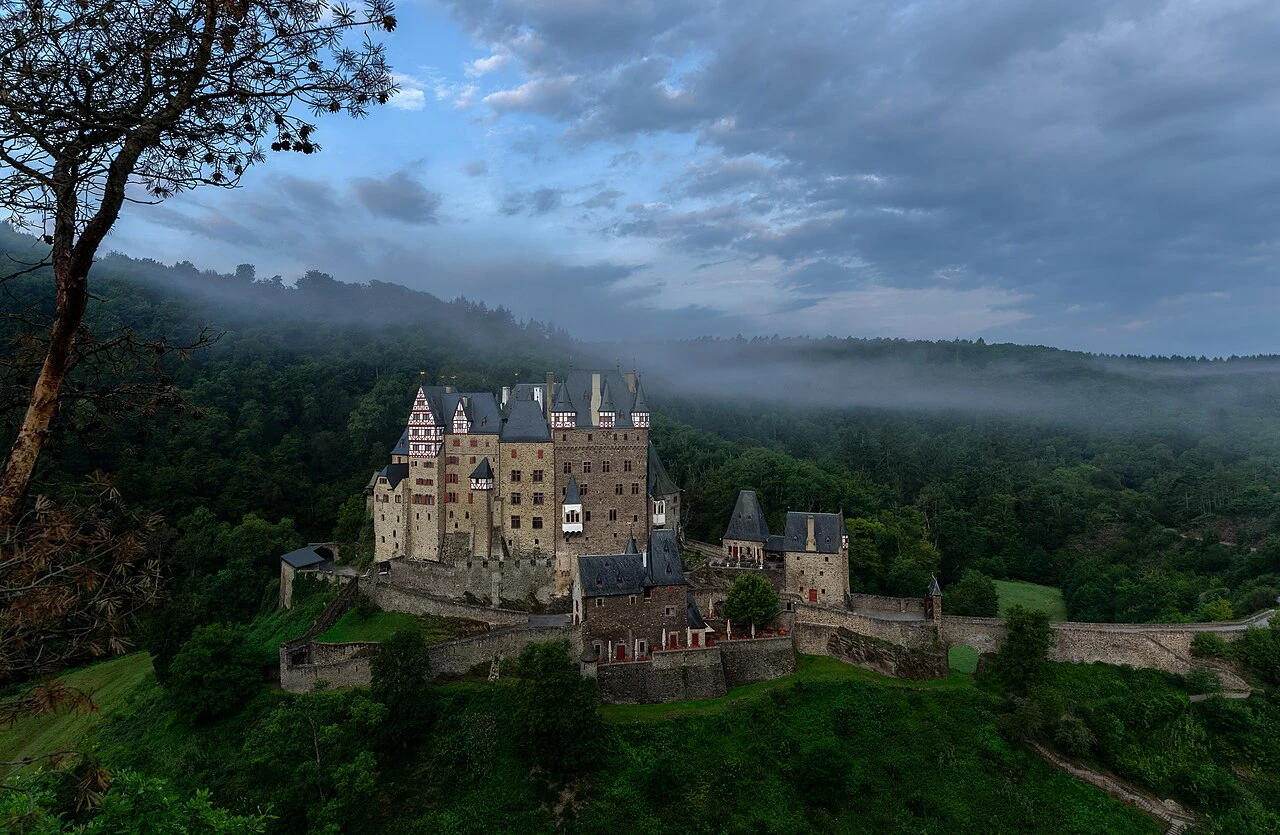
Wierschem
Burg Eltz
Content & sources
Johannes Dörrstock · CC BY-SA 4.0
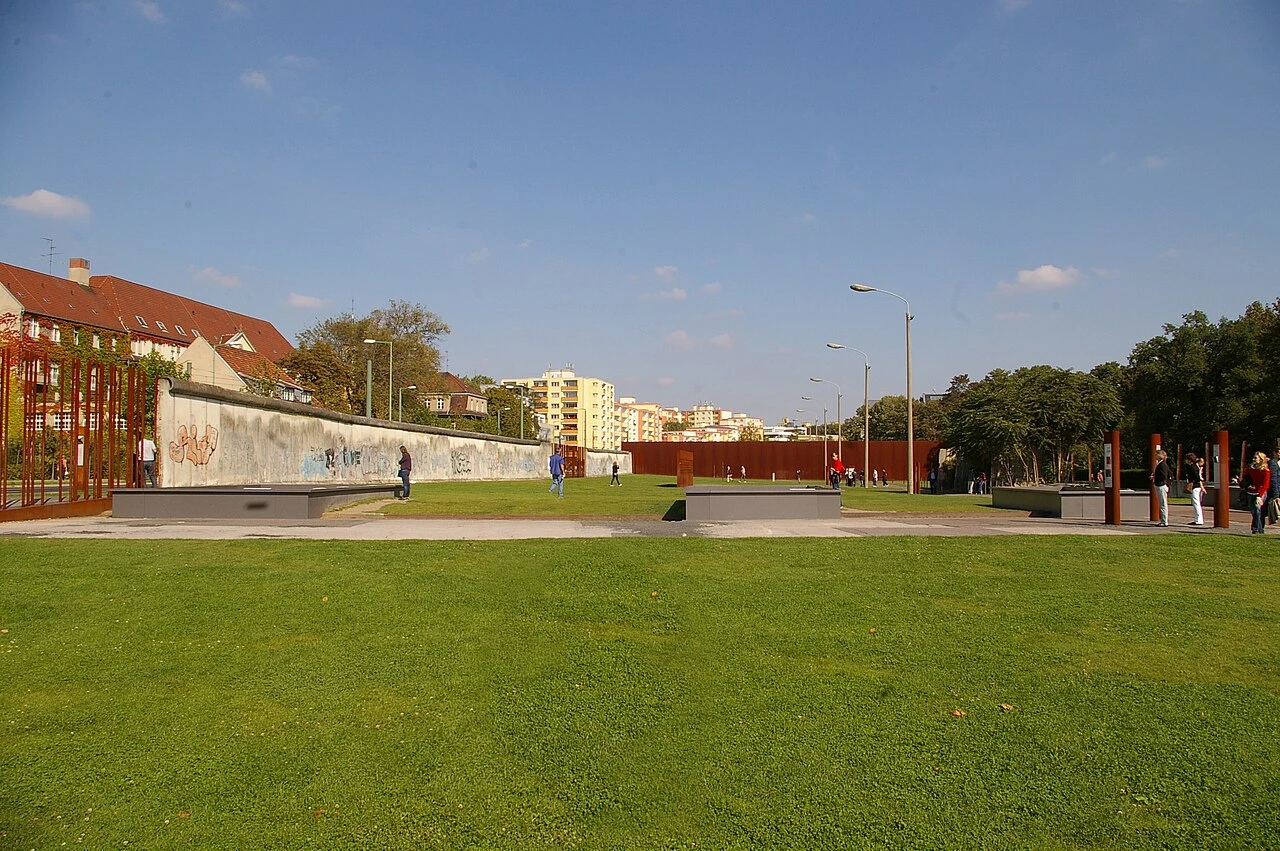
Berlin
Gedenkstätte Berliner Mauer
Content & sources
N-Lange.de · CC BY-SA 3.0
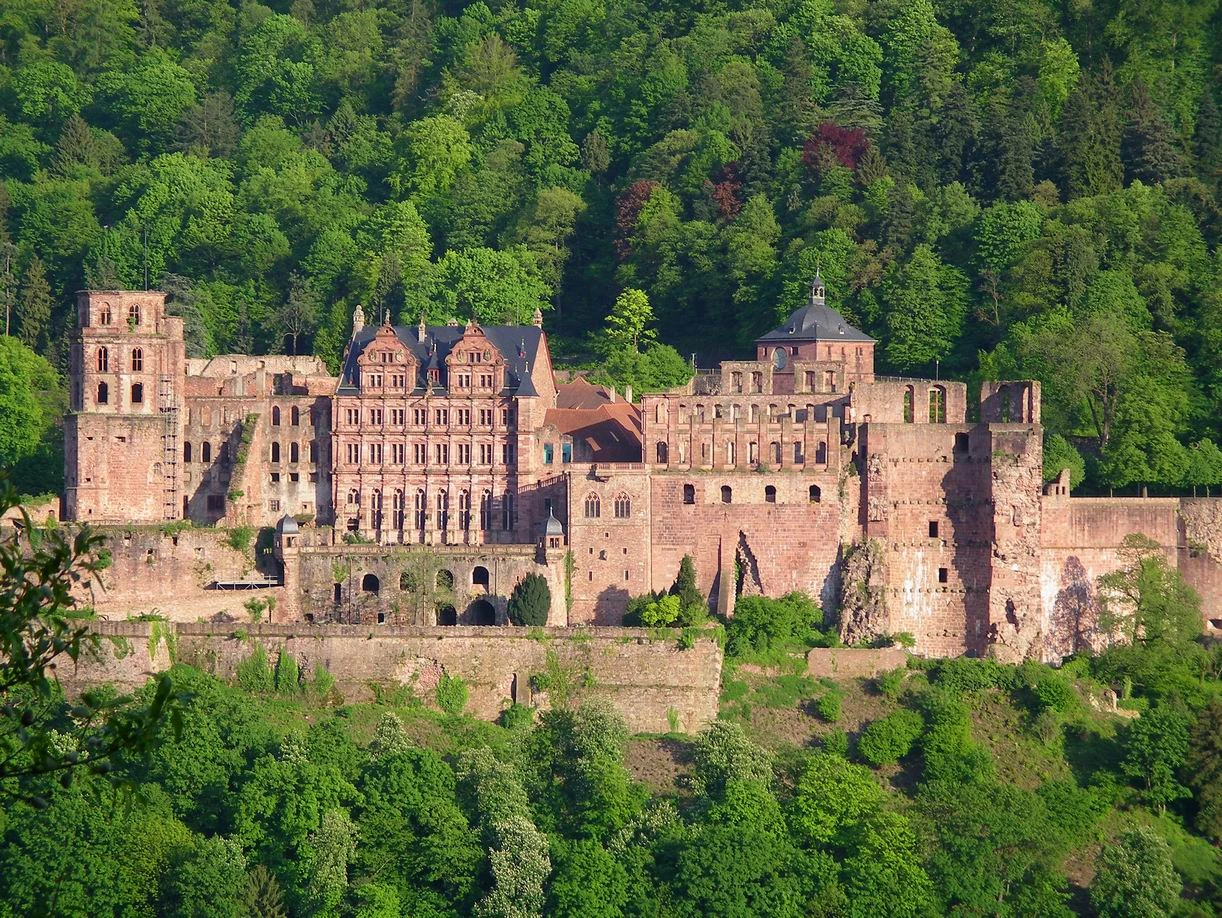
Heidelberg
Heidelberger Schloss
Content & sources
Pumuckel42 (Reinhard Wolf) at de:Wikipedia · CC BY-SA 3.0