Stanza · Audio guide
Corvey Audio Guide
A place to remember. A story to take with you.
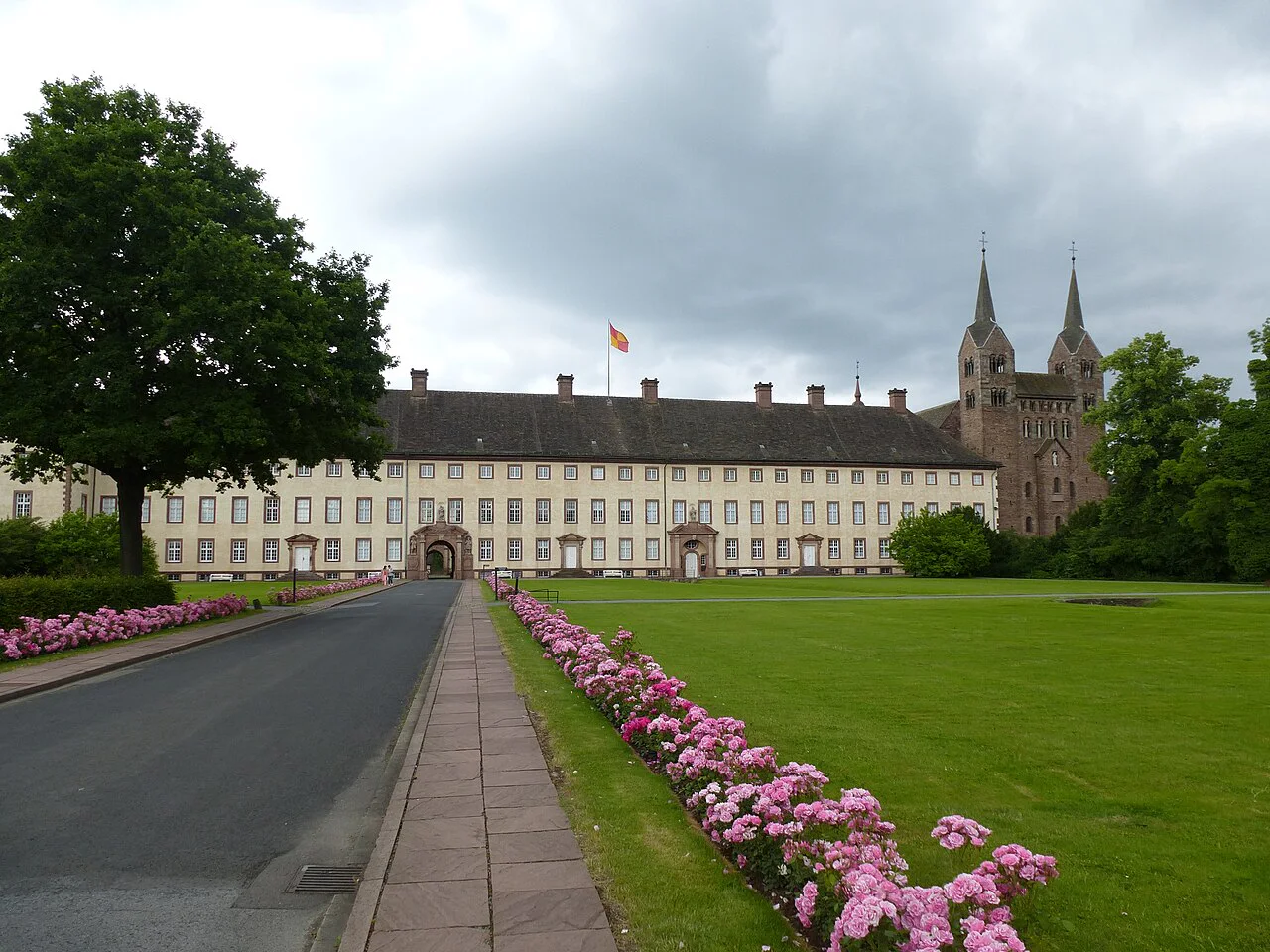
The Princely Abbey of Corvey is a former Benedictine abbey and ecclesiastical principality located in North Rhine-Westphalia, Germany. It is an exceptional example of Carolingian architecture and features the…
Download Stanza, then search for “Corvey”.
About the tour
One guide. Your kind of visit.
The Princely Abbey of Corvey is a former Benedictine abbey and ecclesiastical principality located in North Rhine-Westphalia, Germany. It is an exceptional example of Carolingian architecture and features the oldest surviving westwork and medieval structure in Westphalia.
Ready when you are.
- 01Get the free Stanza app.
iOS & Android
- 02Find your guide.
“Corvey”
- 03Download before you go.
Works offline
Audio guide / 15 narrated stops
Inside the guide
Get to know a few of the stories before you go. Open a stop to read more.
01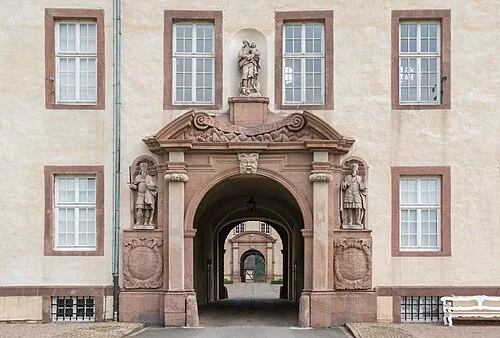 Courtyard Portal and Outer Approach
Courtyard Portal (Hofportal)
Welcome to Corvey. You're standing before the courtyard portal, the Baroque gateway through which visitors have entered for centuries. Look at the carved figures flanking the arch, and the statue watching from the niche above - old visitor descriptions call them sentries, though who exactly they portray is no longer certain. What is certain is the story behind this place. Around twelve hundred years ago, this was the edge of the Frankish world. Charlemagne had conquered Saxony after more than thirty years of war, and his son, Emperor Louis the Pious, decided a monastery should anchor the Christianization of the new territory. In 816, the first monks arrived - not locals, but Benedictines sent from Corbie Abbey in Picardy, in northern France. Their first settlement at a place called Hethis turned out to be poorly chosen, so in 822 they moved here, to a spot then known as Villa Huxori by the Weser. They named their new house Nova Corbeia - the new Corbie - which over time became simply Corvey. From that missionary outpost grew one of the few self-ruling princely abbeys of the Holy Roman Empire. Since 2014, the site has been listed by UNESCO as World Heritage. Walk through the arch, and the medieval heart of Corvey opens up ahead of you.
Photo: Tsungam · CC BY-SA 4.0
02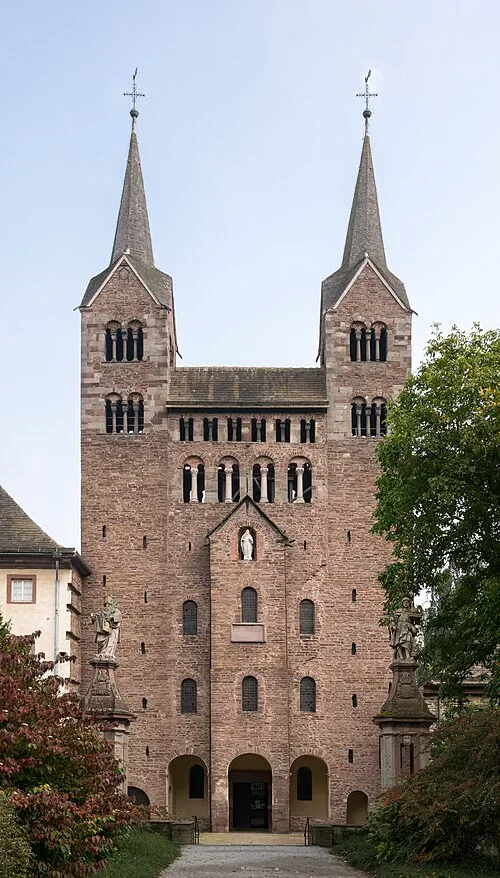 The Carolingian Westwork Facade and Ground Hall
The Carolingian Westwork - Facade
This is the westwork, and it is the reason Corvey is world famous. Between 873 and 885, the monks built this monumental entrance block onto their church - a massive west-facing structure with towers, upper chambers and an interior hall. That building type, the westwork, is Carolingian, and the one in front of you is the oldest that survives anywhere, and almost complete. It is also among the oldest standing medieval structures in Westphalia. Run your eye up the facade. The two spired towers you see today are not entirely original. In the twelfth century, under Abbot Wibald, one of the great abbots of Corvey's thousand-year history, the westwork was rebuilt in the High Romanesque style, and the Carolingian three-tower arrangement gave way to the twin towers we see now. Then comes the harder part of the story. In 1634, during the Thirty Years' War, imperial troops sacked the abbey while besieging nearby Höxter. The great church was later demolished altogether. Everything, that is, except this block. The westwork alone stood fast, which is why you can still put your hand on masonry raised here in the ninth century. Step inside, and let's see what those builders achieved.
Photo: Tsungam · CC BY-SA 4.0
03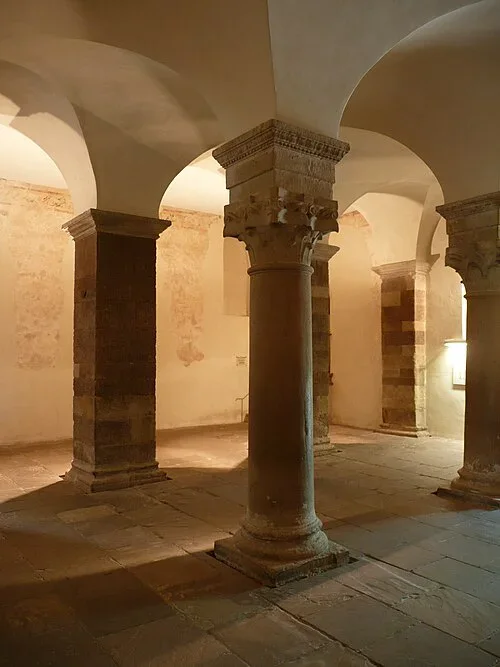 The Carolingian Westwork Facade and Ground Hall
Westwork Ground Hall
Feel the weight in this room. These are heavy blocks of stone, columns thick as tree trunks, carrying vaults that have spanned this hall for over eleven hundred years. For builders around 880, roofing stone over stone like this was a serious technical ambition, and Corvey's westwork pulled it off on a grand scale. What matters beyond this room is what came after. The original design - this vaulted hall, with galleries running around the main space above - became a model. Its arrangement strongly influenced later Romanesque architecture in the west, and echoes of it reach even into Gothic building. In other words, ideas worked out in this chamber helped shape how churches across Europe were thought about for centuries. Take a moment with the vaults overhead, then make your way up the old staircases to the upper rooms - that's where Corvey keeps its greatest surprise.
Listen in the appKarl-Heinz Meurer (Charlie1965nrw at de.wikipedia) · CC BY-SA 3.0
04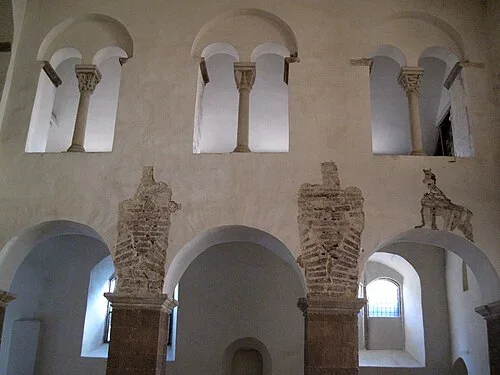 The Johannischor and Homeric Frescoes
The Johannischor - Upper Westwork
You've climbed into the upper level of the westwork, into a chapel known as the Johannischor. Look at the arcades around you - round-arched openings resting on slender columns set high on the wall, the plastered surfaces soft with age. This was no storage loft. In a Carolingian monastery, the upper rooms of the westwork were sacred space at the very threshold of the church, a place of prayer, and part of the ceremonial route through the most monumental block the builders had. From up here, the layout says everything: you stand above the entrance hall, wrapped in the galleries you saw from below. The light is different up here, the room more intimate. And it's a good thing this chamber survived, because its walls carry something found nowhere else. Look closely at the pale patches on the plaster - those faint traces are the remains of ninth-century painting, and what they depict is the subject of your next stop.
Listen in the appPhoto: Malchen53 · CC BY-SA 4.0
05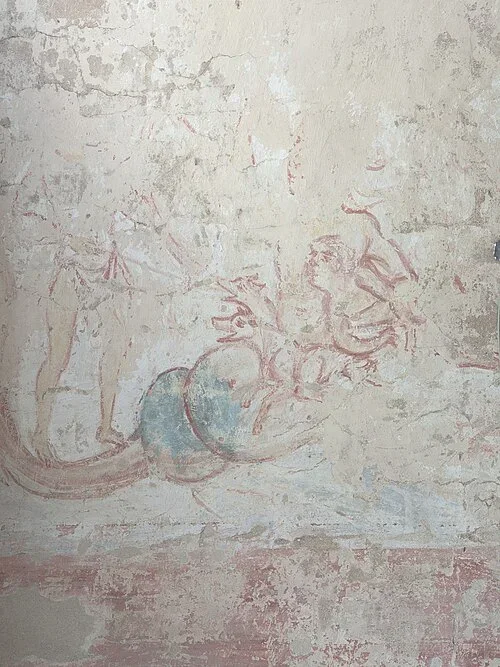 The Johannischor and Homeric Frescoes
The Odyssey Frescoes of the Johannischor
Here it is: a fragment of Odysseus himself, locked in struggle with the monster Skylla, the creature from Homer's Odyssey with dogs' heads springing from her body. These paintings are around eleven hundred years old, and they are unique. Nowhere else do Carolingian wall paintings of ancient mythology survive - and certainly not with the meaning these carry. Think about how strange this is. A monastic chapel on the Saxon frontier, decorated with scenes from a pagan Greek epic. But the monks didn't read Odysseus as a pagan hero. They read him as an allegory: Odysseus the virtuous Christian soul, sailing through a dangerous world, resisting the monsters and temptations that stand between him and salvation. Ancient story and Christian teaching fused into a single image - a rare synthesis of classical antiquity and early medieval thought. Notice how fragile it all is. The colors are ghostly, the plaster scarred; what you see is what time has spared. That a ninth-century monk's paint can still speak to you across eleven centuries is quietly astonishing.
Listen in the appTriple-green · CC BY 2.0
06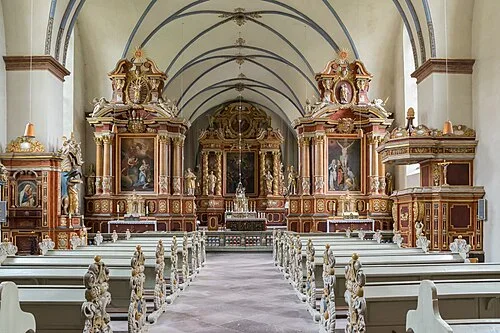 The Baroque Abbey Church of St. Stephanus and Vitus
You heard at the westwork how the old abbey was sacked in 1634 and its church demolished. Recovery took decades. In 1665 the ruined Carolingian church, westwork excepted, was torn down, and from 1667 to 1671 the architect Niklas Dentell raised the church you're standing in - a Gothicizing hall church, meaning Gothic forms delivered in a Baroque age. The rich furnishing followed within a few years, and the church was consecrated in 1681. Around you, the Baroque at full voice: carved and painted altars stacked with figures and gilding, a vaulted nave drawing your eye to the high altar, everything designed as one ensemble of church decoration. The rebuilding didn't stop at the church. Under Abbot Florenz von der Felde and his successors, the whole abbey complex rose again in Baroque dress, the work essentially complete by 1721 - and that is largely the palace you see today, preserved almost unchanged. Look down the nave once more. This church is dedicated to Saint Stephanus and Saint Vitus - and the second of those names has a story of its own, waiting for you just ahead.
Listen in the appPhoto: Tsungam · CC BY-SA 4.0
07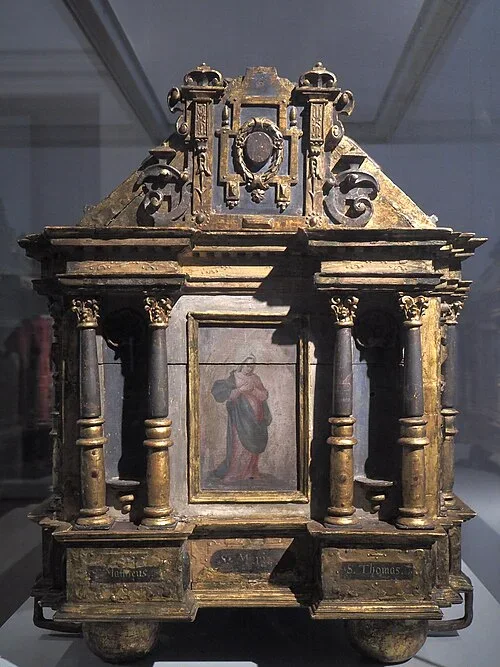 The Baroque Abbey Church of St. Stephanus and Vitus
The Shrine of Saint Vitus
This gilded shrine, with its painted saint framed between twisted columns, belongs to the story that made Corvey wealthy. In 836, the abbey of Saint-Denis near Paris gave Corvey the remains of Saint Vitus, a martyr whose cult swept across medieval Europe. With his relics, Vitus became the patron saint of the Saxons - the very people this monastery had been founded to convert. And because Vitus was counted among the Fourteen Holy Helpers, saints invoked for particular needs, his veneration drew enormous crowds. Corvey became a pilgrimage destination. Pilgrims came, prayed, and gave; other donors followed; and the gifts made Corvey one of the richest abbeys in Central Europe, paying for ambitious building for generations. The translation of the relics was such an event that one of the earliest and most important works of Corvey's own literature tells the story - the Translatio sancti Viti. So when you look at this shining container, see it as a window into that age: roads full of pilgrims, a frontier abbey grown powerful on devotion. Its patron saint's name still rings in the church around you.
Listen in the appUwe Barghaan · CC BY-SA 3.0
08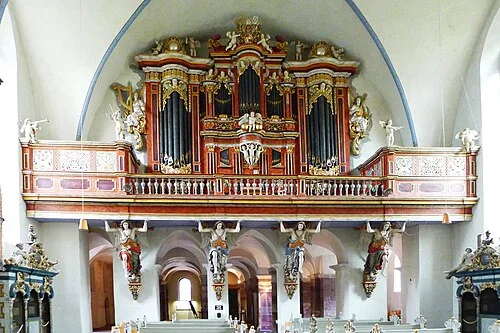 The Baroque Abbey Church of St. Stephanus and Vitus
The Baroque Organ Gallery
Turn and look back toward the west end of the church. There, set against the medieval westwork, rises the organ gallery - pipes gleaming in a case of carved and gilded Baroque splendor. The organ here dates to 1681, which makes it the one piece of furnishing that predates the rest of the church's decoration. Picture what this instrument meant in a monastery. The liturgy ran through the day in sung prayer, and the organ carried it - accompanying chant, marking feast days, filling this vaulted nave with sound. It was, in a real sense, the voice of the church. It still is: worship continues in this building today, just as it has for centuries, in a room that has heard monks, bishops and congregations sing beneath the same vaults. When you're ready, we'll leave the church through the quiet side of the complex - the monks' own walk.
Listen in the appPhoto: Bodo Kubrak · CC0
09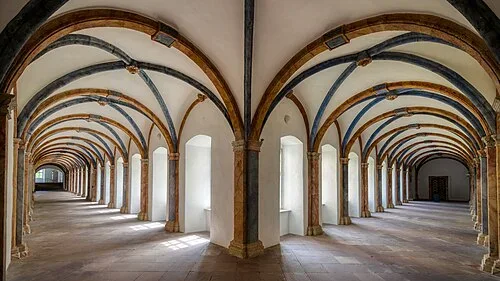 The Monastic Cloister
This is the cloister, the covered walk at the heart of monastic life, linking the church to the residence wings. Walk slowly and listen to the quiet - this corridor of vaulted bays was where the monks moved between prayer, work and study, day after day. And study mattered here enormously. Corvey's school quickly became famous, one of the celebrated schools of the Carolingian world, and it produced scholars of real standing. The greatest name is Widukind of Corvey, the tenth-century Saxon historian who wrote the Res gestae Saxonicae, the history of the Saxons, here at the abbey. In Corvey's first four centuries, twenty-three bishops emerged from this monastery. And not only scholars: from these cloisters went out a stream of missionaries who carried the Christian faith across Northern Europe. It's a striking thought. The quietest corridor in the whole complex was the engine room - the place where a frontier monastery trained the men who shaped the intellectual and spiritual map of the north. From here, we move from the monks' world to the princes'.
Listen in the appPhoto: GZagatta · CC BY-SA 4.0
10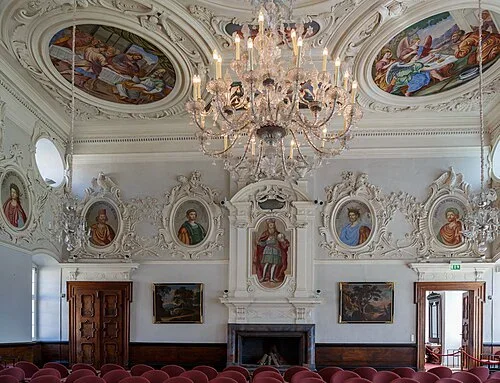 The Kaisersaal (Emperor's Hall)
This is the Kaisersaal, the Emperor's Hall, and it announces exactly what Corvey had become: a state in its own right. As a Reichsabtei, an imperial abbey, Corvey's abbot answered directly to the emperor in secular matters - no bishop, no duke in between. The portraits of emperors and kings arrayed around this hall make that relationship visible; they are the faces of the rulers with close ties to the abbey, watching over its ceremonial room, beneath stucco work and ceiling roundels of great refinement. But the story this room tells ends in change. In 1792, Corvey itself asked to be released from monastic rule, and Pope Pius VI obliged: the abbey became a prince-bishopric, with Abbot Theodor von Brabeck made prince-bishop. He and his successor Ferdinand von Lüninck were the last ecclesial princes here. In 1803, under Napoleonic administration, the principality was secularized - the old church state dissolved, its territory absorbed into new hands. The hall survived the politics. Stand in the middle of it a moment, then look up: one painted scene on this ceiling deserves a closer look, and it's a legend with fire in it.
Listen in the appCEphoto, Uwe Aranas · CC BY-SA 3.0
- 11
The Trial by Fire of Empress Kunigunde - Ceiling Painting
A ceiling scene of Empress Kunigunde's ordeal by fire - imperial legend painted for an imperial hall.
- 12
The Princely Library
Seventy-four thousand volumes in fifteen halls - the purely secular, aristocratic library, the third in Corvey's history.
- 13
Hoffmann von Fallersleben's Workplace
The preserved desk of the poet who wrote the German national anthem - and found refuge here as a librarian.
- 14
The Abbey Cemetery - Hoffmann's Grave
The quiet churchyard where the poet of the national anthem rests beneath a bronze portrait bust.
- 15
The Abbey Grounds and the Lost Town of Corvey
The wide final view - a lost medieval town beneath the gardens, and twelve centuries of Corvey in one panorama.
Corvey
Frequently asked questions
How much does the guide cost?
Free app download. Listed guide price: $1.99. Guide price shown in the app. Audio guide only. Venue admission is separate.
Can I listen without internet?
Yes. Download the guide’s audio, images, and maps in the app before your visit. Your downloaded content is then available offline.
Can I listen in my language?
This audio guide is available in 15 languages, including English.
Do I need to follow a schedule?
No. This is a self-guided experience. Choose your stops, pause whenever you like, and return to a story at your own pace.
At your own pace
Explore Corvey.
Download Stanza, then search for “Corvey”.
Free app download · Guide price shown in the app
Keep exploring
Nearby audio guides
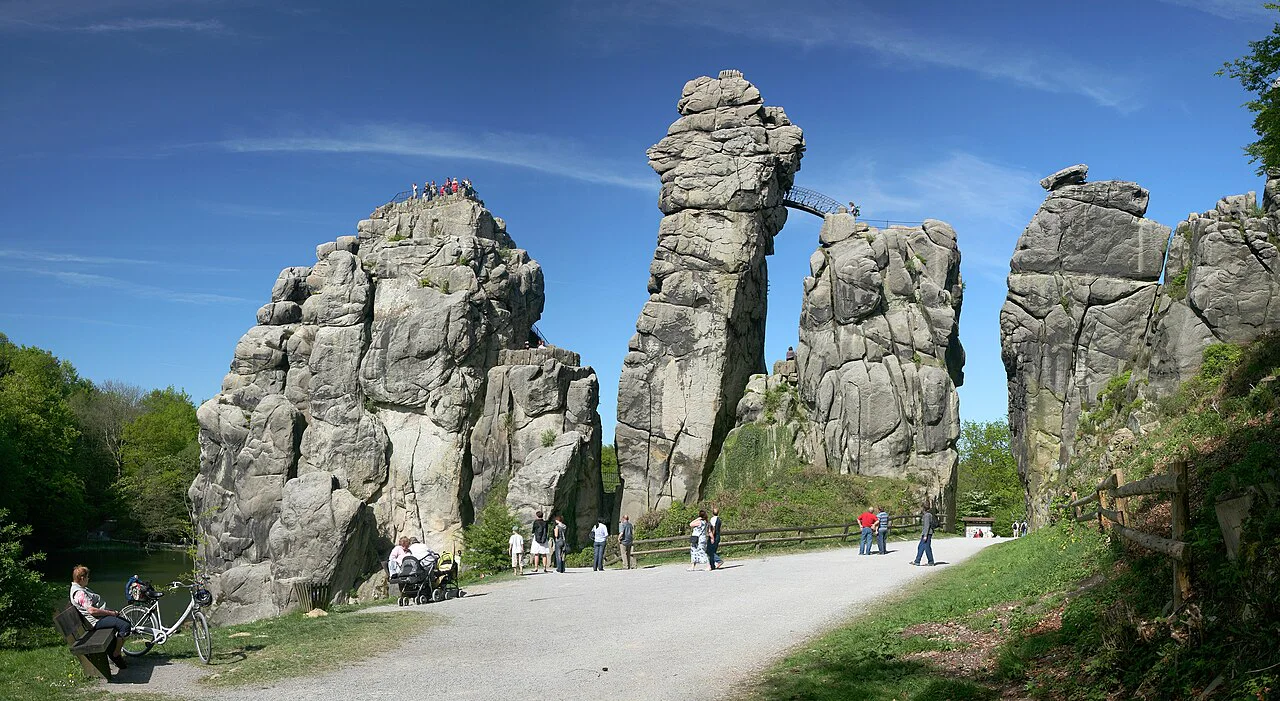
Horn-Bad Meinberg · 35 km
Externsteine
Content & sources
Daniel Schwen · CC BY-SA 2.5
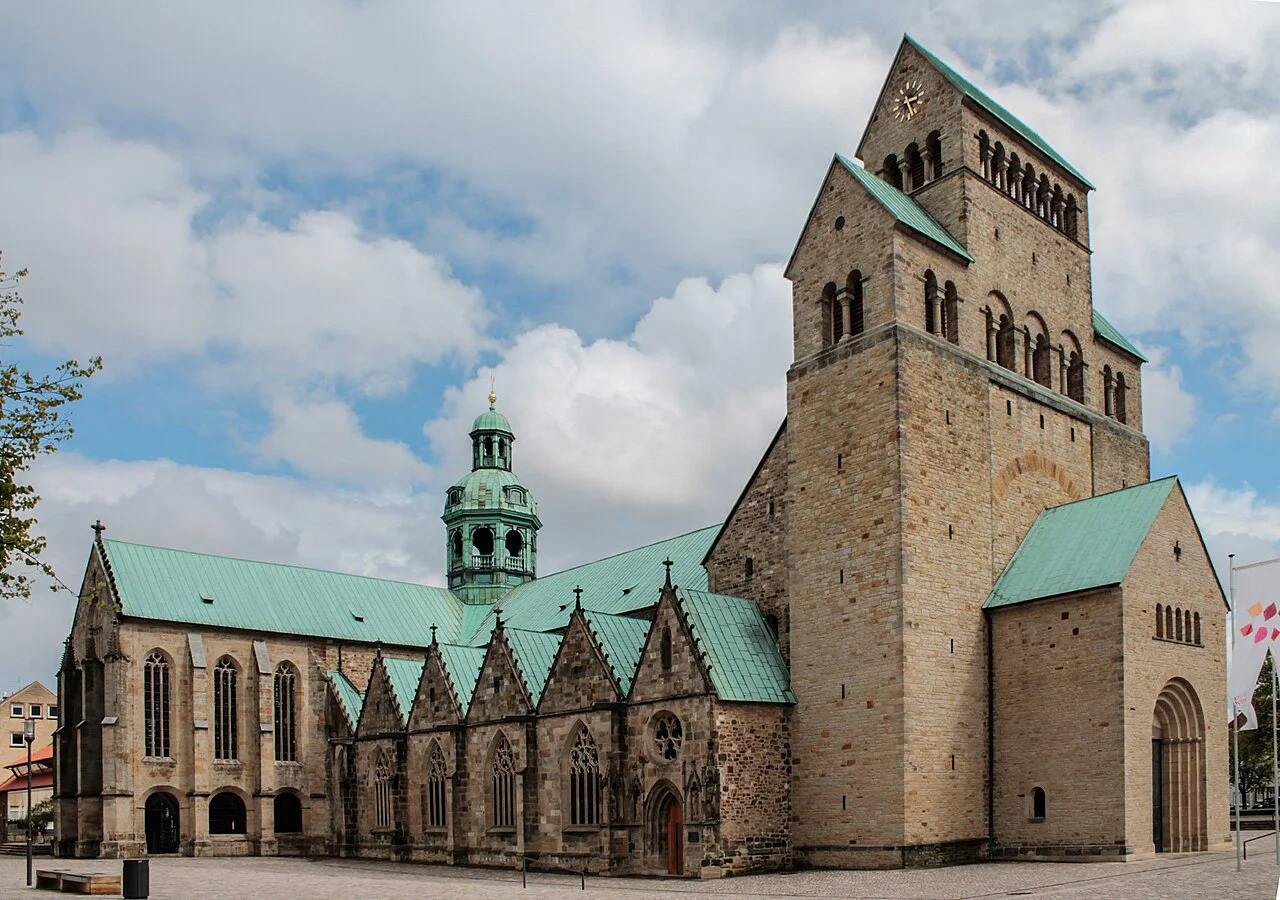
Hildesheim · 55 km
Hildesheimer Dom
Content & sources
Roland Struwe · CC BY-SA 4.0
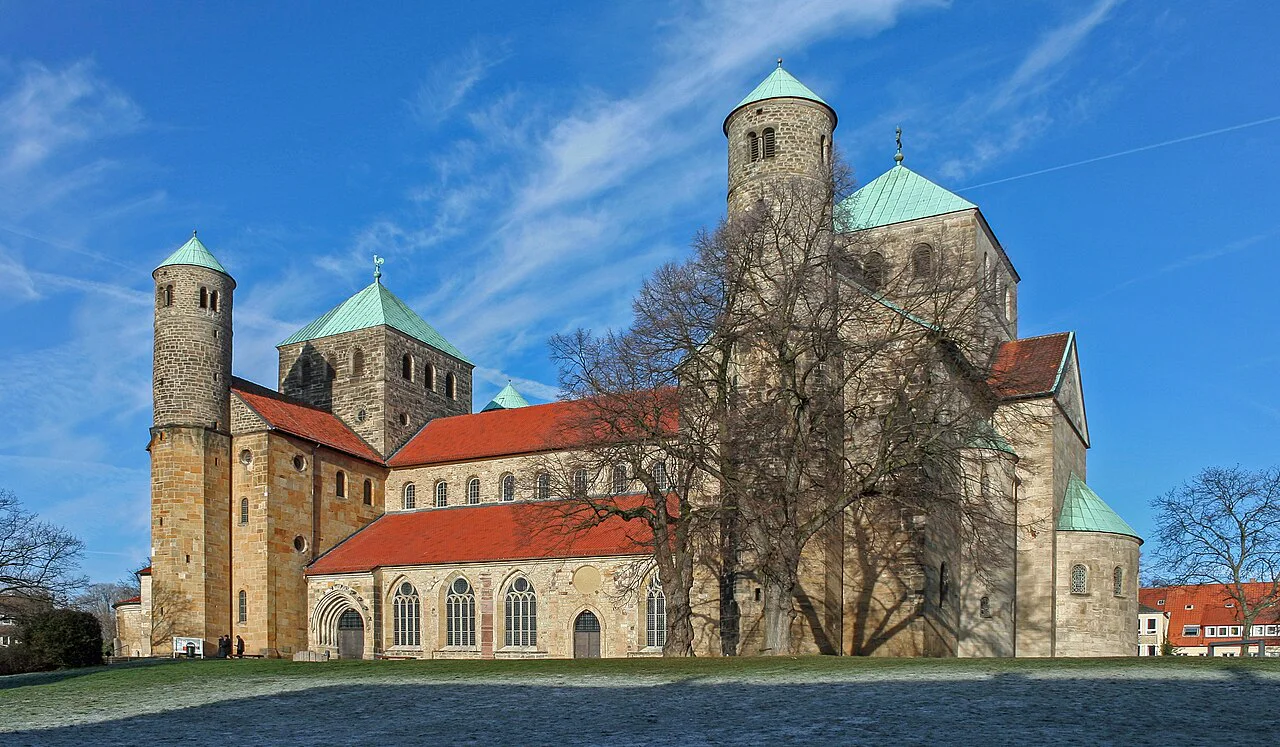
Hildesheim · 55 km
Michaeliskirche
Content & sources
Heinz-Josef Lücking · CC BY-SA 3.0 de
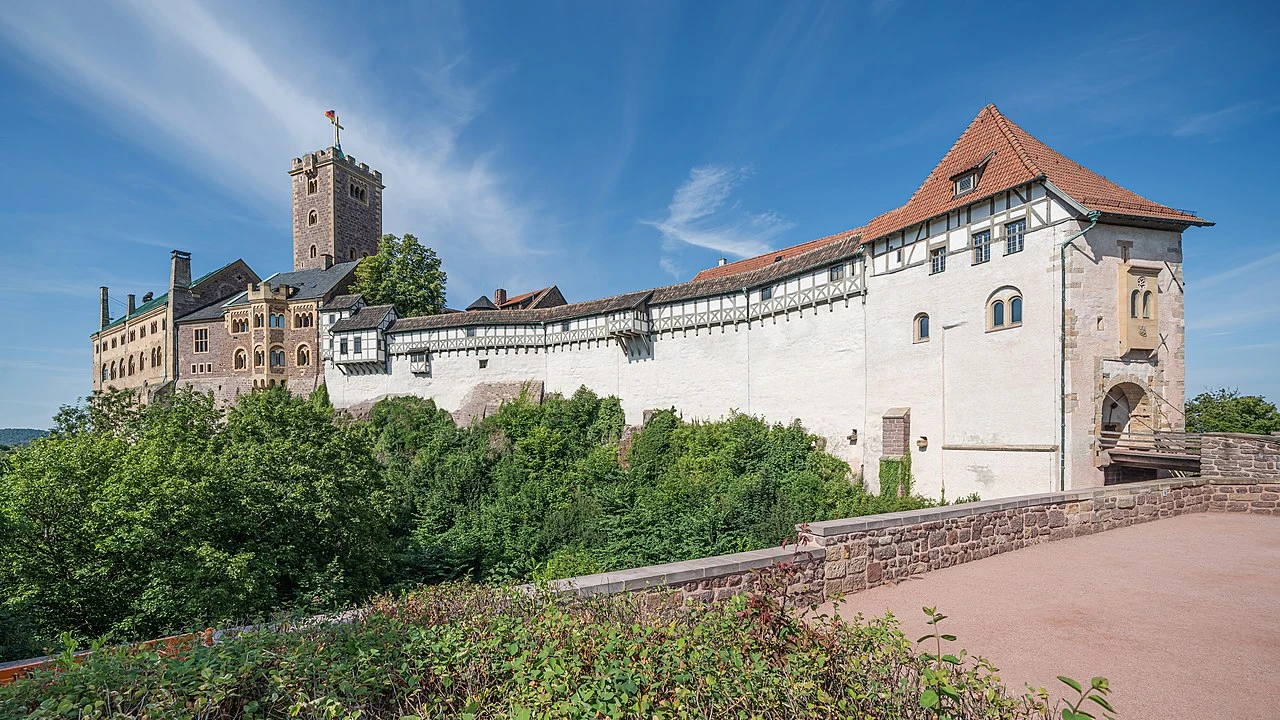
Eisenach · 110 km
Wartburg
Content & sources
Photo: A.Savin · FAL