Stanza · Audio guide
Hauptkirche Sankt Jacobi Audio Guide
A place to remember. A story to take with you.
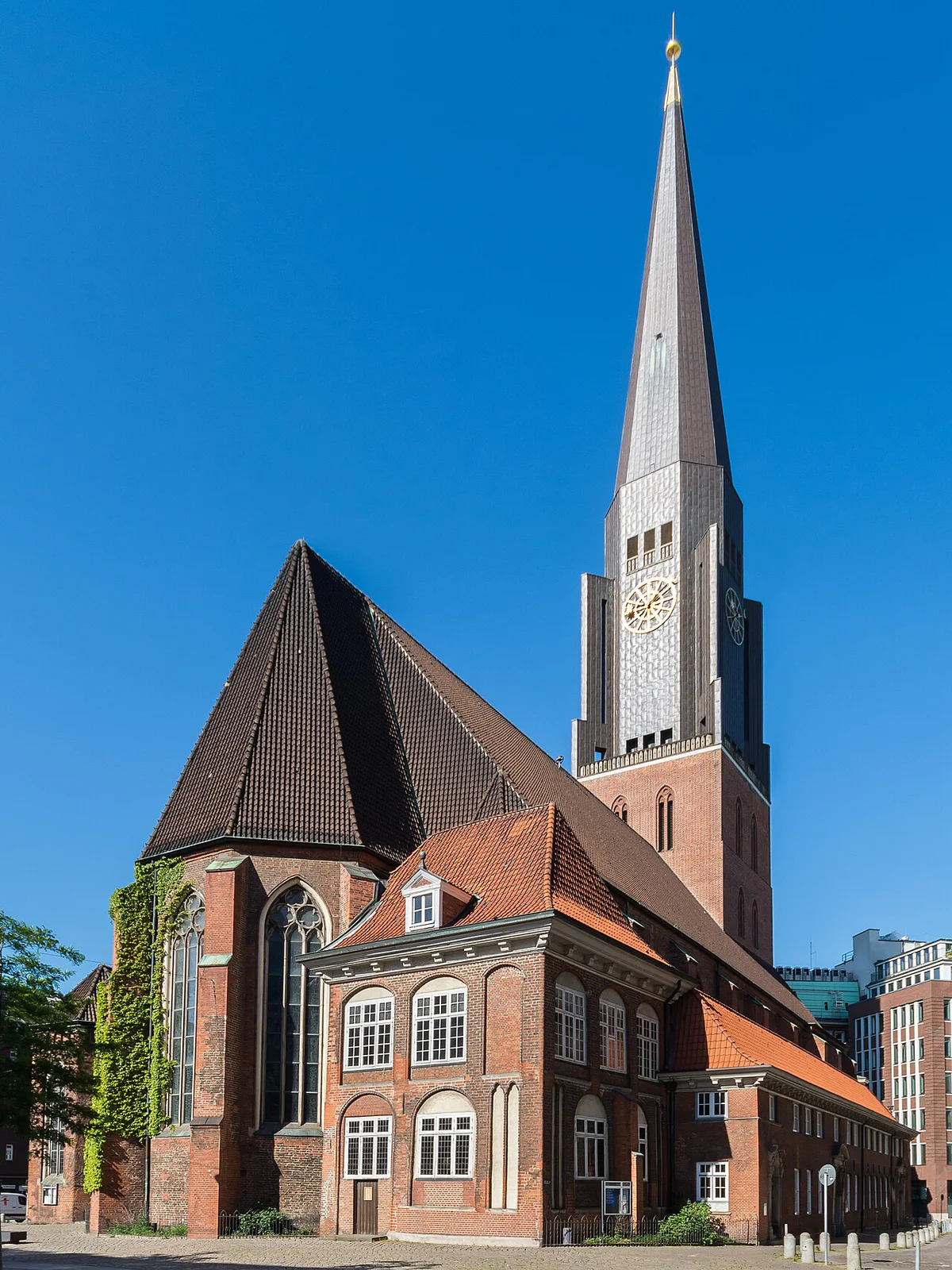
St. James' Church is one of the five principal churches of Hamburg. It features a famous organ by Arp Schnitger from 1693.
Download Stanza, then search for “Hauptkirche Sankt Jacobi”.
About the tour
One guide. Your kind of visit.
St. James' Church is one of the five principal churches of Hamburg. It features a famous organ by Arp Schnitger from 1693.
Ready when you are.
- 01Get the free Stanza app.
iOS & Android
- 02Find your guide.
“Hauptkirche Sankt Jacobi”
- 03Download before you go.
Works offline
Audio guide / 12 narrated stops
Inside the guide
Get to know a few of the stories before you go. Open a stop to read more.
01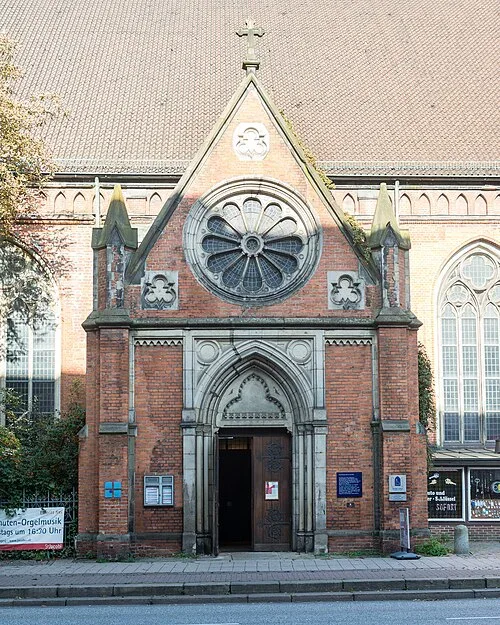 South Portal and Tower Exterior
The Steinstraße Portal
Welcome to St. Jacobi, one of Hamburg's five principal churches, and to a story that begins with pilgrims. The church owes its existence to the pilgrimage route. James the Greater was the saint of the long road to Santiago, and a small chapel here served travelers bound that way. It was first named in 1255, when it still lay outside the city walls, east of the Heidenwall. When Hamburg extended its fortifications from 1260, the chapel was drawn inside the defenses and grew into the fourth Hauptkirche of the city. The Steinstraße outside was one of the early town's main streets, already paved in the thirteenth century. The red brick gable, with its great round rose window above the pointed doorway, marks the entrance from the shopping street into a Gothic hall.
Photo: Ajepbah · CC BY-SA 3.0 de
02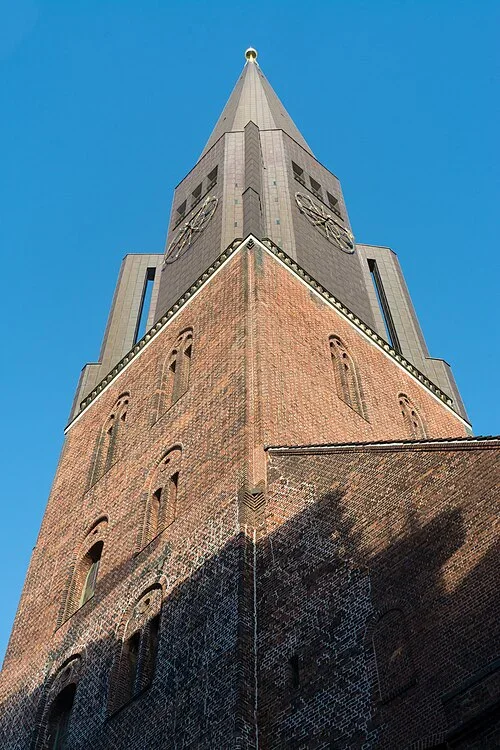 South Portal and Tower Exterior
Tower and Spire
The tower tells two stories at once. The lower shaft is medieval brick, pierced by narrow pointed windows. Above it rises a steep, angular spire of a different character, built in 1963 by the architects Hopp and Jäger as the church rose again after the war. It reaches a hundred and twenty-five meters into the sky. Investigations completed in 2025 found that the medieval lower storeys cannot carry the concrete spire permanently. In January 2026 the parish announced, together with the heritage authorities, that the spire will be dismantled, with work to begin in 2028. An inner supporting structure, the engineers concluded, would not solve the problem. The tower has attracted bold ideas before. In 1769 it received the first lightning rod in Germany, installed on the suggestion of Johann Albert Heinrich Reimarus and built by Mathias Andreas Mettlerkamp. The clock faces were drawn by the Hamburg artist Alfred Mahlau.
Photo: Ajepbah · CC BY-SA 3.0 de
03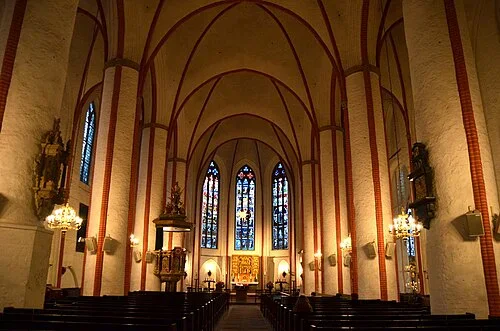 The Four-Nave Gothic Hall
The Gothic Hall
Few churches in Hamburg open as wide as this one: a broad hall of brick, its vaults rising from slender round piers with bands of red brick running up the whitewashed columns. The core was built in the second half of the fourteenth century. Around 1400 it stood complete as a three-naved hall church, similar to the neighboring St. Petri. At the end of the fifteenth century a fourth nave was added on the south side, which is why the plan is lopsided to this day. Brick Gothic like this was the city's own style, shaped by growth rather than by a single plan. The church has not always served worship alone. From 1806 to 1813, while Napoleonic troops occupied Hamburg, the nave served mainly as stables. Cavalry horses stood where the pews are now, under the same vaults.
Listen in the appPedro from Maia (Porto), Portugal · CC BY 2.0
04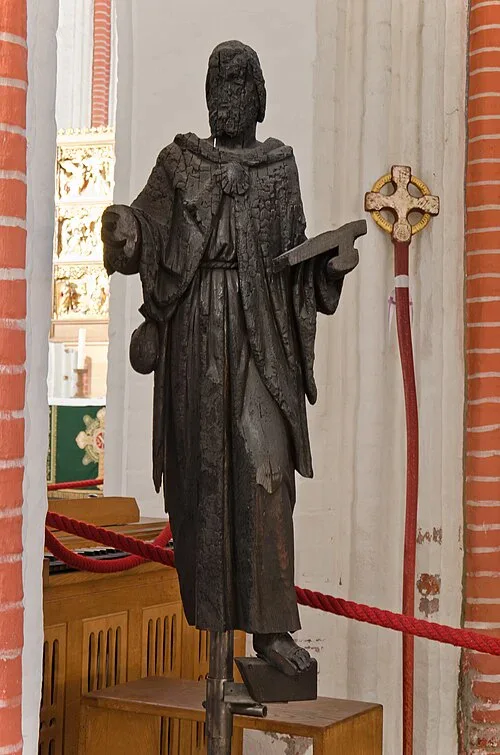 The Four-Nave Gothic Hall
Charred Jacobus Figure
A burned wooden figure of the apostle James stands among the treasures of this church, blackened from head to foot. He is the patron to whom the whole church was dedicated from its beginnings as a pilgrims' chapel. On 18 June 1944 an air raid set St. Jacobi ablaze. The burning tower crashed through the vaults into the interior, and the church burned out completely. Yet the historic furnishings had been brought to safety in time. The altars, the pulpit and the organ case all survived the fire that destroyed the building around them. After the war, St. Jacobi was rebuilt to its medieval design, and by 1963 it stood complete again. The charred saint has kept his place among the rescued works ever since.
Listen in the appPhoto: An-d · CC BY-SA 3.0
05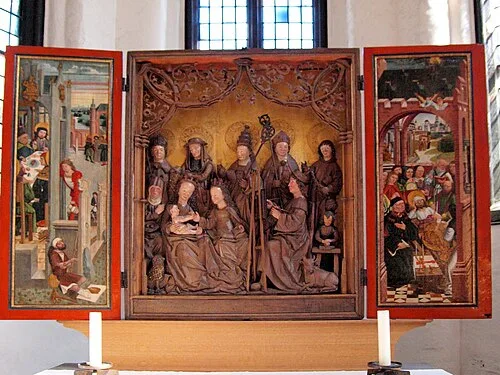 Guild Altars of the South Naves
The St. Luke Altar of the Painters' Guild
The altars in the south naves come from the trade guilds of medieval Hamburg. Each brotherhood of craftsmen endowed its own altar, paid for it, decorated it, and heard mass there. This one, in the second south nave, belonged to the guild of St. Luke, the patron of painters. It was completed in 1499, carved in oak by Hinrik Bornemann, Absolon Stumme and Wilm Dedeke. The altarpiece did not begin its life here. It was made for Hamburg's old cathedral, the Mariendom, and came to St. Jacobi later. In its open state the carved shrine shows holy figures beneath golden tracery, with painted scenes filling the wings. Of the twenty medieval altars St. Jacobi itself once held, only two survive.
Listen in the appPhoto: Bullenwächter · CC BY-SA 3.0
06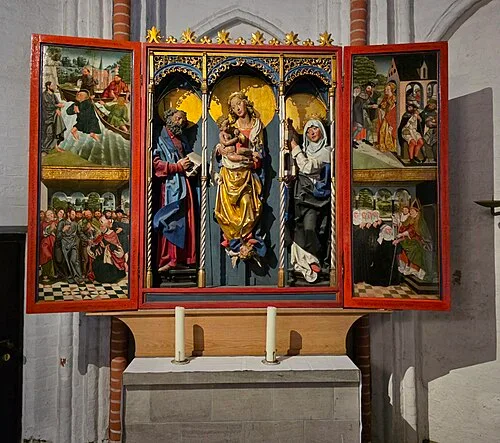 Guild Altars of the South Naves
The St. Peter Altar of the Fishers' Guild
The next altar belonged to a trade tied to the river and the harbor. The fishers of Hamburg gave the St. Peter altar, set up in 1508 in the first south nave. Gilded figures fill its carved shrine, with painted wings telling their stories at the sides, much as on the painters' altar in the nave beyond. All these guild altars were built as Roman Catholic altars, for masses in the old faith. In 1529 St. Jacobi became a Lutheran church. Under the new confession the old carved altars were not swept away. They kept their places in a Protestant parish church, which is why Catholic saints in gold and color stand here still.
Listen in the appPhoto: JensKunstfreund · CC BY-SA 4.0
07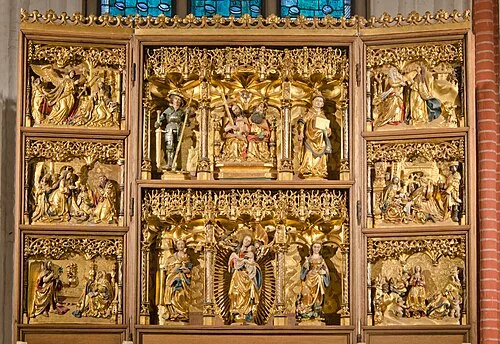 Main Choir and Holy Trinity Altar
The Holy Trinity Altar
The grandest of the guild altars stands in the main choir, the holiest place in the church. The Holy Trinity altar was a gift of the coopers' guild, the Böttcherzunft, presented in 1518. It is carved in oak and covered in gold, and it rises in tiers of saints and scenes set in delicate niches, crowned with openwork tracery. Where the fishers and the painters claimed places in the south naves, the coopers claimed the choir itself. A craft wealthy enough to furnish the church's focal point did so in full view of every congregation. Guild pride rarely found a more splendid expression than this altar of gilded oak.
Listen in the appPhoto: An-d · CC BY-SA 3.0
08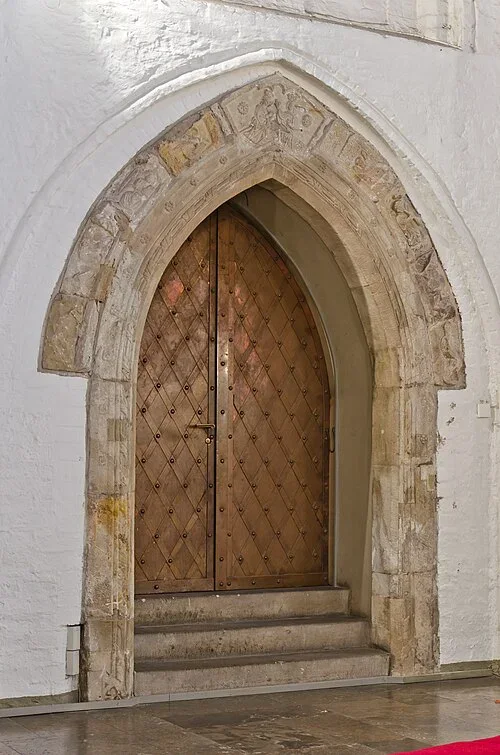 The 1438 Sacristy and Herrensaal
The Sacristy Portal
A pointed arch of pale stone marks the way into the sacristy, on the northeast corner of the church. The annex was built in 1438, while the Gothic church was still growing. Its carved archway has survived intact, with figures and ornament framing the door. The sacristy is a rarity of a special kind. It is Hamburg's only surviving example of medieval secular Gothic architecture, Gothic built not for worship but for everyday use. Above it lies another room, reached by historic stairs, where the parish's governing laymen once met.
Listen in the appPhoto: An-d · CC BY-SA 3.0
09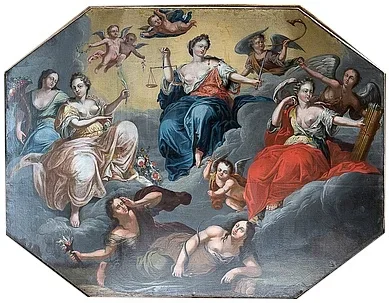 The 1438 Sacristy and Herrensaal
The Herrensaal Ceiling Paintings
Above the sacristy lies the Herrensaal, which began its life as a library. From 1543 it served as the assembly room of the Kirchspielherren, the laymen who governed the parish. In 1710 the room received the outfit it largely keeps today. The ceiling paintings, like the landscapes on the walls, are the work of Johann Moritz Riesenberger the Younger. The octagonal panel with its allegorical figures drifting among clouds is one of these ceiling paintings. Its subject belongs to a larger message: the civic virtues, painted to declare how closely the parish's administration was bound up with the government of Hamburg itself. Along the walls, coats of arms name the pastors, vicars and jurors who have served the parish since the sixteenth century.
Listen in the appJohann Moritz Riesenberger der Jüngere · Public domain
10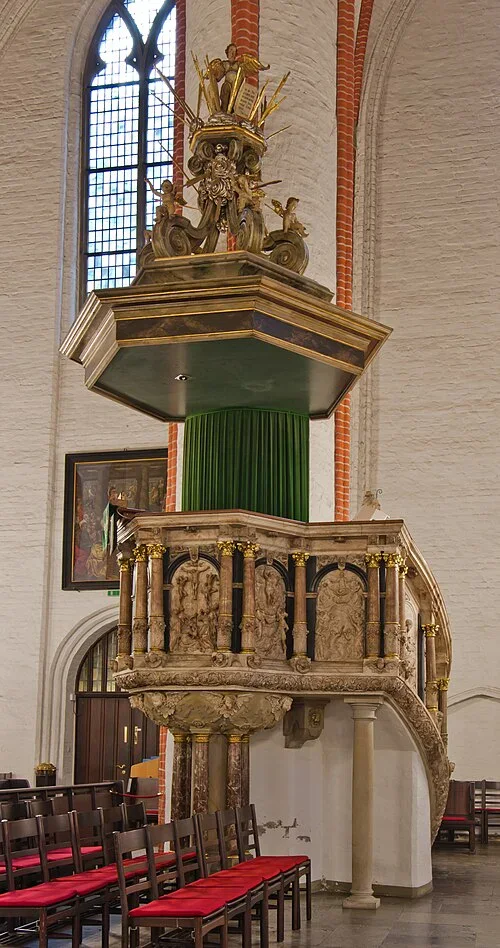 The Alabaster and Marble Pulpit
The Baroque Pulpit of 1610
The pulpit of 1610 is the work of Georg Baumann, worked in alabaster, marble and sandstone. Its cup is a small stage of salvation history. The Annunciation, the birth of Christ, the Crucifixion, the Resurrection and the Ascension are carved in relief around the pulpit. On the panels of the stair the four Evangelists take their places, and the sound lid above carries the Ten Commandments. In a Lutheran church the pulpit is the voice of the service, the place from which the word is preached. This one makes that claim in stone, marble and gold.
Listen in the appPhoto: An-d · CC BY-SA 3.0
- 11
The Arp Schnitger Organ
Arp Schnitger's 1693 giant, the largest surviving Baroque organ in Northern Europe, and the applicant it turned away.
- 12
The Schnitger Console
At the organist's console: the 1993 restoration, a painted Bible around the gallery, and an organ heard every Sunday.
Hauptkirche Sankt Jacobi
Frequently asked questions
How much does the guide cost?
Free app download. Listed guide price: $0.99. Guide price shown in the app. Audio guide only. Venue admission is separate.
Can I listen without internet?
Yes. Download the guide’s audio, images, and maps in the app before your visit. Your downloaded content is then available offline.
Can I listen in my language?
This audio guide is available in 15 languages, including English.
Do I need to follow a schedule?
No. This is a self-guided experience. Choose your stops, pause whenever you like, and return to a story at your own pace.
At your own pace
Explore Hauptkirche Sankt Jacobi.
Download Stanza, then search for “Hauptkirche Sankt Jacobi”.
Free app download · Guide price shown in the app
Keep exploring
Audio guides — Germany
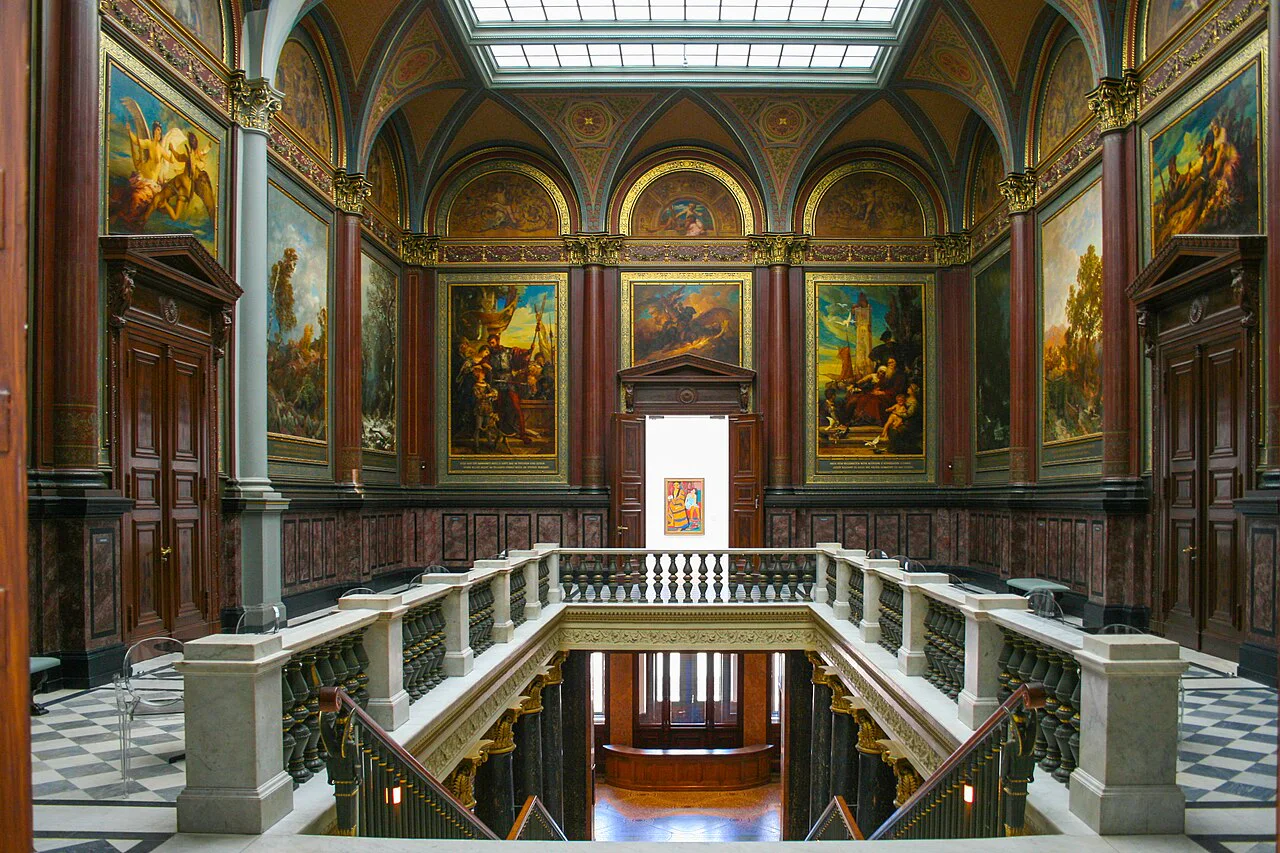
Hamburg · 1 km
Hamburger Kunsthalle
Content & sources
Photo: Daniela Kloth · GFDL 1.2
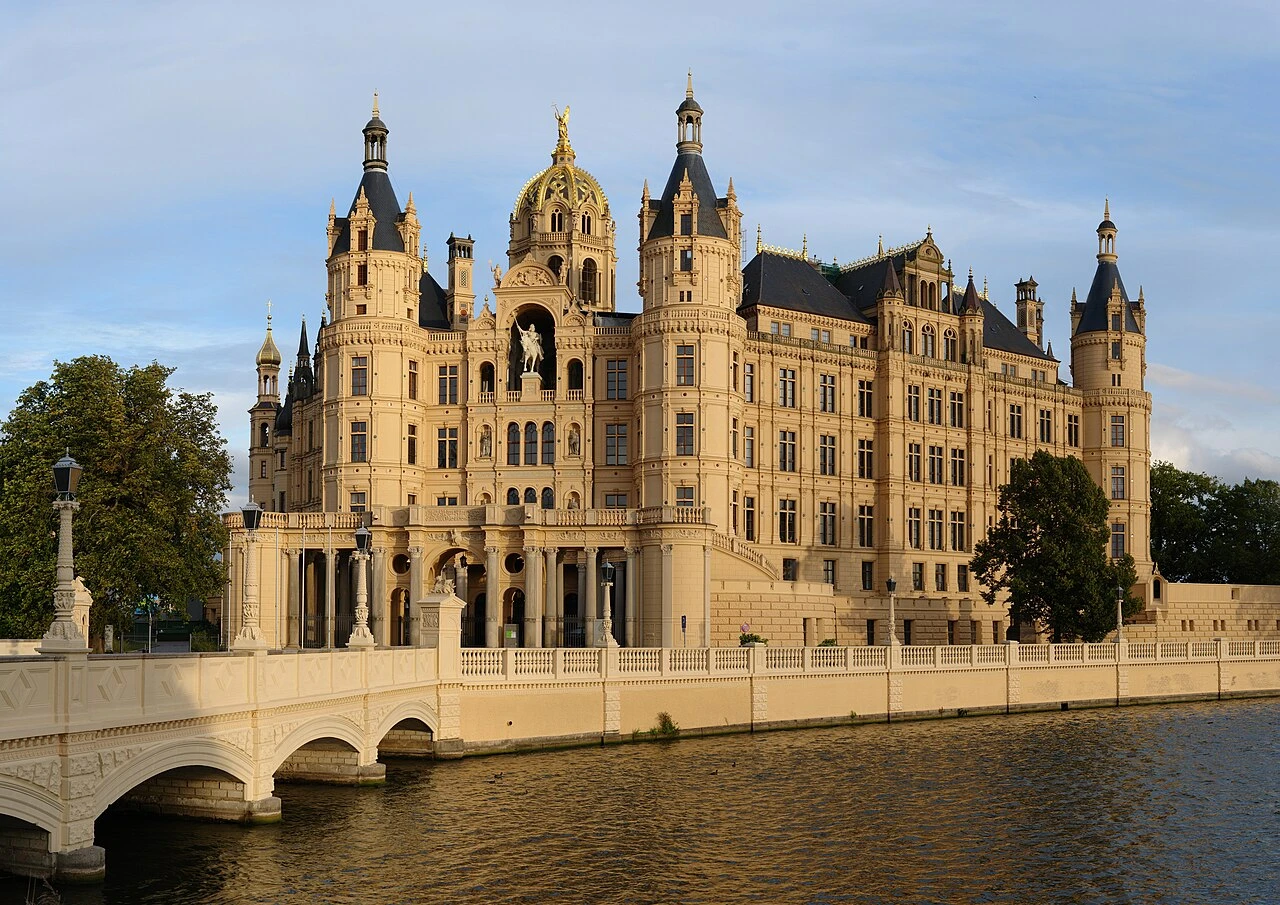
Schwerin · 94 km
Schwerin Castle
Content & sources
User:Kolossos · CC BY-SA 3.0
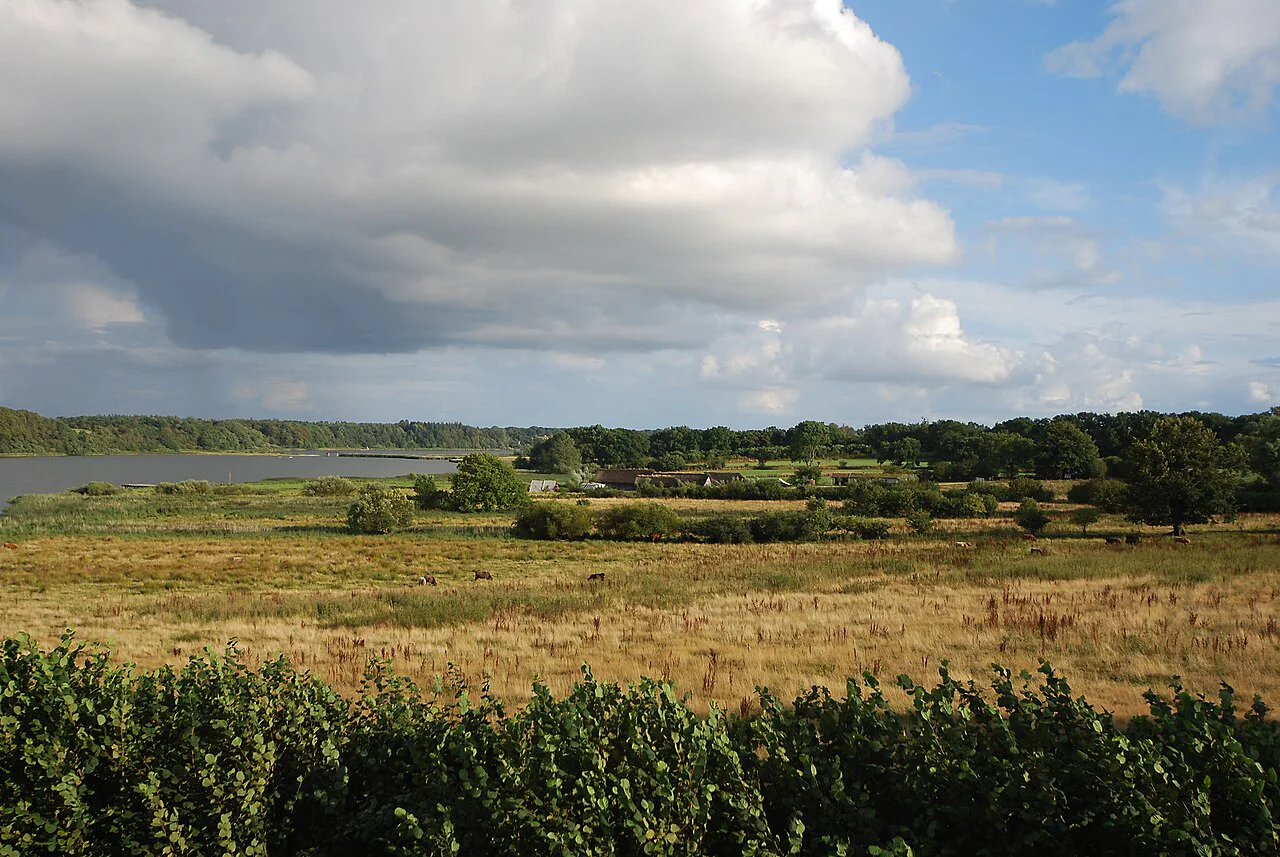
Niederselk · 108 km
Haithabu
Content & sources
Matthias Böhm · CC BY-SA 4.0
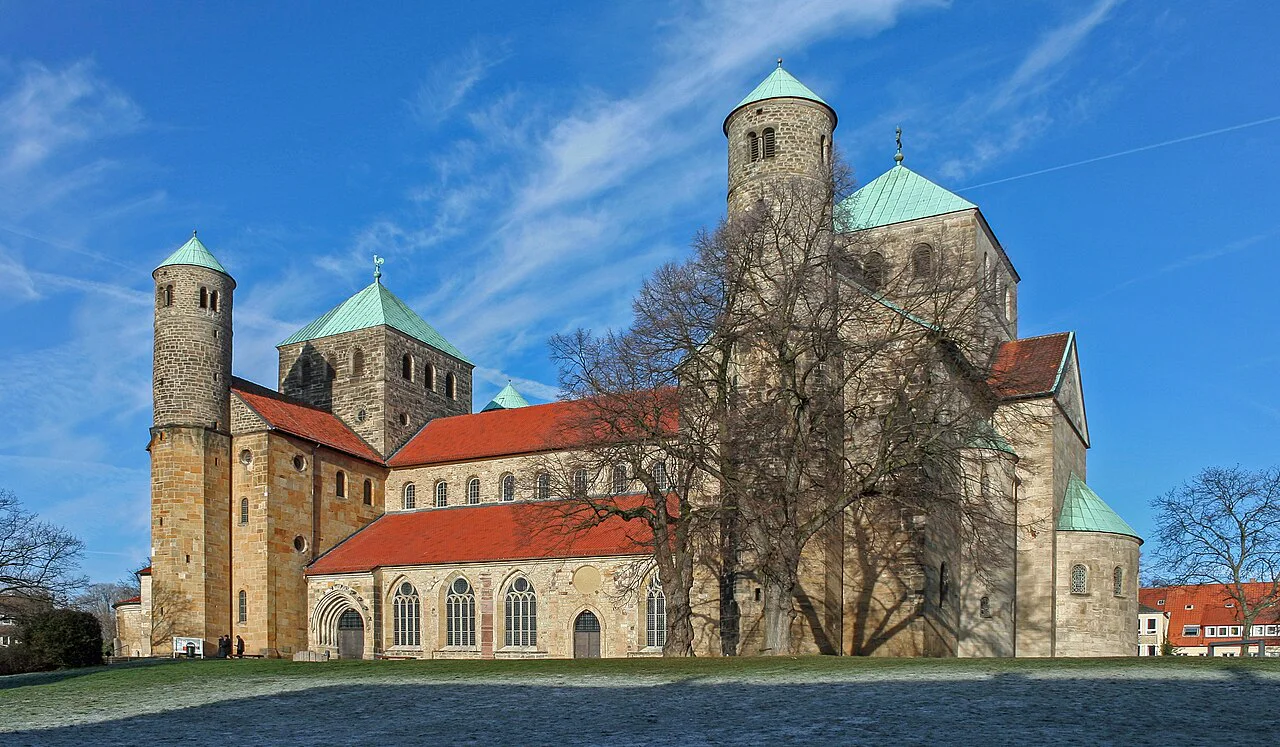
Hildesheim
Michaeliskirche
Content & sources
Heinz-Josef Lücking · CC BY-SA 3.0 de