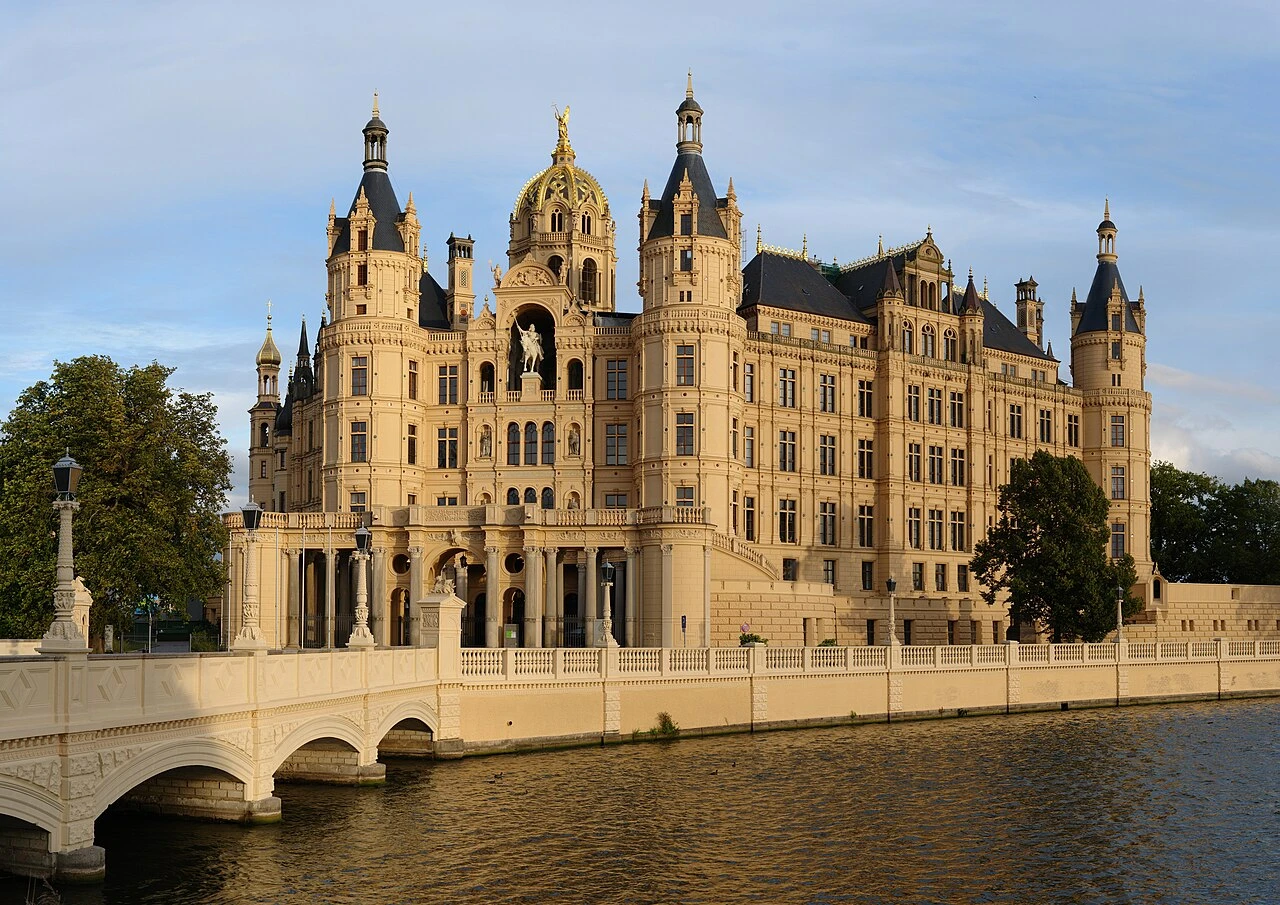
Stanza · Audio guide
Schwerin Castle Audio Guide
A place to remember. A story to take with you.
Schwerin Castle is a historic castle situated on an island in Lake Schwerin, Germany. It functions as a museum and also houses the state parliament of Mecklenburg-Vorpommern.
Download Stanza, then search for “Schwerin Castle”.
About the tour
One guide. Your kind of visit.
Schwerin Castle is a historic castle situated on an island in Lake Schwerin, Germany. It functions as a museum and also houses the state parliament of Mecklenburg-Vorpommern.
Ready when you are.
- 01Get the free Stanza app.
iOS & Android
- 02Find your guide.
“Schwerin Castle”
- 03Download before you go.
Works offline
Audio guide / 15 narrated stops
Inside the guide
Get to know a few of the stories before you go. Open a stop to read more.
01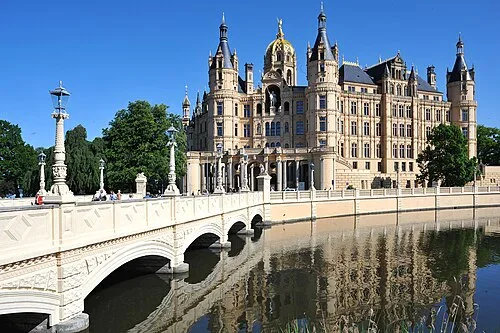 Castle Bridge and the Niklot Entrance Portal
Schlossbrücke and the Castle Facade
Schwerin Castle stands on an island in the city's main lake, and it is a nineteenth-century palace in the historicist style. Its architectural model was Chambord, a Renaissance château in the Loire Valley of France. The old buildings had different origins and styles, and Grand Duke Paul Friedrich disliked that patchwork, and he ordered a new palace built on the Alter Garten, in the town. His successor, Friedrich Franz the Second, halted that work a few months later and had the island site rebuilt instead. Two rival architects, from Dresden and Berlin, could not win the Grand Duke over. The architect chosen for the job, Georg Adolph Demmler, borrowed elements from both designs. His inspiration came from French Renaissance castles. Demolition began in 1843. The new palace was finished in 1857. The bridge onto the island was newly built during the same works. The palace is nicknamed the Neuschwanstein of the North, after the famous castle in Bavaria. About two hundred thousand visitors come each year. In 2024 UNESCO added it to its World Heritage List, as part of the Schwerin Residence Ensemble. Its towers and golden dome are mirrored in the lake.
Хрюша · CC BY-SA 3.0
02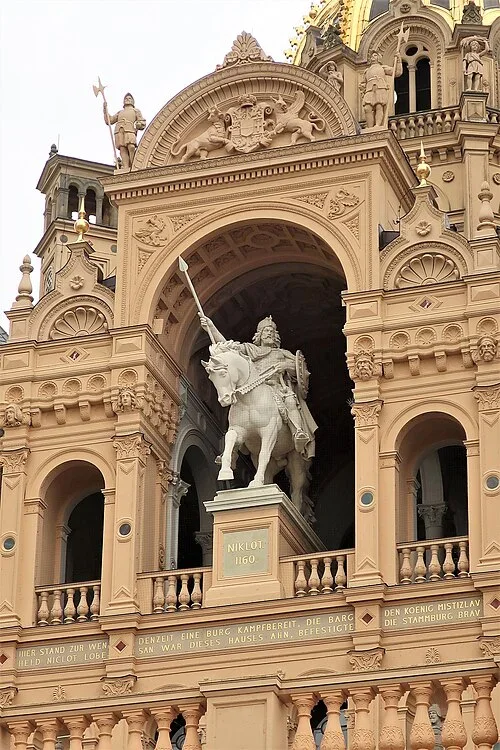 Castle Bridge and the Niklot Entrance Portal
Prince Niklot Equestrian Statue above the Gate
The first records of a fort on this island date from 973. It belonged to the Obotrites, a Slavic tribe. Nearly two centuries later, in 1160, German noblemen, under Henry the Lion, planned to push their territory eastward. The Obotrites were under Prince Niklot. Faced with overwhelming German strength, his men destroyed their own fort and withdrew. The German conquerors saw the island's strategic value and began building a new fort there. The city of Schwerin was founded that same year, and it became the seat of a bishopric. Above the gate, in an arched niche, an equestrian statue shows Niklot on a pale horse. The plinth carries his name and the year 1160. The sculptor was Christian Genschow. Later, the architect Friedrich August Stüler added the statue to the front that faces the town.
Photo: Bärwinkel,Klaus · CC BY-SA 4.0
03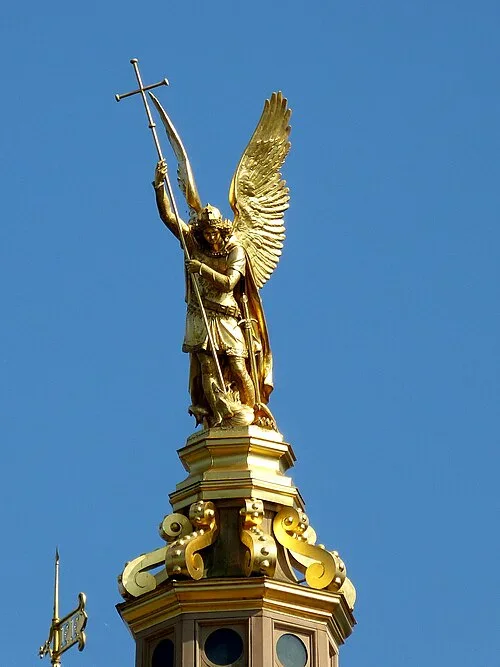 Castle Bridge and the Niklot Entrance Portal
Gilded Archangel Michael on the Central Cupola
The Archangel Michael crowns the cupola tower, a winged figure holding a long staff with a cross at its top. The figure is a gilded zinc casting. In place of a lantern that Demmler had planned, Stüler set a monumental gilded cupola. A lantern is a small glazed structure on top of a roof or dome. The figure was set in place in 1857. Below it, the tower carries scrolled gold ornament and round openings. In 2024 a metal workshop in Berlin restored the figure and renewed its gilding.
Listen in the appWolfgang Sauber · CC BY-SA 4.0
04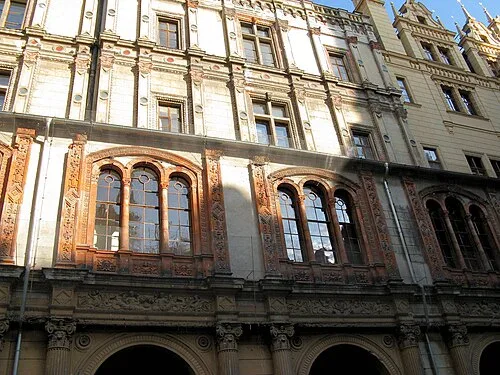 Inner Palace Courtyard and the Legend of Petermännchen
Inner Courtyard Facade
Tall windows on this courtyard front sit between richly decorated pillars, above a row of arches. Demmler, the Grand Duke's architect, led the palace works until early 1851. Many workers were employed on the site, and he tried to ease their hardships. He set up an accident and sickness insurance fund for them. He also argued more than once for fair pay. In 1851 he was dismissed from the state's service, and the reasons are not clear. Stüler then led the works to completion.
Listen in the appNiteshift (talk) · CC BY 3.0
05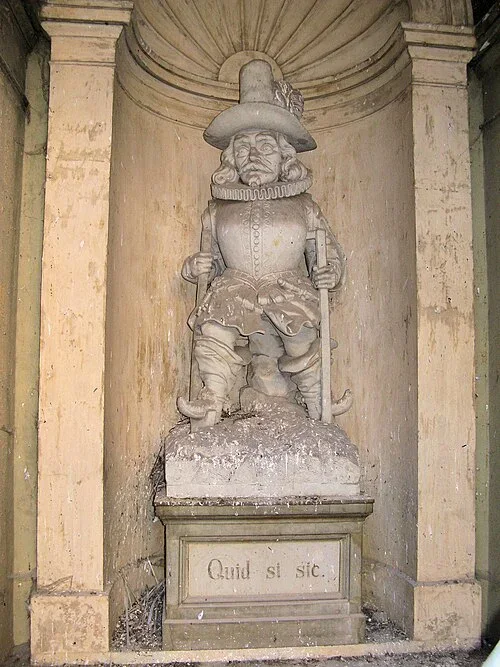 Inner Palace Courtyard and the Legend of Petermännchen
Petermännchen Statue in Its Niche
The Petermännchen, or little Peterman, is said to haunt the halls of Schwerin Castle. The legend makes this invisible sprite no more than a few feet tall. Stories often picture him in seventeenth-century dress, something like a cavalier, a fashionable gentleman. Other tellings make him a long-bearded blacksmith or a night watchman. Some say he is a prankster who plays tricks on anyone who means to harm or steal from the castle. The stone figure in its niche wears a broad-brimmed hat, a ruff at the neck, a doublet and boots. In each hand he holds a long staff. Heinrich Petters made this statue in 1856.
Listen in the appNiteshift (talk) · CC BY 3.0
06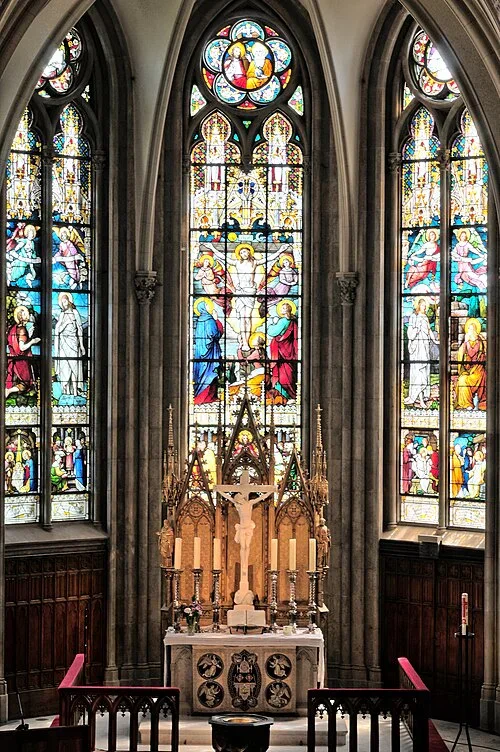 The Historic Protestant Castle Church
Schlosskirche Altar and Stained-Glass Windows
Duke Johann Albrecht the First began this chapel in 1560. It was the first newly built Protestant church in Mecklenburg. On the altar stand a crucifix and tall candles, beneath a canopy of pointed pinnacles. Alabaster reliefs with scenes from the Bible are set into the window niches of the north gallery, away from this altar. Willem van den Broeck, known as Paludanus, made five of them. He was a very popular artist of his day, from the Low Countries. Schwerin has one signed by his own hand, a rare treasure. It is titled The Elevation of the Brazen Serpent.
Listen in the appPhoto: Ralf Roletschek · GFDL 1.2
07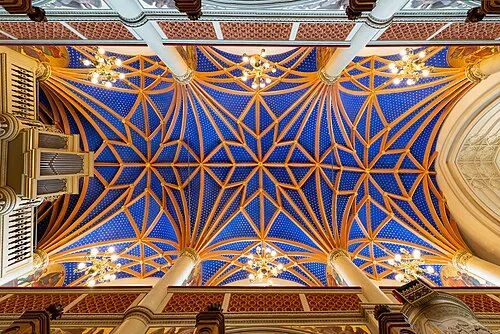 The Historic Protestant Castle Church
Schlosskirche Vaulted Ceiling
Master builder Johann Baptista Parr set the chapel at a right angle against the New Long House. Galleries, or raised balconies, run along both long sides and at the short ends. The chapel was modelled on the castle chapels at Torgau and Dresden, which had been built only a few years earlier. The vault above is painted blue and gold, with ribs that fan out into star shapes. Chandeliers hang beneath it. On the courtyard side, a sandstone portal follows the forms of the early Venetian Renaissance. It came from the workshop of the Dresden sculptor Hans Walther, and its gable shows Christ carrying the cross.
Listen in the appPhoto: T meltzer · CC BY-SA 4.0
08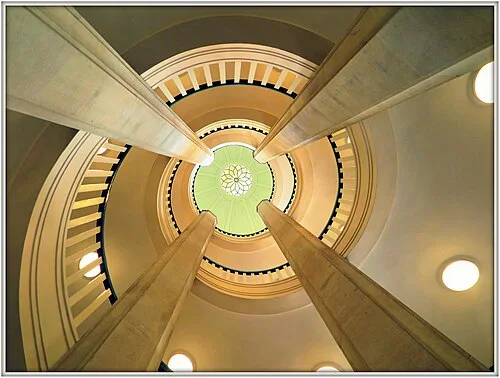 The Grand Staircase and 1913 Fire Recovery
Palace Stairwell Viewed from Below
A spiral stair climbs around an open well, beneath a glazed roof with a rosette at its centre. In December 1913 a fire of unclear cause broke out at night and destroyed about a third of the palace. The wing on the lake side burned down to its foundations. The dining hall, the main staircase and the Golden Hall were completely destroyed. Only the outside had been rebuilt when the revolution forced the Grand Duke to abdicate. In 1972 a festival hall in the style of its day was set up where the Golden Hall had been.
Listen in the appRolf Dietrich Brecher from Germany · CC BY-SA 2.0
09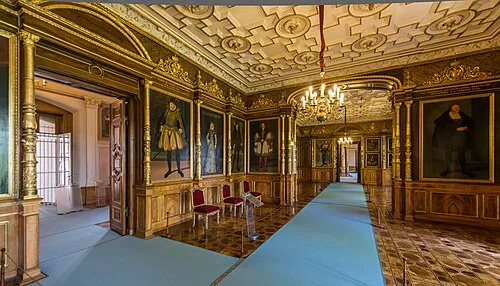 The Ancestral Portrait Gallery
Ancestral Portrait Gallery (Ahnengalerie)
The Ancestral Gallery, or Ahnengalerie, takes its name from the forebears of the ruling family. Portraits in gilt frames hang between gilded pillars, and the floor is parquet. The family story here begins with Pribislav, a son of Niklot. In 1167 Henry the Lion gave the county of Schwerin to one of his vassals, a man who held land from him. The rest of the country around the city went back to Pribislav. In 1358 Niklot's descendants bought the county of Schwerin. They moved their residence inland, from an older seat near Wismar to Schwerin. The hereditary line of dukes that began with Pribislav lasted until 1918.
Listen in the appGymnasium Melle - Foto Gruppe · CC BY-SA 3.0
10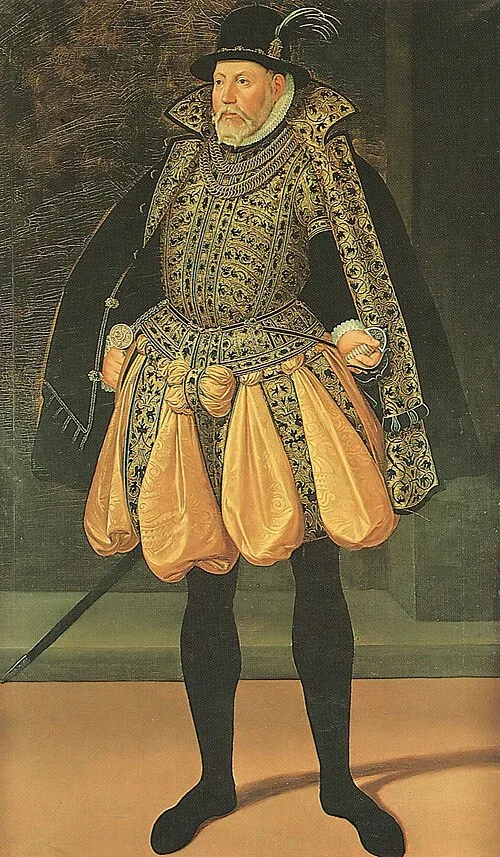 The Ancestral Portrait Gallery
Portrait of Ulrich III, Duke of Mecklenburg
Gold embroidery covers almost every part of this man's court dress, from his close-fitting jacket to his puffed breeches. The painting is titled as a portrait of Duke Ulrich the Third of Mecklenburg. He stands full length, one hand on his hip and a long sword at his side. A plumed black hat completes the outfit. Portraits like this were meant to show rank at a glance. Here the rank comes through the embroidery, the sword and the pose. Below the gold breeches, the legs are in plain black stockings.
Listen in the appTheodor Fischer · Public domain
- 11
Grand Ducal Throne Room
The gilded throne and red-walled hall at the centre of the grand dukes' main residence.
- 12
Painted and Gilded Ceiling with Chandelier
A painted and gilded ceiling, and the Berlin architect and the craftsmen from Schwerin and Berlin who furnished the palace's interiors.
- 13
State Parliament Plenary Chamber
The modern plenary chamber where Mecklenburg-Vorpommern's elected members sit, in a palace built for grand dukes.
- 14
Burggarten and the Orangery
The island garden beside the palace, with its central Orangery, which housed a technical museum for more than thirty years.
- 15
Hercules and the Bull of Crete (Sculpture)
Hercules grappling a bull in a sculpture of one of the great labours of Greek myth.
Schwerin Castle
Frequently asked questions
How much does the guide cost?
Free app download. Listed guide price: $2.99. Guide price shown in the app. Audio guide only. Venue admission is separate.
Can I listen without internet?
Yes. Download the guide’s audio, images, and maps in the app before your visit. Your downloaded content is then available offline.
Can I listen in my language?
This audio guide is available in 15 languages, including English.
Do I need to follow a schedule?
No. This is a self-guided experience. Choose your stops, pause whenever you like, and return to a story at your own pace.
At your own pace
Explore Schwerin Castle.
Download Stanza, then search for “Schwerin Castle”.
Free app download · Guide price shown in the app
Keep exploring
Audio guides — Germany
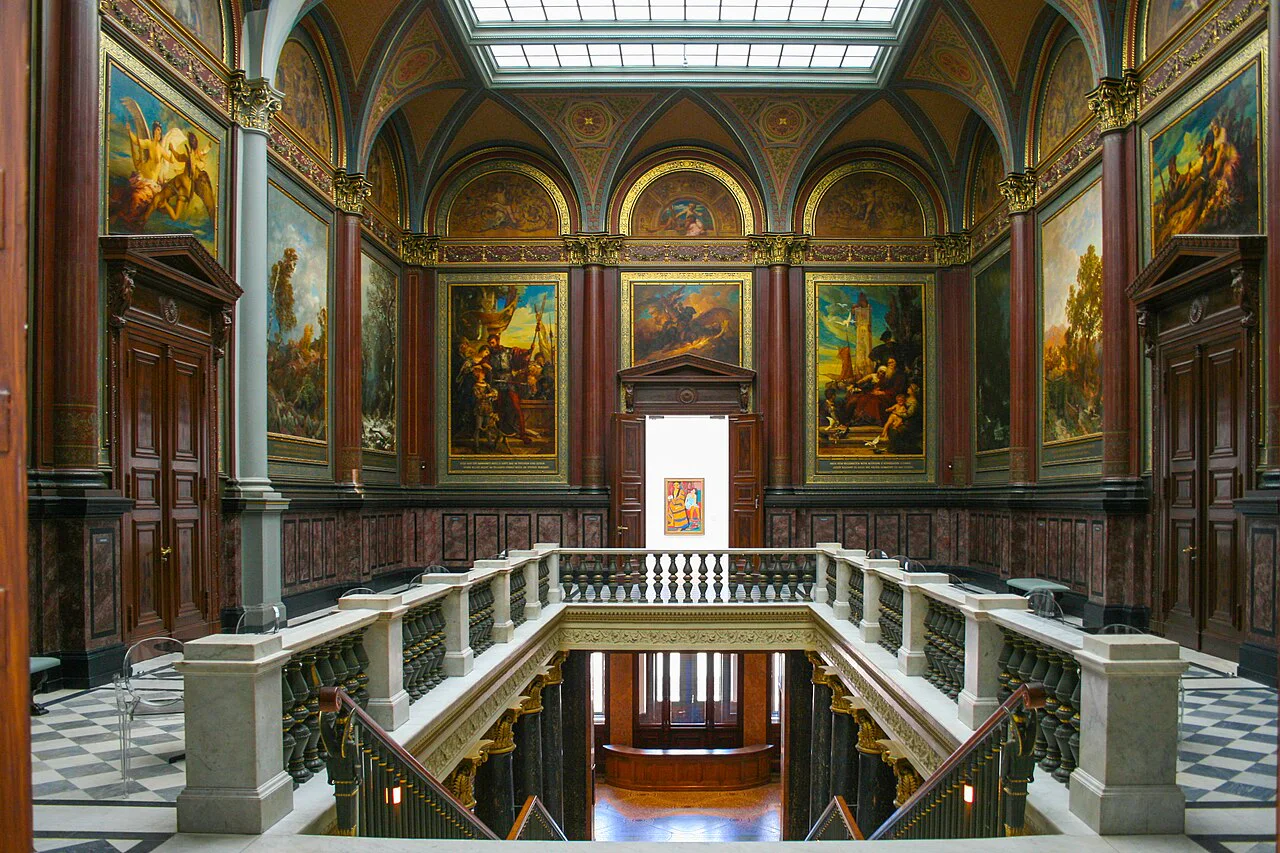
Hamburg · 94 km
Hamburger Kunsthalle
Content & sources
Photo: Daniela Kloth · GFDL 1.2
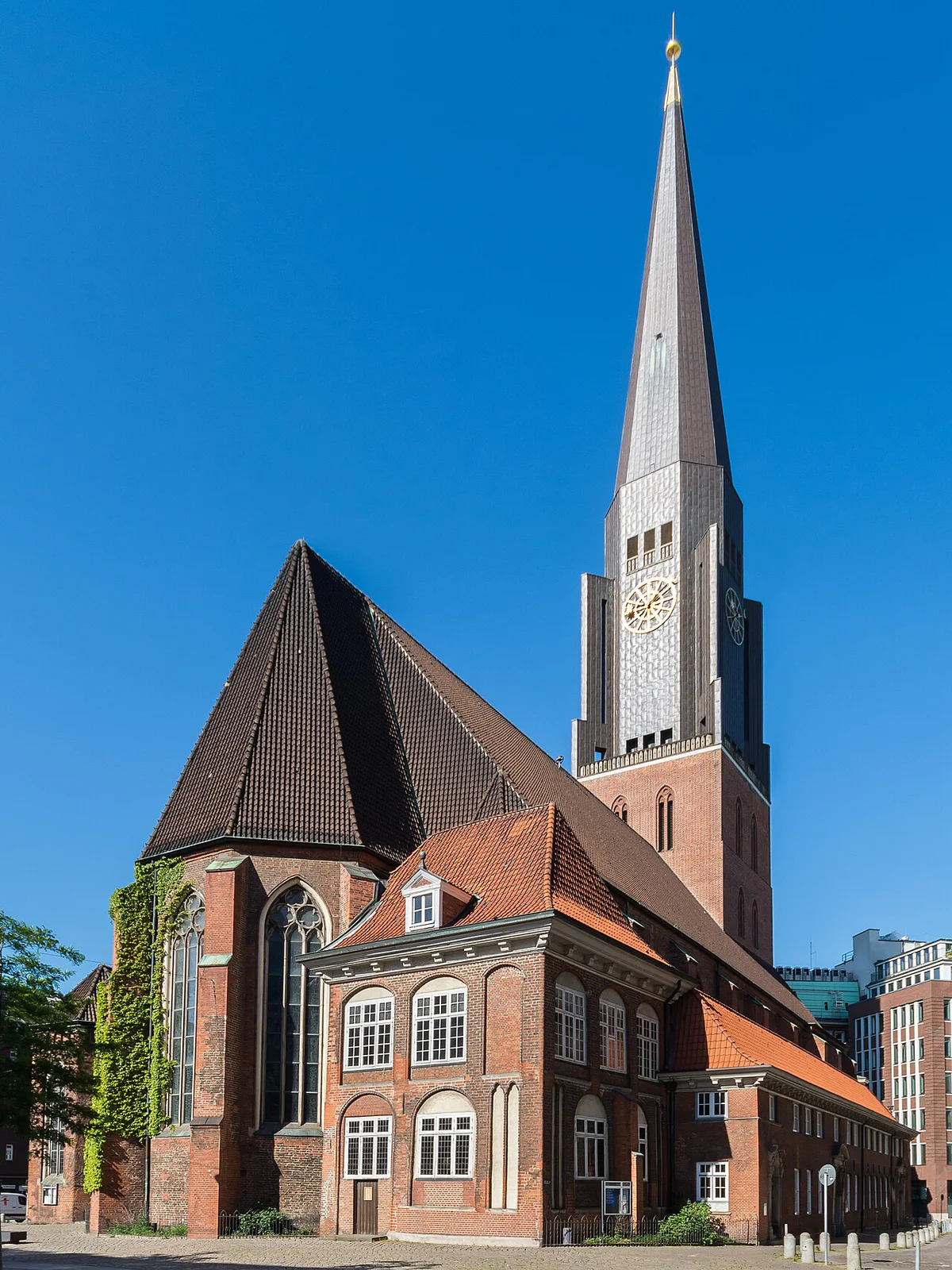
Hamburg · 94 km
Hauptkirche Sankt Jacobi
Content & sources
Photo: Ajepbah · CC BY-SA 3.0 de
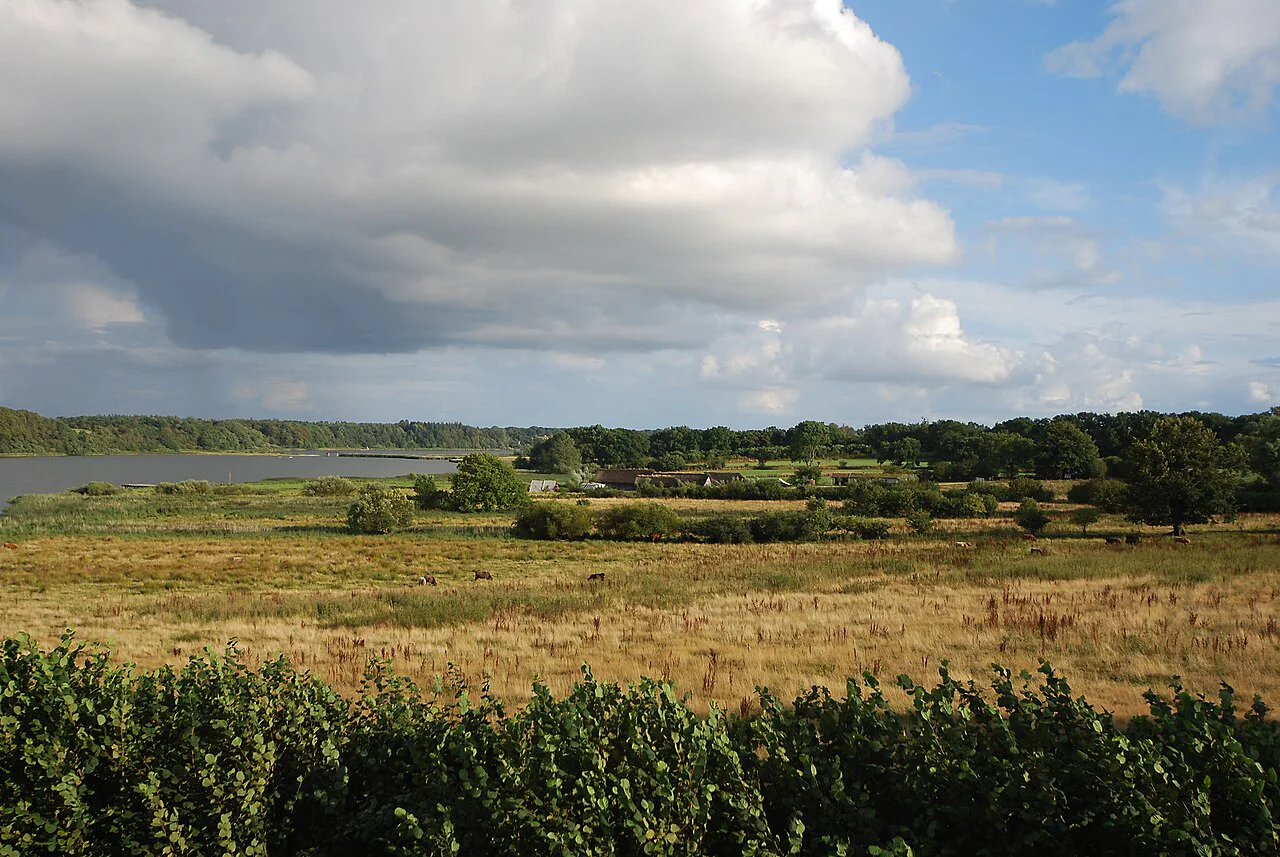
Niederselk
Haithabu
Content & sources
Matthias Böhm · CC BY-SA 4.0
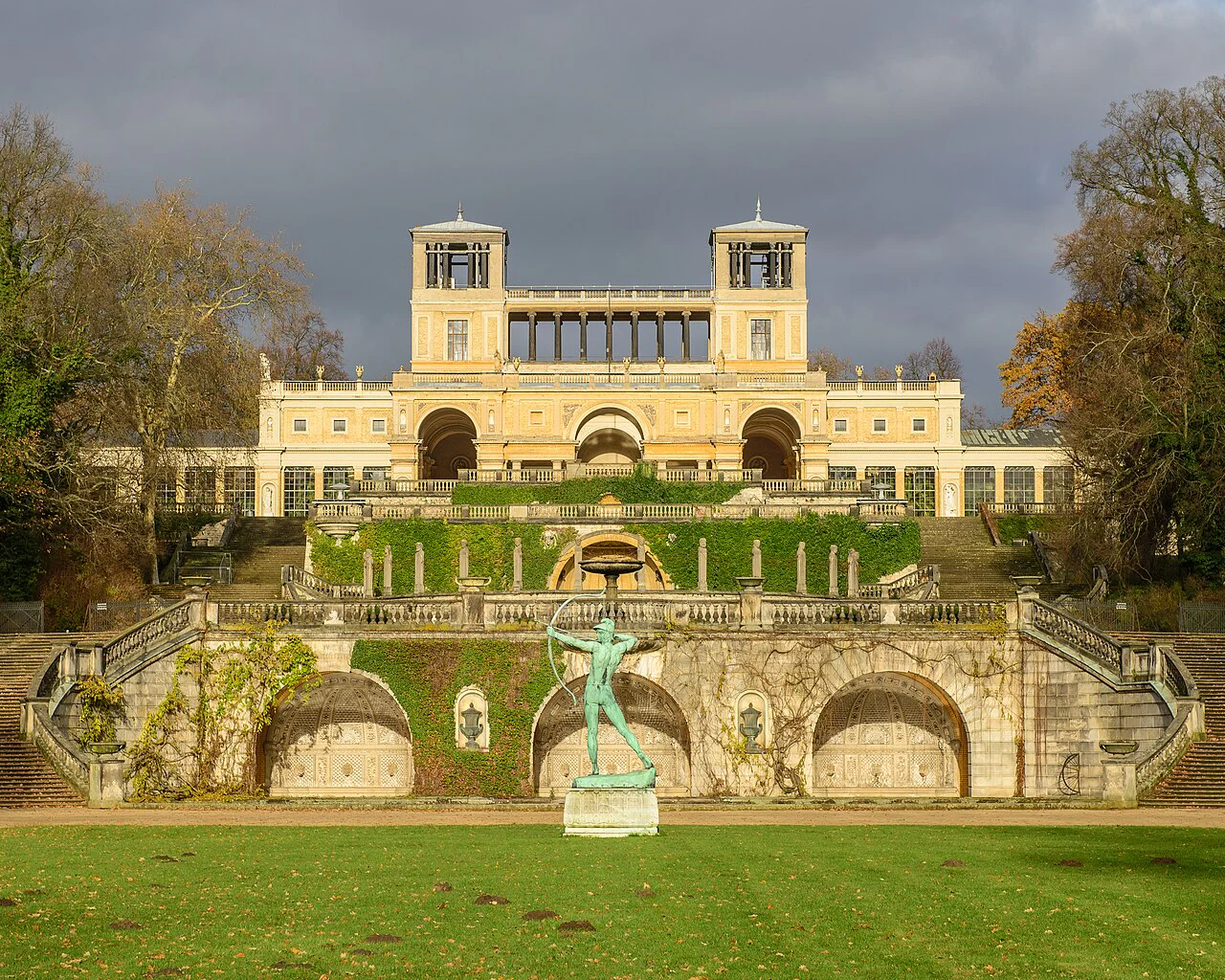
Potsdam
Orangerieschloss
Content & sources
Arild Vågen · CC BY-SA 3.0