Stanza · Audio guide
Schloss LichtensteinAudio guide
A place to remember. A story to take with you.
A 19th-century Gothic Revival castle built on historic medieval foundations overlooking the Echaz valley. It is renowned for its dramatic cliffside position and its architectural homage to Wilhelm Hauff's…
Download Stanza, then search for “Schloss Lichtenstein”.
About the tour
One guide. Your kind of visit.
A 19th-century Gothic Revival castle built on historic medieval foundations overlooking the Echaz valley. It is renowned for its dramatic cliffside position and its architectural homage to Wilhelm Hauff's novel 'Lichtenstein'.
Ready when you are.
- 01Get the free Stanza app.
iOS & Android
- 02Find your guide.
“Schloss Lichtenstein”
- 03Download before you go.
Works offline
Audio guide / 24 narrated stops
Inside the guide
Get to know a few of the stories before you go. Open a stop to read more.
01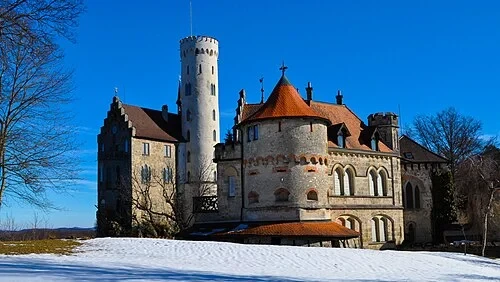 The Fairy Tale FacadeLichtenstein Castle
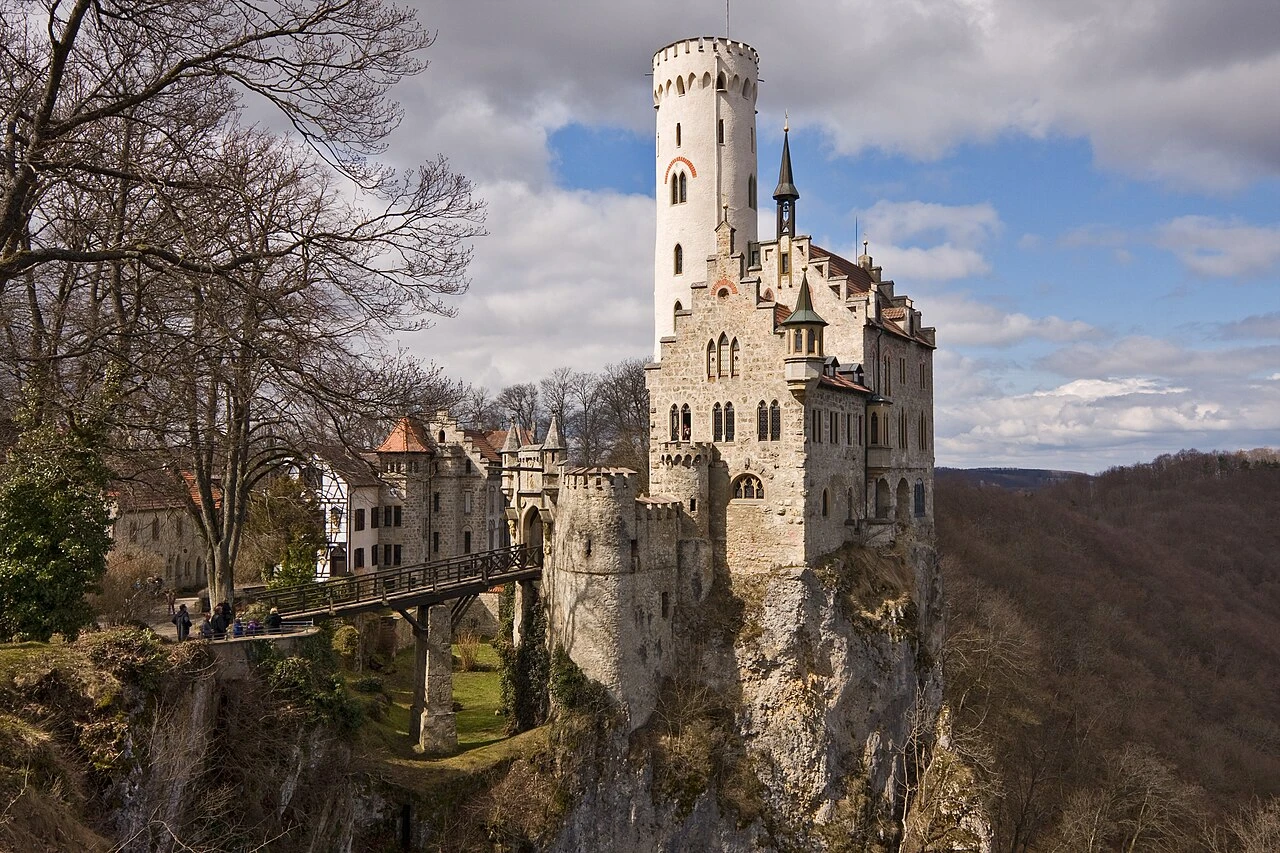
Welcome to Schloss Lichtenstein, often called the Fairy Tale Castle of Württemberg. Looking at the slender towers and crenelated walls, you might assume this is a fortress from the high Middle Ages. In reality, what you see here is a masterpiece of 19th-century Neo-Gothic architecture. It was designed by architect Carl Alexander Heideloff, who was commissioned to create a romanticized vision of the past rather than a strictly functional defensive site. While authentic medieval castles were built for military grit, this structure was built for aesthetic wonder. Heideloff’s design emphasizes verticality and intricate stone details, intended to evoke the chivalric ideals popular during the Romantic era. Construction on this specific version of the castle began in the mid-1800s, replacing a simpler hunting lodge. It serves as a physical manifestation of a 19th-century longing for a "Golden Age" of knights and nobility. As you explore, remember that every pointed arch and decorative turret was carefully planned to satisfy a specific artistic vision of what a castle should look like.
Georg Forderer · CC BY-SA 3.0
02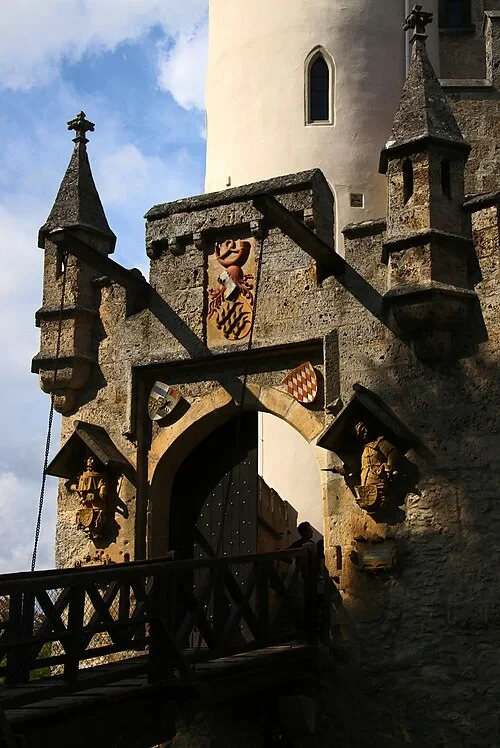 The Fairy Tale FacadeThe Gatehouse Drawbridge
The entrance you see here owes its existence to a book. In 1826, Wilhelm Hauff published a historical novel titled "Lichtenstein," which became immensely popular. Count Wilhelm von Urach was so deeply moved by the story that he decided to purchase the ruins of the old medieval castle and rebuild it exactly as it was described in the pages of Hauff's fiction. This makes the castle one of the few examples of "literature-inspired" architecture on such a grand scale. At the gatehouse, notice the heraldic shields and the statues of knights that flank the arched entrance. These figures aren't just decorations; they reinforce the narrative of chivalry that the Count wished to bring to life. The drawbridge serves as the first step into this reimagined world. By blending historical ruins with a novelist's imagination, the Count created a bridge between 19th-century reality and a legendary past. Every detail, from the stone carvings to the placement of the gate, was intended to recreate the atmosphere of the novel, making the experience a tangible, physical one for visitors.
Guillaume Baviere from Uppsala, Sweden · CC BY-SA 2.0
03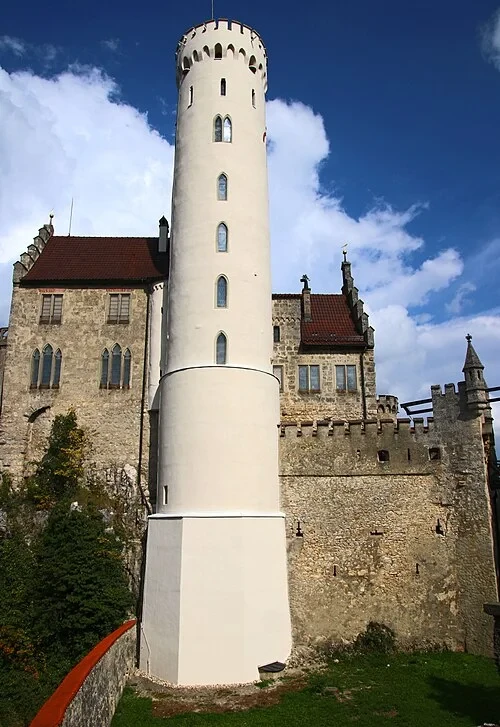 The Wilhelmsturm and Outer BaileyThe Wilhelm Tower
The slender white tower dominating the castle's profile is known as the Wilhelmsturm, or Wilhelm Tower. It is the most recognizable feature of Schloss Lichtenstein and serves as the centerpiece of its romantic silhouette. While many medieval structures took decades or even centuries to complete, the primary construction here was remarkably rapid. Work on this main structure began in 1840 and was largely finished by 1842. This quick turnaround was possible because the project was well-funded and driven by a singular, focused vision. The tower's height and thin profile are characteristic of the Neo-Gothic style, which favored exaggerated vertical lines to create a sense of awe. From a distance, this tower is what gives the castle its "toy-like" or fairytale quality, standing out sharply against the green foliage of the surrounding forest and the blue sky. Although it looks delicate, it is a robust stone structure designed to anchor the complex to the cliff. Its completion marked the transition of the site from a ruinous hunting lodge into the architectural icon that became a symbol of the Württemberg region.
Listen in the appGuillaume Baviere from Uppsala, Sweden · CC BY-SA 2.0
04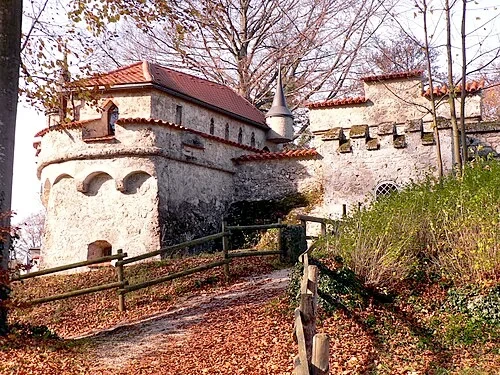 The Wilhelmsturm and Outer BaileyThe Outer Bailey Gateway
As you pass through the outer gatehouse, you are entering the broader defensive complex of the castle. While the main residence was completed in the early 1840s, the surrounding fortifications and the outer bailey were expanded significantly over several decades. Between 1857 and 1908, additional work was undertaken to give the site a more imposing and structurally sound presence on the ridge. These later additions were designed to complement the original Neo-Gothic core while providing a more realistic sense of a fortified medieval town or citadel. The gateway serves as a transitional space, moving visitors from the natural woodland into the controlled environment of the castle grounds. Notice the sturdy masonry and the way the walls are integrated into the uneven terrain. This extended construction period allowed the family to refine the site’s defenses and aesthetics, ensuring that the approach to the inner sanctum felt grand and protected. The result is a layered complex that, while built in the 19th century, mimics the historical growth pattern of older medieval fortresses that evolved through successive generations.
Listen in the appHeribert Pohl --- Thanks for half a million clicks! from Germering bei München, Bayern · CC BY-SA 2.0
05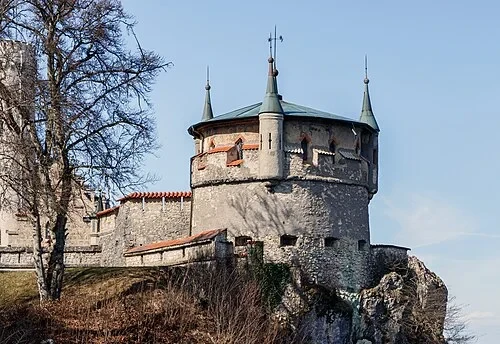 The Artillery BastionAugusta Bastion
The rounded structure protruding from the castle's edge is the Augusta Bastion. Unlike some purely decorative features of the castle, this bastion reflects Duke Wilhelm's professional military background. As a passionate artillery officer, the Duke understood the mechanics of defense. Following the political unrest of the 1848 revolution, he insisted on adding functional defensive elements to his home. He wanted to ensure that his romantic retreat could, if necessary, be defended against civil unrest. Observe the gun ports situated at various levels and the rugged stone base that seems to grow directly out of the limestone cliffside. The design allows for a wide field of fire overlooking the approach and the valley below. It is a fascinating intersection of 19th-century military engineering and romantic architecture. While the upper parts of the castle are designed to look like a fairytale, this bastion is a reminder that the world outside the walls was often unpredictable. The Duke’s practical expertise ensured that his "dream" castle was grounded in the reality of 19th-century defense, blending the aesthetic of a knight's fortress with the needs of a soldier.
Listen in the appPhoto: Llez · CC BY-SA 3.0
06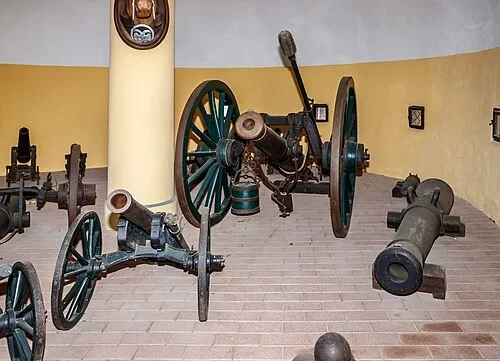 The Artillery BastionThe Artillery Battery
Inside the rounded walls of the bastion, you find a collection of historical cannons. These pieces of artillery are not merely museum displays; they represent the Duke’s commitment to making his castle a truly defensible site. During the mid-19th century, when the threat of local uprisings was quite real, the Duke retrofitted the bastion with functional battery positions. These cannons were positioned to cover the most vulnerable approaches to the ridge. In addition to the cannons, the Duke incorporated defensive caponiers—fortified structures that allowed soldiers to fire along the base of the walls to prevent attackers from scaling them. The space here feels much more utilitarian and somber than the ornate living quarters found elsewhere in the castle. The thick walls and narrow openings are designed to protect the gunners from return fire while providing a stable platform for heavy weaponry. It is here that the Duke’s identity as a soldier is most apparent. He saw himself as a guardian of tradition, and these cannons were the tools he felt were necessary to protect his family and his romantic vision from changing political tides.
Listen in the appPhoto: Llez · CC BY-SA 3.0
07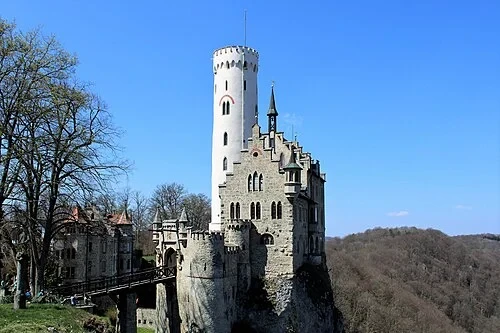 The Castle DrawbridgeThe Cliffside Facade
From this vantage point, you can truly appreciate the daring engineering required to construct Schloss Lichtenstein. The castle sits on a narrow, precarious escarpment exactly 250 meters above the Echaz river valley. Building such a massive stone structure on the very edge of a limestone cliff presented significant challenges for 19th-century architects. The foundation had to be anchored deep into the rock to prevent the building from shifting or collapsing into the abyss below. As you look at the facade, notice how the walls seem to continue the vertical line of the natural cliff face. This integration was intentional, designed to make the castle appear as an organic extension of the landscape itself. The limestone used for the walls was often quarried from the surrounding hills, ensuring a visual harmony between the man-made structure and the natural environment. The sheer drop just a few feet from the castle walls provided a natural defense in the past, and today it offers some of the most dramatic views in Germany. Maintaining such a heavy building on this steep, exposed site requires constant care to protect the masonry from the elements.
Listen in the appPhoto: Roland Puskaric · CC BY-SA 4.0
08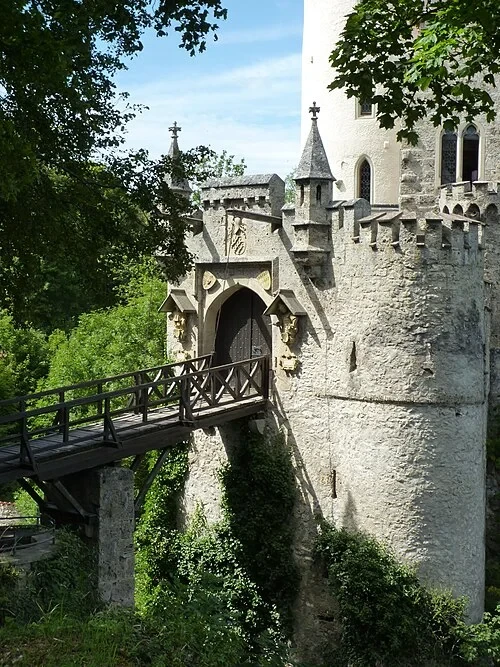 The Castle DrawbridgeEntrance Drawbridge
Crossing the deep dry moat via the drawbridge is a key part of the experience at Lichtenstein. In the romantic tradition of the 19th century, a drawbridge was more than just a security feature; it served as a psychological threshold. As the wood rattles beneath your feet and you leave the solid ground of the outer bailey, you are meant to feel that you are leaving the modern world behind. This physical separation marks your entry into the "medieval" fantasy of the interior. The moat itself was carved out to create a formidable gap, mimicking the defensive layouts of ancient knightly residences. On the other side of this bridge, the atmosphere shifts from the functional and military aspects of the exterior to the highly decorated and atmospheric living spaces. This transition was a deliberate choice by the Count and his architect to immerse visitors in the story of the castle. The act of crossing the bridge reinforces the sense of exclusivity and protection associated with noble life. It prepares the mind for the treasures that lie within, acting as a gateway between reality and the reimagined chivalric world.
Listen in the appPhoto: Franzfoto · CC BY-SA 3.0
09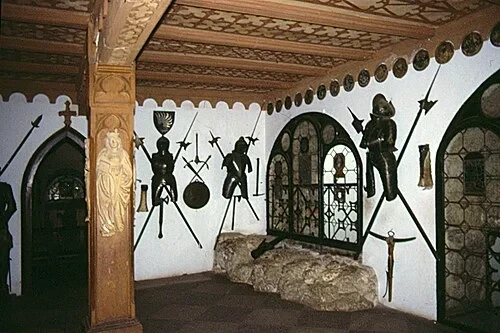 The Rittersaal and ArmoryThe Knight’s Vestibule
Stepping into the Knight’s Vestibule, you are greeted by an impressive display of arms and armor. This area serves as a showcase for Duke Wilhelm’s extensive personal collection, which he gathered to populate his romantic fortress. The 19th-century nobility often looked back at the medieval period with great nostalgia, and collecting weaponry was a way to connect with the perceived virtues of their ancestors. You will see various styles of plate armor, polearms, and shields arranged along the walls. These items were carefully preserved and curated to reinforce the castle's theme of chivalry. While some pieces are original artifacts from the late Middle Ages, others reflect the 19th-century desire to replicate the "Golden Age" of knighthood. The arrangement of the items—often in artistic clusters or standing as if inhabited by ghosts—is typical of the era's museum style. It was intended to evoke the feeling of a living armory where a knight might prepare for battle at any moment. This vestibule sets the tone for the rest of the interior, grounding the fairytale architecture in the tangible, metallic reality of historical warfare and aristocratic display.
Listen in the appPhoto: Rainer Halama · CC BY-SA 3.0
10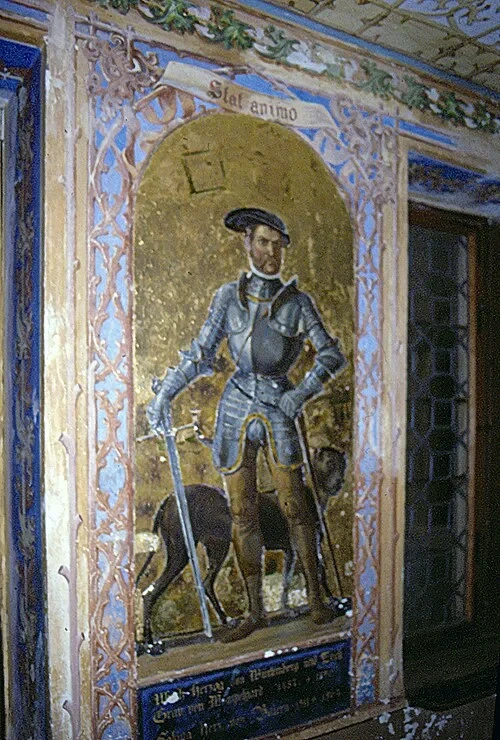 The Rittersaal and ArmoryKnightly Mural
The wall here features an ornate mural, which is believed to be the work of artist Georg Eberlein. It depicts an idealized knight standing proudly in full plate armor. This painting is a perfect example of how the 19th century romanticized the figure of the medieval warrior. Rather than showing the grime or exhaustion of actual combat, the mural presents the knight as a symbol of nobility, strength, and impeccable character. The intricate details of the armor and the knight's posture are designed to reinforce the central theme of the castle: the revival of chivalric ideals. Murals like this one served to decorate the stone walls and provide a narrative backdrop for the rooms, making the inhabitant's connection to a legendary past feel more immediate. The use of color and the stylistic choices reflect the influence of Romanticism, where historical accuracy was often blended with a sense of poetic grandeur. As you observe the figure, notice the background elements that further ground the knight in a world of heraldry and honor. This mural is one of many artistic layers within the castle that transform it into a monument to a bygone era.
Listen in the appPhoto: Rainer Halama · CC BY-SA 3.0
Schloss Lichtenstein
Frequently asked questions
How much does the guide cost?
Free app download. Listed guide price: $3.99. Guide price shown in the app. Audio guide only. Venue admission is separate.
Can I listen without internet?
Yes. Download the guide’s audio, images, and maps in the app before your visit. Your downloaded content is then available offline.
Can I listen in my language?
Stanza supports 15 languages. Check the app for the languages available for this guide.
Do I need to follow a schedule?
No. This is a self-guided experience. Choose your stops, pause whenever you like, and return to a story at your own pace.
At your own pace
Explore Schloss Lichtenstein.
Download Stanza, then search for “Schloss Lichtenstein”.
Free app download · Guide price shown in the app
Keep exploring
Nearby audio guides
Berlin
Brandenburger Tor
Content & sources
Thomas Wolf, www.foto-tw.de · CC BY-SA 3.0
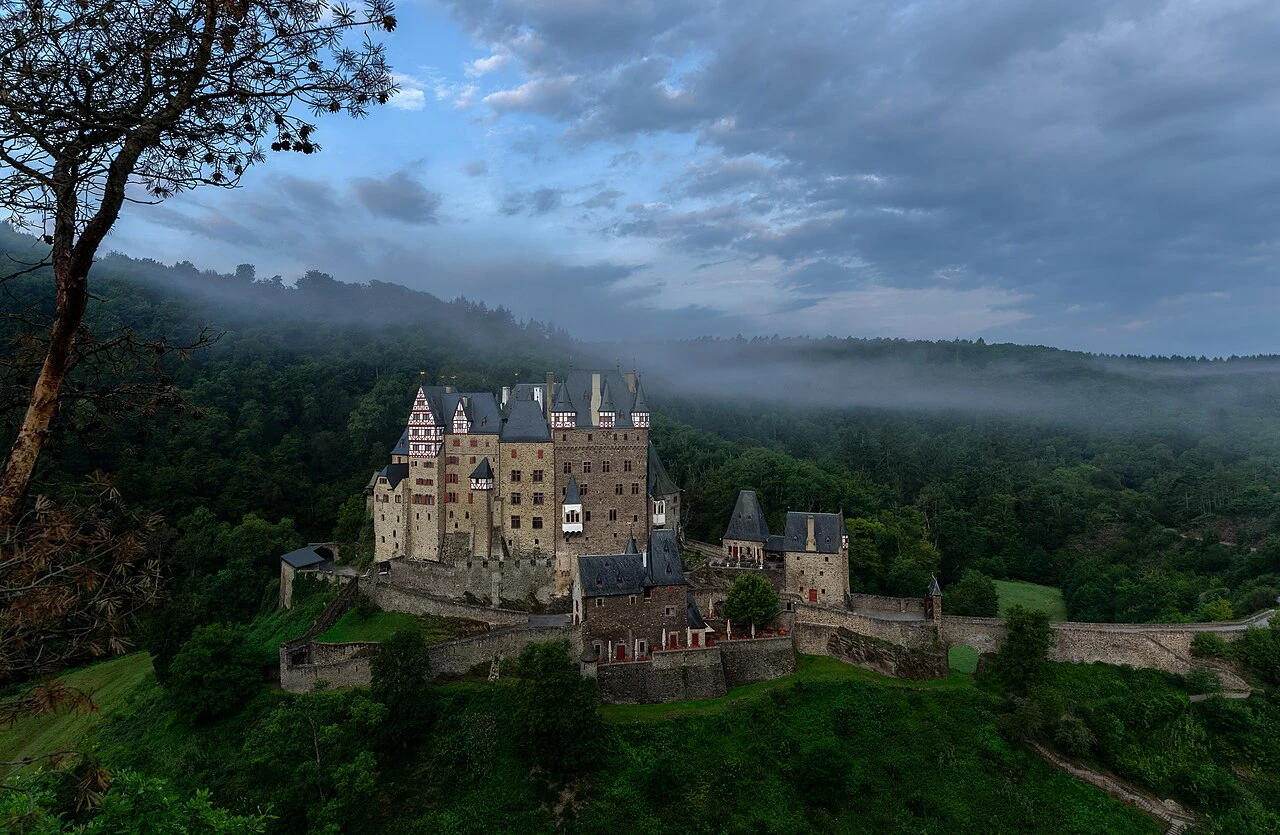
Wierschem
Burg Eltz
Content & sources
Johannes Dörrstock · CC BY-SA 4.0
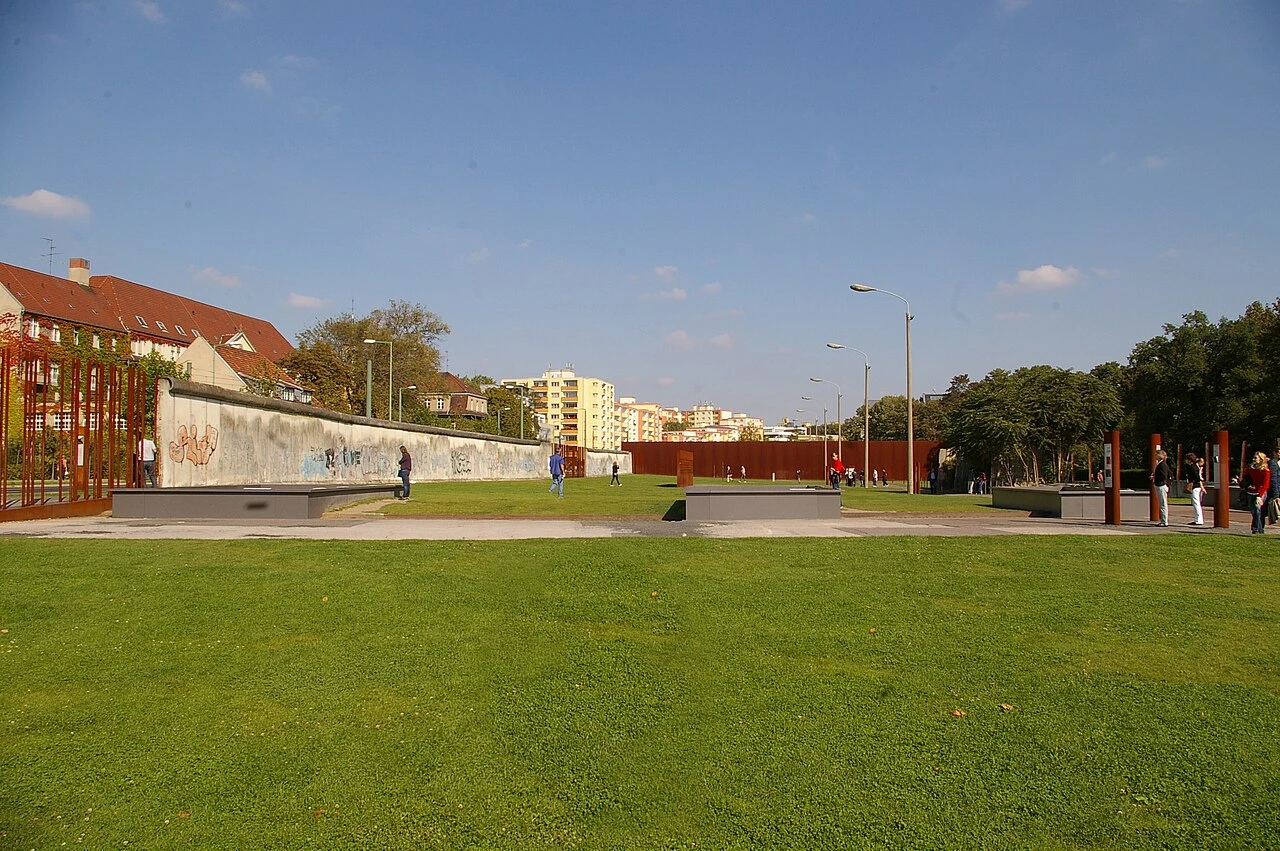
Berlin
Gedenkstätte Berliner Mauer
Content & sources
N-Lange.de · CC BY-SA 3.0
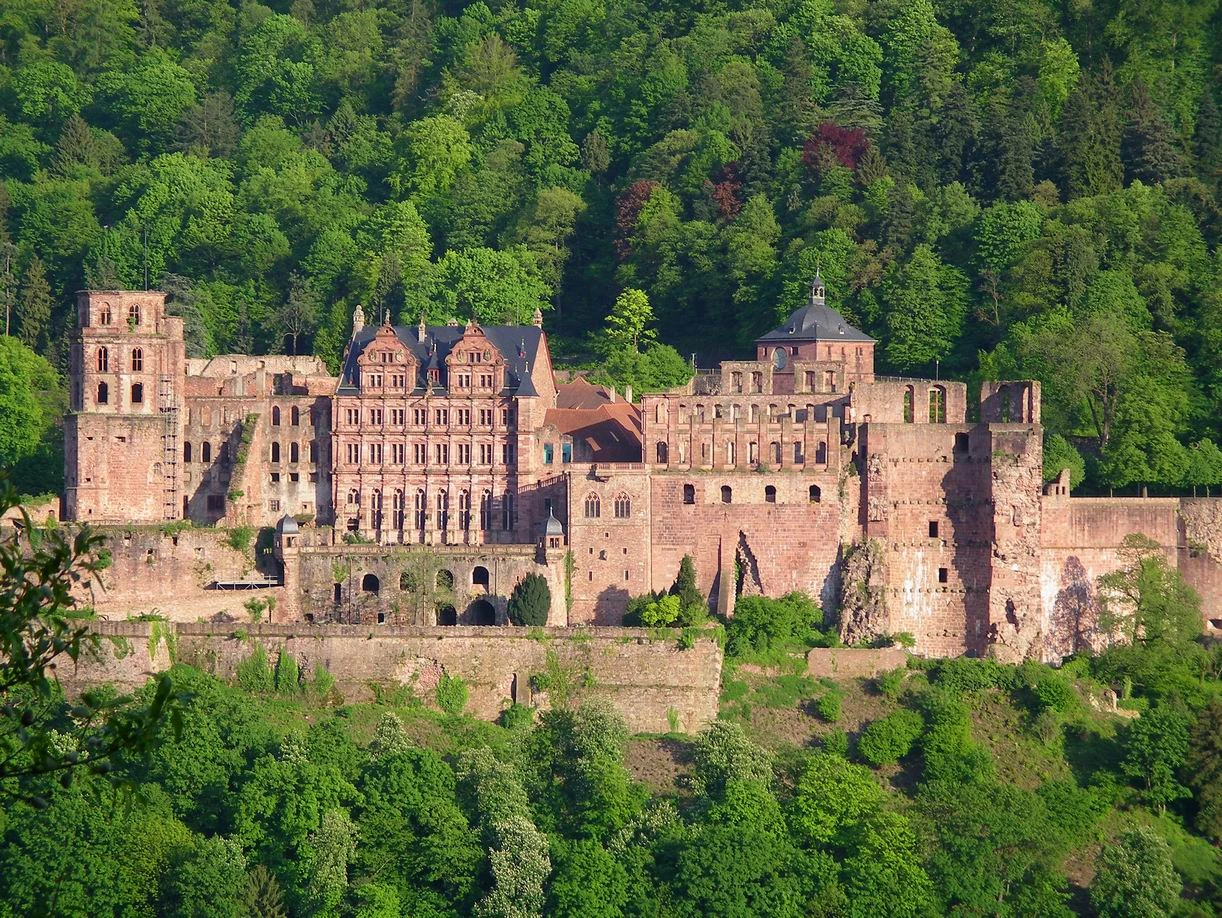
Heidelberg
Heidelberger Schloss
Content & sources
Pumuckel42 (Reinhard Wolf) at de:Wikipedia · CC BY-SA 3.0