Stanza · Audio guide
Akbar's tomb Audio Guide
A place to remember. A story to take with you.
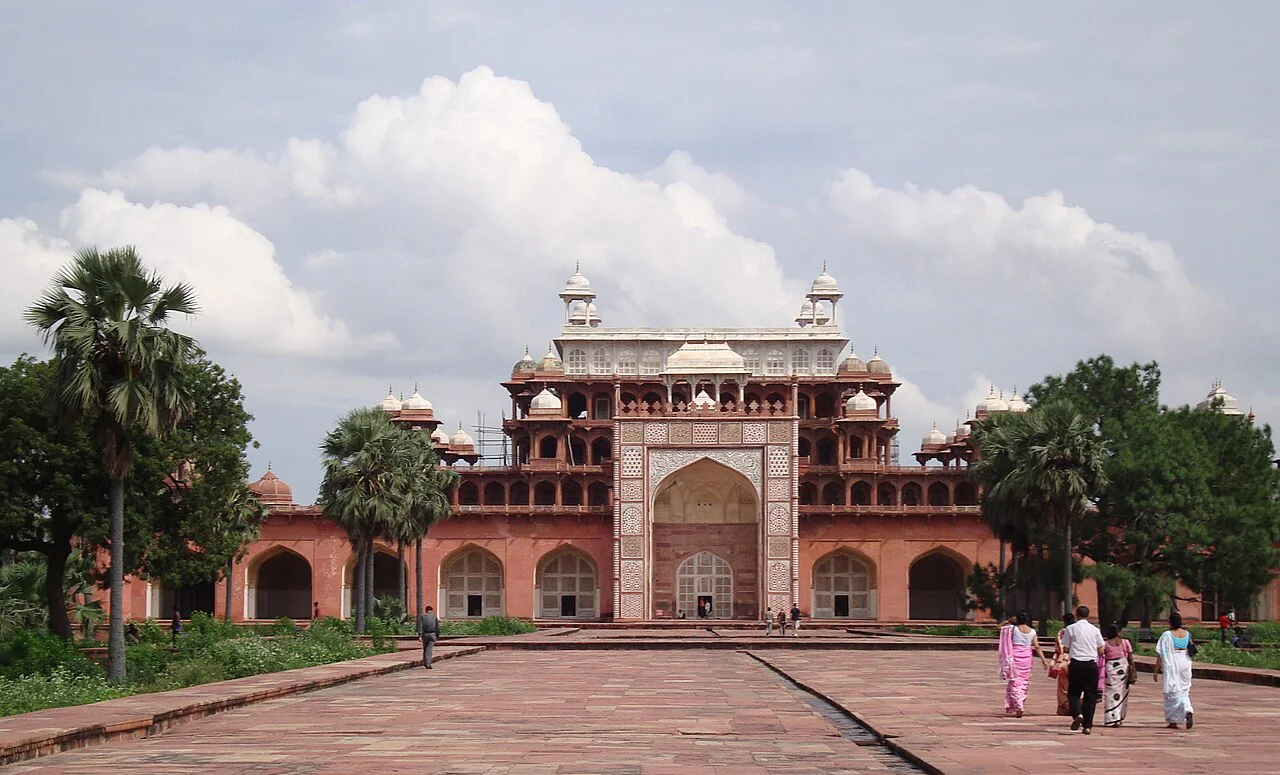
Akbar's tomb is the mausoleum of the third and greatest Mughal emperor Akbar. The tomb was built between 1605 and 1613 by his son, Jahangir, and is situated in Sikandra, a suburb of Agra.
Download Stanza, then search for “Akbar's tomb”.
About the tour
One guide. Your kind of visit.
Akbar's tomb is the mausoleum of the third and greatest Mughal emperor Akbar. The tomb was built between 1605 and 1613 by his son, Jahangir, and is situated in Sikandra, a suburb of Agra.
Ready when you are.
- 01Get the free Stanza app.
iOS & Android
- 02Find your guide.
“Akbar's tomb”
- 03Download before you go.
Works offline
Audio guide / 12 narrated stops
Inside the guide
Get to know a few of the stories before you go. Open a stop to read more.
01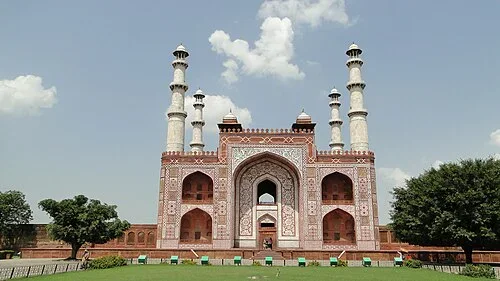 The Grand South Gate and Minarets
The Grand South Gate
Welcome to Sikandra, on the outskirts of Agra, where the third Mughal emperor lies buried. Akbar reigned from 1556 to 1605 and ruled most of the Indian subcontinent by the end of it. In October 1605 he fell ill with dysentery and never recovered. He died that month, and his son Jahangir took up the task of burying him. The tomb took shape between 1605 and 1613, set in walled grounds of a hundred and nineteen acres. The gateway in front of you is the grandest of four, and the usual way in. Its design borrows from the Buland Darwaza at Fatehpur Sikri, the triumphal gate Akbar himself raised at his old capital. Then come the minarets. Four of them, white marble, each crowned with a domed kiosk, rise from the corners of the gate. They came before the Taj Mahal, and its builders would follow the same idea.
Ankur Panchbudhe from Pune, India · CC BY 2.0
02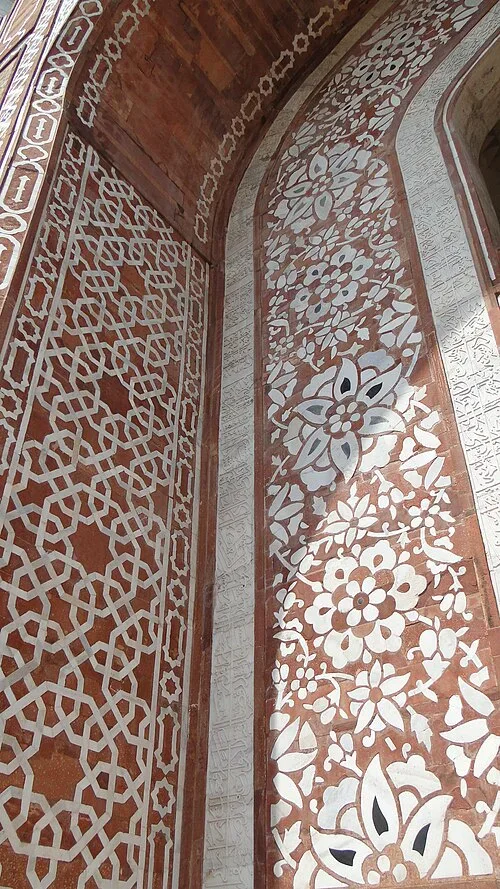 The Grand South Gate and Minarets
Inlay Panels of the Gate
The gate's walls are a lesson in materials. Deep red sandstone forms the ground, and into it craftsmen set panels of white marble and black slate. The patterns run to three kinds: geometric grids, flowering branches, and bands of calligraphy. The flower before you is cut from solid marble, fitted edge to edge into the sandstone like a piece of joinery. This kind of stone inlay was still young in Mughal hands. The designs here are bold and simple. Within a few years, at Itimad-ud-Daulah's tomb in Agra, the same craft would grow far finer and more intricate. So this gate marks an early step, the moment the technique was finding its feet.
Ankur Panchbudhe from Pune, India · CC BY 2.0
03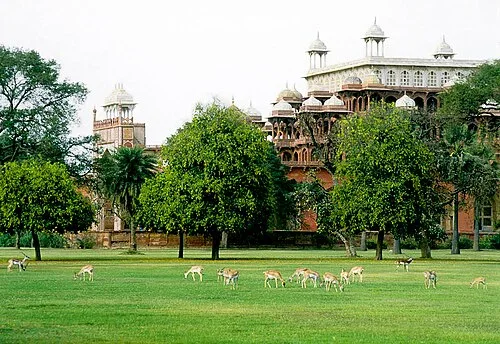 The Charbagh Paradise Gardens
The Garden Grounds
Between the gate and the tomb stretch lawns and old trees, with deer grazing in the shade. After Akbar died, his chief queen Mariam-uz-Zamani laid out a large garden around his tomb. She had been his wife for decades, and this became her project of mourning. The grounds already held an open pleasure pavilion, a baradari built under Sikander Lodi, a sultan of Delhi, back in 1495. When Mariam-uz-Zamani died in May 1623, her son Jahangir turned that old pavilion into a fine mausoleum for her. She was buried near her husband's tomb, the only one of Akbar's wives laid to rest close to him. Her own tomb stands about a kilometre from here.
Listen in the appPhoto: LBM1948 · CC BY-SA 4.0
04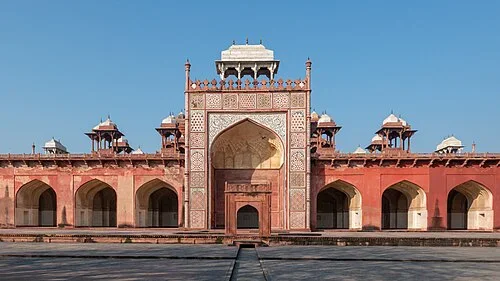 The Five-Tiered Pyramidal Mausoleum
The Pyramid Without a Dome
Most Mughal mausoleums end in a great dome. This one does not. It rises instead as a stepped pyramid, tiers growing smaller as they climb, crowned by a marble pavilion rather than a vault. The building stands about a hundred feet high, inside a walled enclosure a hundred and five metres on each side. The whole work cost one and a half million rupees, and took three or four years. In the family tree of Mughal architecture it sits in the middle: it learned from Humayun's Tomb in Delhi, and the lessons flowed on toward the Taj Mahal. One puzzle remains. Some count four tiers, others five, and the debate has never quite settled.
Listen in the appRohit Sharma · CC BY-SA 4.0
05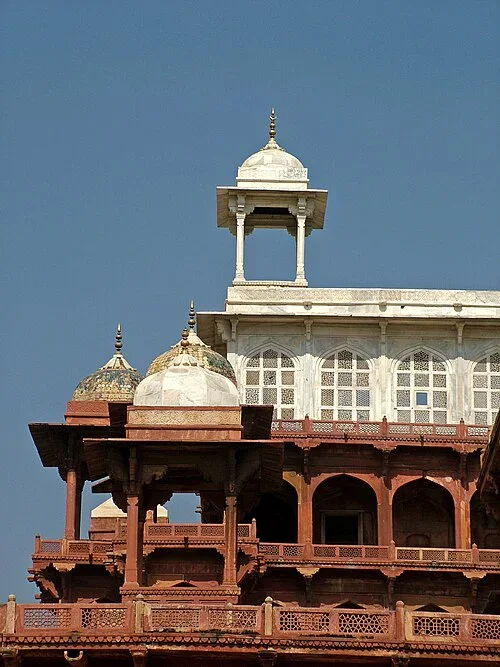 The Five-Tiered Pyramidal Mausoleum
Chhatris and Many Faiths
The little domed kiosks on the upper tiers are called chhatris, a Hindu form from Rajasthan, open pavilions used to mark honour. Here they sit beside pointed Islamic arches and dome shapes that come from Persia. Scholars read the whole building this way: a monument that deliberately mixes the styles of the faiths Akbar ruled over. That mixture matches his own policy, which he called Sulh-i-kul, universal peace. His courts at Delhi, Agra and Fatehpur Sikri drew holy men of many religions, along with poets and architects. He wanted his empire's cultures in conversation. The building says the same thing in stone, without a single word.
Listen in the app*_* · CC BY-SA 2.0
06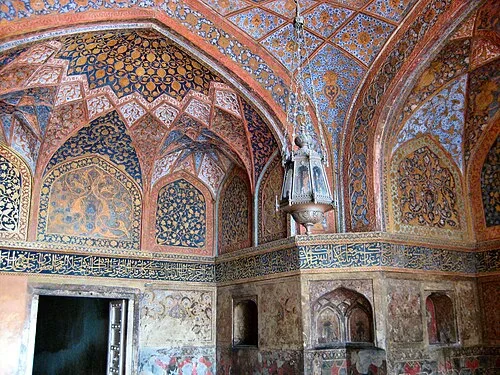 The Vestibule and Calligraphic Archway
The Painted Antechamber
Inside, the antechamber still glows. Its vaulted ceiling carries painted and gilded work, flowers and arabesques in blue, ochre and white, with a metal lamp hanging down the centre of the room. Centuries of damp and visitors have not erased the colour entirely, though some surfaces have plainly suffered. This is the bright half of the building, rooms made for light and ornament. Below them lies the other half, cool, dim and quiet. The passage down leads there, and the tomb's grimmest story waits at the bottom of it.
Listen in the appJ. Miers - User: (WT-shared) Jtesla16 at wts wikivoyage · CC BY-SA 4.0
07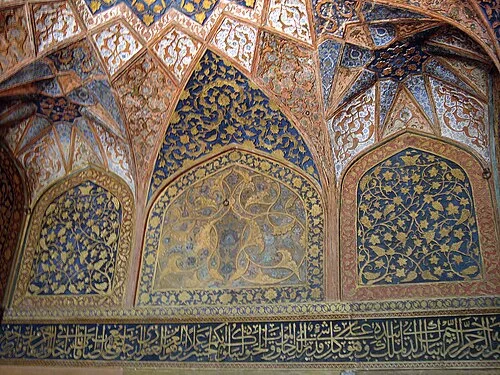 The Vestibule and Calligraphic Archway
The Calligrapher's Signature
The dark band of script running along the vault is a lengthy Persian eulogy for Akbar, composed and inscribed by a calligrapher named Abd al-Haqq, who came from Shiraz. The court was impressed enough to grant him a new name: Amanat Khan. He hid a signature in the work, and not once but in three places, a craftsman quietly claiming his hand. The honour was deserved. He went on to provide the inscriptions for the Taj Mahal, the most admired calligraphy in Mughal architecture. So a line of his writing here connects Sikandra to Agra's most famous building, made by the same pen.
Listen in the appPhoto: Anupamg · CC BY-SA 3.0
08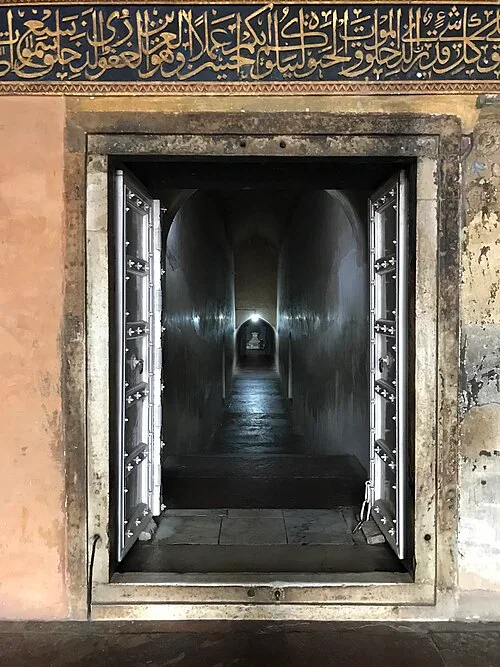 The Sloping Subterranean Corridor
The Descent
The doorway opens onto a long view down an arched corridor, running gently downward toward a faint light at the end. The principle it follows is an old Mughal one. The ornate tomb above holds a cenotaph, an empty marker built for show. The true grave lies in the basement, reached by this long, sloping, dimly lit passage. The corridor narrows the world as it goes, from painted vaults to plain stone walls. At the far end, the light falls on the burial chamber itself.
Listen in the appPhoto: Marajozkee · CC BY-SA 4.0
09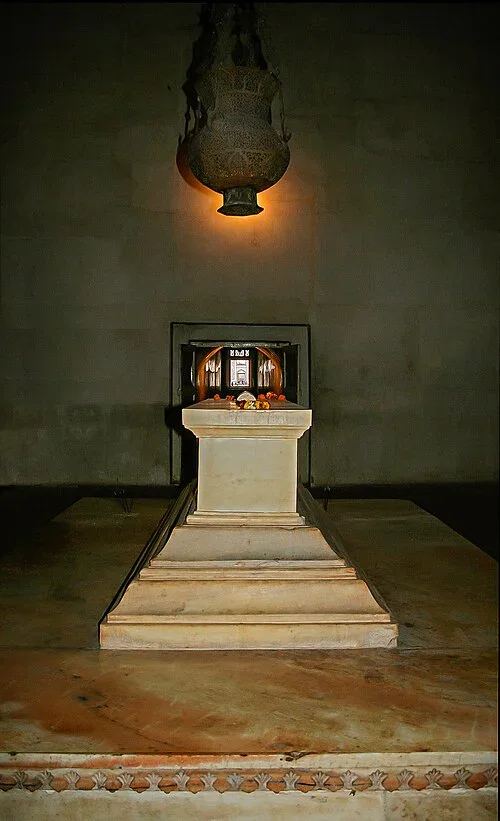 The Inner Burial Chamber
The basement chamber is plain and solemn: a simple stone grave, a lamp hanging above, flowers sometimes left on the stone. Its history was not always quiet. On the twenty-eighth of March 1688, in Aurangzeb's reign, Jats rose in rebellion under Raja Ram Jat and ransacked the tomb, after a failed attempt three years earlier. They carried off the gold, silver, jewels and carpets. The Italian traveller Niccolao Manucci recorded what happened next: the grave was opened and the dead king's bones were burned. It was a grave insult to the Mughal dynasty, and it sharpened the war between the Mughals and the Jats. The chamber now holds only its stillness.
Listen in the appPatrick J. Finn · CC BY-SA 4.0
10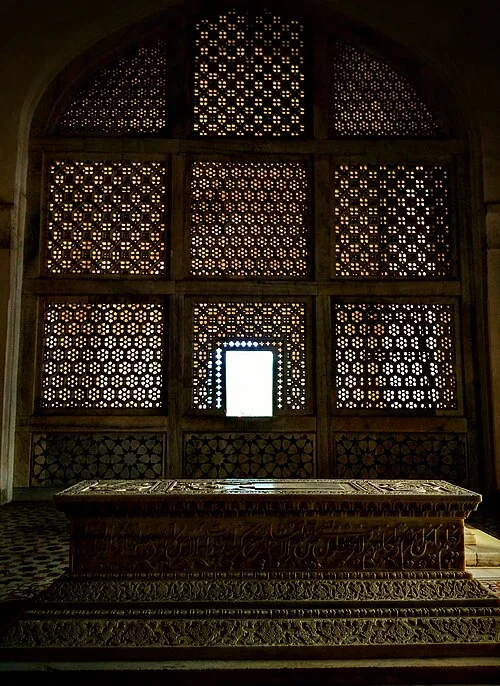 The Upper Marble Terrace and Cenotaph
The Cenotaph Under the Open Sky
The top of the pyramid opens to the sky, and there stands the cenotaph, richly carved marble marking a grave that is not there. The true one lies in the basement below, as heard earlier. The tomb also holds the tombstones of two of Akbar's daughters, Shakr-un-Nissa Begum and Aram Banu Begum, so the emperor keeps his family around him. By the twentieth century the monument had fallen into decay. As Viceroy, George Curzon directed extensive repairs, completed in 1905 and tied to the Ancient Monuments Preservation Act of 1904. He called the project an offering of reverence to the past and a gift of recovered beauty to the future. The work saved the building, though it may also have cooled the devotion of pilgrims and neighbours who once venerated the site.
Listen in the appPhoto: Banswalhemant · CC BY-SA 4.0
- 11
Screens of Light
Marble carved into lace, the screens that turn harsh sunlight into a glow around the cenotaph.
- 12
Kanch Mahal and the Meaning of Sikandra
A small palace of shifting purposes, and what all of Sikandra adds up to.
Akbar's tomb
Frequently asked questions
How much does the guide cost?
Free app download. Listed guide price: $0.99. Guide price shown in the app. Audio guide only. Venue admission is separate.
Can I listen without internet?
Yes. Download the guide’s audio, images, and maps in the app before your visit. Your downloaded content is then available offline.
Can I listen in my language?
This audio guide is available in 15 languages, including English.
Do I need to follow a schedule?
No. This is a self-guided experience. Choose your stops, pause whenever you like, and return to a story at your own pace.
At your own pace
Explore Akbar's tomb.
Download Stanza, then search for “Akbar's tomb”.
Free app download · Guide price shown in the app
Keep exploring
Nearby audio guides
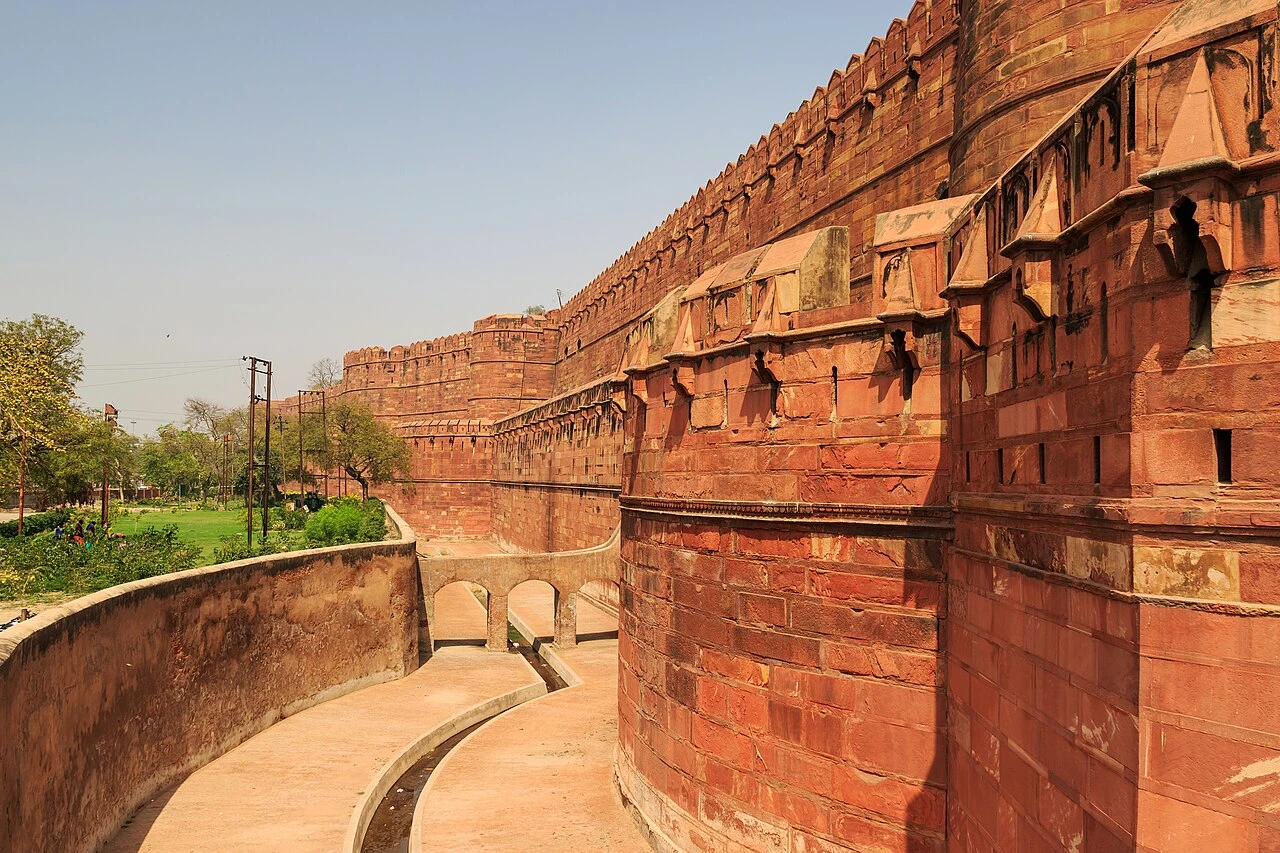
Agra · 8 km
Agra Fort
Content & sources
Photo: A.Savin · FAL
Agra · 9 km
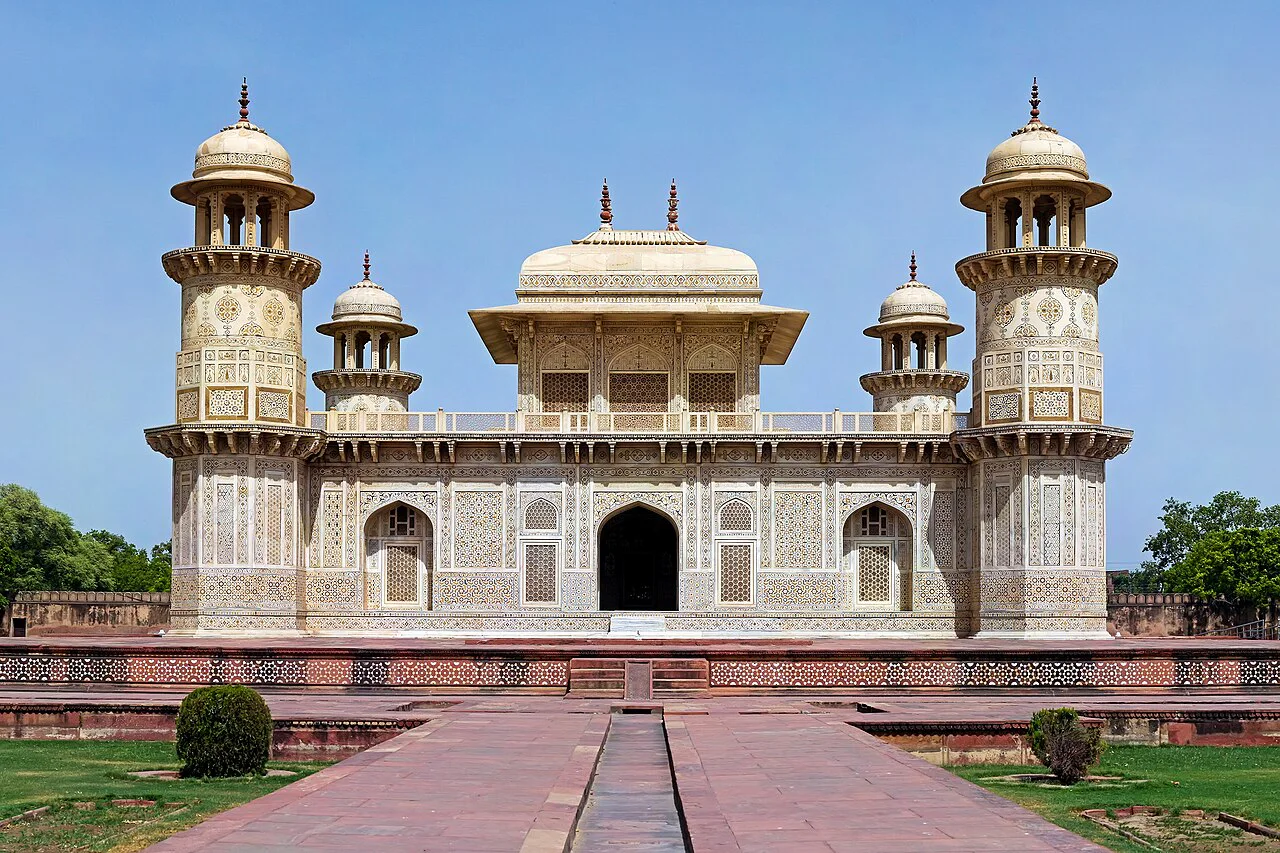
Itmad Ud Daulah
Content & sources
Muhammad Mahdi Karim · GFDL 1.2
Agra · 10 km
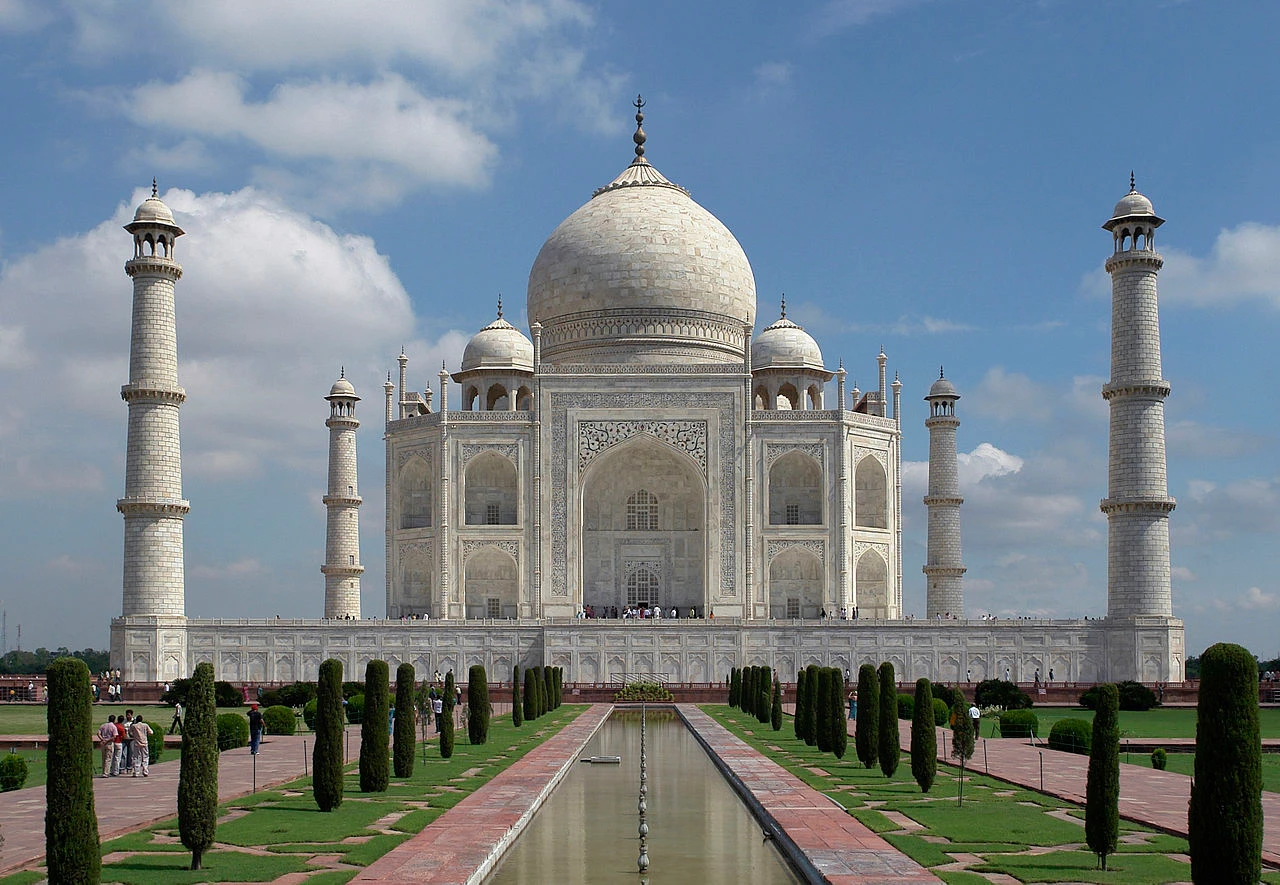
Taj Mahal
Content & sources
Taj_Mahal,_Agra,_India_edit2.jpg: Yann; edited by King of Hearts derivative work: Jbarta (talk) · CC BY-SA 3.0
Fatehpur Sikri · 32 km
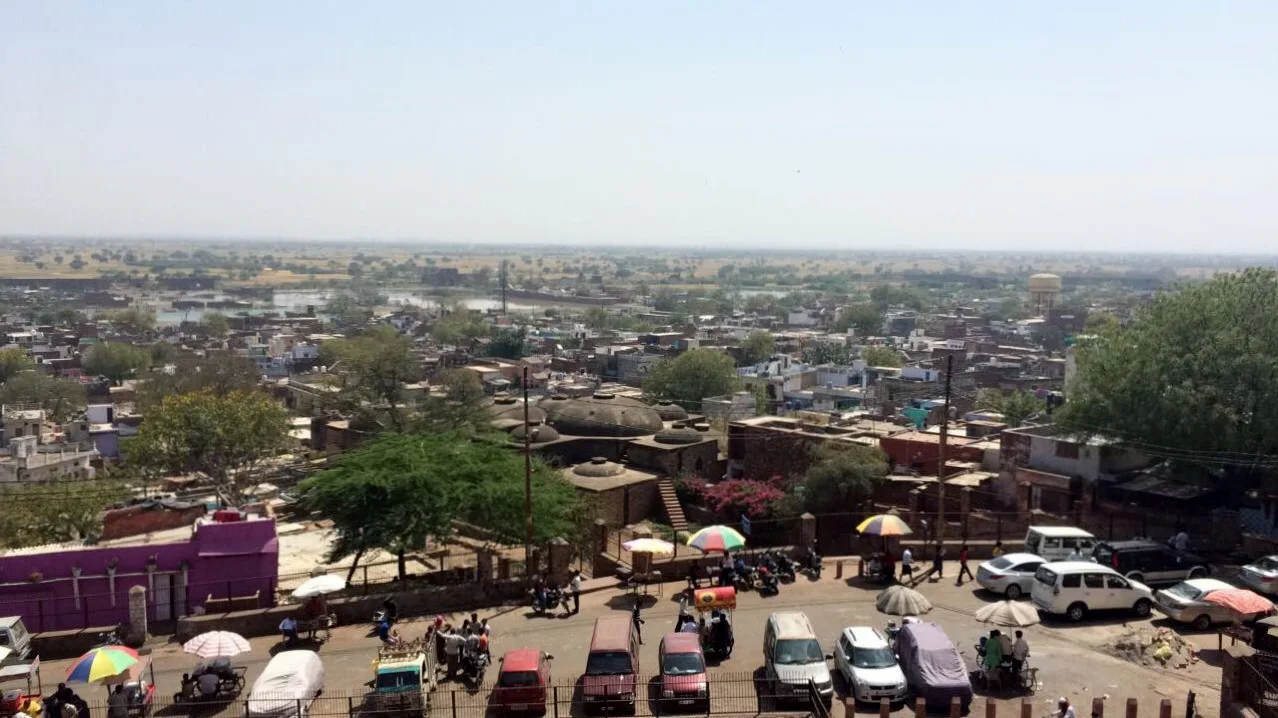
Fatehpur Sikri
Content & sources
Photo: HibaSiddiqui · CC BY-SA 4.0